
This Secluded Vista Provides Some of the Best Views in All of Yosemite National Park
Hiking to Crocker Point in Yosemite National Park

In a naiveté and somewhat overconfident state of mind, I decided to hike from Tunnel View to Taft Point during the winter in hopes of taking some beautiful photographs along the way. At the time, my mindset was simple. I looked up from the floor of Yosemite Valley towards Tunnel View then turned my head tracing the ridge to Taft Point, “That shouldn’t take more than two days. Tops three.” So, I went to the ranger station and talked to them about winter camping permits. They are free and self-assigned.
Within a few hours my 100L pack was overflowing, my snowshoes were under my feet, and I was working my way up the Ponoho Trail towards Taft Point from Tunnel View. I honestly didn’t even know that there were other named points along the journey, but I was excited to be outside and continue developing my winter camping skills for the mountains. So, I walked, and walked, and walked. “Gosh, this hill is no joke!”

The climb from Tunnel View to Inspiration Point to the valley rim is roughly 1000 vertical feet. I didn’t know this. I honestly didn’t know much. Following a gut feeling and knowing that I could rely on the winter camping skills I had developed over the last 12 years of backpacking, I just pushed onward and upward. Ducking under fallen trees branches, dodging post holes other people had fallen into without snow shoes, and singing to myself as I walked. The snow was dampened most of the sounds, but the crunch of my snowshoes was deafening.
After a couple of miles, I noticed the trail was going to be covered with snow. I accepted the challenge. In the back of my mind, I could hear my Mom, “You have gotten lost in snow before, don’t make the same mistakes.” But, have no worries, this winter hiking trip has a happy ending.
A few more hours passed, but I made it to the rim and saw a really cool vista off in the distance.
I want to make a note here, I was moving quite slow as I attempted to slog up this hill with roughly 70lbs on my back all while taking several stops to photograph everything that was new, and pretty, to me along the journey. There was no rush on my end.
That vista looked really awesome, especially because there was a point that jutted out into the skyline and looked like it would be an amazing place for a photograph, but my pack was heavy and I would have to retrace my steps just to stand there, so I opted to just admire from afar. Actually, I remember telling myself, “When the summertime comes, you need to come back with a few friends and check that place out.”
As that point faded over my shoulder and behind some trees, my phone BINGED. I guess I have service up here, which was a surprise. My heart told me not to look, as it would ruin my immersion into this beautiful place, but my brain got the best of me. It was my girlfriend checking in on me. That was nice.
While I was on my phone, a thought popped into my head, “I wonder if anyone has ever gone to that point?” Naiveté, yes, but also remember I have not had a trail for several miles nor have I seen a single foot print for at least two hours. So, I googled it. To my surprise, this spot was Stanford Point. “Hmmm. I will keep that in the back of my head for this coming summer.”
As I carried on between the trees my belly grumbled. Eager to set my pack down and eat a peanut butter and jelly sandwich, I looked for another view point, but nothing. “I want to eat and enjoy this view,” I told myself. Okay, let’s go find a view. So, I did the only logical thing to make my way to a view as fast as possible. I ran downhill towards the cliff.
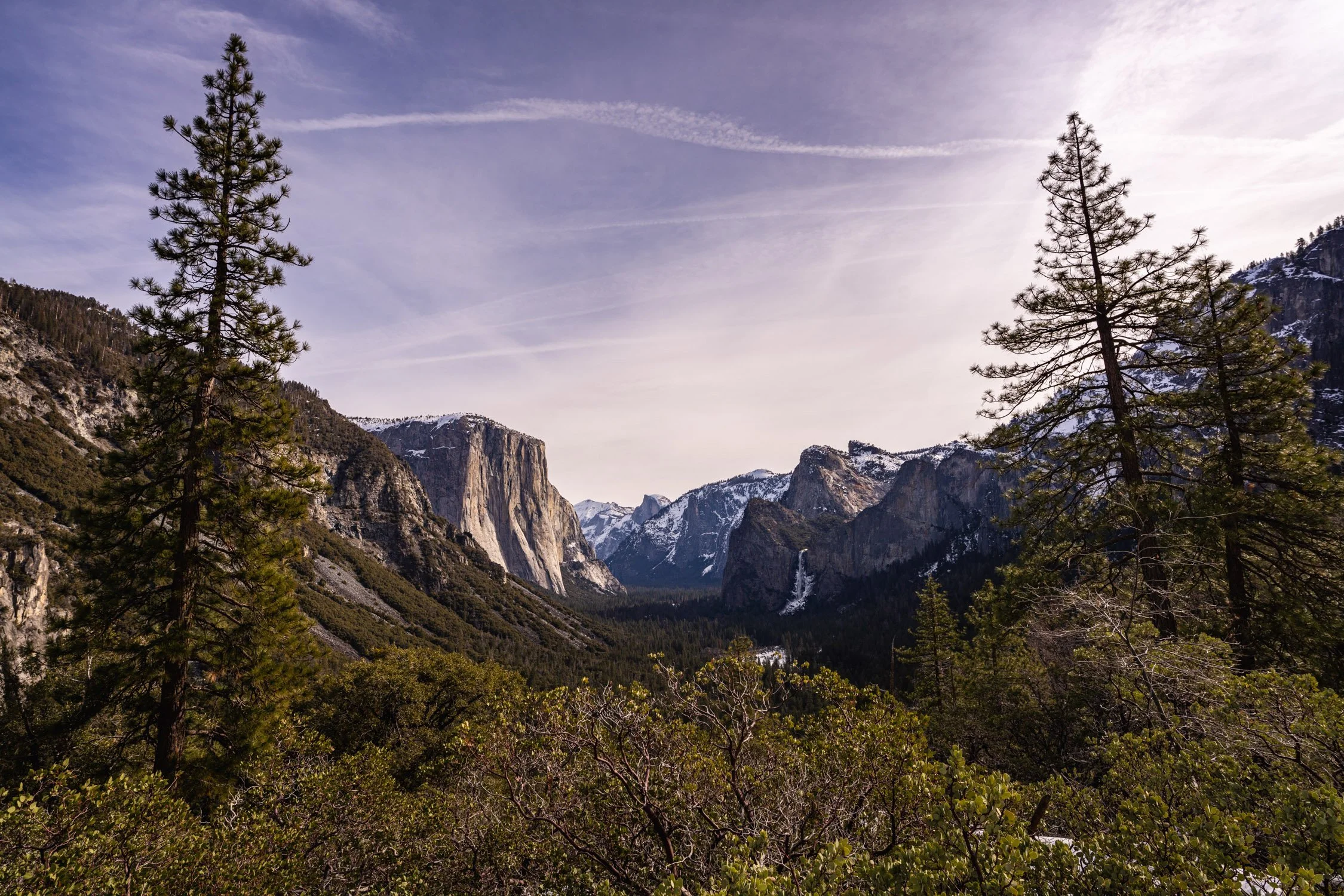
Bobbing and weaving between the trees, getting smacked in the face every so often from a low hanging evergreen, I did everything I could not to face plant into the snow. One minute, five minutes, gosh I am out of breath. “Okay, it is time to walk.” So, I walked for another 10 minutes only to find a sliver opening that contained both El Capitan and Bridalview Fall.
[embed]https://www.youtube.com/watch?v=apwcfTJ7t3w[/embed]
“What is this view?!” I shouted with excitement. “This is crazy sauce, how have I never seen a photograph from here?” Honestly, this was incredible. The alignment of these two is gorgeous and I can’t believe I am here to enjoy this view without a soul around. Dropping my pack, I walked around for a short while to find a better opening, this view was worth at least 5 minutes of searching.
“Found it!”
Grabbing my pack and moving towards an opening, I sat and enjoyed my sandwich. Feeling like an explorer who just discovered the most incredible view of Yosemite ever, I was proud of myself as I chomped down on my sandwich. Crunching the frozen bits between my teeth, sitting on my pack, I enjoyed this view more than any other view in a long time.
“I wonder if this spot has a name?”
Pulling out my phone, I looked on google maps. Where I was didn’t have a name, but if I climb the hill and walked another .25 miles I would be at Crocker Point. Looks like I wasn’t the first person to discover this view, but that is okay.
Grabbing my things, I headed up the hill to stand on the true Crocker Point, which was just as good, if not a better view.
Lojel’s Cubo Fit Luggage Is Like A Black Hole Where You Can Actaully Find Your Clothes
This Hardcase Luggage Changed My Mind About Checked Baggage While Flying

Men’s Journal aims to feature only the best products and services. If you buy something via one of our links, we may earn a commission.
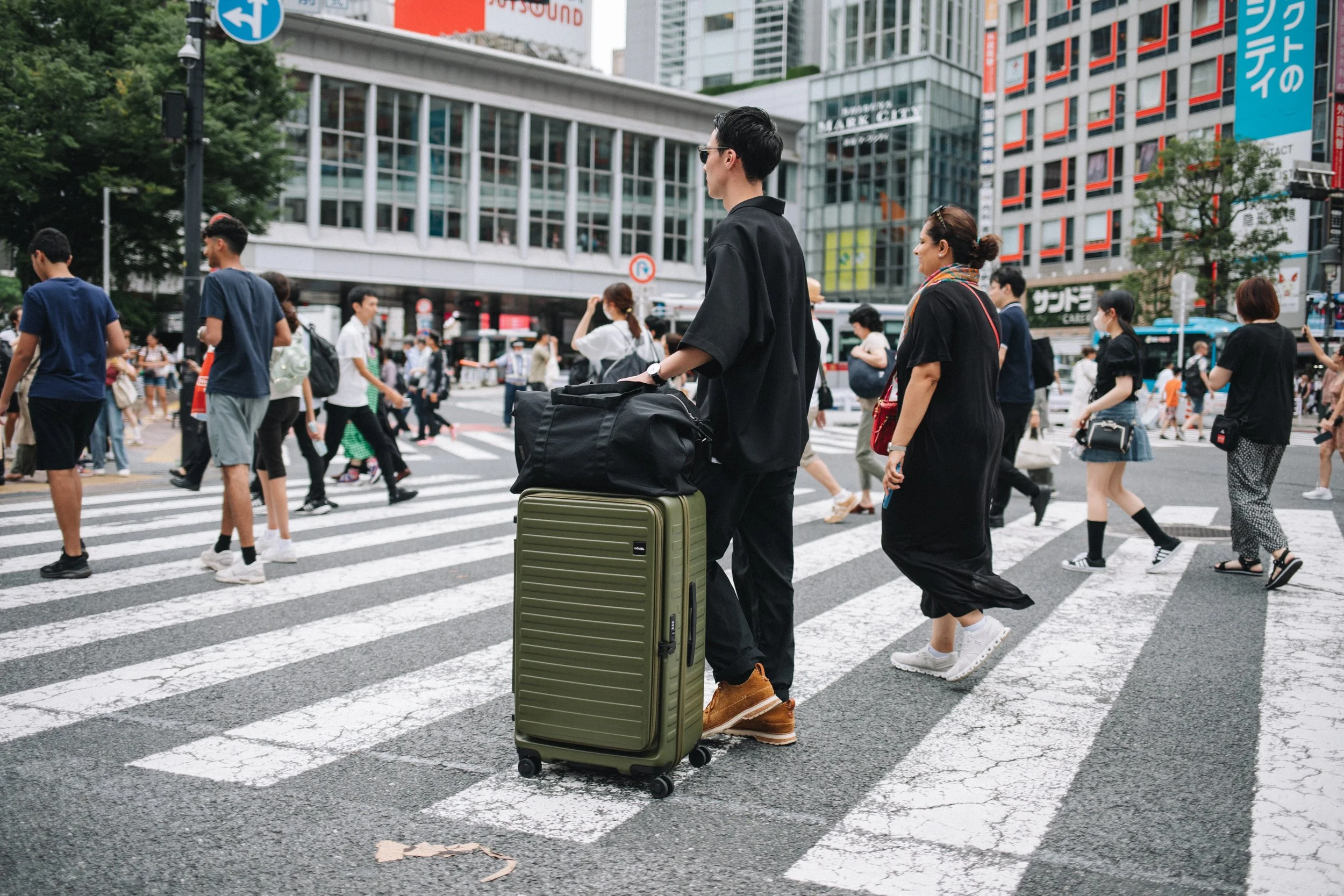
Say what you want about flying with hard-case luggage, let alone checking a bag, however, I’ve kicked my duffles and soft-sided bags for the Lojel Cubo Fit. I’m not just saying this because I was gifted this piece of luggage, either. After my last three flights with this black hole, that weighs in at 10.8 lbs, I haven’t run out of room. The size is notable because this bag has carried enough puffy clothing to keep me warm from head to toe in -50f and comes with a 10-year warranty, just in case TSA or the flight crew decides to break your bag.
Let's get back to that -50f. That’s cold, regardless of who you are, and those temperatures require more layers upon layers. Just picture the Michele Man walking around a snowy landscape photographing the Northern Lights. Massive boots, big jackets, and four layers, all fit into Lojel's hard-case luggage.
My favorite part, mobility. Easily wheeling from transfer to transfer, baggage claim to taxi, the wheels on the Lojel Cubo Fit are capable. I know their marketing department can’t say these wheels can go off-roading, but from my experience in the snow has been flawless. Dirt is not a problem. Mud… okay, maybe not the best but, hey, you can’t win them all.
In addition to the storage capacity, this hard-case luggage has a wonderfully designed internal storage. With six internal pockets organizing your socks, underwear, toiletries, and knickknacks has never been easier. Also, the optional internal divider helps separate your shoes and dirty clothes from your clean clothes. This internal divider has also come in handy while organizing because this travel bag can fit just about anything. Surely your kitchen sink would fit!
If you are checking luggage while flying anywhere, the mid-sized Lojel Cubo Fit will keep your luggage safe while easily moving from point A to point B. Also, the headache of a disorganized bag is gone as you enjoy a simple, yet effective, internal storage system. Needless to say, the Lojel Cubo Fit will certainly change your mind about checking a bag on your next flight.
Three Misconceptions About The Northern Lights
What you need to know before traveling to see the Northern Lights

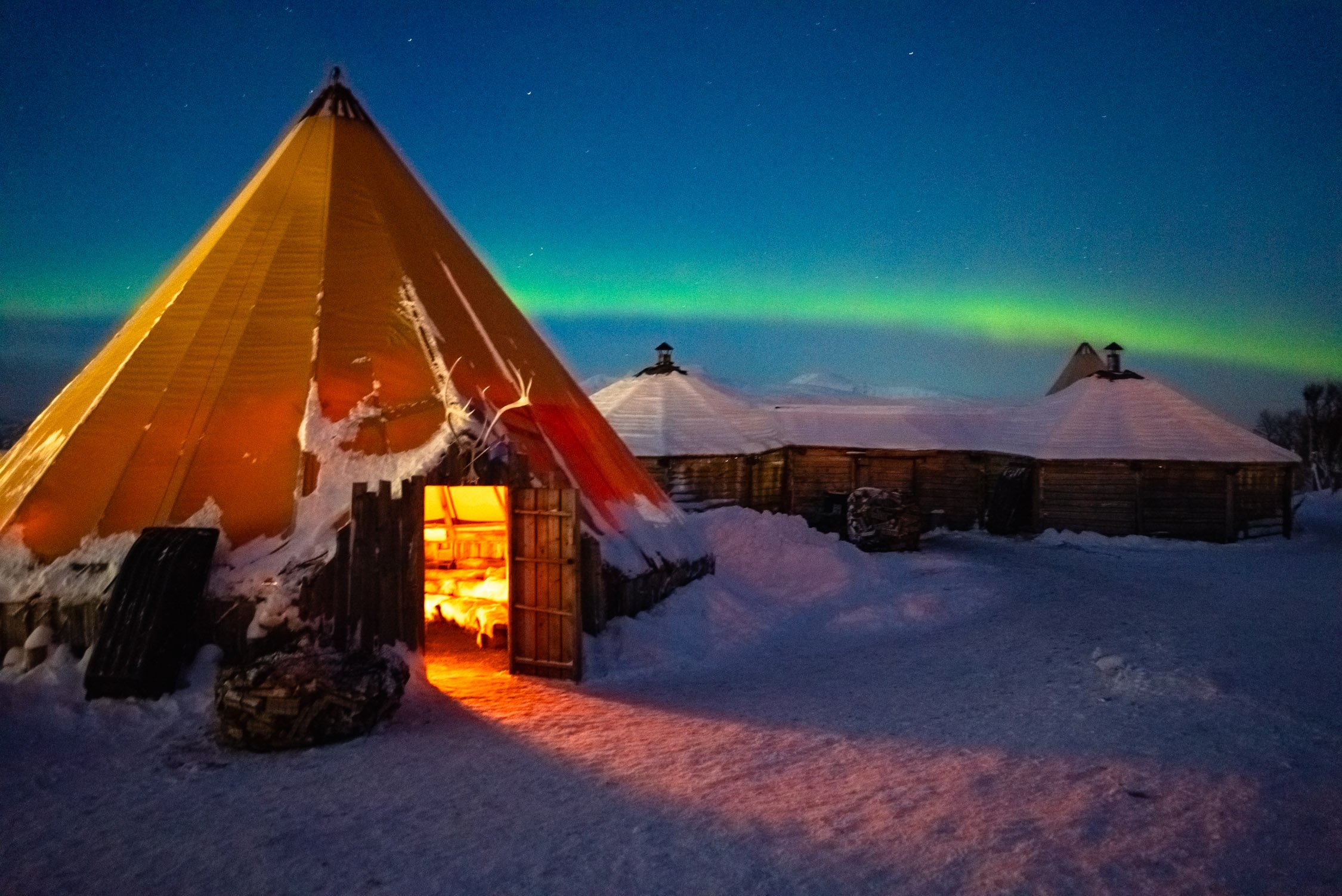
On a recent trip to Norway, I had the opportunity to see the green glow, from Northern Lights, floating in the sky, but the Northern Lights weren't exactly what everyone talks about. The entire sky wasn't lit up with a variety of colors, but a few large, green streaks were crossing the sky. So, I wanted to clear up any misconceptions that you might have about the Northern Lights to level set your expectations if you travel to see this natural phenomenon.

The Northern Lights Look Better Through A Camera
When we see photos of the Northern Lights, they are like the Milky Way in the sense that a camera will capture them better than what you see with the naked eye. When a camera uses a long exposure, say 5 seconds to 30 seconds, to capture an image, the colors begin to pop and even some of the faintest objects will begin to appear. Now, this doesn't mean you can't see the Northern Lights with the naked eye, you can! Just be ready for the Northern Lights not to look like the photos.
The Northern Lights Come and Go Throughout The Night
One of the challenges of seeing the Northern Lights is that they come and go. While the most common hours to see the Northern Lights are between 11 pm and 3 am, one important characteristic of the Northern Lights is their ephemeral nature. What does that mean? If you are looking at the Northern Lights right now, in 10 minutes, they could be gone. On the flip side, if you don't see the Northern Lights right now, they might show up in the next 30 minutes, or not at all. This is what makes chasing the Northern Lights fun.
The Northern Lights Might Be There, But Weather Will Determine What You See
Usually, when you travel to see the Northern Lights, you are going to places that have harsh conditions. The weather can be bad. Rains, winds, and heavy cloud coverage all happen in the regions with the Northern Lights. So, make sure to keep an eye on the weather, because you'll need to be outside to see the Northern Lights. Pack a heavy jacket, and thick gloves, so you can be ready to hop out of bed if you hear the Northern Lights are showing.
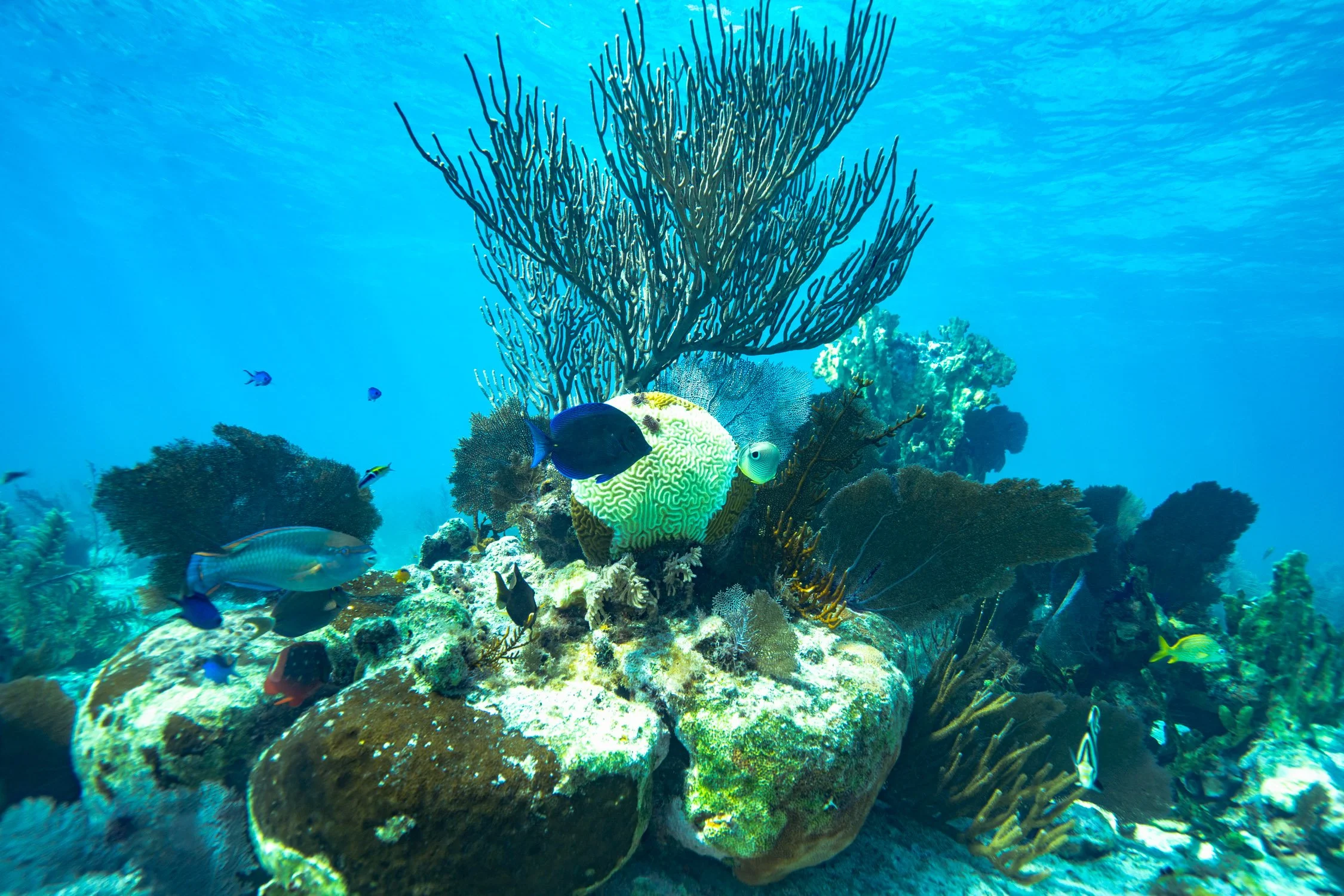
You Don't Need A Wetsuit To Snorkel In Belize, But You'll Want This
You'll want a rash guard while you snorkel in Belize

Bouncing in the boat as we headed for our snorkeling spot around the Turneffe Atoll in Belize, I looked around at the group who were prepping their masks with defog and wiggling their feet into their fins. Soon, we would plunge beneath the surface and explore the colorfully stunning corals of Belize's reefs. But, they all had one thing I did not, a rash guard.

The water in Belize is warm and they didn't plan to surf, so I didn't understand why they had on rash guards. Plunging below the surface, we started our journey. Diving up and down to catch a breath, we floated with the current, away from the boat to check out different sections of the reef.
Shining in the light, the red, blue, and yellow coral popped. I was fascinated by the little fish as well. Holding my breath longer and longer with each dive, I was reaching the flow state during this snorkel. Then, I was tapped on the shoulder by the guide and he pointed close to me.
Struggling to see what he was pointing at, I eventually noticed this translucent blob floating a few feet away, a jellyfish. Returning to the surface at the request of the guide, he said, "Watch out for jellyfish, you don't have a rash guard. Next time, bring a rash guard."
Now, I understood. Thankfully, I wasn't stung by any jellyfish while snorkeling in Belize, but I understand how snorkeling with a rash guard in Belize can be an important addition to your snorkeling kit to keep you warm (you don't need a wetsuit to snorkel) and protect you from jellyfish, shallow reef, and the sun.
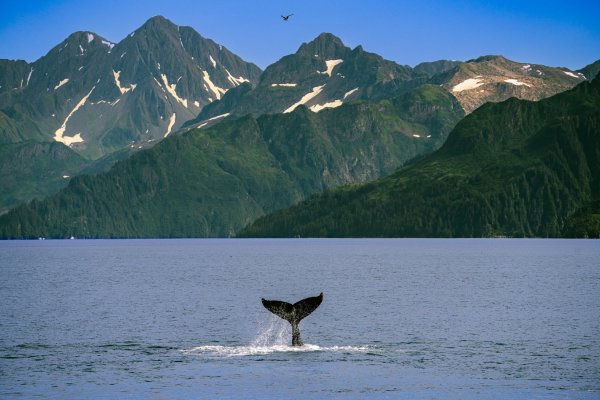
You Can’t Drive Through Kenai Fjords, But You Can Experience The National Park By Foot, Boat, And Plane
Discovering Kenai Fjords National Park From Every Angle

By land, by sea, and by foot, the vastness of Kenai Fjords National Park is challenging to comprehend, especially since you can’t drive through Kenai Fjords. With the Harding Icefield sprawling over 700 square miles and the closest parking vehicle access points being Exit Glacier and the city of Seward, AK getting a hands-on experience with the fjords is difficult. Many find themselves asking the question, “What’s so special about Kenai Fjords National Park and how can I access it?” The answer is in the question.
What makes Kenai Fjords National Park so special is the limited access and how you access the park. While this park is massive, the best way to engage with this landscape is from every angle. That means get your boots dirty, fly high in the sky staring down at the glacier terrain, and observe a glacier calving directly into fjord’s water from the safety of a vessel.
Experience Kenai Fjords National Park By Boat
The best way to gain access to the fjords is from inside of them. If you have the required sea kayaking skills, I suggest you rent a sea kayak with a friend and head out for a multi-day sea-kayaking expedition to explore the fjords and camp on the beaches. If that is a little bit too adventurous for you, there are wildlife tour companies, like Major Marine Tours, who showcase the birds and aquatic life thriving around the fjords, educate you on how the fjords are formed hundreds of thousands of years, and get you as close to the calving glaciers as safely possible.
Experience Kenai Fjords National Park By Hiking
Hiking in Kenai Fjords National Park is a loaded scenario because of the skill needed to access the fjords. Hiking into the fjords is difficult and takes glacial navigational skills. That means you’ll need a partner, crampons, a rescue system in the event of a crevasse fall, and at least a week. My guess is that won’t work for most of you reading this, but you still have options. If you want to see a glacier located in Kenai Fjords National Park, you can hike Exit Glacier. There are two hikes here; a short hike that gains a modest elevation to a viewing area of the glacier and a long hike that many people use to sleep overnight with stellar views of the Harding Icefield.
Experience Kenai Fjords National Park By Plane
The most stunning way to experience Kenai Fjords National Park is from the air during a flight tour. It is here you will see the vastness of the Harding Icefield and comprehend the grand size of Kenai Fjords National Park. Soaring through the sky, in a small plane, you gain an aerial perspective of the geology at work. From your window, you’ll see the carving glaciers and fjords outlets leading to the Pacific Ocean. The stark difference between the crevassed white glacier and smooth dark granite makes me hyperaware of the geological timeline this frozen river encapsulates.

How To Manage Your Time And Stay Productive as a Digital Nomad
Digital nomads have mastered the art of blending work and travel seamlessly, allowing them to explore new destinations while staying productive in their professional endeavors. Balancing work and travel requires a strategic approach and a set of effective practices. Let's delve into how digital nomads stay productive while on the move.
Digital nomads have mastered the art of blending work and travel seamlessly, allowing them to explore new destinations while staying productive in their professional endeavors. Balancing work and travel requires a strategic approach and a set of effective practices. Let's delve into how digital nomads stay productive while on the move.
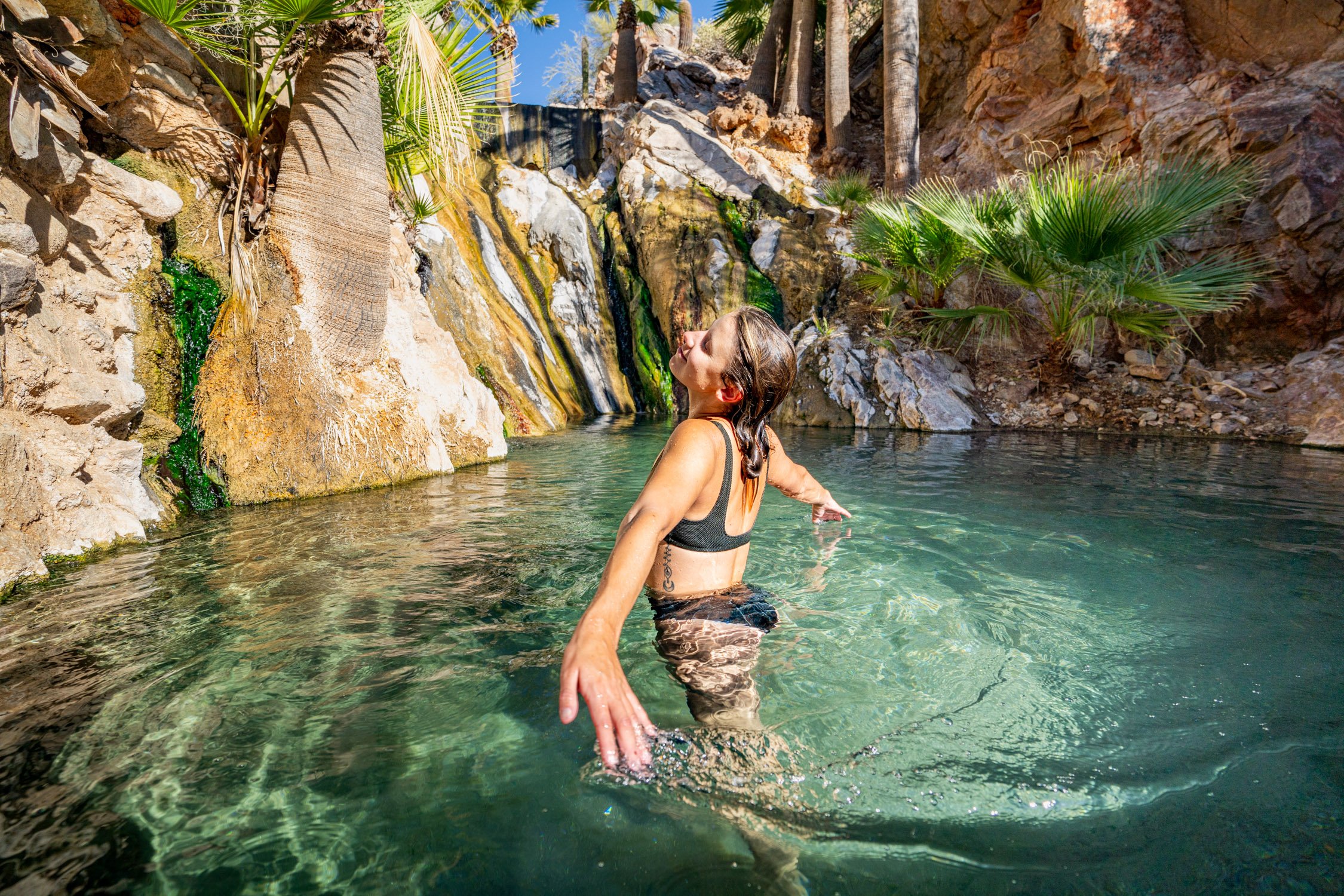
Kristin finding time to enjoy the hot springs while on a work assignment as a digital nomad. Photo by Dalton Johnson
1. Effective Time Management
Digital nomads prioritize their tasks and manage their time effectively. They often use time management techniques such as the Pomodoro Technique, time blocking, or setting specific work hours to maintain focus and productivity. By allocating dedicated time slots for work, they create a structured routine that helps them stay on track despite changing environments.
2. Creating a Functional Workspace
A crucial aspect of productivity for digital nomads is creating a functional workspace wherever they go. This includes having a comfortable chair, a reliable internet connection, proper lighting, and essential tools like laptops and chargers. Many nomads opt for co-working spaces or cafes with conducive environments for work.
3. Utilizing Productivity Tools
Digital nomads rely on various productivity tools and apps to streamline their work processes. These tools include project management platforms like Trello or Asana for task organization, communication tools like Slack or Zoom for team collaboration, and time tracking apps to monitor work hours and productivity levels.
4. Setting Clear Goals and Deadlines
Setting clear goals and deadlines is essential for digital nomads to stay focused and motivated. By breaking down projects into manageable tasks and setting realistic deadlines, they can track their progress and ensure timely completion of work while juggling travel plans.
5. Embracing Flexibility
Flexibility is a hallmark of the digital nomad lifestyle. Nomads adapt to changing circumstances, such as travel delays or unexpected challenges, by adjusting their work schedules and priorities accordingly. Embracing flexibility allows them to maintain productivity even in unpredictable situations.
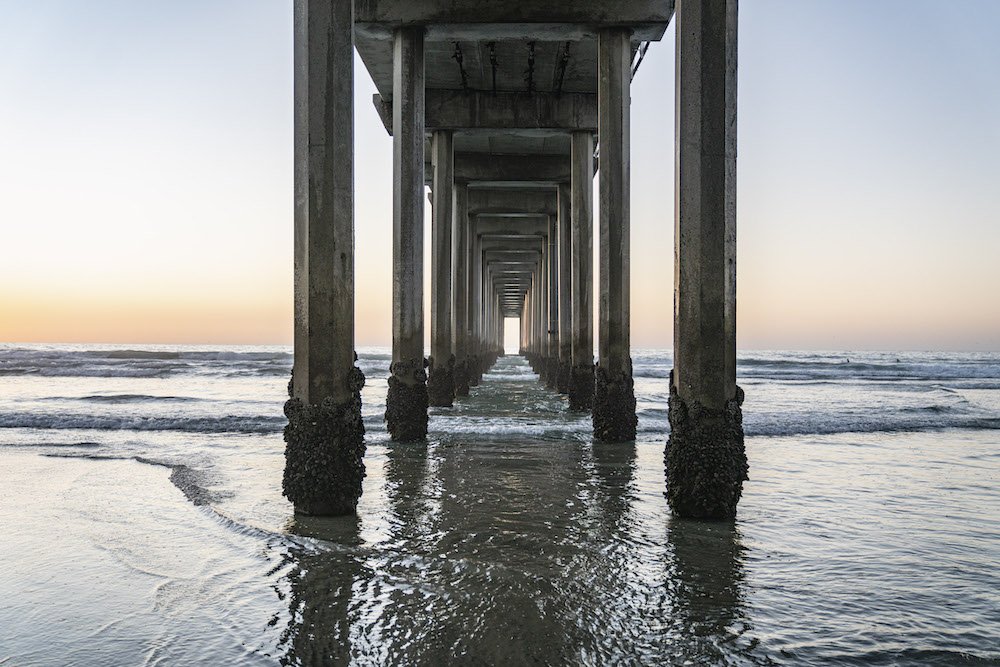


6. Managing Distractions
While traveling, digital nomads face various distractions such as tourist attractions, social events, or new experiences. Managing these distractions involves practicing self-discipline, using productivity techniques like the "two-minute rule" to tackle small tasks immediately, and creating boundaries between work and leisure time.
7. Prioritizing Self-Care
Maintaining productivity requires a healthy work-life balance. Digital nomads prioritize self-care by incorporating regular exercise, mindfulness practices, and adequate rest into their routines. Taking breaks and rejuvenating their minds and bodies contribute to sustained productivity and overall well-being.
8. Networking and Collaboration
Digital nomads often engage in networking events, meetups, or online communities to connect with like-minded individuals and expand their professional networks. Collaborating with other nomads or local professionals not only fosters creativity and innovation but also opens up opportunities for growth and learning.
9. Continuous Learning and Skill Development
To stay competitive in their fields, digital nomads prioritize continuous learning and skill development. They invest time in online courses, workshops, or certifications relevant to their industries, enhancing their expertise and staying abreast of industry trends and advancements.
10. Maintaining Work-Life Integration
Finally, digital nomads strive for work-life integration rather than strict separation. They blend work with leisure activities, allowing for cultural immersion, exploration, and personal growth while fulfilling professional responsibilities. This integrated approach contributes to a fulfilling and sustainable lifestyle as a digital nomad.
There is always time to step outside and watch the Northern Lights when you are a digital nomad. Photo by Dalton Johnson
Digital nomads stay productive while traveling by leveraging effective time management, creating functional workspaces, utilizing productivity tools, setting clear goals, embracing flexibility, managing distractions, prioritizing self-care, networking and collaborating, continuous learning, and maintaining work-life integration. These strategies enable them to thrive in a dynamic work environment while enjoying the freedom and adventure of travel.
Discover more Adventures


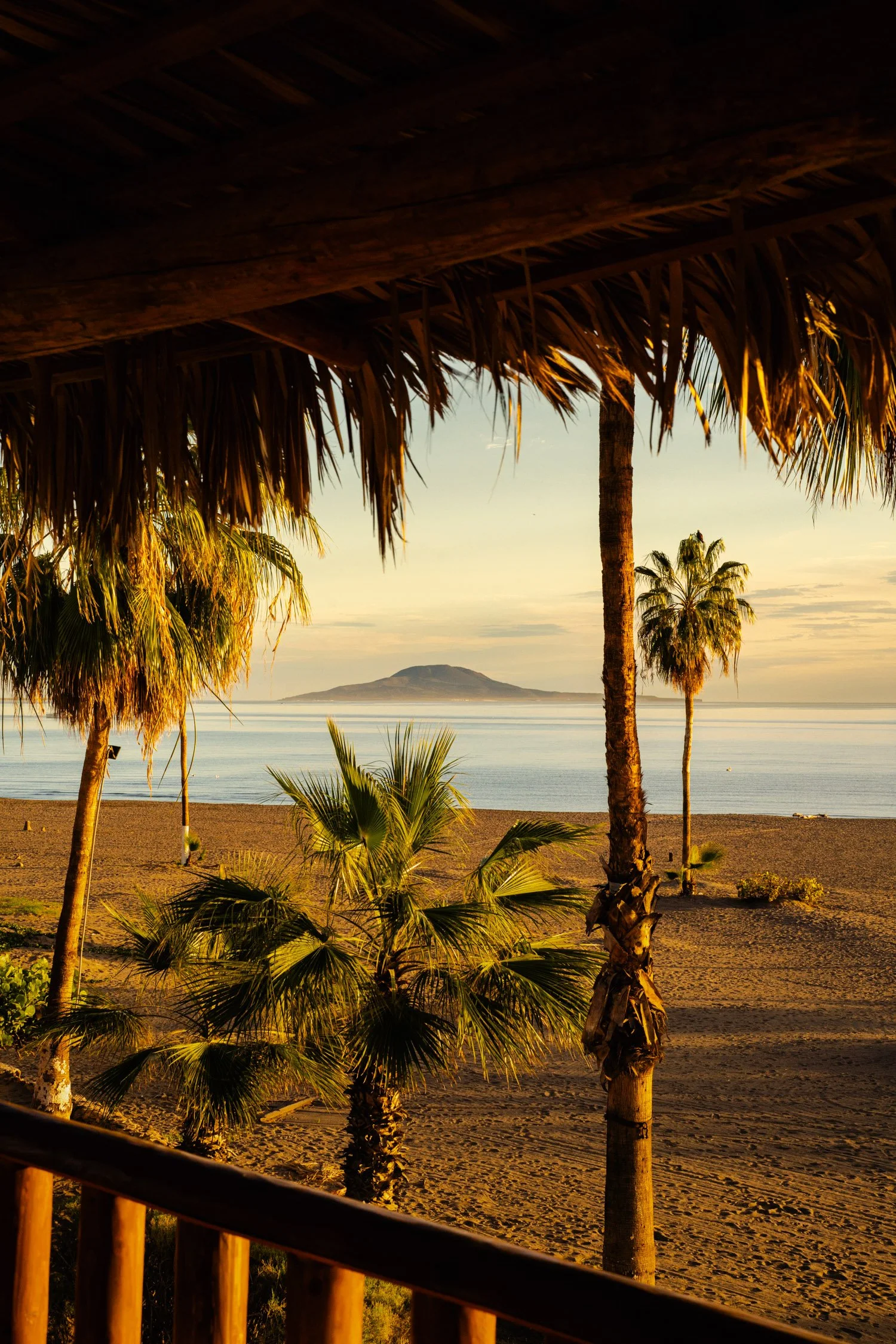

Challenges of Being a Digital Nomad You Did Not Think About
Being a digital nomad offers incredible freedom and flexibility, but it also comes with its own set of challenges. Whether you're working remotely from exotic locations or embracing the van life while staying connected, here are some common challenges that digital nomads face:
Being a digital nomad offers incredible freedom and flexibility, but it also comes with its own set of challenges. Whether you're working remotely from exotic locations or embracing the van life while staying connected, here are some common challenges that digital nomads face:
Working during sunset poolside. Photo by Dalton Johnson
1) Internet Connectivity:
One of the most critical challenges for digital nomads is reliable internet access. While many places offer Wi-Fi, the quality can vary widely, impacting productivity and communication with clients or team members. Digital nomads often have to research and plan their locations carefully to ensure they have a stable internet connection.
2) Time Zone Differences:
Working across different time zones can be challenging, especially when coordinating meetings or deadlines. Digital nomads may find themselves adjusting their schedules to accommodate clients or colleagues in different parts of the world, leading to potential disruptions in work-life balance.
3) Isolation and Loneliness:
Despite the freedom of remote work, digital nomads can experience feelings of isolation and loneliness, especially when they're constantly on the move. Building a sense of community and maintaining meaningful relationships while living a nomadic lifestyle requires effort and intentionality.
4) Work-Life Balance:
Balancing work commitments with exploration and leisure can be tricky for digital nomads. The allure of new experiences and destinations may sometimes lead to overworking or neglecting personal time, leading to burnout in the long run.
5) Financial Stability:
Managing finances as a digital nomad can be challenging, especially when dealing with fluctuating income streams, currency conversions, and varying costs of living in different locations. Budgeting and financial planning become essential skills for sustainable nomadic living.
6) Workspace Setup:
Creating a productive workspace while on the go can be challenging. Digital nomads often have to adapt to different environments, from crowded cafes to co-working spaces or makeshift setups in their accommodations, which can affect focus and productivity.
7) Healthcare and Insurance:
Access to healthcare and insurance coverage can be complex for digital nomads, especially when traveling internationally. Navigating different healthcare systems, understanding insurance policies, and ensuring adequate coverage for emergencies are vital considerations.
8) Visa and Legal Issues:
Digital nomads often face visa restrictions and legal complexities when staying in countries for extended periods. Understanding visa requirements, tax implications, and complying with local regulations can be daunting but necessary for a smooth nomadic experience.
9) Technology Challenges:
Relying on technology for work means dealing with potential technical issues, software updates, device compatibility, and cybersecurity concerns. Digital nomads must stay tech-savvy and prepared to troubleshoot problems on the go.
10) Cultural Adaptation:
Adapting to different cultures, languages, and customs can be both enriching and challenging for digital nomads. Building cultural awareness, respecting local norms, and navigating cultural differences contribute to a more fulfilling nomadic lifestyle.
Taking the evening off while working and living off the grid in a van in Sedona, AZ. Photo by Dalton Johnson
Despite these challenges, being a digital nomad offers unparalleled opportunities for personal growth, cultural immersion, and work-life integration. Overcoming these obstacles requires resilience, adaptability, and a proactive approach to managing the unique aspects of remote work and travel.
Discover more Adventures
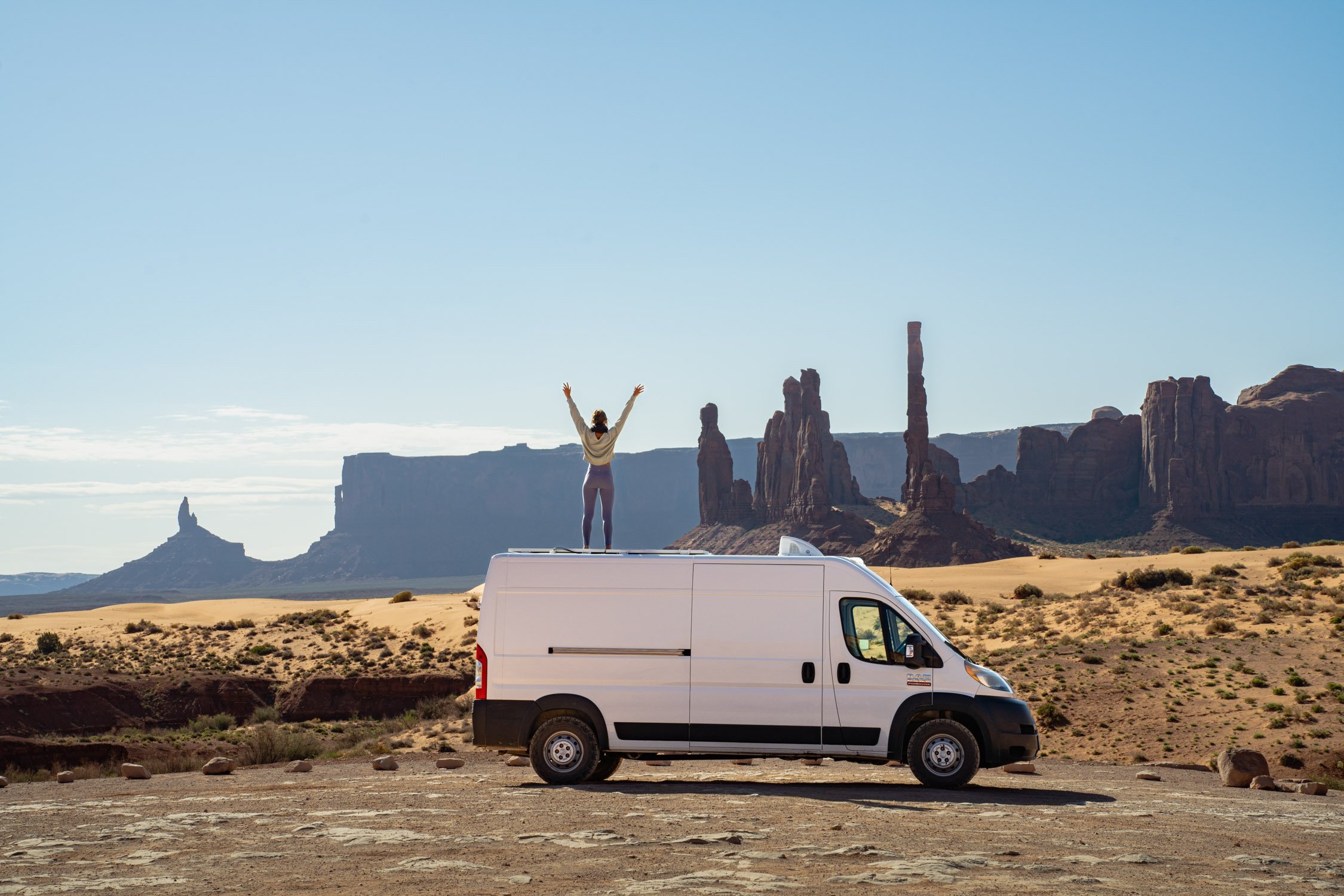
What To Do In Monument Valley
Nestled within the red-rock desert of the American Southwest lies a place of unparalleled beauty and cultural significance — Monument Valley. This iconic landscape, with its towering sandstone buttes and vast open spaces, has captivated travelers, artists, and adventurers for generations. If you're planning a visit to Monument Valley and wondering what to do and see, read on for a comprehensive guide to make the most of your experience.
Nestled within the red-rock desert of the American Southwest lies a place of unparalleled beauty and cultural significance — Monument Valley. This iconic landscape, with its towering sandstone buttes and vast open spaces, has captivated travelers, artists, and adventurers for generations. If you're planning a visit to Monument Valley and wondering what to do and see, read on for a comprehensive guide to make the most of your experience.
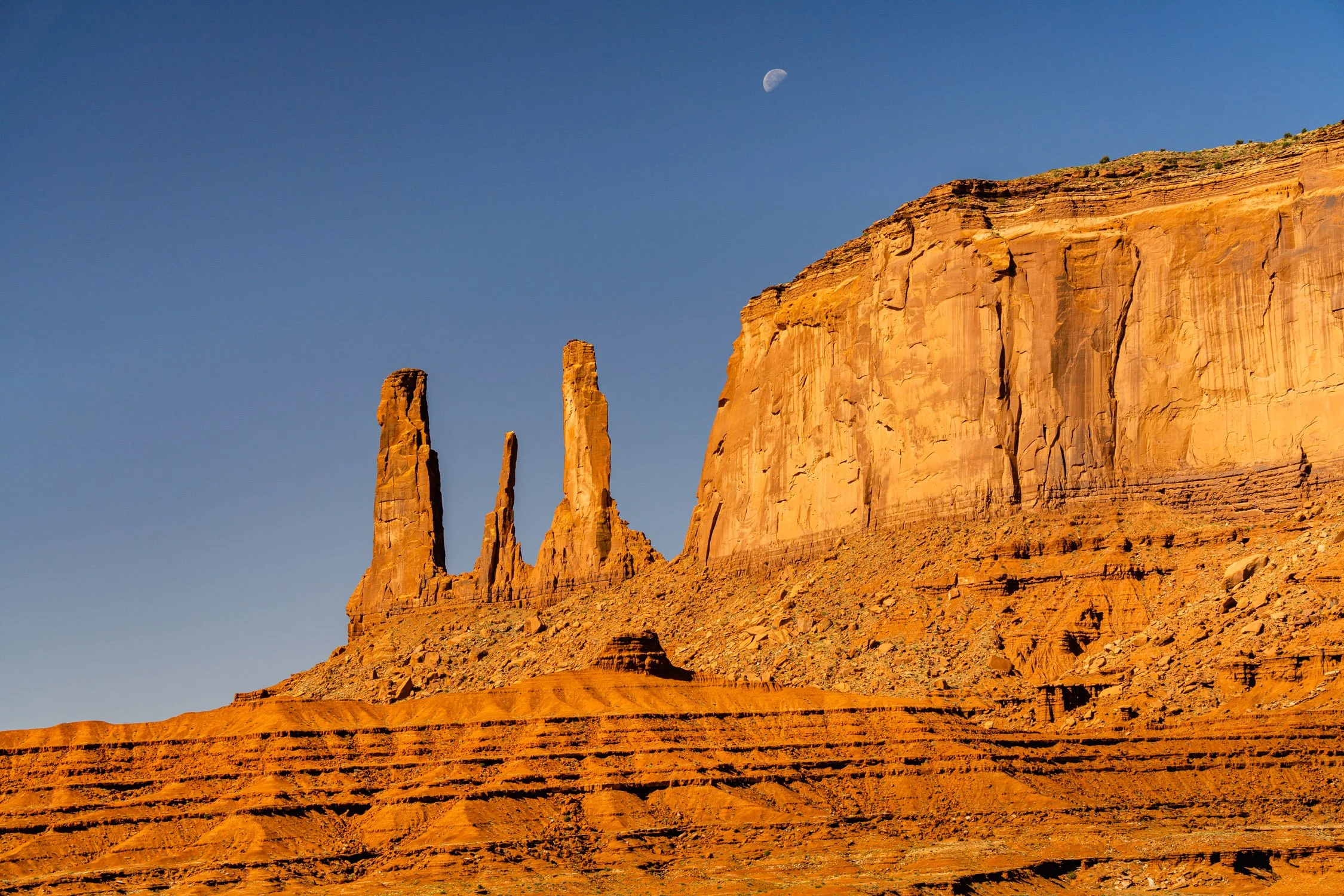
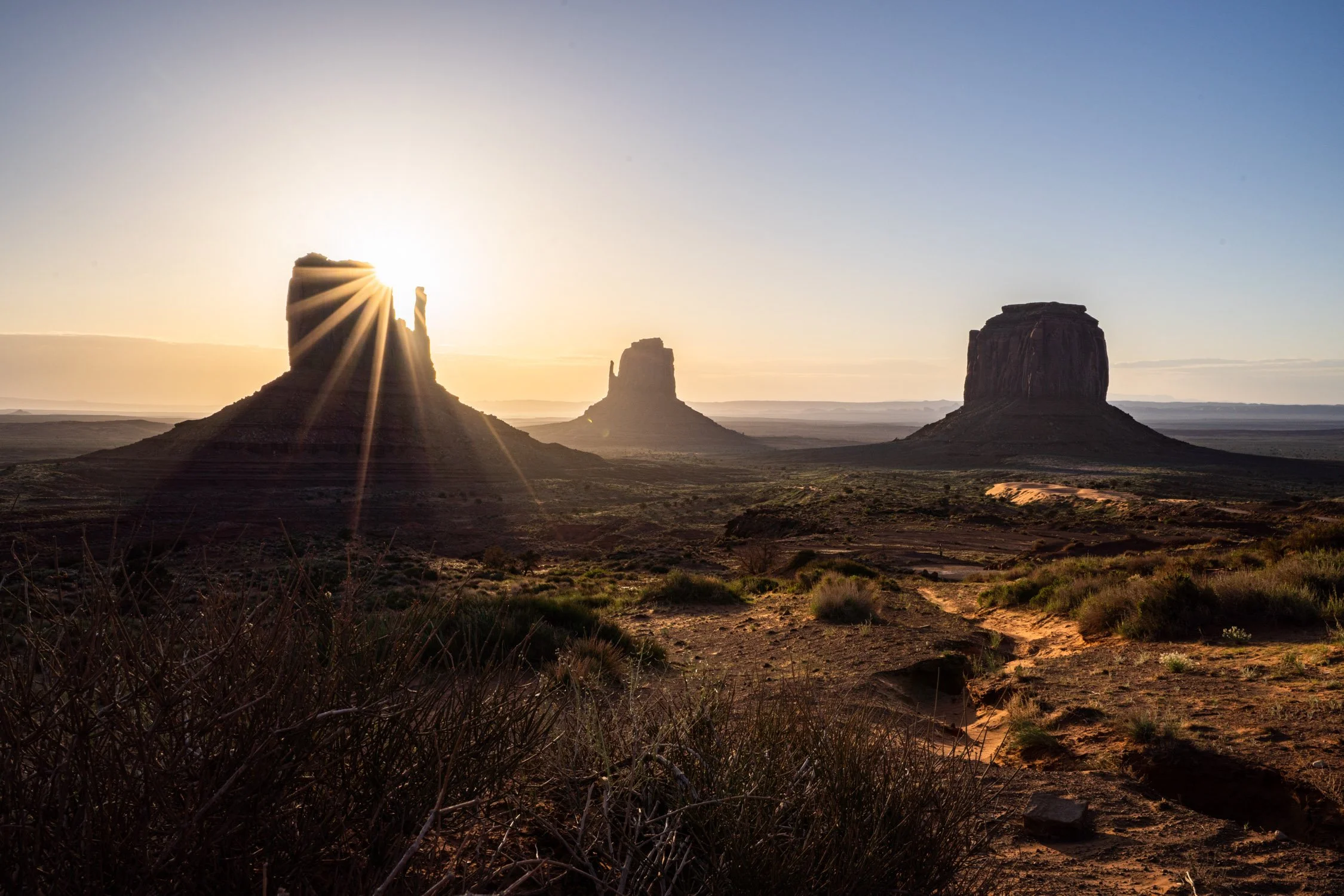
The Three Sisters standing tall on the horizon of Monument Valley glowing in the morning sun. Photo by Dalton Johnson
Understanding Monument Valley's Cultural Significance
Before delving into the activities and sights, it's crucial to appreciate the cultural heritage of Monument Valley. This region is not just a geological marvel but also holds deep spiritual and historical importance for the Navajo people. Respect for their traditions, land, and way of life is paramount when visiting Monument Valley. Many guided tours offer insights into the Navajo culture, providing visitors with a richer and more meaningful experience.
Hiking Adventures in Monument Valley
One of the best ways to immerse yourself in the raw beauty of Monument Valley is through hiking. The valley offers a range of trails suitable for different skill levels, from leisurely strolls to challenging treks. Here are a few notable hiking options:
Wildcat Trail: This 3.2-mile loop is the only self-guided trail within the Monument Valley Tribal Park. It offers stunning views of the iconic West Mitten Butte and allows you to experience the landscape up close.
The Hunt's Mesa: For more experienced hikers seeking a thrilling adventure, the trek to Hunt's Mesa is a must-do. This challenging trail rewards hikers with panoramic views of Monument Valley from a breathtaking vantage point.
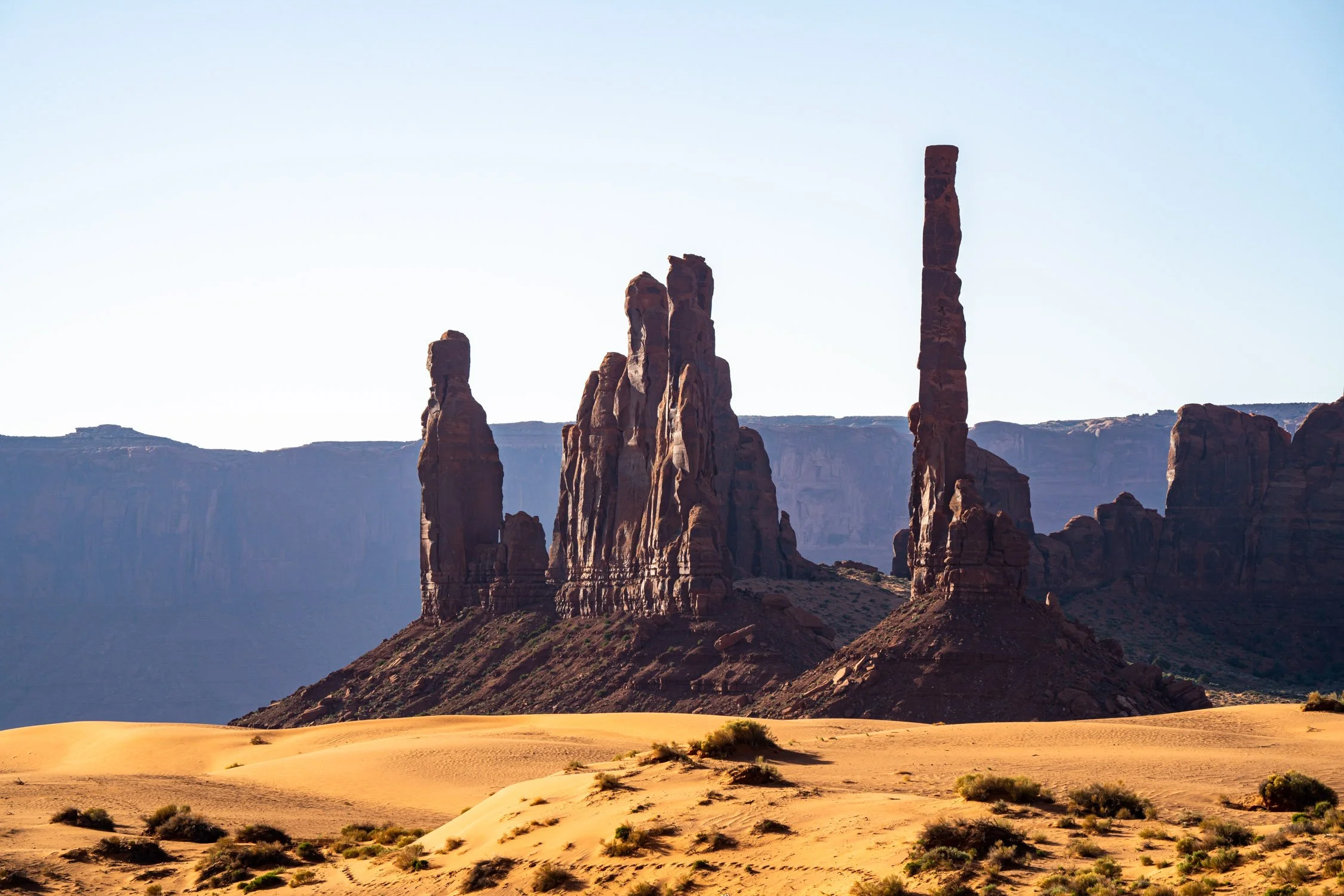
The Totem Pole and Yei Bi Chei: These rock formations are accessible via guided tours or with a Navajo permit. The hike takes you through narrow canyons and unveils ancient petroglyphs, offering a glimpse into the area's rich history.
Photography in Monument Valley
Monument Valley is a photographer's paradise, offering endless opportunities to capture stunning images. The ever-changing play of light and shadow against the red rocks creates a mesmerizing spectacle. Whether you're a professional photographer or an amateur with a smartphone, here are some tips for capturing the best shots:
Golden Hour Magic: The hours around sunrise and sunset bath the landscape in golden hues, enhancing the beauty of the rock formations. Plan your photography sessions during these times for magical results.
Wide-angle Views: Monument Valley's vastness is best captured with wide-angle lenses. Experiment with different focal lengths to showcase the scale and grandeur of the buttes and mesas.
Foreground Interest: Incorporate elements like desert vegetation, rock formations, or Navajo dwellings into your compositions to add depth and interest to your photos.
Guided Tours for a Deeper Experience
While exploring on your own is rewarding, guided tours offer unique insights and access to areas not open to the public. Consider joining a guided tour to maximize your experience in Monument Valley:
Navajo-guided Jeep Tours: Navigate the rugged terrain of Monument Valley with a knowledgeable Navajo guide who can share stories, legends, and cultural insights along the way.
Cultural Immersion Tours: Immerse yourself in Navajo culture with tours that include visits to traditional hogans (dwellings), storytelling sessions, and demonstrations of traditional crafts like rug weaving and pottery making.
Photography Tours: Join a specialized photography tour led by experienced photographers who know the best vantage points and lighting conditions for capturing stunning images of Monument Valley.
Must-See Attractions and Landmarks
No visit to Monument Valley is complete without experiencing its iconic landmarks. Here are some must-see attractions to add to your itinerary:
The Mittens and Merrick Butte: These towering rock formations are among the most recognizable symbols of Monument Valley, especially striking during sunrise and sunset.
Monument Valley Navajo Tribal Park Visitor Center: Start your journey here to learn about the park's history, geology, and cultural significance. The center also offers informative exhibits and guided tour options.
Artist's Point: This overlook provides a panoramic view of the valley, allowing you to admire the vast expanse of red rock formations and mesas stretching into the distance.
Planning Your Visit
The ideal duration for exploring Monument Valley depends on your interests and schedule. While some visitors opt for a day trip, others prefer spending two to three days to fully immerse themselves in the beauty and culture of the region. Consider the following tips when planning your visit:
Accommodations: While there are no lodging options within the Monument Valley Tribal Park, nearby towns like Goulding and Kayenta offer hotels, campgrounds, and RV parks for overnight stays.
Weather Considerations: Summer months can be scorching, so plan outdoor activities accordingly and carry ample water and sun protection. Spring and fall offer milder temperatures and are ideal for hiking and photography.
Permits and Reservations: Some areas within Monument Valley, such as restricted Navajo lands and guided tours, may require permits or reservations. Plan ahead and check with the park authorities or tour operators for any requirements.
Soaking in the magic of Monument Valley from a top the van during a van life road trip. Photo by Dalton Johnson
Monument Valley is a treasure trove of natural beauty, cultural heritage, and outdoor adventures waiting to be explored. Whether you're hiking through its rugged terrain, capturing its majesty through photography, or immersing yourself in Navajo culture, a visit to Monument Valley promises an unforgettable experience. Plan your trip thoughtfully, respect the land and its people, and prepare to be awestruck by the timeless allure of this desert wonderland.
Discover More Destinations

Photography Guide For Monument Valley
Capturing the awe-inspiring beauty of Monument Valley through photography is a dream for many enthusiasts. Monument Valley, located on the Arizona-Utah border in the heart of the Navajo Nation, is renowned for its iconic sandstone buttes, mesas, and stunning desert landscapes. However, like any natural and cultural treasure, there are guidelines and considerations to keep in mind when photographing in this majestic location.
Capturing the awe-inspiring beauty of Monument Valley through photography is a dream for many enthusiasts. Monument Valley, located on the Arizona-Utah border in the heart of the Navajo Nation, is renowned for its iconic sandstone buttes, mesas, and stunning desert landscapes. However, like any natural and cultural treasure, there are guidelines and considerations to keep in mind when photographing in this majestic location.
A field of wildflowers and a tower in Monument Valley during the spring sunrise. Photo by Dalton Johnson
Pros:
Iconic Landscapes: Monument Valley's iconic rock formations, vast desert landscapes, and dramatic skies provide photographers with a wealth of stunning subjects to capture.
Golden Hour Magic: The golden hours around sunrise and sunset in Monument Valley create magical lighting conditions that enhance the colors, textures, and contrasts of the rock formations.
Cultural Significance: The area's rich cultural heritage and connection to Native American traditions add depth and meaning to photographs, offering opportunities for storytelling and cultural appreciation.
Varied Perspectives: From panoramic vistas to intimate details, Monument Valley offers diverse perspectives for photographers, allowing them to experiment with composition and capture unique shots.
Seasonal Changes: The changing seasons in Monument Valley bring different colors, weather conditions, and moods to the landscape, providing photographers with opportunities for diverse and dynamic photographs throughout the year.
Photography Workshops: Many photography workshops and tours are available in Monument Valley, offering guided experiences, insider tips, and access to lesser-known spots for photography enthusiasts.
Cons:
Crowds: Popular viewpoints in Monument Valley can get crowded, especially during peak tourist seasons, making it challenging to find solitude and capture unobstructed shots.
Weather Challenges: The desert climate of Monument Valley can be extreme, with high temperatures during the day and cold nights. Weather conditions like strong winds or dust storms can also affect photography sessions.
Permit Requirements: Some areas of Monument Valley may require photography permits, particularly for commercial or professional photography, adding administrative hurdles and costs for photographers.
Limited Access: Certain viewpoints or areas may have restricted access or limited hours, impacting photographers' flexibility in capturing specific scenes or moments.
Lighting Constraints: While the golden hours offer stunning light for photography, midday sun can create harsh shadows and washed-out colors, requiring photographers to adapt their shooting schedule and techniques accordingly.
Cultural Sensitivities: Photographing in culturally significant areas of Monument Valley requires respect for Native American traditions, land use policies, and privacy considerations, requiring photographers to navigate these sensitivities with care.
Understanding Monument Valley's Photography Guidelines
Before diving into the specifics of photography in Monument Valley, it's crucial to understand and respect the rules and guidelines set by the Navajo Nation, who manage this sacred and culturally significant area. Here are some essential points to keep in mind:
Respect Cultural Sensitivities: Monument Valley holds immense cultural and spiritual significance for the Navajo people. As a visitor, it's essential to respect their land, customs, and traditions. Be mindful of any areas that are off-limits or restricted for photography.
Permits and Fees: In certain areas of Monument Valley, such as within the Tribal Park boundaries, photography permits may be required. These permits often come with fees that contribute to the preservation and maintenance of the park. Check with the Navajo Nation Parks and Recreation Department for the latest information on permits and fees.
Commercial Photography: If you plan to use your photographs for commercial purposes, including publications, advertisements, or any form of commercial gain, special permits and fees may apply. Ensure that you have the necessary permissions before engaging in commercial photography.
Respect Wildlife and Environment: As with any natural environment, it's crucial to respect the wildlife and ecosystem of Monument Valley. Avoid disturbing wildlife, stay on designated paths to prevent environmental damage, and leave no trace of your visit.
Best Practices for Monument Valley Photography
Now that we've covered the essential guidelines, let's delve into the practical aspects of capturing stunning photographs in Monument Valley:
Timing Is Everything: The play of light and shadow in Monument Valley transforms its landscapes throughout the day. Consider the golden hours around sunrise and sunset for capturing warm, soft light that enhances the textures and colors of the sandstone formations.
Composition Techniques: Experiment with different composition techniques to create compelling photographs. Use leading lines to draw the viewer's eye, incorporate foreground elements like desert vegetation or rocks for depth, and consider the rule of thirds for balanced compositions.
Use of Filters: Neutral density (ND) filters can be invaluable for controlling exposure, especially during bright daylight. Polarizing filters can enhance colors and reduce glare, making them useful for capturing vibrant skies and reducing reflections on rock surfaces.
Capture Diverse Perspectives: While the classic panoramic views are undeniably captivating, don't overlook the smaller details and intimate scenes that showcase the unique textures and patterns of Monument Valley's rock formations.
Respect Local Communities: If you encounter local residents or engage in cultural activities, seek permission before taking photographs. Respect privacy and cultural sensitivities at all times.
Tips for Responsible Photography
In addition to capturing stunning images, practicing responsible photography ensures that you leave a positive impact on Monument Valley and its communities:
Pack Out What You Pack In: Carry out all your trash and leave no trace of your visit. This includes not disturbing rocks, plants, or any natural elements.
Minimize Disturbance: Avoid excessive noise, especially in areas where wildlife may be present. Keep a respectful distance from wildlife and refrain from feeding or approaching them.
Educate Yourself: Learn about the history, culture, and significance of Monument Valley before your visit. Understanding the context enriches your photography and fosters greater appreciation for the land and its heritage.
Support Local Conservation Efforts: Consider donating to local conservation organizations or purchasing from local businesses to support sustainable tourism and conservation initiatives in Monument Valley.
Top Photography Spots in Monument Valley
The Mittens and Merrick Butte:
Description: The Mittens and Merrick Butte are perhaps the most recognizable features of Monument Valley. The Mittens are two towering sandstone buttes that resemble mittens, hence their name. Merrick Butte, located nearby, adds to the dramatic landscape with its imposing presence.
Best Time for Photography: These formations are especially stunning during sunrise and sunset when the warm light casts a golden glow on the red rocks, enhancing their textures and colors. The play of light and shadow creates captivating contrasts that photographers often seek.
Photography Tips: Consider capturing the Mittens and Merrick Butte from different angles and perspectives to showcase their grandeur and unique shapes. Experiment with wide-angle lenses to encompass the vastness of the landscape or zoom in to highlight intricate details.
John Ford's Point:
Description: Named after the renowned director John Ford, who filmed several iconic Westerns in Monument Valley, John Ford's Point offers a panoramic viewpoint that encapsulates the essence of the valley. From here, you can admire the expansive vistas, including the Mittens, Merrick Butte, and the sweeping desert landscape.
Best Time for Photography: Similar to other viewpoints in Monument Valley, John Ford's Point is magical during the golden hours of sunrise and sunset. The soft, warm light bathes the landscape, creating a cinematic atmosphere that echoes the Western films shot in this location.
Photography Tips: Utilize the wide vistas of John Ford's Point to capture the vastness of Monument Valley. Experiment with different focal lengths to emphasize distant formations or focus on foreground elements for added depth and visual interest.
Artist's Point:
Description: True to its name, Artist's Point offers breathtaking views that have inspired artists and photographers for generations. From this vantage point, you can marvel at the intricate layers of rock formations, the meandering valleys, and the ever-changing play of light and shadow.
Best Time for Photography: Sunrise and sunset are ideal for photographing Artist's Point, as the changing light transforms the colors and mood of the landscape. The soft, golden light accentuates the textures and contours of the rocks, creating a painterly effect.
Photography Tips: Experiment with composition at Artist's Point by incorporating foreground elements, such as desert plants or rock formations, to add depth and context to your photos. Consider using a tripod to capture long-exposure shots that emphasize the dynamic movement of clouds or the changing colors of the sky.
Sunrise at the Mittens in Monument Valley. Photo by Dalton Johnson
Photographing Monument Valley is a privilege that comes with responsibilities. By following guidelines, respecting cultural sensitivities, and practicing responsible photography, you can capture breathtaking images while contributing to the preservation of this natural and cultural treasure. Remember, the best photographs are not just visually stunning but also ethically sound, leaving a positive impact on both the landscape and the communities that call it home.
Discover More Destinations

Best Time of Year to Visit Monument Valley
When planning a visit to Monument Valley, timing can significantly impact your experience. This iconic destination straddling the Arizona-Utah border boasts stunning rock formations, cultural significance, and breathtaking vistas that vary with the seasons. Let's explore the best times of year to visit Monument Valley for an unforgettable adventure.
When planning a visit to Monument Valley, timing can significantly impact your experience. This iconic destination straddling the Arizona-Utah border boasts stunning rock formations, cultural significance, and breathtaking vistas that vary with the seasons. Let's explore the best times of year to visit Monument Valley for an unforgettable adventure.
A field of wildflowers and a tower in Monument Valley during the spring sunrise. Photo by Dalton Johnson
Spring (March to May)
Spring heralds a beautiful time in Monument Valley. Temperatures start to warm up, making outdoor activities more enjoyable. The landscape comes alive with wildflowers, adding vibrant colors to the red rock scenery. Spring also marks the Navajo Nation's New Year, a culturally rich time to experience local traditions and festivities.
Visiting in spring allows you to explore the valley comfortably without the intense heat of summer. Hiking trails become more inviting, and guided tours offer insights into the area's geological wonders and Native American heritage. However, keep in mind that spring can also bring occasional showers, so it's wise to check weather forecasts and be prepared for changing conditions.
Summer (June to August)
Summer in Monument Valley brings long, sunny days and warmer temperatures, making it a popular time for visitors. The clear skies offer excellent opportunities for photography, especially during sunrise and sunset when the rock formations are bathed in golden light.
While summer allows for more extended exploration due to longer daylight hours, it's essential to plan for the heat. Temperatures can soar, particularly in July and August, so be sure to stay hydrated, wear sunscreen, and schedule outdoor activities during cooler parts of the day.
Despite the higher tourist numbers in summer, the vastness of Monument Valley means that you can still find moments of solitude and tranquility, especially if you venture off the main tourist routes.
Fall (September to November)
Fall brings milder temperatures and crisp, clear days, making it another excellent time to visit Monument Valley. The landscape undergoes a transformation as the summer crowds thin out, providing a more serene and immersive experience.
The autumn colors, especially in late October and early November, add a new dimension to the red rock formations. The cooler weather also makes outdoor activities like hiking and photography more comfortable, allowing you to savor the beauty of Monument Valley without the summer heat.
Fall is also a great time for stargazing in Monument Valley. With clear skies and reduced light pollution, you can marvel at the night sky's brilliance, including the Milky Way and countless stars.
Winter (December to February)
Winter in Monument Valley brings cooler temperatures and occasional snowfall, creating a unique and picturesque setting. While snow is not as common as in other parts of the country, seeing the red rocks dusted with a light blanket of snow is a magical sight.
Visiting Monument Valley in winter offers several advantages. The thinner crowds mean you can explore at your own pace and enjoy a more intimate experience with nature. The crisp air and clear views also enhance photography opportunities, capturing the stark beauty of the desert landscape against snow-capped peaks.
However, it's essential to check weather conditions before traveling in winter, as occasional snow or icy roads may require extra caution. Dressing in layers and being prepared for colder temperatures ensures a comfortable and enjoyable visit.
Sunrise at the Mittens in Monument Valley. Photo by Dalton Johnson
The best time to visit Monument Valley depends on your preferences and interests. Spring and fall offer pleasant weather, vibrant colors, and cultural events, making them ideal for outdoor activities and exploration. Summer attracts more tourists but provides longer daylight hours for adventures and stunning photography. Winter brings a quieter atmosphere, occasional snowfall, and unique photographic opportunities.
Ultimately, each season has its charm in Monument Valley, offering a diverse range of experiences amidst awe-inspiring natural beauty and cultural richness. Whether you prefer the bloom of spring, the warmth of summer, the colors of fall, or the tranquility of winter, Monument Valley awaits with its timeless allure and captivating landscapes.
Discover More Destinations
Visitor's Guide to Monument Valley
Monument Valley stands as an iconic symbol of the American West, its towering sandstone formations etched against the desert sky like ancient sentinels. This natural wonder draws visitors from around the globe with its breathtaking beauty and rich cultural heritage. In this comprehensive guide, we'll delve into what makes Monument Valley a must-visit destination, how to get there, what to expect, and the best ways to make the most of your time exploring this mesmerizing landscape.
Monument Valley stands as an iconic symbol of the American West, its towering sandstone formations etched against the desert sky like ancient sentinels. This natural wonder draws visitors from around the globe with its breathtaking beauty and rich cultural heritage. In this comprehensive guide, we'll delve into what makes Monument Valley a must-visit destination, how to get there, what to expect, and the best ways to make the most of your time exploring this mesmerizing landscape.
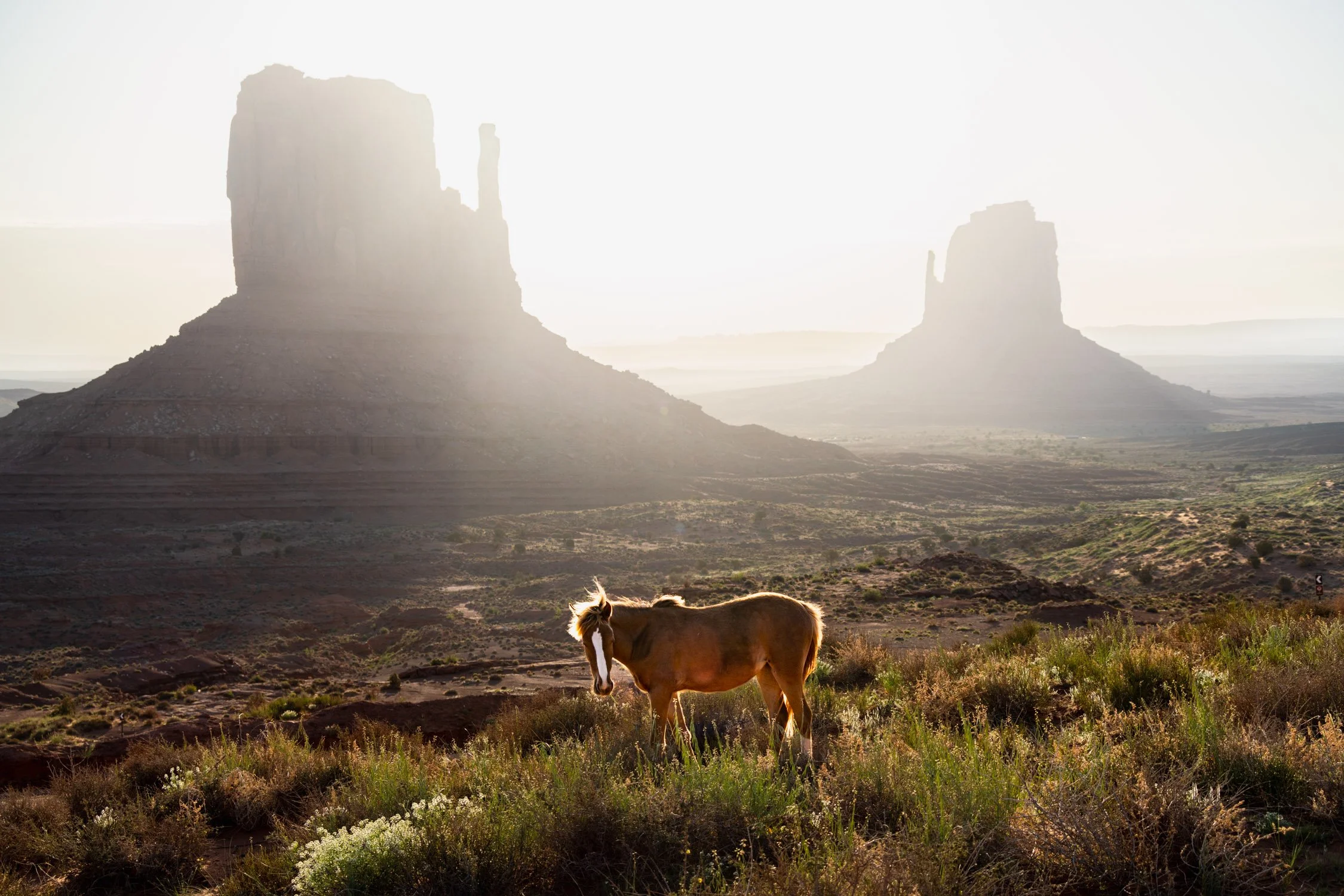
A wild horse poses candidly in front of the mittens in Monument Valley. Photo by Dalton Johnson
PROS:
Breathtaking Scenery: The towering sandstone formations and vast desert vistas offer unparalleled beauty and photo opportunities.
Cultural Immersion: Explore Navajo traditions, crafts, and storytelling at the Navajo Cultural Center, gaining insight into indigenous heritage.
Outdoor Adventures: Enjoy scenic drives, hiking trails, and stargazing nights amidst the natural splendor of Monument Valley.
Film and Art Connections: Discover the cinematic history of the valley, famously featured in Western films, and find artistic inspiration in its timeless landscapes.
Spiritual Retreat: Many visitors find solace and spiritual connection in the serene beauty and ancient energies of Monument Valley.
Accessible Year-Round: Open throughout the year, Monument Valley welcomes visitors in all seasons, each offering a unique charm.
CONS:
High Summer Temperatures: Summer months can be extremely hot, making outdoor activities challenging during midday hours.
Crowded Peak Seasons: Popular times like holidays and weekends can attract large crowds, affecting the serenity of the experience.
Limited Accommodations: Accommodations within the valley are limited, with more options available in nearby towns like Kayenta and Page.
Remote Location: The valley's remote location may require a considerable drive from major cities, adding travel time to your itinerary.
Weather Variability: Weather conditions, including occasional snowfall in winter, can impact road accessibility and outdoor activities.
Park Fees: Entrance fees and additional charges for guided tours may add to the overall cost of your visit.
What is Monument Valley?
Monument Valley is a region of the Colorado Plateau characterized by a unique collection of towering sandstone buttes, mesas, and spires. These geological formations, shaped over millions of years by wind and water erosion, create a stunning panorama that has been featured in numerous films, commercials, and works of art, earning it a place as one of the most recognizable landscapes in the United States.
Where is Monument Valley Located?
Located on the Arizona-Utah border within the Navajo Nation Reservation, Monument Valley is part of the larger Four Corners region where the states of Arizona, Utah, Colorado, and New Mexico meet. The nearest major town is Kayenta, Arizona, approximately 20 miles south of the valley.
How Do I Get to Monument Valley?
By Car: Many visitors opt to reach Monument Valley by car, enjoying the scenic drive through the rugged desert landscape. From major cities like Phoenix, Arizona, and Salt Lake City, Utah, the journey typically takes around 4-6 hours, depending on the route taken.
By Air: The nearest airports to Monument Valley are the Flagstaff Pulliam Airport in Arizona and the Grand Junction Regional Airport in Colorado. From there, you can rent a car and drive to the valley, or arrange for a shuttle service.
Tours: Various tour companies offer guided excursions to Monument Valley from nearby cities such as Flagstaff, Sedona, and Las Vegas. These tours often include transportation, guided commentary, and visits to key viewpoints and attractions.
What Are the Opening Hours of Monument Valley?
Monument Valley is open to visitors year-round. However, the specific opening hours for the park's facilities, including the visitor center and scenic drive, may vary by season. It's recommended to check the official website or contact the park directly for up-to-date information on operating hours.
Is Monument Valley Open Year-Round?
Yes, Monument Valley welcomes visitors throughout the year. Each season offers its own unique charm, from the vibrant colors of spring wildflowers to the crisp air and clear skies of winter. Keep in mind that summer months can be quite hot, while winter may bring occasional snowfall, so plan accordingly based on your preferred weather and activities.
What Are the Entrance Fees for Monument Valley?
As of the last update, the entrance fee for Monument Valley Tribal Park is $20 per vehicle, which includes up to four occupants. Additional passengers are charged an extra fee per person. It's important to note that these fees are subject to change, so it's advisable to check the official park website or contact park authorities for the latest pricing information.
Can I Visit Monument Valley Without a Tour Guide?
Yes, you can explore Monument Valley on your own without a tour guide. The park offers a scenic loop drive accessible by personal vehicles, allowing visitors to enjoy panoramic views of the iconic formations. However, guided tours can enhance your experience by providing insights into the area's geology, history, and Navajo culture. Whether you choose to go solo or join a tour, Monument Valley promises an unforgettable adventure.
What Are the Popular Attractions in Monument Valley?
The Mittens and Merrick Butte: These twin rock formations, resembling giant mittens rising from the desert floor, are among the most photographed features in Monument Valley.
John Ford's Point: Named after the legendary filmmaker who popularized Monument Valley in Western movies, this viewpoint offers a classic vantage point for capturing the valley's dramatic scenery.
The Three Sisters: A trio of slender spires that stand in striking contrast against the expansive sky, providing a picturesque backdrop for photography enthusiasts.
Artist's Point: Known for its sweeping vistas and panoramic views of Monument Valley, this overlook is a favorite among artists and nature lovers alike.
Navajo Cultural Center: Located near the visitor center, the cultural center offers insights into Navajo traditions, crafts, and storytelling, providing a deeper understanding of the area's indigenous heritage.
Hiking Trails: Several hiking trails ranging from easy to moderate difficulty levels allow visitors to explore the valley's terrain on foot, offering close-up encounters with rock formations and desert flora.
How Much Time Do I Need to Explore Monument Valley?
The amount of time you'll need to fully experience Monument Valley depends on your interests and itinerary. A typical visit for scenic driving and photo stops can be completed in a few hours, while those opting for guided tours or hiking excursions may spend a full day or more immersing themselves in the natural beauty and cultural richness of the area. Plan ahead and allocate sufficient time to savor the awe-inspiring landscapes and engage with the fascinating history of Monument Valley.
Why Visit Monument Valley?
Natural Beauty: The striking rock formations and expansive desert vistas of Monument Valley offer a visual feast for nature enthusiasts and photographers.
Cultural Heritage: Explore the rich heritage of the Navajo Nation through guided tours, cultural exhibits, and interactions with local artisans and storytellers.
Outdoor Activities: From scenic drives and hiking trails to photography opportunities and stargazing nights, Monument Valley provides endless outdoor adventures for all ages and interests.
Film and Art Connections: Discover the cinematic history of Monument Valley, famously featured in countless Western films, and find artistic inspiration amidst its timeless landscapes.
Spiritual and Reflective Spaces: Many visitors find solace and spiritual connection in the serene beauty and ancient energies of Monument Valley, making it a place of introspection and renewal.
Hiking Spots Around Monument Valley
Wildcat Trail: A popular hiking trail that offers a close-up view of the West Mitten Butte and surrounding formations, with opportunities for wildlife sightings and desert flora observation.
The Totem Pole and Yei Bi Chei: These iconic rock formations can be admired from various viewpoints along the scenic drive or experienced up close on guided hiking tours led by Navajo guides.
Hunt's Mesa: For more adventurous hikers, a trek to Hunt's Mesa rewards with unparalleled panoramic views of Monument Valley and the surrounding desert landscape, best experienced at sunrise or sunset.
Ear of the Wind Arch: Accessible via a short hike from the main road, this natural arch formation is not only a photographic gem but also holds cultural significance in Navajo mythology.
Mystery Valley: Adjacent to Monument Valley, Mystery Valley offers guided tours to ancient Anasazi ruins, petroglyphs, and hidden rock formations, adding a historical dimension to your exploration.
The totem pole deep in back of Monument Valley. Photo by Dalton Johnson
A visit to Monument Valley is an immersive journey into the heart of the American Southwest, where nature's grandeur and human history converge in a tapestry of awe-inspiring landscapes and cultural richness. Whether you come for the scenic vistas, the cultural experiences, or the outdoor adventures, Monument Valley promises an unforgettable experience that will leave a lasting impression on your soul.
Discover More Destinations

Beginner-Friendly Camping Destinations
Camping offers a wonderful opportunity to connect with nature, unwind from the hustle of daily life, and embark on memorable outdoor adventures. For beginners looking to dip their toes into the camping experience, there are numerous destinations across California and beyond that offer accessible and enjoyable camping experiences. From national parks to Bureau of Land Management (BLM) areas, here's a guide to some of the best beginner-friendly camping destinations.
Camping offers a wonderful opportunity to connect with nature, unwind from the hustle of daily life, and embark on memorable outdoor adventures. For beginners looking to dip their toes into the camping experience, there are numerous destinations across California and beyond that offer accessible and enjoyable camping experiences. From national parks to Bureau of Land Management (BLM) areas, here's a guide to some of the best beginner-friendly camping destinations.

Camping in the Alabama Hills, CA while on a motorcycle trip. Photo by Dalton Johnson
Camping in California
California is a treasure trove of natural beauty, offering a diverse range of landscapes perfect for camping enthusiasts of all levels. Here are some top picks for beginner-friendly camping in the Golden State:
Yosemite National Park: Known for its breathtaking waterfalls, granite cliffs, and lush valleys, Yosemite offers a range of campgrounds suitable for beginners. Campgrounds like Upper Pines and Lower Pines provide easy access to hiking trails and iconic landmarks like Half Dome and Yosemite Falls.
Sequoia and Kings Canyon National Parks: Home to towering sequoia trees and stunning vistas, these parks offer campgrounds such as Lodgepole Campground and Azalea Campground, ideal for first-time campers. Explore the General Sherman Tree and enjoy scenic drives through the parks.
Joshua Tree National Park: Perfect for those seeking a desert camping experience, Joshua Tree's campgrounds like Jumbo Rocks Campground and Hidden Valley Campground offer unique rock formations, starry skies, and opportunities for rock climbing and stargazing.
Big Sur: Along California's central coast, Big Sur features campgrounds like Pfeiffer Big Sur State Park Campground and Andrew Molera State Park Campground, providing access to rugged coastline views, redwood forests, and hiking trails like the iconic McWay Falls Overlook.
Angeles National Forest: Close to Los Angeles, this forest offers campgrounds like Buckhorn Campground and Chilao Campground, making it a convenient option for beginners looking for a nature escape near the city.
Camping in National Parks
National parks across the United States offer diverse camping experiences, catering to beginners and seasoned campers alike. Here are a few national park destinations perfect for beginners:
Great Smoky Mountains National Park (Tennessee/North Carolina): With campgrounds like Elkmont Campground and Cades Cove Campground, this park is known for its lush forests, scenic drives, and abundant wildlife, providing a serene camping experience.
Shenandoah National Park (Virginia): Campgrounds such as Big Meadows Campground and Mathews Arm Campground offer easy access to hiking trails, waterfalls, and panoramic views of the Blue Ridge Mountains, making it an ideal choice for beginners.
Grand Canyon National Park (Arizona): While the Grand Canyon is known for its rugged terrain, campgrounds like Mather Campground and Trailer Village RV Park provide amenities and proximity to iconic viewpoints, allowing beginners to experience the awe-inspiring beauty of the canyon.
Yellowstone National Park (Wyoming/Montana/Idaho): With campgrounds like Madison Campground and Bridge Bay Campground, Yellowstone offers geothermal wonders, wildlife sightings, and picturesque landscapes, making it a memorable camping destination for beginners.
Camping in BLM Areas
Bureau of Land Management (BLM) areas offer a unique camping experience, often with fewer crowds and a sense of solitude in nature. Here are some beginner-friendly BLM camping destinations:
Alabama Hills Recreation Area (California): Located near Lone Pine, Alabama Hills offers dispersed camping among stunning rock formations, perfect for photography, hiking, and stargazing.
Red Rock Canyon State Park (California): Nestled in the Mojave Desert, this BLM-managed park features campsites with panoramic desert views, hiking trails, and opportunities to explore colorful rock formations.
Mojave National Preserve (California): Campgrounds like Mid Hills Campground and Hole-in-the-Wall Campground provide access to desert landscapes, Joshua trees, and hiking trails suitable for beginners.
Valley of Fire State Park (Nevada): Managed by the Nevada State Parks system but adjacent to BLM land, Valley of Fire offers campsites amid red sandstone formations, petroglyphs, and scenic drives.
Best Places to Camp for Beginners
In addition to specific parks and areas, there are several general tips for finding the best camping spots for beginners:
Established Campgrounds: Look for campgrounds with amenities such as restrooms, water sources, and designated campsites to ensure a comfortable experience.
Accessible Trails: Choose campgrounds near beginner-friendly hiking trails or scenic viewpoints for easy exploration.
Safety Considerations: Research campground regulations, wildlife precautions, and weather conditions to stay safe during your camping trip.
Reservations: Consider making campground reservations, especially during peak seasons, to secure your spot and avoid any last-minute inconveniences.
Local Resources: Utilize visitor centers, park websites, and camping guides to gather information about camping regulations, activities, and nearby attractions.
Camping under the Milky Way in Kings Canyon National Park. Photo by Dalton Johnson
By choosing beginner-friendly camping destinations, you can embark on a memorable outdoor adventure while gaining confidence and skills for future camping experiences. Whether you prefer the tranquility of national parks, the rugged beauty of BLM areas, or the convenience of established campgrounds, there's a perfect camping destination waiting for you to explore.
Discover More Destinations

Essential Camping Gear
Camping, whether you're backpacking through the wilderness or enjoying a weekend at a family-friendly campground, is a cherished pastime for many outdoor enthusiasts. However, to make the most of your experience and ensure your comfort and safety, having the right gear is crucial. In this guide, we'll explore essential gear for various camping scenarios, from backpacking adventures to camping with kids.
Camping, whether you're backpacking through the wilderness or enjoying a weekend at a family-friendly campground, is a cherished pastime for many outdoor enthusiasts. However, to make the most of your experience and ensure your comfort and safety, having the right gear is crucial. In this guide, we'll explore essential gear for various camping scenarios, from backpacking adventures to camping with kids.
Camping games are key to enjoying your time disconnected from the internet. Photo by Dalton Johnson
Backpacking Essentials
For backpacking, where every ounce matters, choosing lightweight and compact gear is paramount.
Backpack: Opt for a comfortable, durable backpack with ample space for your gear. Look for adjustable straps and ventilation to enhance comfort during long hikes.
Tent: Invest in a lightweight, weather-resistant tent that accommodates your group size. Consider a freestanding design for easy setup and versatility in different terrains.
Sleeping Bag and Pad: Choose a sleeping bag suitable for the expected temperatures. A lightweight sleeping pad provides insulation and cushioning for a restful night's sleep.
Cooking Gear: A compact stove, fuel, and cookware are essential for preparing meals on the trail. Lightweight utensils and a multi-tool can also come in handy.
Water Filtration: Ensure access to clean water with a reliable water filtration system or purification tablets. Hydration is key during outdoor adventures.
Navigation Tools: Pack a map, compass, or GPS device to navigate trails confidently. Familiarize yourself with the route before setting out.
First Aid Kit: Be prepared for minor injuries with a comprehensive first aid kit that includes bandages, pain relievers, and supplies for treating blisters and cuts.
Clothing Layers: Pack moisture-wicking clothing, a waterproof jacket, and extra layers for variable weather conditions. Opt for lightweight and quick-drying fabrics.
Car Camping Comfort
Car camping allows for more comfort and convenience, as you can bring larger and heavier gear without worrying about weight restrictions.
Tent and Shelter: Choose a spacious tent with room for standing and storage. Consider additional shelter options like a canopy or screen house for relaxation and protection from sun and insects.
Sleeping Gear: Bring comfortable bedding, such as air mattresses, sleeping pads, or camping cots. Pillows and extra blankets enhance sleep quality.
Camp Kitchen: Set up a well-equipped camp kitchen with a stove, cooler, food storage containers, and utensils. Don't forget cleaning supplies for easy meal prep and cleanup.
Lighting: Illuminate your campsite with LED lanterns, headlamps, and string lights for ambiance and visibility after dark.
Seating: Pack lightweight camping chairs or portable stools for comfortable seating around the campfire or picnic area.
Entertainment: Bring entertainment options like books, games, or a portable speaker for music and relaxation.
Safety Gear: Have a fire extinguisher, smoke detector for RVs, and a basic toolkit for minor repairs or adjustments.
Camping with Kids
Camping with children requires extra preparation and gear to ensure their safety and enjoyment.
Family Tent: Choose a spacious tent with separate sleeping areas for adults and kids. Consider a tent with built-in features like pockets and dividers for organization.
Sleeping Gear: Pack sleeping bags or bedding suitable for kids' comfort and warmth. Consider portable cribs or sleeping mats for younger children.
Child-Friendly Gear: Bring outdoor essentials for kids, such as bug spray, sunscreen, hats, and comfortable clothing and footwear.
Activities + Games: Plan age-appropriate activities like nature walks, scavenger hunts, storytelling, and stargazing to keep kids engaged and entertained.
Safety Measures: Teach kids camping safety rules and have a first aid kit specifically for children's needs, including medications and items for minor injuries.
Food and Snacks: Pack a variety of snacks and easy-to-cook meals that appeal to kids' tastes. Don't forget to include treats for special camping moments.
Comfort Items: Bring familiar items like favorite toys, blankets, or stuffed animals to help children feel at ease in the camping environment.

Enjoying a morning cup of coffee in the High Sierra of California. Photo by Dalton Johnson
By prioritizing essential gear based on your camping style and needs, you can enhance your outdoor experience and create lasting memories. Whether you're embarking on a rugged backpacking adventure or enjoying a family-friendly camping trip, proper gear preparation ensures a comfortable and enjoyable time in nature.
Discover More Gear

Mastering Laundry on the Road During Van Life
Living life on the road in a van can be exhilarating, but it also comes with its unique challenges, one of which is handling laundry. When every inch of space matters, and the nearest laundromat might be miles away, knowing how to keep your clothes clean and fresh becomes a crucial part of van life. In this guide, we'll explore various strategies and tips to help you conquer laundry day while living your adventurous van life.
Living life on the road in a van can be exhilarating, but it also comes with its unique challenges, one of which is handling laundry. When every inch of space matters, and the nearest laundromat might be miles away, knowing how to keep your clothes clean and fresh becomes a crucial part of van life. In this guide, we'll explore various strategies and tips to help you conquer laundry day while living your adventurous van life.

Cooking dinner outside after laundry day in Lake Tahoe. Photo by Dalton Johnson
Laundry Options for Van Life
Portable Washing Machines: Invest in a compact, portable washing machine that doesn't require a fixed water connection. These machines are designed to be lightweight and energy-efficient, making them perfect for van life. Simply load your clothes, add water and detergent, and let the machine do the work.
Hand Washing: For smaller loads or delicate garments, hand washing is a viable option. Use a collapsible basin or bucket, fill it with water and detergent, and agitate the clothes manually. Rinse thoroughly and hang to dry.
Laundromats: When you're near urban areas or towns, laundromats are a convenient choice. Plan your route to include stops near laundromats, especially if you have a lot of laundry to do.
Campground Facilities: Many campgrounds offer laundry facilities for campers. Take advantage of these amenities during your stays at campgrounds.
How to Wash Your Clothes During Van Life
Gather Your Supplies: Before starting your laundry routine, gather your supplies including detergent, a portable washing machine if you have one, a collapsible basin for hand washing, and a clothesline for drying.
Water Source: Ensure you have access to a water source for washing. This could be a campground tap, a portable water container, or even a nearby river or lake if you're practicing eco-friendly washing methods.
Separate Your Clothes: Sort your laundry into categories such as whites, colors, and delicates to avoid color bleeding and damage during washing.
Washing Process: Follow the instructions for your chosen washing method. If using a portable machine, fill it with water, add detergent, and select the appropriate cycle. For hand washing, agitate the clothes in the soapy water, rinse thoroughly, and wring out excess water.
Drying: Hang your clothes to dry either outdoors on a clothesline or inside your van using hooks or a drying rack. Ensure good ventilation to prevent mildew or musty odors.
Van Life Clothing Wash Tips
Use Quick-Drying Fabrics: Opt for clothing made from quick-drying fabrics such as merino wool or synthetic blends. These materials dry faster, reducing the time and effort needed for laundry.
Pack Light: Minimize the amount of clothing you carry to reduce the frequency of laundry. Choose versatile pieces that can be mixed and matched for different outfits.
Plan Ahead: Schedule your laundry days strategically. Take advantage of campground facilities or plan stops near laundromats when needed.
Stain Treatment: Deal with stains promptly to prevent them from setting. Carry a stain remover pen or spray for quick spot treatments.
Dry Shampoo and Fresheners: Extend the time between clothing washes by using dry shampoo for hair and fabric fresheners for clothes.
Dealing with Dirty Clothes During Van Life
Storage Solutions: Use collapsible laundry bags or baskets to separate dirty clothes from clean ones. This helps maintain organization and prevents odors from spreading.
Regular Cleaning: Clean your laundry storage containers regularly to prevent odors and mold growth.
Air Out Clothes: If clothes aren't extremely dirty, hang them outside or near an open window to air out and refresh.
Use Scented Sachets: Place scented sachets or dryer sheets in your storage containers to keep clothes smelling fresh.
Visiting Laundromats During Van Life
Choose Off-Peak Hours: Visit laundromats during off-peak hours to avoid crowds and long wait times.
Bring Entertainment: Laundry time can be a great opportunity to catch up on reading, work, or entertainment. Bring a book, laptop, or tablet to pass the time.
Stay Organized: Sort your laundry before arriving at the laundromat to streamline the washing process.
Pack Essentials: Carry essentials such as detergent pods, fabric softener, and quarters for the machines.
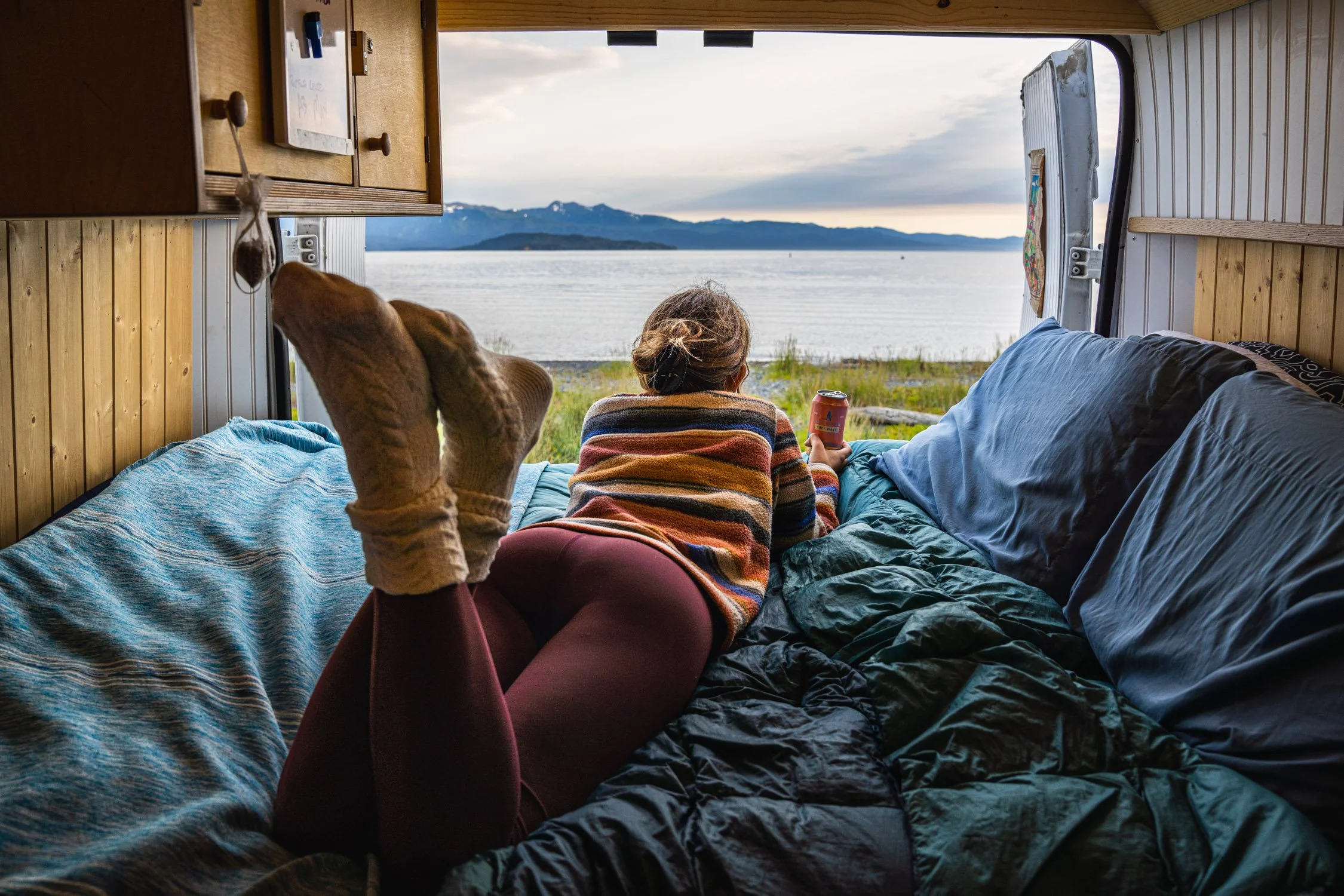
Enjoying clean sheets and a view after a day of chores during a van road tripping in Alaska. Photo by Dalton Johnson
Living in a van offers unparalleled freedom and adventure, but it also requires practical solutions for everyday tasks like laundry. By incorporating portable washing methods, strategic planning, and efficient storage techniques, you can master laundry day in the van life. Embrace the simplicity and resourcefulness that van life encourages, and enjoy the journey without worrying about dirty clothes.
Discover more Adventures
Top Tips for a Clean and Tidy Space During Van Life
Living in a van offers a unique sense of freedom and adventure, but it also presents challenges when it comes to staying organized. From managing limited space to keeping everything tidy on the move, van life demands a strategic approach to organization. Whether you're a seasoned nomad or just starting your journey, mastering organization in van life is essential for a comfortable and stress-free experience. In this article, we'll explore the best tips for staying organized in a van, covering everything from storage solutions to cleanliness and efficiency.
Living in a van offers a unique sense of freedom and adventure, but it also presents challenges when it comes to staying organized. From managing limited space to keeping everything tidy on the move, van life demands a strategic approach to organization. Whether you're a seasoned nomad or just starting your journey, mastering organization in van life is essential for a comfortable and stress-free experience. In this article, we'll explore the best tips for staying organized in a van, covering everything from storage solutions to cleanliness and efficiency.

A chaotic van while packing for a backpacking trip. Photo by Dalton Johnson
Embrace Minimalism
The first rule of van life organization is to embrace minimalism. With limited space available, every item you carry should serve a purpose and contribute to your overall comfort and well-being. Before hitting the road, carefully assess your belongings and prioritize essentials. Opt for multi-functional items whenever possible to save space and reduce clutter. Remember, less is often more in the world of van life.
Utilize Vertical Space
In a van, vertical space is your best friend. Make the most of walls and overhead areas by installing shelves, hooks, and organizers. Vertical storage not only maximizes space but also keeps items easily accessible. Use hanging organizers for clothing, shoes, and accessories, and install shelves or racks for kitchen supplies, books, and electronics. Wall-mounted baskets or bins can also hold smaller items like toiletries or snacks.
Invest in Modular Furniture
Investing in modular furniture can significantly improve organization in your van. Look for collapsible or foldable options that can be easily stowed away when not in use. For example, a folding table can serve as a dining area or workspace and then be compactly stored when you need more space. Similarly, modular storage units with adjustable shelves or drawers allow for customization based on your needs.
Optimize Kitchen Organization
Maintaining a well-organized kitchen is crucial for van life. Use stackable containers or bins to store dry goods, utensils, and cooking supplies. Magnetic spice racks can be mounted on the wall to save drawer space, while collapsible silicone cookware is perfect for compact storage. Consider a compact fridge/freezer combo or a portable cooler to keep perishables fresh. Keep cleaning supplies handy for quick tidying up after meals.
Create Zones for Different Functions
Creating designated zones within your van for different functions helps maintain order and efficiency. Designate areas for sleeping, dining, working, and storage. Use curtains or dividers to separate these zones for privacy and organization. Keep related items together, such as storing outdoor gear near the entrance for easy access during adventures.
Implement Daily Cleaning Routines
A clean van not only looks better but also promotes a healthier and more comfortable living environment. Implement daily cleaning routines to prevent clutter and maintain hygiene. Start with a quick tidying session each morning, putting away items and wiping down surfaces. Use storage containers or bins to corral loose items and prevent them from shifting during travel. Regularly sweep or vacuum floors and upholstery to keep dust and debris at bay.
Prioritize Essential Storage Solutions
When it comes to storage solutions, prioritize essentials that optimize space and accessibility. Consider under-bed storage for bulky items like bedding, outdoor gear, or spare supplies. Utilize storage ottomans or benches with hidden compartments for additional seating and storage. Collapsible crates or bins can be stacked and stored when not in use, providing flexibility for varying cargo.
Utilize External Storage Options
Maximize storage capacity by utilizing external options such as roof racks, hitch-mounted cargo carriers, or bike racks. These solutions are ideal for bulky items like bicycles, kayaks, or camping gear that may not fit inside the van. However, ensure proper securing and weight distribution to maintain vehicle safety and stability.
Stay Organized on the Road
Organization doesn't stop when you're on the move. Secure loose items before hitting the road to prevent shifting and potential damage. Invest in non-slip mats or drawer liners to keep items in place during travel. Use bungee cords or cargo nets to secure larger items like luggage or gear. Regularly check and reorganize storage areas to maintain order and prevent clutter buildup.
Embrace Digital Organization Tools
In the digital age, technology can be a valuable ally in van life organization. Embrace digital tools and apps for tasks such as budgeting, trip planning, and inventory management. Use cloud storage for important documents and photos to free up physical space. Consider e-books or audiobooks to minimize the need for bulky books while still enjoying reading on the road.
Cultivate a Mindset of Adaptability
Above all, cultivate a mindset of adaptability in van life organization. Flexibility and creativity are key when dealing with limited space and changing environments. Be open to trying new organizational solutions and adjusting as needed based on your experiences and evolving needs. Embracing a minimalist lifestyle and focusing on what truly adds value to your van life experience will ultimately lead to a more organized and fulfilling journey.
Relaxing in bliss with a clean van in Alaska. Photo by Dalton Johnson
Mastering organization in van life requires a combination of strategic planning, practical solutions, and a mindset geared toward simplicity and adaptability. By embracing minimalism, optimizing storage solutions, maintaining cleanliness, and staying organized both on and off the road, you can create a comfortable and efficient living space in your van. With these tips as your guide, you'll be well-equipped to enjoy the freedom and adventure of van life while staying organized and stress-free.
Discover more Adventures

Van Life Internet Options
In the age of digital connectivity, staying connected to the internet while on the road has become a crucial aspect of modern travel, especially for those living the van life. Whether you're a digital nomad, a remote worker, or simply want to stay in touch with friends and family, having reliable internet access in your van can enhance your experience and make life on the road more enjoyable. In this article, we'll explore various van life internet options, including Starlink, hotspots, and other solutions to help you stay connected wherever your adventures take you.
In the age of digital connectivity, staying connected to the internet while on the road has become a crucial aspect of modern travel, especially for those living the van life. Whether you're a digital nomad, a remote worker, or simply want to stay in touch with friends and family, having reliable internet access in your van can enhance your experience and make life on the road more enjoyable. In this article, we'll explore various van life internet options, including Starlink, hotspots, and other solutions to help you stay connected wherever your adventures take you.
Watching a sunset in Alabama Hills, CA with Starlink running in the background. Photo by Dalton Johnson
The Importance of Internet Access in Van Life
For many van lifers, having a stable internet connection is essential for several reasons:
Remote Work and Digital Nomadism: With the rise of remote work and digital nomad lifestyles, reliable internet access is crucial for staying productive and connected to work tasks while traveling.
Communication: Staying in touch with friends, family, and fellow travelers through social media, messaging apps, and video calls is easier with a reliable internet connection.
Navigation and Information: Accessing maps, weather forecasts, travel guides, and other online resources can enhance your road trip planning and navigation.
Entertainment: Streaming music, movies, and TV shows, as well as playing online games, can make long drives or downtime more enjoyable.
Van Life Internet Options
1. Starlink
Starlink, a satellite internet service provided by SpaceX, has gained popularity among van lifers and remote workers due to its global coverage and relatively high speeds, even in remote areas. Here are some key points about Starlink for van life internet:
Global Coverage: Starlink's satellite network provides internet coverage in many remote and rural areas where traditional ISPs may not reach.
Easy Installation: The Starlink kit includes a satellite dish, modem, and router, making it relatively easy to set up and use in your van.
High Speeds: While actual speeds may vary depending on location and network congestion, Starlink can provide speeds comparable to or even better than traditional broadband connections.
Portability: The compact size of Starlink equipment makes it suitable for van life, allowing you to take it with you wherever you go.
Pros:
Global Coverage: Provides internet access in remote and rural areas where traditional ISPs may not reach.
Relatively High Speeds: Offers speeds comparable to or better than traditional broadband connections.
Easy Installation: The kit includes all necessary equipment for setup.
Portability: Compact size allows for easy transport and use in different locations.
Cons:
Cost: Initial setup costs and monthly subscription fees can be relatively high.
Dependent on Weather: Satellite-based services may experience interruptions during severe weather conditions.
Equipment Limitations: Requires clear line-of-sight to the sky, which may be challenging in densely forested or urban areas.
2. Mobile Hotspots
Mobile hotspots, also known as MiFi devices or portable routers, are another popular choice for van lifers looking for on-the-go internet access. Here's what you need to know about mobile hotspots:
Cellular Connectivity: Mobile hotspots use cellular networks (e.g., 4G LTE, 5G) to provide internet access to connected devices.
Data Plans: You'll need a data plan from a mobile carrier to use a mobile hotspot. Consider choosing a plan with sufficient data allowance for your usage needs.
Wi-Fi Connectivity: Once set up, a mobile hotspot creates a Wi-Fi network that you can connect your devices to, such as laptops, smartphones, and tablets.
Portability: Most mobile hotspots are compact and battery-powered, making them easy to carry and use in your van or while exploring outdoors.
Pros:
Portability: Compact and battery-powered, making them easy to carry and use anywhere.
Cellular Connectivity: Relies on cellular networks, providing internet access in most areas with cellular coverage.
Easy Setup: Generally simple to set up and connect devices to.
Flexible Data Plans: Offers various data plans to suit different usage needs.
Cons:
Data Limits: Limited data allowances on plans, with potential data throttling or extra charges for exceeding limits.
Network Congestion: Speeds may slow down during peak usage times or in congested areas.
Dependent on Coverage: Reliability and speed depend on the strength of the cellular network in the area.
3. Campground Wi-Fi and Public Hotspots
When parked at campgrounds or staying in areas with public Wi-Fi access, you can leverage these networks for internet connectivity. Here are some considerations:
Campground Wi-Fi: Many campgrounds and RV parks offer Wi-Fi access to their guests. While convenient, the quality and speed of campground Wi-Fi can vary significantly.
Public Hotspots: Public places such as cafes, libraries, and rest areas may also provide free or paid Wi-Fi access. Keep in mind that public hotspots may have security risks, so use a VPN (Virtual Private Network) for secure browsing.
Pros:
Availability: Accessible at campgrounds, RV parks, cafes, libraries, and other public places.
Cost: Some locations offer free Wi-Fi access, reducing internet expenses.
Convenience: Provides connectivity without requiring additional equipment or data plans.
Cons:
Variable Quality: Quality and speed of Wi-Fi can vary significantly depending on location and network capacity.
Security Risks: Public Wi-Fi networks may pose security risks, requiring precautions such as using a VPN.
Limited Range: Coverage is limited to the immediate area of the hotspot, making it less suitable for remote locations.
4. Cellular Data Plans
Using your smartphone or a dedicated hotspot device with a cellular data plan is a reliable way to stay connected on the road. Consider the following:
Network Coverage: Choose a mobile carrier with good coverage in the areas you plan to travel. Research coverage maps and user reviews to assess network reliability.
Data Usage: Depending on your data needs, select a data plan that offers enough data allowance for streaming, video calls, work tasks, and other online activities.
Unlimited Plans: Some mobile carriers offer unlimited data plans, but be aware that these plans may have data throttling or deprioritization after reaching a certain usage threshold.
Pros:
Widespread Coverage: Offers internet access in most areas with cellular coverage.
Reliability: Generally reliable connection for everyday internet usage.
Unlimited Plans: Some carriers offer unlimited data plans for heavy users.
Cons:
Data Caps: Unlimited plans may have data caps or throttle speeds after reaching a certain usage threshold.
Cost: Monthly fees for data plans can add up, especially for high-data usage.
Network Congestion: Speeds may vary depending on network congestion and signal strength.
5. Satellite Internet Providers
In addition to Starlink, there are other satellite internet providers that cater to remote and rural areas. These providers may offer options suitable for van life, although availability and performance can vary.
Equipment and Installation: Satellite internet typically requires a satellite dish and professional installation. Consider the space and power requirements for such equipment in your van.
Pros:
Global Coverage: Provides internet access in remote areas where other options may not be available.
Reliability: Stable connection even in areas with limited infrastructure.
Consistent Speeds: Generally offers consistent speeds regardless of location.
Cons:
Equipment and Installation: Requires satellite dish installation, which may be complex and costly.
Latency: Satellite internet can have higher latency compared to other options, affecting real-time applications like gaming or video calls.
Weather Dependence: Like Starlink, satellite-based services may be affected by weather conditions.
Tips for Optimizing Van Life Internet
Regardless of the internet option you choose, here are some tips to optimize your van life internet experience:
Positioning: For satellite-based solutions like Starlink, ensure clear line-of-sight to the sky for optimal signal reception.
Antennas and Boosters: Consider using external antennas or signal boosters to improve cellular reception and Wi-Fi range in your van.
Data Management: Monitor your data usage regularly to avoid exceeding plan limits or incurring additional charges. Use data-saving features and apps when possible.
Security: Protect your internet connection with strong passwords and consider using a VPN for secure browsing, especially when using public Wi-Fi networks.
Backup Plans: Have a backup internet option or offline activities (e.g., downloaded movies, offline maps) in case of connectivity issues or network outages.
Headed to remote Arizona and using Starlink to stay connected while camping. Photo by Dalton Johnson
Staying connected to the internet while living the van life opens up a world of possibilities for remote work, communication, navigation, and entertainment on the road. Whether you opt for satellite-based solutions like Starlink, mobile hotspots, campground Wi-Fi, or cellular data plans, choosing the right van life internet option can enhance your travel experiences and keep you connected wherever your adventures take you. Evaluate your connectivity needs, research available options, and implement best practices to enjoy seamless internet access during your van life journey.
Discover more Adventures

Van Life Bathroom Options
Living in a van can be an exhilarating and liberating experience, allowing individuals to embrace a nomadic lifestyle and explore the world on their terms. However, one of the most commonly asked questions about van life is how to handle basic needs like using the bathroom. In this article, we will delve into various solutions and strategies for managing bathroom needs while living in a van.
Living in a van can be an exhilarating and liberating experience, allowing individuals to embrace a nomadic lifestyle and explore the world on their terms. However, one of the most commonly asked questions about van life is how to handle basic needs like using the bathroom. In this article, we will delve into various solutions and strategies for managing bathroom needs while living in a van.
Soaking in the rainbow views while camping in dispersed camping land outside of Moab, UT. Photo by Dalton Johnson
Understanding the Challenge
When transitioning to van life, it's crucial to acknowledge the unique challenges presented by limited space and resources, especially concerning bathroom facilities. Unlike traditional homes with fixed plumbing systems, vans require creative approaches to ensure hygiene and comfort.
Portable Toilets
One of the most popular solutions for van lifers is the portable toilet. These compact, self-contained units are designed for mobile use and come in various sizes and styles. Some portable toilets resemble traditional flush toilets, complete with a water tank and flushing mechanism, while others are simpler designs with a waste collection chamber.
When choosing a portable toilet for van life, factors to consider include size, capacity, ease of cleaning, and odor control. Models with sealed waste tanks and deodorizing chemicals help minimize unpleasant smells, enhancing overall comfort during extended travels.
DIY Composting Toilets
For environmentally conscious van dwellers, DIY composting toilets offer a sustainable alternative. These systems convert human waste into nutrient-rich compost, reducing the ecological footprint of van life. DIY composting toilets typically consist of a composting chamber, ventilation system, and organic material like peat moss or sawdust to aid decomposition.
Although DIY composting toilets require regular maintenance and monitoring, they provide a cost-effective and eco-friendly solution for long-term van living. Proper ventilation and odor control are essential aspects of maintaining a pleasant bathroom experience with composting toilets.
Public Restrooms
While on the road, van lifers often rely on public restrooms for convenient access to facilities. Gas stations, parks, campgrounds, and recreational areas typically offer restroom facilities that van dwellers can utilize during their travels. However, it's essential to be mindful of hygiene practices and cleanliness standards when using public restrooms, especially in remote or less maintained locations.
Nature's Call: Outdoor Options
Embracing the great outdoors is a fundamental aspect of van life, and nature provides ample opportunities for bathroom breaks. When camping in wilderness areas or secluded spots, van dwellers can practice Leave No Trace principles by digging cat holes for disposing of human waste. Cat holes should be dug at least 6-8 inches deep and covered after use to prevent contamination and minimize environmental impact.
Additionally, portable privacy shelters or pop-up tents can offer a degree of privacy and comfort when using outdoor bathroom options. Carrying biodegradable toilet paper and sanitizing wipes ensures responsible waste disposal and hygiene practices while enjoying nature.
Gym Memberships and Recreation Centers
For van lifers seeking regular access to showers and more extensive bathroom facilities, gym memberships and recreation centers are valuable investments. Many fitness facilities offer affordable memberships with access to showers, toilets, and amenities like sauna or steam rooms. This option not only promotes personal hygiene but also provides opportunities for exercise and social interaction during van travels.
Mobile Shower Solutions
In addition to managing bathroom needs, maintaining personal hygiene, including showering, is essential for van dwellers. Mobile shower solutions cater to this requirement, offering compact shower units that can be installed in vans or used externally. These systems typically include a water reservoir, pump, showerhead, and drainage setup.
Van lifers can choose between DIY shower setups using water storage containers or invest in portable camping showers with built-in heating elements for warm water. Solar showers harnessing sunlight to heat water are eco-friendly options for off-grid living, ensuring comfortable showers without excessive energy consumption.
Hygiene Tips for Van Life
Regardless of the chosen bathroom solution, adopting good hygiene practices is paramount for health and comfort during van life. Here are some essential tips:
Regular Cleaning: Maintain cleanliness by regularly cleaning and sanitizing bathroom facilities, including portable toilets and shower areas.
Proper Waste Disposal: Dispose of waste responsibly, following local regulations and environmental guidelines for waste management.
Water Conservation: Conserve water by using efficient showering techniques, capturing rainwater for non-potable uses, and minimizing water wastage.
Hygiene Supplies: Stock up on essential hygiene supplies like toilet paper, hand sanitizer, soap, and disinfectant wipes for convenient use on the go.
Mindful Camping: Choose campsites with designated restroom facilities whenever possible and practice Leave No Trace principles to minimize environmental impact.
Van life in National Parks is hard, but Grand Teton National Park is pretty sweet. Photo by Dalton Johnson
Living in a van offers unparalleled freedom and adventure, but managing bathroom needs requires thoughtful planning and adaptation. Whether utilizing portable toilets, embracing outdoor options, or accessing public facilities, van lifers can find practical solutions for maintaining hygiene and comfort on their nomadic journey. By prioritizing sustainability, hygiene practices, and responsible waste management, van dwellers can fully enjoy the van life experience while minimizing environmental impact.
Discover more Adventures

Parking Hacks For Van Lifers
Living in a van offers a unique blend of freedom and flexibility, allowing you to explore diverse landscapes and experience a nomadic lifestyle. One of the key considerations for van dwellers is where to park for the night or longer periods. In this article, we'll explore various options for van life parking, from designated campsites to stealth camping spots, and provide insights into the best places to park for van life.
Living in a van offers a unique blend of freedom and flexibility, allowing you to explore diverse landscapes and experience a nomadic lifestyle. One of the key considerations for van dwellers is where to park for the night or longer periods. In this article, we'll explore various options for van life parking, from designated campsites to stealth camping spots, and provide insights into the best places to park for van life.
Parking on BLM land is great when you can have a fire. Photo by Dalton Johnson
Understanding Van Life Parking Options
When it comes to parking your van for living purposes, several factors come into play. These include legality, safety, amenities, and convenience. Let's delve into different parking options:
Designated Campgrounds: Many national parks, state parks, and private campgrounds offer designated spots for RVs and vans. These areas typically come with amenities like restrooms, water hookups, and sometimes even electricity. While they provide a comfortable stay, they often come with fees and may require reservations, especially during peak seasons.
BLM Land: The Bureau of Land Management (BLM) manages vast expanses of public land across the United States. These lands often permit dispersed camping, also known as boondocking, where you can park your van for free or at minimal cost. However, amenities are usually limited, and you must adhere to Leave No Trace principles to protect the environment.
National Forests: Similar to BLM land, national forests offer opportunities for dispersed camping. Check with the local ranger station for guidelines and designated camping areas. Some national forests may have developed campgrounds with varying amenities.
Rest Areas and Truck Stops: Rest areas along highways and truck stops can be convenient for overnight stays. They often have facilities like restrooms, picnic areas, and sometimes showers. However, they can be noisy and busy, especially during peak travel times.
Public Parking Lots: Some cities allow overnight parking in public lots, especially in areas where van life is common. Be sure to check local regulations and signs for any restrictions or permits required.
Stealth Camping: This refers to parking in urban or residential areas without drawing attention. It's essential to be discreet, respectful of private property, and mindful of local ordinances. Avoid overstaying your welcome and leave no trace of your presence.
Pros and Cons of Van Life Parking Options
Designated Campgrounds:
Pros:
Amenities like restrooms, water hookups, and sometimes electricity.
Safety and security measures.
Opportunities to socialize with other campers.
Cons:
Fees and reservation requirements, especially during peak seasons.
Limited availability in popular destinations.
BLM Land and National Forests (Dispersed Camping):
Pros:
Free or low-cost camping.
Remote and scenic locations.
Flexibility and solitude.
Opportunities for outdoor activities like hiking and wildlife viewing.
Cons:
Limited amenities (no water or hookups).
Adherence to Leave No Trace principles required.
Availability may vary depending on regulations and seasons.
Rest Areas and Truck Stops:
Pros:
Convenient for quick overnight stays during road trips.
Facilities like restrooms, picnic areas, and sometimes showers.
Safety due to frequent traffic and surveillance.
Cons:
Noise and potential congestion, especially during peak travel times.
Limited amenities for extended stays.
Not ideal for a quiet or scenic camping experience.
Public Parking Lots:
Pros:
Accessible in urban areas and along highways.
Convenience for short stops or urban exploration.
Potential for amenities like restrooms nearby.
Cons:
Regulations and restrictions may apply (time limits, permits).
Limited space and competition for parking spots.
Noise and urban environment may not be suitable for extended stays.
Stealth Camping (Urban or Residential Areas):
Pros:
Discreet and low-profile camping.
Access to urban amenities like restaurants, shops, and services.
Flexibility to park closer to attractions or activities.
Cons:
Legal concerns and risk of fines for unauthorized parking.
Need for discretion and respect for local residents.
Lack of amenities (may require using public facilities).
Best Places to Park for Van Life
BLM and National Forests: These are top choices for van dwellers seeking solitude and scenic views. Research specific areas that allow dispersed camping and follow guidelines to preserve the environment.
State Parks: Some state parks offer affordable camping options with beautiful surroundings. Check availability and reservation requirements in advance.
RV Parks and Campgrounds: While they may come with a price tag, RV parks often provide amenities like showers, laundry facilities, and hookups, making them ideal for longer stays.
Coastal Areas: Beachside parking areas or coastal campgrounds offer stunning views and recreational activities like swimming, surfing, and beachcombing. Be aware of any permits or fees.
Small Towns and Rural Areas: These places often have more relaxed parking regulations compared to urban areas. Look for quiet streets, public parks, or community centers that may allow overnight parking.
Community and Recreation Centers: Some municipalities permit overnight parking for self-contained vehicles like vans in designated areas. Check with local authorities for rules and availability.
Parking Hacks for Van Life
Use Apps and Websites: Utilize apps like iOverlander, Campendium, and AllStays for finding camping spots, reviews, and amenities. Websites like Freecampsites.net also provide valuable information on free camping options.
Plan Ahead: Research parking options along your route before starting your journey. Have backup spots in mind in case your preferred location is full or unavailable.
Be Flexible: Embrace spontaneity but remain adaptable. Be prepared to change plans if needed, especially during peak travel seasons or inclement weather.
Practice Safety: Choose well-lit and secure areas for overnight stays. Trust your instincts and avoid parking in isolated or questionable locations.
Respect Local Regulations: Follow posted signs, adhere to parking time limits, and obtain necessary permits or passes when required. Respect private property and avoid parking in prohibited areas.
Connect with the Community: Engage with other van dwellers, join online forums or social media groups, and seek advice from experienced travelers. They can offer valuable insights and recommendations for parking locations.
Cooking breakfast while camping in dispersed camp grounds of Sedona. Photo by Dalton Johnson
Finding suitable parking when living in a van involves a mix of research, planning, and adaptability. Whether you prefer remote wilderness spots, beachside campsites, or urban stealth camping, there are diverse options to suit your preferences and needs. By understanding local regulations, practicing responsible camping ethics, and utilizing available resources, you can navigate the van life parking landscape and enjoy the freedom of life on the road.