

"She Beat The Men With Feet" a Poem by Dalton Johnson
"She Beat The Men With Feet" is a poem by Dalton Johnson published in his first book 51 Poems For Humankind To Think About. This article also has a video of Dalton reading aloud his poem. You can purchase this book on Dalton Johnson's website or on Amazon.
SHE BEAT THE MEN WITH FEET
When pen and sheet collide in love so smooth The tip so wet in ink so bold so blue.
The art must glide from mind to hand to wood.
As thought will smudge the skies of blue, I fall With you. To beach and sea we walk the line That sketch the mind more blue. For pen in hand
Can free the soul. Let man be man for man
Will hold so true his love of love so blue.
The pen, the pen, the pen, they shout, “Ol’ Blue!”
With joy and wrath and love and fear. For she So bright she dare to bring the point of lead To sheet to write the words of men in sin.
Order Your Copy Today: Buy on Amazon
Order Your Signed Copy Today:
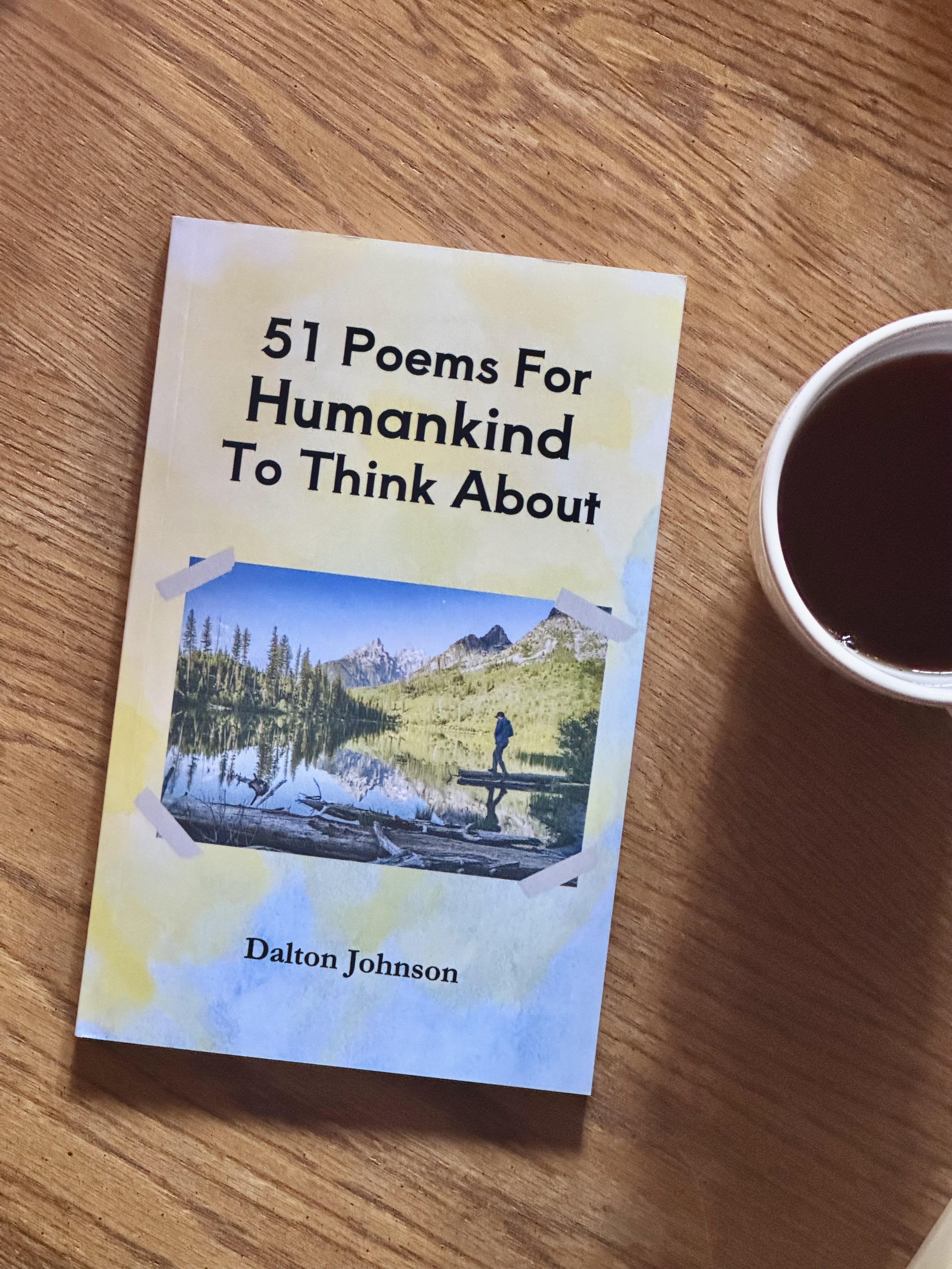
Get your signed copy of 51 Poems For Humankind To Think About. Dalton Johnson's first book of poetry. These 51 poems are his critique of American hustle culture told from the perspective of a young man returning to the world after years of living off the grid on less than $500 a month.
These poems capture the internal battle of consumerism, American greed, humans loss of connection with the natural world, and pokes fun at some of the absurd cultural norms of adulting. Each poem touches on different parts of American's superficial society in hopes of promoting the change from group thought to individuality. For it is at the individual level Johnson belives you unlock your true self.
As you read these poems take some time to think about what stirs inside of yourself to find where you can change and grow into the human you want to be today and tomorrow.
Please Note: Signed paperback will be shipping the middle of April, 2025 and should arrive by the end of April

The Creative Cycle All Adventure Photographers Need To Know
Every successful adventure photographer—from the earliest pioneers scaling granite walls to today’s social-media storytellers—follows a simple yet powerful creative cycle. It’s a repeating loop of creation, exposure, monetization, and reinvestment. When you understand each stage and learn how to navigate it intentionally, your craft improves, your earnings grow, and your professional network expands.
Every successful adventure photographer—from the earliest pioneers scaling granite walls to today’s social-media storytellers—follows a simple yet powerful creative cycle. It’s a repeating loop of creation, exposure, monetization, and reinvestment. When you understand each stage and learn how to navigate it intentionally, your craft improves, your earnings grow, and your professional network expands.
I call this process The Adventure Photographer’s Career Cycle, and it has four essential turns: building a body of work, marketing that work, selling shoots and licensing images, and then doing it all over again—each time at a higher level. Let’s explore each phase in depth and discover how you can move fluidly through the cycle to build a thriving adventure photography career.

Climbing the Grand Teton with Arctery’x Ambassador Beau Martino. Photograph by Dalton Johnson, follow him on Instagram
Building a Body of Work
Your journey begins with the photographs themselves. Before you can sell a story or pitch a brand, you need compelling images that demonstrate your vision, technical skill, and ability to handle the challenges of outdoor environments.
Imagine driving through a winding mountain pass before dawn, camera in hand, chasing the perfect pre-sunrise light. You scout a ridge overlooking a glacial lake. The air is crisp, the wind whispers through the pines, and every breath feels like you’re stepping into a new world. You set up your tripod, tweak your composition, and wait. When the first pink rays strike the snow, you press the shutter.
Moments like these form the backbone of your portfolio. They capture authentic adventure—the kind of visceral, emotional experiences clients and audiences crave. Over time, you’ll collect dozens, then hundreds, of images that showcase your signature style: whether that’s dramatic wide-angle vistas, intimate environmental portraits of climbers, or dynamic action shots on whitewater rapids.
But collecting images alone isn’t enough. You must also curate thoughtfully. A strong portfolio balances variety with cohesion. Group your best work by activity—rock climbing in the Sierra Nevada, kayaking in the Boundary Waters, or alpine ski tours in the Rockies—so viewers instantly grasp what you do and where your expertise lies.
If you’re just starting or need fresh inspiration, The Adventure Photographer’s Playbook by Dalton Johnson offers guided exercises and shot-list templates to help you plan, execute, and refine meaningful photo projects. These tools ensure your body of work grows more intentional and professional with every outing.
👉 Download the Playbook
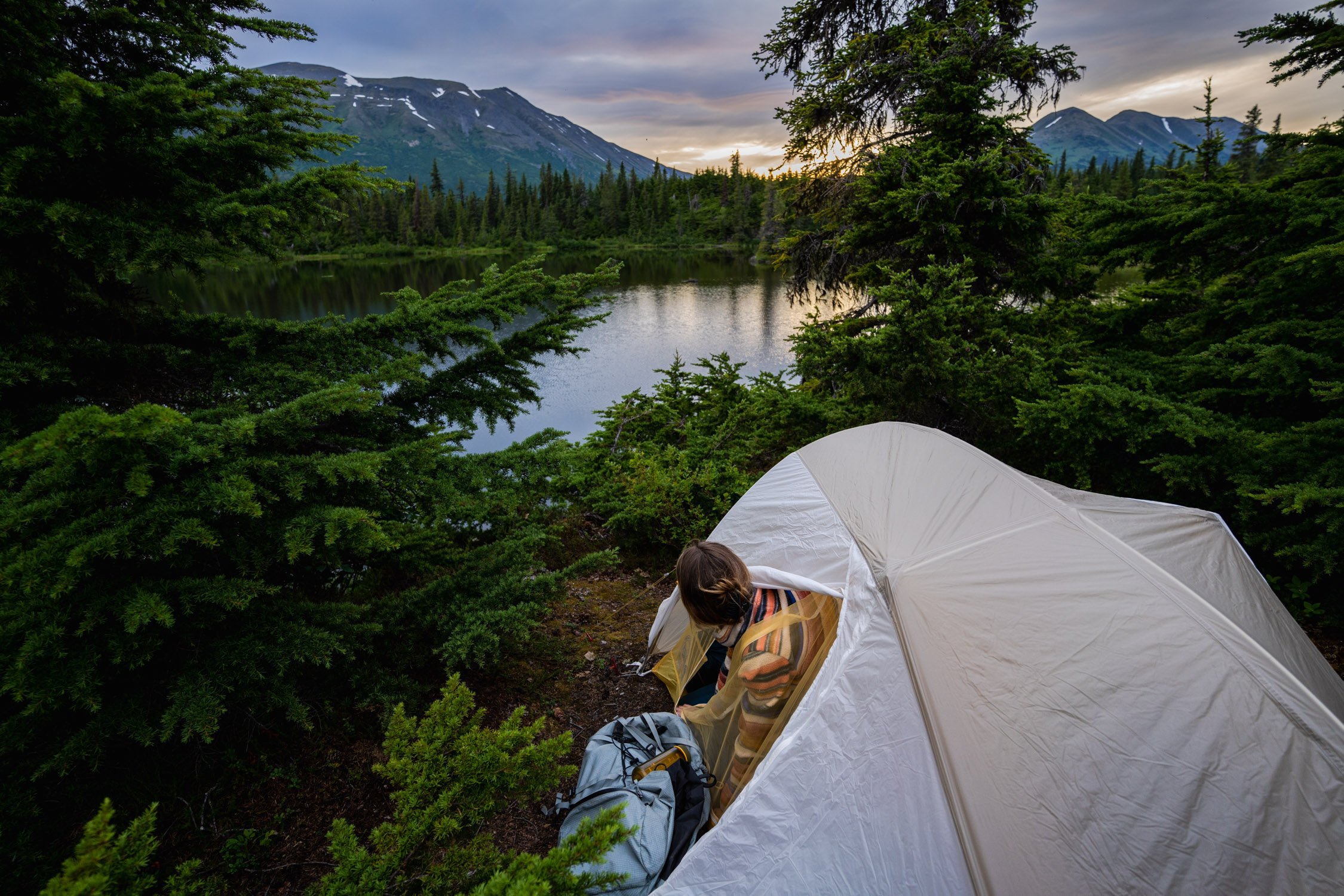
Kristin catching a glance of sunset while escaping the bugs of Alaska inside the tent. Photograph by Dalton Johnson, follow him on Instagram
Marketing Your Work
Once you’ve assembled images that showcase your unique perspective, the next challenge is visibility. Adventure photography doesn’t thrive in a vacuum—your photographs need an audience, and that audience needs to include editors, brand managers, and potential collaborators.
Start by creating a clean, mobile-optimized website that places your work front and center. Avoid clutter: a full-screen slideshow of your most striking images can be more compelling than multiple galleries buried under dropdown menus. Each photograph should be accompanied by a brief caption that provides context—where it was shot, the story behind the shot, and the technical details.
Parallel to your website, develop a social media strategy tailored to platforms like Instagram, TikTok, and LinkedIn. Share not only polished final images, but also behind-the-scenes glimpses: your camera setup by a roaring campfire, early-morning coffee on the trail, or a quick video showing how you rigged your harness for a cliffside portrait. Storytelling builds trust. When followers see the person behind the lens living the adventure, they connect with you on a deeper level.
Email outreach remains one of the most effective marketing tools. Rather than sending generic blasts, craft personalized messages to editors and brand contacts. Reference a recent article they published or a campaign they ran, and then briefly explain how your work complements their goals. Attaching three of your very best, thematically relevant images can prompt editors to request a full gallery or assign a shoot.
Throughout this phase, consistency is key. The Playbook demystifies the marketing process with detailed social-media workflows, email templates, and SEO recommendations that ensure your images—and your name—rise above the noise.
👉 Explore marketing strategies in the Playbook

Dalton ridge running during his 20 day adventure climbing all the Sawatch 14ers in a single push. Photograph by Dalton Johnson, follow him on Instagram
Selling Shoots and Licensing Images
With an impressive portfolio and effective marketing, paid opportunities begin to materialize. These might take several forms: custom shoots for outdoor brands, licensing agreements for editorial publications, or commissioned photo essays for tourism boards.
Custom shoots often involve tight deadlines and specific deliverables. For example, a hydration-pack company might hire you to photograph a backcountry runner navigating a rugged mountain trail, capturing both the athlete’s focus and the pack’s functionality. Other times, you might license existing images for use in print ads, digital campaigns, or stock libraries.
Navigating pricing and contracts can feel daunting at first. It’s essential to establish day rates, usage fees, and clear licensing terms up front. Editorial assignments typically have modest budgets compared to high-end commercial work, so adjust your rates accordingly. Always account for your time—travel, shoot days, post-production, and administrative tasks. Overlooking “invisible” hours is a common mistake that can leave you underpaid.
Inside The Adventure Photographer’s Playbook, you’ll find real-world rate guides, contract templates, and licensing breakdowns that empower you to negotiate confidently and protect your creative rights.
👉 Learn pricing and licensing strategies

Tucking into barrels while surfing in Santa Cruz, CA. Photograph by Dalton Johnson, follow him on Instagram
Rinse, Repeat—and Level Up
The true power of the career cycle lies in its repetition. After completing a paid assignment and delivering outstanding work, you return to the first phase with new skills, insights, and connections. Your portfolio now includes high-profile images; your marketing benefits from real-world success stories; your network expands with each client relationship; and your confidence grows.
Each rotation through the cycle lets you tackle more ambitious projects—perhaps a multi-week expedition in Patagonia, a commercial campaign for a global outdoor brand, or a published photo book. As your rates increase and your creative challenges deepen, the cycle fuels both artistic fulfillment and financial sustainability.
For those moments when motivation dips or you’re unsure how to level up, The Adventure Photographer’s Playbook serves as your compass. It provides reflection questions to keep your goals aligned, new module suggestions—like adding drone videography or underwater photography—and accountability worksheets to chart your progress quarter by quarter.

A selfie filled with excitement as I drive to Alaska with my Dad so I can film a documentary on Denali. Photograph by Dalton Johnson, follow him on Instagram
Embrace Your Adventure
Becoming a successful adventure photographer isn’t about luck or wishful thinking. It’s about mastering the cycle of creation, exposure, monetization, and reinvestment. By building a focused body of work, marketing it strategically, selling shoots and licenses with confidence, and repeating the process with intention, you transform your passion into a sustainable career.
If you’re ready to take the next step, grab The Adventure Photographer’s Playbook today. Let Dalton Johnson’s proven frameworks guide your journey from amateur enthusiast to in-demand outdoor storyteller.
👉 Get your copy now and start turning your adventurous spirit into a thriving freelance business!

"It's The Youth's Fault Too" a Poem by Dalton Johnson
"It's The Youth's Fault Too" is a poem by Dalton Johnson published in his first book 51 Poems For Humankind To Think About. This article also has a video of Dalton reading aloud his poem. You can purchase his book of poetry on Amazon or his website.
IT’S THE YOUTH’S FAULT TOO
Elders are the givers,
Providers, and guides to eternal knowledge.
Speakers of mythology, Singers of hardship, Mentors of practice,
Lives and lessons learned from the past, given to the future, so Mistakes only need to be made once. But,
Thankless youth under-appreciate the privileged lifestyle graciously gifted,
Taking for granted the ease of modern life and
Disregarding the cautionary tales from elders. Ignoring the messages interwoven into that mythology, song, and practice for
That is in the past.
Unable to look beyond their ego and acknowledge Yesterday’s difficulties could be tomorrow's realities,
The youth remain in a state of perpetual ease, Halting...
connection. progression. betterment. understanding.
Order Your Copy Today: Buy on Amazon
Order Your Signed Copy Today:
Get your signed copy of 51 Poems For Humankind To Think About. Dalton Johnson's first book of poetry. These 51 poems are his critique of American hustle culture told from the perspective of a young man returning to the world after years of living off the grid on less than $500 a month.
These poems capture the internal battle of consumerism, American greed, humans loss of connection with the natural world, and pokes fun at some of the absurd cultural norms of adulting. Each poem touches on different parts of American's superficial society in hopes of promoting the change from group thought to individuality. For it is at the individual level Johnson belives you unlock your true self.
As you read these poems take some time to think about what stirs inside of yourself to find where you can change and grow into the human you want to be today and tomorrow.
Please Note: Signed paperback will be shipping the middle of April, 2025 and should arrive by the end of April

Hitting The Road And Bringing You All Along For The Ride
For the past few months I’ve been obsessed with Craig Mod and the way he shares his great walks around Japan with his readers. This sparked inside of me the desire to look at how I share my road trips with everyone on my weekly newsletter and those who read The Travel Journal religiously. Enough fanboying over Craig and his amazing work (BTW he just released a new book), here is what that really means for the upcoming road trip around a relatively overlooked part of the Western United States.
For the past few months I’ve been obsessed with Craig Mod and the way he shares his great walks around Japan with his readers. This sparked inside of me the desire to look at how I share my road trips with everyone on my weekly newsletter and those who read The Travel Journal religiously. Enough fanboying over Craig and his amazing work (BTW he just released a new book), here is what that really means for the upcoming road trip around a relatively overlooked part of the Western United States.
The upcoming road trip map.
The Goal:
Write a daily recap “journal entry” with a handful of photographs from the day’s travel
Each journal entry should be story driven, focused on the journey
If I don’t have internet, that is okay, just share it the next day when I get service
Share the highs and the lows as well as the strange wandering path that is life
For the most part, my process for writing and sharing has been all over the map. This blog, newsletter, publication, whatever you want to call it has been a winding and unknown journey in it’s own right for so many random reasons. The main one being me. However, I have shown up here time and time again for years. Sometimes because I felt I had to for SEO reasons. Other times because I wanted to share what I had learned.
There is a feeling inside of me that I want to pen as “strange” around the idea of doing something I love for the sake of the art form instead of doing it for money, status, or really any reason outside of myself and the love for the craft. Eight years ago, that is all I did. But, there came a time when I needed to make some money and all I knew how to do was sell the craft I had developed over the years. The cool part, it’s worked. Photography, writing, and filmmaking have made me a solid living. However, the time has come for me to start taking back the craft for myself and I believe returning to the formats that got me started is the best way to do this.
So, photography and writing during a two week road trip is really the goal. Craft stories daily while sitting in the front seat of the van as the stars move overhead while Kristin, my girlfriend, and Chestnut, my adventure pup, sleep in the back. I can visualize this and it feels right to me.

Me taking in the sunset at Lake Mead on one of my road trips in 2022.
If you are interested in learning more about the road trip here is a pitch deck I have been sending to companies to fund the project:
https://dalton-johnson.com/summer-road-trip
Feel free to roast me in the comments or emails as you read this note on making money from this road trip after saying I feel like I’ve tainted a lot of my life by taking on too much work for capital gains. Ironic, I get it. My gut tells me to defend myself against the haters, however, I’ll just accept it digital scoffs because I am not made of money and getting 12 miles to gallon in the van adds up quickly when filling the tank.
Thank you for taking the time to read this and if you are interested in following the project, tune in starting June 11th.
"My New Addiction" a Poem by Dalton Johnson
My New Addiction is a poem by Dalton Johnson published in his first book 51 Poems For Humankind To Think About. This article also has a video of Dalton reading aloud his poem.
MY NEW ADDICTION
Bar lined windows do not trap me Nor do cinderblock walls,
But the screen imprisons My mind, clogging thoughts.
Trapping creativity and self-expression Gigabyte after gigabyte,
We are told, directed, entertained By the new age.
Cluttered and overstimulated My mind, addicted to the screen,
Has lost the battle.
Order Your Copy Today: Buy on Amazon
Order Your Signed Copy Today:
Get your signed copy of 51 Poems For Humankind To Think About. Dalton Johnson's first book of poetry. These 51 poems are his critique of American hustle culture told from the perspective of a young man returning to the world after years of living off the grid on less than $500 a month.
These poems capture the internal battle of consumerism, American greed, humans loss of connection with the natural world, and pokes fun at some of the absurd cultural norms of adulting. Each poem touches on different parts of American's superficial society in hopes of promoting the change from group thought to individuality. For it is at the individual level Johnson belives you unlock your true self.
As you read these poems take some time to think about what stirs inside of yourself to find where you can change and grow into the human you want to be today and tomorrow.
Please Note: Signed paperback will be shipping the middle of April, 2025 and should arrive by the end of April
How To Start Your Adventure Photography Career
Adventure photography sits at the thrilling intersection of exploration, storytelling, and visual art. It’s about more than snapping “pretty” landscapes—it’s about capturing moments of human endeavor, raw emotion, and the awe-inspiring power of nature. If you’ve ever dreamed of turning your passion for the outdoors into a fulfilling freelance career, this starter guide comes from The Adventure Photographer’s Playbook and will show you exactly how to get started, grow your reputation, and land the work you want as an adventure photographer.
Adventure photography sits at the thrilling intersection of exploration, storytelling, and visual art. It’s about more than snapping “pretty” landscapes—it’s about capturing moments of human endeavor, raw emotion, and the awe-inspiring power of nature. If you’ve ever dreamed of turning your passion for the outdoors into a fulfilling freelance career, this starter guide comes from The Adventure Photographer’s Playbook and will show you exactly how to get started, grow your reputation, and land the work you want as an adventure photographer.

Surfing Mavericks in Half Moon Bay. Photograph by Dalton Johnson, follow him on Instagram
1. Build a Body of Work
“If you build it, they will come… kinda.”
Your journey begins with physical proof (your photographs) and social proof (how you share them). Clients need to see that you can consistently produce images that tell compelling stories in real-world adventure settings.
Define Your Niche.
Adventure photography spans mountaineering, rock climbing, kayaking, trail running, and beyond. Start by choosing the activities you know best or feel most drawn to—this focus will give your work cohesion and help you stand out.Create a Portfolio.
In the past, photographers carried printed books; today, your digital portfolio is king. Showcase 15–20 of your strongest shots on a clean, mobile‑friendly website. Organize images by activity or location to help potential clients quickly grasp your style and expertise.Leverage Personal Projects.
Don’t wait for paid assignments: plan your own adventures. Spend weekends exploring local canyons, sunrise hikes, or surf sessions—and document them with intention. These self‑initiated shoots build skills, confidence, and a portfolio you can pitch to brands and publications.Use The Adventure Photographer’s Playbook.
This eBook (available at https://dalton-johnson.com/prints/the-adventure-photographers-playbook) is packed with step‑by‑step exercises for honing your craft. From scouting locations to planning shot lists and mastering gear prep, the Playbook guides you through every facet of creating a standout body of work.

Heading into the mountains for a backpacking trip. Photograph by Dalton Johnson, follow him on Instagram
2. Market Yourself
“Market yourself, market yourself, market yourself!”
Photography is half art, half business. You can take breathtaking images, but without marketing savvy, your work may never find an audience—or paying clients.
Craft a Compelling Brand.
Choose a memorable business name (often your own), design a simple logo, and develop a consistent visual aesthetic across your website, social media, and email signature. Your brand should reflect the adventurous spirit you capture in your images.Optimize Your Online Presence.
Website SEO: Use keywords like “adventure photographer [your region],” “outdoor photography,” or “action sports photography” in page titles, headings, and image alt text.
Social Media: Post regularly on Instagram, TikTok, and Facebook. Share a mix of polished shots, behind‑the‑scenes stories, and short “day in the field” videos. Engage with followers by asking questions (“Which angle do you like best for this waterfall shot?”) and responding to comments.
Leverage Email Marketing.
Build an email list of fellow adventurers, potential clients, and industry contacts. Send monthly newsletters featuring your latest work, upcoming workshops, or gear reviews. The Playbook walks you through setting up Mailchimp (or similar) and drafting compelling email content that drives inquiries.Network with Purpose.
Attend local climbing gym socials, outdoor meetups, or photography workshops. Offer to collaborate on community events or guest‑blog for adventure travel sites. Every person you meet is a potential referral.

Topping out Nutcracker in Yosemite National Park. Photograph by Dalton Johnson, follow him on Instagram
3. Land the Work You Want
“It’s more about who you know and less about how good you are with your camera.”
Technical skill opens the door—but relationships and reliability win the contract.
Pitch Strategically.
Research publications, gear brands, tour operators, and non‑profits aligned with adventure travel. Customize each pitch: reference a recent article they published, explain how your images address their audience’s interests, and include three relevant portfolio samples. The Playbook provides pitch templates and subject‑line best practices that get your emails opened.Understand Client Needs.
Before quoting a job, ask questions: What’s the intended use (web, print, social)? How many images are required? What are the deadlines? This ensures your quote covers your time, travel, and post‑production work—and helps you avoid scope creep.Negotiate Fairly.
Set day rates and usage fees based on market standards (e.g., $500–$1,000/day for editorial, $1,000–$2,000/day for commercial work, plus licensing). The Playbook’s rate guidelines and contract templates will help you feel confident asking for—and receiving—what you’re worth.Deliver Excellence and Build Trust.
Show up on time, communicate proactively, and deliver your images ahead of schedule. A reputation for reliability and quality will lead to repeat work and referrals. Always ask happy clients for testimonials and permission to feature their projects in your portfolio.

Road tripping in a Rivian for an editorial project. Photograph by Dalton Johnson, follow him on Instagram
4. Repeat—and Evolve
“After a few years in this industry, you’ll realize the cyclical nature of freelance photography. The key is to stay in it and keep growing.”
Review Your Progress Quarterly.
Look back at your completed projects: Which landed you the most income? Which were most creatively fulfilling? Use these insights to refine your niche and marketing efforts.Expand Your Skill Set.
As you grow, consider branching into aerial drone work, underwater photography, or video storytelling. The Playbook includes tutorials and gear checklists for expanding into these complementary fields.Invest in Education and Community.
Attend conferences (like Outdoor Retailer or Photo Plus Expo), enroll in online workshops, and join professional associations (e.g., the North American Nature Photography Association). Staying connected ensures you remain inspired, informed about industry trends, and continually improving.Plan the Next Level of Adventure.
Set ambitious goals: cover a multi‑week mountaineering expedition, partner with a major outdoor brand, or publish a photo book. Write these goals into your annual plan and use the Playbook’s actionable worksheets to break them into monthly and weekly tasks.

Kristin giving a final look at the waves before heading home. Photograph by Dalton Johnson, follow him on Instagram
Why The Adventure Photographer’s Playbook Is Your Essential Companion
Whether you’re just picking up your first camera or transitioning from hobbyist to paid professional, The Adventure Photographer’s Playbook distills decades of field experience into a concise, actionable guide. Inside you’ll find:
Fundamentals: There is so much to learn and most are not willing to share the business fundamentals for adventure photography. So, I broke it down for you all!
Building a Portfolio: If you don’t have a body of work, nobody can hire you. I break down different methods for you to build a portfolio you are stoked to share.
Marketing Strategy: Proven methods for consistent outreach so you get noticed and stop caring about vanity metrics.
Pricing and Selling: A pricing guide for your next production and all the details that go into an adventure photography project.
Reflection Questions: Questions at the end of each chapter to make you think about the next move in your career.
Get your copy today at
https://dalton-johnson.com/prints/the-adventure-photographers-playbook
and transform your adventure photography passion into a sustainable, inspiring freelance career.

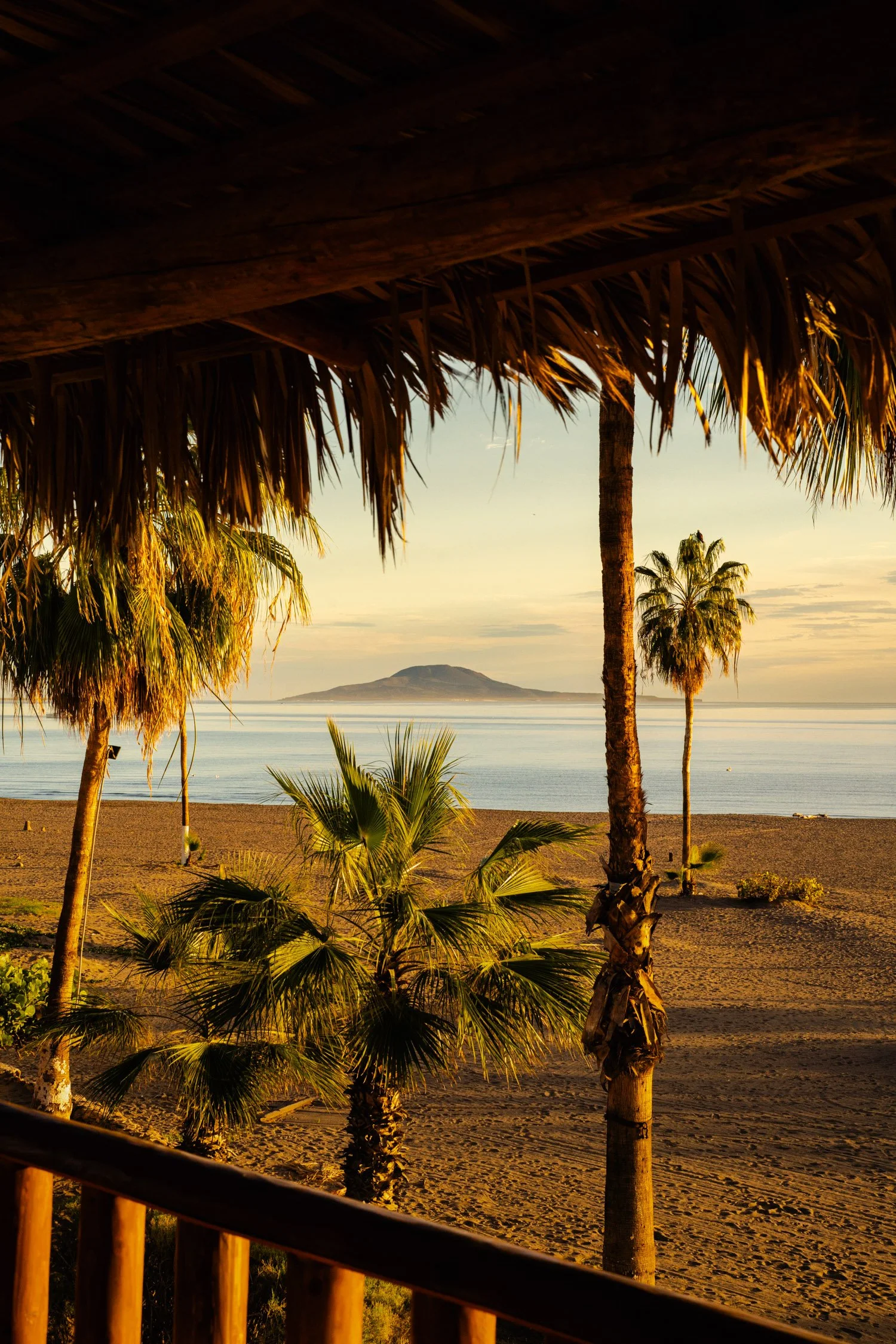
Not all road trips are created equal and heading to Baja is a special one, especially with a camera. Photograph by Dalton Johnson, follow him on Instagram
Final Thoughts
Adventure photography demands more than technical expertise—it requires curiosity, resilience, and a willingness to embrace discomfort in pursuit of the perfect shot. By building a thoughtful body of work, marketing yourself with clarity and consistency, and nurturing client relationships, you’ll carve a path to the assignments—and the adventures—of your dreams.
Embrace each step as part of your own adventure, and let the Playbook be your trusted guide along the way. The world is waiting for your story—grab your camera, chase the horizon, and capture the extraordinary.
Start your journey to become an adventure photographer today:
The Adventure Photographer’s Playbook is an e-book created by full-time photographer Dalton Johnson to help new photographers go from nothing to booked in the adventure photography space.
This adventure photography e-book goes over the business and what “making it” as a photographer in the outdoor space requires. Covering topics such as pricing, marketing, building a body of work, reflection questions, and everything you need to know to make a career out of adventure photography.
Updated: June 2025
51 Poems For Humankind Think About
My childhood dream was to be a writer and I have written daily for years. After hundreds of articles published, I figured it was time to do what I really wanted to do, release a book. Hiding behind excuses for years, I avoided sharing my poetry. I did one time in a college dorm room with floor mates and was laughed at after a reading because “my voice while reading was weird”. That comment deflated me. However, that was many years ago. Now, you can hear me read my first book from cover to cover:
My childhood dream was to be a writer and I have written daily for years. After hundreds of articles published, I figured it was time to do what I really wanted to do, release a book. Hiding behind excuses for years, I avoided sharing my poetry. I did one time in a college dorm room with floor mates and was laughed at after a reading because “my voice while reading was weird”. That comment deflated me. However, that was many years ago. Now, you can hear me read my first book from cover to cover:
Introduction
Fourteen years ago, I was afraid to do anything with my poetry, so they sat on my computer's hard drive. Three laptops later, the poems still resided in the top right corner within a document with the name "Starting Point".
All of my poetry that I have written is here. Hundreds of poems, finished or unfinished, that didn't matter. What mattered was the accumulation of poems and the fear of releasing them.
I don't have a MFA, I actually have a Batchlor's Degree in Mathematics. I have received more rejection letters from publishers and editors than I would like to admit. And, that is okay. I used to wear those as a badge of honor, but that was my ego.
The contents in my first book are art, my art, and I feel honored that you are going to read my poetry. Not every poem will interest you, but if there are a handful that do, I consider that a success.
Fourteen years of hiding and writing in secret. Well, that ends today with my first book of poetry.
Order Your Copy Today: Buy on Amazon
Order Your Signed Copy Today:
Get your signed copy of 51 Poems For Humankind To Think About. Dalton Johnson's first book of poetry. These 51 poems are his critique of American hustle culture told from the perspective of a young man returning to the world after years of living off the grid on less than $500 a month.
These poems capture the internal battle of consumerism, American greed, humans loss of connection with the natural world, and pokes fun at some of the absurd cultural norms of adulting. Each poem touches on different parts of American's superficial society in hopes of promoting the change from group thought to individuality. For it is at the individual level Johnson belives you unlock your true self.
As you read these poems take some time to think about what stirs inside of yourself to find where you can change and grow into the human you want to be today and tomorrow.
Please Note: Signed paperback will be shipping the middle of April, 2025 and should arrive by the end of April

An Evening Surf With Santa Cruz Local Pro Austin Smith Ford And Dermatone
Without much daylight left, local surf-pro, Austin Smith-Ford, waxes his board for an evening of surf a few miles north of Santa Cruz, CA. A local’s only spot where you’ll surely be yelled at if you can’t say “hey” to at least a few surfers in the line up.
Sunscreen… check
Wetsuit… check
Surfboard… check
Waves… check
Sunset… soon to come
Without much daylight left, local surf-pro, Austin Smith-Ford, waxes his board for an evening of surf a few miles north of Santa Cruz, CA. A local’s only spot where you’ll surely be yelled at if you can’t say “hey” to at least a few surfers in the line up.
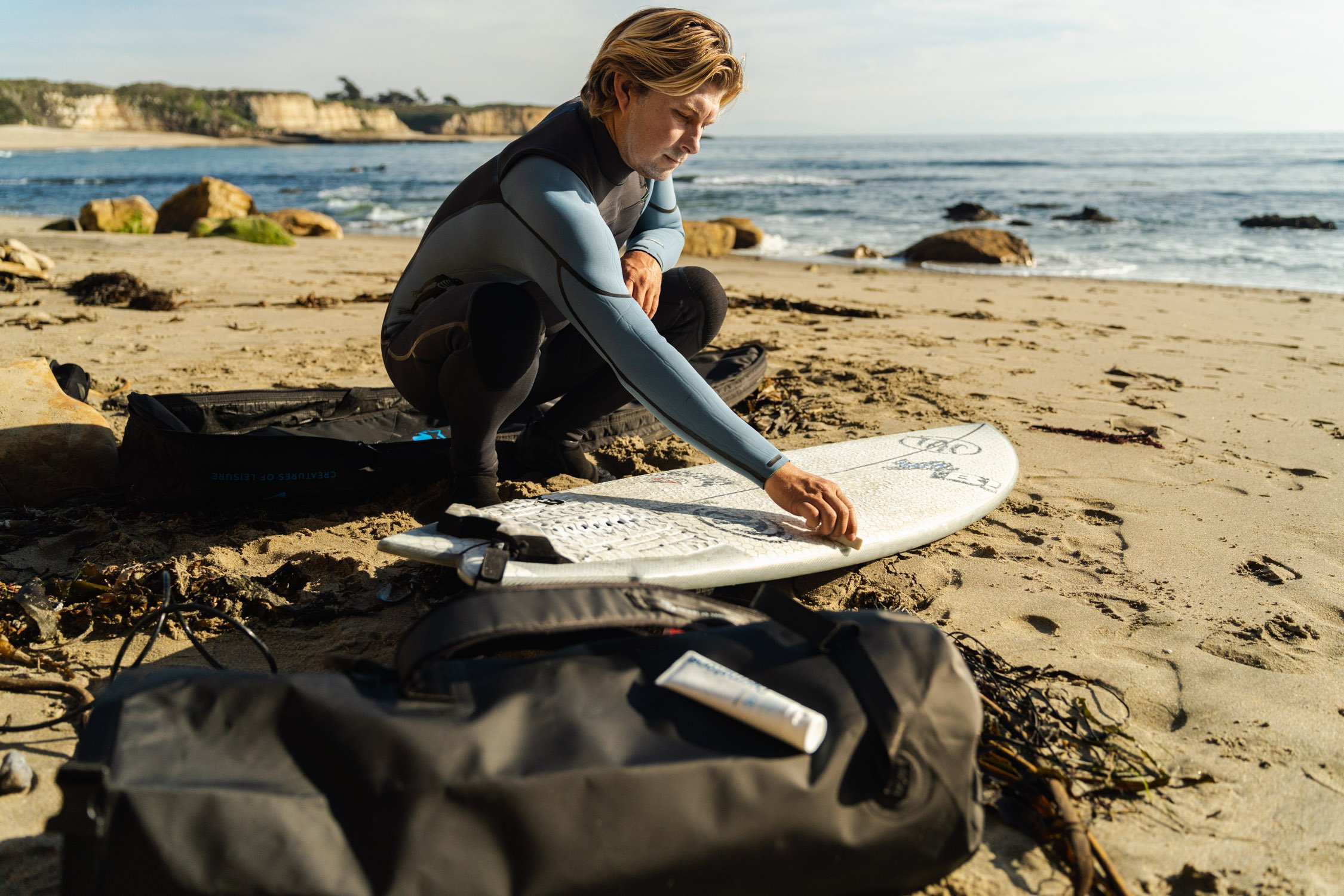
Austin Smith-Ford waxing his surfboard before heading into the ocean to surf. Photo by Dalton Johnson, follow him on IG


Product image of Dermatone Sunscreen, the sponsor of this adventure photography shoot. Photo by Dalton Johnson, follow him on IG

Austin taking in the sunset views between sets of waves, he’s the last one out. Photo by Dalton Johnson, follow him on IG


Staying late rewarded Austin with stellar golden light. Photo by Dalton Johnson, follow him on IG
One final wave to catch before nightfall. Photo by Dalton Johnson, follow him on IG


The motion of the ocean over 1 second. Photo by Dalton Johnson, follow him on IG
From Paddle to Plunge, A Sunset Kayaking Adventure on Lake Tahoe
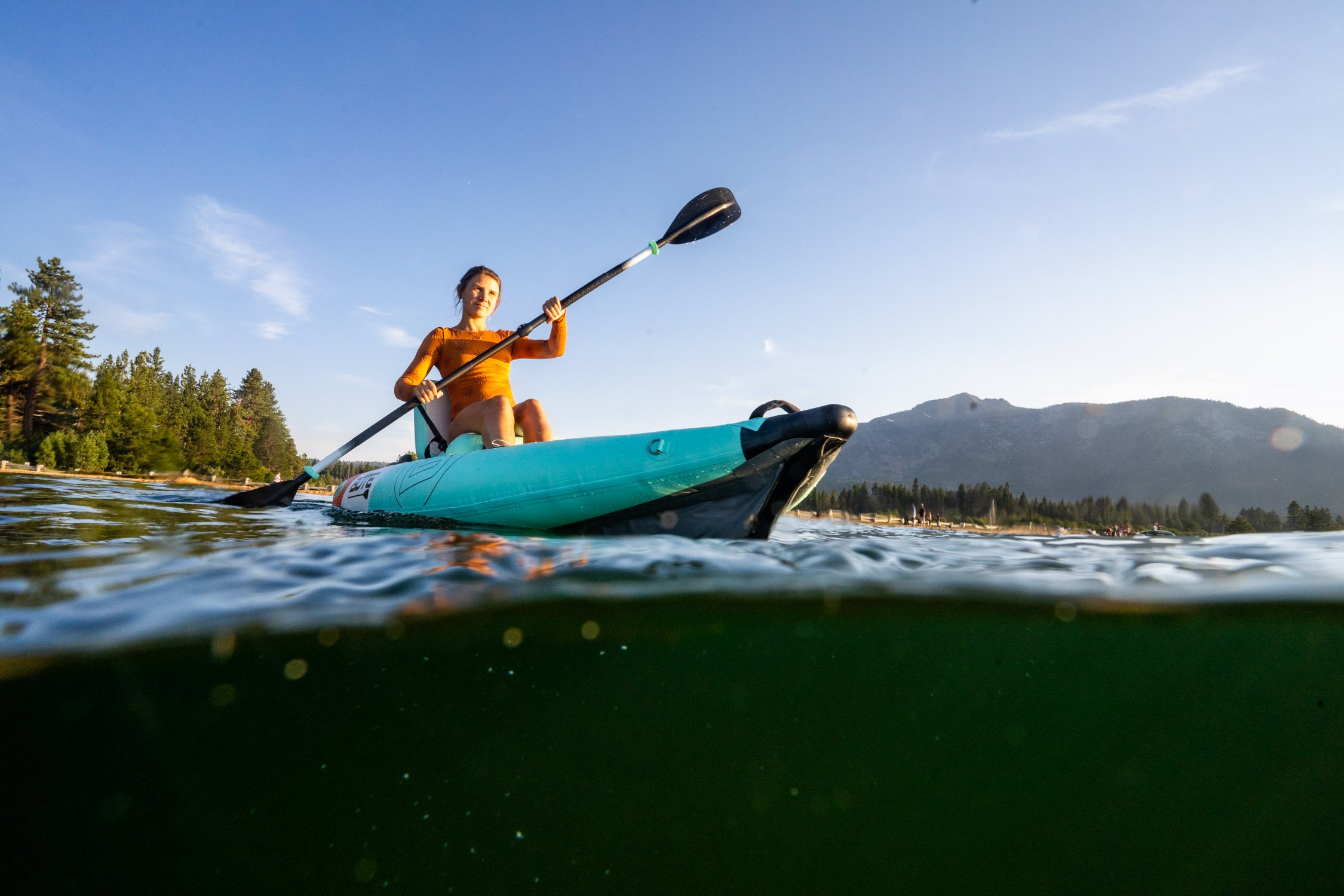
Golden light coats the largest natural lake in California and blankets the Emerald Range lining the eastern shore of Lake Tahoe. From Pope Beach, looking north across the lake reminds me of being in a cove opening to the ocean. Kristin inflates her Bote kayak and begins the short paddle to her ideal destination during this sunset.
Golden light coats the largest natural lake in California and blankets the Emerald Range lining the eastern shore of Lake Tahoe. From Pope Beach, looking north across the lake reminds me of being in a cove opening to the ocean. Kristin inflates her Bote kayak and begins the short paddle to her ideal destination during this sunset.

Kristin looking towards the pole a short paddle from shore she wants to jump off this sunset. Photo by Dalton Johnson, follow him on IG


Not far from shore, a pole with a ladder protrudes from Lake Tahoe’s crystal clear water. That is the destination for the evening. A paddle and plunge, at sunset.
Beginning the short paddle to pole off the shore of Pope Beach in South Lake Tahoe. Photo by Dalton Johnson, follow him on IG

Climbing the pole to leap off of in South Lake Tahoe. Photo by Dalton Johnson, follow him on IG

Kristin leaping into the sunset in South Lake Tahoe, CA. Photo by Dalton Johnson, follow him on IG

When the day is done, the calm lake rewards us with a stunning final light. Photo by Dalton Johnson, follow him on IG
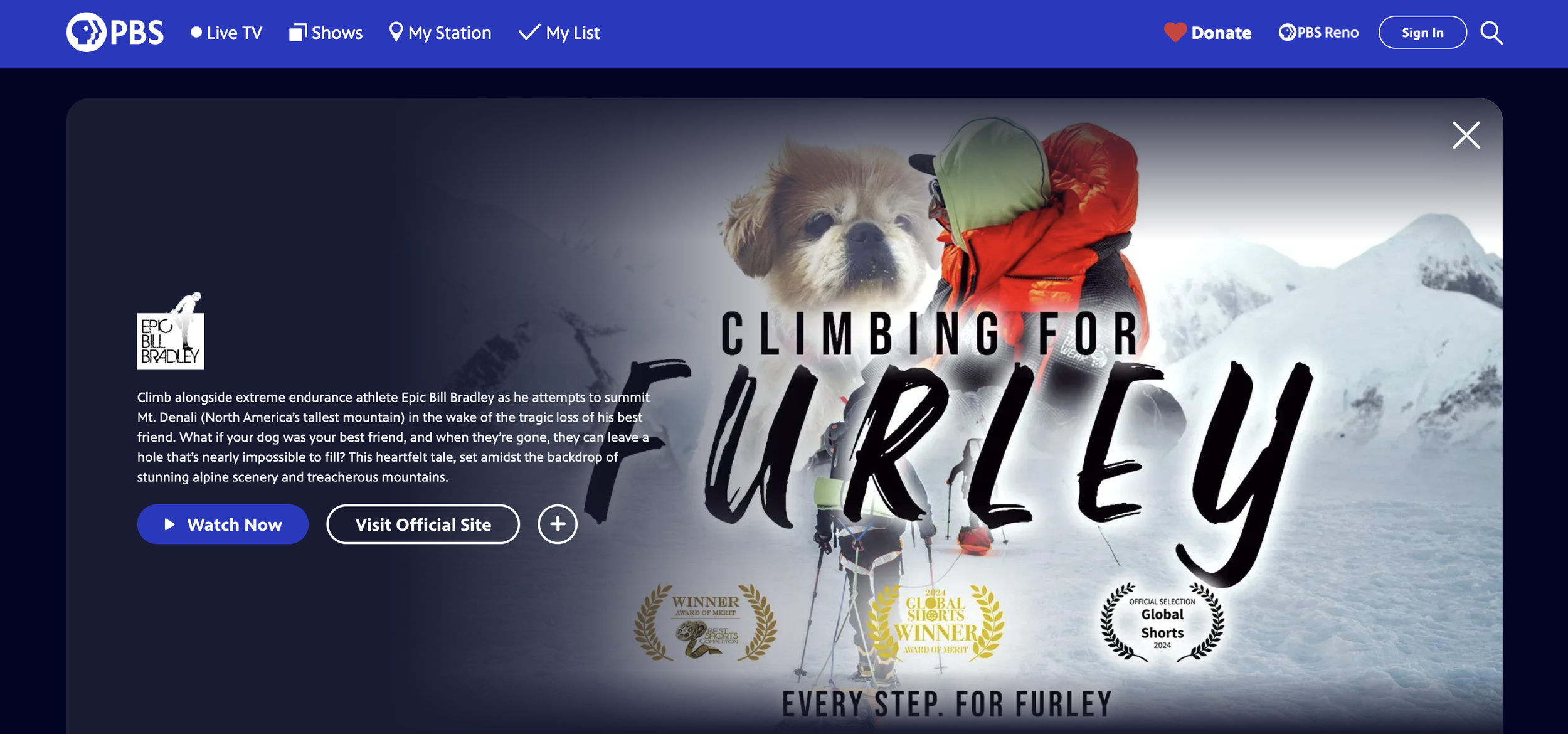
Climbing For Furley Is Now Streaming On PBS
Climbing for Furley follows Northern California resident, Epic Bill Bradley as he attempts to climb Mount Denali after the loss of his best friend, Furley. Bradley is an ultra-endurance athlete who has held world records and completed several mind-blowing races like Ride Across America, a quadruple Bad Water, double Ironman, and many hundred mile races.
I’m excited to share that my first short documentary, Climbing for Furley, is now streaming on PBS.
This documentary follow Northern California resident, Epic Bill Bradley as he attempts to climb Mount Denali after the loss of his best friend, Furley. Bradley is an ultra-endurance athlete who has held world records and completed several mind-blowing races like Ride Across America, a quadruple Bad Water, double Ironman, and many hundred mile races.

Bill’s motto: Show Up and Suffer!!! Yes, the three exclamation points are part of his trade mark. If you ever text with Bill, you’ll find that out. Is contagious, so it only makes sense that his personality shines though in this short documentary.
Stream Climbing For Furley on PBS:
https://www.pbs.org/show/climbing-for-furley/
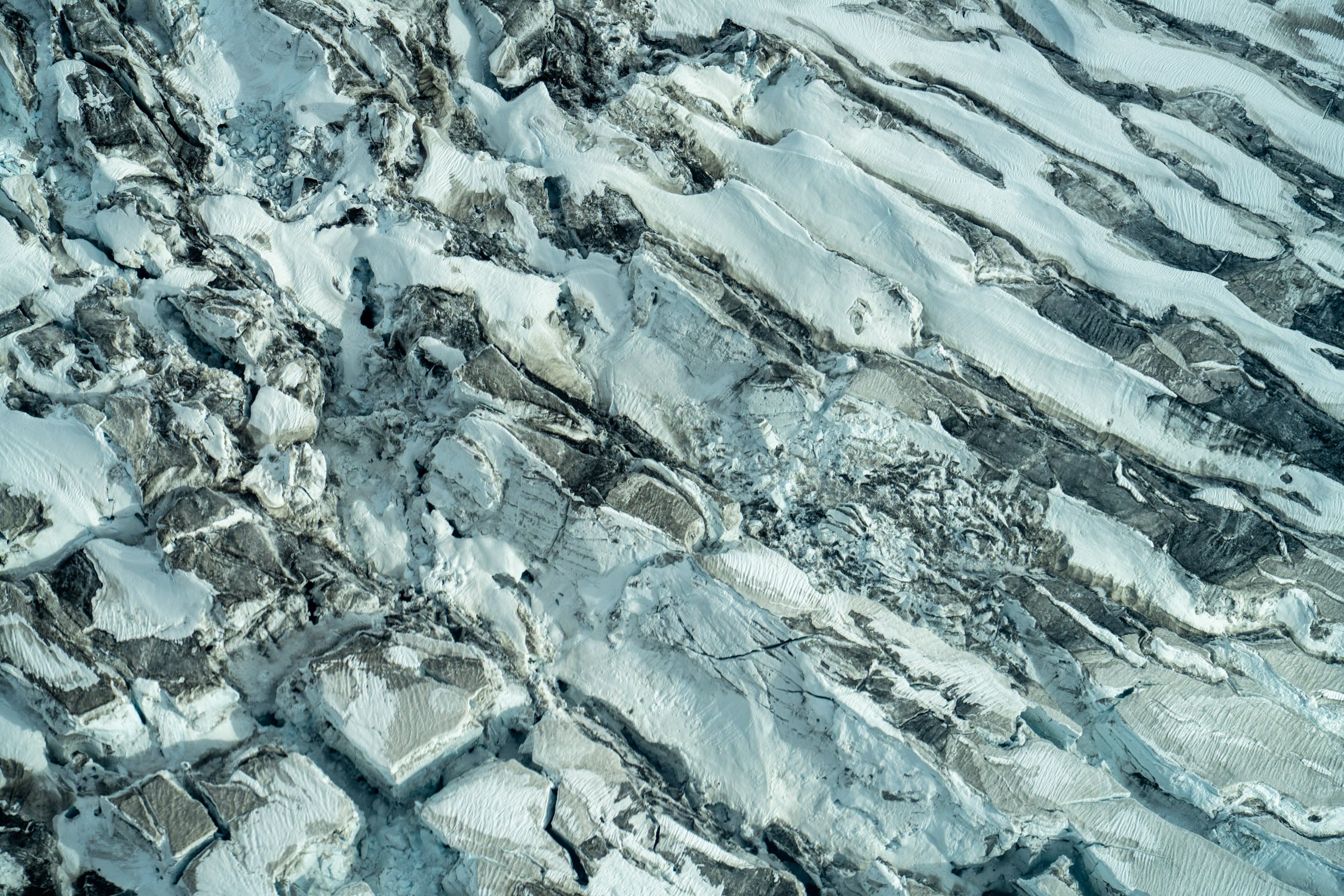
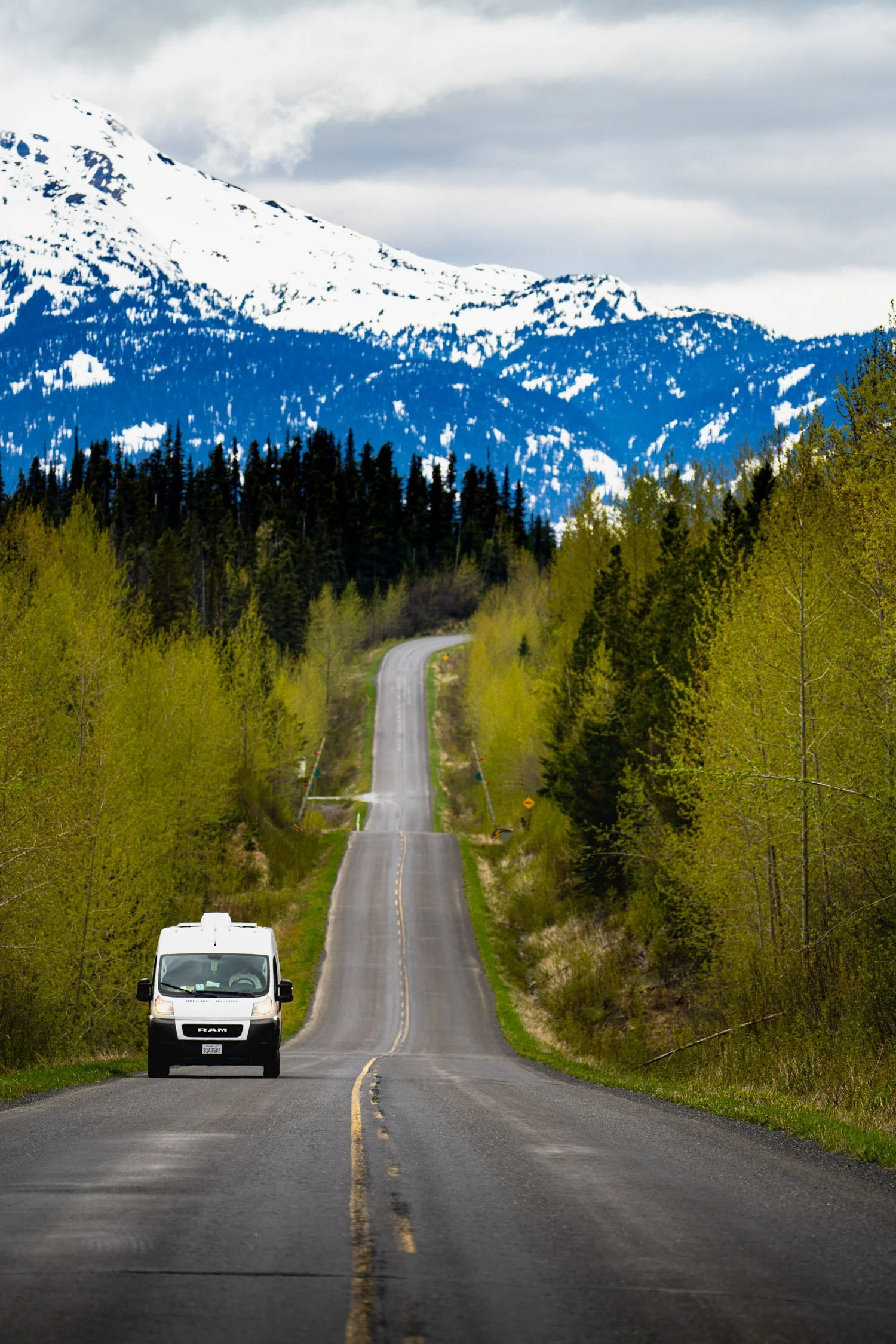
Photo Essay from Project




Life Is Complicated And I Don't Know Why
Sitting down behind the computer this morning after a few hours of journaling about business, future travel plans, and over-arching life, I feel the complexity of my life is at an all time high, but it doesn’t make sense.
March 20, 2025
Sitting down behind the computer this morning after a few hours of journaling about business, future travel plans, and over-arching life, I feel the complexity of my life is at an all time high, but it doesn’t make sense. Overall, this year has been simple:
Photographing the normal amount of campaigns
A couple video projects
Lots of video edits for a project filmed last year
Most marketing outside of that
In other words, a pretty normal year. Only, I have added more comfort to my life like living in a house (I was homeless by choice from 2016 until 2024) which should make things easier than living in my converted van. Yes, the cost of living is more expensive, but not by much. In total, I think the difference is about $1,500 a month. Very do-able for my income. So, why are things more complex?
Is it my dog? I mean, he is about a year old now and still very much so a puppy. Sure, I should be training him more. Hmmm…

Sunset at rainbow lakes along the Kenai Peninsula during a road trip in 2022. Photo by Dalton Johnson, follow him on IG
With less travel days, I sit inside or go play outside with friends and family. My body is in better shape than the last three years as I have constant access to a gym. On the books, I would say I have been making more money than I had been, but without crunching the numbers I can’t say if that is totally true. So, I don’t really know what is going on.
This feeling inside of me is focused on what I am missing out on, but the reality is I have so much back logged work that I haven’t been able to share yet, I feel like going on another large road trip anytime soon doesn’t make sense.
But, the pull to the open road is omnipresent.
Road tripping in Baja with Andrew Muse for a Ford Bronco project. Photo by Dalton Johnson, follow him on IG
Looking through my archive at my last grand adventure, a road trip, that took me from Seattle, WA to Cabo, Mexico to Denali, Alaska back to Lake Tahoe, CA. Almost one full year of traveling on the road. Several years of editing was needed just to start sharing the work. Most notably, my first award-winning short documentary: Climbing For Furely. This short documentary is now streaming on PBS for anyone that wants to watch it.
In addition to this film, the year was filled with photo assignments, the start to my writing career, a handful of additional video assignments, and the belief that I could “make it” in the creative world. For the 6 years prior to this, I felt like I was an imposter in the industry. However, this road trip and work I produced made me feel like I belonged.
Now, back to why I am feeling at odds with myself this year?
I honestly don’t know.
The creative journey is not obvious, but I am excited to see where it leads. Right now, I have 12 projects in the editing bay, which is overwhelming and exciting to know I have so much more work on the horizon I get to share. But then the question arises, how do I share?
social media?
newsletter?
this blog?
in person?
hmmmmmm

Kristin enjoying a morning cup of coffee while in Joshua Tree for a project with several brands. Photo by Dalton Johnson, follow him on IG
Most likely all of the above, I just need to take some time to finish the projects and start figuring out how to market them. In time, I will know and share with you all.

Using Spec Work To Land New Photography Clients
While road tripping down the Pacific Coast Highway, just north of Santa Cruz, CA, I asked Kristin Riegel if she would be open modeling for a spec shoot for Blundstone while we stopped at Sharkfin Cove for sunset. She looked at me with a smile, “I’m ugly right now, but of course I will.” For the past three years, Kristin has always been there for me and the building of my career. For this, I am forever grateful ❤️
While road tripping down the Pacific Coast Highway, just north of Santa Cruz, CA, I asked Kristin Riegel if she would be open modeling for a spec shoot for Blundstone while we stopped at Sharkfin Cove for sunset. She looked at me with a smile, “I’m ugly right now, but of course I will.” For the past three years, Kristin has always been there for me and the building of my career. For this, I am forever grateful ❤️
Pulling into the dirt parking we get our first glimpse of the Sharkfin Island in the middle of the cove. My mind was blown, people were swarming the area, and Kristin was looking a bit hesitant to be in front of the camera. Yet, she pulled herself up by her Blundstone straps and was a perfect model.
Kristin playfully posing for a photograph at sharkfin cove. Photo by Dalton Johnson, go follow him on Instagram
With three shot ideas, we headed for the most simple to the most challenging.
First Look: An overlook of the cove similar to a stereotypical influencer style shot that showcased the boots.
Second Look: The above shot.
Final Look: A playful feel showcased by cartwheel on the beach during blue hour.
SNAP. SNAP. SNAP.
If you know anyone at Blundstone USA, I’d appreciate you forwarding this post to them. I’ve connected with a few people but have never had the opportunity to share the images with them. Thanks 🙏


What is Spec Work in Photography?
Speculative work—commonly known as "spec work"—in photography refers to creating images for a project without a guaranteed payment or client commitment upfront. It’s essentially a pitch: a photographer shoots and delivers work in the hopes of impressing a brand or potential client enough to earn a future paid opportunity. Spec work can take the form of mock advertising campaigns, lifestyle shoots showcasing a product, or travel and outdoor content created as if it were commissioned by a specific company.
What is Spec Work Used For?
Photographers often use spec work to build portfolios that attract their ideal clients. For example, if you want to work with outdoor gear companies, you might photograph your own backpacking trip and frame the images in a way that aligns with the brand's visual identity. Spec work demonstrates your ability to tell compelling visual stories, understand branding, and create commercial-quality content.
Brands sometimes use spec work to vet photographers, especially in competitive fields like product, fashion, or adventure travel photography. It gives them a low-risk way to gauge your style, professionalism, and whether your work aligns with their brand. However, it's important to be cautious—some companies try to take advantage of photographers by using spec work without paying. Make sure to watermark or limit resolution unless usage is clearly agreed upon.
How to Land Photography Clients Using Spec Work
Create with Purpose: Don’t just shoot random subjects. Choose brands you admire and design a shoot that mirrors their aesthetic and target audience. Research their style guides, colors, and tone. Make your spec shoot feel like it belongs on their website or Instagram feed.
Pitch Strategically: Once you’ve created strong spec work, pitch it to the brand with a short email or message. Highlight how your work aligns with their mission, include a few thumbnail images or a link to a polished portfolio, and suggest how you can add value on future campaigns.
Post and Tag: Share your spec images on social media and tag the brands. Use relevant hashtags and write captions that tell a story or highlight how the product was used. Brands often notice and reach out if your content fits their vibe.
Be Professional: Treat spec work like a paid gig. Show up with quality, creativity, and consistency. If a brand sees you’re serious and skilled, they’re more likely to hire you when the next campaign rolls around.
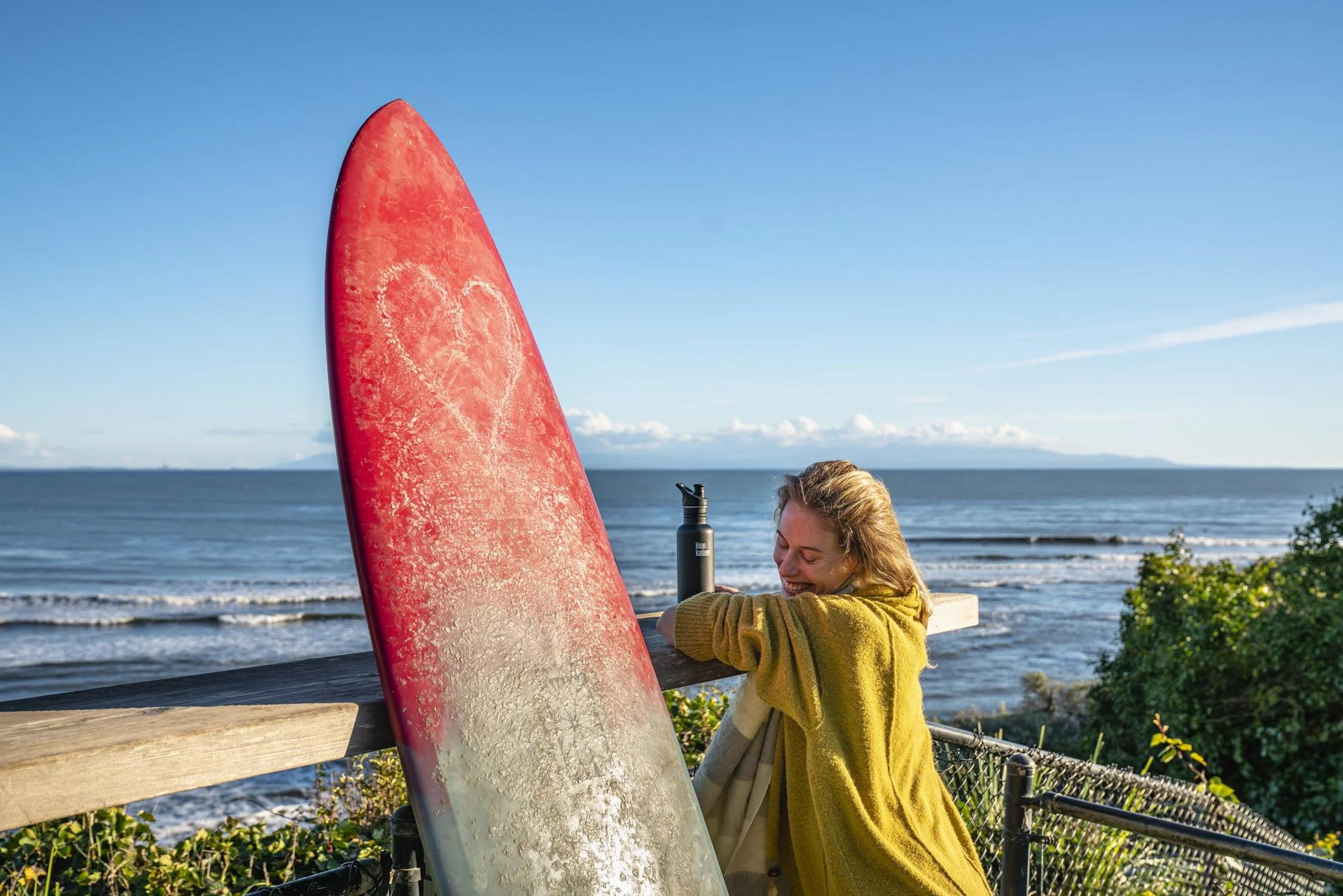
This Is What Happens When You Stop Marketing Your Photography Business
For a couple of years I was the go to photographer for water bottle companies. While you can say what you want about photographing outdoor lifestyle campaigns around water bottles, it was rad. Right now, I am smiling as I look through my archive at the countless photoshoots I did for brands like MiiR and Klean Kanteen but something is off!
For a couple of years I was the go to photographer for water bottle companies. While you can say what you want about photographing outdoor lifestyle campaigns around water bottles, it was rad. Right now, I am smiling as I look through my archive at the countless photoshoots I did for brands like MiiR and Klean Kanteen but something is off!

Photographed for MiiR highlighting sustainable surfboard shaping practices. Photo by Dalton Johnson, follow him on Instagram
Almost every shoot was deeply rooted in storytelling like:
1) Highlighting sustainable surfboad shaping in Santa Cruz
2) Surf and climb long weekends around Joshua Tree and San Diego
3) Collabs between coffee roasters and water bottles
4) Love on the beach
5) Mountain biking around San Francisco
6) Valentine's Day themed shoots
The shoots were great, the clients were happy with the creative, and they got results from the campaigns. However, this brings me to the question, why did I only land water bottle jobs and this work didn't take me into the CPG industry, the beverage industry, or other product focused lifestyle shoots?
My guess: marketing

Shot for the launch of MiiR Seltzer coozie. Photo by Dalton Johnson, follow him on Instagram
What do I mean by marketing? Well, this might be the first time I am ever sharing this work. Can you believe that?! I completed a shoot, the client was happy, at the time it was portfolio worthy work for me, and I didn’t share it. How stupid was I? Why did I do that?
Once I delivered the images to the clients, I just carried on with my life. I was 26, or 27, years old and didn't understand the business of photography. Marketing wasn't in my vocabulary until I was tired of being a homeless dirtbag at 29 years old doing nothing but rock climbing, surfing, and one-off photo/video shoots for brands.

Shot for a Valentine’s Day campaign for MiiR. Photo by Dalton Johnson, follow him on Instagram
I photographed and photographed and photographed, but never shared the work.
I was proud of the work, but the resistance to sharing was so great, because I was living in a car, or van, relying on the coffee shop internet, that I couldn't share. That isn’t true. I could have shared the work, but at the volume needed to get eyeballs on it wasn’t available to me.
Now, however, that has changed. Marketing my work has taken over my life, in a good way. Instead of storing images and films on my hard drives for nobody to see, I try to put out 439 pieces of content each week. Yup, that isn’t a typo. My weekly goal is 439 pieces of content each week. You reading this is a prime example of one piece of content. Granted, I hope this piece of content has a much longer shelf life than one week.

Photographed for Klean Kanteen. Photo by Dalton Johnson, follow him on Instagram
So, how do I market now as a photographer? Often is the key and here are the outlets:
Newsletter - you can sign up here
Email
My special sauce, phone calls and snail mail
Each one of these outlets could be broken down into several different steps and I will do that in a later article, but for now, this is my marketing outlet breakdown. On average, I reach roughly 30K people each week which leads to about 3 discovery calls a week of potential clients.

Photographed for MiiR while highlighting a story about mountain biking spots in San Francisco. Photo by Dalton Johnson, follow him on Instagram
Now, here’s the real kicker. If I would have been on top of my marketing, when I was 27 years old, who do you think I could have photographed for... Yeti? Maybe, alcohol brands like Coors Banquet? Coffee roasters like Verve Coffee Roasters?
Who else would fall into this kind of photography?

A Bob Ross Like Morning At Wild Willy Hot Springs In Mammoth, CA
Before the sun rose, we had our shorts on, bags packed, and towels slung over our shoulder. Andrew has the behemoth Muse Roamer that allows for a very plush life on the road, meanwhile I have modest comforts with a converted van. So, I crawled out of the van and headed into the heated Muse Roamer to enjoy coffee to wait for the best lighting.
No matter what, soreness sets in while living on the road. Between sitting in one place for hours driving to pushing my bodies limits while exploring whatever landscape surrounds me, at the end of everyday, I find I’m sore. No matter how much yoga I do or the number of rest days I take, soreness is omnipresent. So, when Andrew Muse suggested we take a morning and hit the hot springs outside of Mammoth, CA along Highway 395, I wasn’t going to complain.
About a month before this, Andrew and I had met up to work on a collaboration project for the release of the Ford Bronco Ambassador program. Andrew was one of the ambassadors and I was the filmmaker & photographer hired to create the promo assets for the launch. With manufacturing delays on the Broncos, we were bound stateside for about a month, so Andrew and I decided to road trip along Highway 395 in California before starting the project for Ford in Baja, Mexico. After several days hiking, climbing, and paddle-boarding we decided it was finally time to take a rest day and catch up on some edits. Which catches us back up to this morning.
Before the sun rose, we had our shorts on, bags packed, and towels slung over our shoulder. Andrew has the behemoth Muse Roamer that allows for a very plush life on the road, meanwhile I have modest comforts with a converted van. So, I crawled out of the van and headed into the heated Muse Roamer to enjoy coffee to wait for the best lighting.
Just before the sky started to pop off, we left the warmth of the heated Muse Roamer and headed into the chilly fall mornings in the Eastern Sierra Nevada Mountains. If I were to guess, it was 36 to 39f outside, but without a thermometer, nobody will know. I can say, everything was frosted over and walking barefooted with very uncomfortable.
This morning, we were going to photograph a short photo essay for Klean Kanteen and Visit Mammoth centered around Wild Willy Hot Springs. For those of you who haven’t been along this stretch of highway, let me paint a Bob Ross styled painting for you all.
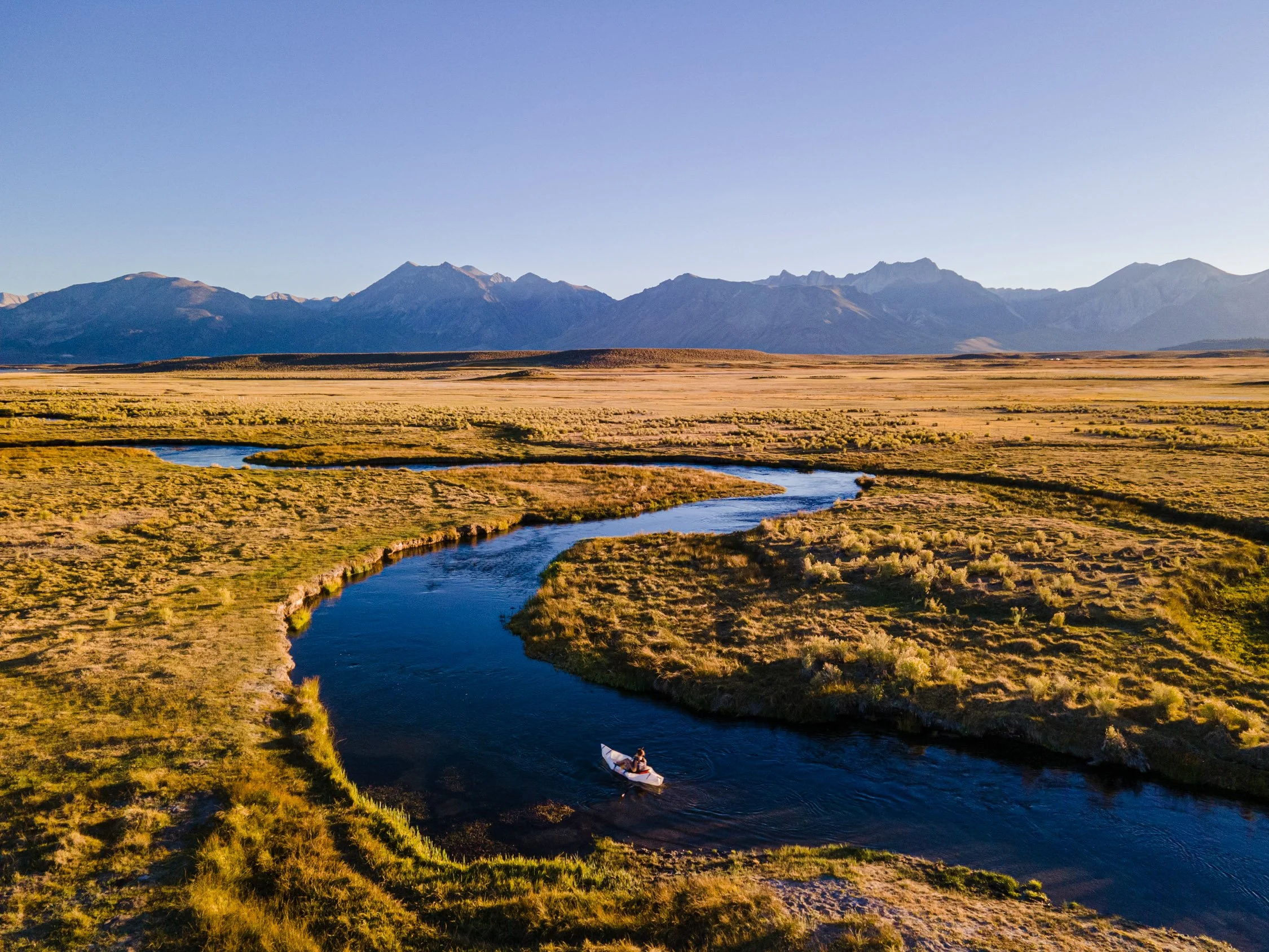
Grand mountains surround our campsite as far as the eyes can see. Plumes of steam from the hot springs rise into the early morning. Little shrubs make up the flora as well as the rolling hills in Owen’s Valley. This volcanic heated land attracts outdoor people alike; skiers, rock climbers, trail runners, bikers (the kind who pedal), and those who enjoy a stroll through the woods with a backpack. The early morning colors of reds and oranges make your jaw drop, meanwhile the glowing yellow sunsets calm the soul as the mountains cast their shadows upon you.

Sunrise from the parking lot of Wild Willy’s Hot Spring. Photo by Dalton Johnson, follow him on Instagram

One of the many peaks in the surrounding area reflected in a seasonal pool of mineral water. Photo by Dalton Johnson, follow him on Instagram

Andrew and his dog, Kicker, walk to the hot springs in Mammoth, CA under a spectacular sunrise. Photo by Dalton Johnson, follow him on Instagram
The long walk to the hot springs under the colorful sky of a California morning. Photo by Dalton Johnson, follow him on Instagram

While the color in the sky has faded, the hot spring of Wild WIlly’s are calling our names. Especially with the bonus of nobody else being here. Photo by Dalton Johnson, follow him on Instagram

Andrew testing the water and Kicker keeping a close eye on his Dad. Photo by Dalton Johnson, follow him on Instagram
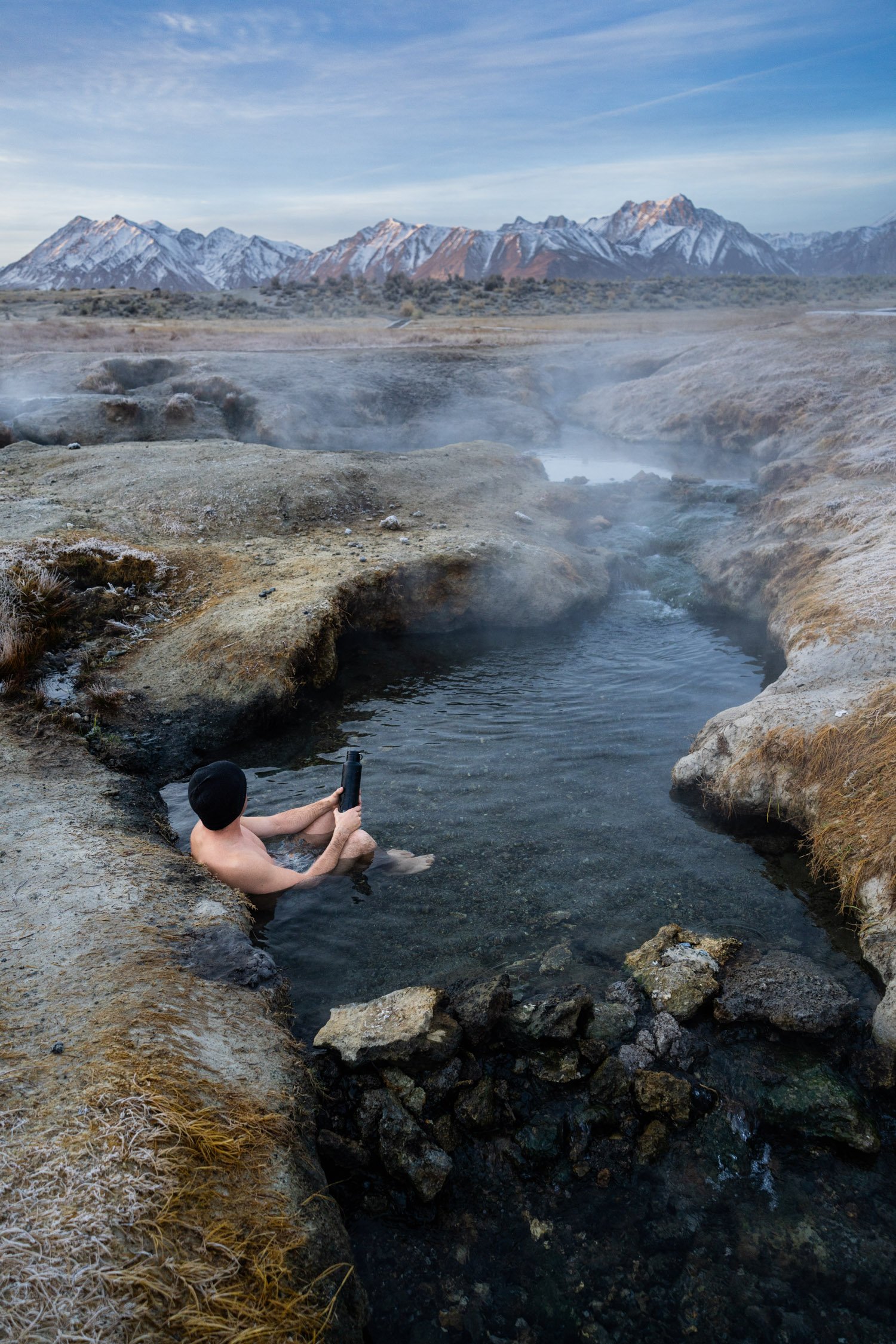
Andrew contemplating life, or searching for ski lines in the distance. Andrew grew in popularity as a professional snowboarder before hurting himself. Photo by Dalton Johnson, follow him on Instagram

Staying hydrated while in a hot spring is key, so always pack a water bottle. Photo by Dalton Johnson, follow him on Instagram

Rarely can you get these hot springs to yourself, but somehow Andrew and I scored this morning. Photo by Dalton Johnson, follow him on Instagram

That longing look from Kicker letting Andrew know he wants to join and be closer to his Dad. Photo by Dalton Johnson, follow him on Instagram

Kicker Dog letting Andrew know he wants to join in the soaking. Photo by Dalton Johnson, follow him on Instagram

Andrew and Kicker are inseparable, these two have traveled the world together and I don’t see that stopping any time soon. Photo by Dalton Johnson, follow him on Instagram

Steam rolling off the main pools of Wild Willy Hot Spring and I utilize a long exposure to capture the moving water. Photo by Dalton Johnson, follow him on Instagram
As the morning photoshoot with Andrew comes to a close and I can finally settle into the hot spring, pour myself a cup of hot tea, and relax for now. We will have the rest of the day to edit images and deliver to our clients, but then we will have to pack up our rigs and start heading back to San Diego to pick up the Ford Bronco and begin our project south of the border.

A celebratory cheers to a morning photo shoot done well. Photo by Dalton Johnson, follow him on Instagram

The First Surf Image That Gave Me Faith I Could Do This Photography Thing
Getting a start as a creative is no easy task, especially when you don’t have a clue as to what you want to do, create, or, most importantly, enjoy. As a kid, I always thought I would be an author, which I became about a month ago with my first book, but the idea of “becoming a photographer” never crossed my mind. Becoming a filmmaker was not something I ever talked about with my family growing up, but my first documentary won a few awards at film festivals last year. So, what the heck did I do as a kid?
Getting a start as a creative is no easy task, especially when you don’t have a clue as to what you want to do, create, or, most importantly, enjoy. As a kid, I always thought I would be an author, which I became about a month ago with my first book, but the idea of “becoming a photographer” never crossed my mind. Becoming a filmmaker was not something I ever talked about with my family growing up, but my first documentary won a few awards at film festivals last year. So, what the heck did I do as a kid?
I played my heart out in water.
Sunset surf at Steamer Lane in Santa Cruz, CA. Photo by Dalton Johnson
Growing up near a lake and swimming competitively, I loved the water. Still do. Some might say I lived in water as I practiced 3-5 hours a day during high school and college. However, when I was 8, I had the opportunity to learn how to surf in Baja and fell in love. Not your typical love, either. I used to download the cams off pipeline off LimeWire — anyone remember this platform? I looked, it still exists — as a kid and upload that to my iPod video and watch it going to bed. Yeah, that kind of love.
So, when I started this process of “becoming a creative” I spent all of my money on a water housing for my camera so I could be closer to the sport. Every morning and every evening I would get in the water and shoot until my memory card was full or the battery died. Then, during the night, I would edit those images and see what I came up with.
This image here, from Steamer Lane, was one of the earlier photographs I remember taking and being like, “Wow, that is cool!” Maybe it was the frozen hands, numb lips, or just desire to see something different, but this image was one of the first images that gave me hope I was moving in the right direction.
Outside of my own thoughts, many peers — mostly on Instagram at the time — gave me a lot of encouragement to keep going, keep shooting, and keep up the grind. Fast forward 8 years, I still look at this image and smile.
Prints and Books For Sale
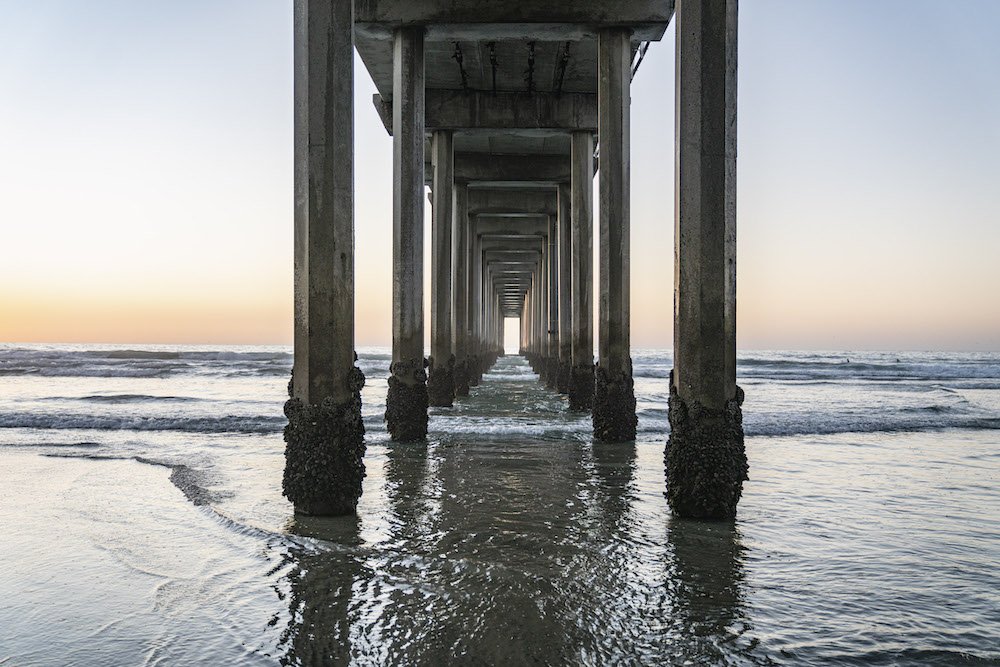


Discover more Adventures



Consistency VS Frequency, Creatives & Marketers Need To Know The Difference
Consistency is not frequency, yet many creatives think these words are synonymous. Heck, I used to think this was the case until a few years ago, which lead to me leaving all social media platforms for about 2.5 years, but that is a story for another time. To debunk the consistency vs frequency argument, I’m starting with the fundamentals…
Consistency is not frequency, yet many creatives think these words are synonymous. Heck, I used to think this was the case until a few years ago, which lead to me leaving all social media platforms for about 2.5 years, but that is a story for another time. To debunk the consistency vs frequency argument, I’m starting with the fundamentals, their definitions:
Consistency: achievement of a level of performance that does not vary greatly in quality over time
Frequency: how often, or the cadence, you repeat an action
For those of you who think showing up and sharing your work is being consistent, you are right and wrong. That is why you are not growing. So, hear me out, by continuing to read, and I will help you understand the difference between these two and how to apply it to your marketing strategy.
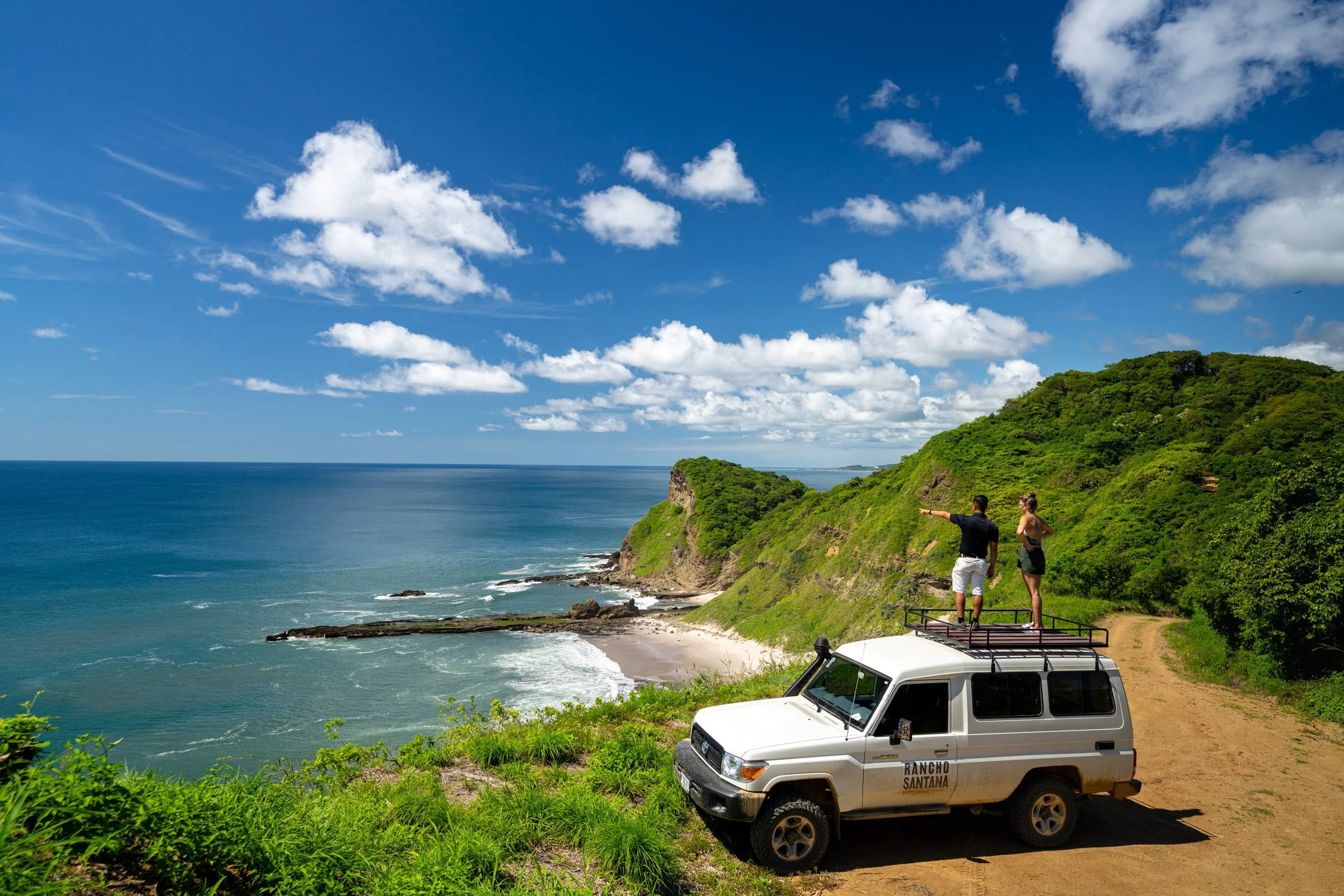
Shot on assignment for luxury surf retreat Rancho Santana of Nicaragua. Photo by Dalton Johnson
The concept, consistency vs frequency, came into my sphere when I was chatting with fellow creatives about three years ago. We had all agreed, consistency is what it takes to “become somebody” in this industry. While most of us in the conversation are photographers or filmmakers the concept applies to anyone making content. Now, I know content is a dirty word, but I am using it as a catch all for anyone making movies, photographs, books, songs, paintings, designs, etc.
While we all agreed it was the key, we all had different ideas as to what consistency meant. For those that were not as successful, they were saying things like, “I don’t really get it. I share daily, but nothing really happens.” Meanwhile, the more successful ones were saying things like, “I share about three times a week, putting a lot of time and effort into each one, and it’s helping me grow.” While we were all chatting about posting to Instagram, this concept is universal.
For a writer, sitting behind the computer putting words to a page every day could mean a manuscript, or it could mean a journal entry. Both have different levels of intention.
For an athlete, practicing daily could result in making it to college, meanwhile, dedicating that same time to practice but with more intention, that could mean going pro.
One last example, for a photographer, taking 10,000 images a day and occasionally getting lucky vs taking 10 photos a day, but focused on creating something stunning. Which photographer is going to make out? My money is on the 10 photos a day.
Prints and Books For Sale
Reeling this back in. You will notice all of these talk about frequency; 10 photos a day, daily practice, writing daily, posting 3 times a week. That is the bare minimum to establish what type of consistency we create.
Remember, consistency is the level of performance, not varying greatly, over time. For those of us who are not a walking dictionary, that means we need to set a frequency that we can share and/or create at a high level. Each individual will define high level for themselves. Maybe that is content that is designed to go viral, today. Maybe that is content that is meant to be enjoyed for years to come. Maybe that is a book made to read next to a fire. That is for you to decide, but the key is to create a frequency at which a high level of performance is achieved. The inverse of this, one hit wonders.
Nobody wants to be a one hit wonder and consistency is the key to that success.
So, how do we insure we are consistent?
Allow time for the content to sit and age
Have a series of people who can look over what you are creating and provide feedback
Be honest with yourself AND be willing to throw things in the garbage
Develop your taste and make it exquisite
Shot on assignment in Antarctica. Photo by Dalton Johnson
So, if you are talking about how often you do something and are wondering why it isn’t working, swap your mindset to ask itself the question, “What am I consistently creating?” Maybe what you are creating isn’t working because you are consistently showing up in a poor manner. Sorry to be the barrier of bad news, but start looking at yourself and your work. If you are getting the results you want, why the heck are you reading this article? But, thank you anyways.
If you have any questions about this, I am happy to chat. Drop a comment below.
Discover more Adventures

16 Tips I Would Tell Myself When I Started Photography In 2016
Here are 16 tips for budding photographers looking for quick advice on getting started in the career of adventure photography. After 10 years in the career, adventure photographer Dalton Johnson shares his experience to becoming the go to content partner for brands with adventurous clients.
I'm 31.
Full-time photographer, filmmaker, and author.
I started my journey in 2016, here are 16 things I would tell myself when starting:
Austin Smith Ford slashing a turn at Ano Nuevo State Park. Photo by Dalton Johnson
1) Your camera and lenses only matter if you know how to make happy accidents
2) You are homeless right now, that's okay, shoot every day and don't worry about money right now
3) Learn how to tell and create a story, that will be the most second important thing in this career
4) Your network will be the most important thing, so make friends
5) Have a website and use social media, but don't let it be your life
6) Sell prints and books, those will keep you afloat during hard times. If you can, show your films in person!
7) Learn marketing and selling, but not for a few years, get good at your craft first
8) You can do everything, just not at the same time. Start with photo, then video, then put it all together with books and films
Prints and Books For Sale


9) Access can be your limitation, figure out how to leverage you camera to access unique things
10) Become a great writer. Being good doesn't get you very far
11) Don't be afraid to self-publish or self-fund projects you can about
12) Pay off all of your debt, it feels great
13) Niches are over-rated, but being known for what you do is critical for inbound messages
14) Pitch solutions, be really good at listening, and figure out how to help people (maybe this should have gone closer to the top)
15) Love and love hard! There is nothing better than loving and being loved
16) Don't give up along the way
That’s me :-) Photo by Jonathan Thorpe
I'm Dalton Johnson and I am the go-to content partner for brands with an adventurous clientele. I have delivered over 160 campaigns for some of the biggest brands in the world, created award winning documentaries, I have published over 1000 articles, and a released a poetry book. Yup a poetry book.
If you are a brand that wants to connect and level up your content game, let's schedule a discovery call. You can do that while checking out my work on my portfolios.
Discover more Adventures

Photographing Olmstead Point In Yosemite At Sunset
Photographing Olmsted Point in Yosemite National Park is an overcrowded tourist experience I pretty much never pass up. While I have been to this spot roughly 20 times, each stop is different, so I always bring my camera. With its sweeping views of Half Dome, Tenaya Lake, and Clouds Rest, this spot is a favorite among landscape photographers. Equipped with a Sony A7R IV and a Tamron 70-180mm f/2.8 lens, you can make the most of this location's photographic potential.
Story Behind The Shot:
After a grueling evening lumbering out of the Eastern Sierra and waking up from the disappointment of failing to climb the Palisade Traverse in a trailhead parking lot, we packed our cars, cooked breakfast, and headed for Yosemite Valley via Tioga Pass. Without any real plans, we took our time along the way. Stopping in the Mammoth Lakes Hot Springs to relax our sore muscles. Then, over the pass, just in time for sunset.
Halfway along Tioga Pass, just after Tenaya Lake is Olmstead Point. Often a crowded parking lot with tourists gawking at Half Dome for good reason. This vista point is stunning. Today, since the timing was perfect, we stopped as well. I set out with my camera, away from the crowds by walking down the trail about a quarter of a mile, to find a composition I was happy with at this iconic view point.
Snap

From the car, looking out at Half Dome from Olmstead Point. Photo by Dalton Johnson
What To Know When Photographing Olmstead Point In Yosemite National Park
Photographing Olmsted Point in Yosemite National Park is an overcrowded tourist experience I pretty much never pass up. While I have been to this spot roughly 20 times, each stop is different, so I always bring my camera. With its sweeping views of Half Dome, Tenaya Lake, and Clouds Rest, this spot is a favorite among landscape photographers. Equipped with a Sony A7R IV and a Tamron 70-180mm f/2.8 lens, you can make the most of this location's photographic potential.
1. Optimal Timing for Light
Late afternoon approaching sunset is ideal for photography at Olmsted Point. During this time, the light casts warm hues on the granite formations (especially Half Dome) and enhances the textures of the landscape. The fading sunlight illuminates the sheer face of Half Dome, creating a dramatic effect. If you get some clouds, this will make for an epic shot!
2. Exploring Beyond the Parking Area
While the parking area offers impressive views, a short walk down granite steps and a brief hike lead to a granite outcropping with panoramic vistas. This vantage point provides unobstructed views of Half Dome, Tenaya Lake, and Clouds Rest, and is less frequented by visitors. Additionally, this area has several trees that are great to add to the foreground for added depth in the image.
3. Utilizing the Tamron 70-180mm Lens
The Tamron 70-180mm f/2.8 lens complements the high-resolution Sony A7R IV, allowing for sharp, detailed images. Its compact design makes it suitable for hiking to various viewpoints. The lens's focal range is ideal for isolating specific elements of the landscape, such as the contours of Half Dome or the textures of the granite formations. I really like this lens to compress the scene into a single image and making Half Dome pop as the main subject. Shooting wider lenses doesn’t do the sweeping landscape justice.
4. Incorporating Foreground Elements
Including foreground elements like twisted pines or granite boulders can add depth and interest to your compositions. These elements provide a sense of scale and lead the viewer's eye through the image, enhancing the overall impact.
5. Managing Harsh Daylight
During midday, the sunlight can be intense, leading to high contrast scenes. Using a polarizing filter can help reduce glare and enhance the colors of the sky and foliage. Alternatively, waiting for the softer light of late afternoon can yield more balanced exposures. I love sunset at Olmstead Point for photography. Some people tout sunrise, but I don’t think it is very good.
6. Preparing for Variable Conditions
Weather in Yosemite's high country can change rapidly. Bringing layers of clothing and being prepared for sudden shifts in light and temperature will ensure comfort and readiness to capture fleeting moments.
Conclusion
Photographing Olmsted Point requires thoughtful preparation and an appreciation for the nuances of light and landscape. By considering the timing of your visit, exploring various vantage points, and utilizing your equipment effectively, you can create compelling images that reflect the beauty of Yosemite National Park.