
The Biggest Misconception About Making Money as an Adventure Photographer
I want to be honest with you about something most photographers in this industry won't say out loud. Adventure photography looks like a thriving, well-funded career from the outside. The Instagram feeds are full of remote locations, high-end gear, and athletes doing extraordinary things in extraordinary places. It looks like someone is paying well for all of it.
Most of the time, they're not.
The financial reality of adventure photography is one of the least discussed and most misunderstood parts of the industry. After a decade doing this work, including years of stagnation I didn't see coming, here's what I actually know about making money in this space.
Quick Note: If you find this article helpful, the idea come from The Adventure Photographer's Playbookand it costs $10. Why so cheap? The goal is to help as many new to mid level photographers as possible go from nothing to getting booked in 18 months. If that is you, check it out.

The Industry Looks Bigger Than It Is
Here's a number worth sitting with. The outdoor brands that have budgets large enough to fund real adventure photography campaigns, the ones over a billion dollars in annual revenue with actual marketing dollars to spend, number somewhere under ten. Maybe fewer.
That's the top of the market. Below that, there are hundreds of smaller brands with genuine enthusiasm for adventure content and significantly smaller budgets to support it. The total pool of work available to adventure photographers at any given time is much smaller than the volume of content being produced would suggest.
Most of what you see on Instagram from adventure photographers is self-funded, spec work, or trade. Gear in exchange for content. A free trip in exchange for photos. A small licensing fee that doesn't begin to cover the time and cost of the shoot. That's not a criticism of anyone making those trades. It's how most careers in this space begin. But it's important to understand that a visible presence in adventure photography does not equal a financially sustainable one.

Your Work Will Not Speak for Itself
This was the hardest lesson I learned and the one I see most photographers struggle with. The belief that if you make great images, the right people will find them. That quality is its own marketing. That your portfolio will do the work of building a career.
It won't.
I spent years making work I was genuinely proud of and wondering why it wasn't converting into the kind of client relationships I was seeing other photographers build. The work was good. The distribution was almost nonexistent. Nobody knew about it except the people who already knew me.
The photographers landing the best work aren't always the best photographers. They're the photographers who are most visible to the people making hiring decisions. Visibility requires active, consistent effort that has nothing to do with making images. Cold outreach. Networking. Showing up to conferences. Sending case studies to three hundred contacts every two weeks. Staying top of mind with people who won't hire you for eighteen months but will eventually hire you if you're still there when they're ready.
Here’s What Lives In My Gear Bag:
Sony a7r4; my work horse
Sony a7s3; mostly for video work like solo-filmmaking documentary
Tamron 16-30; probably my favorite lens right now
Tamron 28-75; I think this is the best all around focal length
Tamron 70-180; I don’t use this a ton, but it’s a great lens
The Hiring Chain Is More Complex Than You Think
One of the most common misconceptions among photographers breaking into adventure work is that brands hire photographers directly. Sometimes they do. But the path to a shoot is often much longer and more complicated than a direct relationship with a brand's marketing team.
Brands work with PR agencies. PR agencies work with creative directors. Creative directors work with talent agencies. Talent agencies represent photographers. A job can pass through four or five hands before it reaches you, and each one of those handoffs is a relationship you either have or you don't.
Understanding this changes how you build your network. You're not just trying to connect with the outdoor brands you want to work with. You're trying to connect with the PR agencies that represent them, the creative directors who execute their campaigns, and the producers who manage the logistics of shoots. Any one of those connections can be the one that puts you in the room.
Photography Alone Has a Ceiling
Six years into my commercial photography career I hit a wall. Work was still coming in but I could feel the ceiling. Photography alone, no matter how good, was becoming a commodity. Brands had more options than ever for competent adventure imagery and the rates reflected that reality.
The photographers I watched build genuinely sustainable careers in this space weren't just photographers. They were photographers who could also write. Or direct. Or produce. Or build an audience large enough that brands paid for access to it rather than just for the images themselves.
I started writing seriously after a conversation with my mom at my grandma's eightieth birthday where I admitted out loud that I wasn't sure the photography career was going to hold. That conversation started eighteen months of building writing as a real skill rather than a side interest. It led directly to the Rivian project, a week-long road trip through Northern California that generated over a million views across platforms and opened doors that a photography portfolio alone never would have.
Skill stacking doesn't add value to your career. It multiplies it.

The Stagnation Is Real and It Can Last Years
Nobody talks about the years where nothing is working. The period after losing a major client or a reliable income stream where the career that looked solid from the outside turns out to have been built on fewer relationships than you realized.
I spent roughly three years feeling stagnant after a magazine contract I had been relying on ended. It took six months before I started landing photography work again. Eighteen months before any real momentum returned. And it wasn't until I added a guaranteed outcome to my pitches, one million organic views in ninety days, backed by the distribution system I had spent years building, that brands started responding differently.
The guarantee changed the conversation because it made me different from every other photographer in the room. I wasn't selling images anymore. I was selling a result.
That's the shift most adventure photographers never make. And it's the one that changes everything.
Reflection Questions
Are you currently building visibility with the people who make hiring decisions, or are you waiting for great work to find them on its own?
Do you understand the full hiring chain for the brands you want to work with, including the agencies and creative directors between you and the brand?
What skill beyond photography could you add in the next twelve months that would make you harder to replace and easier to hire?
What would change about your business if you sold guaranteed outcomes instead of just deliverables?
This lesson comes from my The Adventure Photographer's Playbook and it costs $10. Why so cheap? The goal is to help as many new to mid level photographers as possible go from nothing to getting booked in 18 months:

The Adventure Photographer’s Playbook is an e-book created by full-time photographer Dalton Johnson to help new photographers go from nothing to booked in the adventure photography space.
This adventure photography e-book goes over the business and what “making it” as a photographer in the outdoor space requires. Covering topics such as pricing, marketing, building a body of work, reflection questions, and everything you need to know to make a career out of adventure photography.
Updated: June 2025
Read More From The Photographer’s Playbook


About Dalton
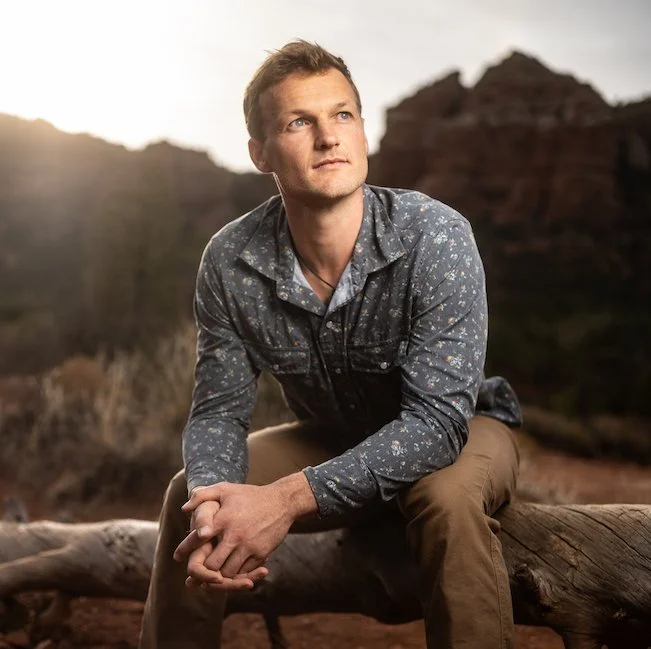
Dalton Johnson is a photographer, director, and writer (award-winning at all three) based in South Lake Tahoe, CA.
Over the last 10 years, Dalton’s creative work has taken him to every continent, above the arctic circle, and below the antarctic circle.
Getting out of the car, today’s walk was going to be short and full. Kristin and Chestnut were joining me for the evening stroll. Yes, it’s day two of my personal challenge to go for a daily photo walk, and this one was a close call. Today was filled with an afternoon of chores; taking Chestnut to the vet, donating stuff to Goodwill, and more boring things like that. The real life of a photographer, am I right?!