How to Use Natural Frames in Surf Photography
A natural frame is a simple idea with a big payoff. You use something already in the scene, such as a doorway, a tree branch, or a rock arch, to create a border around your subject. In surf photography, it can turn a good wave into a photograph with depth. I used the idea in The Stairwell, shot from land in Santa Cruz, California, in early summer 2026, and here is how you can use it too.

This print comes from Santa Cruz, CA during the string of summer swells in 2026. I noticed the wave aligning with the stairwell while scouting a place to surf. At the time, nobody was surfing the wave, but I decided to head back to my van for the camera.
I waited for almost an hour in the stairwell for a surfer and wave to align.
Thankfully, I stuck out the wait as I love this image.
Additional Information:
Please allow 5-10 days for printing and shipping.
I have the ability to print custom sizes and material (like wood, gatorboard, etc.). If this interests you, please reach out to dj@dalton-johnson.com for a free quote with the size and material you desire.
Let me describe what the frame looked like. I walked into a concrete stairwell and looked out. A sunlit brick wall ran down one side and a shadowed concrete wall sat on the other. Together they made a gap that opened onto the ocean. I could see the finished photograph before I had even taken my camera out, which is a rare feeling. The only things missing were a wave worth shooting and a surfer.
Why does a frame work? First, it creates layers. The walls sit in the foreground, the ocean sits in the background, and the surfer sits between your eye and the horizon. Layers give a flat image a sense of space. Second, a frame directs attention. The walls act as arrows pointing to the wave. Third, a frame adds context. You see where the photographer was standing, which makes the viewer feel like they are standing there too.
Now, how do you find natural frames? Start by looking at what is around you instead of only at the water. Seawalls, stairs, rock arches, tree branches, fence lines, and building edges can all work. Walk the spot and look back toward the ocean from different positions. Crouch or step to one side and see how the shapes change.
Pay attention to light. In The Stairwell, the brick wall caught the sun and glowed gold, while the other wall stayed in shadow. That mix of warm light and dark shade gave the frame weight. If both walls had been evenly lit, I think the image would have felt flatter. Look for contrast between bright and dark areas, and let the shadows form a border.
Consider the foreground details too. A few blurred dark leaves in the top corner of my photograph softened the edge and added a bit of life. Out of focus elements near the lens can make the scene feel more natural, as long as they do not cover the subject.
Finally, plan for patience. A frame is only half the picture. You still need the action, and that usually means waiting. I stood in the stairwell for about an hour, from 100 to 200 yards away, until the tide changed and a surfer dropped in.
Always put safety first. Rocks are slippery, waves are unpredictable, and you should never turn your back on the ocean.
One caution is not to overdo it. A frame should support the subject, not compete with it. If the walls, branches, or rocks are too busy or too bright, they will pull the eye away from the wave. Simplify where you can, keep the edges calm, and let the frame fade into the background of the viewer's attention while the surfer holds the center of it. Used with care, a frame is one of the simplest ways to add depth to a surf photograph.
If you want to see a natural frame at work, The Stairwell is available as an open edition print starting at $26.95.
Go check out all the prints by Dalton Johnson.
About the Author
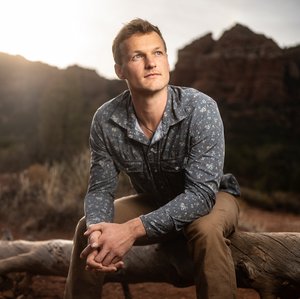
Dalton Johnson is a photographer, writer, and filmmaker who tells stories about real people pushing themselves in the outdoors, from the High Sierra to the far reaches of every continent. He has shot and written for brands, tourism boards, and editorial outlets, including Nike, Patagonia, Four Seasons, PBS, GoPro, and Ford, with more than 160 campaigns and hundreds of published articles to his name. Off assignment, he bikepacks, trail runs, swims open water, chases big waves, and rock climbs.