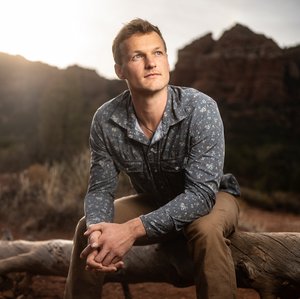
Building Authority Without Becoming a "Guru"
There's a very particular kind of photographer I've watched build genuine authority in this industry, and a very different kind who instead chases the mere appearance of authority, posting confident-sounding advice, adopting guru-style language, and performing expertise rather than actually building it through real, sustained work over time.
I've spent years thinking carefully about which category I want to fall into, and it's shaped how I approach content, teaching, and public visibility considerably. If you're working through your own approach to building genuine authority, the Adventure Travel Photographer's Playbook covers how I think about credibility and positioning as part of a complete business strategy.
The Difference Between Authority and Performance
Genuine authority comes from a track record of actual results, work that clients have paid for, problems that have actually been solved, and judgment that's been tested repeatedly under real conditions rather than simply asserted with confidence in a caption or a post.
Performance, by contrast, borrows the language and posture of authority without the underlying substance, confident tone, definitive claims, a studied air of expertise that isn't necessarily backed by the actual depth of experience being implied to an audience that has no easy way to verify it.
I've learned to watch for that distinction carefully in my own work, asking honestly whether a given piece of content reflects something I've actually tested and proven, or whether it's simply borrowing confident language because that's what tends to perform well with an audience looking for clear answers.
Why the "Guru" Trap Is So Easy to Fall Into
The guru trap is easy to fall into because confident, definitive content genuinely performs better than nuanced, honest content, audiences respond to certainty, and the algorithm rewards content that generates strong, immediate engagement regardless of how well-earned that certainty actually is.
I've felt that pull myself, watching a confidently stated, oversimplified claim outperform a more careful, accurate one, and having to consciously resist the temptation to just lean into the version that performs better rather than the version that's actually true and useful to the reader.
Resisting that pull consistently has taken real discipline, reminding myself that short-term engagement isn't the same as long-term credibility, and that an audience built on inflated certainty is a genuinely fragile foundation for an actual business relationship.
What Genuine Authority Actually Looks Like in Practice
Genuine authority, in my experience, looks considerably more modest than the guru performance, it includes real uncertainty where uncertainty genuinely exists, acknowledges the limits of personal experience, and resists the urge to have a confident answer for absolutely everything an audience might ask.
I've found that this kind of honesty, counterintuitively, builds more trust over time than pure confidence does, an audience can generally tell the difference between someone who's actually done the work and someone who's simply good at sounding like they have, even if it takes them a while to notice.
That trust compounds slowly but durably, producing a reputation that holds up under real scrutiny rather than one that depends entirely on an audience never asking too many pointed follow-up questions.
How I Decide What I'm Actually Qualified to Teach
I've developed a fairly simple internal test before publishing any piece of teaching content, asking whether I've actually done the specific thing I'm about to advise on, repeatedly and under real conditions, rather than simply having a plausible-sounding opinion about it.
That test has kept me from publishing confidently worded content on topics I only have surface familiarity with, an easy trap when an audience is asking for guidance on adjacent topics I haven't personally tested with the same rigor as my core areas of expertise.
Staying within the bounds of what I've actually earned the right to speak on has meant turning down some content opportunities that would likely have performed well, a tradeoff I've made deliberately in favor of long-term credibility over short-term visibility.
Why I'm Comfortable Saying "I Don't Know"
Saying "I don't know" or "I'm not the right person to ask about that" felt uncomfortable early in my career, worried it would undermine the confident, expert image I thought I needed to project to actually be taken seriously by clients and peers.
I've since come to see the opposite is true, a willingness to acknowledge the limits of my own expertise has consistently made people trust the areas where I do claim expertise considerably more, since it signals that my confident claims are actually calibrated rather than reflexive.
That calibration has become one of the more valuable, if understated, parts of my professional reputation, people know that when I do speak confidently about something, it's because I've actually earned the right to.
How Authority Without Ego Changes Client Relationships
Clients respond noticeably differently to genuine authority than to guru-style performance, they tend to trust a photographer who demonstrates real expertise without needing to constantly assert it, and they're often more collaborative with someone who doesn't need to be the loudest voice in the room to actually be the most competent one.
I've noticed this shift directly in how project conversations unfold, clients raising concerns or pushing back more openly with me than they might with someone projecting a more defensive, ego-driven kind of expertise, which has consistently produced better creative collaboration and stronger final results.
That openness has become one of the quieter benefits of building authority the slower, more honest way, rather than the faster, more performative one that many photographers gravitate toward under competitive pressure.
What I'd Tell a Photographer Tempted by the Guru Persona
If you're a photographer feeling the pull toward guru-style content because it seems to perform better in the short term, I'd encourage you to think seriously about the kind of reputation you actually want to have built five or ten years from now, not just the engagement numbers this week.
The guru persona tends to produce a fast initial spike in visibility that's genuinely difficult to sustain once an audience starts noticing gaps between the confident claims and the actual demonstrated track record behind them, a mismatch that erodes trust considerably faster than it was built.
Genuine authority takes longer to build but holds up considerably better under real scrutiny, and in my experience, it's the foundation that actually sustains a long career rather than a short burst of visibility.
How Peer Relationships Change When You Drop the Guru Act
Dropping the guru persona has changed my relationships with other photographers considerably, colleagues seem noticeably more willing to share honest feedback, collaborate genuinely, and treat me as a peer rather than as a competitor performing dominance in a crowded, status-conscious field.
I've noticed that photographers who lean hardest into the guru persona tend to have thinner, more transactional peer relationships, other professionals sense the performance and respond with a certain guardedness that limits genuine collaboration and mutual support over time.
Choosing the more honest path has cost me some of the faster peer recognition that comes with confident self-promotion, but it's built a genuinely stronger, more collaborative professional network that has paid off in referrals, partnerships, and honest counsel over many years.
What Happens When a Guru Persona Eventually Gets Tested
I've watched a number of photographers build a guru-style following only to have it collapse quickly once a real test arrived, a difficult project that exposed genuine gaps in expertise, or a public misstep that revealed the underlying performance had outrun the actual substance behind it.
Those collapses tend to be sudden and difficult to recover from, an audience that feels genuinely misled by inflated claims doesn't simply move on quietly, they often become vocal critics precisely because the sense of betrayal is sharper than ordinary disappointment with a lesser-known figure.
Watching that pattern repeat across the industry has reinforced my own commitment to staying within the bounds of what I've actually earned, understanding that a reputation built on real substance is considerably more resilient when it's eventually and inevitably tested by a difficult moment.
How I Handle Being Wrong Publicly
Being wrong publicly, which happens occasionally to anyone who shares opinions and advice regularly, is a genuine test of whether the underlying reputation is built on real substance or on carefully maintained performance that can't tolerate any visible cracks.
I've made it a practice to acknowledge mistakes directly and without excessive defensiveness when they happen, correcting the record clearly rather than quietly editing or deleting the original claim and hoping no one notices the change had occurred at all.
That practice has, somewhat counterintuitively, strengthened rather than weakened my credibility over time, an audience that sees genuine accountability when mistakes happen trusts the rest of the content considerably more than one that never sees any acknowledged imperfection at all.
Why I Measure Authority by Repeat Business, Not Follower Count
Early in my career, I fell into the trap of measuring my own growing authority by follower count and engagement metrics, numbers that felt like a clear, objective signal of how much genuine credibility I'd actually built within the industry over time.
I've since shifted to a considerably more meaningful metric, repeat business and direct referrals from past clients, a measure that's much harder to inflate through performance alone and reflects whether people who've actually experienced my work firsthand trust it enough to come back or vouch for it to others.
That shift in measurement has changed how I evaluate my own progress considerably, a quiet month with strong client retention now feels like more genuine evidence of real authority than a viral post with a large but shallow audience that never converts into anything lasting.
How This Approach Has Shaped My Long-Term Career Trajectory
Looking back over the full arc of my career, choosing the slower, more honest path toward authority has produced a considerably more stable trajectory than I've seen among peers who leaned harder into performed expertise and rapid, engagement-driven visibility early on.
My own growth has been less dramatic in any given month but noticeably more durable across years, client relationships that have lasted, a reputation that's held up under real scrutiny, and a body of genuine expertise that keeps compounding rather than requiring constant reinvention to stay relevant.
That durability has become the thing I value most about this approach, a career built on genuine substance simply holds up better over the long run than one built primarily on the performance of confidence, however well that performance might work in any single given moment.
What I'd Tell My Younger Self About Building Authority
If I could go back and speak to my younger self, anxious about establishing credibility quickly in a competitive field, I'd say that the shortcut of performed authority is genuinely a false shortcut, one that trades long-term durability for short-term visibility in a way that rarely pays off as well as it initially seems to.
I'd tell myself to be patient with the slower process of actually earning expertise through real work, understanding that the years spent building genuine competence would eventually produce a considerably more valuable and resilient reputation than any amount of confident-sounding content published before that competence was actually there.
That patience, in hindsight, was the better investment, even though it didn't feel that way during the early years when peers with less actual experience seemed to be moving faster and gaining more visible traction in the short term.
How I Talk About My Own Growth Publicly Without Overselling It
Talking publicly about my own professional growth is a genuine balancing act, sharing real progress and hard-won lessons learned without slipping into the kind of self-congratulatory framing that starts to feel more like a performance of success than an honest account of an ongoing process.
I've settled on a habit of framing growth stories around specific, concrete lessons rather than vague claims of expertise, describing exactly what changed, what I learned, and what I'd still do differently, rather than simply asserting that I've arrived at some finished state of mastery worth admiring.
That framing keeps the resulting content genuinely useful to readers rather than purely self-promotional, and it's fully consistent with the broader approach of building authority through honest substance rather than through carefully managed image, even when discussing my own accomplishments and growth over time.
Why This Approach Requires More Patience Than It Might Seem
Building authority this way requires a genuine, considerable amount of patience that isn't always obvious from the outside looking in, watching peers gain faster visibility through more confident, performance-driven content while trusting that the slower, more honest path will eventually produce a more durable, valuable result over time.
That patience has been tested repeatedly over many years, moments where a more confident, oversimplified claim would clearly have performed better in the short term, requiring real, sustained discipline to stick with the more honest, measured version instead simply because it's actually true and genuinely useful to readers.
Looking back on it all now, that patience has consistently proven genuinely worthwhile, the reputation it's built has held up considerably better under real scrutiny than the faster, more performative alternative would likely have managed to sustain over that same long stretch of years.
Why I See This as an Ongoing Practice, Not a Fixed Achievement
I've come to see genuine authority not as a fixed state I've achieved once and can simply maintain passively forever, but as an ongoing practice that requires continued honest self-assessment, staying within the bounds of what I've actually earned as my own experience and expertise keep evolving over time.
That ongoing quality means periodically revisiting old content and claims, checking carefully whether they still hold up against current experience, and being willing to update or fully retire material that no longer reflects genuinely tested, current expertise rather than simply leaving it published indefinitely online.
Treating authority as an active, ongoing practice rather than a fixed achievement has kept me genuinely honest over the years, a discipline I consider central to sustaining the kind of credibility that actually holds up over a full, decades-long career rather than just a single strong season.
Reflection Questions
- Does your content reflect genuine, tested expertise, or does it sometimes borrow the confident language of authority without the underlying substance?
- Are you comfortable saying "I don't know" publicly when a topic falls outside your actual tested experience?
- How do clients respond differently to genuine expertise versus performed confidence in your own professional relationships?
- What kind of professional reputation do you want to have built five or ten years from now?
If you're thinking through your own approach to building genuine authority, the Adventure Photographer's Playbook covers how I approach credibility and positioning as part of a complete business strategy.
Dalton Johnson is a professional adventure and editorial photographer with over a decade of experience creating images on all seven continents. His client work includes Patagonia, GoPro, Arc'teryx, Four Seasons, Nike, Rivian, Big Agnes, Ford Bronco, and 160+ other brands. He runs Dalton Johnson Media as a full-service studio, from pre-production through post and distribution.