Composing Group Shots on a Moving Raft
Composing a genuinely strong group image on a raft moving through active water presents a real challenge that static group photography simply doesn't, since every single person in the frame is actually shifting position, paddling rhythm, and body angle simultaneously and independently of one another.
I've spent many years actually refining an approach to group composition specifically built for this constant, unpredictable motion, and I'd genuinely like to share what's actually worked well for me. If you're working to strengthen your own group composition skills in dynamic settings, the Adventure Travel Photographer's Playbook covers how I approach composition as part of a complete creative practice.
Why Traditional Group Composition Rules Actually Break Down on Water
Traditional group photography composition genuinely assumes a stable arrangement, people positioned deliberately relative to each other and the camera, but a raft crew is actually constantly shifting as everyone paddles, braces, and reacts to the water beneath them independently.
I learned early on that trying to force a static composition onto this genuinely dynamic situation consistently produced awkward, half-formed frames, since by the time I actually recognized a promising arrangement, the raft's motion had already genuinely changed it entirely.
That realization pushed me to actually abandon static composition thinking altogether in favor of an approach built specifically around anticipating and working with the raft's constant motion rather than fighting against it.
How I Actually Anticipate Paddle Synchronization Moments
Paddlers on a well-coordinated raft genuinely synchronize their strokes at certain moments, and I've learned that these brief synchronized moments actually produce some of the strongest group compositions, since aligned paddles create a genuine sense of visual unity across the frame.
I've actually trained myself to watch for the specific cues, a guide's call, an approaching rapid, that typically precede this synchronization, positioning myself and pre-focusing so I'm genuinely ready the instant paddles actually align across the crew.
That anticipation skill took considerable practice to actually develop, but it's become one of the most reliable ways I actually produce group images that read as cohesive rather than as a scattered collection of individuals paddling independently.
Why I Actually Position Myself at the Bow for Most Group Shots
Shooting from the bow, facing back toward the crew, genuinely lets me capture the entire group within a single frame while also actually showing the water and terrain unfolding behind them, giving a group shot genuine environmental context.
That bow position does require actually bracing carefully, since I'm genuinely more exposed to spray and sudden motion than paddlers positioned further back, but the compositional advantage of seeing the whole crew together consistently justifies the added physical challenge.
I've learned to actually pair this bow position with a wider lens specifically so I can capture the full group without needing to physically back away further, which genuinely isn't possible within the raft's limited confines.
How I Actually Use the Raft's Own Shape to Frame the Group
The raft's own curved tubes and structure genuinely provide a natural compositional frame around the crew, and I've learned to actually incorporate these lines deliberately rather than cropping them out as simply incidental background elements.
Positioning myself to actually let the raft's leading edge curve naturally toward the paddlers genuinely creates a sense of visual containment that helps unify a group of people who are otherwise all moving somewhat independently within the frame.
I've genuinely found that these raft-shape framing devices work especially well in calmer water, where the group's own motion is less chaotic and the raft's natural lines can actually do more of the compositional work on their own.
Why I Actually Prioritize Genuine Interaction Over Posed Formation
Rather than genuinely trying to arrange paddlers into a formal, symmetrical formation, I've learned to actually watch for and prioritize genuine interaction, a shared laugh, a coordinated shout, that naturally draws the group together within the frame far more effectively.
Those authentic interaction moments genuinely produce considerably stronger group images than any deliberately posed arrangement could, since viewers actually respond to real, visible connection between people rather than to a technically balanced but emotionally flat formation.
I've actually learned to stay patient and ready throughout a run specifically for these interaction moments, understanding that they'll genuinely happen unpredictably rather than on any schedule I could actually plan for in advance.
How I Actually Handle Uneven Lighting Across a Group in Motion
A raft crew moving through varied terrain genuinely passes through uneven lighting constantly, some paddlers in direct sun while others fall into shadow from a canyon wall or overhanging tree, creating real exposure challenges for a cohesive group shot.
I've learned to actually expose for the midtones across the group as a whole, accepting some genuine variation in individual paddler exposure rather than trying to perfectly balance every single person, which is generally impossible in rapidly changing natural light.
That practical acceptance of some lighting variation has genuinely improved my group shots overall, since chasing perfect uniform exposure across a moving group in natural light consistently costs more good moments than it actually saves.
What I've Learned About Timing Group Shots Around Rapids Versus Calm Water
Group shots captured during an active rapid genuinely show energy and coordinated effort, while shots captured on calmer stretches genuinely allow for more relaxed, natural interaction between paddlers that active water simply doesn't permit.
I've learned to actually plan for both types deliberately within a single run, capturing dynamic action-oriented group shots during rapids and reserving calmer stretches specifically for the more relaxed, character-driven group images that round out a complete gallery.
That deliberate mix has genuinely given clients considerably more variety across a delivered gallery, showing both the crew's coordinated effort under pressure and their genuine camaraderie during the quieter moments between rapids.
Why I Actually Shoot in Continuous Burst Mode for Group Compositions
Given how quickly a group's arrangement genuinely shifts on moving water, I've learned to actually rely heavily on continuous burst shooting for group compositions, capturing many frames in rapid succession rather than trying to time a single perfect exposure.
That burst approach genuinely gives me considerably more raw material to actually choose from during editing, since even a fraction-of-a-second difference in timing can genuinely mean the difference between a scattered arrangement and a genuinely cohesive group composition.
I've learned to actually review these bursts carefully afterward, looking specifically for the exact frame where paddle position, body language, and expression all genuinely align most effectively across the entire group simultaneously.
How I Actually Communicate With Guides About Group Shot Opportunities
I've genuinely learned to brief guides in advance about wanting strong group compositions, asking them to actually call out coordinated paddle commands at moments when I'm genuinely ready and positioned to capture the resulting synchronized action.
That coordination has genuinely produced considerably more reliable group shot opportunities than simply hoping synchronization happens naturally, since a guide's deliberate command timing can actually be aligned with my own readiness in ways spontaneous moments alone can't guarantee.
I've come to treat this guide partnership as an essential part of my group photography process, recognizing that the guide's actual control over the crew's coordinated actions genuinely gives me a meaningful compositional advantage.
How I Actually Handle Groups That Include Both Confident and Nervous Paddlers
A single raft crew genuinely includes people with very different comfort levels, some confidently paddling hard while others grip the raft tightly, and I've learned to actually compose group shots that honestly reflect this genuine range rather than only favoring the most confident, photogenic paddlers.
That honest inclusion has genuinely produced considerably more relatable images for clients working with first-time or mixed-experience groups, since these images actually reflect the real range of emotion and confidence present on an actual rafting trip.
I've learned to actually position myself where I can capture both the confident bow paddlers and the more hesitant crew members within the same frame, giving a genuinely complete and honest picture of the whole group's real experience.
Why I Actually Vary My Height Within the Raft for Group Compositions
Beyond simply choosing where along the raft to position myself, I've learned that actually varying my height, kneeling low versus standing braced, genuinely changes how the group reads compositionally, with a lower angle emphasizing paddlers against the sky and water.
A higher, more elevated position, by contrast, actually lets me show the group's arrangement relative to the raft's own shape and the water immediately around it, a genuinely useful perspective for showing overall coordination and formation.
I've learned to actually alternate between these heights throughout a run, testing which specific vantage point best serves a given moment's genuine composition rather than committing to a single fixed height for an entire shoot.
How I Actually Manage My Own Balance While Composing Group Shots
Composing a genuinely strong group shot requires real physical stability, since a poorly braced stance can actually ruin a promising composition the instant an unexpected wave hits and throws my own body off balance mid-frame.
I've genuinely developed a specific bracing technique using my legs and core against the raft's structure, actually freeing both hands for the camera while my lower body absorbs the raft's constant, unpredictable motion beneath me.
That physical stability work has genuinely become just as important to strong group composition as any purely creative decision, since even the best-anticipated moment is genuinely lost if my own body can't actually hold steady enough to capture it.
What I've Learned About Editing Group Shots for Genuine Cohesion
During editing, I've learned to actually prioritize frames where the group genuinely reads as a cohesive unit, even if individual expressions aren't each perfectly captured, since overall group energy consistently matters more than any single person's individually perfect expression.
I've genuinely trained my eye to scan burst sequences specifically for that collective cohesion, actually comparing near-identical frames side by side to identify the exact moment where the whole group's body language and paddle position align most convincingly.
That editing discipline has genuinely saved me from selecting technically sharp images that actually feel disjointed as a group, reinforcing that cohesion, not individual perfection, is the real standard I'm actually editing toward.
Why I Actually Shoot Wider Than Feels Necessary for Group Compositions
I've genuinely learned to shoot noticeably wider than initially feels necessary when composing group shots, since a raft's constant motion means paddlers can actually shift position considerably between the moment I frame a shot and the moment I actually capture it.
That extra framing margin genuinely gives me real flexibility during editing to crop toward the strongest arrangement after the fact, rather than being locked into a composition that seemed right in the moment but no longer actually works once motion shifted the group.
I've found this deliberate over-framing habit consistently rescues shots that would have otherwise been unusable, since the raft's unpredictable motion genuinely makes precise in-camera framing considerably less reliable than it would be with a stationary group.
How Weather Conditions Actually Change My Group Composition Approach
Overcast conditions genuinely allow for more flexibility in group positioning, since soft, even light reduces the harsh shadow and exposure challenges that direct sun creates across a spread-out group of paddlers positioned at different points along the raft.
On genuinely bright, sunny days, I've learned to actually favor group compositions where the whole crew shares similar lighting conditions, avoiding arrangements that split the group awkwardly between direct sun and raft-cast shadow whenever the shot allows for that choice.
That weather-aware approach to group composition has genuinely become part of my standard planning process now, checking forecasts in advance so I know whether to expect more flexible or more constrained lighting conditions for group work that day.
What Client Feedback Has Taught Me About What Group Shots Actually Need
Clients booking rafting coverage have consistently told me that the group shots showing genuine camaraderie and shared effort resonate more with their own audiences than any single dramatic individual action shot could achieve on its own.
That feedback has genuinely reinforced how much time I now dedicate specifically to group composition within a broader rafting shoot, treating it as a genuinely essential deliverable rather than a secondary consideration behind individual action photography.
I've come to build group composition planning directly into my pre-shoot conversations with every client, actually asking upfront how much genuine emphasis they want placed on group cohesion versus individual paddler action so I can plan positioning accordingly.
How I Actually Prepare Mentally Before a Group-Focused Rafting Shoot
Beyond the technical and physical preparation, I've genuinely learned that mentally rehearsing a group-focused shoot beforehand, visualizing likely synchronization moments and genuine interaction cues, actually improves my real-time readiness once I'm genuinely out on the water.
That mental rehearsal genuinely helps me react faster when an authentic moment does occur, since I've already actually considered what a strong group composition might look like before the raft ever launches into its first rapid of the day.
I've found this preparation habit consistently pays off across even the most chaotic runs, giving me a genuine head start on recognizing and capturing the group moments that matter most once conditions actually get demanding.
What I'd Tell a Photographer Struggling With Group Shots on Moving Water
If you're struggling to capture cohesive group images on a moving raft or boat, I'd genuinely encourage you to actually abandon static composition thinking and instead study the specific rhythms of paddle synchronization and genuine interaction that naturally occur.
Position yourself where you can actually see the whole group within a single frame, lean on continuous burst shooting to capture fleeting moments of genuine alignment, and stay genuinely patient for authentic interaction rather than trying to force any posed arrangement.
Coordinate closely with guides who can actually help create synchronized moments on command, and accept that some lighting variation across a group in natural, shifting light is a normal, expected part of working in these genuinely dynamic conditions.
Give yourself real, dedicated time to mentally rehearse before launching, since a photographer who's already genuinely visualized likely group moments will consistently react faster and more confidently than one who's simply hoping something compelling happens to unfold in front of the lens.
Reflection Questions
- How do you currently adapt your composition approach for subjects that are constantly moving?
- What natural moments of group synchronization or interaction could you learn to anticipate in your own work?
- How might burst shooting change your ability to capture fleeting group alignment?
- How could closer coordination with guides or coordinators improve your group photography opportunities?
If you're working on strengthening your own group composition skills in dynamic, moving settings, the Adventure Photographer's Playbook covers how I approach composition as part of a complete creative practice.
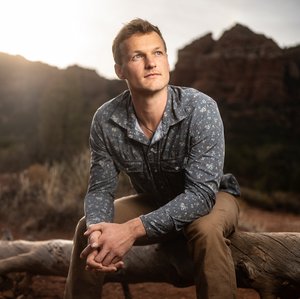
Dalton Johnson is a professional adventure and editorial photographer with over a decade of experience creating images on all seven continents. His client work includes Patagonia, GoPro, Arc'teryx, Four Seasons, Nike, Rivian, Big Agnes, Ford Bronco, and 160+ other brands. He runs Dalton Johnson Media as a full-service studio, from pre-production through post and distribution.