How To Talk With Photography Clients Without Mansplaining
In my years as an adventure photographer, one thing is clear: your clients know what they know, and sometimes that knowledge can be more than yours. But often, especially after you have been in the industry for a while, you find that the person hiring you knows less about the creative or technical side than you do. That means you have to recognize this, educate them, and keep moving forward.
Educating your client is not about lecturing or talking down to them. The moment you come across as a know-it-all or start mansplaining, you risk losing the job. Instead, approach every conversation with kindness and curiosity. Ask questions that help your client understand your creative vision or the technical needs of the shoot. This builds trust and makes them feel included and respected.
For example, rather than saying, “You don’t understand lighting,” try asking, “What kind of mood are you hoping to convey with this shot?” or “Have you thought about how natural light at this time of day will affect the final image?” These questions open a dialogue and help clients find the answers themselves. This makes collaboration smoother and the final product stronger.
It is a fine balance. You want to be the expert without alienating the person paying for your work. When you educate with empathy and patience, you build trust and long-term relationships that will benefit your career.
Remember, being a successful adventure photographer means more than capturing epic shots. It means communicating clearly and respectfully with the people who make those opportunities possible.
If you are struggling to find the right words or ways to educate clients without overstepping, I cover this topic in detail in The Adventure Photographer’s Playbook. It is packed with real-world strategies that help you grow your skills, your confidence, and your business.
This lesson comes from my ebook "The Adventure Photographer's Playbook" and it costs $10. Why so cheap? The goal is to help as many new to mid level photographers as possible go from nothing to getting booked in 18 months:
Read More From The Photographer’s Playbook
How to Climb Mount Massive in Colorado
Mount Massive lives up to its name. At 14,421 feet, it’s the second-highest peak in Colorado and just 14 feet shorter than Mount Elbert. What sets it apart is its long, hulking summit ridge—the mountain stretches over three miles and features five summits above 14,000 feet, more than any other peak in the Lower 48. Climbing Massive is a true alpine experience, and the standard East Slopes route offers a non-technical but strenuous path to the summit.
How to Climb Mount Massive in Colorado
Mount Massive lives up to its name. At 14,421 feet, it’s the second-highest peak in Colorado and just 14 feet shorter than Mount Elbert. What sets it apart is its long, hulking summit ridge—the mountain stretches over three miles and features five summits above 14,000 feet, more than any other peak in the Lower 48. Climbing Massive is a true alpine experience, and the standard East Slopes route offers a non-technical but strenuous path to the summit.
Getting to the Trailhead
From Leadville, head south on U.S. Highway 24 for about 3 miles, then turn right onto Colorado 300. After 0.8 miles, turn left onto Lake County Road 11. After 1.2 miles, keep right at the fork onto Halfmoon Road. The Mount Massive Trailhead is just before the North Mount Elbert Trailhead. In summer, most vehicles can make it to the trailhead, though the dirt road can get rough in places.
Route Overview: East Slopes
The route begins at 10,050 feet and follows the Colorado Trail for the first 3.2 miles. It’s a gentle start through lodgepole pine forest, gradually gaining elevation. After crossing Willow Creek, look for a marked junction where the Mount Massive Trail branches off to the right.
Once on the Mount Massive Trail, the climbing begins in earnest. The trail steepens as it climbs through treeline at about 11,500 feet and transitions into alpine tundra. The views open up quickly, with Mount Elbert looming to the south.
The route continues up long switchbacks along the east slopes before reaching the summit ridge—a broad, undulating ridge that offers sweeping views of the Sawatch Range. From here, it’s a final push to the true summit. The round-trip distance is about 13.6 miles with 4,500 feet of elevation gain.
Tips for Climbing Mount Massive
Get an early start. This is a long day, and much of the trail is above treeline and exposed to afternoon storms.
Though non-technical, the trail is steep and sustained. Come prepared with plenty of snacks, water, and layers.
Poles help immensely with both the climb and descent.
Because of its elevation and length, acclimatizing beforehand is a good idea.
The summit ridge can be windy and deceptively long—pace yourself and enjoy the views.
Mount Massive offers a big day out in the Colorado high country. It’s long, scenic, and truly massive—ideal for hikers looking for a challenging but rewarding summit.
"I Need That" a Poem by Dalton Johnson
"I Need That" is a poem by Dalton Johnson published in his first book 51 Poems For Humankind To Think About. This article also has a video of Dalton reading aloud his poem. You can purchase this book on Dalton Johnson's website or on Amazon.
I NEED THAT!
Phone, TV, Computer I NEED THESE!
No, no you don’t
All you need is a kick out the door.
You need to get out, Take a breath. Take a walk. Talk with stranger. Study. Observe nature. Work, hard.
America, we need to stop consuming! WE NEED, TO STOP!
We are confused,
What we need, is what we want. What we want, is what others have.
What is wrong, with what YOU already posses? NOTHING!
Order Your Copy Today: Buy on Amazon
Order Your Signed Copy Today:
Get your signed copy of 51 Poems For Humankind To Think About. Dalton Johnson's first book of poetry. These 51 poems are his critique of American hustle culture told from the perspective of a young man returning to the world after years of living off the grid on less than $500 a month.
These poems capture the internal battle of consumerism, American greed, humans loss of connection with the natural world, and pokes fun at some of the absurd cultural norms of adulting. Each poem touches on different parts of American's superficial society in hopes of promoting the change from group thought to individuality. For it is at the individual level Johnson belives you unlock your true self.
As you read these poems take some time to think about what stirs inside of yourself to find where you can change and grow into the human you want to be today and tomorrow.
Please Note: Signed paperback will be shipping the middle of April, 2025 and should arrive by the end of April
Know When To Say "No" To A Photography Job
In this industry, your clients usually know what they want — but not always what they need. And after you’ve spent some time in adventure photography, you start to realize that sometimes you actually know more than the people hiring you. That’s where the tricky part begins: educating your clients without coming across as a know-it-all.
I’ve learned that how you communicate this education makes all the difference. Instead of mansplaining or lecturing an art buyer, I ask questions. It’s about being kind and unassuming, guiding them toward understanding rather than pushing your expertise down their throat. Because if you mansplain? You’ll probably lose the job.
Let me share a personal story. Would you turn down a “free trip” to Antarctica? I did. If you read The Adventure Photographer’s Playbook, you might remember chapter 1, “Selling Shoots Not Your Soul.” This particular project ticked a lot of boxes on paper, but I just couldn’t say yes.
Sure, a dream trip for my girlfriend and me, no doubt. But the reality? I would have lost nearly $35,000 to make it happen. I sent a counteroffer to the company, but they said no. That was disappointing, but not surprising.
Was it hard to walk away? Honestly, no. I ran the numbers against my Cost of Doing Business. There was no way to make it work financially. The only other option was to turn it into a personal project and find funding, which I chose not to pursue at the time.
The lesson? Know your line in the sand and be willing to walk away from projects that don’t serve you professionally or financially. Stay civil and transparent in conversations — even if it means getting ghosted. Your integrity and long-term sustainability depend on it.
Remember, success as an adventure photographer isn’t about saying yes to everything — it’s about saying yes to the right things.
This comes lesson comes from my ebook "The Adventure Photographer's Playbook" and it costs $10. Why so cheap? The goal of this ebook is to help as many new to mid level photographers go from nothing to getting booked in 18 months as possible:
Read More From The Photographer’s Playbook
To Win In Photography, You Have To Play The Long Game
If you want to make it as an adventure photographer, you have to play the long game. I wish there was a faster route. But after nearly a decade in this industry, I can say this with confidence: every meaningful success I’ve had has been built slowly, layer by layer.
When I started in 2016, I thought if I just focused on getting better with a camera, the work would come. But the truth is, developing your craft is only one piece of a much bigger puzzle. You need time to grow your network. Time to learn how to market your work. Time to build a body of images that tells the world who you are and what you stand for. And time to figure out what kind of projects actually matter to you—the kind of work you’d do even if no one paid you.
I still feel like I’m just getting started. Some years are full of momentum; others feel like uphill climbs. But every step has been worth it because each one builds on the last. A shoot I said yes to five years ago led to a referral that turned into a dream assignment. A personal project I started in a dusty notebook now lives in print. None of it was instant.
If you're just starting out and hoping to make a living through travel or outdoor lifestyle photography, you need patience. Be in it for the long haul. Set goals, yes—but more importantly, show up consistently. Keep creating. Keep connecting. Keep refining your voice.
There's no secret formula. No algorithm hack. Just deep, intentional work over time.
Start now. Start small. And don’t stop.
This lesson comes from my ebook "The Adventure Photographer's Playbook" and it costs $10. Why so cheap? The goal is to help as many new to mid level photographers go from nothing to getting booked in 18 months as possible:
Read More Lessons From The Photographer’s Playbook
How to Climb Mount Elbert in Colorado
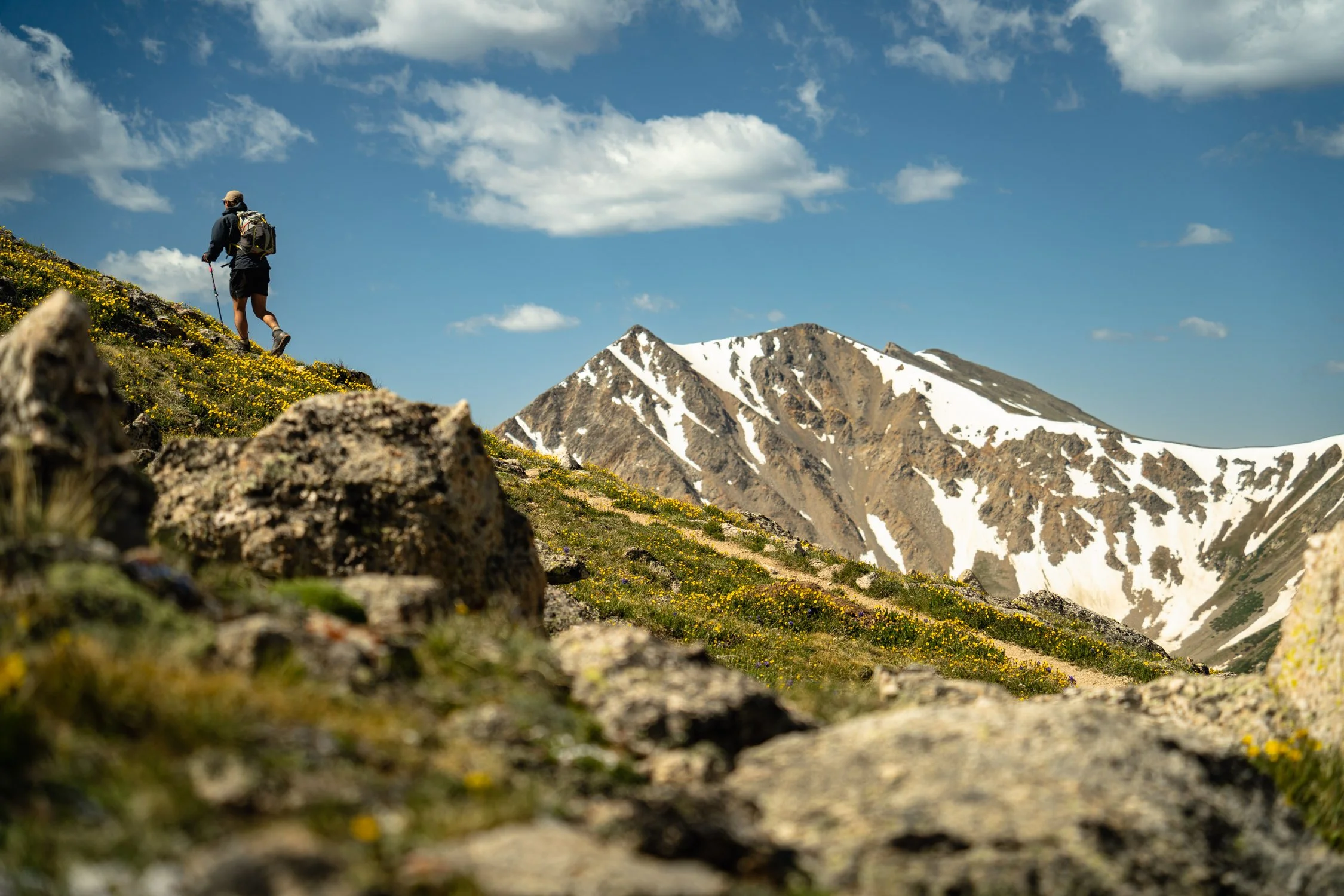
Mount Elbert stands as the tallest peak in Colorado at 14,440 feet and is the second-highest mountain in the contiguous United States. Despite its impressive height, Mount Elbert is one of the more accessible 14ers, making it a favorite for first-time summit attempts. The standard Northeast Ridge route offers a well-traveled Class 1 trail with expansive alpine views, moderate grades, and a steady climb through forest and tundra.
How to Climb Mount Elbert in Colorado
Mount Elbert stands as the tallest peak in Colorado at 14,440 feet and is the second-highest mountain in the contiguous United States. Despite its impressive height, Mount Elbert is one of the more accessible 14ers, making it a favorite for first-time summit attempts. The standard Northeast Ridge route offers a well-traveled Class 1 trail with expansive alpine views, moderate grades, and a steady climb through forest and tundra.
Getting to the Trailhead
From Leadville, head south on U.S. Highway 24 for about 3 miles, then turn right (west) onto Colorado 300. After 0.8 miles, turn left onto Lake County Road 11 and follow it for 1.2 miles until you reach a fork—stay right on Halfmoon Road. Continue past the Mount Massive trailhead until you reach the clearly signed Mount Elbert Trailhead (North Elbert Trailhead). Most passenger vehicles can reach the parking area in summer conditions, though the road can be rough in spots.
Route Overview: Northeast Ridge
From the trailhead (10,040 ft), the route starts with a gentle walk through pine forest and quickly begins to climb via well-maintained switchbacks. Around 11,600 ft, the trail exits treeline and transitions into alpine tundra, where views of the surrounding Sawatch Range open up.
From here, the route becomes more strenuous, with a few false summits along the way. The final ridge is wide and gradual but feels unrelenting due to the altitude. With steady effort, you'll reach the summit and be rewarded with 360-degree views that stretch as far as the Elk Mountains and the Mosquito Range.
The hike is approximately 9.2 miles round trip with 4,400 feet of elevation gain.
Tips for Climbing Mount Elbert
Start early—afternoon storms are common, and much of the trail is above treeline.
Though it’s a Class 1 hike, the altitude and elevation gain make it a physically demanding climb.
Bring plenty of water and sun protection. There is little shade after 11,600 feet.
Trekking poles help reduce fatigue on the long descent.
While non-technical, proper acclimatization is key—Elbert’s height can bring on altitude sickness if you're not prepared.
Mount Elbert may be Colorado’s tallest, but it’s a surprisingly approachable summit for hikers willing to put in the work. Don’t underestimate it—but with good preparation, this iconic 14er is one of the most rewarding climbs in the state.
How to Climb La Plata Peak in Colorado
La Plata Peak, rising to 14,336 feet, is the fifth-highest summit in Colorado and one of the most scenic 14ers in the Sawatch Range. Its name—Spanish for “The Silver”—reflects the mining history of the area, but today it draws hikers with its massive elevation gain, alpine views, and challenging terrain. The standard Northwest Ridge route is a tough but rewarding Class 2 climb with a bit of everything: forests, streams, switchbacks, talus, and ridge hiking.
How to Climb La Plata Peak in Colorado
La Plata Peak, rising to 14,336 feet, is the fifth-highest summit in Colorado and one of the most scenic 14ers in the Sawatch Range. Its name—Spanish for “The Silver”—reflects the mining history of the area, but today it draws hikers with its massive elevation gain, alpine views, and challenging terrain. The standard Northwest Ridge route is a tough but rewarding Class 2 climb with a bit of everything: forests, streams, switchbacks, talus, and ridge hiking.
Getting to the Trailhead
From the town of Twin Lakes, drive west on Highway 82 toward Independence Pass. After about 14 miles, look for the well-marked La Plata Peak Trailhead on the left (south) side of the road. The parking area sits at roughly 10,000 feet and is accessible by most vehicles in summer. There’s room for several cars, but it fills quickly on weekends.
Route Overview: Northwest Ridge
From the trailhead, cross a footbridge over the creek and begin a mellow climb through thick forest. After about 1.3 miles, the trail crosses South Fork Lake Creek and begins a steeper ascent through willows and talus. This stretch can be wet and muddy in early season, but is well-marked and easy to follow.
At around 12,000 feet, the route climbs a long, rocky ridge. The final 2,000 feet of gain is sustained and demanding, with some light route-finding through talus fields and brief Class 2 scrambling in the last half-mile. The summit is broad and offers exceptional views of the rugged Elk Mountains to the west and the surrounding Sawatch peaks.
The round-trip distance is approximately 9.25 miles with 4,500 feet of elevation gain.
Tips for Climbing La Plata Peak
The trail is well-defined early but becomes rocky and steep—expect slower travel above treeline.
Start early—most of the route is exposed after the creek crossing.
Trekking poles are useful for both the climb and the descent.
Snow can linger on the ridge well into June; traction may be required in early season.
Wildflowers line the lower trail in July and August, making for a scenic start and finish.
La Plata Peak is a big mountain that delivers a big mountain experience. With alpine terrain, a rugged summit ridge, and fewer crowds than nearby Mount Elbert, it’s a rewarding challenge for fit hikers looking for a classic Colorado 14er.
"All Things Which" a Poem by Dalton Johnson
"All Things Which" is a poem by Dalton Johnson published in his first book 51 Poems For Humankind To Think About. This article also has a video of Dalton reading aloud his poem. You can purchase this book on Dalton Johnson's website or on Amazon.
ALL THINGS WHICH
Red lights, money, responsibility, laws, transportation, overbearing guardians.
All things which restrict
the free-thinking minds,
who wish to express themselves.
Traffic-filled backroads, exuberant costs, family, bills,
a sense of security.
All things which clutter
a free-thinking mind, inhibiting self-expression.
Ocean, trees, fresh air,
fish, primates, birds,
plentiful beaches filled of sand.
All things which invoke free-thinking minds,
to create self-expression.
Order Your Copy Today: Buy on Amazon
Order Your Signed Copy Today:
Get your signed copy of 51 Poems For Humankind To Think About. Dalton Johnson's first book of poetry. These 51 poems are his critique of American hustle culture told from the perspective of a young man returning to the world after years of living off the grid on less than $500 a month.
These poems capture the internal battle of consumerism, American greed, humans loss of connection with the natural world, and pokes fun at some of the absurd cultural norms of adulting. Each poem touches on different parts of American's superficial society in hopes of promoting the change from group thought to individuality. For it is at the individual level Johnson belives you unlock your true self.
As you read these poems take some time to think about what stirs inside of yourself to find where you can change and grow into the human you want to be today and tomorrow.
Please Note: Signed paperback will be shipping the middle of April, 2025 and should arrive by the end of April
An Influencer Told BF Goodrich To Hire Me and They Listened, Here's Why
An influencer told BFGoodrich to hire me and they listened.
Why?
The influencer, Andrew Muse, knew he couldn't shoot the project himself as he needed to be the talent, but not many photographers understand the difference between commercial needs and influencer needs.
So, my name was brought up and I was hired.
Jobs with influencers can be tough because you have to create content that resonates with the influencers audience, in this case dogs & adventure, AND images that will work for commercial clients.
Shoots like this pack a one-two punch of brands, leveraging the influencers audience and the brands at the same time.
So, you can't screw it up and I was worried the morning of this shoot.
We woke up to cloudy skies with no chance of meat balls or clear skies. By call times, it was raining and there was no chance to reschedule.
At first we were bummed and figured this shoot was going to be a flop with the client as they requested clear skies. But, we chatted in the van as we ate some breakfast and just said, "screw it, let's get muddy!"
Embracing the mud and cloudy skies, we headed out into the lake bed and found every puddle we could find.
The good news, the project performed well on the influencers page and the clients was pleased.
It must have been the rainbow we got at the end of the day!
If you are an adventure-focused brand that needs a storyteller to bring marketing ideas to life, I'm your guy. Photo or video, I know how to make it happen in the best and worst of times. Shoot me an email dalton@dalton-johnson.com
Project Gallery
Here's How to Climb Huron Peak in Colorado
Huron Peak, at 14,003 feet, is one of Colorado’s most beloved 14ers—and for good reason. It offers stunning views, a well-built trail, and a more remote feel than many of the state’s other high peaks. Though it's one of the lower 14ers by elevation, Huron’s dramatic surroundings make it a standout summit experience in the Sawatch Range.
How to Climb Huron Peak in Colorado
Huron Peak, at 14,003 feet, is one of Colorado’s most beloved 14ers—and for good reason. It offers stunning views, a well-built trail, and a more remote feel than many of the state’s other high peaks. Though it's one of the lower 14ers by elevation, Huron’s dramatic surroundings make it a standout summit experience in the Sawatch Range.
Getting to the Trailhead
The most common route begins at the Clear Creek / South Winfield Trailhead, located off County Road 390 west of U.S. 24 between Buena Vista and Leadville. Follow CR 390 for 12 miles to reach Winfield. A 2WD vehicle can reach the lower trailhead, but a high-clearance 4WD vehicle is recommended to continue another 2 miles up the rough road to the upper trailhead (10,500 feet). If you're unsure, park at the lower lot and hike the road.
Route Overview: Northwest Slopes
From the upper trailhead, the trail climbs steadily through forest and open meadows before switchbacking above treeline. Wildflowers often blanket the lower basin in mid-summer. Once above treeline, the trail ascends Huron’s broad northwest slope and then narrows near the summit, with a few short Class 2 rock steps just before the top.
The route is about 6.75 miles round-trip from the upper trailhead, with roughly 3,500 feet of elevation gain. If starting from the lower trailhead, add 4 miles round-trip and 500 feet of gain.
Tips for Climbing Huron Peak
Huron’s summit views are some of the best in Colorado, with the jagged Three Apostles to the south stealing the show.
Because of its moderate length and solid trail, Huron is a great option for intermediate hikers working through the 14ers.
Start early to avoid afternoon storms, especially since most of the route is exposed after the first mile.
There are dispersed camping spots near Winfield and along CR 390—ideal for an early start.
While the final summit pitch has some rock scrambling, it’s short and manageable for most.
Huron Peak delivers all the alpine beauty you’d expect from a Colorado 14er without the crowds or extreme exposure. It’s a rewarding hike, a stunning photo op, and a must-do for anyone chasing summits in the Sawatch.
How to Climb Missouri Mountain in Colorado
Missouri Mountain, standing tall at 14,067 feet, is one of the more scenic peaks in the Sawatch Range. Known for its striking summit ridge and wide-ranging views, it offers a slightly more adventurous feel than its nearby neighbors, Mount Belford and Mount Oxford. While still non-technical, Missouri’s summit ridge adds just enough spice to make this 14er a standout.
How to Climb Missouri Mountain in Colorado
Missouri Mountain, standing tall at 14,067 feet, is one of the more scenic peaks in the Sawatch Range. Known for its striking summit ridge and wide-ranging views, it offers a slightly more adventurous feel than its nearby neighbors, Mount Belford and Mount Oxford. While still non-technical, Missouri’s summit ridge adds just enough spice to make this 14er a standout.
Getting to the Trailhead
Missouri Mountain shares the same access point as Belford and Oxford: the Missouri Gulch Trailhead off County Road 390. From U.S. 24, turn west between the towns of Leadville and Buena Vista and follow CR 390 for 7.8 miles. The road is usually passable for most passenger vehicles in summer, and the parking area fills quickly on weekends.
Route Overview: Northwest Ridge via Missouri Gulch
From the trailhead (9,650 feet), start up the well-maintained Missouri Gulch Trail. The first few miles climb steadily through forest, passing an old log cabin and eventually breaking treeline. After 3.5 miles, you’ll reach the split for Elkhead Pass (used for Belford and Oxford) and Missouri Mountain.
Turn left at the signed junction and continue up Missouri’s northwest ridge. This is where the trail steepens and narrows. The final push includes a bit of mild scrambling and exposure, but nothing that exceeds Class 2 difficulty. The ridge section is narrow in spots but manageable for most hikers with a head for heights.
Expect roughly 10.5 miles round-trip with 4,500 feet of elevation gain.
Tips for Climbing Missouri Mountain
The northwest ridge is exposed—avoid this route in bad weather or high winds.
Trekking poles help on the steep descent.
The views from the summit are spectacular: look for Huron Peak to the south and the rugged Elkhead Basin below.
While the trail is popular, it’s generally less crowded than Belford and Oxford.
Wildflowers light up Missouri Gulch in July and August, making it one of the more beautiful approaches in the Sawatch.
Missouri Mountain is perfect for hikers looking for a scenic summit with just a touch of alpine challenge. Its classic ridge and peaceful setting make it one of Colorado’s more underrated 14ers—and one that belongs on any serious peakbagger’s list.
"Connectionless" a Poem by Dalton Johnson
"Connectionless" is a poem by Dalton Johnson published in his first book 51 Poems For Humankind To Think About. This article also has a video of Dalton reading aloud his poem. You can purchase this book on Dalton Johnson's website or on Amazon.
CONNECTIONLESS
What anchors my feet to the ground which I walk,
so I don’t float away? How are my feet planted so firmly, upon this earth,
when I just feel like floating away. All I want to do is float,
float away from this earth, away from the emptiness which my heartless carcass feels.
For what do I connect with?
Nothing
connects this world to me. I have successfully floated away from this land which
I once walked upon.
Order Your Copy Today: Buy on Amazon
Order Your Signed Copy Today:
Get your signed copy of 51 Poems For Humankind To Think About. Dalton Johnson's first book of poetry. These 51 poems are his critique of American hustle culture told from the perspective of a young man returning to the world after years of living off the grid on less than $500 a month.
These poems capture the internal battle of consumerism, American greed, humans loss of connection with the natural world, and pokes fun at some of the absurd cultural norms of adulting. Each poem touches on different parts of American's superficial society in hopes of promoting the change from group thought to individuality. For it is at the individual level Johnson belives you unlock your true self.
As you read these poems take some time to think about what stirs inside of yourself to find where you can change and grow into the human you want to be today and tomorrow.
Please Note: Signed paperback will be shipping the middle of April, 2025 and should arrive by the end of April
Here's How to Climb Mount Oxford in Colorado
Mount Oxford, rising to 14,153 feet, is often summited as a tag-along to nearby Mount Belford. While not typically climbed on its own due to its remote location, Oxford offers rewarding solitude, stunning ridgeline hiking, and a true sense of accomplishment. It’s best suited for experienced hikers ready for a big day in the mountains.
How to Climb Mount Oxford in Colorado
Mount Oxford, rising to 14,153 feet, is often summited as a tag-along to nearby Mount Belford. While not typically climbed on its own due to its remote location, Oxford offers rewarding solitude, stunning ridgeline hiking, and a true sense of accomplishment. It’s best suited for experienced hikers ready for a big day in the mountains.
Getting to the Trailhead
Like Mount Belford, the standard route to Oxford begins at the Missouri Gulch Trailhead. From the town of Granite, turn west on County Road 390 and follow it for 7.8 miles to the trailhead. This dirt road is usually passable for most vehicles in summer, and there’s a well-used parking area at 9,650 feet.
Route Overview: Belford-Oxford Traverse via Missouri Gulch
You’ll first climb Mount Belford (14,197 feet) via its steep northwest ridge—about 4.5 miles and 4,500 feet of gain to reach the summit. From Belford, the real work begins. The route to Oxford follows a clear, defined ridge, dropping roughly 700 feet into the saddle before climbing another 600 feet to the summit of Oxford.
The out-and-back to Oxford from Belford adds about 3 miles round-trip and 1,200 feet of extra elevation change. While the trail remains Class 1, the terrain is entirely above treeline, fully exposed to wind, sun, and fast-changing weather.
On Mount Oxford's summit, you'll enjoy sweeping views across the Sawatch Range, with close-up looks at Harvard, Missouri, and the Elkhead Basin.
Tips for Climbing Mount Oxford
Consider Oxford only if you're feeling strong at the top of Belford. The return climb back up Belford’s ridge is steep and taxing.
Start early—this is a long, exposed route with minimal shelter from thunderstorms.
Carry at least 3 liters of water per person. There are no reliable water sources after leaving Missouri Gulch.
Expect few crowds. Many stop at Belford, so Oxford offers a quieter summit experience.
Pack layers. Wind and temperature can shift rapidly above 13,000 feet.
Mount Oxford might not be the flashiest 14er, but it offers classic high-alpine terrain and a true endurance challenge. For those looking to push their limits or cross multiple peaks in a single day, the Belford-Oxford combo is one of the best two-for-one routes in the state.
Here's How to Climb Mount Belford in Colorado
Mount Belford, standing tall at 14,197 feet, is one of Colorado’s Collegiate Peaks and a favorite for hikers aiming to summit multiple 14ers in a day. Its close proximity to Mount Oxford makes it an ideal two-peak outing, though Belford alone offers a satisfying challenge with big elevation gain, well-maintained trail, and expansive alpine views.
How to Climb Mount Belford in Colorado
Mount Belford, standing tall at 14,197 feet, is one of Colorado’s Collegiate Peaks and a favorite for hikers aiming to summit multiple 14ers in a day. Its close proximity to Mount Oxford makes it an ideal two-peak outing, though Belford alone offers a satisfying challenge with big elevation gain, well-maintained trail, and expansive alpine views.
Getting to the Trailhead
The Missouri Gulch Trailhead is the standard starting point. From the town of Granite, head west on County Road 390 (a well-graded dirt road) and continue for 7.8 miles to the trailhead parking area at 9,650 feet. The lot fills quickly in summer—arrive early, especially if you’re attempting the Belford-Oxford combo.
Route Overview: Northwest Ridge via Missouri Gulch
The hike begins with a steep series of switchbacks through dense forest, gaining nearly 1,500 feet in just the first mile. After crossing a footbridge over Clear Creek, the trail opens into the scenic Missouri Gulch. Take your time here—the scenery is stunning, especially in the morning light.
Continue climbing past treeline and a few old mining ruins until you reach a junction at about 12,000 feet. Go right to begin the long switchbacks up Belford’s northwest ridge. The trail is well-defined but steep, gaining over 1,500 feet in the final mile.
At the summit, you'll be rewarded with panoramic views of the Sawatch Range, including nearby Missouri Mountain, Mount Harvard, and Mount Oxford. The round-trip distance is approximately 7 miles with 4,500 feet of elevation gain.
Tips for Climbing Mount Belford
Start early—this route gains elevation quickly and is fully exposed above treeline.
Expect windy conditions on the upper ridge. Dress in layers and bring a windbreaker.
Bring plenty of water and snacks. The strenuous grade demands steady energy.
If continuing to Mount Oxford, expect an additional 3 miles and 1,200 feet of gain/loss.
Wildflowers are abundant in late July and early August—one of the prettiest gulches in the Sawatch.
Mount Belford offers a classic Colorado 14er experience: steep trail, sweeping alpine vistas, and a satisfying summit. Whether you climb it solo or tack on Mount Oxford, you’ll walk away with strong legs and a deeper appreciation for the rugged beauty of the Sawatch Range.
Here's How to Climb Mount Columbia in Colorado
Mount Columbia, at 14,073 feet, is part of Colorado’s Collegiate Peaks and lies just north of its loftier neighbor, Mount Harvard. Once notorious for its steep, eroded slopes, recent trail improvements have made this a more enjoyable hike—though it’s still a serious effort. The standard route via the new Columbia Trail remains Class 2, with long mileage, big gain, and sweeping views across Horn Fork Basin.
How to Climb Mount Columbia in Colorado
Mount Columbia, at 14,073 feet, is part of Colorado’s Collegiate Peaks and lies just north of its loftier neighbor, Mount Harvard. Once notorious for its steep, eroded slopes, recent trail improvements have made this a more enjoyable hike—though it’s still a serious effort. The standard route via the new Columbia Trail remains Class 2, with long mileage, big gain, and sweeping views across Horn Fork Basin.
Getting to the Trailhead
From Buena Vista, head north on US 24 and turn west on County Road 350. After about 2 miles, turn right onto County Road 365 and follow it to the North Cottonwood Creek Trailhead at 9,880 feet. The road is graded dirt and generally passable to most vehicles in summer. The parking area is small and fills early—arrive before sunrise or consider overnighting in the basin.
Route Overview: West Slopes via Horn Fork Basin
Start on the Horn Fork Basin Trail, the same approach used for Mount Harvard. The trail climbs steadily through pine forest and opens up into alpine tundra around 11,400 feet. At roughly 11,600 feet, a signed junction marks the turnoff for the Mount Columbia Trail—take a right and begin climbing Columbia’s western slopes.
The new trail is well-built and makes use of long switchbacks to gain the ridge, avoiding the steep and eroded fall line that gave this mountain a bad reputation. Once on the ridge, follow the cairned route over rock and tundra toward the summit. The final push involves some loose talus and a faint trail, but nothing technical.
From the summit, you’ll get clear views of Mount Harvard, Mount Yale, and the surrounding wilderness. Total round-trip distance is about 11 miles with 4,250 feet of elevation gain.
Tips for Climbing Mount Columbia
The climb is best done late June through September—snow lingers on the upper trail in early season.
If combining with Mount Harvard, prepare for a steep and rugged ridge traverse—there’s no easy connection between the two.
Bring plenty of water; there are no reliable sources once you leave the main Horn Fork trail.
Trekking poles help significantly on the descent.
Be ready for wind exposure above treeline, especially on the summit ridge.
Mount Columbia is no longer the muddy mess it once was. Thanks to thoughtful rerouting, this peak offers a more enjoyable trail experience while still delivering the wild beauty and solitude of the Collegiate Peaks.
"Roller-Caster Rides" a Poem by Dalton Johnson
"Roller-Caster Rides" is a poem by Dalton Johnson published in his first book 51 Poems For Humankind To Think About. This article also has a video of Dalton reading aloud his poem. You can purchase this book on Dalton Johnson's website or on Amazon.
ROLLER-COASTER RIDES
I
Emotional roller-coaster; up, down,
climbing, falling, loops, up-side-down.
Life is such, except
you don’t pay ten dollars
to get on and walk away
after ninety seconds of exhilaration.
For each movement on
this figurative roller-coaster takes days, weeks, months, even years.
II
Peering upon the twist
and turns, pondering to myself thoughts of eagerness and fear,
I prepare myself for what is to come in my near future. For I can
see that. However, in this unpredictable life
there are no promises, or preparations taken to overcome
the twist and turns
only to coast downhill.
III
Life is uncertain, uncontrollable,
unfathomable to all, alive.
Only the lifeless
know what is to come, Nothing! For the dead
will remain in the ground
never to wander the streets again and those never given life will remain lifeless.
So, remain alive and continue riding as many ups, downs, climbs and falls
as possible.
Order Your Copy Today: Buy on Amazon
Order Your Signed Copy Today:
Get your signed copy of 51 Poems For Humankind To Think About. Dalton Johnson's first book of poetry. These 51 poems are his critique of American hustle culture told from the perspective of a young man returning to the world after years of living off the grid on less than $500 a month.
These poems capture the internal battle of consumerism, American greed, humans loss of connection with the natural world, and pokes fun at some of the absurd cultural norms of adulting. Each poem touches on different parts of American's superficial society in hopes of promoting the change from group thought to individuality. For it is at the individual level Johnson belives you unlock your true self.
As you read these poems take some time to think about what stirs inside of yourself to find where you can change and grow into the human you want to be today and tomorrow.
Please Note: Signed paperback will be shipping the middle of April, 2025 and should arrive by the end of April
Real Content Wins Over Staged Creative Everytime
Have you ever watched somebody scroll their feed? People move quick and don't give you a second chance if you're a brand putting out sterile content that is staged.
Consumers will swipe past staged images in .2 of a second.
To succeed in the content game pretty photos only go so far.
To succeed in the content game stunning drone clips only go so far.
To succeed in the content game studio created ads only go so far.
To succeed in the content game, the content needs to be real. authentic. emotional.
That type of content starts by investing in creative that showcases real people doing real things with your product. Think road trips, expeditions, thru-hikes, backpacking trips, etc. The companies who start from the ground and build up, they are winning.
Why is North Face winning?
Why is Yeti winning?
Why is Huckberry winning?
Their content is real! Real athletes, ambassadors, & people doing rad things with their product.
This is the type of content I create for brands in two ways:
1) a brand comes to me with an idea, I produce it, shoot it, and deliver it
2) 4 times a year I embark on content trips with a crew and create content for brands of their products in use
My next trip is coming up in Colorado check it out:
https://dalton-johnson.com/northern-colorado-road-trip
If you are a brand who wants to have a brand story told, send me an email: dalton@dalton-johnson.com
Here's How to Climb Mount Harvard in Colorado
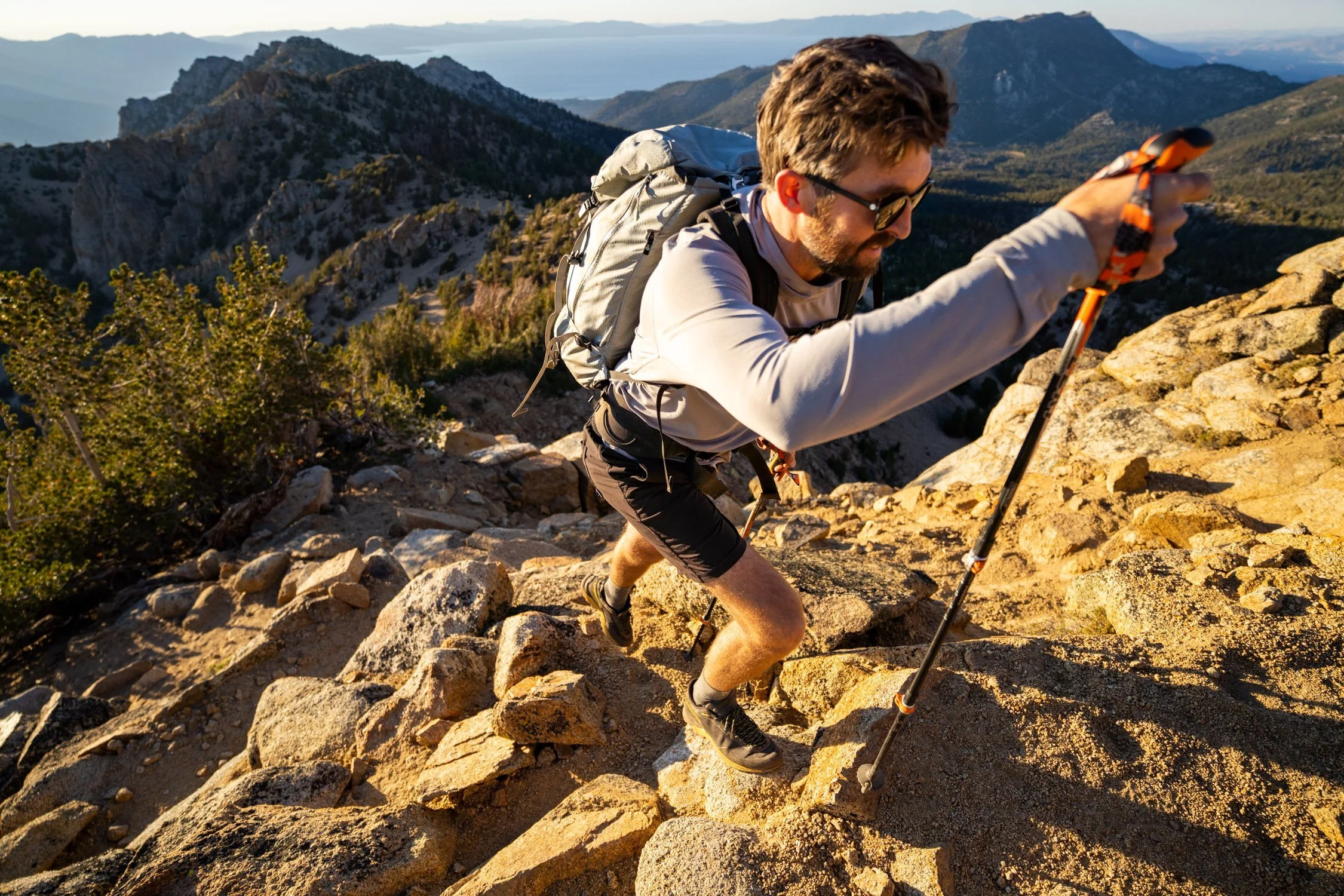
Mount Harvard stands at 14,420 feet and is the third-highest peak in the Lower 48. Nestled deep in the Collegiate Peaks Wilderness, it’s a long, non-technical Class 2 hike that rewards endurance with big alpine views and quiet summit solitude. The route is straightforward, but the approach is long—expect a full-day effort.
How to Climb Mount Harvard in Colorado
Mount Harvard stands at 14,420 feet and is the third-highest peak in the Lower 48. Nestled deep in the Collegiate Peaks Wilderness, it’s a long, non-technical Class 2 hike that rewards endurance with big alpine views and quiet summit solitude. The route is straightforward, but the approach is long—expect a full-day effort.
Getting to the Trailhead
From Buena Vista, head north on US 24 and turn west on Chaffee County Road 350. After about 2 miles, turn right onto County Road 365 and follow it to the North Cottonwood Creek Trailhead at 9,880 feet. The road is graded dirt—passable for most vehicles in summer. The trailhead has a small parking area that fills quickly on weekends. Arrive early or consider camping nearby.
Route Overview: South Slopes via Horn Fork Basin
Begin on the Horn Fork Basin Trail, which follows a clear path through dense forest alongside North Cottonwood Creek. The grade is gentle for the first few miles, climbing steadily into Horn Fork Basin—one of the most scenic alpine valleys in the Sawatch Range.
At around 12,000 feet, stay right at the junction below Mount Columbia. From here, the trail steepens as it climbs toward Harvard’s upper slopes. The final mile features some light talus hopping and steeper tread, but no scrambling. A few faint use trails may appear near the summit—stay on the most defined path to avoid damaging the fragile tundra.
The summit offers panoramic views across the Collegiate Peaks Wilderness. The round-trip is approximately 14 miles with about 4,600 feet of elevation gain.
Tips for Climbing Mount Harvard
Start early—the approach is long and the entire upper route is exposed to weather.
Water is available from North Cottonwood Creek and streams in the basin—bring a filter.
Camping in Horn Fork Basin is popular if you want to split the climb over two days.
Use trekking poles and bring sun protection—the hike stays above treeline for hours.
Be prepared for a long return—many hikers underestimate the descent.
Mount Harvard offers one of the most scenic and rewarding hikes in the Sawatch. While the mileage is big, the trail is manageable for fit hikers, and the remote setting makes it a true Colorado wilderness experience.