Why Most Photographers Quit Too Early on Outreach
The most common reason photographers do not build the client roster they want has nothing to do with their work. The work is usually good enough. It has nothing to do with the pitch either. Most pitches are fine. The reason is simpler and harder to fix than either of those things. They stop too soon.
Outreach is a long game played in an industry that moves slowly. The photographers who figure that out early build something real. The ones who do not spend years wondering why their work is not landing the clients it deserves.
CASE STUDY: Take a deep dive into one of Oru Kayak's most successful launches
The Timeline Most Photographers Expect vs. What Actually Happens
Ask most photographers how long they are willing to pitch a brand before moving on and the answer is usually somewhere between one and three months. A handful of emails, maybe a follow up or two, and if nothing comes back they cross the brand off the list and try someone new. That timeline is about a tenth of what actually works.
The outdoor industry moves on a product launch cycle. Brands allocate campaign budgets around specific releases, usually one to three per year. Outside of those windows there is no budget and no decision to make regardless of how good the pitch is. A photographer who pitches for three months and stops may have never overlapped with a single launch window during that entire period. They walked away from a relationship that was never given enough time to encounter the right conditions.
The Oru Kayak campaign came together after close to a year of outreach. Six months of complete silence followed by a handful of soft replies before a real conversation finally started. If the outreach had stopped at month three or month six, the project never happens. The relationship that eventually produced one of Oru Kayak's most successful product launches and two subsequent campaigns existed entirely because the outreach continued past the point where most photographers would have given up.

Follow Dalton Johnson on your favorite platform: @storiesbydalton
Silence Is Not the Answer You Think It Is
Photographers quit outreach because silence feels like rejection. It does not feel neutral. It does not feel like waiting. It feels like a no that nobody bothered to say out loud. That interpretation is understandable and it is almost always wrong.
Silence in the outdoor industry is the default state. Marketing managers are managing multiple vendors, multiple campaigns, and multiple internal priorities at once. A cold email from a photographer they have not worked with before is not at the top of anyone's inbox. It gets seen, maybe, and set aside for a moment that never quite arrives. That is not a judgment about the work. It is just the reality of how busy people manage their attention.
The photographers who internalize this stop reading silence as a signal about their work and start reading it as information about timing. The brand is not ignoring you. The window is just not open yet. Keep showing up. When the window opens, and for most active brands it will open at least once or twice a year, you want to be the name that has been showing up consistently rather than the name that sent one great email four months ago and was never heard from again.
Quick Note: If you find this article helpful, the idea come from The Adventure Photographer's Playbookand it costs $10. Why so cheap? The goal is to help as many new to mid level photographers as possible go from nothing to getting booked in 18 months. If that is you, check it out.
Here’s What Lives In My Gear Bag:
Sony a7r4; my work horse
Sony a7s3; mostly for video work like solo-filmmaking documentary
Tamron 16-30; probably my favorite lens right now
Tamron 28-75; I think this is the best all around focal length
Tamron 70-180; I don’t use this a ton, but it’s a great lens
What Quitting Too Early Actually Costs You
The cost of stopping outreach too soon is invisible because you never see what you walked away from. You do not get a notification when a brand you stopped pitching finally opens a campaign window and hires someone else. You just never hear from them. That absence is easy to rationalize as confirmation that they were never going to hire you anyway. It is usually not true.
Over five years of consistent outreach to roughly 300 contacts, about 20 have converted to paying clients. That is a seven percent conversion rate across the full list. But the timing on those conversions was spread across years. Some came together quickly. Some took eighteen months. A few took longer. If the outreach had stopped running at the six month mark across the board, the conversion rate would be close to zero and the client roster would look completely different.
Every photographer who quit a pitch sequence too early has a version of this story they do not know about. A brand they stopped pitching three months before a product launch. A relationship they let go cold six weeks before a creative director changed roles and started greenlighting new vendors. The cost of quitting early is real. It just never shows up in a way that makes it obvious.
How to Stay in It When Nothing Is Happening
The practical challenge of not quitting too early is that outreach with no visible return is genuinely demoralizing. You are doing work that produces nothing you can see and it is easy to start questioning whether the work is worth doing. That feeling is normal. It is also the exact moment where the discipline to keep going separates the photographers who build something from the ones who stay stuck.
A few things make it easier. First, build the cadence into a system rather than a decision. When outreach runs on a fixed schedule every two weeks across the full list, it stops being something you have to motivate yourself to do and becomes something that just happens. Systems are easier to sustain than willpower. Second, measure activity rather than outcomes in the early months. You cannot control when a brand opens a campaign window. You can control whether you are in their inbox when it does. Track the outreach, not the responses. Third, remember that the math only works if the volume is high enough. Pitching ten brands and getting no response in six months tells you nothing useful. Pitching a hundred brands consistently for a year starts to give you real data about what is working and what is not.

Follow Dalton Johnson on your favorite platform: @storiesbydalton
The Takeaway
The photographers who build the client rosters worth having are not the ones with the best pitches. They are the ones who were still showing up when everyone else had already stopped. That is a lower bar than it sounds and a higher standard than most photographers actually meet.
Pick a number you can sustain. Build the list. Set the cadence. Then do not stop. Not after a month of silence. Not after a soft no. Not after six months of nothing. The outdoor industry moves slowly and rewards patience in ways that are not visible until they suddenly are.
The Oru Kayak campaign is one example. It is not an outlier. It is what consistent long-term outreach produces when you give it enough time to work.
Reflection Questions
What is the longest you have ever sustained outreach to a single brand and what made you stop when you did?
How do you currently distinguish between silence that means no and silence that means not yet, and is that distinction showing up in how you manage your outreach list?
If you measured your outreach by activity rather than outcomes for the next six months, what would change about how you approach it?
Is there a brand you stopped pitching in the last year that you wish you had stayed with, and what would you do differently if you started that outreach again today?
Want to create adventure photography campaigns like this? My The Adventure Photographer's Playbook breaks down everything you need to do and it only costs $10. Why so cheap? The goal is to help as many new to mid level photographers as possible go from nothing to getting booked in 18 months:

The Adventure Photographer’s Playbook is an e-book created by full-time photographer Dalton Johnson to help new photographers go from nothing to booked in the adventure photography space.
This adventure photography e-book goes over the business and what “making it” as a photographer in the outdoor space requires. Covering topics such as pricing, marketing, building a body of work, reflection questions, and everything you need to know to make a career out of adventure photography.
Updated: June 2025
Read More About Adventure Photography
About Dalton
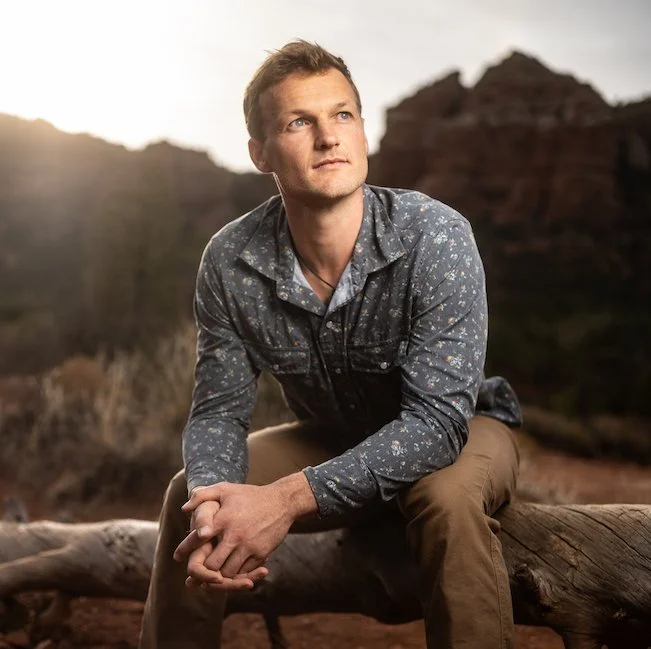
Dalton Johnson is a photographer, director, and writer (award-winning at all three) based in South Lake Tahoe, CA.
Over the last 10 years, Dalton’s creative work has taken him to every continent, above the arctic circle, and below the antarctic circle.