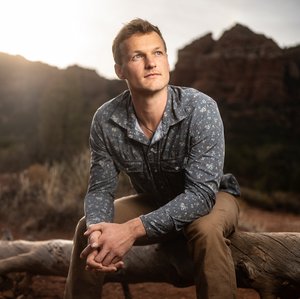
The Gear I Actually Carry on an Adventure Photography Shoot
People ask me about gear constantly. It's usually the first question, which tells you something about where most photographers put their energy early in their careers. Gear matters, but it matters a lot less than most people think. After a decade shooting on all seven continents for brands like Patagonia, Arc'teryx, Big Agnes, and Ford, here's what I actually carry and why.
Quick Note: If you find this article helpful, the idea come from The Adventure Photographer's Playbookand it costs $10. Why so cheap? The goal is to help as many new to mid level photographers as possible go from nothing to getting booked in 18 months. If that is you, check it out.

Follow Dalton Johnson on your favorite platform: @storiesbydalton
Start With the Trinity of Zooms
The foundation of my kit is three zoom lenses that together cover roughly ten millimeters on the wide end all the way out to two hundred millimeters on the long end. The specific ranges I work with are a sixteen to twenty-four, a twenty-four to seventy, and a seventy to two hundred. Those three lenses cover almost every scenario I run into on a shoot, from wide environmental portraits in tight spaces to compressed telephoto shots of athletes moving fast across a landscape.
I shoot Sony, two bodies. The reason for two bodies isn't redundancy alone, it's efficiency. Swapping lenses in the field costs time and introduces dust and moisture risk. Having two bodies mounted with different focal lengths means I'm always ready for whatever happens next. In adventure photography, the moment rarely waits for you to change a lens.
Batteries and Storage Are the Real Logistics Problem
On a multi-day shoot where charging isn't guaranteed, batteries become your most critical resource. I carry six to ten batteries depending on the length of the project and whether I have access to power. If I'm heading into a situation where I can't charge at all, I err toward ten. Cold weather drains batteries faster than anything else, so I keep spares in a chest pocket or with hand warmers to maintain temperature and extend life.
Storage is the same conversation. I bring enough cards to never have to erase anything in the field. Five hundred gigabytes minimum for a shorter project. More for anything longer. On bigger productions I run a full Digitech setup to back everything up each night. On solo projects I keep cards organized obsessively because losing a card in the field with no backup is a career-ending mistake waiting to happen.
Here’s What Lives In My Gear Bag:
Sony a7r4; my work horse
Sony a7s3; mostly for video work like solo-filmmaking documentary
Tamron 16-30; probably my favorite lens right now
Tamron 28-75; I think this is the best all around focal length
Tamron 70-180; I don’t use this a ton, but it’s a great lens
The Kit Scales With the Production
Here's what most gear conversations miss: the right kit depends entirely on the size and scope of the production. On the Lassen and Shasta project last winter, I was a solo shooter managing brand deliverables for multiple companies simultaneously. That meant one drone, a gimbal, two camera bodies, my three lenses, a tripod, and enough batteries and cards to shoot for seven days without reliable power. Everything fit in my van and on my back.
On a larger commercial production, that kit expands significantly. Multiple cameras, multiple tripods, cine cameras, different GoPros for underwater and action footage, a full lighting setup, multiple drones, filters, terabytes of storage. The principles are the same but the scale is completely different. The job defines the kit, not the other way around.
Water and Weather Protection
If the shoot involves water, I use an Aquatech housing. I've used a lot of different housings over the years and Aquatech has been the most reliable for the kind of work I do. The basic models are point and shoot once the camera is sealed inside. The higher-end versions give you access to back controls, different port options for different lenses, and a zoom mechanism that actually works underwater.
For rain and wet conditions that don't require full submersion, a rain cover or a simple plastic bag works. Some photographers tape a filter to a trash bag and slip it over the lens port. It sounds janky but it works. I also keep silica packets in my bag to manage moisture on longer trips in wet environments.
Follow Dalton Johnson on your favorite platform: @storiesbydalton
The Honest Minimum
If you stripped everything back to the bare minimum needed to shoot adventure photography professionally, here's what that looks like: one camera body, one twenty-four to seventy lens, two to three batteries, two hundred and fifty to five hundred gigabytes of storage. That's it. Everything else is an addition based on the specific demands of the project.
The photographers who obsess over gear before they obsess over access, light, and storytelling are usually the ones who show up with beautiful equipment and average images. The gear is a tool. Know it well, pack smart, and then forget about it.
Reflection Questions
Are you carrying gear that serves the actual demands of your shoots, or gear that makes you feel prepared for shoots you haven't landed yet?
What's the minimum kit you could take on your next project and still deliver everything the client needs?
Have you ever lost a shoot or missed a moment because of a gear failure that better planning could have prevented?
If you had to pack everything into one backpack tomorrow and fly somewhere for a week-long shoot, what would actually make the cut?
This lesson comes from my The Adventure Photographer's Playbook and it costs $10. Why so cheap? The goal is to help as many new to mid level photographers as possible go from nothing to getting booked in 18 months:

The Adventure Photographer’s Playbook is an e-book created by full-time photographer Dalton Johnson to help new photographers go from nothing to booked in the adventure photography space.
This adventure photography e-book goes over the business and what “making it” as a photographer in the outdoor space requires. Covering topics such as pricing, marketing, building a body of work, reflection questions, and everything you need to know to make a career out of adventure photography.
Updated: June 2025
Read More From The Photographer’s Playbook
About Dalton
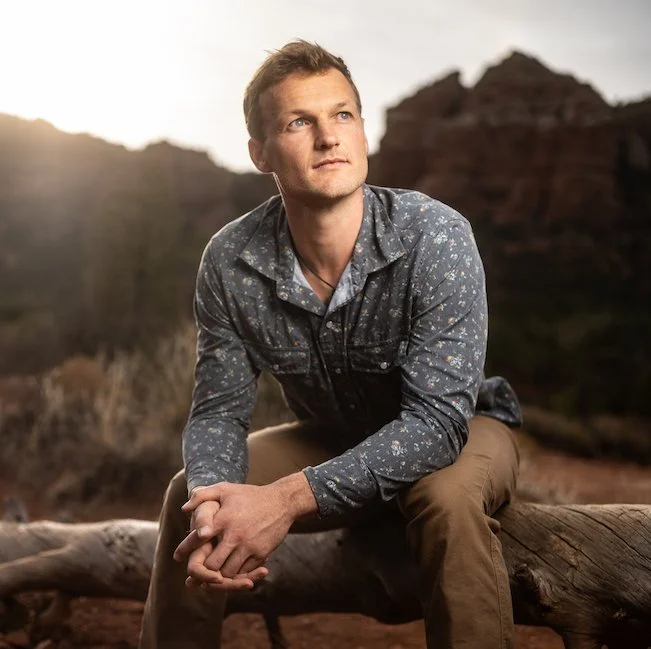
Dalton Johnson is a photographer, director, and writer (award-winning at all three) based in South Lake Tahoe, CA.
Over the last 10 years, Dalton’s creative work has taken him to every continent, above the arctic circle, and below the antarctic circle.