Every Photographer Should Photograph the Golden Gate Bridge at Both Sunrise and Sunset
as always, the full gallery is at the bottom, so skip there if you don’t care about the words
I'll say the obvious thing first. The Golden Gate Bridge is overphotographed. It's one of the most common, most photographed landmarks in the world, and if you're trying to find some hidden gem nobody has ever shot before, this isn't it.
And yet, I still think every photographer road tripping the PCH should spend at least one sunrise and one sunset here. Here's why.
What Common Places Teach You
There's real value in photographing places everyone else photographs too. When a location is this iconic, this photographed, and this studied, you get to see exactly what makes a great image work. You start noticing why certain angles get shared over and over, why certain times of day matter so much, and why the same handful of viewpoints keep showing up in everyone's feed.
Spend a sunrise and a sunset here and you start to understand the anatomy of a truly great photograph, not just of the bridge, but of any iconic location. That lesson travels with you long after you leave San Francisco.
Talk to the People Who Show Up
Something else happens when you post up at a famous spot during golden hour. Other photographers show up too. You end up talking with people, comparing notes, hearing about other angles and other times that worked for them. That kind of casual exchange rarely happens at some empty roadside pullout. It happens at places like this, where a crowd of people with cameras all care about the same golden hour light.
Shoot Both Sides, Not Just One
If you only photograph the bridge from one angle, you're leaving most of the story untold. The bridge looks completely different depending on which side of the bay you're standing on, so plan to hit both.
On the north side, in the Marin Headlands, Battery Spencer is one of the most reliable viewpoints. It sits up high, gives you an uninterrupted view of the bridge, and works especially well if fog is rolling through since the elevation puts you above a lot of it. Hawk Hill, also in the Marin Headlands, is a favorite for sunrise thanks to its high vantage point over the whole bay. If you're up for a short walk, Kirby Cove leads down toward Kirby Beach, which gives you a clear angle on the bridge with the city skyline behind it, another strong sunrise option.
On the south side, closer to the city itself, you've got a few solid choices. Battery Lancaster, near the Golden Gate Bridge Welcome Center, frames the bridge with Fort Point in the foreground. Battery Godfrey gives a wider, more open view and sits close to the trail down to Marshall's Beach. Marshall's Beach itself is one of the closest beach access points to the bridge and tends to be quieter than the more popular lookouts. Crissy Field offers a mix of grassy park views and sandy beach trails, plenty of room to find your own composition. And Baker Beach is the classic sunset spot, where you can use the Pacific surf and shoreline rocks as foreground elements while the bridge glows in the evening light.
Here’s What Lives In My Gear Bag:
Sony a7r4; my work horse
Sony a7s3; mostly for video work like solo-filmmaking documentary
Tamron 16-30; probably my favorite lens right now
Tamron 28-75; I think this is the best all around focal length
Tamron 70-180; I don’t use this a ton, but it’s a great lens
When to Go, and Why You Need a Car
Spring is one of the best times to make this trip, largely because of the wildflowers. The hillsides around the Marin Headlands fill in with color as the season goes, and if you time it for slightly later in spring rather than the very start, you'll catch them in much better bloom. That window makes for a completely different kind of foreground than the usual grass and rock.
One thing to plan for either way: you need a car for this stop. You're moving between the north side in the Marin Headlands and the south side near the city, and that back and forth just doesn't work with rideshares. Between the drive times, the parking, and the flexibility of chasing light as it changes, having your own vehicle is close to essential here.
Beyond Stills: Video and Night Photography
This spot isn't just a stills location either. Video works really well here, between the scale of the bridge, the movement of fog rolling through, and the changing light across a full sunrise or sunset session.
Night photography is another strong option worth building into your visit. Long exposures of the bridge lit up at night, with car light trails streaming across the deck, create a completely different image than anything you'll get during the day. If you're willing to stick around after sunset, it's worth the wait.
More Than Just a Photo Op
Beyond the photography angle, this is just a stunning place to stand. You're looking out at the Pacific Ocean, watching one of the most recognizable structures in the world frame the water in front of you. It's one of those stops on the PCH where the scenery does most of the work, and you just have to show up at the right time to catch it.
I love stopping here every time I pass through, not because it's some undiscovered secret, but for the opposite reason. It's proof that some places earn their reputation.

The Golden Gate bridge at sunset from the south side. Follow Dalton on your favorite platform: @storiesbydalton
The Takeaway
Don't skip the Golden Gate Bridge because it feels too obvious or too crowded. Shoot it from the north, shoot it from the south, catch it at sunrise and again at sunset, and pay attention to why it works. That lesson will make every other stop on your PCH road trip a little bit better.
If you enjoyed this story, follow @storiesbydalton on your favorite platform.
Thank you for reading this journal entry. If you have enjoyed it and have something to add, send me an email: dj@dalton-johnson.com
✌️
The Day’s Gallery

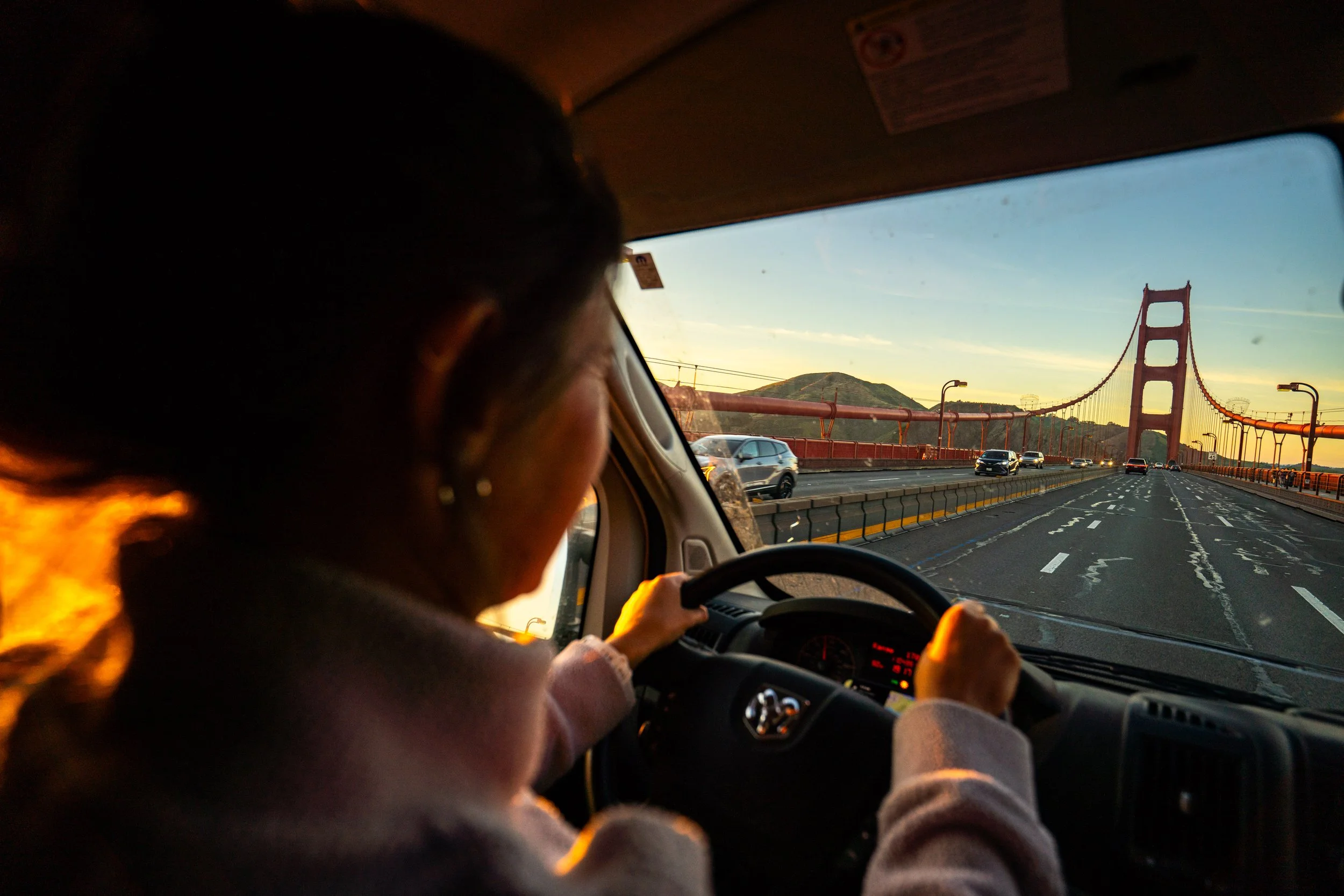


Read More About The California Coast


About Dalton:

Dalton Johnson is a photographer, direcot, and writer (award-winning at all three) based in South Lake Tahoe, CA.
Over the last 10 years, Dalton’s creative work has taken him to every continent, above the arctic circle, and below the antarctic circle.