
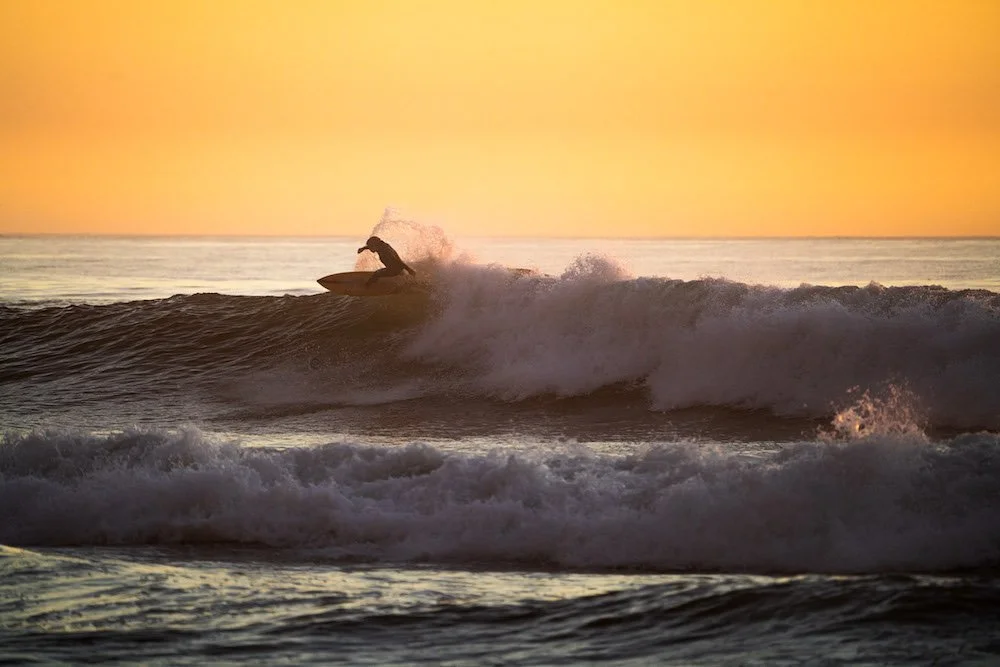
Three Tips for Taking Better Silhouette Photographs
Imagine, it's a Friday night and you want to go hang with your buddies for an afternoon surf, but can't get in the water. This doesn't mean you can't have a good time. Heck, you might even be able to have more fun. Well, this is kinda the situation that I was in, but still wanted to hang out, so what did I do? Well, I grabbed my camera and headed to the beach.

Video Link at the BOTTOM for visual learners
Imagine, it's a Friday night and you want to go hang with your buddies for an afternoon surf, but can't get in the water. This doesn't mean you can't have a good time. Heck, you might even be able to have more fun. Well, this is kinda the situation that I was in, but still wanted to hang out, so what did I do? Well, I grabbed my camera and headed to the beach.
Locked and loaded with the 150-500mm lens, I joined in the action in my way, from behind the lens. Photographing @andrew__muse and @kickerdogmuse during a surf session. My goal was to shoot a little story about going to beach, focused on silhouette to create a timeless feel. Here are a few tips I focus on to get create silhouette images:
First, face subject into the sun:
While counterintuitive and breaking the "rules" of photography 101, shooting into the sun to make the subject backlit.
Second, place the subject just above the horizon:
This means, get your body on the ground if you have to. Heck, you will often find me rolling in the dirt to make this happen! Pro tip, don't wear your Sunday best while shooting.
Third, have a clean background:
The key is to have the background be simple, clean, and bright. Sunset or sunrise works best for this. You can shoot midday, but shadows become complicated!
Summary
Well, there you have it, this is how I focus on shooting silhouettes.
But remember, this is was more about joining in the fun with friends, even though you might not be able to get in the water for a surf. So, how do I do that? Well, as a photographer one of the best gifts I can give are images of my friends. So, I hook them up with some of the frames from that day and we get to laugh at some of the bloopers and crashes, meanwhile gawking at the images which capture them riding waves!
Long story short, there is almost always a good way for you to join your friends on an adventure, so get out there and live!

Creating Content for the Ford Bronco
Quite honestly, I would not have guessed when I made my business official (aka got a business license and started paying taxes under the business name "Dalton Johnson Media") roughly three years ago, that I would be photographing a campaign for @fordbronco or @outwardboundusa anytime soon. Realistically, I just wanted to pay my way by shooting odd jobs here and there to fuel my adventures. I really never had a list of dream clients, nor did I care to reach out to clients. While some of that has changed, my focus remains the same. I am here to live my life in accordance to my own view of success.
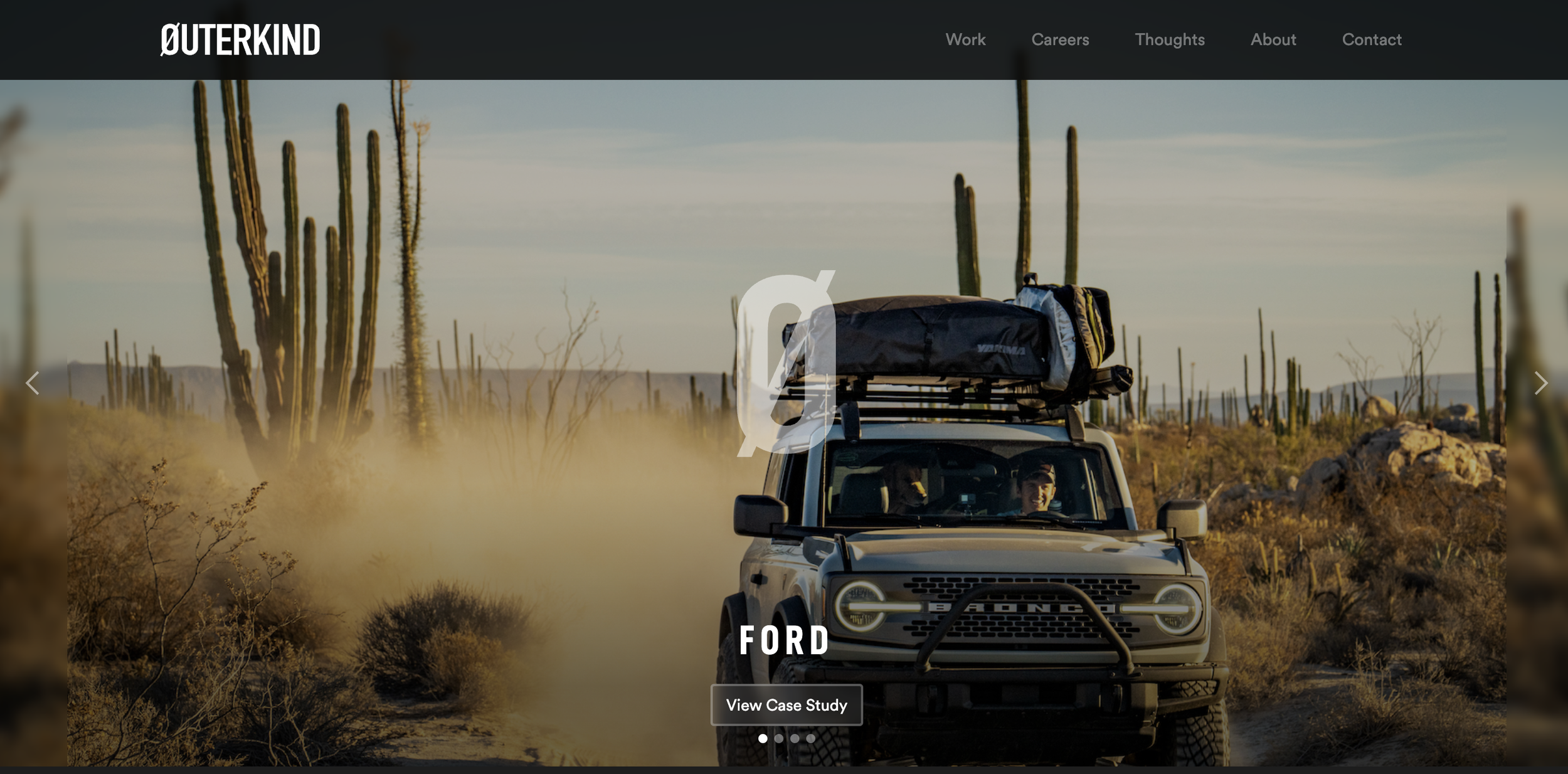
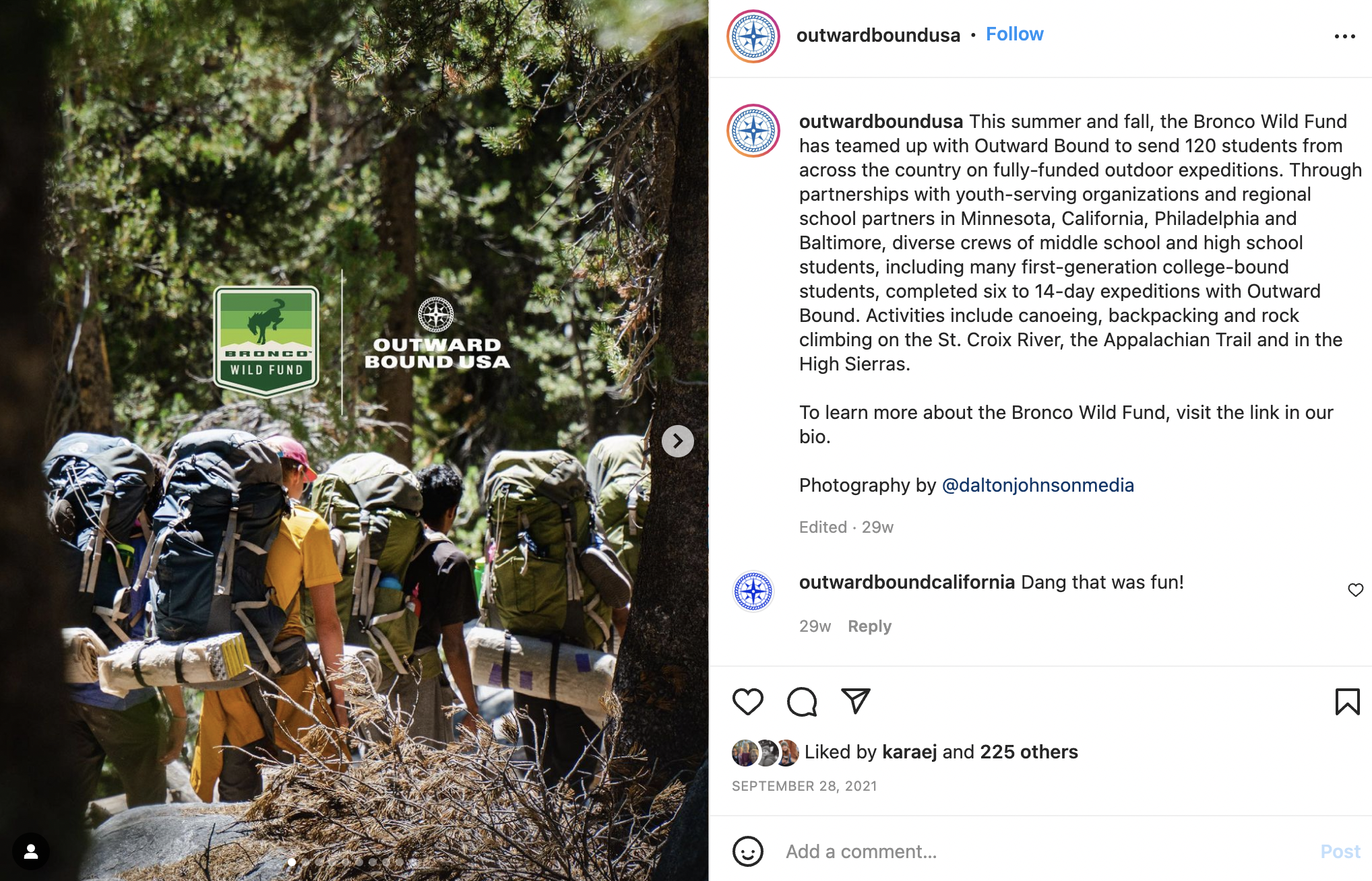
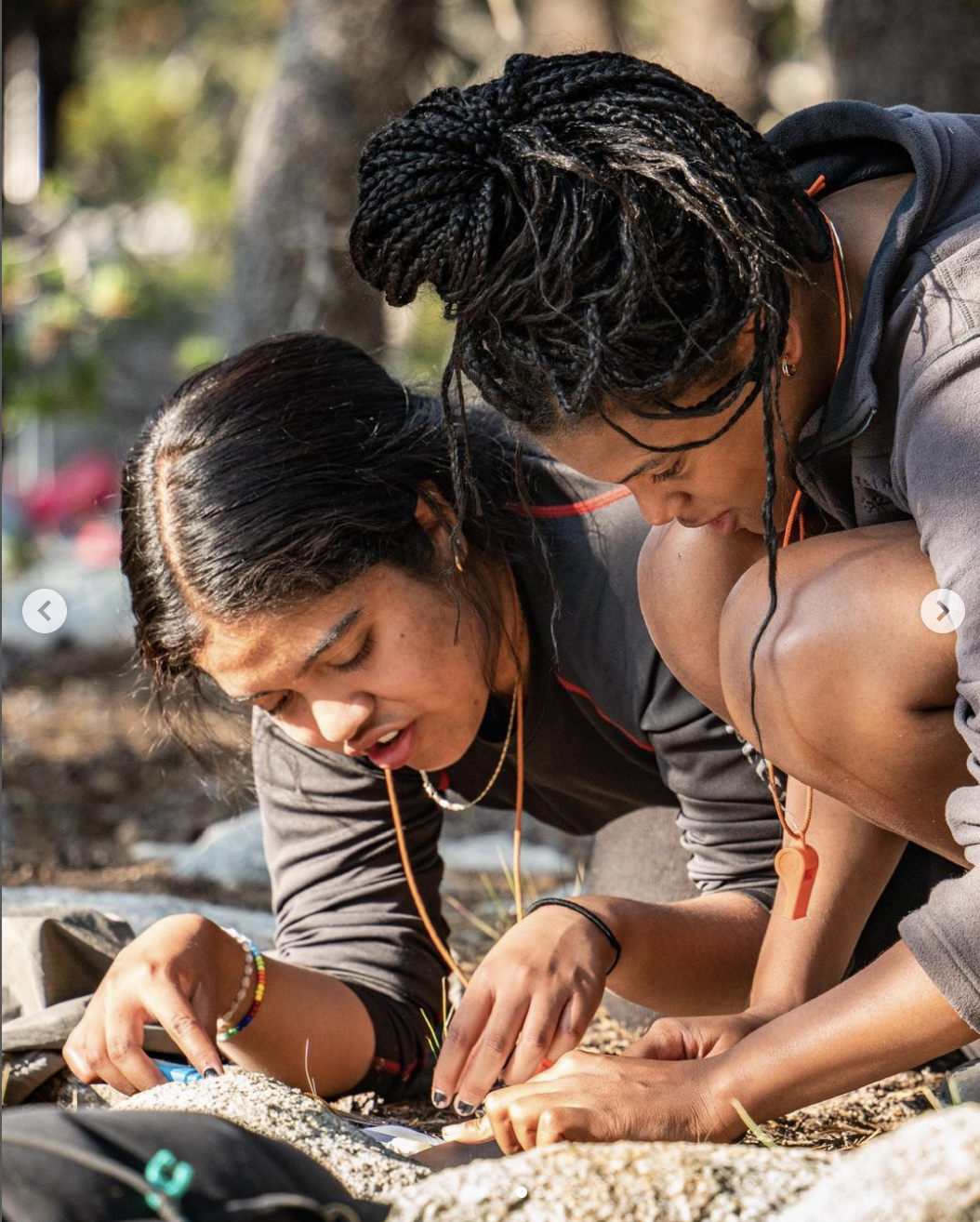
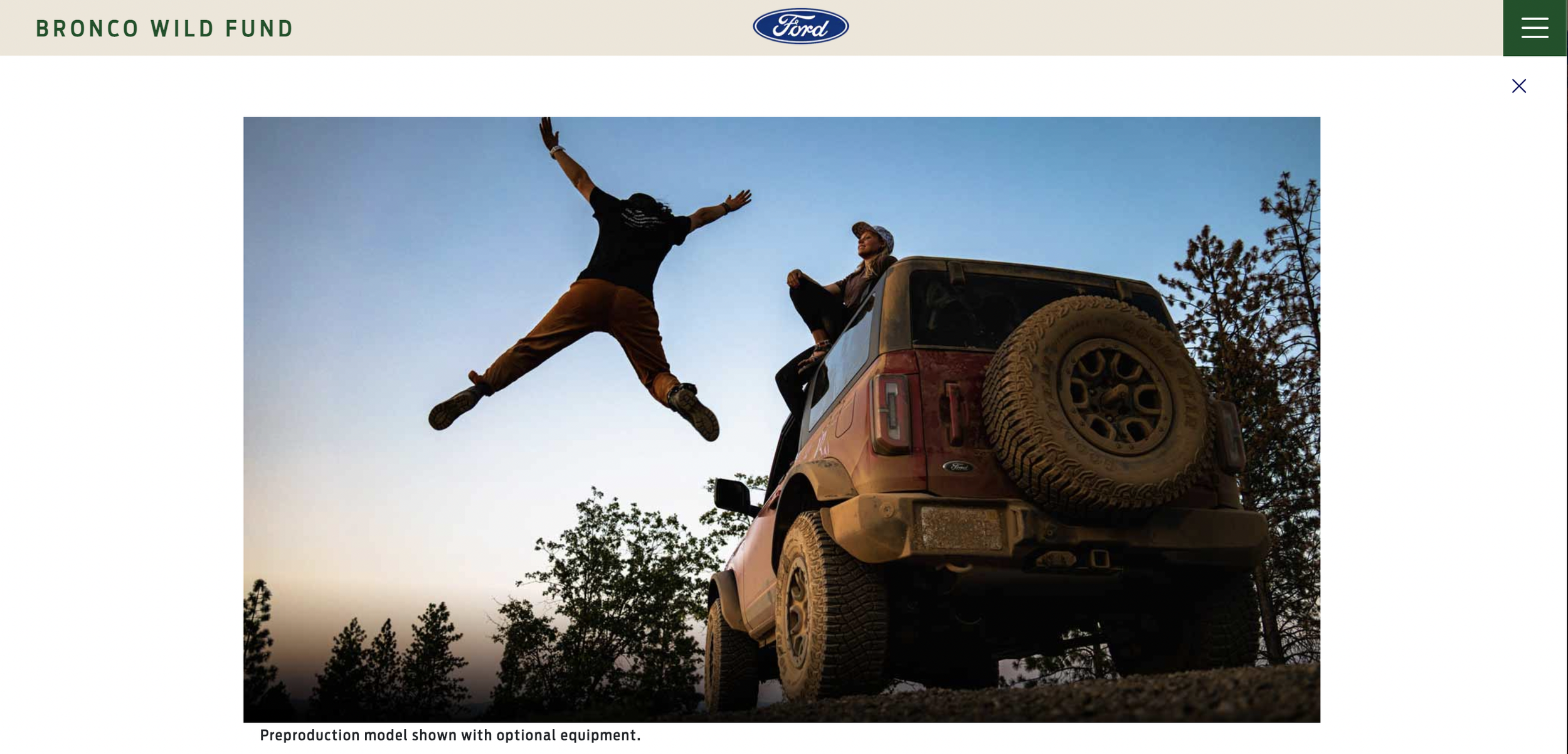
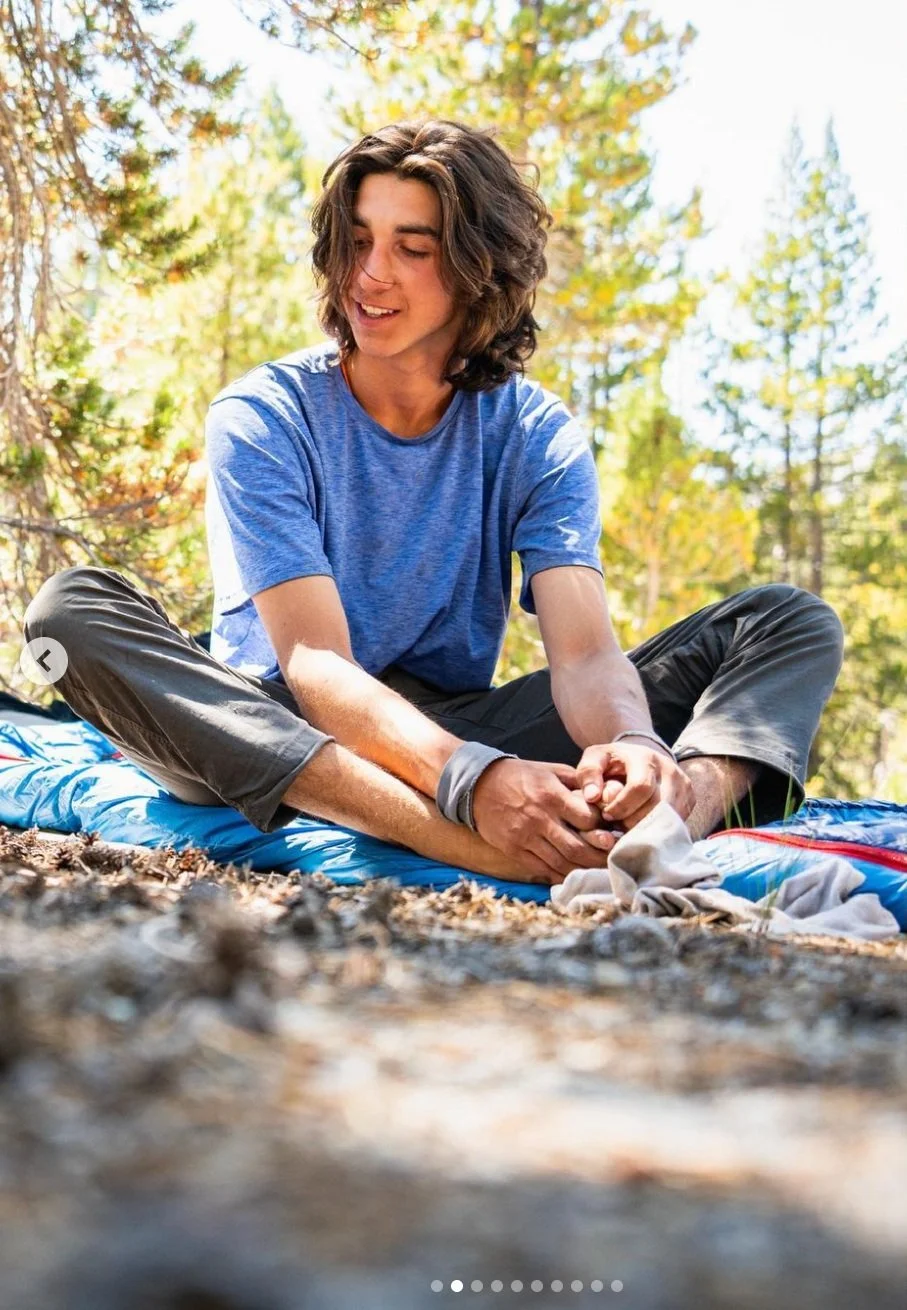
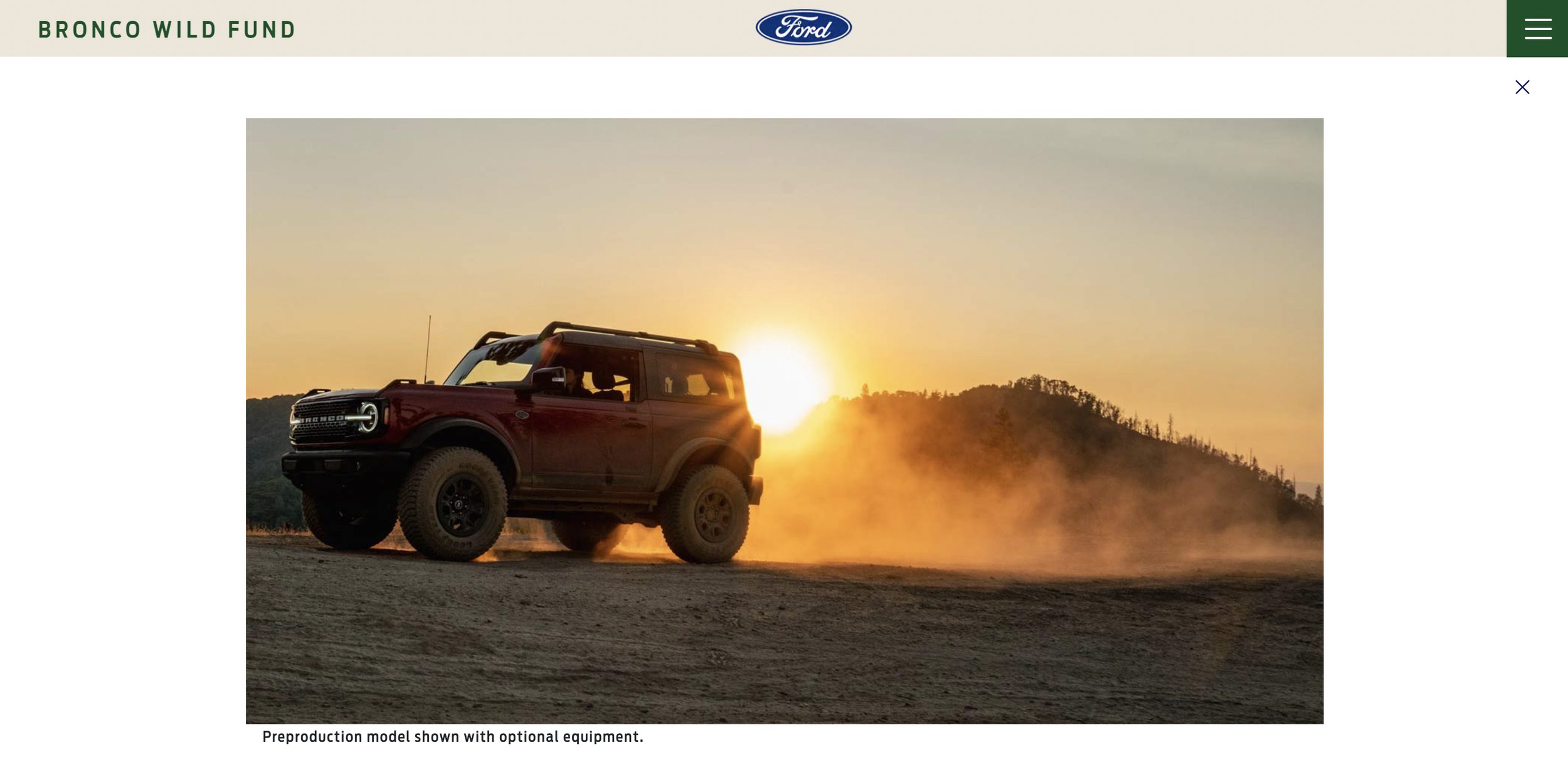
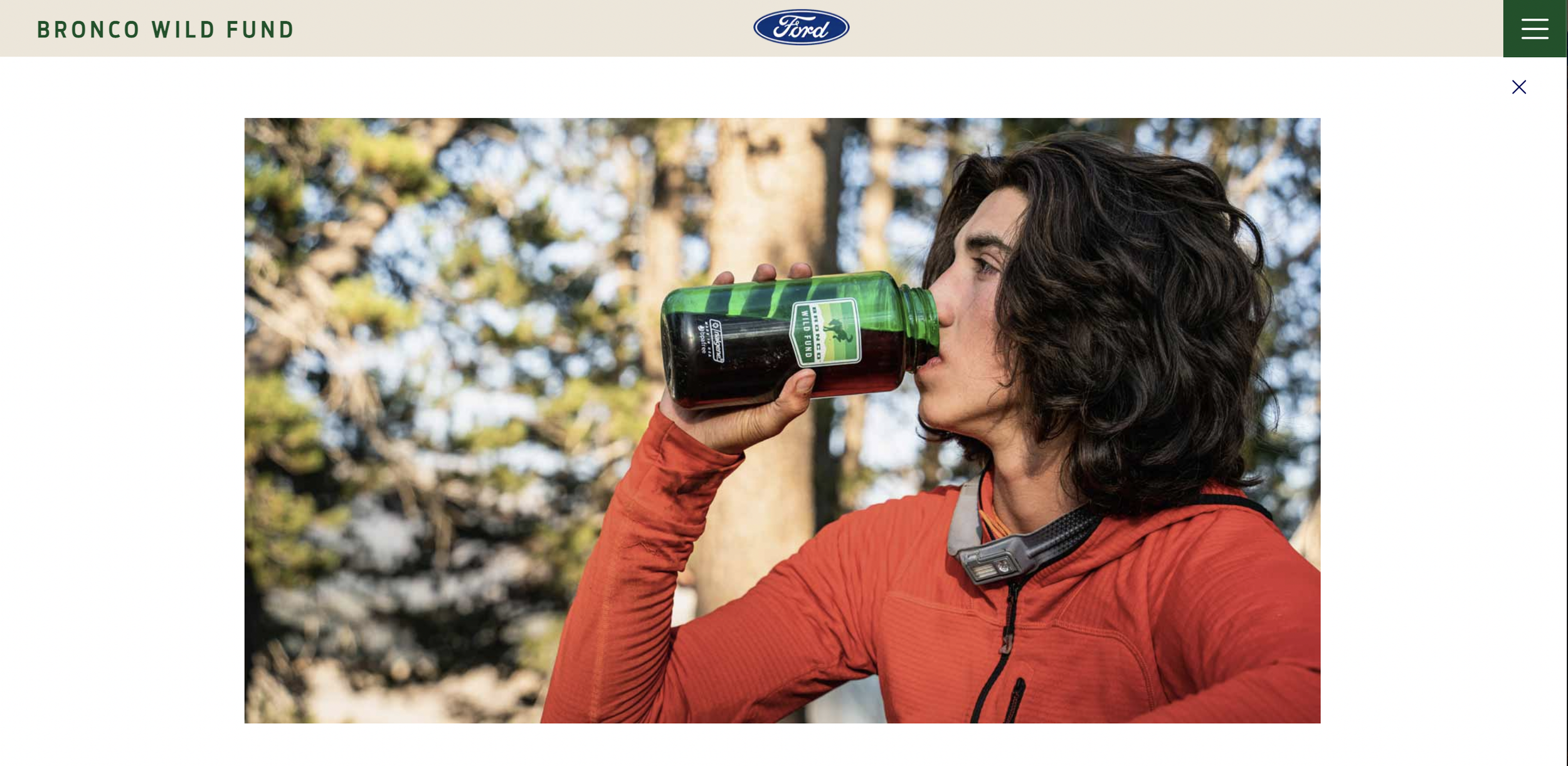
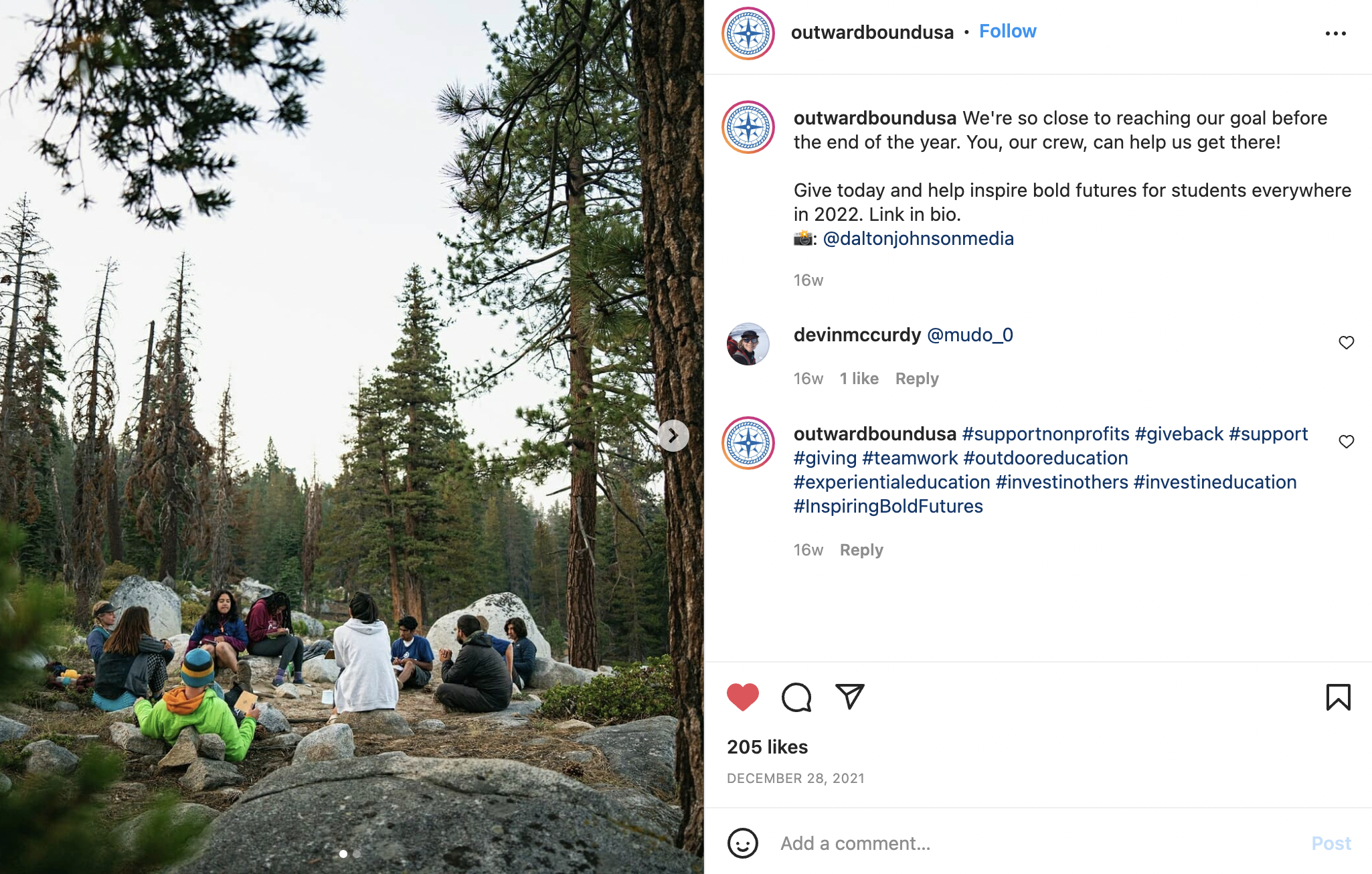
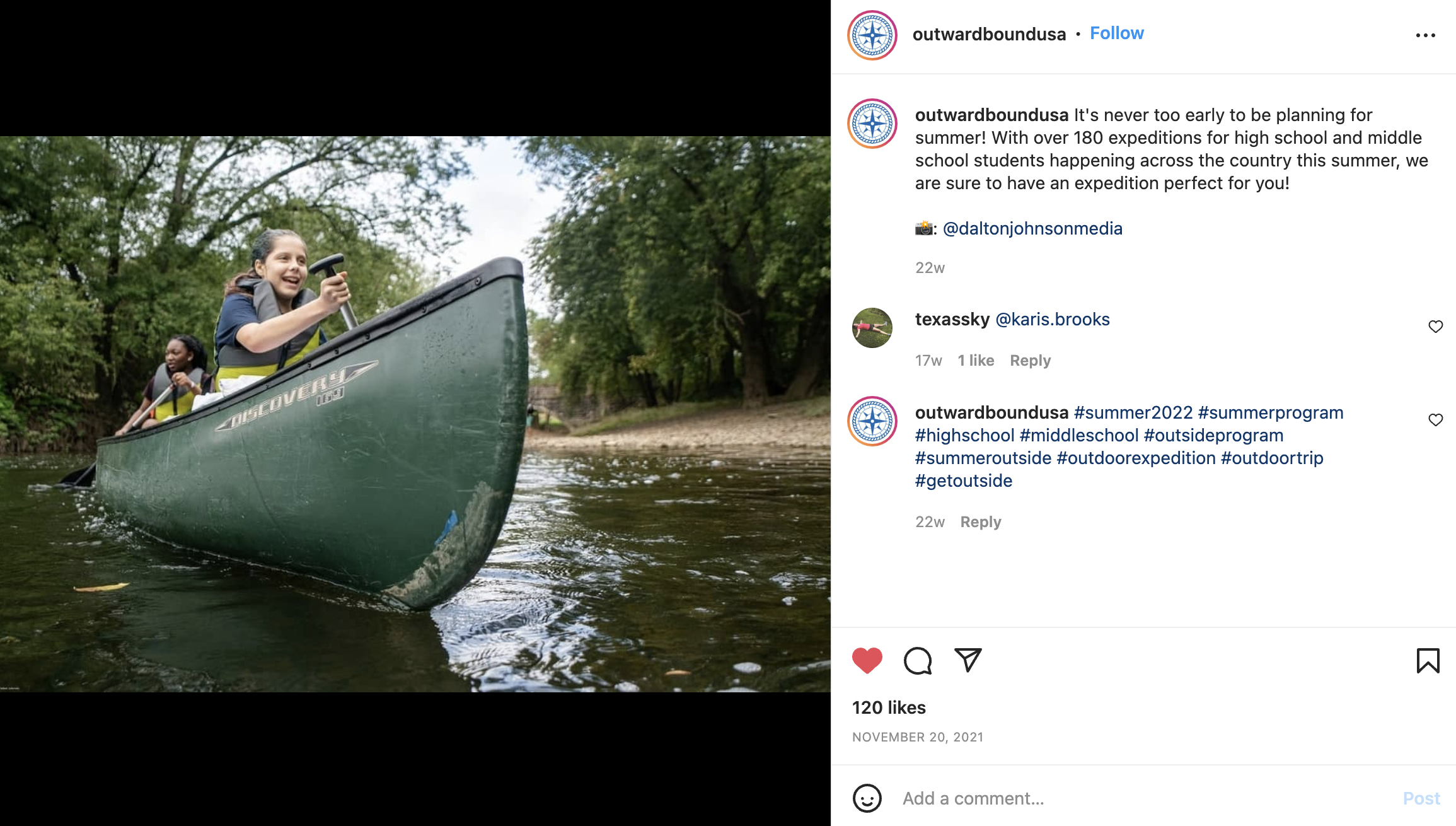
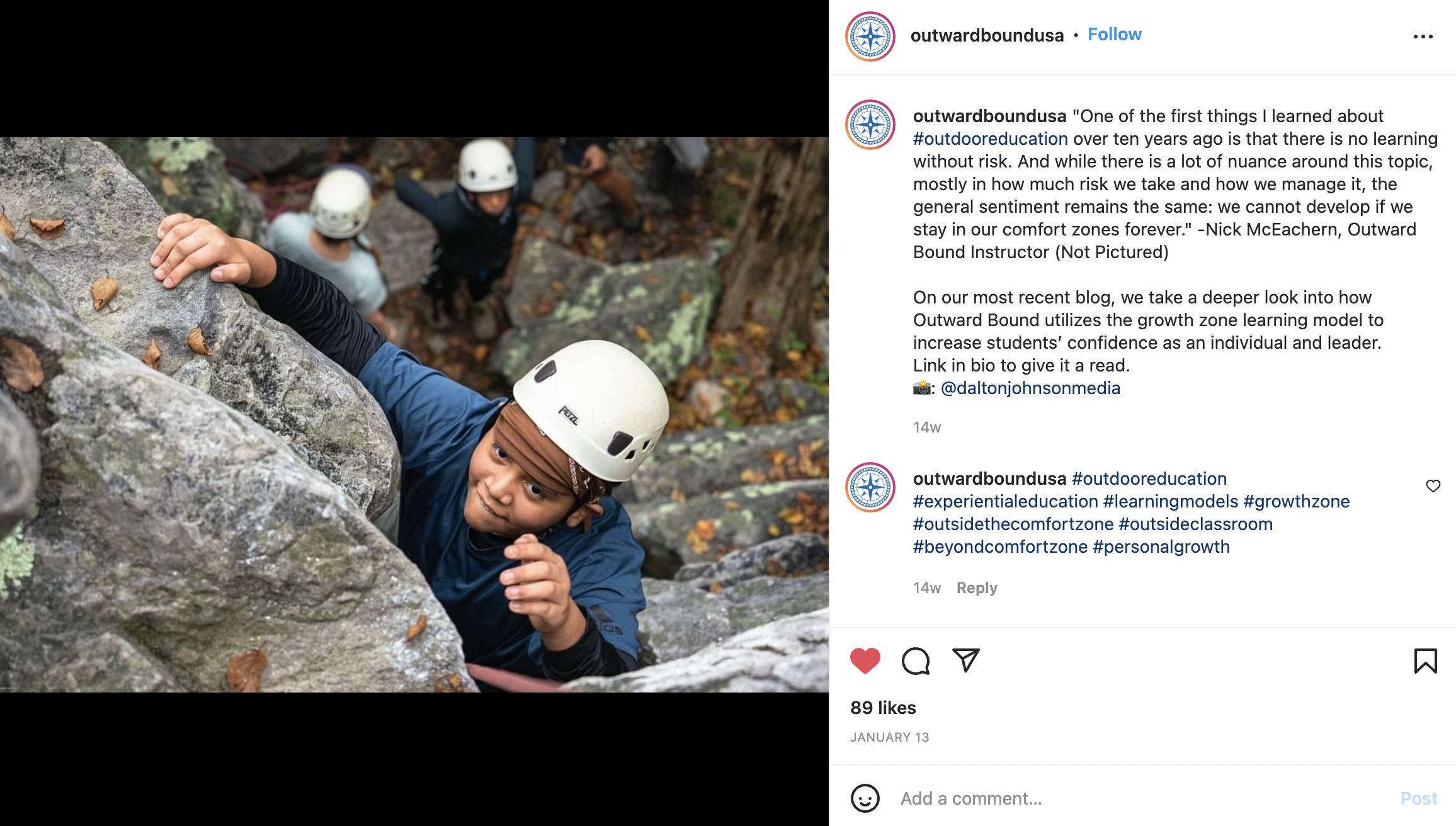
Throughout 2021, I was responsible to two major contributions to Ford Motor’s release of the Ford Bronco; the ambassador program with Andrew Muse and the Bronco Wild Fund collaboration with Outward Bound.
Ford Bronco x Andrew Muse Ambassador Program
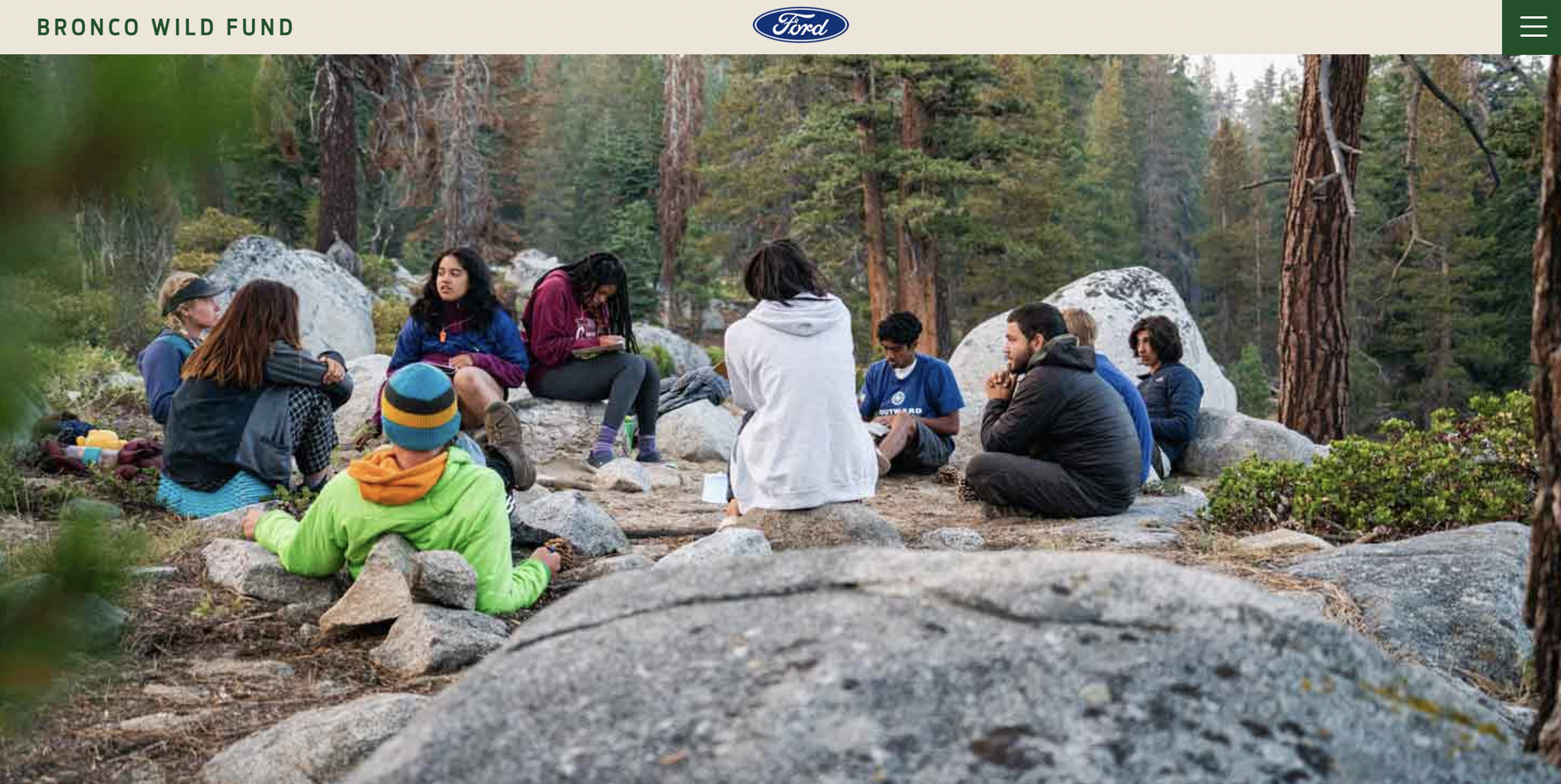
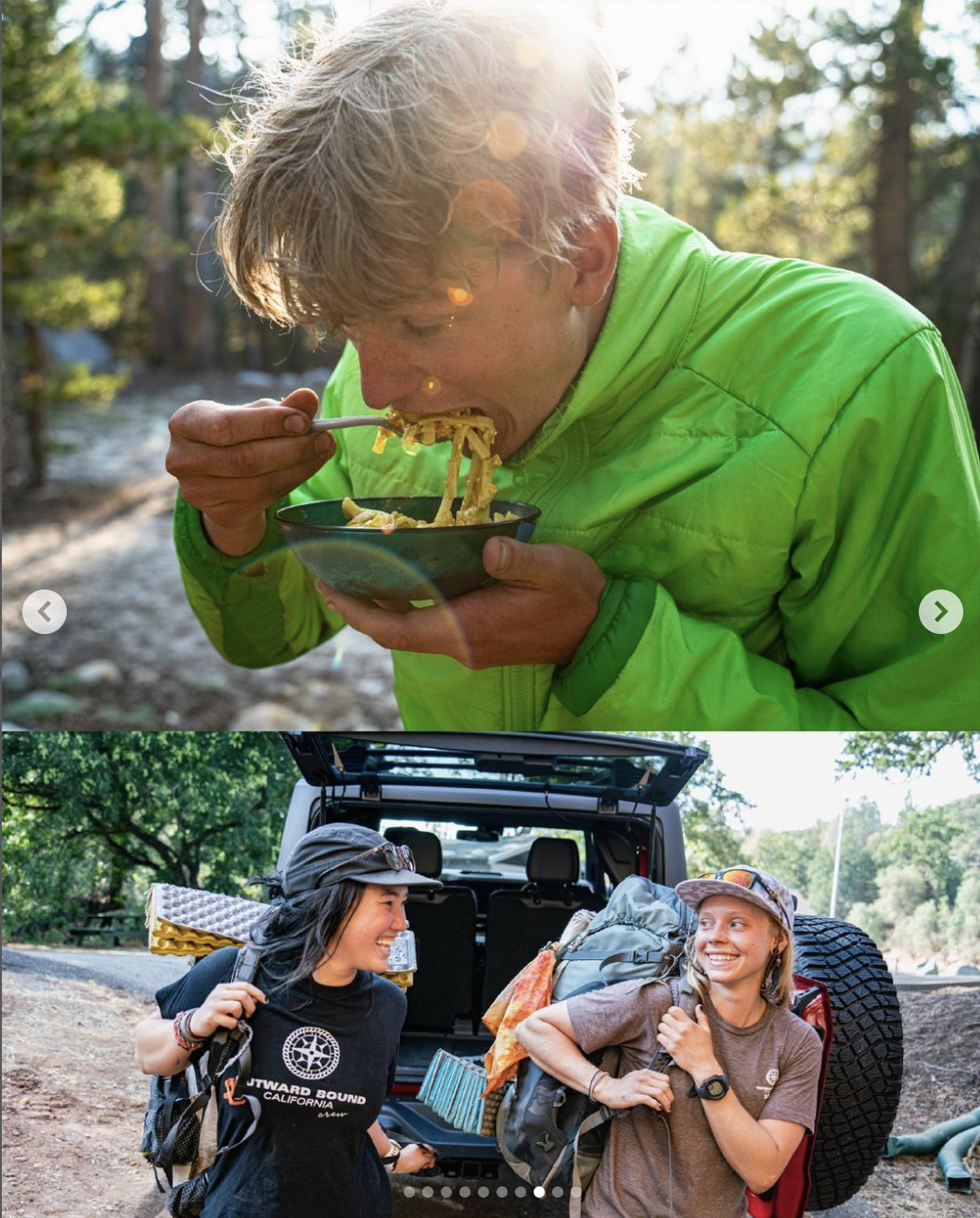
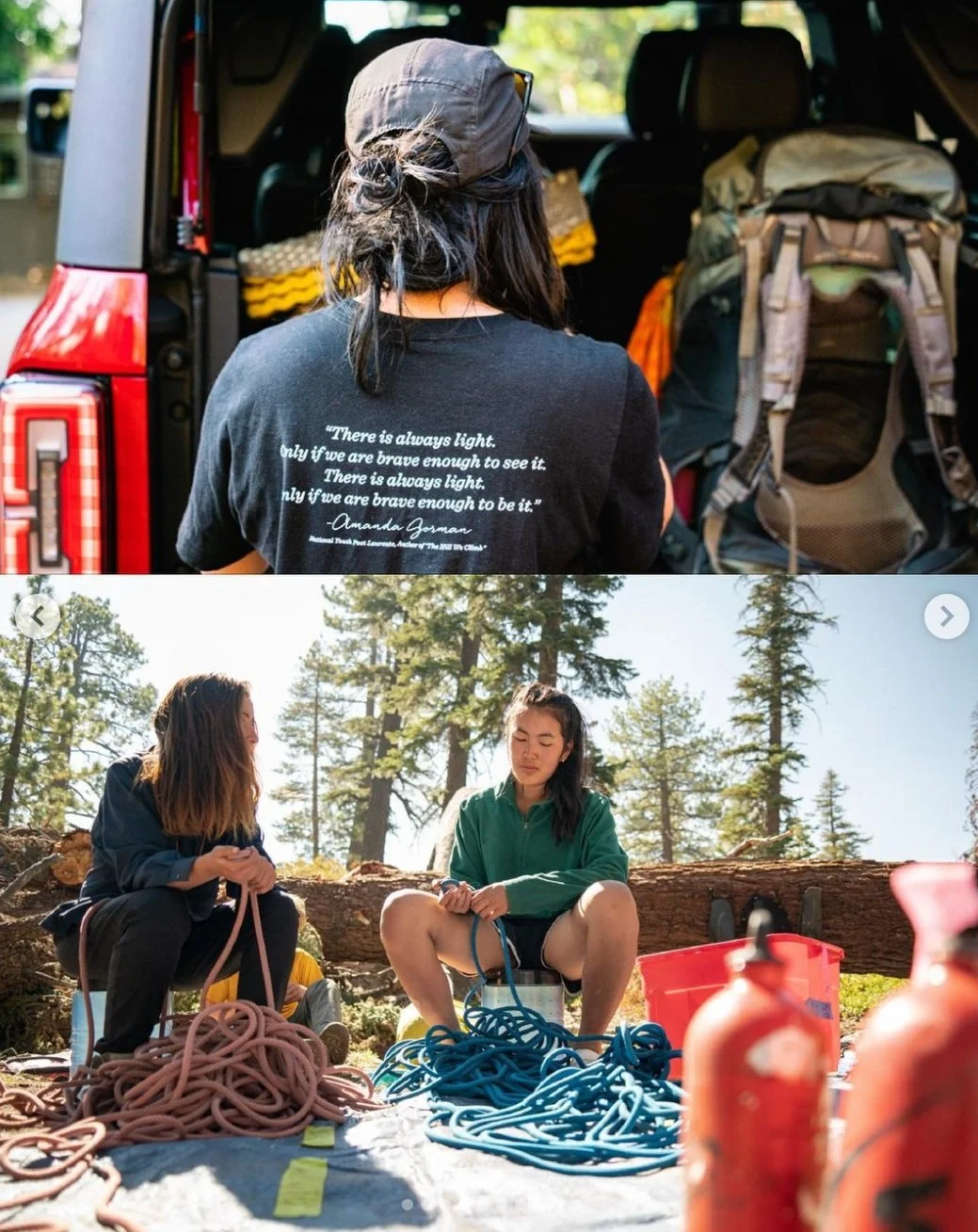
Bronco Wild Fund x Outward Bound


Quite honestly, I would not have guessed when I made my business official (aka got a business license and started paying taxes under the business name "Dalton Johnson Media") roughly three years ago, that I would be photographing a campaign for @fordbronco or @outwardboundusa anytime soon. Realistically, I just wanted to pay my way by shooting odd jobs here and there to fuel my adventures. I really never had a list of dream clients, nor did I care to reach out to clients. While some of that has changed, my focus remains the same. I am here to live my life in accordance to my own view of success.
At first, I thought success meant scraping by, then I thought it meant making tons of money. I would hopefully say that I have matured a little bit since starting this journey, but one thing I am excited about are the opportunities that are opening up along the way.
I am ready for what is to come in this life, big and small :-)
Photo Gallery
Enjoying the Meaningless
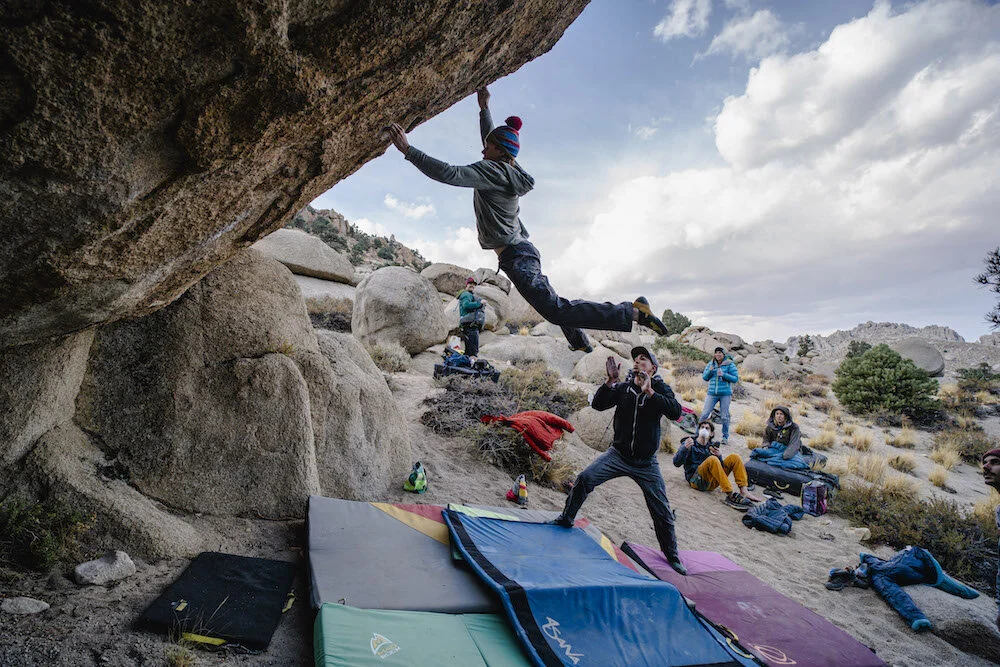
Over the last year, I have focused on climbing more than ever before. Taking trips from Joshua Tree to the Tetons to the Buttermilks to Yosemite. Throughout that time, I have been able to meet tons of people who've showed me what dedication to a craft truly looks like. For the most part, climbing is a selfish pursuit, but a pursuit that is totally meaningless. Quite honestly, nobody cares who gets to the top of a boulder, crack, mountain. Sure, we may highlight the story within a community, but there really isn't much to be said about playing on rocks.

Over the last year, I have focused on climbing more than ever before. Taking trips from Joshua Tree to the Tetons to the Buttermilks to Yosemite. Throughout that time, I have been able to meet tons of people who've showed me what dedication to a craft truly looks like. For the most part, climbing is a selfish pursuit, but a pursuit that is totally meaningless. Quite honestly, nobody cares who gets to the top of a boulder, crack, mountain. Sure, we may highlight the story within a community, but there really isn't much to be said about playing on rocks.
Now, don't get me wrong, climbing is amazing and I truly think everyone should try it. Also, the lifestyle is admirable to me. For those who "give up their lives" to pursue something they care about are truly inspiring and motivate me, behind the lens, to push my craft and perfect my meaningless pursuit. Hell, it looks like we all are in the pursuit of meaningless things 😂
Please note, this is not meant to be pessimistic. I actually love the fact and find comfort in reassuring myself that taking photographs is meaningless in the moment, just like climbing a rock. However, it is what you do once the rock is climbed, or the photograph is taken, when meaning comes into play.
As my archive continues to grow, I am currently working through the idea/narrative I have built to understand where and what meaning can be found in these images. Where that will go, I am unsure. However, I am happy to see where that can go!

Find your Ikigai to make your mission statement
At the chance of sounding like a self-help book, “Are you wandering, feeling a bit lost, and looking for a solution?” Well, I have the cure, just pay me $500… LOL! In reality, I was feeling like the above statement and was truly wandering, without much direction, until I was introduced to the concept of Ikigai. Now, I will be totally honest with you, I am not sure if Ikigai is a way-of-life, a philosophy, a concept, a practical guide to life, etc. Ikigai was introduced to me by a Jesuit Priest as he was reflecting upon his own life. While out at lunch, he shared his perspective and encouraged me to look into it for myself.
Introduction
At the chance of sounding like a self-help book, “Are you wandering, feeling a bit lost, and looking for a solution?” Well, I have the cure, just pay me $500… LOL! In reality, I was feeling like the above statement and was truly wandering, without much direction, until I was introduced to the concept of Ikigai. Now, I will be totally honest with you, I am not sure if Ikigai is a way-of-life, a philosophy, a concept, a practical guide to life, etc. Ikigai was introduced to me by a Jesuit Priest as he was reflecting upon his own life. While out at lunch, he shared his perspective and encouraged me to look into it for myself.
I get this sounds totally crazy, a Jesuit Priest introducing me to a word—that I am unsure if I can pronounce correctly—causing a spiral of events for myself after spending a few hours reading, listening, and learning about this word. Now, I am no expert on the subject, but I have dedicated at least 10-12 hours learning about the subject and more than I would like to admit thinking about the topic while wandering through the High Sierra in California.
Before this intro starts to drag,
Learning to Understand This Mysterious Word
After getting an introduction to the word, the first step was to understand. So, let’s dive into the word.
How do you say Ikigai?
As a westerner, I have no idea how to say this word! From the online translations, there is a general consensus the word should come out something like EE-KEY-GUY. That is the best I can do for you all. There is also a really solid Ted Talk on Ikigai where the speaker pronounces the word several times.
What is Ikigai?
Ikigai (ee-key-guy) is a Japanese concept that combines the terms iki, meaning “alive” or “life,” and gai, meaning “benefit” or “worth.”
Also, Ikigai can be loosely translated to “the reason for living.”
Why should you care—aka why keep reading?
If you are curious and want to learn how to look at this world through another lens, then this is an option. Ikigai can be another tool for yourself to become more self-aware. Also, if you are feeling off, the process to “find” your Ikigai is grounding as you will ask yourself a serious of questions and make lists about yourself, your skillset, and more.
Now, if you are skeptical because you feel great about yourself, then maybe this isn’t for you. However, I would make the argument that any opportunity to learn about yourself is worth the time. Heck you may learn something about yourself that unlocks that next step towards a long-term goal. At the worst, you wasted a couple more minutes of your life. Now, if you are Jeff Bezos, that would be expensive, but for most of us, this should be a fun activity.

How do YOU find YOUR Ikigai?
To “find” your Ikigai, you must put in some work. Well, actually a good amount of work. There is a process, so hopefully you have a journal, or something to write with, so that you can take notes and dive into yourself.
Learn about yourself by:
a) Making a list of what you love.
This list should include people, concepts, ideas, things, etc.
b) Make a list of what you can be paid for.
This list does not have be the things that you already are making money from, this could be a theory as well. For example, say you make sea-glass jewelry for yourself as a hobby… well maybe people would buy these and you could become a jewelry maker instead of an accountant.
c) Make a list of what are you good at.
Try not to overthink this one. What are you good at doing, making, sharing, connecting, etc. Don’t short yourself, we all know you are great at something!
d) Make a list of what the world needs.
What does this world need? What have you observed throughout your life that the world needs more of, make the list!
Ask the Following Questions:
-Where are the overlaps?
-What are the outliers?
-Is there anything that overlaps in all four categories; love, good at, world needs, and paid for?
-How does your heart differ from the voices in your head?
How I found mine and made a mission statement
Over the last couple of years, I have been working on this. Now, I will admit my attention has not been 100% given to this for years. Heck, I have given this the old college try, but the process has been helpful. Over that time, I took notes, journaled about these questions and made many lists. Eventually, I sat down and hashed out the final details. This is what it has turned out as:
“I would create a consistent message, with practical tactics, to motivate and awaken others from life's entrapments through photography and writing about adventure, nature, travel, and open ended questions.”
Now, I decided to take the step of turning my Ikigia into a mission statement. This might be a very western approach, but, none-the-less, this was a helpful opportunity for myself.
Conclusion
I hope you found this helpful, informative, or, at the very least, got something out of skimming this blog post. In the end, this is your life and you should live it as you please. There shouldn’t be anyone else taking control of you, your actions, or anything else. Be yourself and be happy with that! Be who you are supposed to be and contribute to the world as you feel you can.
How to overcome the fear of failing as a photographer
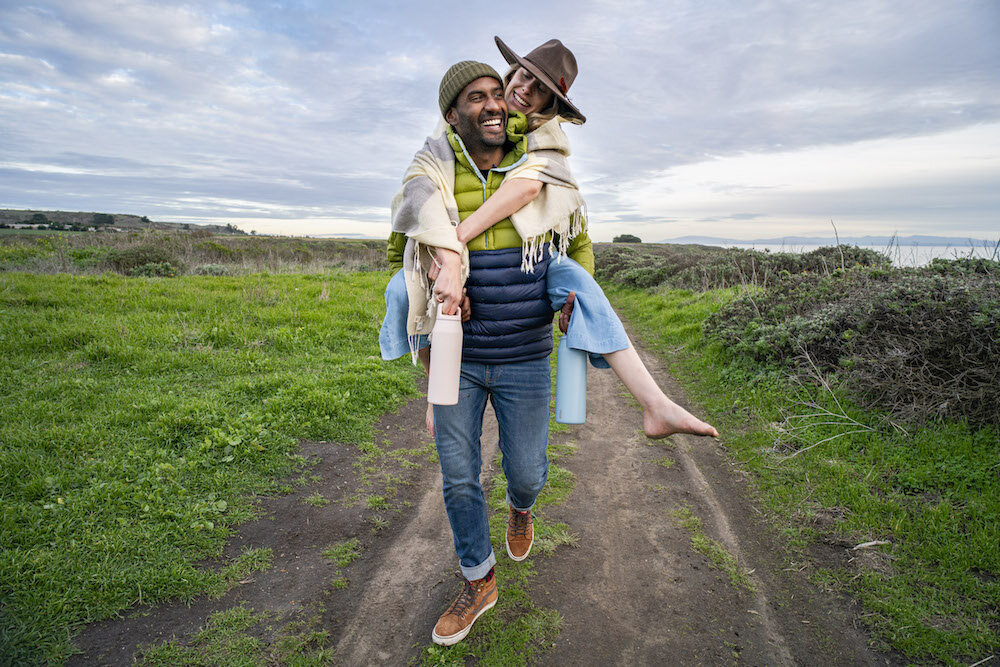
Earlier this year, I had the opportunity to photograph a project for MiiR. The concepts were a bit broad and sounded a little something like, “we are releasing new colors to our classic bottle and want to showcase them in a lifestyle manner. We like your work and want you to just do what you do.” Now, when I receive assignments with directions that parallel this, I am usually at a loss. The wide open instructions for a photographic assignment often intimidates me for two reasons…
Everyday we have the opportunity to chose who we surround ourselves with, so chose spending time with those who make you feel loved, build you up, and fill your cup.

Earlier this year, I had the opportunity to photograph a project for MiiR. The concepts were a bit broad and sounded a little something like, “we are releasing new colors to our classic bottle and want to showcase them in a lifestyle manner. We like your work and want you to just do what you do.” Now, when I receive assignments with directions that parallel this, I am usually at a loss. The wide-open instructions for a photographic assignment often intimidates me for two reasons:
I never know if what I am shooting is what the client wants, even-though I am following their instructions
The measure of success is a complete unknown, so does that many everything is a success?
The way I counteract this intimidation is to logically move through the process of the shoot. Which kinda looks like this:
First, set an intention.
Whenever I pick up my camera, I set an intention. This can be as simple as a word, a feeling, a thing, or a statement. From my experience, if the intention is simple, you can use it like a mantra throughout your time shooting, which in turn keeps you focused. Often, I like to select a feeling. For this shoot with MiiR, the intention was love.
Second, concept the final product.
If you know where you are going, then all you have to do is get there. However, when you are given an open-ended photography assignment, the look and feel of the final product can be worrisome. This is where a mood board can play into the equation. A mood-board is a collection of colors, images, textures, designs, words that provide direction for the final product. Once you nail this down, you’ll know what the end result should look like!
Third, work backwards.
Once the concept is finished, I start to ask myself a million questions. When I say a million, that might now be an exaggeration. I want to flesh out all of the details that I can so that I can visualize the entire shoot. From the smallest details like what will the air feel like when clicking the shutter button to the logistical nightmares like acquiring location permits. The importance here, however, is to work backward from your final product concept. This process helps illuminate the fear of failing and is very loosely outlined below:
Final product is deliver to client
How do I save my finished files?
How do I edit my images?
How do I import and backup my files from the shoot?
How do I shoot this project? (this step will require at least 200 questions)
What does the final product look like?
Finally, let go and flow.
Once I have laid the foundation, the final step is to shoot. For myself, the best way I can do this is to share everything I have prepared with the team, have a pre-production meeting so we are all on the same page, and then let go. By letting go, I allow myself to be free of critique at the moment, I can trust everyone is doing their part, and I can have fun with the project.
To Wrap Up
Anytime I receive a commercial photography assignment, I am excited for the opportunity to push my limits as a photographer. Each opportunity can be stressful, especially if the creative is ambiguous, but trusting the process you develop for yourself will help alleviate that fear of failing, or letting down a client. In the beginning, it is important to allow yourself the space, time, and freedom to make mistakes without putting yourself down. Be hard on yourself, but only in a constructive manner. Hold yourself to the highest level, but allow yourself to flow. Most importantly, enjoy the process!
Four Must-Chill Hammock Spots
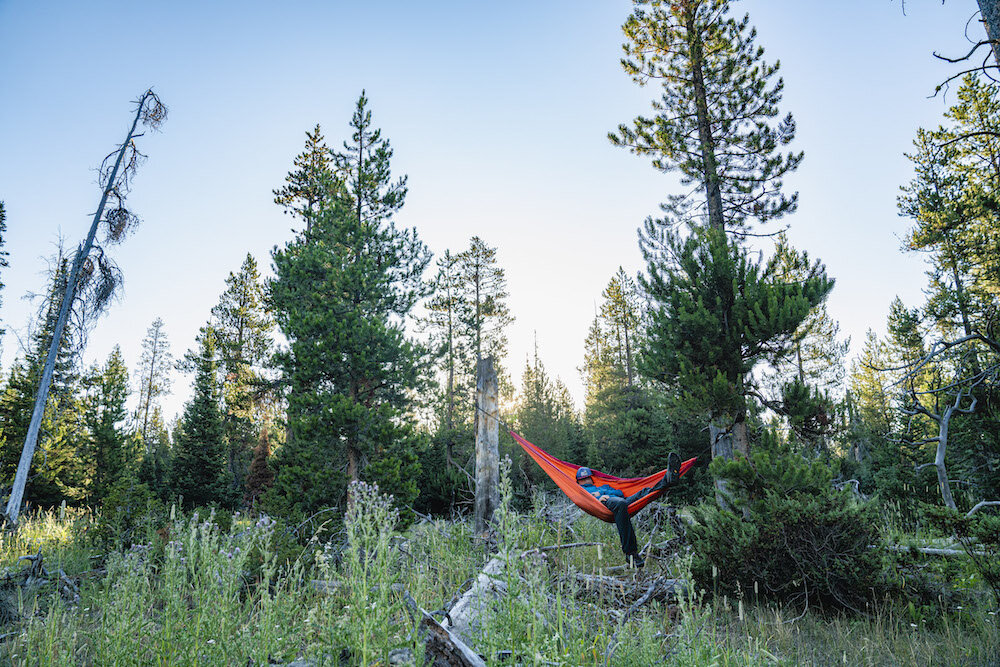
The real question is, “When was the last time you were upset after relaxing in a hammock?” As summer approaches and daylight extends well beyond that of a 9-5 job, what better way to spend your evening than in a hammock, maybe with a book or journal. For myself, living on the road my work hours are all over the map, but whenever I can find a place to hang a hammock and take in the view, I am in my happy place. Below are four of my favorite spots that I have hung a hammock.
The real question is, “When was the last time you were upset after relaxing in a hammock?” As summer approaches and daylight extends well beyond that of a 9-5 job, what better way to spend your evening than in a hammock, maybe with a book or journal. For myself, living on the road my work hours are all over the map, but whenever I can find a place to hang a hammock and take in the view, I am in my happy place. Below are four of my favorite spots that I have hung a hammock.
#1 GRAND TETON NATIONAL PARK, WY
Not far from the trailhead that provides access to the Grand Teton you will find a river and a few groves of evergreens. After a long day of climbing, trail running, and snapping photos, I found this spot, hung my hammock, and, as you can see, didn’t do much work. But that might have been the goal.
Location: https://goo.gl/maps/EhpmtxRhMCJcagnB9
#2 BIG COTTONWOOD CANYON, UT
Sometimes life is most enjoyed when you remember that you are always a kid. While visiting Salt Lake City I found myself climbing in Big and Little Cottonwood. On a rest day from rock climbing, I went for a fun hike to Donut Falls (check this place out if you have the chance) and then headed out on a run with a pack filled with my journal and hammock. At first, I thought I was going to dig deep into the psyche, but realistically I ended up swinging in the hammock, falling on my face a few times, and laughing at myself.
Location: https://goo.gl/maps/XE2XvySGViWFA34T9
Finding a perfect spot to hang a hammock in Colorado during the summer. Photograph by Dalton Johnson
#3 LEMON RESERVOIR, CO
Lemon reservoir has a small rock climbing crag where you can easily climb with friends, or top-rope solo if you are alone, in the morning and evening. During the day, it’s quite hot, so I escaped the heat among the aspen groves of Colorado, swinging in a hammock, with a book, and my legs kicked up. I’ll probably have a bite to eat as well, applesauce with granola has been my current snack of choice.
Location: https://goo.gl/maps/k9DuUe8tvDRfcQgE7
#4 LAKE TAHOE, CA
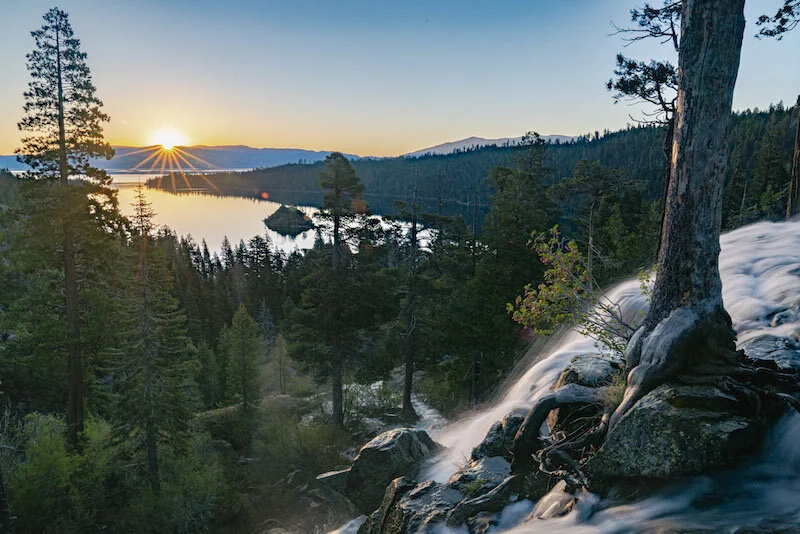
Growing up just outside this adult playground, Lake Tahoe’s coastline is lined with perfect places to hang a hammock and journal. The blue water will put you in a trance as you stare, so watch out if you are on a timeline. Better yet, let go of your timeline and learning to take in the environment this earth has to offer.
Location: https://goo.gl/maps/HN8pjnMcNs8uAbWP9
Discover more Adventures



Surrender to the Moment
When I first sat down to write this blog, I wanted to express the beauty and elegance longboarding holds. Erased line after erased line, the string of words could not match the self-expression and feminine endearment longboarding requires. My ego and masculinity wanted to force together words, hoping to create prose. Instead, I was faced with a challenge, similar to that of riding the nose or cross-stepping, to surrender.
When I first sat down to write this blog, I wanted to express the beauty and elegance longboarding holds. Erased line after erased line, the string of words could not match the self-expression and feminine endearment longboarding requires. My ego and masculinity wanted to force together words, hoping to create prose. Instead, I was faced with a challenge, similar to that of riding the nose or cross-stepping, to surrender.
To be frank, I do not think I achieved this in the lines, or photos, below. It’s still a work in progress for me!
Surrender to the Moment
Let go of your mind and embrace your feminine side. It is time to release your arms and dance atop your log.
Gliding upon the ocean, step cross-legged across the plank, and meet change with elegance.
Dangle your toes over the edge, spread them wide, toss your arms to the sky, and embrace the moment like a child, for you will become an adult before your know it.
Remember, when you are ahead, take a step back, weight your foot, pivot, and rejoin the crowd with your nose pointed down the line, ready for take-off.

Where Does Freedom Live? (VIDEO)
Dalton Johnson seeks to answer the question, "Where does freedom live?" in his latest video from the UT desert. He spent a month climbing, canyoneering, and trail running around Moab, Utah. The visuals all come from the surrounding areas of Moab. In this project, Dalton visited Indian Creek, Arches National Park, and Canyonlands National Park.
Where Does Freedom Live?
Take a deep breath and close your eyes
Shut out the skeptical mind and listen to your foolish heart.
What do you feel between those thumps that keep you alive?
Is it an adrenaline spike?
Is it a chill down your spine from another’s touch?
Is it exhaustion from a day you thought could only be a dream?
Between the pulses, your heart is speaking, but are you listening?
During those sleepless nights, it’s telling you it’s time.
As you stare out the window, you can feel the pull.
Your life is calling to you.
When will you let the allure of the open road drawn you in?
When will you listen to your heart?
When will you be ready?
Regardless of when, please, relentlessly seek your freedom!
———————-
Dalton Johnson seeks to answer the question, "Where does freedom live?" in his latest video from the UT desert. He spent a month climbing, canyoneering, and trail running around Moab, Utah. The visuals all come from the surrounding areas of Moab. In this project, Dalton visited Indian Creek, Arches National Park, and Canyonlands National Park.
A Letter to Humanity
My name is Dalton Johnson and I am a wanderer with a camera, a pencil, and paper. Now, that may sound vague and entice you, but please understand, that means most would consider my days to be quite long and boring. Often you can find me by a river contemplating, dangling from a rope on the side of a cliff, struggling to breathe as I swim in alpine lakes, or walking for hours without an endpoint. The reason I am writing this letter is to spark your curiosity, foster your nurturing gifts, and to encourage you to spread your love.
To all those who decide to read this,
Thank you for taking the time out of your day, to read this letter. If you make it to the end, this letter was written for your curious, nurturing, and loving self. My name is Dalton Johnson and I am a wanderer with a camera, a pencil, and paper. Now, that may sound vague and entice you, but please understand, that means most would consider my days to be quite long and boring. Often you can find me by a river contemplating, dangling from a rope on the side of a cliff, struggling to breathe as I swim in alpine lakes, or walking for hours without an endpoint. The reason I am writing this letter is to spark your curiosity, foster your nurturing gifts, and to encourage you to spread your love.
Over the last five years, I have studied my actions, opened my heart, cried, closed my heart, and laughed. In the beginning, I thought I was lost. I did not know where I was headed, nor did I know what I wanted to do with my life. One could say I was your typical “failure to launch” or “unproductive citizen” yet nobody was guiding me. A helping hand did not look like somebody putting out their hand to lift me. Instead, a helping hand looked like Kiwi (a resident of New Zealand) offering me “biscuits and tea” because they felt bad for the guy cycling in the rain. In fact, I had been cycling for a week in the rain, but they did not know that.
As the years went on, I desperately wanted a mentor to lead me. I wanted somebody to help me along the way and guide me through this unknown world. While many gave advice, I never found that person who would take me under their wing. Emails were sent. Fourth and fifth follow up emails went unanswered. Showing up uninvited to people’s place of work, asking if I could help were rejected. Still no teacher. There came a point, I was laying in my tent, crying, as the words of all those I looked up to shared stories of mentors showing them the ropes.
Continuing down my path, I started to feel a bit insecure. I would lie to myself and built a world with blinders, telling myself that everything was going to be okay. To keep pushing and something will happen. Truth be told, nothing happened. No handouts, no fame, no wing to ease my flight. Self-help book after self-help book and motivational speech after motivational speech couldn’t solve the void I felt. Then, I gave up.
I turned my back and said, “Since everyone is too busy to help, I guess I will just do what I love and see what happens.” Turns out, when you follow your heart, the world begins to speak to you.
My wandering became focused on nature. I walked in the woods, climbed up rocks, swam in oceans. Curiosity spiked and questions about why did “X” happen, how long would it take for… to form, why do we all accept and agree to “XYZ”, and more went unanswered, but they were asked and observed. I started sitting and watching the sunset. Appreciating the smile on somebody's face as they walked past me. There was a relief that overcame me as I began to understand what I had already known as a kid. The desert flora and fauna started to show me how to survive the extremes. The forest inhabitants showed me how to balance excess and competition. The ocean and moon were experts in cycles and relationships. Fires, droughts, and floods no longer were a disaster, but an attempt to heal the wounds the earth had endured. The natural world became the teacher and mentor I had been seeking.

As the physical seasons changed around me, I could feel I was in a mental change of season. As a kid, I wanted to be a writer and travel the world, and following my heart had taken me to places I had dreamed of as a kid and allowed me to publish some of my words. While my traveling dreams as a kid were more romantic, liking riding off on a horse to see the world at sunset waving to my loved ones, the reality is my noble steed has been a bike, a car, and a couple of vans and my loved ones have been nowhere in sight as I set off midday. Instead, they all understood that I need to leave because there was something inside of me that nobody could stop without gratefully hindering both of our lives. This change in mentality brought new questions encouraged by my environment. Questions like why am I pursuing “X”, what am I willing to sacrifice to make “Y” happen, and, most importantly, how will I give back to to my teacher, Earth?
It was during this season that I began to understand myself, because I was merely a reflection of the world around me. But, how do you continue to nurture yourself if your environment is always changing? How can you be consistent at showing up and improving yourself? The answer is in the questions. Once one stops asking the questions, the nurturing stops. We are all able to reflect, but we must make time and be like the mountains. Moving slowly, but still moving. We can be like a lake reflecting the world around us because we are still, but under the surface we hold our current. To nurture ourselves takes time, patience, and continual effort. Luckily, we are social creatures and our environment is greater than the natural world.
As humans, we can converse and work together. We can show each other love and boost everyone around us. The way we present ourselves to this world is also a reflection of our environment. If we do not have time for Me, we do not have time for Others. If we continue to fill our schedules with meaningless work, we are dying inside. Our hearts can become tough, hiding us from those who want to help. From those who want to give a hand. If our pursuit is for material things, we must understand the long term effects of accumulation. Eventually, you will be so full, there is no space for perceived stillness and slow growth. Our commitments will jade us, preventing us from loving the environment we are apart. If we are a reflection of our environment, then our environment is also a reflection of us. If we exude love, then our environment will provide love.
As seasonal transformations take year after year, our effects on our environment are similar. The impact of a single generation can, and will, be felt multiple generations down the road. What we continually nurture, is what we will become. Think back to my efforts to become a mentee above. I was attempting to manifest a relationship that was only going to benefit one person, myself. I now understand why I was not mentored. If we hope to become better as a species, we must take the time to be still and think through our actions so that we may consider the lasting impacts of our actions. So, be your curious self, nurture from the heart, and encourage the spread of love amongst your environment.
Thank you for reading,
Dalton
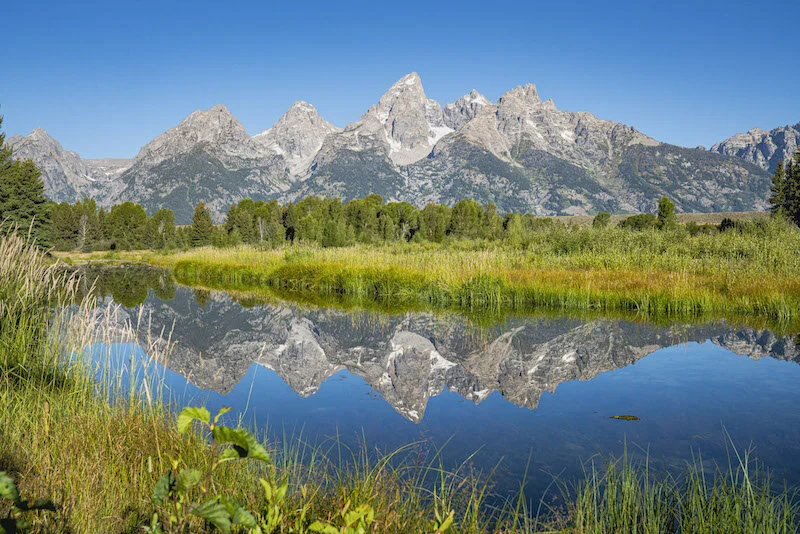
Be a Kid Again and Ask, "Why? Why? Why?..."
As we age (I know, not what we all want to acknowledge) we begin to rely on our past experience. Fortunately, our experiences have kept us alive and thriving over the last “X” number of years. Unfortunately, this experience removes the natural curiosity we had as a kid, potentially blinding us from seeing this world as it presents itself to us. Our experience allows us to see “between the lines” and blocks us from being surprised by one’s actions. Yet, what happens when we can no longer surprise ourselves? Have we become stagnant? Well, that is possible, but there is an easy way to get out of that rut. Simply, be that annoying a kid again, and ask yourself “Why?” until you can’t go any further.
As we age (I know, not what we all want to acknowledge) we begin to rely on our experience. Fortunately, our experiences have kept us alive and thriving over the last “X” number of years. Unfortunately, this experience removes the natural curiosity we had as a kid, potentially blinding us from seeing this world as it presents itself to us. Our experience allows us to see “between the lines” and blocks us from being surprised by one’s actions. Yet, what happens when we can no longer surprise ourselves? Have we become stagnant? Well, that is possible, but there is an easy way to get out of that rut. Simply, be that annoying a kid again, and ask yourself “Why?” until you can’t go any further.
Why Ask Why?
Asking why leads to an open-ended answer that usually can not be expressed in a single word. Why takes time to think through. Often, why questions are loaded with background knowledge we must sort through. If we rush a why question, we either end up lying to ourselves, and others, or reinventing the story to quickly sum up days, weeks, even years of experience. So, asking why forces us to slow down, be honest with ourselves and others, and to acknowledge those unaddressed wounds we have been hiding.
Want to learn more about WHO questions or general introspection? Click the word.
The Power of Why
The power in asking why goes well beyond honesty, a forced reduction of speed, and healing wounds. The true power of why is in the relationship we build with ourselves. Our true mission in life reveals itself to us as time goes on, only if we ask why. As we understand ourselves better, we can see the patterns we want to change or grow. As we grow into the best person we can be, through understanding ourselves, we can help others by endlessly pursuing our why.
How Many Why’s Should I Ask?
If I were to give you a blanket statement, I would say five times. However, there are occasions 18 whys are required to get to the root of my reflections. Other times, it only takes three why’s. So, there is no recipe, however, there is a solution; ask yourself why until you can not answer any longer. That would be a great start!
How Do I Know If I Am Lying to Myself?
We are all stuck in our own lies and there is no way around that besides hitting it straight on! You must get real with yourself and build a checks-and-balances system. For myself, this is between my journaling, my daily actions, and my SMART goals. My SMART goals keep me on track, my actions are my daily intentions, and my journaling practice is the reflection that holds me accountable each day. Develop a system for yourself. This could be a calendar or this could be a vision board. There are lots of ways to work through your lies.
How to Begin Journaling with Why?
Journaling has been the best practice for me to sort through my lies and slap me in the face when I am BSing myself. I’ll admit, I tell myself that I am doing well in my diet… then I eat a box of Oreos. When I record in my journal “I ate a box of Oreos” and also try to write, “I ate well today” in the same sentence, I know something is off! So, how does journaling and why go together? If you select specific topics to focus on, you can assess yourself each day on how you are progressing towards your goal. If you slip up, the journaling will catch you. If you are doing well, the journal will congratulate you.
Let’s keep with the diet theme. If you want to focus on your food and beverage intake (which I call diet) while journaling each night it could look something like this:
-Write the facts: “I ate an egg and spinach omelet for breakfast. Lunch was a turkey sandwich. Dinner was Mac and Cheese. Sadly I ate a box of Oreos. On the bright side, I controlled my caffeine intake with one cup of coffee.”
-Assess and ask your FIRST why: “Why are you sad about eating a box of Oreos? I was having a bad day after my dog died and I am focused on not drinking caffeine. Usually, I would have had six cups of coffee.”
Now, that is getting somewhere!
-SECOND why: “After my dog died, why did I feel I needed to consume something to make myself feel better? I called three friends and nobody picked up because they were at work.”
-THIRD why: “Why did I call these three people and not somebody who doesn’t work, like mom? I didn’t want to bother her.”
-FOURTH why: “Why don’t you want to bother her? She has called me three times and I have forgotten to give her a call back because I am stressed about work.”
-Fifth why: “Why is returning mom’s phone call easily forgotten? I don’t really know, maybe because she is always there for me and I am embarrassed to call her when I have problems. After all, she raised me and has already dealt with so many of my problems.”
At this point, we can see eating a box of Oreo’s is not the problem, that was just the bandaid we slapped on to sort through our own lies and pains. We should have just called mom, cried a little bit about our dog, written a country song, and been proud we only drank one cup of coffee.
Conclusion
The above example is a bit strange, but you can get the point of how our fixation on a single action usually is not the issue. The issue is usually something deeper that we must address and work on. Asking why takes time, so make sure to allot yourself 10ish minutes to ask these questions. Rushing the why’s is only a disservice to yourself. Be kind to yourself and promote growth. As you discover who you are and what your why (sometimes called a mission statement) you will help improve the world. Keep up the work and stay positive. Most of all, live your dream life!
How can Ikigai improve my life?
Most likely you have not heard of Ikigai, however, its background story and correlation to the Japanese island, Okinawa, which is home to the most centenarians in the world gives this Japanese practice an unparalleled lifestyle design resume. Living in the west, we have a consumer-based society, where our value is based on our belongings. That is not the case in Ikigai.
Most likely you have not heard of Ikigai, however, its background story and correlation to the Japanese island, Okinawa, which is home to the most centenarians in the world gives this Japanese practice an unparalleled lifestyle design resume. Living in the west, we have a consumer-based society, where our value is based on our belongings. That is not the case in Ikigai.
What is Ikigai?
The word Ikigai loosely translates to “the reason for living.”
What is Ikigai based upon?
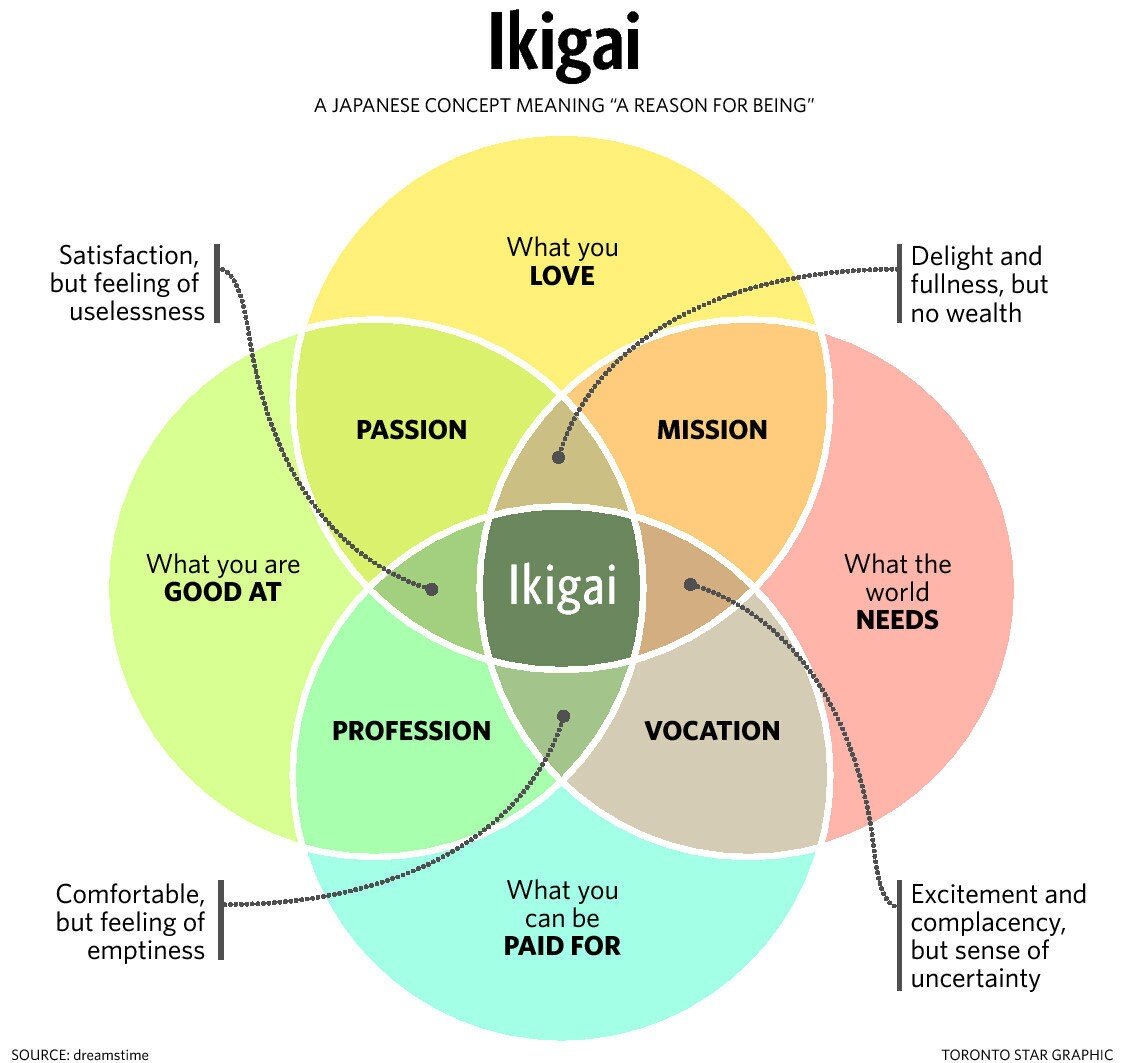
Ikigai has four categories to consider. Each category has the same weight in life, however, finding the harmony between all four allows you to live your Ikigai:
-What you love
-What you can be paid for
-What are you good at
-What the world needs
The Ten Principles of Ikigai according to Hector Garcia and Francesc Miralles:
1. Stay active and don’t retire
2. Leave urgency behind and adopt a slower pace of life
3. Only eat until you are 80 percent full
4. Surround yourself with good friends
5. Get in shape through daily, gentle exercise
6. Smile and acknowledge people around you
7. Reconnect with nature
8. Give thanks to anything that brightens our day and makes us feel alive.
9. Live in the moment
10. Follow your ikigai
A great video:
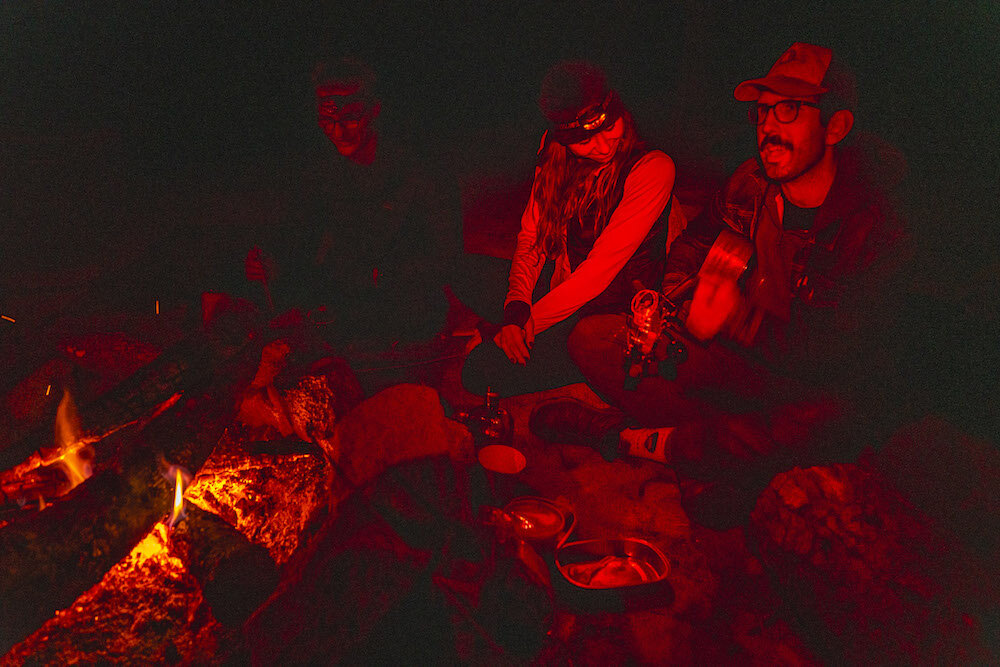
Four Ways to Improve Your Perspective On Society
The societal climate appears to be hot and toasty. Often, the rhetoric is negative and disapproving of our society, yet what are you doing to make it a better place? How are you creating an environment for others to see the good in society? Below are four ways to connect with other humans and improve your perspective on society.
The societal climate appears to be hot and toasty. Often, the rhetoric is negative and disapproving of our society, yet what are you doing to make it a better place? How are you creating an environment for others to see the good in society? Below are four ways to connect with other humans and improve your perspective on society.
1) Hug Often
Sure, we can shake hands, but you lose the opportunity to put a smile on somebody's face. A hug is an embrace with another human where we connect and build trust. You can feel their heartbeat, their touch, and vulnerability to open their arms, exposing their vital organs. Hugs that last 30 seconds, or longer, have shown to reduce anxiety in both participants. So, hug often!
2) Share Meals with Others
Who doesn’t enjoy eating some good food? Why not invite friends over for dinner, share lunch with a co-worker, grab coffee with a stranger. The food and/or drink is just an excuse to listen and talk with another human. Going for a walk and talk with your neighbor or a phone call with a friend all work the same, but the goal here is to talk with a person, preferably outside of your echo chamber.
3) Dance Under the Stars (this is my favorite)
Logistically, I understand this can be difficult to orchestrate, but when the opportunity arises, never turn it down! Better yet, suggest it because who knows the next time you will be in the situation. When we dance we move with somebody, thus we learn how to give and take without overpowering the other. So, even if it isn’t under the stars, go dance. Go laugh. Go enjoy yourself with others.
4) Send Appreciation Letters to Loved Ones
When was the last time you sent somebody a handwritten letter for no reason? I’m not here to remind you of all those letters you should have sent, we all know we should have sent at least 100 two years ago. The key here, make it easy. Say you love watching Netflix and drinking wine, or beer, after work on the couch. That is awesome and sounds relaxing. Why not have blank cards, stamps, and a pen next to you? Who knows, maybe you’ll write 101 letters!
Conclusion
Here are four ways to connect with humans on a positive front. It might be the case that somebody doesn’t want to dance to share a meal, don’t take it personally. Act with good intentions and be a kind human. You’ll begin noticing this world is a beautiful place filled with lots of kind and generous people.
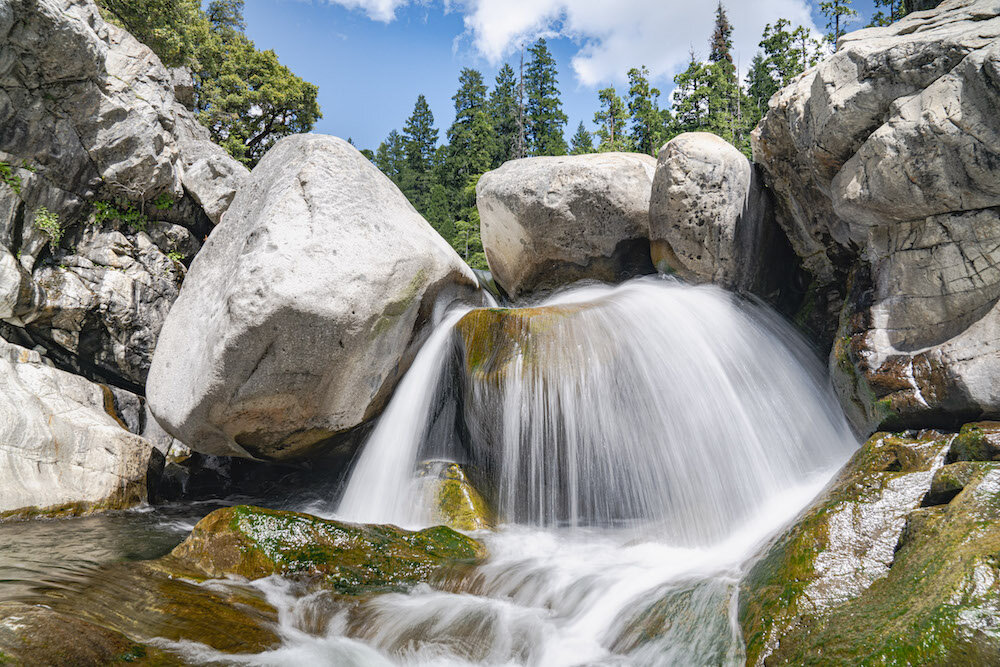
Four Steps to Unlocking Your Day: The Traveler's Mindset
We all have 24 hours in a day and you can choose to spend those hours however you wish. It does not matter if you work a 9-5 or live in a van. We are the creators of your schedules. We are the puppet master pulling our strings. Our actions are ours alone. Why not embrace the traveler’s mindset and get the most out of your 24 hours?
Carpe Diem, or Seize the Day, is what it means to be a traveler, but why? Often times we only visit a place once, which means all the excuses you use while at home won’t work. There is no tomorrow, only today. There is no next time, only this time. Now, what if you could take that mindset and apply it to your daily life? While there might be limits to your audacious adventures when you are traveling, I have been curious and practicing how I can use the traveler’s mindset to unlock my days. Using this mindset, I have built a life on the road that works even if you live the 9-5 life. And the best part, it’s easy to start!
The first step is realizing what it means for you to seize the day. Maybe it is sipping Mai Tai’s on the beach, or maybe it is climbing a glaciated peak in a remote mountain range, either way, let’s make that a reality! Take out a pen and paper, jot down what you dream of doing, then walk away to grab a cup of coffee and think to yourself, “Yup, you had a sweet idea!” Now, since you are at home and probably not in Tahiti, it is time to get creative.
Let’s use the the Mai Tai on the beach example and say you live in Minnesota. How do you sip Mai Tai’s on a beach in Minnesota in the dead of winter? You fill your living room with sand, begin a quest to make the best Mai Tai in the world, turn up the heater, and live steam the sunset over the ocean. Maybe toss in some tiki lanterns for some added flare. Now, I know this may see extreme, but if you wanted to sip Mai Tai’s on a beach every day for the rest of your life, yet you live in Minnesota, wouldn’t this be a pretty comparable solution? Think of all the crazy and wild solutions you could create. All you have to do is step outside of the sand box!
The second step is to create a sense of urgency, or ephemerality. While starting was easy, I think this second step is the most difficult. When you are traveling, the reason you go see the Eiffel Tower when it is pouring rain or walk around the pyramids during a heat wave is because you don’t have another chance. However, once you are home, going to the park is old and becomes a task. Why? Because it is always there and you know it’ll be better another time. So, how do you overcome this? You create urgency by reducing the comforts you have.
For example, I love being at the ocean or in the mountains. I want my whole life to bounce between the two, catching the best swells and squeezing in weather windows. So, I packed everything I needed into a car and left the comforts for another person. While I admit I have gone to the extreme, I wake up at the base of a climb or next to a beach where I can surf every morning. If you decide to take this route, decide what you won’t give up, ask yourself why, then decide if you can live without it. Each thing you keep, make sure it adds value to your life.
The third step is to build your group of friends who motivate you. Who likes doing everything alone? At some point, pushing yourself becomes a task that is easy with a friend. There is quote that I learned while teaching in outdoor education that goes something like, “If you want to go fast, go alone. If you want to go far, go together.” I believe this to be a truth. When you are alone, you are responsible for everything, which means there is nobody but yourself to hold you back. However, if you build the right relationships, those which promote growth, you end up going further because you have the support you needed.
The last step is to go freak’n live your life! Yup, it is that simple. You now know what you want, you don’t have that comfortable couch whispering, you had a long day, come watch Netflix and chill, and best of all you have friends that call you to do the things you love!
We all have 24 hours in a day and you can choose to spend those hours however you wish. It does not matter if you work a 9-5 or live in a van. We are the creators of your schedules. We are the puppet master pulling our strings. Our actions are ours alone. Why not embrace the traveler’s mindset and get the most out of your 24 hours?
Good Reads to Inspire You:
Micro-Adventures by Sir Alistair Humphreys
Vagabonding by Rolf Potts
Four Hour Work Week by Tim Ferris
**When using these links, I make a small portion of the sale. There is no additional cost for you.
Asking “Who”: Understanding the Who Question Generator for Introspection
Who questions are a great place to start whenever you are trying to take a deeper dive into your cognitive process. The reason, people are often the trigger, or influence, into why we didn’t stick to our truths. In our hearts, we know what is correct, but often it is our environment that changes the typical results for what we want to achieve. Please note, this influence can be both, constructive and destructive.
Asking “Who”
Understanding the Who Question Generator for Introspection
Who questions are a great place to start whenever you are trying to take a deeper dive into your cognitive process. The reason, people are often the trigger, or influence, into why we didn’t stick to our truths. In our hearts, we know what is correct, but often it is our environment that changes the typical results for what we want to achieve. Please note, this influence can be both, constructive and destructive.
From personal experience, I would say influence from others often lead to better results. Just think about your running buddy, your climber partner, or your co-worker. In most situations, the aid of another will help you make a sound decision. There is a quote from Kurt Huhn that goes something like, “If you want to go fast, go alone. If you want to go far, go together.” Stay positive, work together, and also remember introspection is about discovering YOUR cognitive process. These actions are YOUR actions!
Who are the players in a “Who” question?
A "who" question is all about taking note of who you are with during the time at which you made a reaction. This reaction could have been positive or negative, but make sure to take note of who surrounds you. List out everyone, even if they a person didn’t seem to have any influence what so ever.
Where do “Who” questions live?
Who questions are a simple observation of your surrounding or future. When it comes to reflection, take note of the people in the room. I like to ask “who” upfront because I know that there are a few people, like my family and closest friends, that I rely on to be an audit for my ideas. So, I often ask "who" questions quite often when selecting a person to bounce ideas. When looking at the past or towards the future, "who" questions are great for seeking support!
When to use a “Who” question?
Who questions are for the past or the future, but often asked during reflection. If you are setting goals, this is a great time to ask yourself, “who would be a good person for me to talk with/meet?” Meanwhile, if you are reflecting, a who question is a great time to ask, “Who has helped me grow in the last three months?”
What role does a “Who” question play?
A "who" question brings awareness to the situation at which you were in. Think of a who question as an auditor, selector, or identifier. When asking yourself who during reflection, often this is to identify who was around during a spike in your emotions. For example, if you had a fresh, bad breakup and you are at a party, then your ex walks in with a new date, you probably felt something! Maybe, later on, that night you did something you weren’t happy about. Maybe it was because you saw your ex and your heart was hurting, maybe it was something else, maybe it was both. Sorting this example out would be a great discovery of your emotional process.
Now, maybe you are trying to do have your portfolio reviewed but want somebody to look it over before submitting it. Does selecting your best friend or your mentor, make the most sense?
How to use a “Who” question?
Since a "who" question is an identifier to your surroundings, you use this question to set the scene for yourself. The expression, put your name in the hat, comes to mind. When asking this question, you are putting people into the hat, so you may assess their role in your goals or reflection. Make sure to add a lot of names, then take them away as you realize they did not fit your situation.
Why ask a “Who” question?
Overtime asking “Who” surrounds you will help guide you towards the community that lifts you. As you take notes on the people around you during positive and negative experiences, you will be building a list of people that boost you up and a list of people that do the opposite. As time goes on, surround yourself with those who lift you. For those who constantly bring you down, I encourage you to talk with them and share what you have found. Be kind and supportive as you would want to be supported!
Conclusion
A who question is a starting place for introspection and goal setting because it identifies the potential influences that you can semi-control in the future. This world we live in is yours to develop. You take control of your life, oftentimes by taking control of your thoughts. With control of your thoughts, you will be able to decide where you will go. However, if you let others drive for you, then you will end up where others want you. So, be the driver of your own life.
Introspection: Discover Your Cognitive Process
Another way to think of introspection is the discovery of one’s cognitive process. I use the word discovery because I do not think nearly observing nor examining is enough. To discover something, one must be curious to look around the corner, poke and prod, asking questions you may not want the answer to, but know it is important to find out. Also, I change the mental and emotional process to cognitive because one’s cognition also adds the senses to the process.
In this next series, I will be taking a deep dive into introspection, the basis of the six question generators, how to use it, and leave you with a list of questions to take your self-love and self-discovery to the next level. Today, I will share what you can expect over the next few weeks.
What is Introspection?
The observation, or examination, of one’s own mental and emotional process.
Another way to think of introspection is the discovery of one’s cognitive process. I use the word discovery because I do not think nearly observing nor examining is enough. To discover something, one must be curious to look around the corner, poke and prod, asking questions you may not want the answer to, but know it is important to find out. Also, I change the mental and emotional process to cognitive because one’s cognition also adds the senses to the process.
The Six Question Generators
At first, this may seem silly, or at least it did for me. However, you will get the hang of it, if you practice, and asking these questions will be like second nature. The good news is, you learned these questions in 2nd or 3rd grade!
Who
Where
When
What
How
Why
Yup, those are the question generators that we all know and will soon come to re-love.
How to use introspection?
Introspection is a tool and a muscle, but it can also create anxiety. The good news is, once you learn how to use your tool, you will be able to see recognize the anxiety building habits and address them.
In the most simple way, introspection is about giving yourself permission to set aside your emotions, for a brief moment, and objectively ask six questions. These six questions will help you observe your mental and emotional process, so you can begin taking the next steps you need to take.
To start, below is the most basic flow:
The event which triggers a mental or emotional habit
Remove yourself from the scenario
In a space you are alone and safe ask yourself:
Who was I with? Who was I not with? Who did I want to be with?
Where was I? Where did I want to be?
When did this happen? When did I want it to happen?
What was my emotional response?
How do I want to respond in the future?
Why was my reaction different than how I want to react in the future?
Conclusion
I look forward to taking a deep dive into each of the following sections over the next few weeks. Also, my goal is to help others be able to understand their process, so they can choose to pursue their own path in life. Have a wonderful day and, as always, if you have any questions or comments, please reach out!
Fifty Questions to Ask Yourself: When You’re Questioning Your Path
When we begin questioning the path we are on, oftentimes it is because we are in downtime, or are not seeing the results we had expected. The fifty questions below are a way to work through these downtimes and remind ourselves of what we are capable of doing, remind ourselves of the successes we have had, and to begin pointing your compass towards your true north.
When we begin questioning the path we are on, oftentimes it is because we are in downtime, or are not seeing the results we had expected. The fifty questions below are a way to work through these downtimes and remind ourselves of what we are capable of doing, remind ourselves of the successes we have had, and to begin pointing your compass towards your true north.
Who
Who are five people that influence me?
Who are five people that I look up to?
Who do I wish to become?
Who am I afraid to become?
Who has helped me grow?
Who can have achieved what I want to achieve?
Who will help me through this transition?
Who can I help?
Who can I mentor?
Who will hire me?
What
What is this path supposed to look like?
What do I do when I am bored?
What are the three goals I have?
What am I afraid to do?
What have I recently achieved that helped me grow?
What holds me back?
What am I good at/have a passion for doing?
What can I teach?
What can I give away, for free, that will help others grow?
What is the am I not willing to give up to pursue my dreams?
Where
Where does my favorite food come from?
Where does my least favorite food come from?
Where do I want to live?
Where do I not want to live?
Where do I wish I was right now?
Where do I need to be to achieve my goals?
Where do my dreams take me?
Where can I add discipline to my life?
Where are the people who I can help?
Where do I not what to be in life?
When
When can I start?
When will I consider myself able to move onto the next thing?
When can I begin teaching others?
When am I finished with the path I am on?
When will I know if I am on the correct path?
When was my last success?
When was my last challenge?
When was my last celebratory worthy moment?
When will I reach the next celebratory worthy moment?
When will I have time for reflection?
Why
Why have I not changed my course?
Why do I fear to do something?
Why do I not want to become… (see the answer to question 4 under “who”)?
Why am I questioning my current path?
Why did I begin this path?
Why am I willing to change paths? Or, why am I not willing to change paths?
Why can’t I change paths? Or, why can I change paths?
Why am I excited about tomorrow? A month from now? A year from now?
Why have I committed to my last three biggest commitments?
Why do I love the current path I am on?
Conclusion
Now that you have taken the time to sit down and think about what, where, when, and why you are on your current path, what is your plan of action? Where do you go next? Take some time to map this out and begin pursuing your dream!
The Balance of Fire | Learning to Recognize the Cycles in Life
Cycles define our lives. We ebb and flow, much like the tides pulled by the moon’s gravity. Some cycles are short, while others last a lifetime. Our relationships, our work, our creativity all require attention (the flowing) and withdrawal (the ebbing). Recently, I have been wondering what would it take to control these cycles. Are they controllable? Well, my intuition lands on a simple answer, no. No, I do not think we can control these cycles, but we can learn to recognize and embrace each orbit.

Cycles define our lives. We ebb and flow, much like the tides pulled by the moon’s gravity. Some cycles are short, while others last a lifetime. Our relationships, our work, our creativity all require attention (the flowing) and withdrawal (the ebbing). Recently, I have been wondering what would it take to control these cycles. Are they controllable? Well, my intuition lands on a simple answer, no. No, I do not think we can control these cycles, but we can learn to recognize and embrace each orbit.
Defining a cycle
By no means am I a scholar, or a practitioner, of the Hindu tradition or Buddhism, however, both teachings reference a cycle in relationship to our spirit. Both of these teachings focus on a multi-life experience upon this planet. What we do in this life, directs how we will be present in the next. Moving away from the dogma, yet applying the concept to a single life, we begin noticing how our actions are apart of a cycle. Remaining on a grand scale of a single life, the cycle transitions from no-life to creation to no-life. The cycle is also present in something as routine as making a meal, no-meal to meal to no-meal. Now, how do we begin recognizing a cycle?
Recognizing a cycle
As cycles come in levels of complexity and length, becoming aware of a cycle adds to the layers of awareness in a person’s life. To begin recognizing, we must be open. To be open means, we are able to reflect upon our actions without an emotional connection. To do so forgiveness must be granted and boundless love must be shared. Cycles follow a similar pattern, which are ingredients, balance, and imbalance. To maintain consistency, I will use a fire metaphor.
The Fire
The cycle of a fire is much like life. There is no fire until the building blocks come together; a fuel source, oxygen, and heat. Once these building blocks come into contact with each other under the correct conditions, a fire begins. The duration and size of fire depend upon the building blocks. Once there is an imbalance, too much or too little, of a block then the fire extinguishes. The fire may have passed, but the cycle has not ended. Once the conditions are just right, another fire will burn.
Ingredients
What does it take for a cycle to exist? For a fire, those ingredients are a fuel source, oxygen, and heat. For tea, those ingredients are boiling water, parts of the tea plant, a vessel to mix the parts and water. The number of ingredients dictates the complexity of a cycle. The complexity I am referencing is the likelihood of the ingredients finding the balance for a cycle to spin another orbit. One important consideration when looking at ingredients is to remain objective. For a cycle to exist, it only needs the building block. The subjective considerations are the nuances that define the duration and size of a cycle, which are important when trying to control a cycle but clutter the mind when trying to recognize a cycle.
Balance
For a cycle to begin, a balance must occur within a spectrum of acceptable ingredients. Notice, there is not a need for perfect conditions, only the need to fit within an acceptable range. Discovering the balance of a cycle follows the scientific method. If we know the ingredients, then all we have to do is continually test different conditions until the cycle begins.
Imbalance
If a cycle is currently flowing, then the way for it to stop is through an imbalance. As a fire loses oxygen, it will suffocate. As a fire burns all of its fuel, it will extinguish. As a fire is zapped of its heat, the fire will freeze. These imbalances are the cause of growth and destruction. If a fire is in a controlled fire pit, then the lack of surplus will not allow the fire to grow. Yet, once there is an abundance of ingredients, then there will be exponential growth, as is the case in a forest fire. The defining characteristic of imbalance is its ability to grow or destroy a cycle, but isn’t all growth destruction?
Why should we recognize cycles?
Recognizing cycles adds a layer to the recognition of this planet, society, and our own life. We may become aware of the cycles of love. We may become aware of the cycle of the stock market. We may become aware of the cycles of rain. Each cycle we begin to recognize helps us make decisions for the future. They help us plant our crops, invest our money, and share our hearts. As an open person, you will begin connecting with more than your needs, but the needs of others. These others are not only other humans but are everything from your dog to your food to your world. So, why wouldn’t you want to be able to recognize cycles?

Release your Inner Child
In the world of taxes, mortgages, car payments, student loans, utility bills, etc. we—or at least myself—fall into the trap of forgetting to play. I don’t mean going out with friends or surfing your favorite break. The play I am talking about is the kind you enjoyed as a little kid. Growing up in a rural place, I often played naked in the backyard during a rainstorm with my GI Joes or I was pretending to be Tarzan climbing trees. While I keep my nudity to a minimum these days, I hope you get what I mean.
In the world of taxes, mortgages, car payments, student loans, utility bills, etc. we—or at least myself—fall into the trap of forgetting to play. I don’t mean going out with friends or surfing your favorite break. The play I am talking about is the kind you enjoyed as a little kid. Growing up in a rural place, I often played naked in the backyard during a rainstorm with my GI Joes or I was pretending to be Tarzan climbing trees. While I keep my nudity to a minimum these days, I hope you get what I mean.
Often on an assignment, the deadline and the need to capture a moment for a client puts me in a serious mood. Focused and aware. This focus is rigid. When this rigidity begins creeping in, I feel stiff and the enjoyable part of my career, taking photos, starts to feel like work. Thankfully, I have the pleasure of creating with awesome people who always find a way to bring out the child in me and in this world. Often, these images are not the ones selected by a client, but they are the ones which help me snap out of the serious mindset, allowing me to create some of my favorite work.


To give a perfect example of this child-like fun, I was shooting landscapes and products for two different companies around Death Valley. The timing was critical for the light. I was in my head about the location (because I didn’t want others in the background in a popular place) and it was my first time working with both companies (and I was responsible for pushing their brand identity into a new market). As the light changed from golden towards midday, Hailey started to play in the sand. It reminded me of the playground at the lake I grew up going to. I asked her to start tossing the sand around.
The sand got everywhere! We had fun! We played! We were kids!
Once back to the van, I started going through the images. The morning session was solid, but the frames following our giant sandbox experience were the ones both clients selected. I am excited to say, both companies have been stoked with the boundary push of the for their brand, which has even lead to new client acquisition for both. Also, to nobodies surprise, both companies laughed at the sandbox images!
So, make sure to get out and have fun. Go play like you are a kid!