
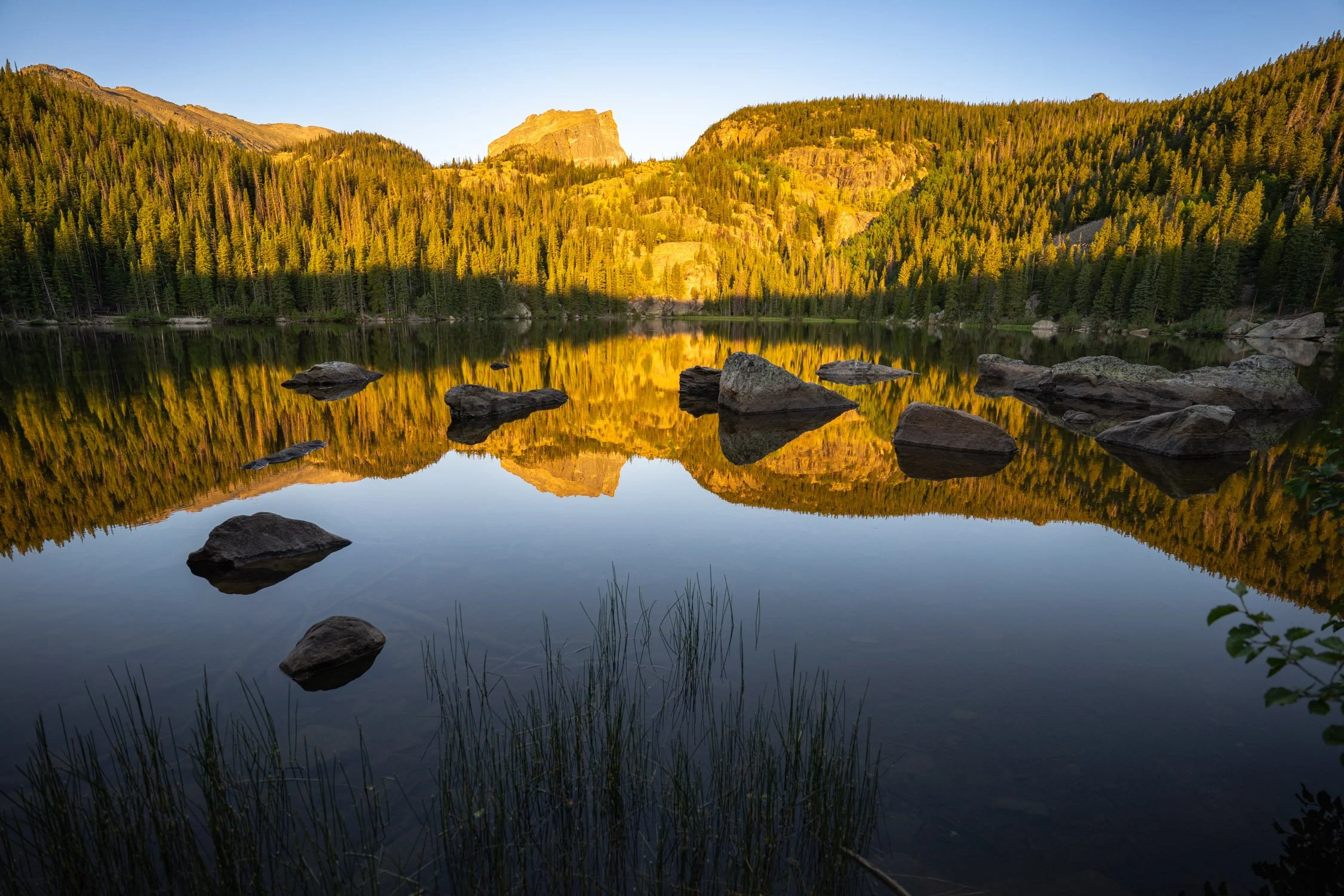
The 5 Stages of Visiting Bear Lake in Rocky Mountain National Park
With the timed entry into Rocky Mountain National Park, access to Bear Lake at sunrise takes a little bit of planning. While there are day of permits available, they seem to be impossible to land. So, if you are making the trek out to Rocky Mountain National Park, I suggest you secure your entry permit months beforehand.
Before diving into the 5 stages of Bear Lakes, here’s a little backstory you should know before visiting Bear Lakes for yourself:
With the timed entry into Rocky Mountain National Park, access to Bear Lake at sunrise takes a little bit of planning. While there are day of permits available, they seem to be impossible to land. So, if you are making the trek out to Rocky Mountain National Park, I suggest you secure your entry permit months beforehand.
With that said, Kristin, my partner, was able to land an entry permit for the morning slot, the night before, during late-summer in the middle of the week. I think we were lucky, but who really knows?!
Now that your permit is secured, it’s time to set your alarm the night before and try to sleep, crossing your fingers you wake up to an early alarm, drive through the dark to the trailhead, and walk the .5 of a mile to Bear Lake.
Yup, the walk is very short, so no need to rush.
I suggest bringing a warm beverage to keep you warm, even if it is the summer as the lake sits at 9,449 feet. From there, set up your camera, enjoy the alpine glow on the cliffs, and push that shutter button.
You can walk around the lake to create different images, I liked the alpine glow in the morning from the eastern bank of the lake and the northern bank of the lake around mid-morning when most of the lake was in full sun.
Now, let’s explore the 5 stages of visiting Bear Lakes:
1) Arriving In Pitch Black Wondering Where Bear Lake Is At

Camera: Sony a7r4
Lens: Tamron 28-75 f/2.8 G2
Focal length: 44 mm
Aperture: f/5.0
Shutter-Speed: 1/40 second
ISO: 400
2) Patiently Waiting For The Alpine Glow To Start

Camera: Sony a7r4
Lens: Tamron 16-30 f/2.8 G2
Focal length: 16 mm
Aperture: f/2.8
Shutter-Speed: 1/30 second
ISO: 400
3) Standing In Excitement The Glow Has Arrived, But Also Realizing You Are Cold From Sitting To Long

Camera: Sony a7r4
Lens: Tamron 16-30 f/2.8 G2
Focal length: 16 mm
Aperture: f/2.8
Shutter-Speed: 1/100 second
ISO: 400
4) Realizing There Is More To Bear Lake And Start Walking Around, Feeling Hard Core FOMO You Didn’t Do This Before
Camera: Sony a7r4
Lens: Tamron 16-30 f/2.8 G2
Focal length: 16 mm
Aperture: f/2.8
Shutter-Speed: 1/320 second
ISO: 250
5) Looking Over Your Shoulder And Thinking, “Dang! Bear Lake has it going on!”

Camera: Sony a7r4
Lens: Tamron 16-30 f/2.8 G2
Focal length: 30mm
Aperture: f/5.0
Shutter-Speed: 1/320 second
ISO: 250
People Care About You and Your Work, If They Know You
"At the end of the day, nobody cares about you"
False.
It's the opposite. If you don't let people know you exist they don't care about you because they don't know you.
"At the end of the day, nobody cares about you"
False.
It's the opposite. If you don't let people know you exist they don't care about you because they don't know you.
When you are hidden away in the dark, nobody can even care about you because they don't know you. That means two things:
First, you can do whatever you want because your actions don't really have consequences. So, go create whatever you want!
Second, you can't land jobs if nobody knows who you are or what you do. So, go create something to make a name for yourself, make some money using your camera, and turn that "dream job" into your "real job".
Yes, this is a bit preachy, but that's because these images come from July 7th, 2020 when I almost exclusively photographed on spec for outdoor brands and played in the mountains every day. At the time, that is what I needed and wanted. However, over the years my goals changed from summiting mountains to using my camera as a key to unlock new places in this world, like Antarctica.


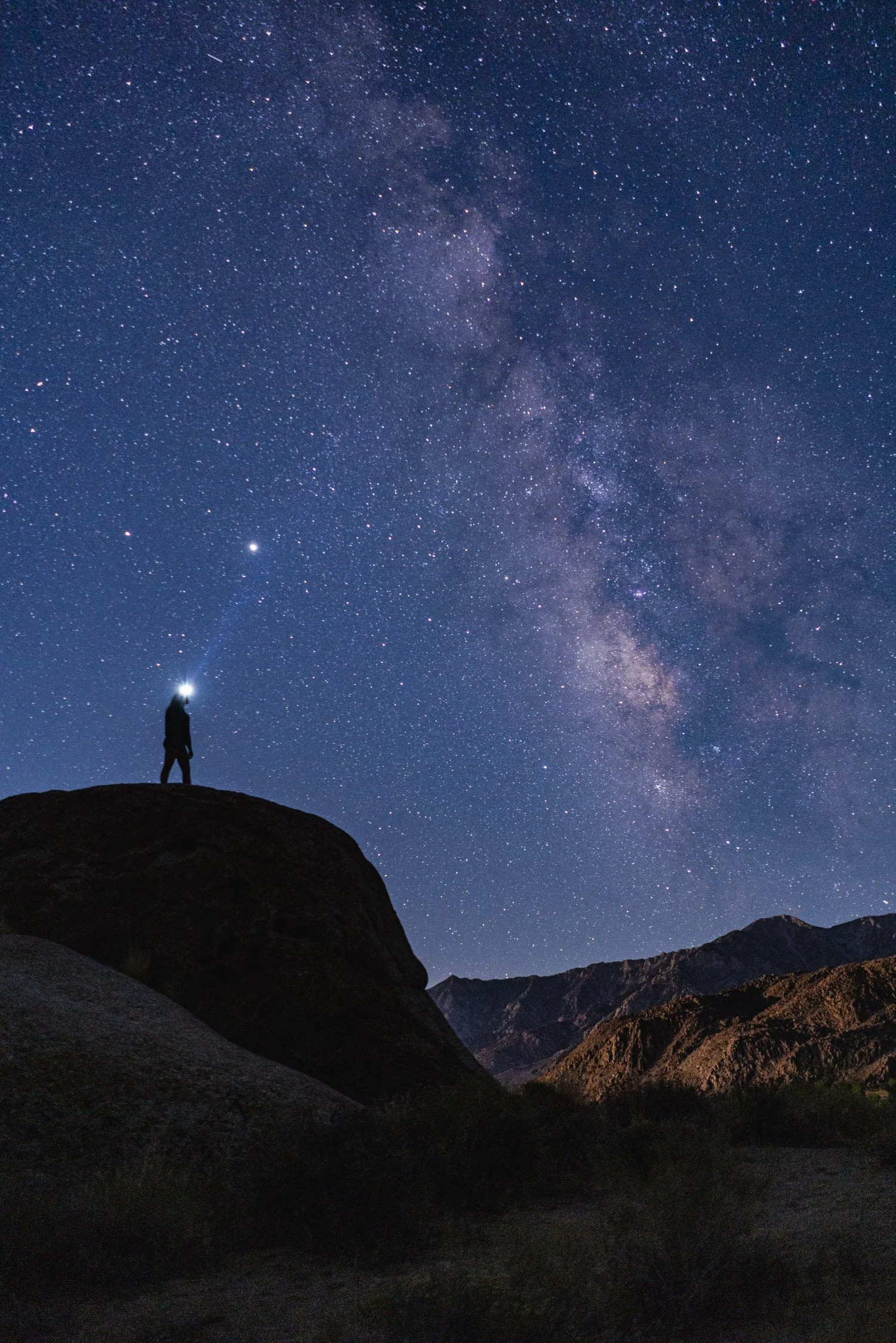


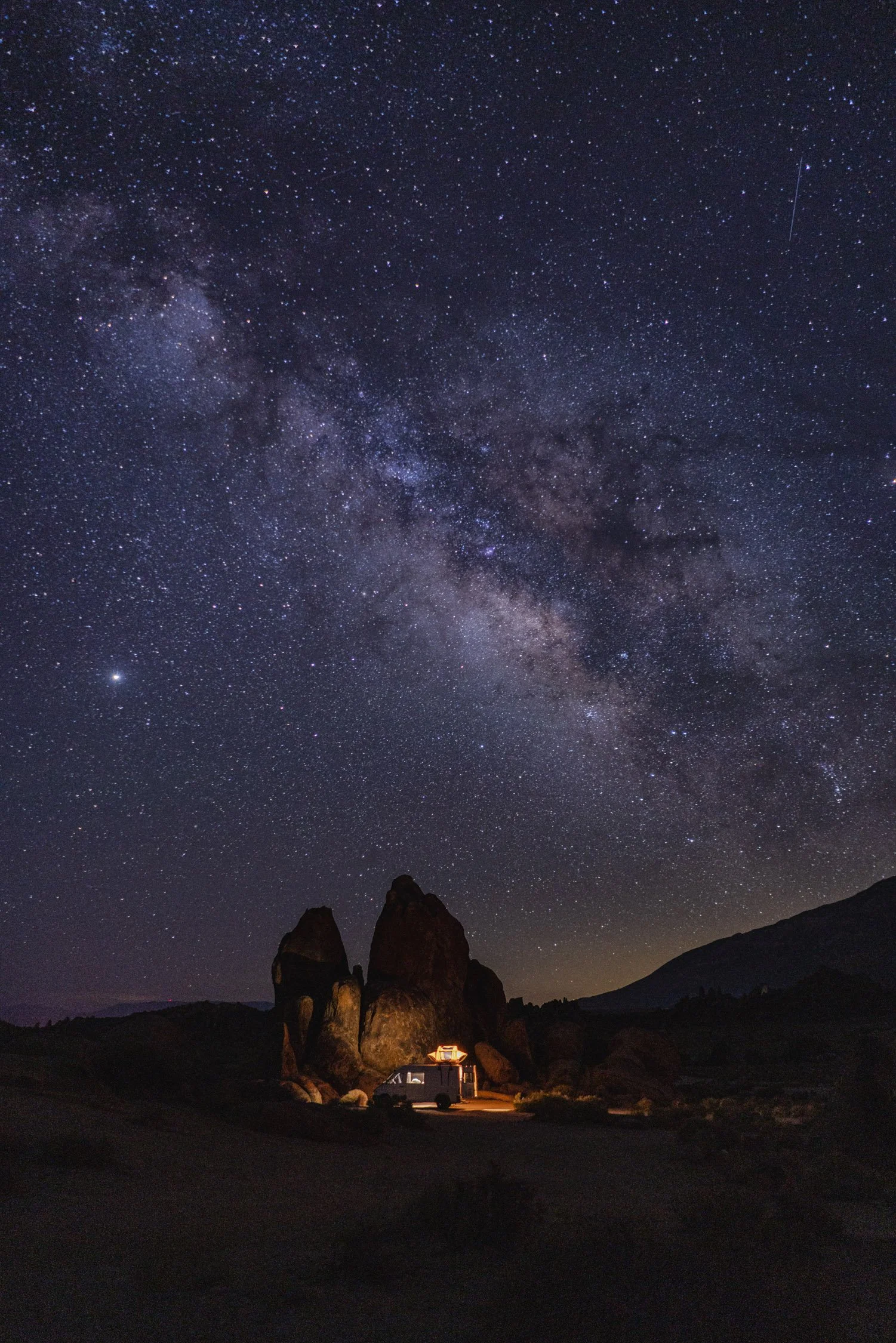
BTW this is the summit of Mount Mallory in the High Sierra of CA. A mostly unknown peak directly across from Mount Whitney. The night time images are from Alabama Hills. If my memory serves me right, some rental car company picked up the glowing van shot with the milky way overhead.
Lastly, if you are like "how they heck do I start this type of career?" I wrote an ebook and it's only 10 bucks. Which is incredibly affordable because I want every who wants to be in this industry to learn what they need to learn to succeed!

The Adventure Photographer’s Playbook is an e-book created by full-time photographer Dalton Johnson to help new photographers go from nothing to booked in the adventure photography space.
This adventure photography e-book goes over the business and what “making it” as a photographer in the outdoor space requires. Covering topics such as pricing, marketing, building a body of work, reflection questions, and everything you need to know to make a career out of adventure photography.
Updated: June 2025
Jimmy Chin and Jim Morrison Return to Everest to Ski the Hornbein Couloir
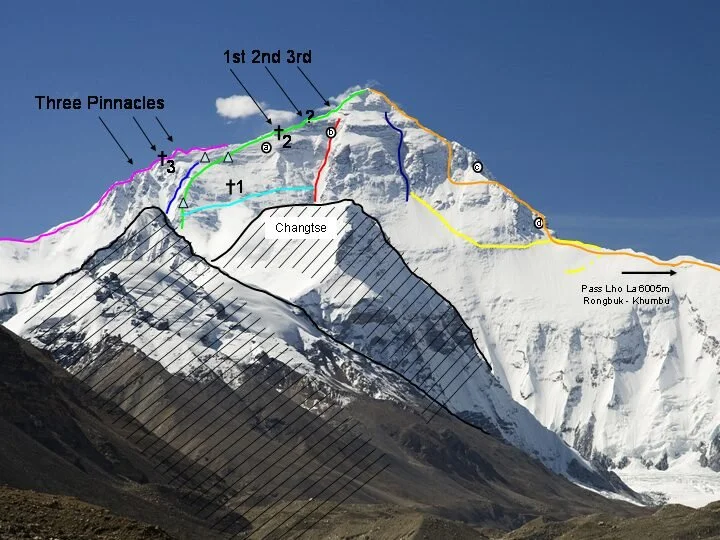
In a bold and emotionally charged endeavor, renowned American ski mountaineer Jim Morrison, along with acclaimed filmmaker Jimmy Chin, is set to tackle one of the most challenging ski descents on Mount Everest: the Hornbein Couloir. This ambitious project, part of a multi-million dollar initiative funded by the National Geographic Society and The North Face, aims to pay tribute to Morrison’s late partner, Hilaree Nelson, who tragically died attempting a similar feat on Mount Manaslu in 2022.
In a bold and emotionally charged endeavor, renowned American ski mountaineer Jim Morrison, along with acclaimed filmmaker Jimmy Chin, is set to tackle one of the most challenging ski descents on Mount Everest: the Hornbein Couloir. This ambitious project, part of a multi-million dollar initiative funded by the National Geographic Society and The North Face, aims to pay tribute to Morrison’s late partner, Hilaree Nelson, who tragically died attempting a similar feat on Mount Manaslu in 2022.
Wikipedia
An Emotional and High-Stakes Project
The Hornbein Couloir, a notoriously difficult route named after Thomas Hornbein of the 1963 US Everest Expedition, will be the focus of this high-profile ski descent. The project is being closely monitored by the climbing community and adventure enthusiasts worldwide, with significant resources invested in ensuring its success.
Jimmy Chin, the Academy Award-winning director known for his work on Free Solo and The Rescue, is slated to film the descent under the National Geographic Society and The North Face's multi-million dollar project. "ABC is set up and the fixing team will soon head for the Hornbein Couloir route to fix the Camp I," sources confirmed. This extensive preparation highlights the complexities and risks involved in the descent.
Tribute to Hilaree Nelson
The endeavor is a heartfelt tribute to Hilaree Nelson, a celebrated extreme skier who, along with Morrison, made the first ski descent of Lhotse in 2021. Nelson’s tragic death while attempting to ski down from the summit of Mt Manaslu in 2022 cast a shadow over the climbing community. Morrison’s return to Everest, therefore, carries a deep personal significance, honoring Nelson’s legacy and the profound impact she had on the world of ski mountaineering.
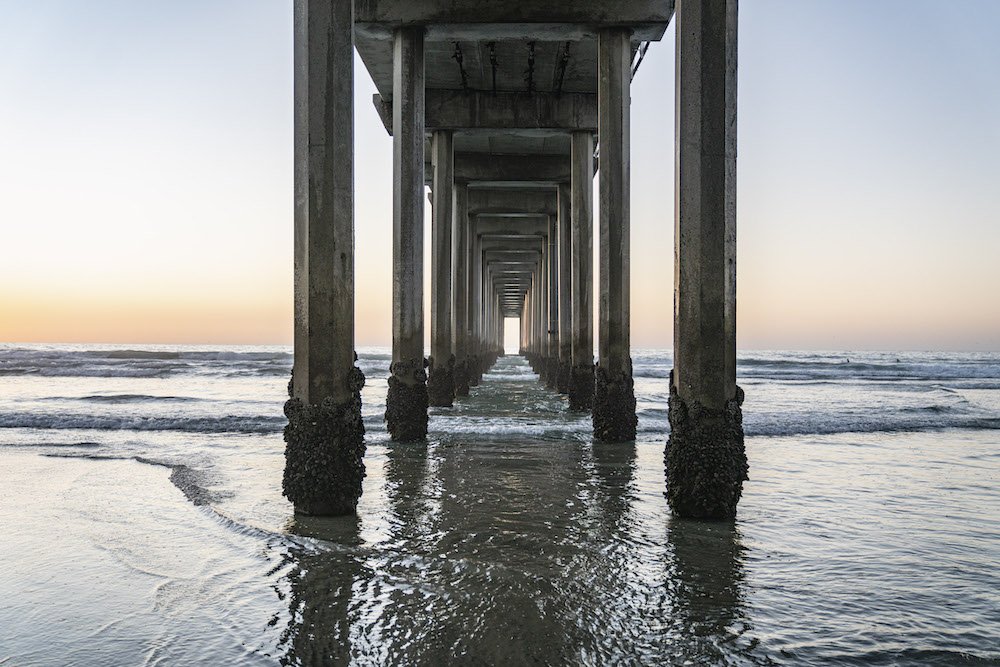


Project Challenges and Preparations
The Everest Ski Project faced significant hurdles last year when Chinese authorities refused to issue necessary permits for the expedition. Despite these setbacks, Jimmy Chin's persistent lobbying with Chinese authorities has secured the Tibet entry permit for this season. However, the team still encountered obstacles, as Conrad Anker, the original expedition leader, was unable to join due to visa issues.
This season's team includes Morrison, Chin, and cinematographer Mark Fisher, who will be supported by a dedicated group of Sherpa climbers, including Mingma David Sherpa, co-owner of Elite Exped/Sherpa Extremes Pvt Ltd. These climbers have already reached base camp in Tibet to assist with ground preparations. A few Chinese members are also expected to join the guiding team, underscoring the collaborative effort involved in this challenging project.
As the team gears up for the descent, the Everest Ski Project promises to be a remarkable and emotional journey. The combination of high-altitude skiing, a tribute to a beloved climber, and the dramatic backdrop of Everest ensures that this project will be closely watched by the climbing community and outdoor enthusiasts alike.
The success of this endeavor will not only honor Hilaree Nelson’s memory but also highlight the incredible feats that can be achieved in the world of extreme sports. As preparations continue, all eyes will be on Everest to see if Morrison, Chin, and their team can accomplish their daring goal.
Discover more Adventures
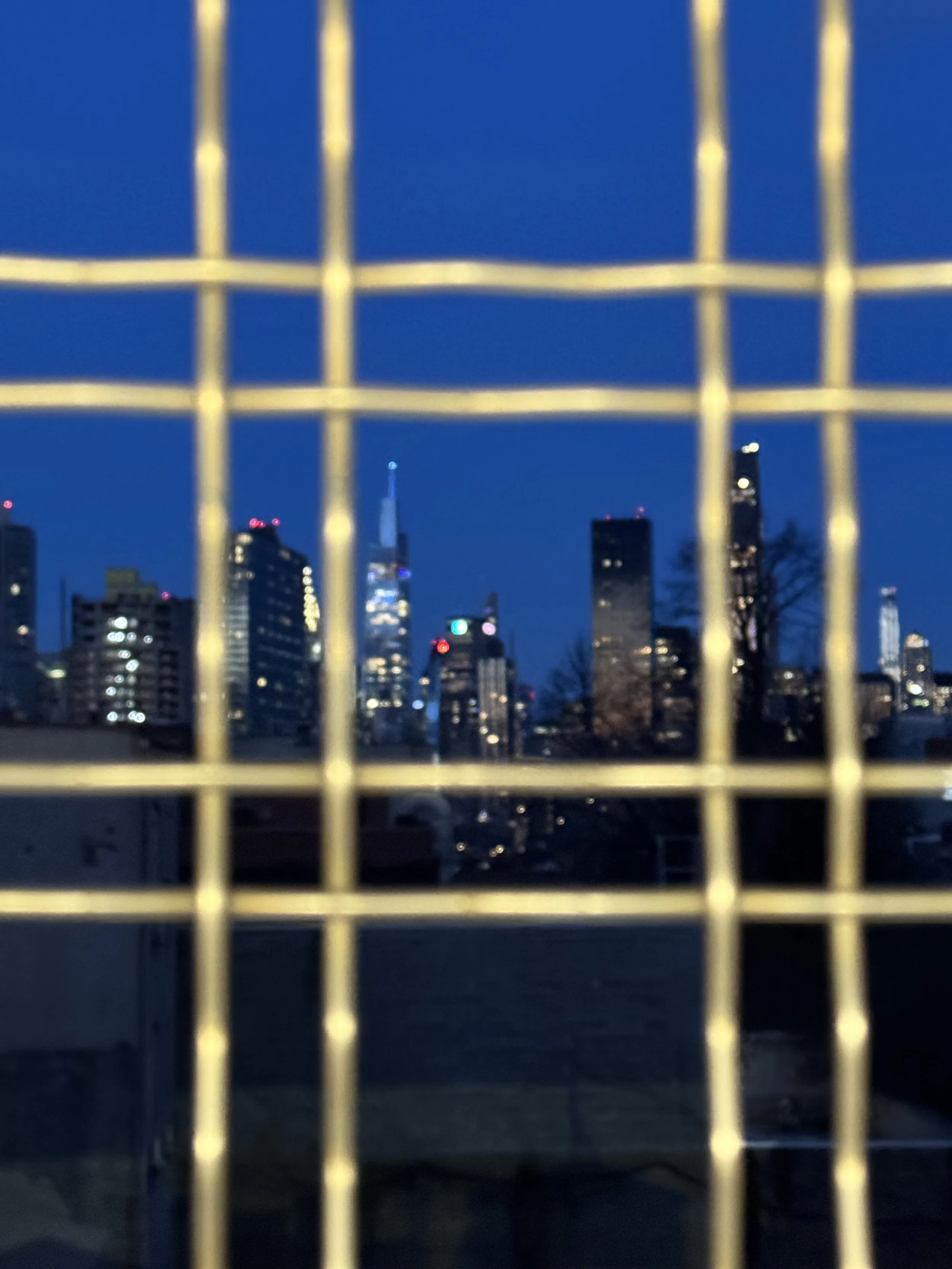

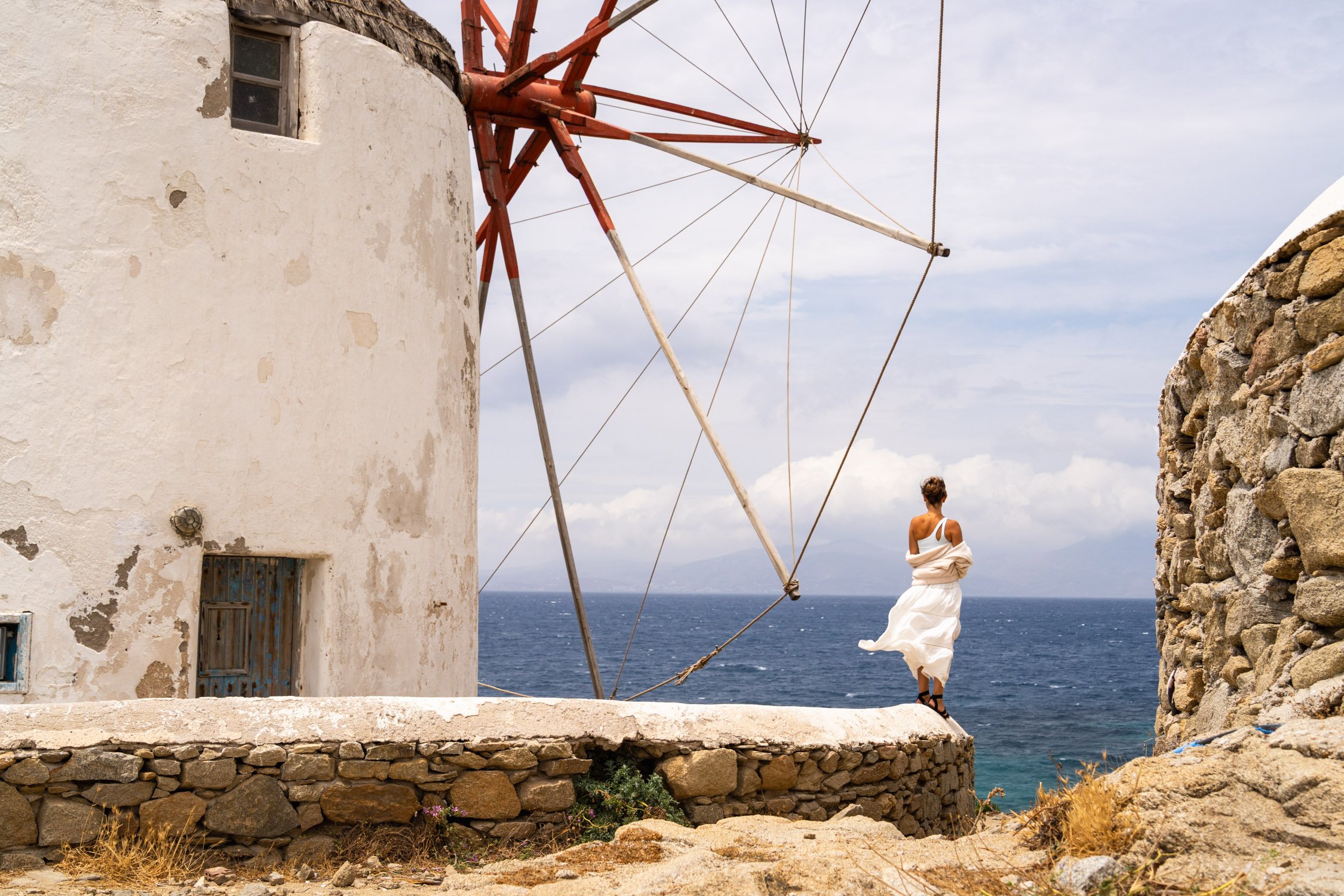

Lonely Planet's Best in Travel is Back
Lonely Planet's Best in Travel is back and better than ever, making a triumphant return after a one-year hiatus to celebrate the 50th anniversary of this iconic travel brand. This annual bestseller is a must-have for wanderlust enthusiasts, providing a roadmap to the most exciting and captivating destinations around the globe. With 2024 just around the corner, this edition promises to be a source of inspiration and discovery for every type of traveler.
Lonely Planet's Best in Travel is back and better than ever, making a triumphant return after a one-year hiatus to celebrate the 50th anniversary of this iconic travel brand. This annual bestseller is a must-have for wanderlust enthusiasts, providing a roadmap to the most exciting and captivating destinations around the globe. With 2024 just around the corner, this edition promises to be a source of inspiration and discovery for every type of traveler.
Inside the pages of Lonely Planet's Best in Travel 2024, readers can expect to find a treasure trove of wanderlust-inducing content. The expert panel of judges has meticulously selected and ranked 50 destinations, divided into five distinct categories, each catering to different travel preferences.
The first list, "Top 10 Countries," showcases nations that are on the brink of becoming the next big thing in travel. Whether it's an emerging cultural hotspot or a natural wonder waiting to be explored, this list is your gateway to the world's most promising destinations.
For those seeking regional gems, the "Top 10 Regions" category highlights areas that often fly under the radar. These are the places where authenticity and adventure await, away from the tourist crowds.
If you're more of a city explorer, the "Top 10 Cities" list will guide you to urban destinations that are brimming with culture, history, and excitement. These cities offer a unique blend of tradition and modernity, making them perfect for urban adventurers.
Budget-conscious travelers will find the "Top 10 Best Value Destinations" indispensable, as it features destinations that offer an exceptional experience without breaking the bank.
In an era where sustainable travel is gaining importance, the "Top 10 Sustainable Travel Destinations" list highlights places that are taking significant steps to protect the environment and support responsible tourism.
But Lonely Planet's Best in Travel 2024 is more than just lists. Each destination profile is packed with timely reasons to visit in 2024, expertly curated itineraries to help you make the most of your trip, and practical advice to ensure a seamless travel experience. Furthermore, the stunning travel photography captures the essence of these 50 incredible locations, from the people and landscapes to the activities that make them truly exceptional.

With Lonely Planet's Best in Travel 2024 in hand, you'll be ready to embark on a year filled with remarkable adventures, unforgettable experiences, and the joy of exploring the world's best destinations. Whether you're an intrepid explorer, a culture enthusiast, a budget-savvy traveler, or an eco-conscious globetrotter, this book has something for everyone, making it an indispensable guide for planning your next great escape. Don't miss the chance to celebrate the 50th anniversary of Lonely Planet by discovering the world anew in 2024.
Discover More Gear
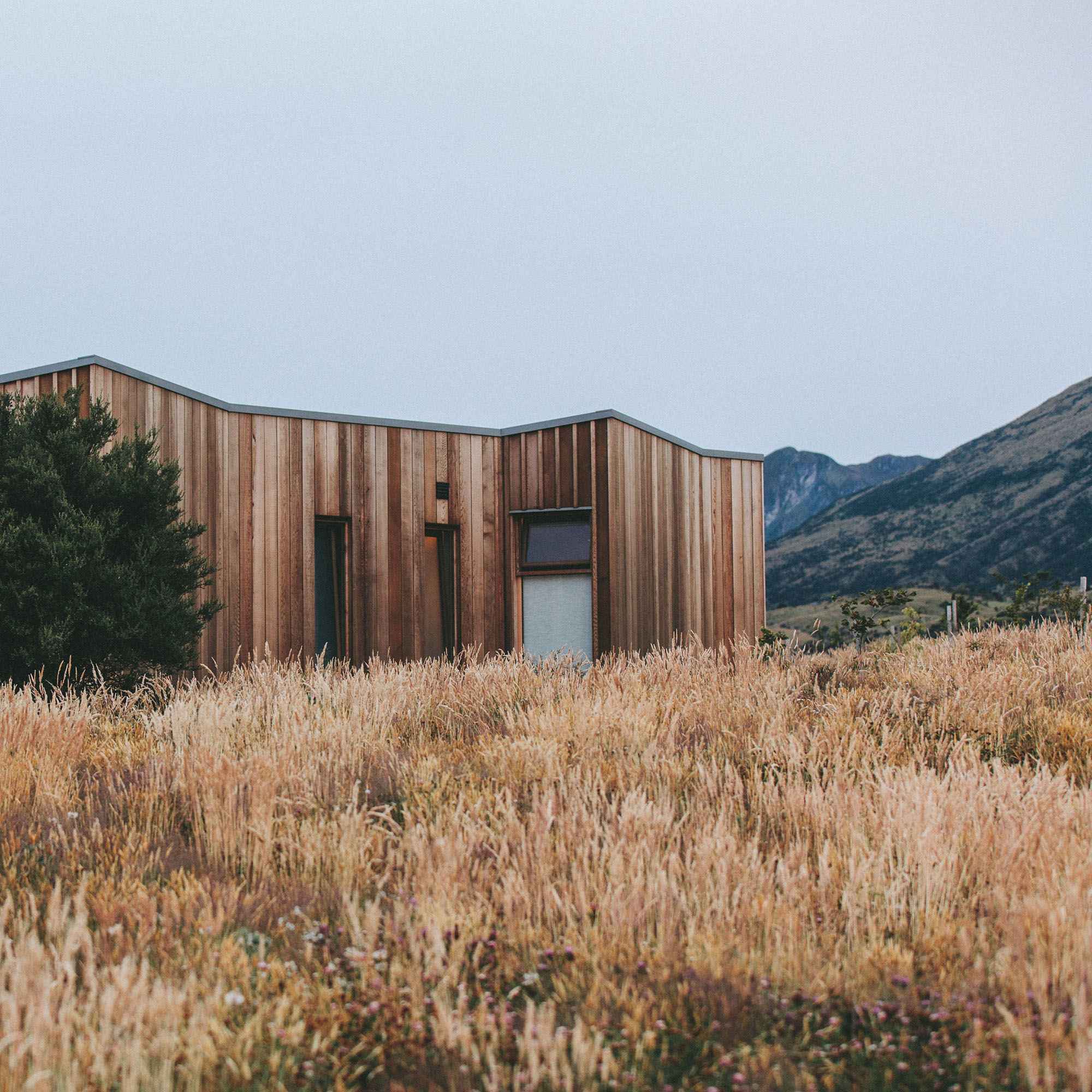
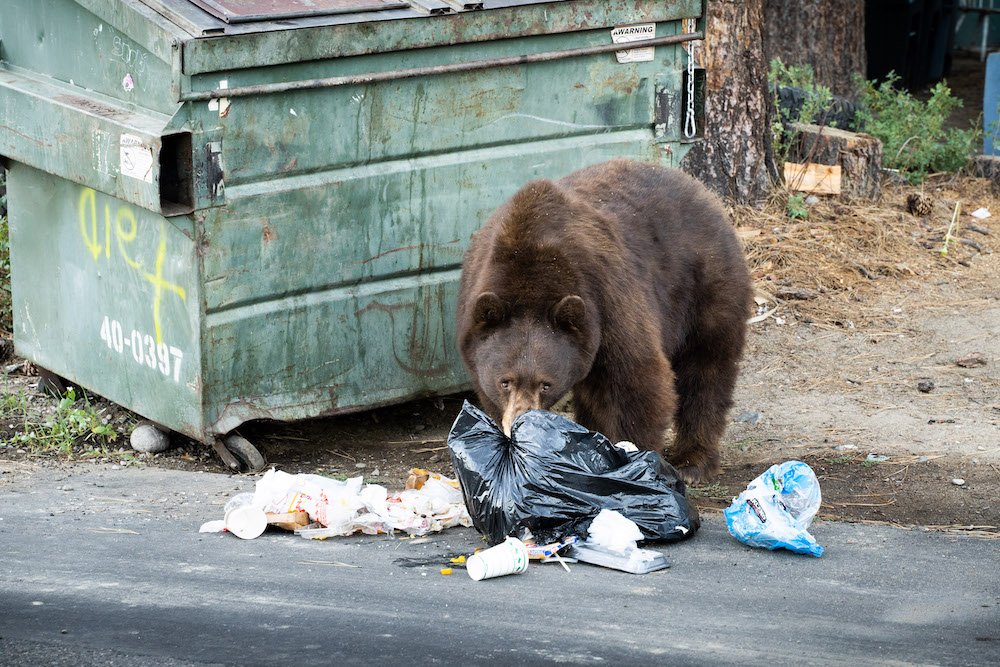
Q&A With Filmmaker of The Backyard Bears
Q: Why did you make The Backyard Bears?
A: I made The Backyard Bears simply because I love bears. Black bears are what kick started my love for documenting wildlife, and when I first saw a bear gorging himself with trash, consuming plastic and other waste that no creature should be trying to digest, I knew I needed to do something and help these bears find their way back to the wild. Documenting these problems and bringing them to the world through this film was the first step for me, and there’s much more coming!
Q: Where can people watch it?
A: The Backyard Bears is available for free to everyone on YouTube!
Q: What camera gear did you shoot on?
A: This film was entirely shot on the Sony A7iv, Sony FX3, and DJI drones. When filming wildlife it’s important to be light and to be able to keep up with the animals in the terrain that they live in. So keeping things light with compact Sony cameras was important!
Q: How long did it take for you to make the film?
A: I spent about 6 months documenting the bears for this specific project. In total it was probably 8 months from start to finish with pre production, editing etc.
Q: Any words of advice for aspiring videographers?
A: Advice is hard, as I still feel that I’m at the very beginning stages of this journey of mine as a wildlife filmmaker. But what I’d say for anyone looking into becoming a filmmaker or photographer, is find something that you are incredibly passionate about.
It took me a while to connect the dots and realize that combining my love for animals and my love for filmmaking was where I needed to be and where I belonged as a creative. Once I found this sweet spot, I knew this is exactly where I needed to be and what I needed to do for the rest of my life.
At that point you just have to do it, you can’t wait for a network or an organization to give you a check to make it happen, you have to do whatever you can to make it happen for yourself and show the world what you can do.
This documentary was entirely a passion project, to tell this important story that needed telling and an outlet for me to show what I can do as a wildlife filmmaker. Putting yourself out there and just doing it is the best thing you can do, in my opinion. This documentary has led to some amazing opportunities that I honestly never thought would come to me.
I can’t say much about these opportunities, now, but you can follow along on my journey to find out!
Discover more Adventures

These 6 Tips Will Help You See the Northern Lights This Year
The ethereal dance of the Northern Lights, also known as the Aurora Borealis, is a breathtaking natural phenomenon that captivates anyone fortunate enough to witness it. But, the Northern Lights are not the easiest light show to witness first-hand. If you're planning to chase this mesmerizing light display this year, we have you covered, here are six tips to enhance your chances of experiencing this celestial spectacle.
The ethereal dance of the Northern Lights, also known as the Aurora Borealis, is a breathtaking natural phenomenon that captivates anyone fortunate enough to witness it. But, the Northern Lights are not the easiest light show to witness first-hand. If you're planning to chase this mesmerizing light display this year, we have you covered, here are six tips to enhance your chances of experiencing this celestial spectacle.

The aurora glowing over a Sami home in Norway. Photo by Dalton Johnson
Choose the Right Time and Location:
Seeing the Northern Lights is heavily dependent on the time of year and your geographical location. The best times to witness this phenomenon are during the winter months, particularly from September to March when the nights are longest. Opt for locations situated within or near the Arctic Circle, such as Scandinavia, Canada, Alaska, and Iceland, where the lights are most active. One stand out location is Eleven's Deplar Farm in Iceland, where you can watch the Northern Lights from a soaking tub!
Monitor Solar Activity:
The intensity of the Northern Lights is linked to solar activity. Keep an eye on solar forecasts and sunspot activity to predict when the auroras will be at their most vibrant. Websites like the Space Weather Prediction Center provide real-time data on solar flares and geomagnetic storms, helping you plan your trip for optimal viewing conditions.
Stay Away from Light Pollution:
To fully appreciate the Northern Lights, it's crucial to escape light pollution from urban areas. Head to remote locations or designated dark sky areas where artificial lights are minimal. This not only enhances the visibility of the auroras but also allows you to enjoy the cosmic display in all its glory.
Be Patient and Plan for Multiple Nights:
Nature can be unpredictable, and seeing the Northern Lights is not guaranteed even in prime conditions. Plan for multiple nights at your chosen location to increase your chances of catching the auroras. Patience is key, as the lights may appear and disappear quickly, requiring vigilance and a bit of luck. I've found a great cup of coffee or tea is helpful to stay awake while waiting for the light show.
Pack Warm Clothing and Essential Gear:
Many Northern Lights destinations are in cold climates, so it's crucial to dress appropriately. Pack insulated layers, waterproof clothing, and sturdy footwear to stay warm and comfortable during long nights of star-gazing. Additionally, bring a tripod for your camera to capture stunning long-exposure shots of the auroras.
Capture the Moment:
If you're a photography enthusiast, equip yourself with a camera capable of capturing low-light conditions. Learn the basics of night photography, including long-exposure settings and manual focus, to capture the Northern Lights in all their glory. Be prepared to experiment with your camera settings to find the optimal configuration for the unique conditions of the auroras.
Northern Lights over the ocean in Norway. Photo by Dalton Johnson
Experiencing the Northern Lights can be a magical and unforgettable adventure. By choosing the right time and location, monitoring solar activity, avoiding light pollution, being patient, packing appropriately, and capturing the moment with your camera, you'll maximize your chances of witnessing this celestial dance in the night sky. Embrace the beauty of the auroras and create memories that will last a lifetime.
Discover more of The Night Sky
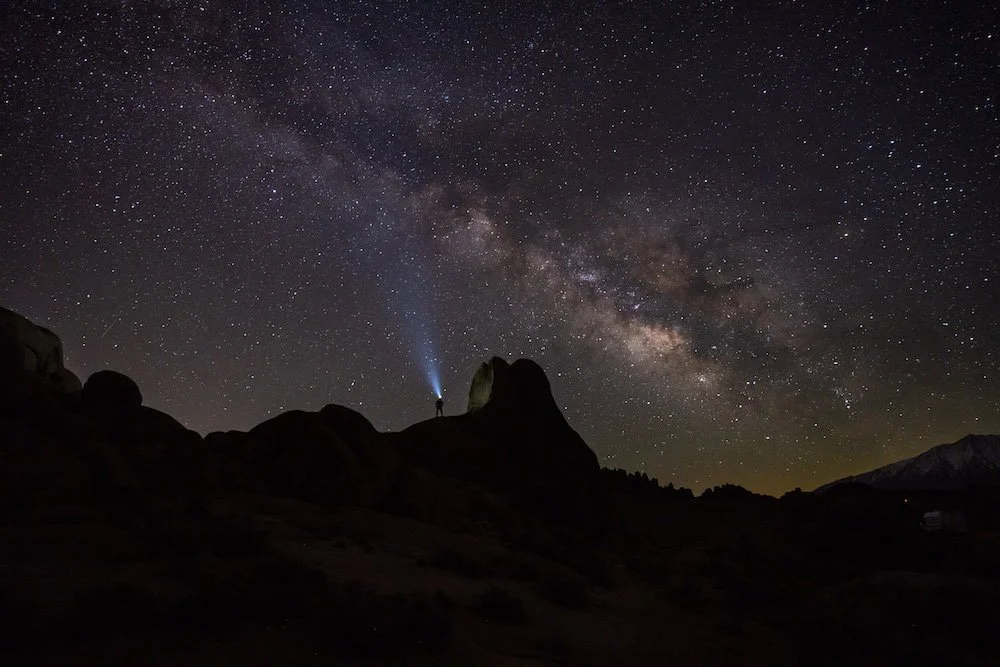
How To Photograph the Stars
Capturing the breathtaking beauty of the cosmos requires more than just pointing your camera at the night sky. Astrophotography is a captivating blend of science and art that demands the right equipment, meticulous preparation, and a keen understanding of camera settings and techniques.
Whether you're gazing at the stars from the serene landscapes of Alabama Hills or any other dark-sky location, this guide will provide you with all the insights you need to embark on an unforgettable astrophotography journey.
Capturing the breathtaking beauty of the cosmos requires more than just pointing your camera at the night sky. Astrophotography is a captivating blend of science and art that demands the right equipment, meticulous preparation, and a keen understanding of camera settings and techniques.
Whether you're gazing at the stars from the serene landscapes of Alabama Hills or any other dark-sky location, this guide will provide you with all the insights you need to embark on an unforgettable astrophotography journey.

The milkyway over Bonsai Rock in Lake Tahoe, Nevada. Photo by Dalton Johnson
Essential Equipment
Embarking on an astrophotography adventure begins with the right gear. The following essential equipment forms the foundation of successful astrophotography sessions:
Camera Body: Invest in a camera with manual settings and strong low-light performance. Mirrorless cameras are popular choices due to their ability to use interchangeable lenses and control settings like ISO, aperture, and shutter speed. My favorite camera to use is the Sony a7r5.
Wide Angle Lenses: A wide-angle lens with a low aperture (f/2.8 or lower) is essential for capturing the vastness of the night sky and incorporating the unique rock formations of locations like Alabama Hills. Tamron lenses such as the 17-28mm and 20mm provide excellent choices.
Tripod: Stabilizing your camera during long exposure shots is crucial. Opt for a lightweight yet sturdy tripod that can withstand challenging conditions, ensuring sharp and detailed images free from camera shake.
Remote Shutter Release (optional): Minimize vibrations by using a remote shutter release or an intervalometer to trigger your camera without physical contact. This is particularly valuable for long exposures and star trail photography. If you are using a mirrorless camera, use the 2 second or 10 second delay.
Headlamp or Flashlight: Navigating in the darkness necessitates a reliable light source. A headlamp with a red light mode is recommended to preserve night vision while allowing you to manage camera controls and equipment.
Extra Batteries and Memory Cards: Extended astrophotography sessions can drain your camera battery quickly. Carry fully charged spare batteries and ample memory cards to capture every enchanting moment.
Constellation Book or Mobile Apps: Acquaint yourself with the night sky using a star chart or mobile apps that identify stars, constellations, and celestial objects. These tools enhance your understanding and appreciation of the cosmic wonders above. Here are two of our favorite books to learn the night sky:
Night Sky - A Field Guide to the Constellations my personal favorite book to learn the night sky. Easy to use, lightweight (making it easy to take backpacking), and great graphics
National Geographic Backyard Guide to the Night Sky, 2nd Edition is a staple, but it can be hard to use and understand for novice/kids.
Remember, these essentials serve as a foundation; more advanced equipment like filters, telescopes, or portable tracking mounts can further elevate your astrophotography capabilities.


Camera Settings and Techniques
Mastering the art of astrophotography involves more than just having the right equipment. Understanding camera settings and techniques is key to producing stunning celestial images. Here's a step-by-step guide to get you started:
Location and Timing
Choose a location with minimal light pollution, such as Alabama Hills, to ensure a dark and clear sky for optimal results.
Research celestial events, moon phases, and weather conditions to select the best times for stargazing and astrophotography.
Equipment Preparation
Set up your camera on a stable tripod to eliminate camera shake during long exposure shots.
Attach a wide-angle lens with a low aperture to capture a broad field of view and maximize light gathering.
Ensure your camera battery is fully charged and carry spare batteries and memory cards.
Camera Settings
Switch to manual mode to have complete control over camera settings.
Set the ISO to as low of a value as possible (e.g., ISO 600 or 800) to minimize noise in your images.
Choose a wide aperture (e.g., f/2.8 to f/4) to allow more light to reach the sensor.
Experiment with different shutter speeds, starting with 10 to 30 seconds for pinpoint stars or longer durations for captivating star trail photography.
Focus
Switch your lens to manual focus mode.
Utilize the camera's live view and zoom in on a bright star or distant light source.
Adjust the focus ring until the stars appear as sharp points of light, ensuring optimal focus for your shots.
Composition
Incorporate unique foreground elements such as rock formations to add depth and interest to your images.
Experiment with various angles, perspectives, and framing to create visually engaging compositions.
Exposure
Utilize a remote shutter release or timer delay to minimize camera shake when capturing images.
Capture test shots and review results on the camera's LCD screen to fine-tune exposure settings.
Adjust ISO, aperture, and shutter speed as needed to achieve desired exposure and balance between the foreground and the sky.
Review and Refine
Regularly review images on the camera's LCD screen to evaluate focus, exposure, and composition.
Make necessary adjustments to camera settings or composition based on your assessments.
Capture multiple exposures and experiment with various techniques to produce a diverse range of captivating shots.
The milkyway high in the night sky. Photo by Dalton Johnson
Astrophotography is an awe-inspiring pursuit that combines technical expertise, creativity, and patience. With the right equipment and a solid grasp of camera settings and techniques, you can unlock the hidden beauty of the night sky.
Each session presents unique challenges and opportunities, allowing you to refine your skills, experiment, and develop your own distinctive style.
As you immerse yourself in the celestial wonders above, remember that practice and persistence are the keys to capturing breathtaking astrophotos that reveal the magic of the cosmos. Whether you're in Alabama Hills or any other celestial hotspot, the night sky awaits your artistic interpretation.
Discover more about our stars

Type 2 Fun | A Cinematic Adventure
Now that we understand what type 2 fun is, where does inspiration come from behind this video? My adventures. Since 2016, I have dedicated my life to adventures that range from the grand to the micro. Just the idea of adventure get’s me excited and I often read books about adventures just to get the ideas flowing.
Type 2 Fun Script
I have no idea why I keep going on these adventures. Half the time I am asking myself, “what the hell am I doing?”
Things are always breaking, often I am shivering alone in a sleeping bag, pedaling into a horrific head wind, or puking my guts out from altitude sickness… Like, does that even sound fun to you?
If it does, I think you are kinda messed up. But, the good kind of messed up because it means you and I are alike.
Ehhh then again, maybe that’s a bad thing. Does the world really need two of us?
We are the weirdos. Lovers of monotony. Freaks of nature who fancy a good a ole fashioned suffer fest.
Pedaling down dirt roads in search of something, anything really. If we are lucky, it’ll be a hot spring or a pretty view, but most of the time it, is nothing more than some flat ground to lay our heads.
Even if that’s the case, you’ll find me dancing like a fool. It’s just one of those things that brings me joy.
The funny part of these trips, I hate them. Like really, I don’t enjoy it. Yet, I love them once the trip is over and find myself asking, “what stupid thing is next?”
A trip to the mountains, another bike packing trip, endurance trail run, who knows?
For now, I’ll just keep scrolling though the memory bank, happy I elected to suffer for week.
I guess that is why they call it type two fun.
Idea Behind the Video
As a lover of type 2 fun, the script above landed on a piece of paper as I journaled one morning. Most of the video content had already been shot, so I just needed to have the editing work done, but where did the inspiration come from? First, let’s answer the basic question, what is type 2 fun?
Type 2 fun occurs when a task is difficult at the time, but feels rewarding afterward, often because it challenges the practitioner to test their limits and grow.
Now that we understand what type 2 fun is, where does inspiration come from behind this video? My adventures. Since 2016, I have dedicated my life to adventures that range from the grand to the micro. Just the idea of adventure get’s me excited and I often read books about adventures just to get the ideas flowing.
Yet, this video predominantly comes from a semi-recent supported bikepacking adventure that I did from Lake Tahoe to Mount Whitney, where I bikepacked and tried to hike to the summits of both peaks.
Shooting the Video
I wish I could say that this was filmed on a high end camera, but the reality is I used a GoPro because I didn’t want to carry much weight, as this trip was a personal project. The content for this video was shot during a supported bikepacking trip from Freel Peak to Mount Whitney. Honestly, this video was kind of one of those “what do I do with this footage” kind of videos, which gives the video its raw and authentic feeling.
In many ways, some of the best adventure movies in the world are created this way.
The goal with this video was to take the content from the trip and showcase the spirit of type 2 fun, aka the suffering an adventurer goes through on an adventure. Mostly, this is a mental battle, but sometimes this is a physical one as well. In my case for this trip, it was both.
Discover More Creative Works By Dalton


How to Create Commercial Photography on a Budget
There is nothing more annoying than a company low balling you to create content. At least that is what I originally thought! Companies are just trying to get as much as they can within their budget, there is nothing wrong with that. Heck, I always try to get as much money as possible for a job, so am I any different? Not really. So, what should we do to try to fix this budget confusion around creating content?
There is nothing more annoying than a company low balling you to create content. At least that is what I originally thought! Companies are just trying to get as much as they can within their budget, there is nothing wrong with that. Heck, I always try to get as much money as possible for a job, so am I any different? Not really. So, what should we do to try to fix this budget confusion around creating content?
As a creator, you can always say, "NO!" But, what if you take a different approach? An approach where we focused on value proposition and worked together to create the best content we can with the resources we have hand. What would that approach look like and feel like? As a content creator, could we just create what you can within clients budget. Yes, we can! How is that so? A dirty little secret, not everything you create needs to be portfolio work.
If we realign our goals as creators and become happy the company reached out to us and to understand our value, that would be perfect. As a creator, if we spoke with honesty and showed real numbers, then we could work together to achieve the best that we can. Budgets don’t need to be an enemy, they are just a metric for what is possible! In this article we will explore how a content creator can do the best work with the limited resources at hand, and most importantly have fun!
What is branded content?
Branded Content is a broad term for marketing materials created specifically for a brand to put their logos on. The type of content here ranges from photography, videography, short form videos, and copywriting. Most companies use branded content for marketing purposes making the goal of branded content to attract customers and sales through a curated brand identity.
The words “branded content” can be swapped out for “commercial content” or “ commercial photography”.
I mean, who doesn’t love a good jump photograph? While I still have more to edit from Alaska, this is one of my favorite self-portraits of the trip. Photograph by Dalton Johnson
What are the budget constraints you’ll often run into?
Budget constraints don’t have to be the enemy, nor a devaluation of your work. As a content creator, the goal is to understand the budget your client has so that you can build a project within the allotted budget. Most companies have a range they need the project to fall into, if so, they will share. If not, then they are shopping, or just don’t know, so you will need to educate the client on the costs. So, what budget constraints will you typically run into?
Client doesn’t understand the true cost of production
Client has a lump some of money and it is an all or nothing solution
You, the content creator, don’t know how to quote a job
You, the content creator, don’t understand the industry
The both of you are not speaking the same language
Let’s dive into these five common budget constraint issues:
Client does not understand the true cost of production
Solution: This is an easy fix. After you have a conversation with the client about creating their dream project, send them an estimate with the line items built out. When doing this, most likely you know that the price is higher than their budget, so you ask do two things. First, educate the client on the cost difference. Second, propose a solution to fix/adjust the budget and ask for their imput as well, they might be willing to cut something. One of my favorite “go-to’s” in situations like this is to deliver three “packages” showing the difference in deliverables with price-points.
Client has a lump some of money and it is an all or nothing solution
Solution: This is a hard fix. If a client is playing the “all-or-nothing” game with you, I suggest walking away. This is a power play, but you have to stand up for yourself. I’ve found in the end, these clients are a pain to work with and often make you feel icky inside when the job is done. However, if you believe in your heart you “need this job” then take it, but make sure to lay out the harmful short cuts will you have to take to complete the job. Additionally, make sure your contract is well written and signed before starting the project!
You, the content creator, don’t know how to quote a job
Solution: Ask around and search the web. If you are unsure how to quote a job, ask your peers for help. Most are willing to help. Additionally, seek out advice from agents and peers who are a bit “ahead” of you. If you don’t have access to either of those, then give the company a price you think is fair. To do this, calculate your cost of doing business, add a little fluff to the price (roughly 10%) for negotiations, and give it to the client. If they say no, ask for feedback. If they say yes, ask for feedback. Regardless, this is a learning process, embrace it.
You, the content creator, don’t understand the industry
Solution: This is a content creator problem. Yup, it is a you problem, but have no worries, you can fix that. Education. I would suggest getting on CreativeLive and watch course after course. Additionally, find creators who are willing to help you. This might mean they share blogs, have online courses, or offer digital downloads. Regardless of how you consume your knowledge, make sure you are learning about the industry you are working in, that is your responsibility. If you are just starting out, calculate your cost of doing business and start quoting jobs. Most likely your difficulty isn’t going to be pricing, it’ll be getting a client.
The both of you are not speaking the same language
Solution: A tricky situation. If you realize that you and the client are not speaking the same language, you need to change how you are talking. If the client wants to talk in terms of deliverables, talk in terms of deliverables. If the client wants to talk in terms of creativity, talk in terms of creativity. If the client wants to talk in terms of dollar signs, talk in terms of dollar signs. I think you get the picture, listen to the client. They will tell you what they need, follow along with that. Ultimately, the goal is to create something fun and get paid to create it.
Tips and Tricks for talking with a small budget client:
If you are given the opportunity to create for a company with a small budget, most likely they just don’t know what it takes to create branded content. So, part of your job is going to be educating the client. At times, educating a client can be frustrating, but remember, you are the specialist and that is why they are coming to you! So, here are a few pointers for talking with a client who has a small budget to create commercial content:
Be honest and realistic with what you can create
Be patient and open with a client
Voice what you need to create the job
Share what could be done with a larger budget
Provide a realistic timeline
When should you say no and walk away as a content creator?
There are tons of reasons to say yes to projects and it takes a certain level of privilege and prestige to be able to walk away saying “no” to paid work. But, when should you say no to a client as a content creator? For myself, I do a triple check and it kinda goes like this:
Is this a project I want to do? yes/no
Is this project going to make me money to do something else I want to do? yes/no
Is this project going to be a portfolio piece? yes/no
If I get two yes’s I will most likely do the job. If I get two no’s I will most likely not do the job. However, that is not totally the case.
The second question, in this grouping, is the most important to me, “Is this project going to make me money to do something else I want to do?” If a door is going to open because I take this job, I will most likely do it. If a job gives me access to something I want to do in the future, I will most likely take it. However, I do have to weigh the other options. Having doors open to us is the most difficult part of the job. Access to new clients, a peak behind the door to the next level, different opportunities are all hard to manifest as a content creator. So, as a content creator weighing saying yes or no to a project, access to something new is the most important key for myself.
Sometimes a client just wants a simple shot, hold our product to the sky with a pretty backdrop. There’s nothing wrong with that. Photograph by Dalton Johnson
Gear to help you create on a budget?
I will be the first to admit that I am not a gear head, nor do I think we should rely on gear as crutch, but sometimes you just have to, especially if you are solo shooting. So, what gear have I found to be a great crutch?
Helps with run and gun shooting. Additionally, you can set up on a tripod and control it remotely from your phone.
Drone (I use the DJI Mavic Air 2)
This is a MUST for me! I use a drone in almost every shoot as a drone allows me to be a subject and still get the shot.
Full-frame camera (I use the Sony a7r4)
I suggest a large sensor camera with a high mega-pixel count so that you can crop if need be. You might have to set this up on a tripod and shoot via interval timer to capture yourself.
A Lens Quiver (I use the Tamron f/2.8 line up)
Having a variety of lenses allows you to create several different photographs all in the same location.
This is a jack of all trade, master of none tool. I keep this around for all the quick and dirty shots that would take a long time to get using a larger camera.
Commercial photography is often product driven, so make sure to capture the product in use. Photograph by Dalton Johnson
Final Thoughts on Budget Content Creation
If you are doing work on a budget, be respectful all the way around. That means to yourself and your client. The best way to do that is to be honest a transparent with your pricing and what you are capable of doing. That is exactly what I did in this video while in Alaska. Dermatone knew that their budget was low and they were asking for a lot of content. So, they knew we couldn’t hire talent, there wasn’t the budget for an assistant, and they had to release creative control to me. Overall, we were both happy with the project. Why was that? Taking on this sunscreen project gave me an opportunity to do something with my girlfriend that I would not have done otherwise and Dermatone got the content they wanted within their budget.
Discover more about photography
How to Make Money as a Freelance Content Creator | Part 2 of 5
If you are a freelance content creator, or have aspirations on becoming a freelance content creator, this five part series will help you lay the foundation for making money. In episode two of this five part series, I cover ways to generate active income streams for freelance careers. To do this, I dive deep into what types of active income exist and what the end results will look like. All of these are focused on freelance jobs.
How to Make Money as a Content Creator
If you are a freelance content creator, or have aspirations on becoming a freelance content creator, this five part series will help you lay the foundation for making money. In episode two of this five part series, I cover ways to generate active income streams for freelance careers. To do this, I dive deep into what types of active income exist and what the end results will look like. All of these are focused on freelance jobs.
What is Active Income?
Active Income as a freelancer means you are actively pursuing and creating the work you are hoping to sell. This work often takes up the bulk of your time and creative energy.
Another way to think about active income is work you are creating for a client.
Active Income Jobs
Jobs in the active income category have a wide range, but are typically what you might expect in terms of freelance jobs for content creators. These jobs are:
Create Branded Content
As a freelance creative, creating branded content is the quickest way to money. This means creating marketing assets that a company will put their logo onto. Branded content is also the most sure way to get paid as a freelance creative.
Copywriting
If you are a writer, copywriting is a wonderful way to get paid for your craft. Initially, I thought of a copywriter as a person who wrote blogs. That could be true, but a copywriter also writes newsletter, webpages, about me bios, and so so much more. Think of a copywriter as a person who writes for a brand.
Video Creation
Video creation is a growing need for all companies as the rise of short form video is taking over the social world. Outside of short form video editing, there is also long form, and commercial work. Video creation doesn’t have to be branded work, it could be Youtube, educational videos, video editing, and so much more. If you are a skilled editor, you will be in high demand!
Project Sponsorship
This is my favorite and most lucrative type of work. Project sponsorship takes the most work as the freelance creative must do everything and a company simple exchanges money for the opportunity to be apart of the project. This type of work isn’t for the faint of heart as you never know if the work will see the light of day, get funded, or gain traction. I like to think of project sponsorship like gaining VC funding for Entrepreneurship. You are seeking a backer who believes in your work for a return of assets.
Building a social media presence
The modern way of becoming a creator is to build an audience yourself. As a freelancer, if you can bring an audience to a client you are a step ahead of most other creatives. Now, this isn’t an easy thing to do at all! Building an audience takes a lot of persistence and dedication to the cause you are working on. If you decide to go down this path, good luck! I only kid a little bit here. If you want to become an influencer, just try your best not to wrap your self worth into the numbers.
Repurposing your archived content into new content
For creatives that have been around for a while and are looking to expand their base income level, I suggest figuring out how to repurpose your content so that it works for you. What do I mean by this? Look at your archive and ask yourself, what is sitting around that I could turn into a money making machine? For example, could you start a social media account? Could you develop a blog? Could you develop a youtube channel? Could you sell prints? What can you do to make your old work worth money… again!
Final Thoughts
Thank you for taking the time to read through this blog about how to make money as a freelancer. The goal of this series is to help other creatives find a way to remain in the field longer and make money doing what they love. If you have any questions please, send me an email. We don’t have to do everything ourselves and should rely on each other to grow as a community. That is why I write these blogs and put out these videos. Below you will find a variety of articles that are full of useful information.
Addtional Articles to Read:
Part 1 - How To Make Money as a Freelancer
Examples of Content Creation - Big Agnes
Miracles During My Second Seasonal Job
While in Yosemite National Park climbing and sleeping in the boulders, a couple of things happened. First, I committed to my second seasonal job as an outdoor educator. Second, I met some famous climbers. Both of which pulled me in opposite directions.
While in Yosemite National Park climbing and sleeping in the boulders, a couple of things happened. First, I committed to my second seasonal job as an outdoor educator. Second, I met some famous climbers. Both of which pulled me in opposite directions.
The seasonal job was on the east coast in Baltimore and the famous climbers, Conrad Anchor and Graham Zimmerman, offered me a position at a diner just outside of Yosemite. At the time, all I cared about was climbing and seeing new things, so I wanted to take the diner position, but I also had a gut feeling that if I committed to the diner, I would have to stop climb and work all of the time. So, I stayed committed and headed to the East Coast.
Arriving at the Baltimore Outward Bound school with my bicycle, climbing and backpacking gear, and my Sony a6000 with a kit lens, I had no idea what I was getting myself into. Heck, all I knew was that I wanted to see new places and the east coast was new. Additionally, I knew that if I committed and finished this apprenticeship, I would have enough money where I could ride my bicycle home to California. So, that was my goal.
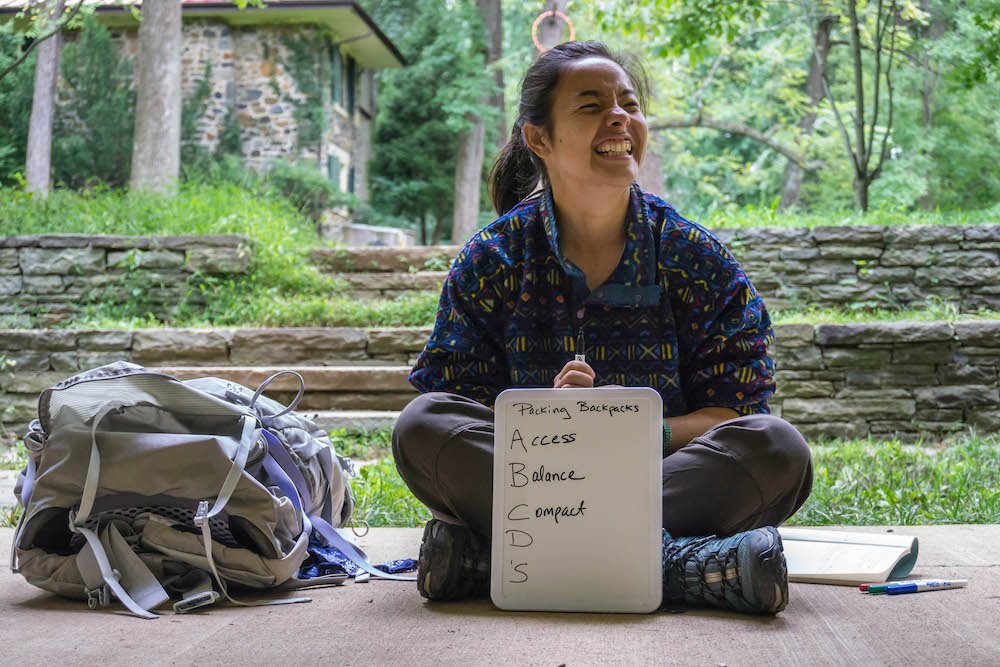
Yoshie sharing the ABC’s of backpacking with a new group of students. Photograph by Dalton Johnson
Unloading my gear, I quickly found a few awesome places in this converted mansion we would be living in for the next three months. There was a bouldering room and a coupala (the name given to a watch tower kind of place at the top of the mansion) which would become my home. Now, it was time to meet the people.
I’m not sure why, or how, but I have always felt like an outcast. My mom has playfully called me “the king of misfits” as I am kinda like a stray cat who brings home the weirdos. And, ironically, I found the people at Outward Bound to speak a similar language. We loved the outdoors, getting dirty, and went to the beat of our own drum.
The kind faces met everyone with smiles. It was awesome, but where did I fit in? Of this, I was unsure. I am always unsure. For the most part, I am an overconfident human that is down for almost anything. Well, not anything, but most things. As the group of apprentices got to know each other, we found common threads. However, everyone kinda filled a niche of their own. Mine was using a camera and helping the Marketing Director, Ben Worden.
We had three months to learn the ropes of the Baltimore Outward Bound way of things. In a somewhat good metaphor for life, we were challenged to try everything at the school. We taught backpacking courses, rock climbing days, school group day lessons, worked in logistics, packed food and cleaned gear, we did it all. Then, a turning point came about for myself. I found myself wandering into Ben’s office just to talk, to see what he was working on, or share a creative idea.
Ben was always kind and encouraging, responding to my ideas like, “Heck yeah, I love it! You should try it out. Do you want to barrow one of our cameras?” While swiveling around in his chair to find the right camera and lens for the job. It was in that moment when something began to click for me. I actually enjoyed this. I was going out and taking photographs or recording video for fun. I officially had a hobby.
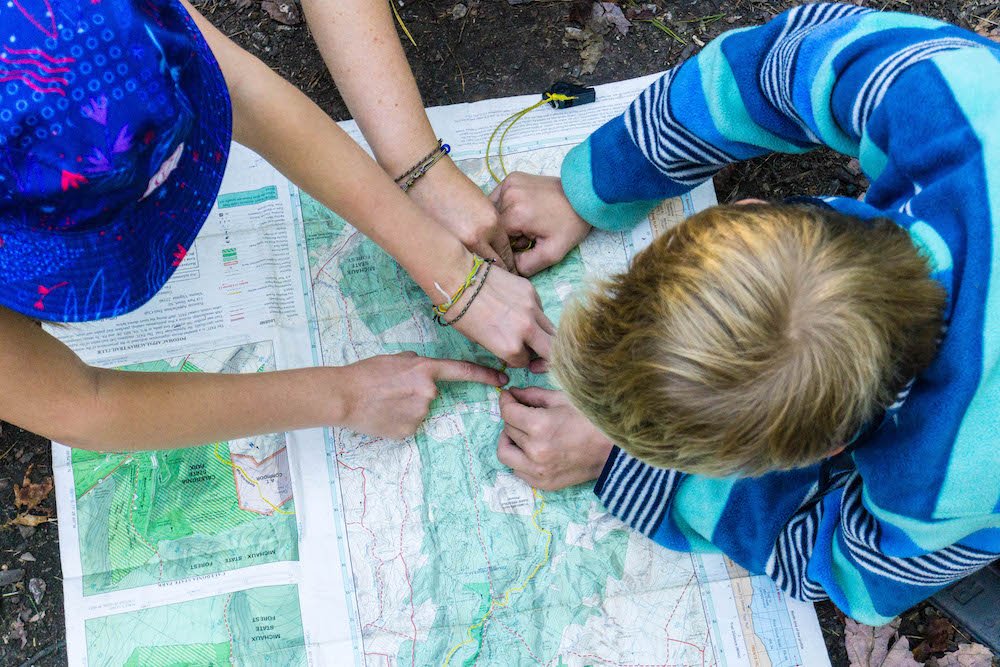
Two students refining their map reading skills while on a backpacking course with Outward Bound Baltimore. Photograph by Dalton Johnson
Growing up and throughout college, I was consumed by sports, so the idea of a hobby never existed. I forwent friendships so I could focus on getting out of my childhood town. Not because it was a terrible place or anything, but because I wanted to see more. I wanted to see the world. My sports dreams were over and I now had a hobby. So, I did what any washed-up athlete does when they find something new, get competitive with themselves about it.
Everyday, I went out and photographed. I did everything I could to be in a position to snap a photograph. My knowledge didn’t exist, so I just snapped away and review later. There wasn’t a goal to achieve, just a way to express myself. I wanted to tell a story or show an emotion. Heck, I just loved showing Ben my favorite image from the day and him smiling saying, “Dude! That is awesome!”
There came a point that I was spending so much time in Ben’s office that a desk was somehow put into his office for me to sit at and edit. I am not totally sure how this came to be, but I would just sit there and edit images everyday. Bouncing ideas off Ben and then going out with a camera to try to capture this idea. But, it didn’t stop there. Video came into the picture as well. This was another ball game that was challenging. There were so many moving parts, I was just unsure how to move forward. However, Ben was there to help me.
I told him that I wanted to try to do a video project, so he gave me a challenge to create a video about the life of an apprentice at Outward Bound. Without thinking twice, I accepted. For about a week, I chased down a variety of people in hopes of making the this video. Interviews, b-roll, a-roll (is that thing?), I really had no idea what I was doing. What I did know is that I had fun doing it. So, I kept pushing and here was the result:
Now, I know this isn’t very good now, but at the time, I was impressed! For my first ever video that I strung together, I was happy with how it came out. Additionally, Ben was as well. He helped get all of the branding and name plates for the video, I had no idea how to do that.
As my time as an apprentice came to a close, the time for me to begin biking back to California was quickly approaching. For that, I had no plan, which I was happy about. There is something about the unknown which appeals to me. Discovering along the way is better than planning it out and just following the road map you have made for yourself. I guess I might do this to protect myself from not trying something, for I knew what I was committing too, I most likely would not do it. However, setting a destination and slowing working your way towards it is romantic in the sense of self-discovery. I start feeling instead of thinking.
Just a week left until I would leave the east coast, Ben asked me, “Would you be interested in coming back next year to be a photographer?”
I thought for a second and naively contemplated, “Do people get paid to take photographs?”
“Yeah! You would get paid about 10x what you were paid for this apprenticeship.” Ben explained.
“Really?” I asked in disbelief.
“Well, not 10x but definitely double to triple.”
“I’m in!”
“Okay, you’ll have to set up a business over the winter. I’ll send you the paperwork you’ll need to do. After that, we can set a date and we will fly you back to the east coast for a project.”
“Awesome! Thank You!” I couldn’t believe this was happening to me.

A Year of Creating Content with Big Agnes
Thank you Big Agnes for the opportunity to create with you all. I have enjoyed the process of learning your style and doing my best to contribute to you all!
There are those full circle stories that are always kinda nice to read from time to time, this is one of them.
Throwback to 2016, I really wanted to get my work in-front of the Big Agnes marketing team. Having wrapped up a two month bike-packing trip around the South Island of New Zealand, with a Big Agnes Tent, I thought I had taken some banger shots.
At the time, I was only starting a photography career and had no idea how to share my work with a potential client. Actually, I had no idea how to connect with a brand at all. I was so green! However, I had these blinders on that told me I was good enough to pursue photography and that is what I did.
Fast forward to 2020. I was now in a place where I was getting jobs here and there for photography. Most of my income came from my work behind the camera, but then again I was a dirtbag, so I didn’t need much. While in the Tetons on a perpetual road trip for climbing, I had gotten into the habit of guessing emails. Well, Big Agnes was still on my radar and I guessed a couple of emails correctly, the same day. Turns out, I had guessed almost everyone in the marketing departments email and they all received the same email.
I made an impression!
After a few days, I received and email (that I wish I still had) which went a little something like:
Dalton,
Thank you for your email, looks like the whole team got it. We don’t know what you are looking for, but it looks like you are a photographer and an athlete. Are you trying to submit images, or are you asking for a sponsorship?
Best,
BA Marketing
I was a blow away, I didn’t know what to say and felt a bit silly for sending everyone the same message. My goal was to share images, so that is what I ask for. They were kind, I think they laughed at me in their little office (at a later date I had a video call with a marketing team member, everyone sits next to each other).
After a couple of months and a few submissions later, the Big Agnes team and I clicked. What I was shooting was perfect for them and I enjoyed the process of shooting spec work keeping them in the back of my mind.
Fast Forward to 2022. I have done a good amount of work with Big Agnes. Below is just a sample of the work that has come out this year and I know there is much much more on the horizon :-)
Brand Identity Videos
Video Ads
Website Headers
Emails
Catalog
Blogs I have Written for Big Agnes
Go for the Slowest Known Time
A funny one about moving slow on purpose:
https://www.bigagnes.com/blogs/sleep-in-the-dirt/make-it-an-adventure-and-go-for-the-skt
Five Jaw-Dropping Campsites of HWY 395
An SEO based blog focused on camping spots along HWY 395:
https://www.bigagnes.com/blogs/sleep-in-the-dirt/five-jaw-dropping-camping-spots-along-highway-395
How to Pack for Backpacking
An educational blog designed to education and sell Big Agnes’s newly released backpacks:
https://www.bigagnes.com/blogs/sleep-in-the-dirt/how-to-pack-for-backpacking
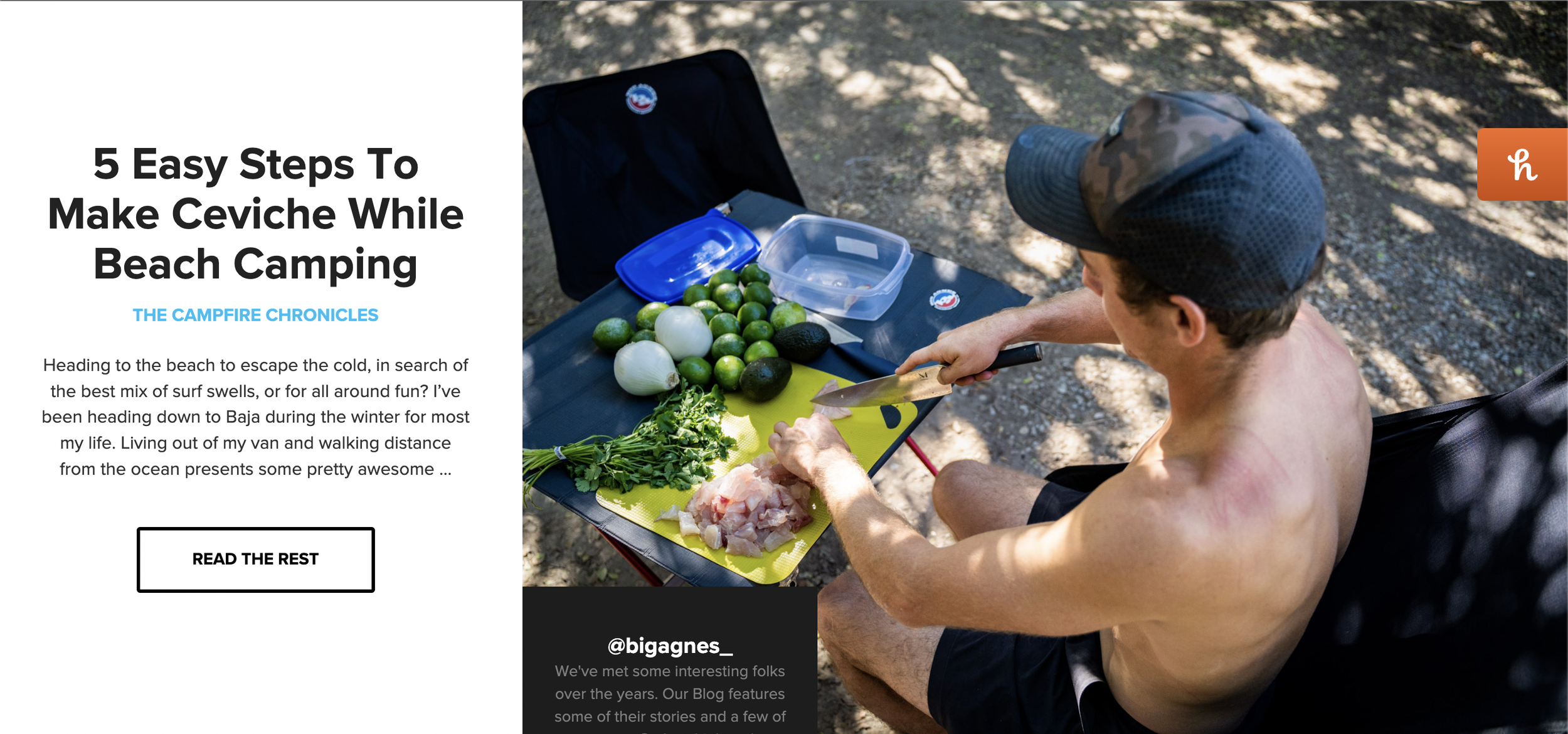
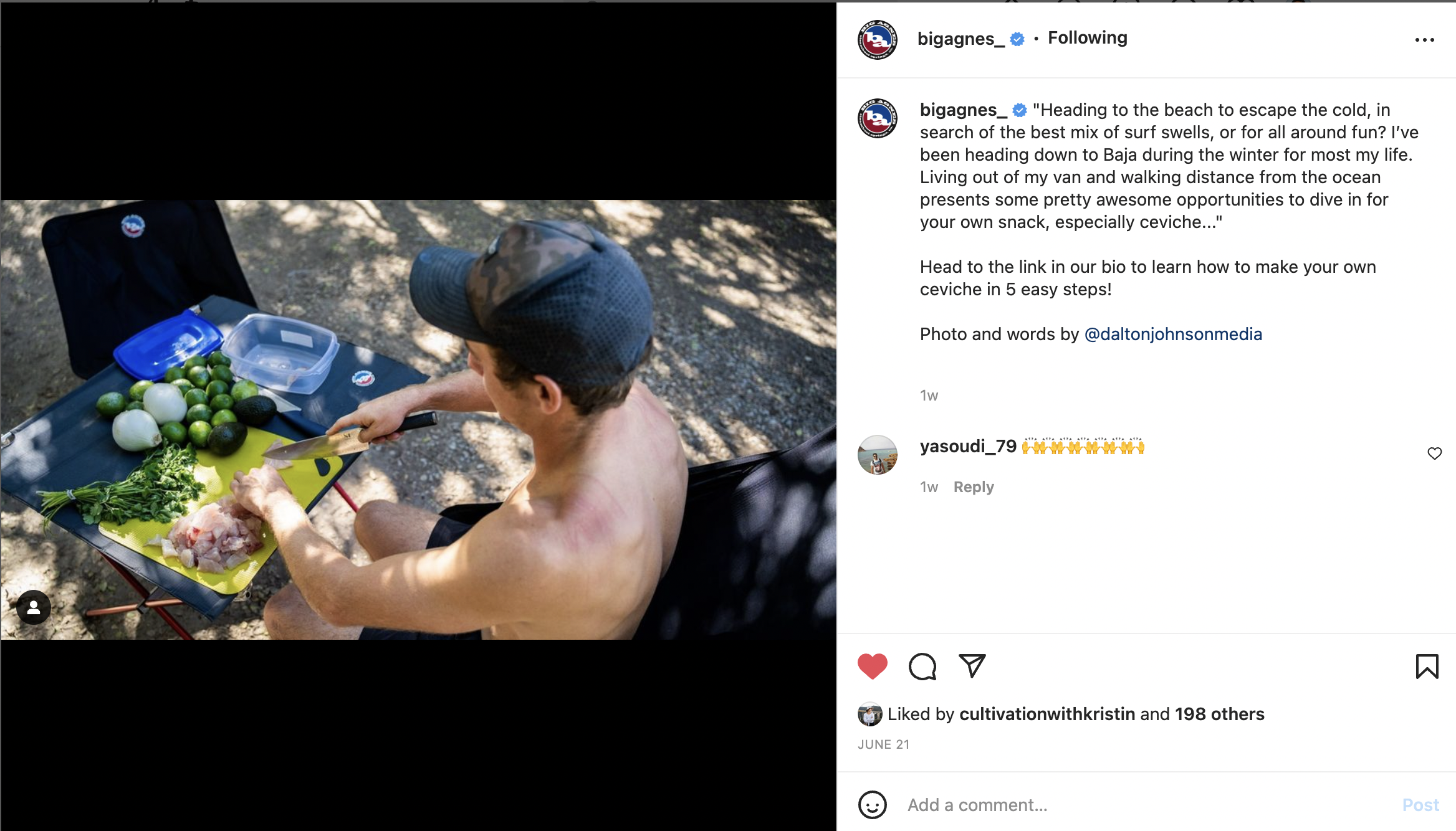
5 Easy Steps to Make Ceviche While Beach Camping
A how to guide for making Ceviche while on a Baja Road trip:
Trust Your Friends’ Outlandish Voicemail Ideas
A really fun and entertaining recap to adventures around the western United States:
https://www.bigagnes.com/blogs/sleep-in-the-dirt/trust-your-friends-outlandish-voicemail-ideas
Thank You Big Agnes
Thank you Big Agnes for the opportunity to create with you all. I have enjoyed the process of learning your style and doing my best to contribute to you all!

Your Reminder to Wake Up Early
Waking up early is a novelty. Crawling out from under your covers is difficult, but worth it. Throughout a year, at least one of my highlights comes from waking up early to catch a sunrise. Often my motivation is a photo idea, but sometimes it is a climbing mission, or an outing with a friend. Regardless, do something hard and wake up early a few times a year! It’ll be worth it.
Waking up early is hard. There is no doubt in my mind, the most difficult time of the day is crawling out from under the warm blankets, placing me feet on the cold ground, and getting out the door. However, waking up early provides opportunities that make up for the challenge.
As a commercial photographer focused on outdoor lifestyle, the best light comes at sunrise and sunset. So, I always aim to be photographing at sunrise and sunset. However, early mornings are not my favorite. So, how do I overcome this?
Sunrise on the Middle Tetons after waking up early to be at the base of the route to climb the Grand Teton. Photograph by Dalton Johnson
I think about the reward of waking up early.
I am embarrassed to admit it, but, I love to hit snooze several times before crawling out from under my covers. Living in a van, I don’t don’t have a thermostat, so every morning is cold! The ground is cold, the van is cold, and I just want to keep sleeping. But, I know I need to get out of bed. To do this, I think about the benfits.
I think about the awesome photographs I will take, which usually motivates me to get out of bed. However, if it doesn’t help, I think about the athlete that will be outside of the van waiting, or what I would have to say to a client. Surely, those last two will get me out of bed.
Tips for waking up early:
Have a reason to wake up (a passion project, a goal, a dream)
Meet somebody at a location, this will hold you accountable
Set multiple alarms
Have something to motivate waking up early (a reward, caffeine, etc.)
Go to bed early
Two love birds dancing at Glacier Point for sunrise in Yosemite National Park. Photograph by Dalton Johnson
Benefits of Waking Up Early:
The world is quiet
You can watch sunrise
Time to reflect
You can have unique places to yourself
Waking up early is a novelty. Crawling out from under your covers is difficult, but worth it. Throughout a year, at least one of my highlights comes from waking up early to catch a sunrise. Often my motivation is a photo idea, but sometimes it is a climbing mission, or an outing with a friend. Regardless, do something hard and wake up early a few times a year! It’ll be worth it.
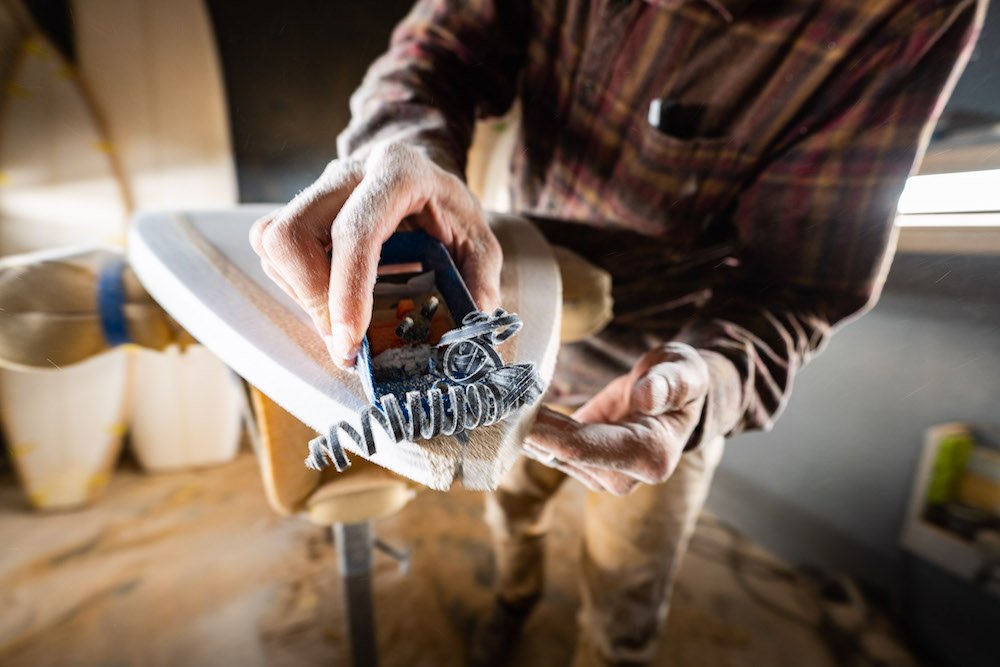
How to Hand Shape Surfboards
In this photo essay Dalton Johnson documents Ryan Lynch hand shaping a surfboard from a blank. Documenting the process of how to make a surfboard from start to finish, this photo essay shows the beauty of the hand made process. If you are curious on how to make a surfboard, this photo essay will give you a look behind the curtain at how to make a surfboard.
Thank you Ryan Lynch and Timber Surf Co
for welcoming me into your workshop
Start by listening
then look, touch, and feel the blank
the board is inside.
Like marble, you can’t
put back the foam you remove
so every stroke counts.
The smallest details
will shape the experience
of how this board rides.

Reviving the Lost Art of Letter Writing
After a three day digital detox in Joshua Tree National Park, void of vibrations and pings, penning a note felt like the perfect way to continue the slowed down lifestyle and show some gratitude for time well spent with good friends. Pulling a pen from the drawer, tearing out a blank sheet from his notebook, and sitting down with a fresh cup of coffee, Dalton Johnson shares the story of a weekend adventure.
After a three day digital detox in Joshua Tree National Park, void of vibrations and pings, penning a note felt like the perfect way to continue the slowed down lifestyle and show some gratitude for time well spent with good friends. Pulling a pen from the drawer, tearing out a blank sheet from his notebook, and sitting down with a fresh cup of coffee, Dalton Johnson shares the story of a weekend adventure.
Dear Kay Kay,
Thank you and, at the same time, I am sorry this letter has taken so long to reach you. It’s been well over two months since we last connected, as I don’t totally know what to say, but now feels correct. I’m sitting at my table, cherishing a warm cup of coffee, looking at the photos from our latest adventure. Wild, yet tame. Full of yummy snacks and warm beverages, yet I was always reaching for that next bite until the food tins were empty. I am not kidding when I say that I often thought about licking the tin clean.
But, I must say, I am quite happy that I didn’t lick the hummus tin clean, because I just stumbled upon a photo of Jason’s dirty hands squishing into the hummus during that chess tournament. Ha! Do you recall the chess game between Jason and Ray? I mean, they played for so long, I refilled the chip and dip container twice. TWICE! Either they were super hungry from climbing all day in Joshua Tree, or they really just played for that long. I’ll have to ask.
With a wilderness permit, we took our digital detox to the Joshua Trees and camped under the stars for a night. Photo by Dalton Johnson
OH! Can you take me back already. I miss the cold nights and warm days in the dessert. I mean, the weather is perfect. Waking up, drinking a nice warm cup of coffee as the sun rises, filling our water bottles with cold water, then heading out for a full day adventure. In many ways this trip was perfect. Everyone had the ability to do something they wanted and had a forced digital detox. I had forgotten what it was like be out of service for a few days.
In just three days, we did everything from climbing and high-lining to hiking and picnicking, we really packed this outing to the brim with fun. Also, it was a blast communicating through hand written notes… maybe that is what has inspired this letter!
Jason Crist taking full advantage of the digital detox head space by snagging an onsight on Intersection Rock in Joshua Tree National Park. Photo by Dalton Johnson
OMG, I am totally forgetting if you came out to watch, but did you see Ray effortlessly walk the Little Candy Mountain line? I don’t know how he did it! He hadn’t walked a line in three years and just got on and walked the line, at sunset, as if it was nothing. Gorgeous. Maybe someday I’ll be able to walk that line!
Without the distractions of phones during our digital detox, I had the pleasure of observing the Joshua Trees at sunset. Photo by Dalton Johnson
With that said, I do wish we had a little bit more time, for I really wanted to check out the Cholla Garden, especially at sunrise, on the eastern side of the park. If we went back, is there anything you would want to do? I know you mentioned wanting to go on an overnight trip to cowboy camp under the milky way. Is that still on your mind? If so, let me know and count me as your plus one, please.
Did you have a favorite day? What about a favorite activity while in the park?
I’ll be honest though, I think my favorite part of the outing was our final night, once we returned to San Diego. I know, it may seem silly, but it was great seeing everyone and having a bonfire. You’ll have to send me that recipe for the hot tottie you made! It was so good, especially with the s’mores. I guess I am just a sucker for a classic bonfire and warm drinks with friends.
Anyways, thank you for putting together this awesome trip and I really hope we can make another one happen ASAP. I am in need of a quick escape from work, even if it means taking a mental health day to make the most out of a weekend.
Thank you for being an amazing friend,
Dalton
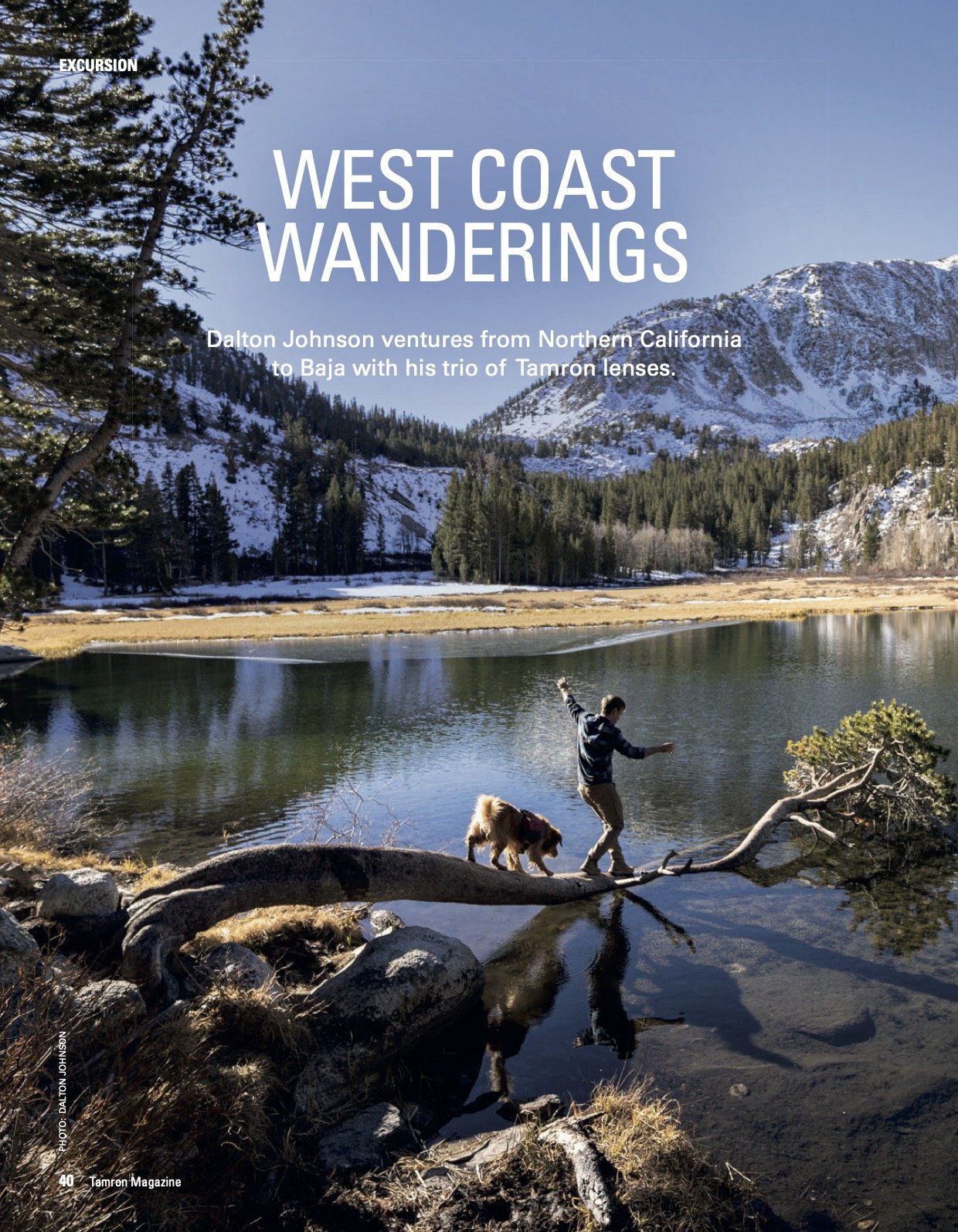
The Dirty Secrets of Being a Travel Photographer
From the outside looking in, travel photography is a dream. As a travel photographer, you get to hang out in cool places, do all the adventurous things, and see the world… for free. Right? Well, not exactly. The reality is, if something is happening, you have your camera to your face photographing. If nothing is happening, you are jocking for position to get the next shot, or, you are importing content, cleaning gear, etc. Yes, you get to be in the places, but you rarely have the opportunity to do the activities. For example, this was a 40(ish) day shoot. In the end, I got to play (surf, rock climb, snorkel, etc.) for six of them. That is less than if I worked a 9-5 job!

Dreaming of a road trip from Northern California down the Baja Peninsula, the winter of 2021 was the year. At least for myself. Surfing, spearfishing, saturated sunsets, wild coyote spotting, and cactus… lots of cactus. Looking back, this assignment was a dream come true. Why? Who can beat chasing waves, eating tacos, and swamped motors? Okay, we could have gone without the swamped motors, but this trip was surely one for the books. A huge thank you to the plethora of companies for making this dream a reality.
The Route:
Choosing a ridiculous route, our team—Andrew Muse, Kristin Riegel, and myself—started in San Diego, made a HUGE circle back to San Diego, and then departed the United States for Mexico’s iconic Baja Peninsula. Our loop looked a little something like this:

Exploring Highway One on a vanlife road trip. Photo by Dalton Johnson
San Diego to Bishop
Bishop to Lake Tahoe
Lake Tahoe to Santa Cruz
Santa Cruz to San Diego
San Diego to Cabo
Cabo to San Diego
If you are looking for an epic road trip, this route offered everything from mountains to surfing, river to lakes, and everything in-between. If you have the time, the vehicle, and finances to make this happen… you should do it!
What was the project?
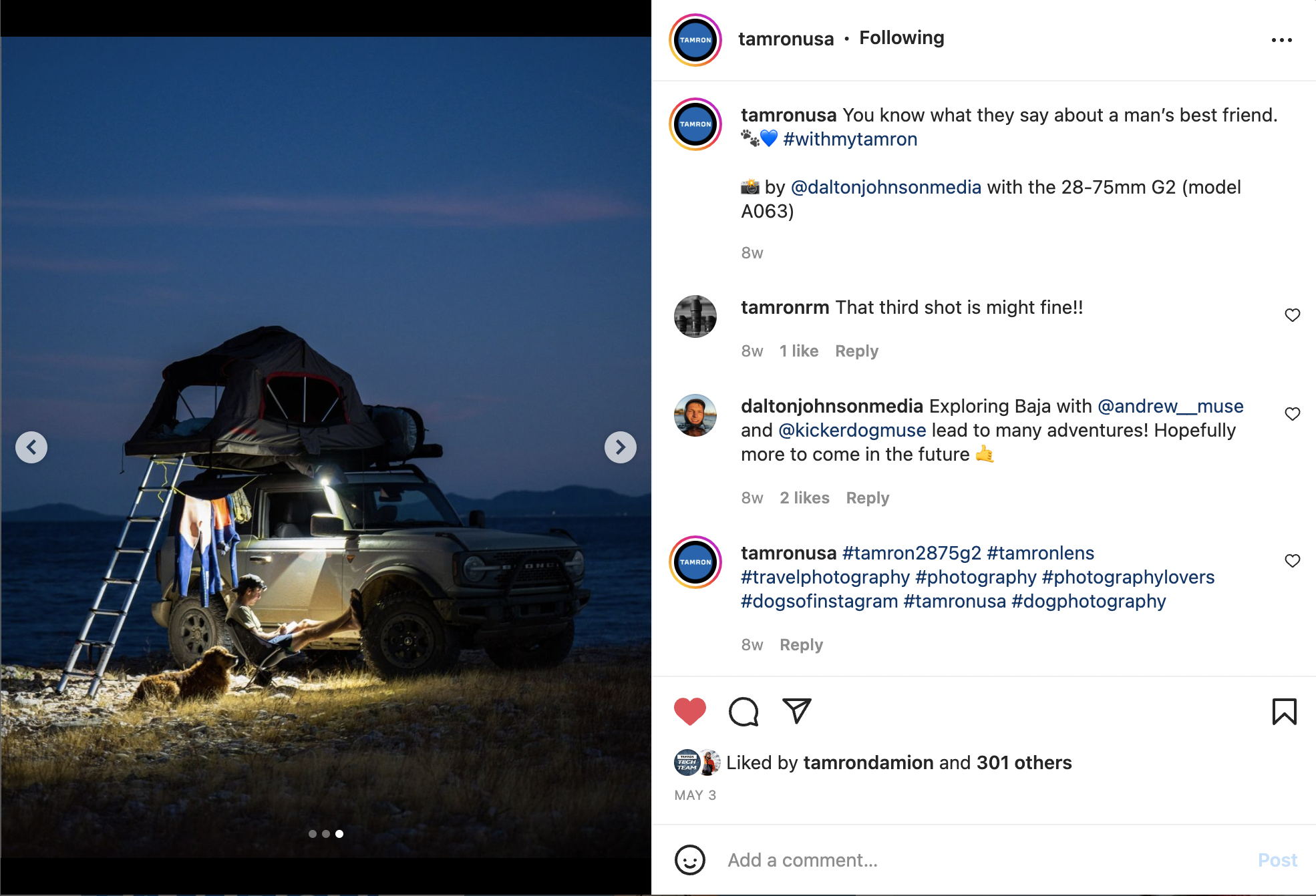
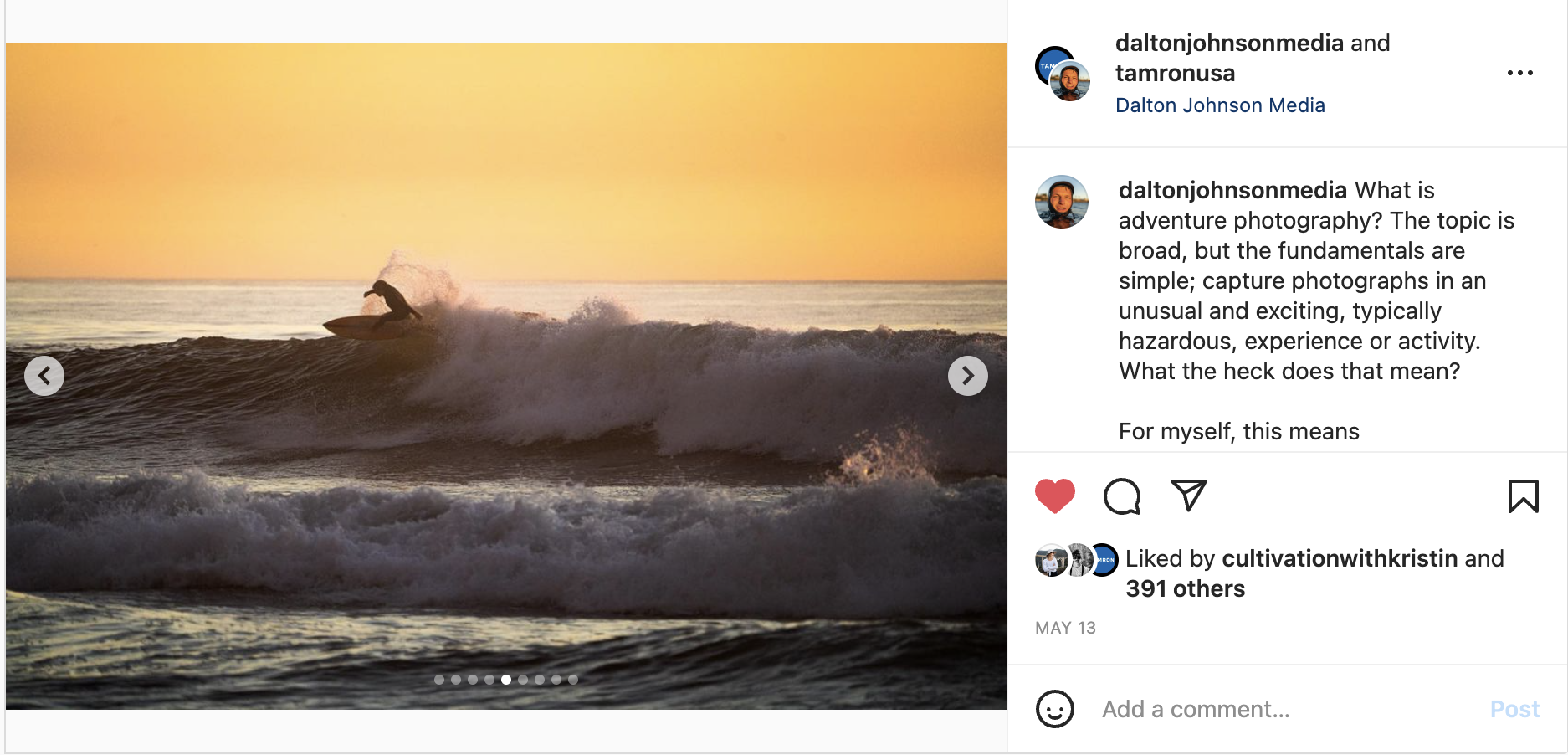
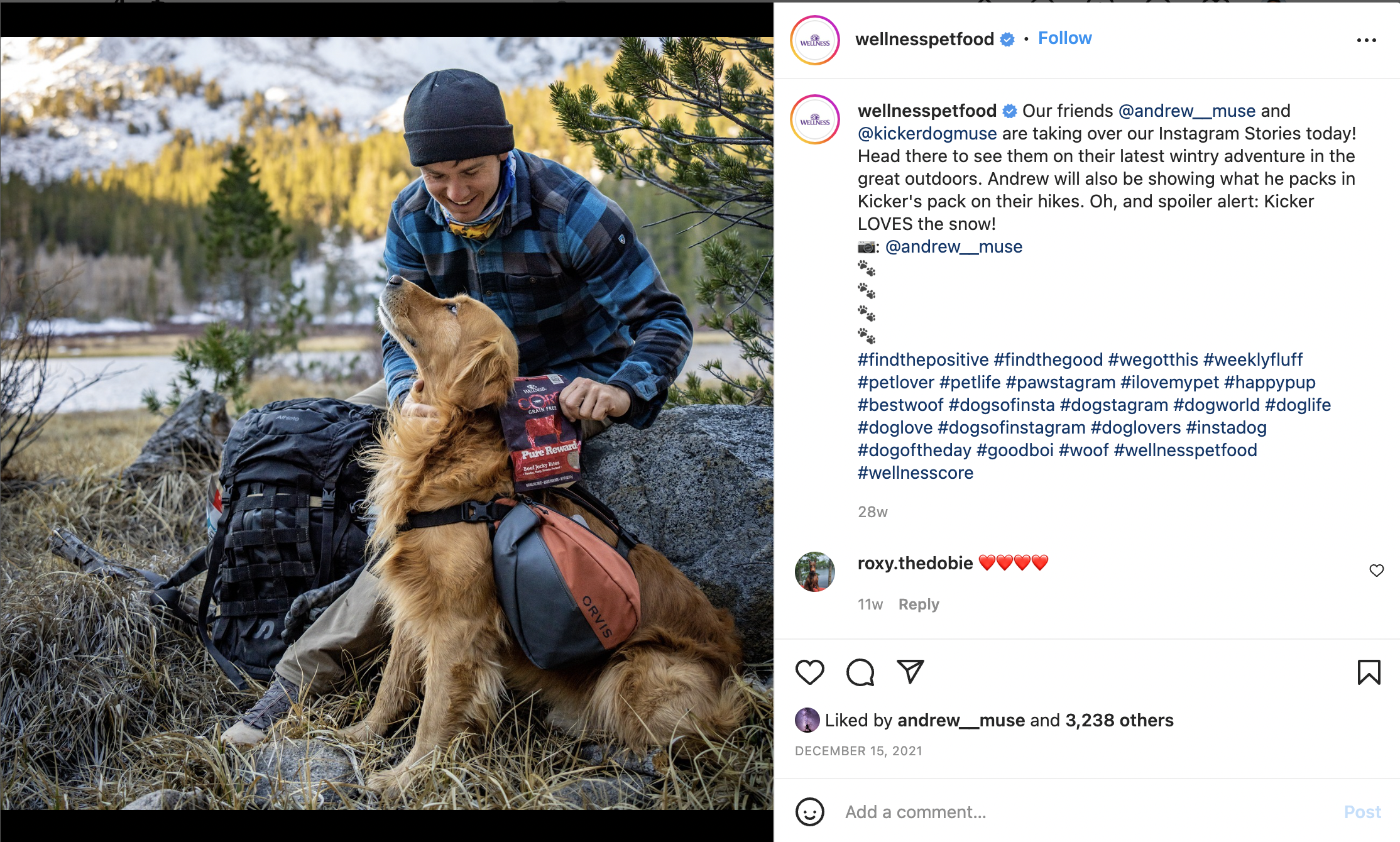
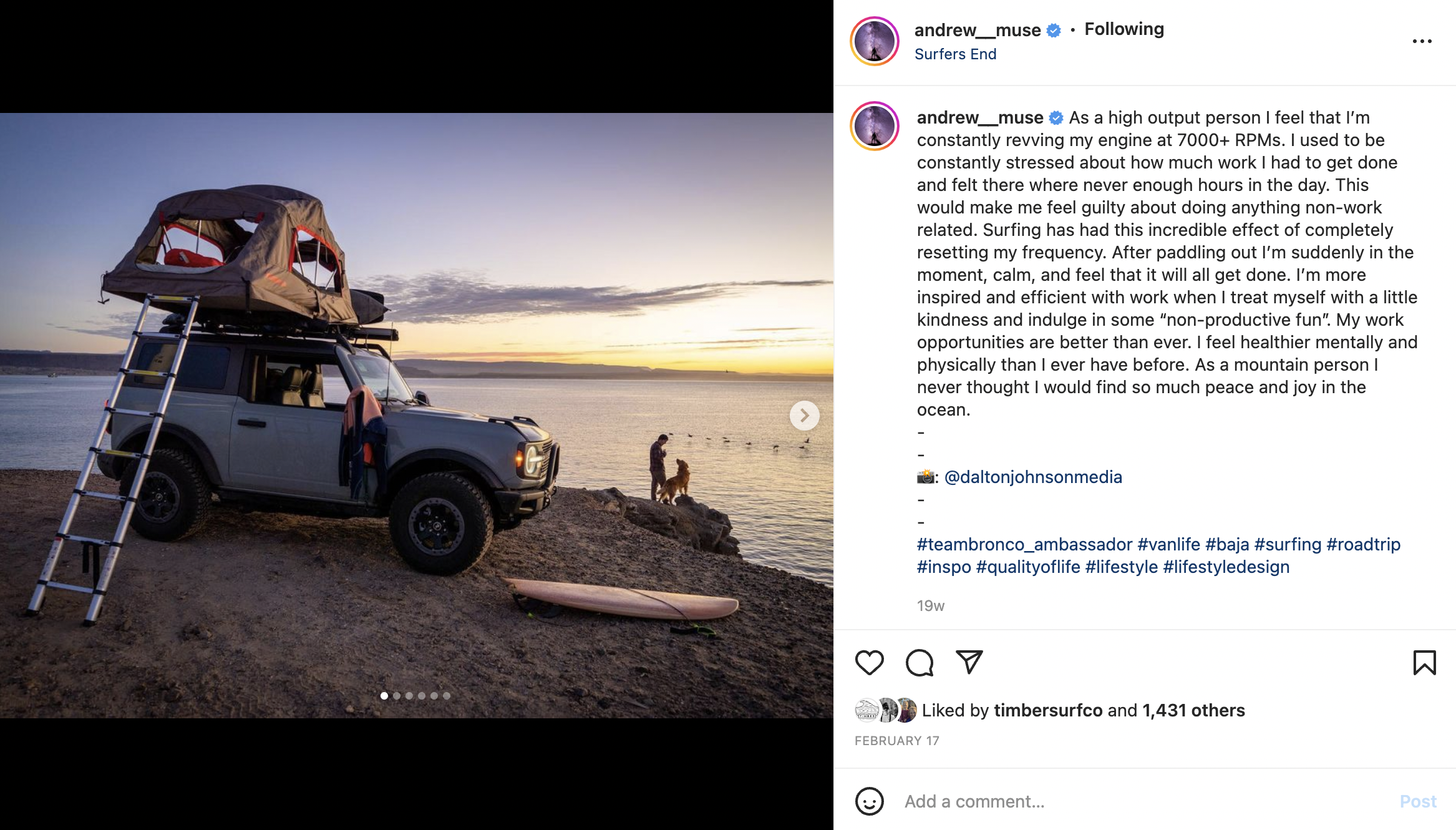
This project was multi-faceted to say the least. Embarking on this road trip, the list of deliverables were piling up and the days were dauntingly long. At first, the team had some hesitations around the size of the project, especially since wifi was a huge unknown. Thankfully, the wifi throughout Baja was sustainable and capable of sending files… occasionally. The end result was a variety of photographs and videos for a multitude of brands:
Tamron Lenses
Ford
Peak Refuel
Big Agnes
Timber Surfboard Co.
Lux Pro
Wellness Dog Food
Maverik Gas Station
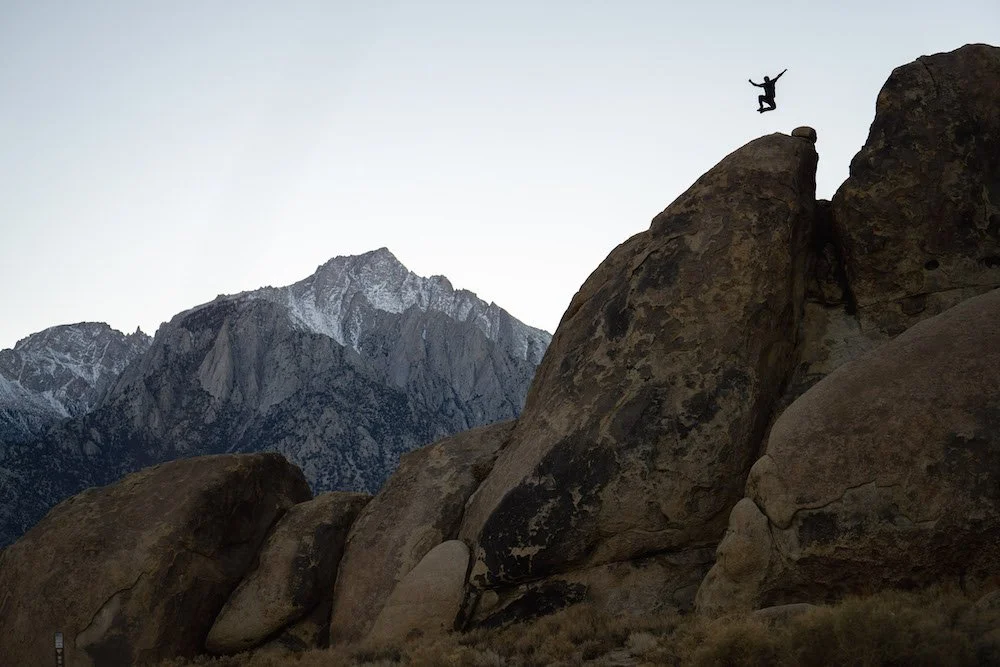
Taking full advantage of any and all light with Andrew Muse in Lone Pine, CA. Photo by Dalton Johnson
What I learned along the way:
It takes a village, otherwise logistics become a nightmare
The core group of this project was three; Andrew, Kristin, and myself. With that said, the outside help was uncountable. Everything from local help, my parents (shout out and a huge thank you), to friends made this trip possible. The smallest details, like your entry FMM to enter Mexico or vehicle insurance can easily slip through your fingertips!
Travel photography looks like a vacation, but you are ALWAYS working
From the outside looking in, travel photography is a dream. As a travel photographer, you get to hang out in cool places, do all the adventurous things, and see the world… for free. Right? Well, not exactly. The reality is, if something is happening, you have your camera to your face photographing. If nothing is happening, you are jocking for position to get the next shot, or, you are importing content, cleaning gear, etc. Yes, you get to be in the places, but you rarely have the opportunity to do the activities. For example, this was a 40(ish) day shoot. In the end, I got to play (surf, rock climb, snorkel, etc.) for six of them. That is less than if I worked a 9-5 job!
Additionally, our days were long enough that I fell asleep at the computer working 5% of the nights we were on the road. Take a second to think about that…
Editing on the road is harder than it seems
Paddleboarding on the Owen River along Highway 395 in California. Photograph by Dalton Johnson
To start, I thought we were going to be able to edit the majority of the project while on the road. I am writing this article in July, six months later, and am still editing images/cutting videos from the trip. Now, all of the client work was delivered long ago, but the remaining work that will go into my archive for future license, social media, etc. is just about finished. Was I naïveté? I’d prefer to say ambitious. However, for projects like this in the future, I will utilize an editor and a digi-tech.
NOTE: I have done two larger projects to date and the use of an editor and digi-tech make life manageable! If you are a content creator for large projects, do yourself a favor and do this!!
You need down days
This might be obvious, but how do you manage weighing the opportunities of the here and now, versus the opportunities of tomorrow? You just can’t, especially on a traveling project where weather, swells, etc. determine the outcome of a project. With that said, down days, or really down hours, are critical for the crews sanity
Vanlife and Photography mix well
My favorite take away (obviously I am biased) is that the ever growing #vanlife and #photograherlife mix very well. For the past five years, I have been living on the road, building a career as a photographer. Overall, making money has been sustainable, however the shoots are a production, start to finish in one to five days. Typically, these shoots are totally curated and finishing off with restaurant meals and hotel rooms. Baja wasn’t that. In fact, this project was a 40(ish) day marathon of daily content creation. We shot 24/7, often with multiple cameras, racking up the GB’s (gigabytes).
Now that the project is done, I can honestly say that I do think the blend works well and for those van-curious creators, I would suggest it! Just remember, editing is going to be a pain! So, go get yourself an editor.

Kristin sipping tea during the sunset while road tripping along the Pacific Coast Highway. Photograph by Dalton Johnson
The Published Project:

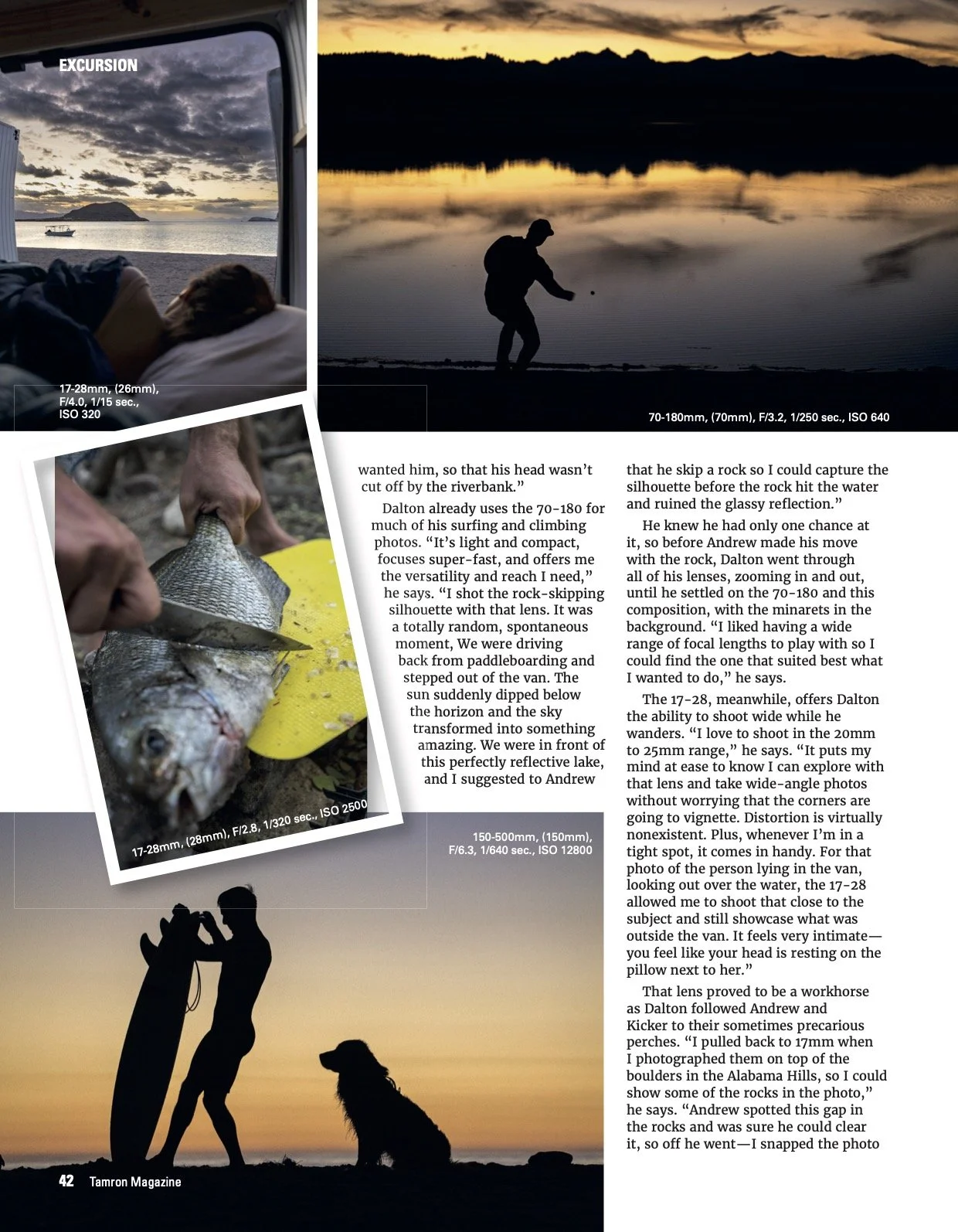

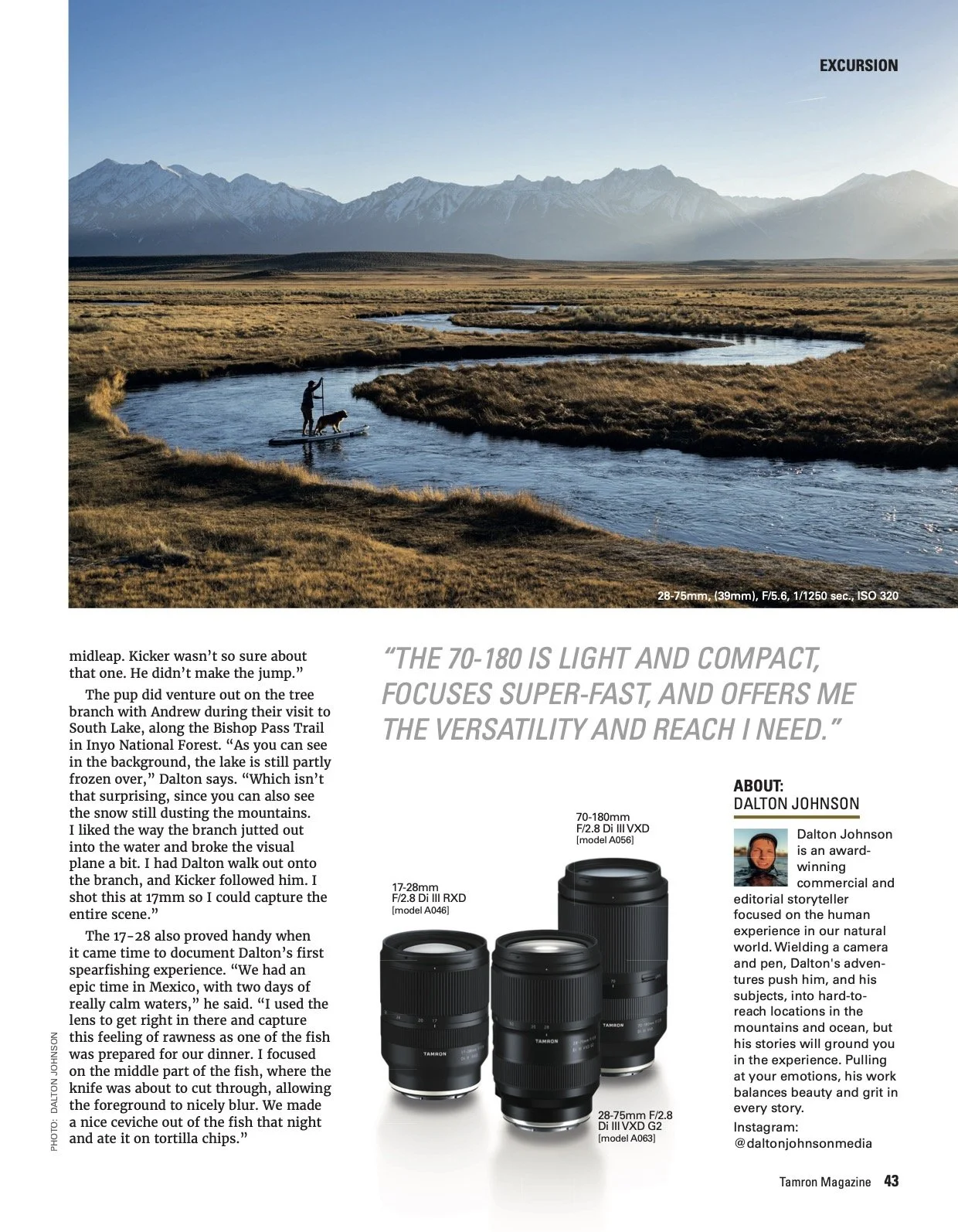
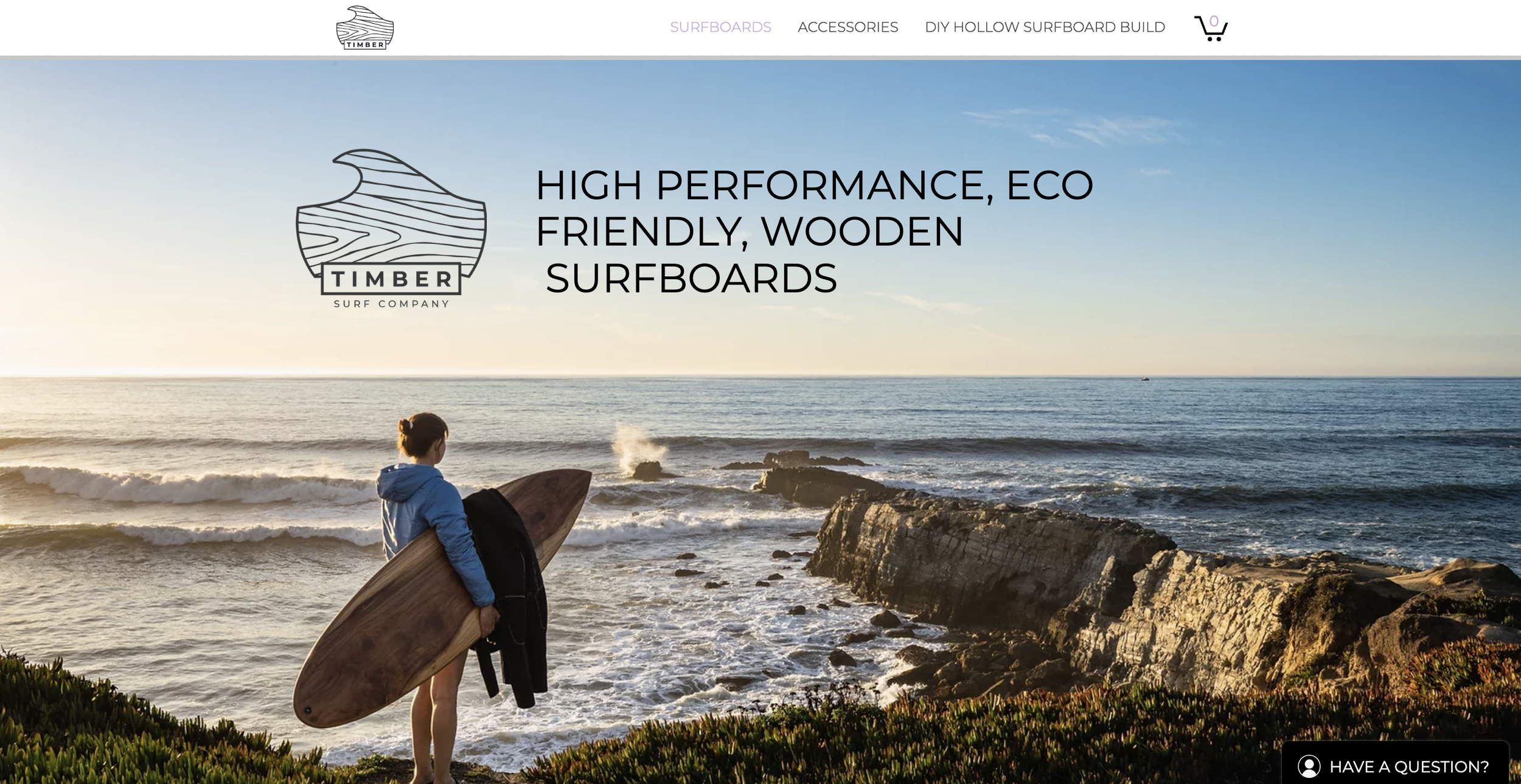
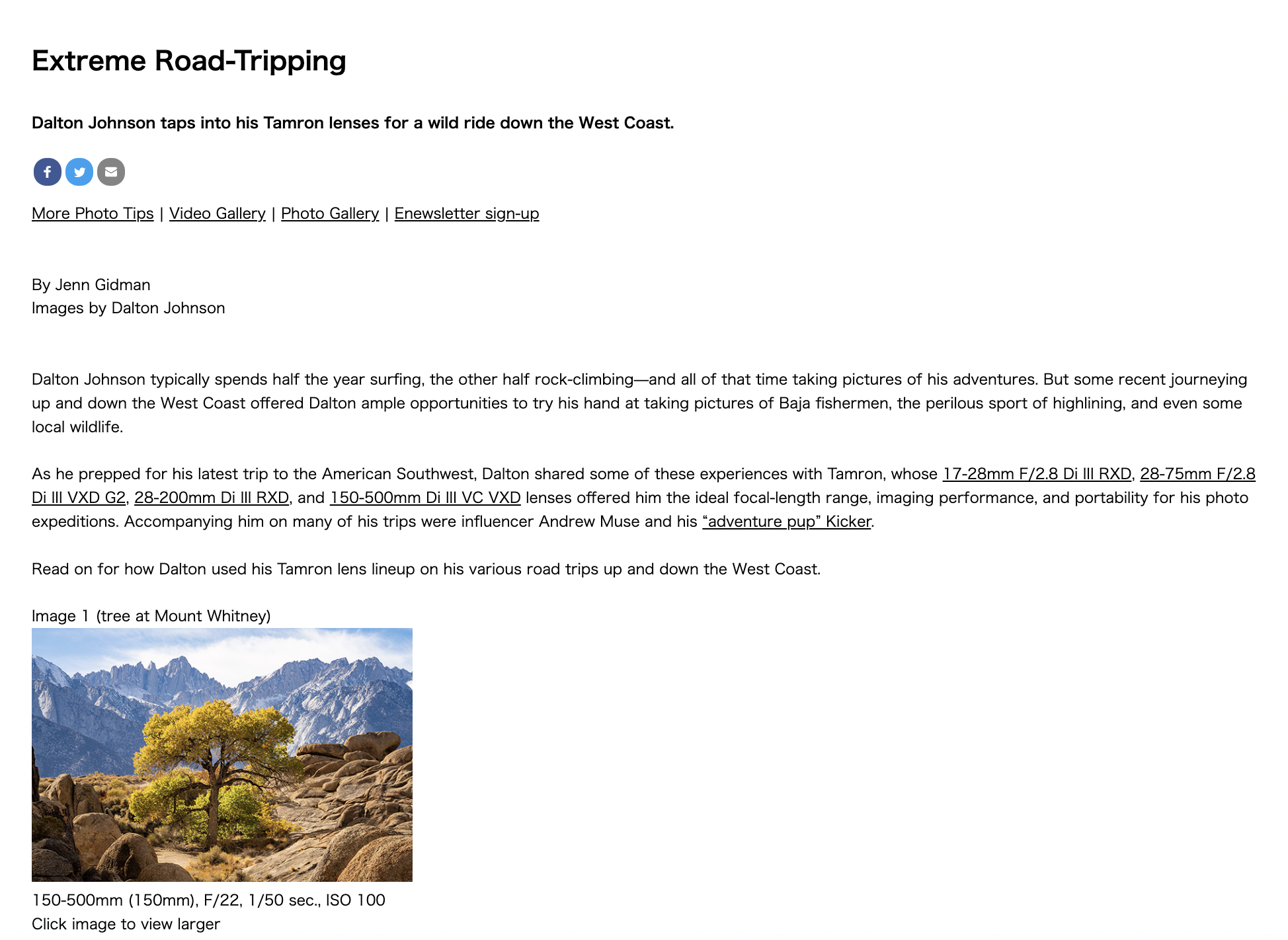



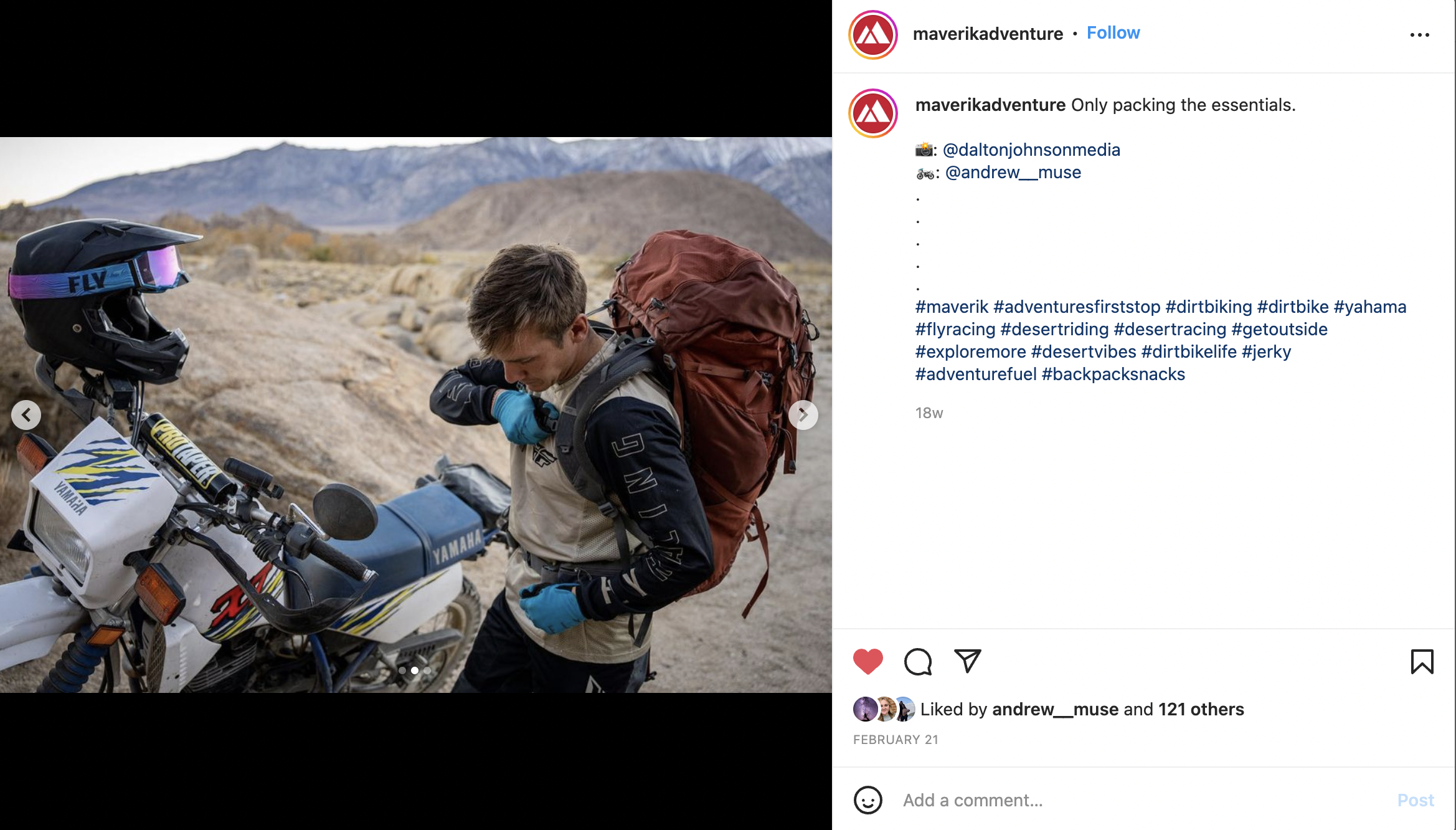
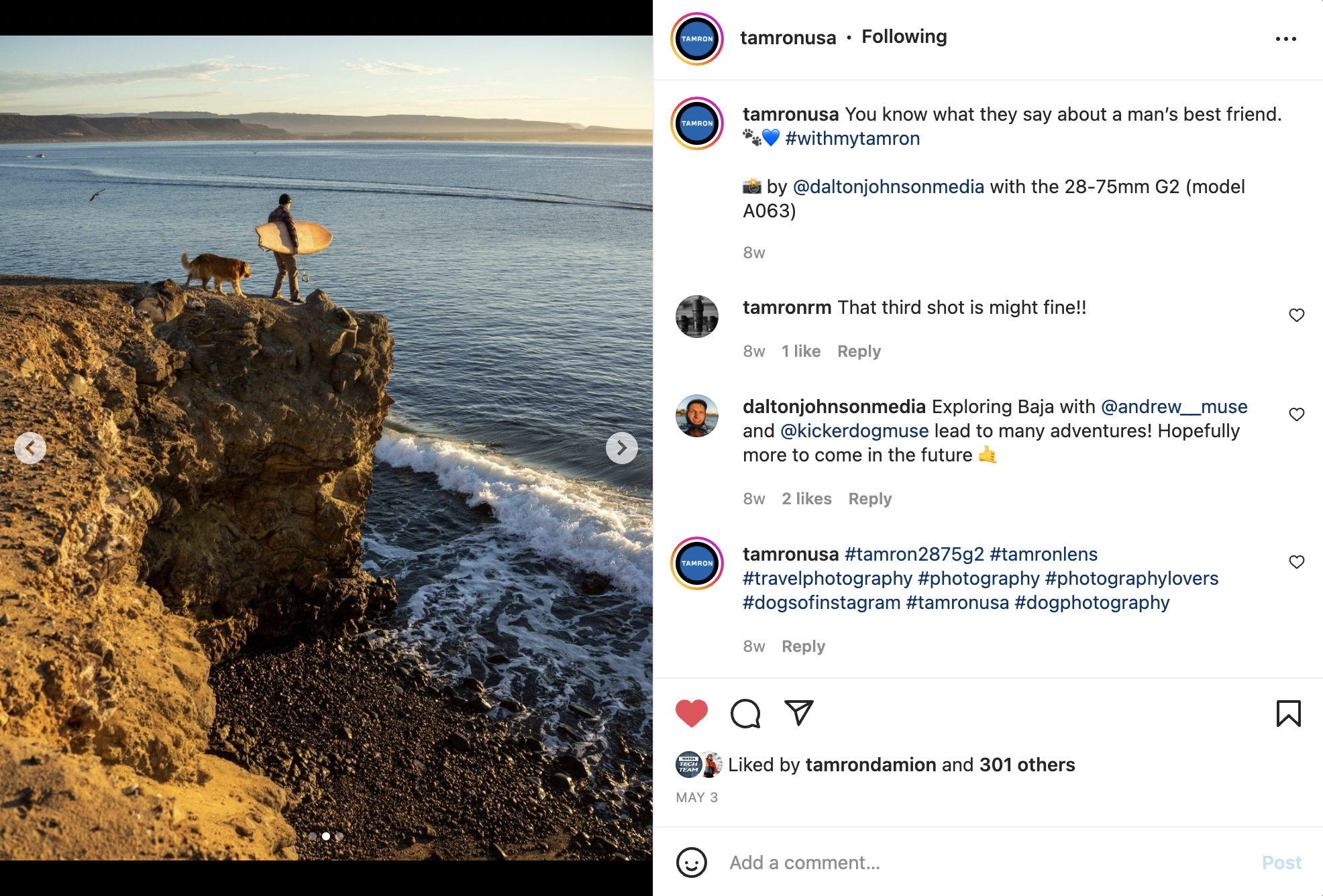
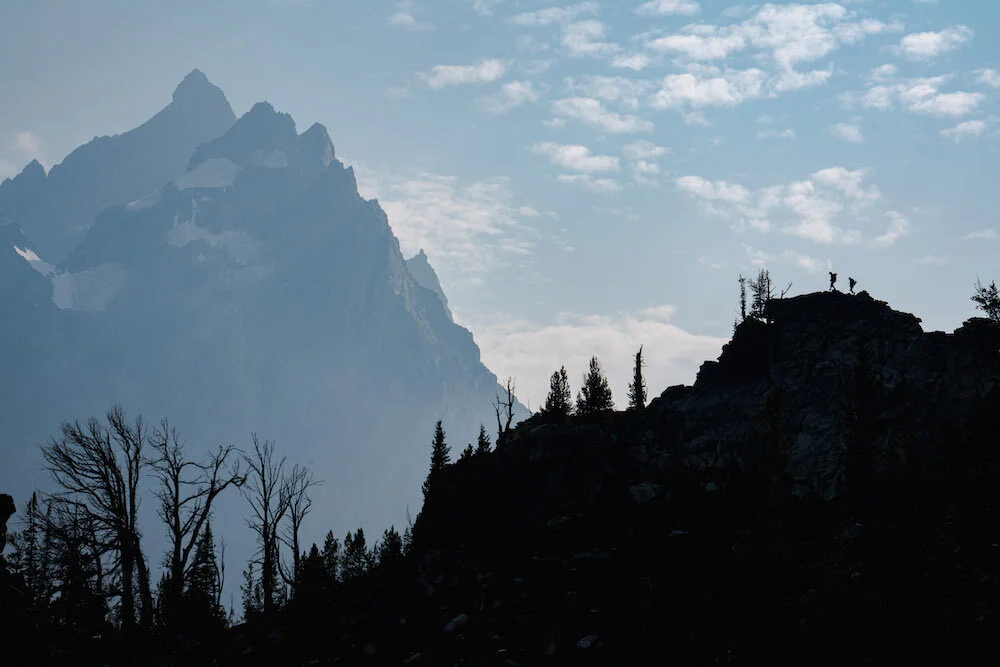
Find Your Beyond
Rewinding one calendar year, to September 2020, I was slouched and red-eyed, staring at google earth dreaming up ideas, such as climbing notable peaks in a single season in three different mountain ranges like the High Sierra, the Tetons, and the Cascades. All of these ranges have a lifetime of climbing within them, so I knew I would be a guest, cherry-picking the classics, but I still wanted to give this a try. So, I started training. As the plans for the trip developed and I connected with past climbing partners, like Luan, Beau, and Kristin. I started to get psyched, but felt a void.
Rewinding one calendar year, to September 2020, I was slouched and red-eyed, staring at google earth dreaming up ideas, such as climbing notable peaks in a single season in three different mountain ranges like the High Sierra, the Tetons, and the Cascades. All of these ranges have a lifetime of climbing within them, so I knew I would be a guest, cherry-picking the classics, but I still wanted to give this a try. So, I started training. As the plans for the trip developed and I connected with past climbing partners, like Luan, Beau, and Kristin. I started to get psyched, but felt a void.
As I bouldered in the Buttermilks just outside of Bishop, CA, my gut struggled to comprehend why I wanted to make this trip happen. Questioning my intentions, I desired a trip with more meaning. So, I started looking in all the wrong places like at harder routes, more committing routes, and played with the idea of trying to solo all the routes to give myself that extra little bit of risk. Luckily, reality and the fear of gravity winning overtook me as I slipped off my warm-up boulder.
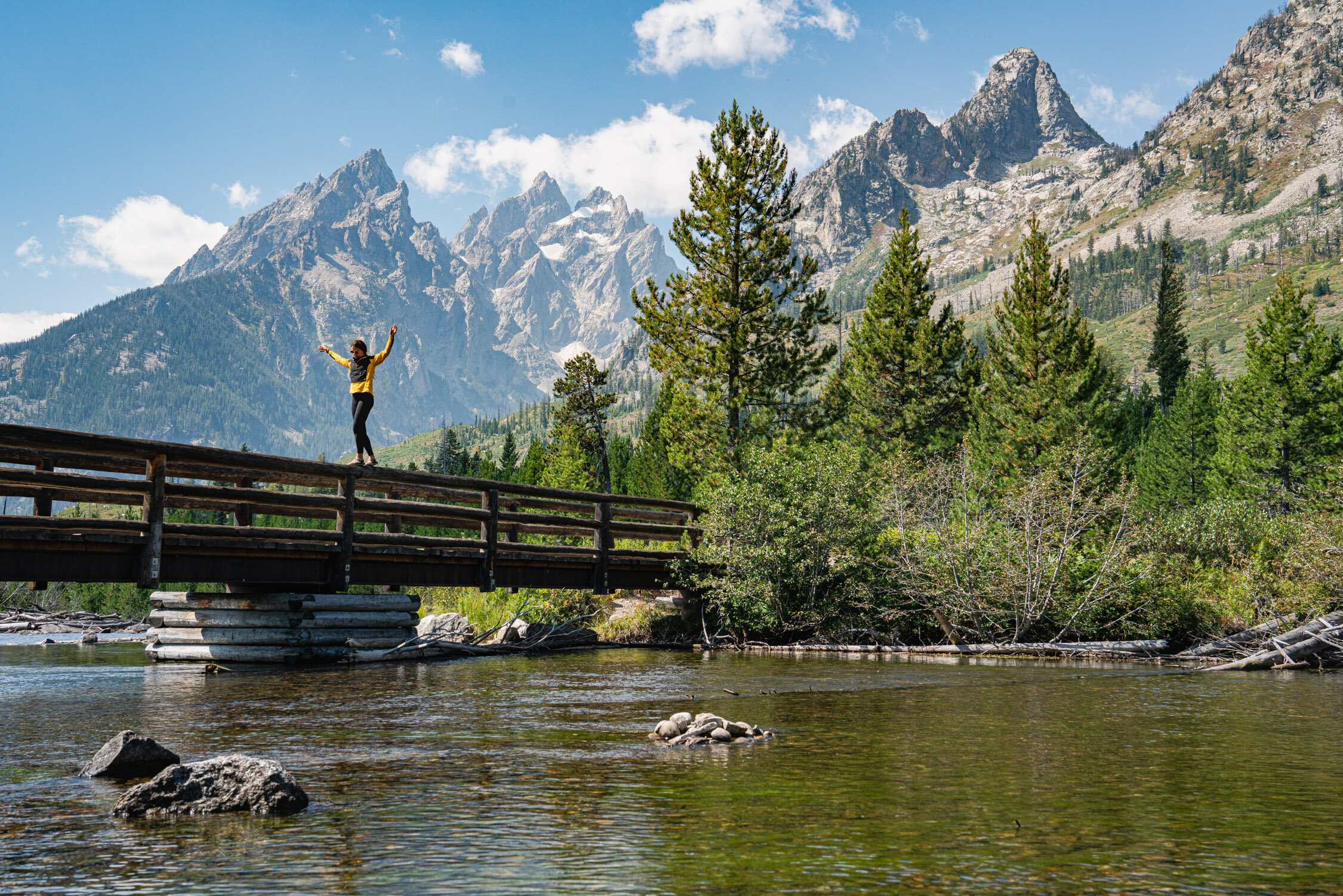
Kristin walks the bridge rail on String Lake in Grand Teton National Park, WY. Photo by Dalton Johnson
Sitting on my crash-pad, I received an email from a friend asking me if I had heard about Adventure Scientist - I had not. Adventure Scientist is a non-profit based out of Bozeman, Montana whose mission is to equip partners with data collected by leveraging the skills of the outdoor community that is critical to addressing environmental and human health challenges.
Fully invested in my rabbit hole with two bars of service, I sent off an introduction email with the idea of collaborating on the trip of the three ranges. To myself, I thought, “how cool would it be if I could summit a peak and collect water samples on my way down?” Needless to say, I was overeager and naive, but they responded politely and walked me through the requirements for data collecting… I didn’t fit the bill.
Data collection takes a very small commitment, the ability to return to a place over a couple of months. Since I was moving around, this didn’t work and I was gutted. Staring at the sky from my pad, I questioned what these last five years had been about, then it hit me. I flipped the script and asked if I could utilize my skills with a camera to create a piece for them, highlighting a few of their all-star volunteers. The door was opened and my training now had a purpose.

Kristin embraces the light as she takes in the magnificent view of the Teton Range in Jackson, WY. Photo by Dalton Johnson
As mid-July rolled around, the time to test my training had come, as did my ability to create with purpose. Three months on the road, shooting and climbing every day I could. Coordinating with Adventure Scientist, climbing partners, and reaching summits became my focus.
Watching the sunset from my van’s roof, sleeping in roadside pullouts, swollen knees, dust-filled camera sensors, hot spring star-gazing, and huddling soaking wet under a tree during a thunderstorm at the base of a climb have become my reality.
If you are interested in joining Adventure Scientist the process is streamlined! Head over to https://www.adventurescientists.org, decide if you are a scientist or adventurer, then go through the application process. In total, be prepared to spend two hours learning how to correctly collect and record data. Don’t let the idea of two hours hold you back! Instead of binge watching your next Netflix show, drop into the application so you can help preserve our planet’s natural spaces.
This article was originally written for and published by Oros Apparel. Read the original article at this link: https://www.orosapparel.com/blogs/journal/find-your-beyond-dalton-johnson

Three Most Important Life Lessons I’ve Learned To Date
In 2016 I took a leap of faith, bought a plane ticket to New Zealand as a graduation gift to myself for finishing college, and cycled around the South Island of NZ. Without a plan of action, all I knew was that I needed some time to sit with my thoughts and process as much as I could during that time. Sixty-two days is a long time without music, internet, social media, etc. but I can say, 62 days went quickly and wasn’t enough time to unpack the 24 years of living I had experienced. Getting caught up in the social conditioning of America is a road map to safety. Well, being safe isn’t living, and I wanted to live. While pedaling through rainstorms, almost sliding off roads, and sharing cookies and tea with strangers, I started to feel alive.
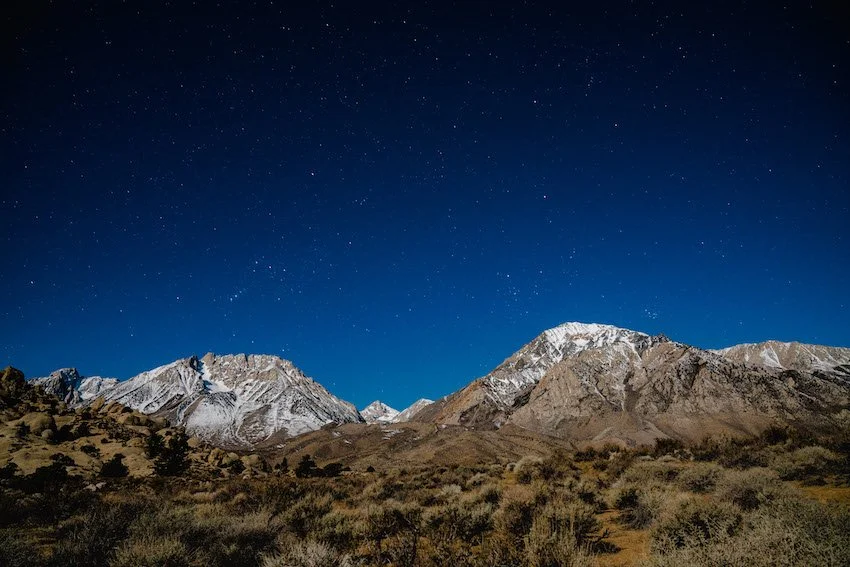
In 2016 I took a leap of faith, bought a plane ticket to New Zealand as a graduation gift to myself for finishing college, and cycled around the South Island of NZ. Without a plan of action, all I knew was that I needed some time to sit with my thoughts and process as much as I could during that time. Sixty-two days is a long time without music, internet, social media, etc. but I can say, 62 days went quickly and wasn’t enough time to unpack the 24 years of living I had experienced. Getting caught up in the social conditioning of America is a road map to safety. Well, being safe isn’t living, and I wanted to live. While pedaling through rainstorms, almost sliding off roads, and sharing cookies and tea with strangers, I started to feel alive.
I knew returning to the US would be a challenge to keep the stoke alive, but I did my best, ending up in a wide variety of seasonal jobs while launching a career in photography and writing. Now, six years have passed and I seem to be moving along quite well, so I wanted to share three of the most important life lessons I’ve learned to date. Check them out below:
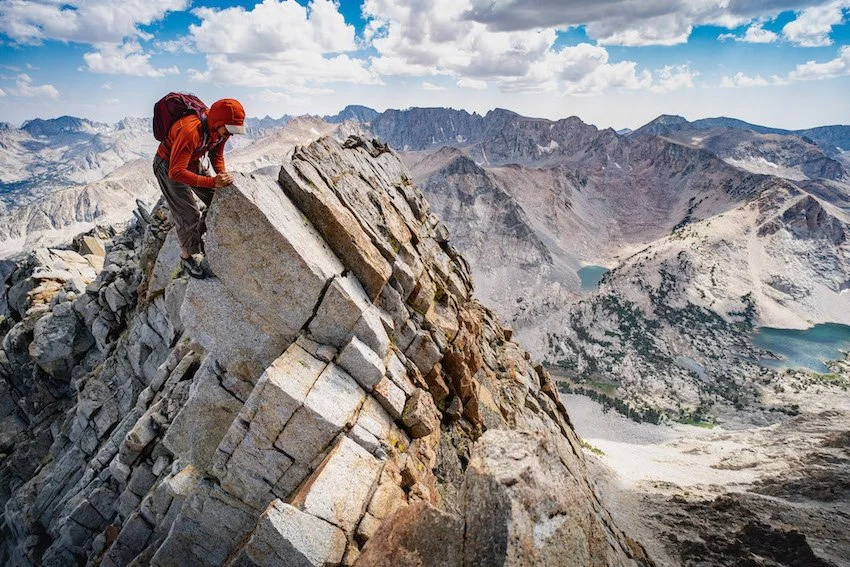
1) Focus on long-term growth, meanwhile, recognize to grow over time you need to have a direction and perspective.
In a data-driven world, I’ve found the daily obsession around views, likes, follows, clicks, etc. to be intoxicating. In many ways, getting data drunk has been an obsession of mine. If data can’t show what’s going on, why even do it? Well, that is the wrong approach. Yes, day-to-day metrics show improvements and errors, but for a sustainable life, it is the trending slopes up, or down, that make the difference. Every day doesn’t need to be positive, and when there is a dip in the data, that’s an opportunity for growth. If a trend is upward, then you are growing. If the trend is down, zoom out, is it still down?
A view from Glacier Point of little Yosemite Valley in Yosemite National Park, CA
In the hopes of understanding long-term growth better, I have started to look at data in sets of a week, month, and year. A week is the smallest time frame because that is all that matters. If I go viral, that is a great hype for a day, but that isn’t long-term. Yes, I will analyze what made that video go viral, but what’s going to matter more is consistently showing up, day in and day out, dedicated to your direction.
A quick note, goals are the tasks required for you to continue in your direction. In many ways, a goal is simply a step, hop, or jump in your direction. Each time you achieve a goal, you take one step further down your path, towards your north star. Now, in the end, we are all just racing towards the end of our lives, so make sure the path you are walking is one that you enjoy! If it isn’t, then start rethinking, you only live this life once.
Perspective matters. When it comes to data trends, I focus on the average low. When I say that, I mean, I am focused on raising my bottom line. For example, I had a goal, back in 2017, for my website to have zero days with zero visits. At the time, I didn’t offer much and my blog was complete trash, so I wasn’t surprised that I was getting zero views, but that focus made me improve. All I wanted was a minimum of one view a day. Fast forward to 2018, my goal was to raise that bar to a minimum of 20 views a day. That is an upward trend. That is raising the minimum bar over time. On the flip side, the spikes feel great! They raise the average and make the numbers better for sales purposes, but they are short-lived.
Okay, okay, I have shared enough on business—because it is tangible—, let’s get back to what matters, the soft skills. As a human, we have an obligation to ourselves to always strive to do our best. Some days, our best is better than others, but the key is that when we look back on any day, we gave 100% of what we had that day to that day. I have stayed away from this example because there is no data, so now is the time to get touchy-feely. Long-term growth as a human means that we become a better person, this you can/will only be able to define for yourself. Do you need to improve your relationships, your love life, your focus, your…? The list can go on and on, but the key here is to pick a few goals so that you take the steps towards your direction. One of the best, and most morbid, ways to understand your direction, is to write your ideal obituary. Once you have this down, check-in as to where you are at, identify the gap, and get to work. As you do the work, your path will change, that is okay, but if you don’t start, you won’t know the current path isn’t for yourself. So, get started!
To wrap up this life lesson, if you manage your perspective and follow your direction, you’ll be in good shape. In today’s world, it is easy to get lost among the numbers, but, at the end of the day, what matters is that you are enjoying your time in harmony, trending upwards over time, and trying your best not to get caught up in the rat race! Work towards you might change, more on this in Life Lesson Three, but that is okay. Start working on yourself now and, over time, you will be on the correct path.
Journal Topic:
-Write your ideal obituary/how you wish people to remember you. If this is too morbid, write down four adjectives you want to be remembered as.
-Once you know how you want to be remembered, objectively write out where/who you are today.
-Lastly, compare the two, then start making changes (you might be surprised to find out you are already on your way!).

Enjoy the journey, but also make this life count!
2) Invest your time into projects with a shelf-life.
I was told this by a couple of established photographers, especially around the concept of a portfolio-building road trip, but the lesson did not sink in for many years. At first, I shook my head and agreed thinking to myself, “Of course, you want to invest in projects with a shelf-life, I mean who doesn’t want to create something that lasts?” Then I headed off on a trip to climb all of California’s 14,000-foot peaks in a single push with a buddy. We summited roughly half, gave many more an attempt, but ultimately this was a learning trip. Once done, I had to head back to some seasonal work, at the time this was substitute teaching, to make enough money to survive. While teaching, I edited, wrote, and submitted images. Nothing.
A tip to making work last is to shoot a “timeless” photograph, such as this one.
One month, two months, six months passed and there wasn’t much of a bite. I had heard back from Patagonia, they archived some images, but that was all. The images I had edited found their place on my social media feed and in a few blogs, but nothing to generate cash. A bit disappointed, I photographed surfing every day after teaching and took the day off if the swell was good. As time continued to pass, I submitted more surfing images, met some of the local pros, and tried to keep my head high. Occasionally, I would get the odd photo job, sometimes a yoga portrait session, sell a print, shoot a video job, or write some copy for somebody just to keep the dream alive. It was hard! Then, almost a year later, things started to pop!
That trip I went on, started to get some traction. A magazine submission came back and was accepted, with 12 images and an essay. That was real validation. I received some money and had several spreads. Another month later, Patagonia licensed an image, then another. During that time, I had posted some of my favorite landscape images from that trip on my website as prints, those started to sell. That trip went from costing me a couple of thousand dollars to now being a profitable trip. As wild as it sounds, five years later, I am still licensing images from that trip. I am still selling prints. I am still writing digital articles with those images, about that trip.
So, while I didn’t understand what it meant to invest in projects that have a shelf-life at the moment, I was lucky enough to make my first trip count. While I didn’t know how to sell a project upfront, I did come to realize that there are ways to sell a trip once you finish. Honestly, I have grown to love creating projects and selling the work later. This kind of trip allows me to maintain the full creative license, but, this means there is a lot of self-disciplined work that has to be done following the trip.
Now, outside of photography, what does it mean to invest in a project with a shelf-life? The easiest way to express this is through a term called Mailbox Money. This means money comes in once the work is done. So, I will give some examples:
-Writing a Blog, if you can have advertisements on your blog, you are making money as people read your posts.
-Rental Properties, I agree, this might seem far-fetched for some, and I don’t have any rental properties, but if you are receiving rent each month, that is mailbox money… even if the rent is covering your mortgage ie building equity for yourself.
-Stock Dividends, once you own the stocks that pay a dividend, sick back and wait for your check. At first, this might be small, but over time this can grow if you invest correctly
-YouTube channel, once you publish the video, YouTube pays you after a certain amount of views. Find your niche and create videos, over time this will pay off!
-Books, online classes, print sales, NFT, all of these are great ways to generate income over time. You just need to create the asset first, then fulfill the request once purchased.
Journal Topic:
-List out 15 things you do that make you happy.
-Look at the list, and search each one on Google and YouTube, this will give you an example of the blogs and YouTube channels that exist, could you do that?
-Map out the process for you to start, then start taking steps! This will be your side hustle :-)
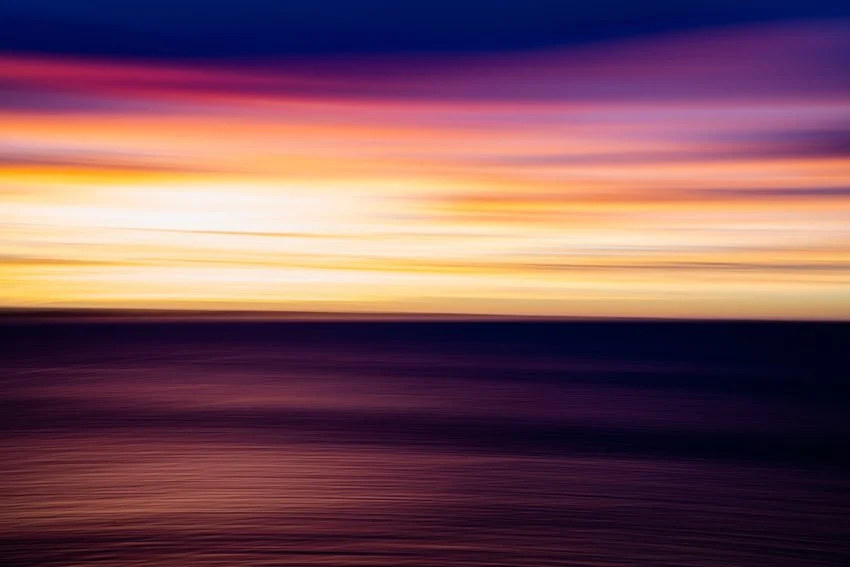
Not everything can be clear, so embrace the blurry side of life! Revist and revise along the way.
3) Revisit, revise, and update along the journey.
How often have you done something 100% right the first time? I don’t think I have ever done that! Heck, I am on my fourth version of this blog, second edit of this version, and still finding errors. Once we have started with a direction and recognized the important projects to focus on, the next step is revision. Refining our process, converting bad habits into good ones, and revisiting our compass to make sure we are headed in the correct direction along our journey. Let’s be real, that shiny thing over there is cool and I want it too. Heck, who doesn’t want that shiny thing over there? And, if we fall into our curiosity of that shinny thing, we should enjoy it. Recognize you might be off-course but start working your way back.
Andrew Muse enjoying the last bits of light after a full day of riding motorcycles along HWY 395 in CA.
Here is the dirty secret, starting is just that, starting. Once you begin, you will quickly recognize if what you started is for you. If it feels good, continue. If it doesn’t serve you, stop and revise. As you experiment with many different things, find the common thread of the ideas, actions, inactions to find the root of the path. Your path is unique to you, and you will never find it in the form of a blueprint. What you will find are emotions, feelings, intuitions, and data points all pushing/pulling you in a direction. As you wander that path, you are saying yes with each step. Each step forward is into the unknown, but that unknown will be filled with feelings. If the feelings are off, revise. Take a step back. Sit with the idea, flesh out new paths, then proceed.
This has been relatively meta, so let me break this down in a more concrete manner with a personal example. Once I returned from my bike trip to New Zealand, I was a bit lost and wandered for two(ish) years. The seasonal jobs allowed me freedom but did not pay much. Along the way, an Art Director, at Outward Bound, told me I should pursue a career in photography. At the time, I only shot for fun, but I took his advice and began developing my craft. I limited my time surfing and rock climbing so that I could photograph surfing and rock climbing. As I developed “my style” I realized I am not much of an action sports photographer, but more of a lifestyle shooter who conveyed the concept of fun. I was getting some jobs, but not much. A bit defeated, I started going back to the drawing board and re-found my love for writing (which was showing up in daily journaling practice as well as blog writing). At some point, I just offered to write a blog with photos to a client to tell the story. They said, “YES,” enthusiastically and immediately. That gave me the courage to offer this more often. I think the year was 2019, or 2020, but I went from one to two jobs a year to one job a month of photos and a blog. As that developed, I started to write two a month and now I am often writing/shooting 6-10 pieces a month! Kinda crazy!
I think this example directly sums up the power of these three life lessons. With direction and growth over time, I was able to develop a craft. At some point a few projects I invested in circled back around months later after a small revision in my approach. Then, BOOM! I started to thrive.
Journal Topic:
-List TEN things, both positive and negative, that you are currently doing that brings up emotions.
-Once ten are listed for both types of emotions, think of ways you could revise your position for the ten negative and think of ways you could deepen for the positive.
Life can feel overwhelming like wandering through the dunes of Death Valley.
Conclusion
Hopefully, there are a few nuggets of goodness in this for you, or at least these lessons got you thinking about your position in life. Please, take the time to dive into the journaling topics, reach out if you have any questions, and let me know what resonated with you. In the end, the goal of sharing my journey and my path is to provide some clarity for others that it is possible if you have a direction, invest in long-term projects, and revise along the way. You have the ability and the power within yourself to live a life of happiness. Go live that life!