
Three Misconceptions About The Northern Lights
What you need to know before traveling to see the Northern Lights

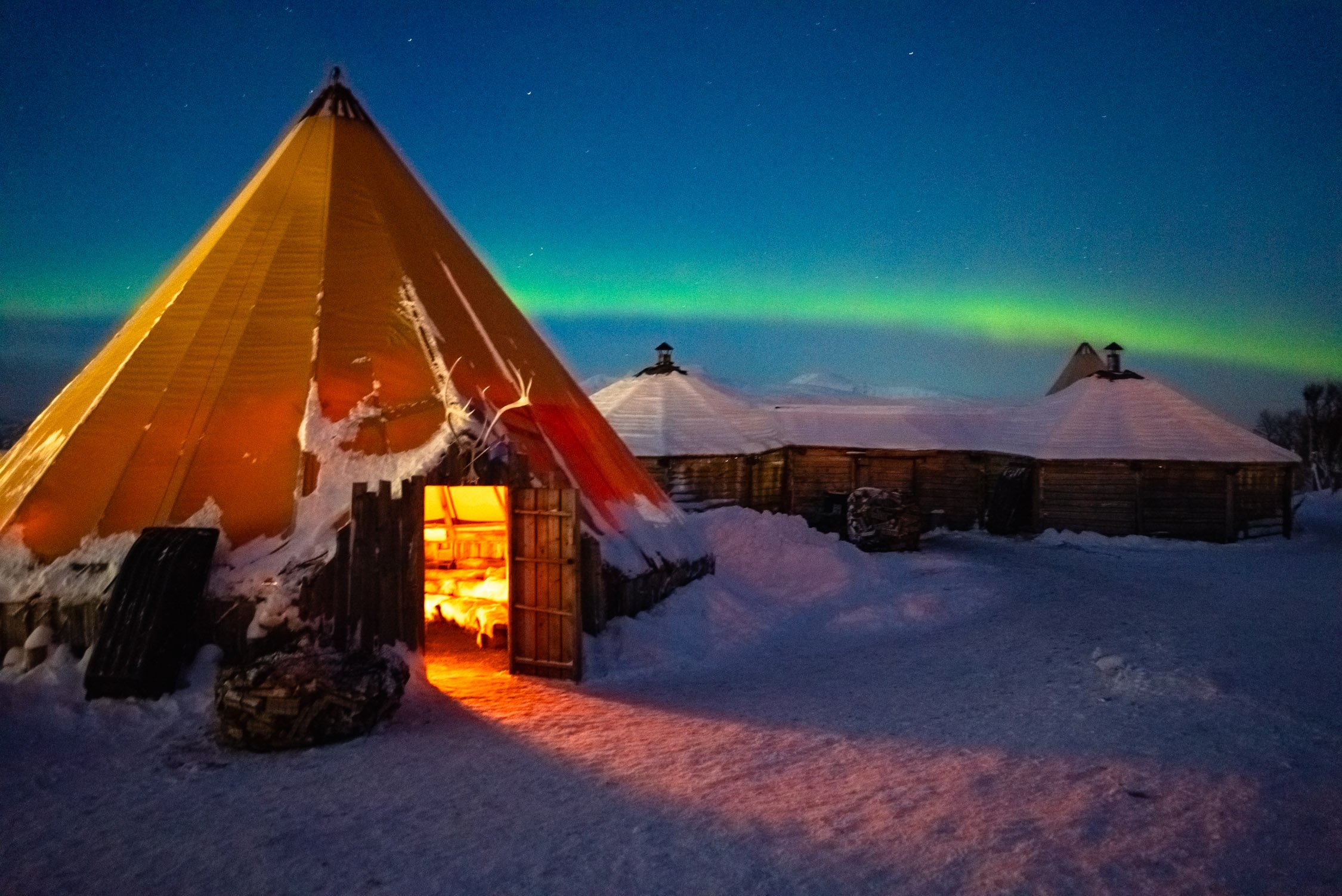
On a recent trip to Norway, I had the opportunity to see the green glow, from Northern Lights, floating in the sky, but the Northern Lights weren't exactly what everyone talks about. The entire sky wasn't lit up with a variety of colors, but a few large, green streaks were crossing the sky. So, I wanted to clear up any misconceptions that you might have about the Northern Lights to level set your expectations if you travel to see this natural phenomenon.

The Northern Lights Look Better Through A Camera
When we see photos of the Northern Lights, they are like the Milky Way in the sense that a camera will capture them better than what you see with the naked eye. When a camera uses a long exposure, say 5 seconds to 30 seconds, to capture an image, the colors begin to pop and even some of the faintest objects will begin to appear. Now, this doesn't mean you can't see the Northern Lights with the naked eye, you can! Just be ready for the Northern Lights not to look like the photos.
The Northern Lights Come and Go Throughout The Night
One of the challenges of seeing the Northern Lights is that they come and go. While the most common hours to see the Northern Lights are between 11 pm and 3 am, one important characteristic of the Northern Lights is their ephemeral nature. What does that mean? If you are looking at the Northern Lights right now, in 10 minutes, they could be gone. On the flip side, if you don't see the Northern Lights right now, they might show up in the next 30 minutes, or not at all. This is what makes chasing the Northern Lights fun.
The Northern Lights Might Be There, But Weather Will Determine What You See
Usually, when you travel to see the Northern Lights, you are going to places that have harsh conditions. The weather can be bad. Rains, winds, and heavy cloud coverage all happen in the regions with the Northern Lights. So, make sure to keep an eye on the weather, because you'll need to be outside to see the Northern Lights. Pack a heavy jacket, and thick gloves, so you can be ready to hop out of bed if you hear the Northern Lights are showing.

You Don't Need A Wetsuit To Snorkel In Belize, But You'll Want This
You'll want a rash guard while you snorkel in Belize

Bouncing in the boat as we headed for our snorkeling spot around the Turneffe Atoll in Belize, I looked around at the group who were prepping their masks with defog and wiggling their feet into their fins. Soon, we would plunge beneath the surface and explore the colorfully stunning corals of Belize's reefs. But, they all had one thing I did not, a rash guard.

The water in Belize is warm and they didn't plan to surf, so I didn't understand why they had on rash guards. Plunging below the surface, we started our journey. Diving up and down to catch a breath, we floated with the current, away from the boat to check out different sections of the reef.
Shining in the light, the red, blue, and yellow coral popped. I was fascinated by the little fish as well. Holding my breath longer and longer with each dive, I was reaching the flow state during this snorkel. Then, I was tapped on the shoulder by the guide and he pointed close to me.
Struggling to see what he was pointing at, I eventually noticed this translucent blob floating a few feet away, a jellyfish. Returning to the surface at the request of the guide, he said, "Watch out for jellyfish, you don't have a rash guard. Next time, bring a rash guard."
Now, I understood. Thankfully, I wasn't stung by any jellyfish while snorkeling in Belize, but I understand how snorkeling with a rash guard in Belize can be an important addition to your snorkeling kit to keep you warm (you don't need a wetsuit to snorkel) and protect you from jellyfish, shallow reef, and the sun.

Lojel’s Cubo Fit Luggage Is Like A Black Hole Where You Can Actaully Find Your Clothes
This Hardcase Luggage Changed My Mind About Checked Baggage While Flying

Men’s Journal aims to feature only the best products and services. If you buy something via one of our links, we may earn a commission.
Say what you want about flying with hard-case luggage, let alone checking a bag, however, I’ve kicked my duffles and soft-sided bags for the Lojel Cubo Fit. I’m not just saying this because I was gifted this piece of luggage, either. After my last three flights with this black hole, that weighs in at 10.8 lbs, I haven’t run out of room. The size is notable because this bag has carried enough puffy clothing to keep me warm from head to toe in -50f and comes with a 10-year warranty, just in case TSA or the flight crew decides to break your bag.

Let's get back to that -50f. That’s cold, regardless of who you are, and those temperatures require more layers upon layers. Just picture the Michele Man walking around a snowy landscape photographing the Northern Lights. Massive boots, big jackets, and four layers, all fit into Lojel's hard-case luggage.
My favorite part, mobility. Easily wheeling from transfer to transfer, baggage claim to taxi, the wheels on the Lojel Cubo Fit are capable. I know their marketing department can’t say these wheels can go off-roading, but from my experience in the snow has been flawless. Dirt is not a problem. Mud… okay, maybe not the best but, hey, you can’t win them all.
In addition to the storage capacity, this hard-case luggage has a wonderfully designed internal storage. With six internal pockets organizing your socks, underwear, toiletries, and knickknacks has never been easier. Also, the optional internal divider helps separate your shoes and dirty clothes from your clean clothes. This internal divider has also come in handy while organizing because this travel bag can fit just about anything. Surely your kitchen sink would fit!
If you are checking luggage while flying anywhere, the mid-sized Lojel Cubo Fit will keep your luggage safe while easily moving from point A to point B. Also, the headache of a disorganized bag is gone as you enjoy a simple, yet effective, internal storage system. Needless to say, the Lojel Cubo Fit will certainly change your mind about checking a bag on your next flight.

How To Manage Your Time And Stay Productive as a Digital Nomad
Digital nomads have mastered the art of blending work and travel seamlessly, allowing them to explore new destinations while staying productive in their professional endeavors. Balancing work and travel requires a strategic approach and a set of effective practices. Let's delve into how digital nomads stay productive while on the move.
Digital nomads have mastered the art of blending work and travel seamlessly, allowing them to explore new destinations while staying productive in their professional endeavors. Balancing work and travel requires a strategic approach and a set of effective practices. Let's delve into how digital nomads stay productive while on the move.
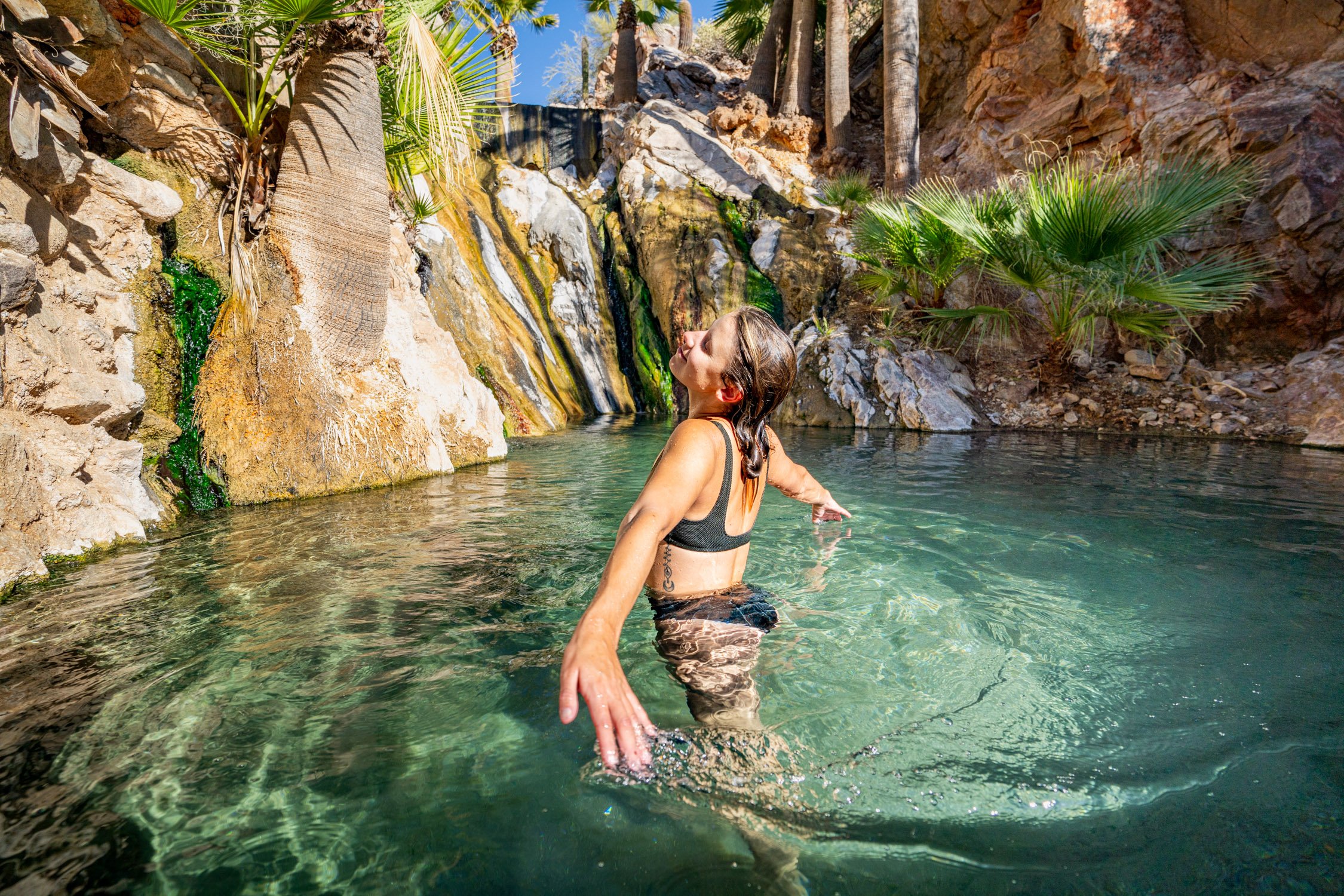
Kristin finding time to enjoy the hot springs while on a work assignment as a digital nomad. Photo by Dalton Johnson
1. Effective Time Management
Digital nomads prioritize their tasks and manage their time effectively. They often use time management techniques such as the Pomodoro Technique, time blocking, or setting specific work hours to maintain focus and productivity. By allocating dedicated time slots for work, they create a structured routine that helps them stay on track despite changing environments.
2. Creating a Functional Workspace
A crucial aspect of productivity for digital nomads is creating a functional workspace wherever they go. This includes having a comfortable chair, a reliable internet connection, proper lighting, and essential tools like laptops and chargers. Many nomads opt for co-working spaces or cafes with conducive environments for work.
3. Utilizing Productivity Tools
Digital nomads rely on various productivity tools and apps to streamline their work processes. These tools include project management platforms like Trello or Asana for task organization, communication tools like Slack or Zoom for team collaboration, and time tracking apps to monitor work hours and productivity levels.
4. Setting Clear Goals and Deadlines
Setting clear goals and deadlines is essential for digital nomads to stay focused and motivated. By breaking down projects into manageable tasks and setting realistic deadlines, they can track their progress and ensure timely completion of work while juggling travel plans.
5. Embracing Flexibility
Flexibility is a hallmark of the digital nomad lifestyle. Nomads adapt to changing circumstances, such as travel delays or unexpected challenges, by adjusting their work schedules and priorities accordingly. Embracing flexibility allows them to maintain productivity even in unpredictable situations.


6. Managing Distractions
While traveling, digital nomads face various distractions such as tourist attractions, social events, or new experiences. Managing these distractions involves practicing self-discipline, using productivity techniques like the "two-minute rule" to tackle small tasks immediately, and creating boundaries between work and leisure time.
7. Prioritizing Self-Care
Maintaining productivity requires a healthy work-life balance. Digital nomads prioritize self-care by incorporating regular exercise, mindfulness practices, and adequate rest into their routines. Taking breaks and rejuvenating their minds and bodies contribute to sustained productivity and overall well-being.
8. Networking and Collaboration
Digital nomads often engage in networking events, meetups, or online communities to connect with like-minded individuals and expand their professional networks. Collaborating with other nomads or local professionals not only fosters creativity and innovation but also opens up opportunities for growth and learning.
9. Continuous Learning and Skill Development
To stay competitive in their fields, digital nomads prioritize continuous learning and skill development. They invest time in online courses, workshops, or certifications relevant to their industries, enhancing their expertise and staying abreast of industry trends and advancements.
10. Maintaining Work-Life Integration
Finally, digital nomads strive for work-life integration rather than strict separation. They blend work with leisure activities, allowing for cultural immersion, exploration, and personal growth while fulfilling professional responsibilities. This integrated approach contributes to a fulfilling and sustainable lifestyle as a digital nomad.
There is always time to step outside and watch the Northern Lights when you are a digital nomad. Photo by Dalton Johnson
Digital nomads stay productive while traveling by leveraging effective time management, creating functional workspaces, utilizing productivity tools, setting clear goals, embracing flexibility, managing distractions, prioritizing self-care, networking and collaborating, continuous learning, and maintaining work-life integration. These strategies enable them to thrive in a dynamic work environment while enjoying the freedom and adventure of travel.
Discover more Adventures


What To Do In Monument Valley
Nestled within the red-rock desert of the American Southwest lies a place of unparalleled beauty and cultural significance — Monument Valley. This iconic landscape, with its towering sandstone buttes and vast open spaces, has captivated travelers, artists, and adventurers for generations. If you're planning a visit to Monument Valley and wondering what to do and see, read on for a comprehensive guide to make the most of your experience.
Nestled within the red-rock desert of the American Southwest lies a place of unparalleled beauty and cultural significance — Monument Valley. This iconic landscape, with its towering sandstone buttes and vast open spaces, has captivated travelers, artists, and adventurers for generations. If you're planning a visit to Monument Valley and wondering what to do and see, read on for a comprehensive guide to make the most of your experience.
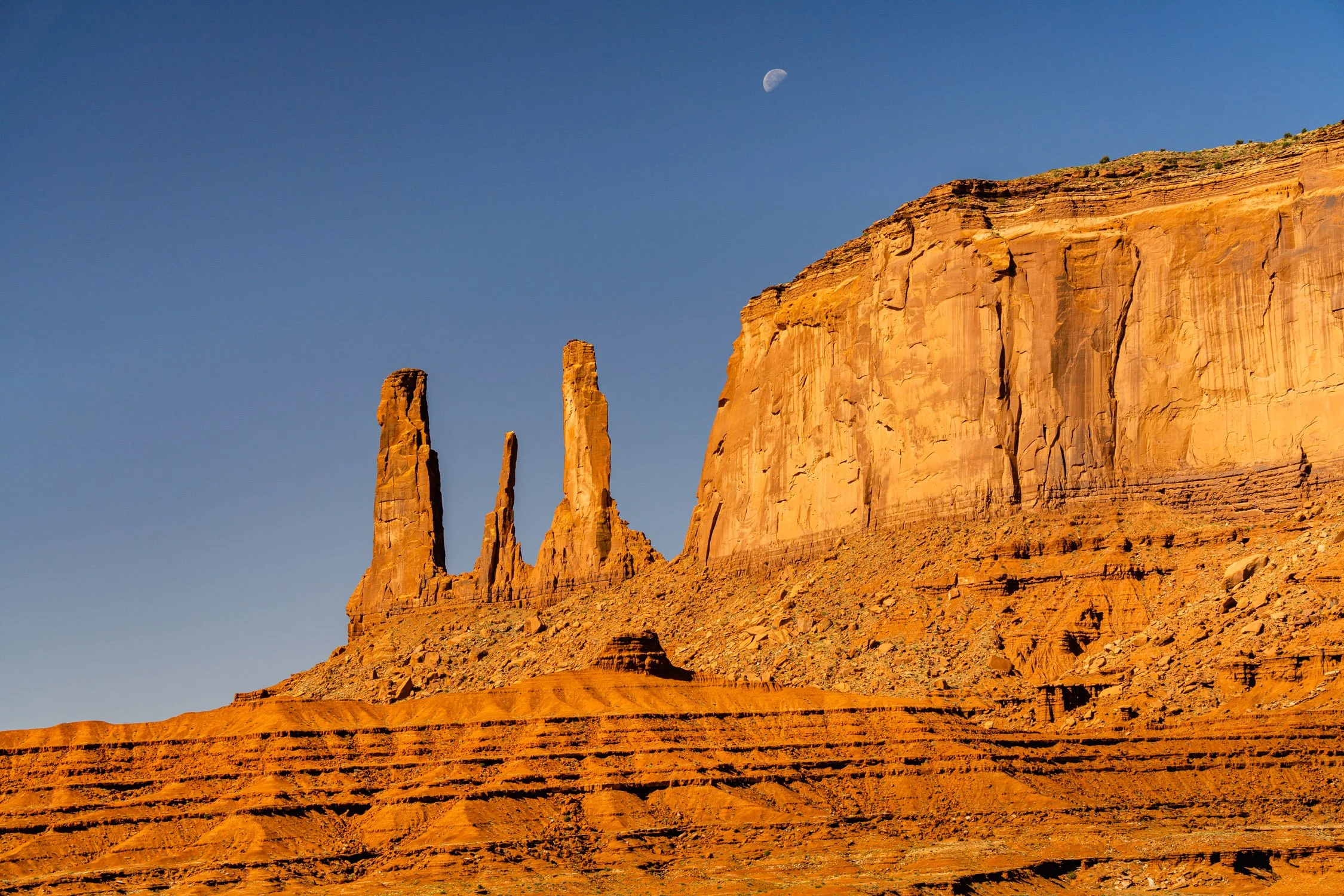
The Three Sisters standing tall on the horizon of Monument Valley glowing in the morning sun. Photo by Dalton Johnson
Understanding Monument Valley's Cultural Significance
Before delving into the activities and sights, it's crucial to appreciate the cultural heritage of Monument Valley. This region is not just a geological marvel but also holds deep spiritual and historical importance for the Navajo people. Respect for their traditions, land, and way of life is paramount when visiting Monument Valley. Many guided tours offer insights into the Navajo culture, providing visitors with a richer and more meaningful experience.
Hiking Adventures in Monument Valley
One of the best ways to immerse yourself in the raw beauty of Monument Valley is through hiking. The valley offers a range of trails suitable for different skill levels, from leisurely strolls to challenging treks. Here are a few notable hiking options:
Wildcat Trail: This 3.2-mile loop is the only self-guided trail within the Monument Valley Tribal Park. It offers stunning views of the iconic West Mitten Butte and allows you to experience the landscape up close.
The Hunt's Mesa: For more experienced hikers seeking a thrilling adventure, the trek to Hunt's Mesa is a must-do. This challenging trail rewards hikers with panoramic views of Monument Valley from a breathtaking vantage point.
The Totem Pole and Yei Bi Chei: These rock formations are accessible via guided tours or with a Navajo permit. The hike takes you through narrow canyons and unveils ancient petroglyphs, offering a glimpse into the area's rich history.
Photography in Monument Valley
Monument Valley is a photographer's paradise, offering endless opportunities to capture stunning images. The ever-changing play of light and shadow against the red rocks creates a mesmerizing spectacle. Whether you're a professional photographer or an amateur with a smartphone, here are some tips for capturing the best shots:
Golden Hour Magic: The hours around sunrise and sunset bath the landscape in golden hues, enhancing the beauty of the rock formations. Plan your photography sessions during these times for magical results.
Wide-angle Views: Monument Valley's vastness is best captured with wide-angle lenses. Experiment with different focal lengths to showcase the scale and grandeur of the buttes and mesas.
Foreground Interest: Incorporate elements like desert vegetation, rock formations, or Navajo dwellings into your compositions to add depth and interest to your photos.
Guided Tours for a Deeper Experience
While exploring on your own is rewarding, guided tours offer unique insights and access to areas not open to the public. Consider joining a guided tour to maximize your experience in Monument Valley:
Navajo-guided Jeep Tours: Navigate the rugged terrain of Monument Valley with a knowledgeable Navajo guide who can share stories, legends, and cultural insights along the way.
Cultural Immersion Tours: Immerse yourself in Navajo culture with tours that include visits to traditional hogans (dwellings), storytelling sessions, and demonstrations of traditional crafts like rug weaving and pottery making.
Photography Tours: Join a specialized photography tour led by experienced photographers who know the best vantage points and lighting conditions for capturing stunning images of Monument Valley.
Must-See Attractions and Landmarks
No visit to Monument Valley is complete without experiencing its iconic landmarks. Here are some must-see attractions to add to your itinerary:
The Mittens and Merrick Butte: These towering rock formations are among the most recognizable symbols of Monument Valley, especially striking during sunrise and sunset.
Monument Valley Navajo Tribal Park Visitor Center: Start your journey here to learn about the park's history, geology, and cultural significance. The center also offers informative exhibits and guided tour options.
Artist's Point: This overlook provides a panoramic view of the valley, allowing you to admire the vast expanse of red rock formations and mesas stretching into the distance.
Planning Your Visit
The ideal duration for exploring Monument Valley depends on your interests and schedule. While some visitors opt for a day trip, others prefer spending two to three days to fully immerse themselves in the beauty and culture of the region. Consider the following tips when planning your visit:
Accommodations: While there are no lodging options within the Monument Valley Tribal Park, nearby towns like Goulding and Kayenta offer hotels, campgrounds, and RV parks for overnight stays.
Weather Considerations: Summer months can be scorching, so plan outdoor activities accordingly and carry ample water and sun protection. Spring and fall offer milder temperatures and are ideal for hiking and photography.
Permits and Reservations: Some areas within Monument Valley, such as restricted Navajo lands and guided tours, may require permits or reservations. Plan ahead and check with the park authorities or tour operators for any requirements.
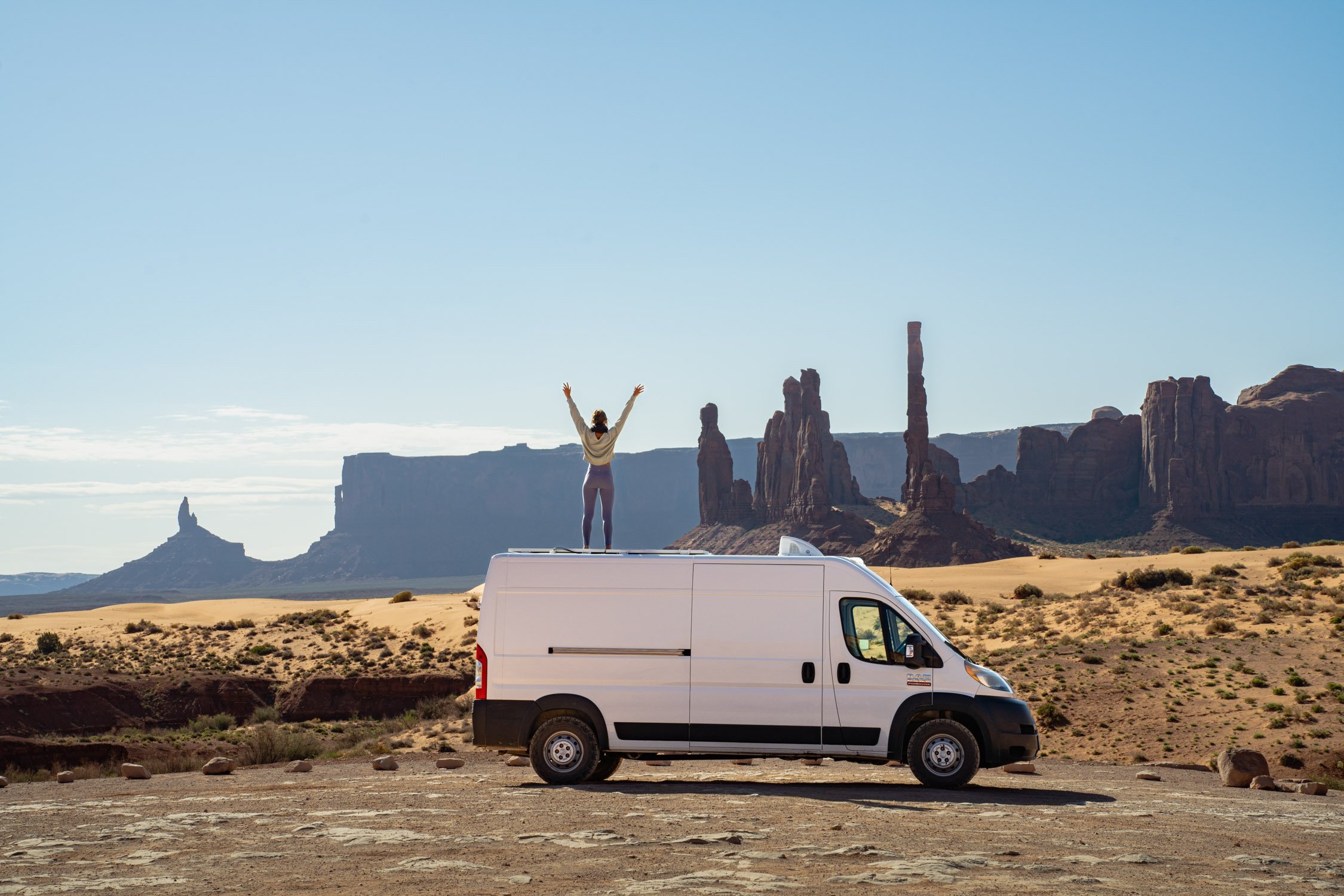
Soaking in the magic of Monument Valley from a top the van during a van life road trip. Photo by Dalton Johnson
Monument Valley is a treasure trove of natural beauty, cultural heritage, and outdoor adventures waiting to be explored. Whether you're hiking through its rugged terrain, capturing its majesty through photography, or immersing yourself in Navajo culture, a visit to Monument Valley promises an unforgettable experience. Plan your trip thoughtfully, respect the land and its people, and prepare to be awestruck by the timeless allure of this desert wonderland.
Discover More Destinations

Best Time of Year to Visit Monument Valley
When planning a visit to Monument Valley, timing can significantly impact your experience. This iconic destination straddling the Arizona-Utah border boasts stunning rock formations, cultural significance, and breathtaking vistas that vary with the seasons. Let's explore the best times of year to visit Monument Valley for an unforgettable adventure.
When planning a visit to Monument Valley, timing can significantly impact your experience. This iconic destination straddling the Arizona-Utah border boasts stunning rock formations, cultural significance, and breathtaking vistas that vary with the seasons. Let's explore the best times of year to visit Monument Valley for an unforgettable adventure.
A field of wildflowers and a tower in Monument Valley during the spring sunrise. Photo by Dalton Johnson
Spring (March to May)
Spring heralds a beautiful time in Monument Valley. Temperatures start to warm up, making outdoor activities more enjoyable. The landscape comes alive with wildflowers, adding vibrant colors to the red rock scenery. Spring also marks the Navajo Nation's New Year, a culturally rich time to experience local traditions and festivities.
Visiting in spring allows you to explore the valley comfortably without the intense heat of summer. Hiking trails become more inviting, and guided tours offer insights into the area's geological wonders and Native American heritage. However, keep in mind that spring can also bring occasional showers, so it's wise to check weather forecasts and be prepared for changing conditions.
Summer (June to August)
Summer in Monument Valley brings long, sunny days and warmer temperatures, making it a popular time for visitors. The clear skies offer excellent opportunities for photography, especially during sunrise and sunset when the rock formations are bathed in golden light.
While summer allows for more extended exploration due to longer daylight hours, it's essential to plan for the heat. Temperatures can soar, particularly in July and August, so be sure to stay hydrated, wear sunscreen, and schedule outdoor activities during cooler parts of the day.
Despite the higher tourist numbers in summer, the vastness of Monument Valley means that you can still find moments of solitude and tranquility, especially if you venture off the main tourist routes.
Fall (September to November)
Fall brings milder temperatures and crisp, clear days, making it another excellent time to visit Monument Valley. The landscape undergoes a transformation as the summer crowds thin out, providing a more serene and immersive experience.
The autumn colors, especially in late October and early November, add a new dimension to the red rock formations. The cooler weather also makes outdoor activities like hiking and photography more comfortable, allowing you to savor the beauty of Monument Valley without the summer heat.
Fall is also a great time for stargazing in Monument Valley. With clear skies and reduced light pollution, you can marvel at the night sky's brilliance, including the Milky Way and countless stars.
Winter (December to February)
Winter in Monument Valley brings cooler temperatures and occasional snowfall, creating a unique and picturesque setting. While snow is not as common as in other parts of the country, seeing the red rocks dusted with a light blanket of snow is a magical sight.
Visiting Monument Valley in winter offers several advantages. The thinner crowds mean you can explore at your own pace and enjoy a more intimate experience with nature. The crisp air and clear views also enhance photography opportunities, capturing the stark beauty of the desert landscape against snow-capped peaks.
However, it's essential to check weather conditions before traveling in winter, as occasional snow or icy roads may require extra caution. Dressing in layers and being prepared for colder temperatures ensures a comfortable and enjoyable visit.
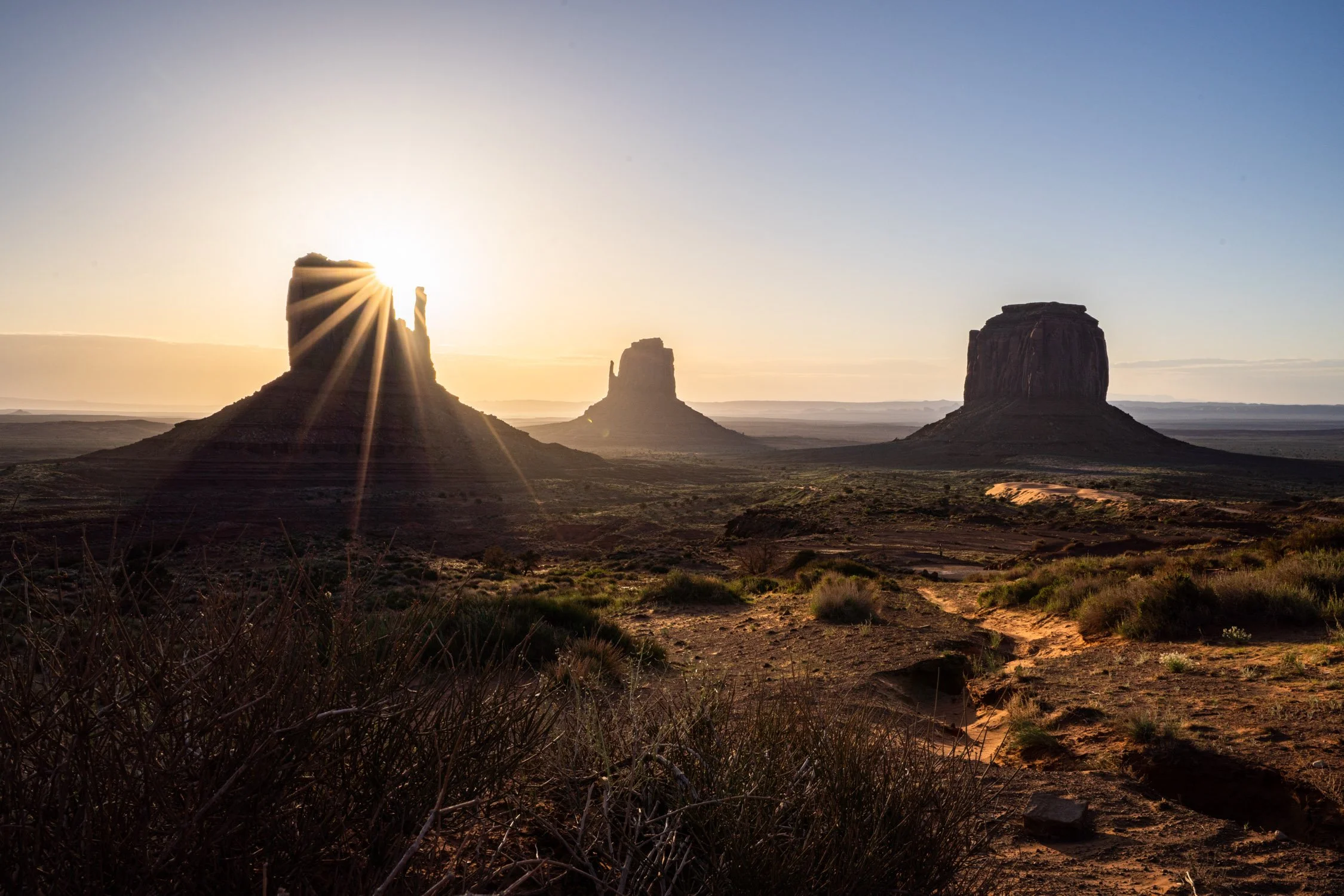
Sunrise at the Mittens in Monument Valley. Photo by Dalton Johnson
The best time to visit Monument Valley depends on your preferences and interests. Spring and fall offer pleasant weather, vibrant colors, and cultural events, making them ideal for outdoor activities and exploration. Summer attracts more tourists but provides longer daylight hours for adventures and stunning photography. Winter brings a quieter atmosphere, occasional snowfall, and unique photographic opportunities.
Ultimately, each season has its charm in Monument Valley, offering a diverse range of experiences amidst awe-inspiring natural beauty and cultural richness. Whether you prefer the bloom of spring, the warmth of summer, the colors of fall, or the tranquility of winter, Monument Valley awaits with its timeless allure and captivating landscapes.
Discover More Destinations
Visitor's Guide to Monument Valley
Monument Valley stands as an iconic symbol of the American West, its towering sandstone formations etched against the desert sky like ancient sentinels. This natural wonder draws visitors from around the globe with its breathtaking beauty and rich cultural heritage. In this comprehensive guide, we'll delve into what makes Monument Valley a must-visit destination, how to get there, what to expect, and the best ways to make the most of your time exploring this mesmerizing landscape.
Monument Valley stands as an iconic symbol of the American West, its towering sandstone formations etched against the desert sky like ancient sentinels. This natural wonder draws visitors from around the globe with its breathtaking beauty and rich cultural heritage. In this comprehensive guide, we'll delve into what makes Monument Valley a must-visit destination, how to get there, what to expect, and the best ways to make the most of your time exploring this mesmerizing landscape.
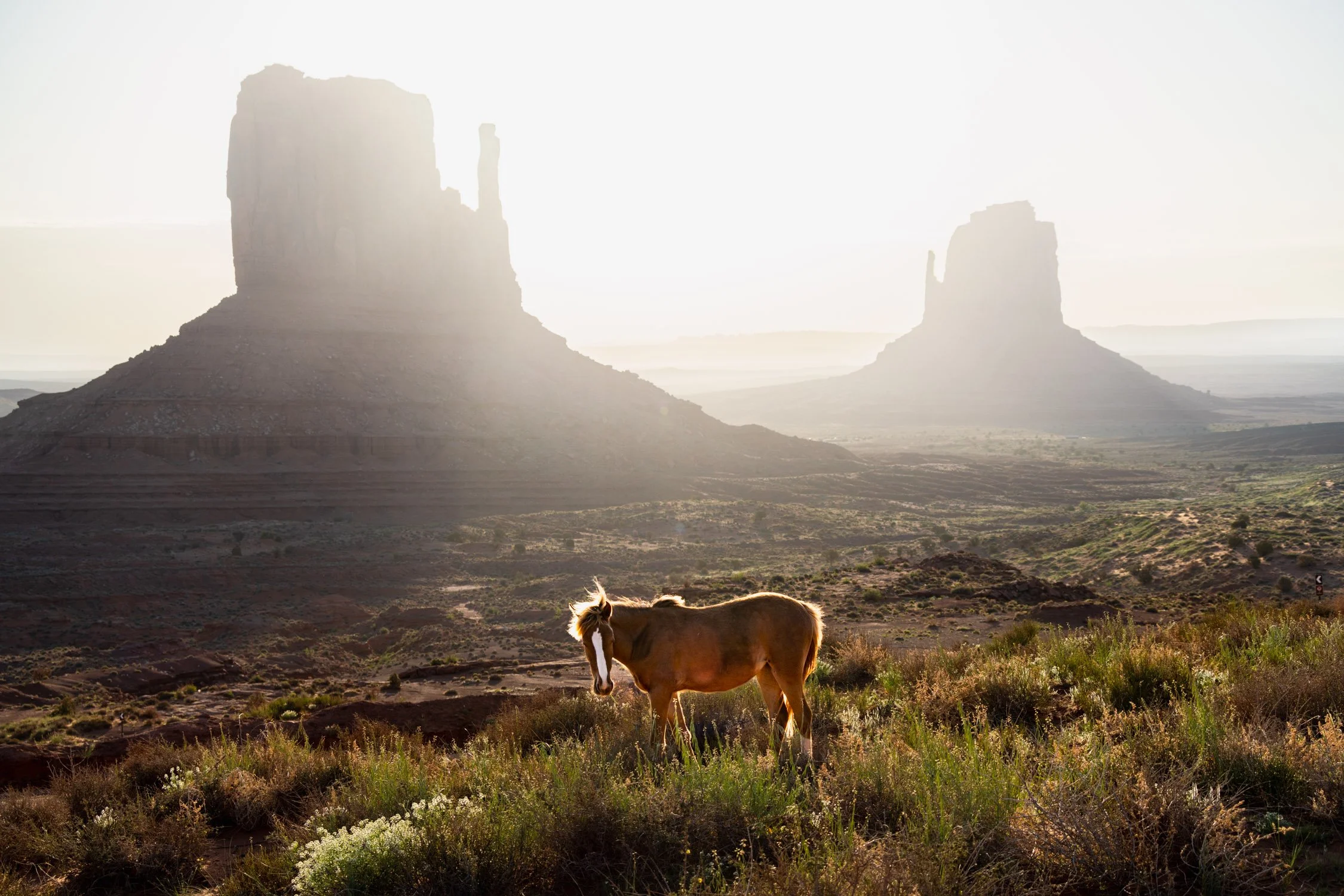
A wild horse poses candidly in front of the mittens in Monument Valley. Photo by Dalton Johnson
PROS:
Breathtaking Scenery: The towering sandstone formations and vast desert vistas offer unparalleled beauty and photo opportunities.
Cultural Immersion: Explore Navajo traditions, crafts, and storytelling at the Navajo Cultural Center, gaining insight into indigenous heritage.
Outdoor Adventures: Enjoy scenic drives, hiking trails, and stargazing nights amidst the natural splendor of Monument Valley.
Film and Art Connections: Discover the cinematic history of the valley, famously featured in Western films, and find artistic inspiration in its timeless landscapes.
Spiritual Retreat: Many visitors find solace and spiritual connection in the serene beauty and ancient energies of Monument Valley.
Accessible Year-Round: Open throughout the year, Monument Valley welcomes visitors in all seasons, each offering a unique charm.
CONS:
High Summer Temperatures: Summer months can be extremely hot, making outdoor activities challenging during midday hours.
Crowded Peak Seasons: Popular times like holidays and weekends can attract large crowds, affecting the serenity of the experience.
Limited Accommodations: Accommodations within the valley are limited, with more options available in nearby towns like Kayenta and Page.
Remote Location: The valley's remote location may require a considerable drive from major cities, adding travel time to your itinerary.
Weather Variability: Weather conditions, including occasional snowfall in winter, can impact road accessibility and outdoor activities.
Park Fees: Entrance fees and additional charges for guided tours may add to the overall cost of your visit.
What is Monument Valley?
Monument Valley is a region of the Colorado Plateau characterized by a unique collection of towering sandstone buttes, mesas, and spires. These geological formations, shaped over millions of years by wind and water erosion, create a stunning panorama that has been featured in numerous films, commercials, and works of art, earning it a place as one of the most recognizable landscapes in the United States.
Where is Monument Valley Located?
Located on the Arizona-Utah border within the Navajo Nation Reservation, Monument Valley is part of the larger Four Corners region where the states of Arizona, Utah, Colorado, and New Mexico meet. The nearest major town is Kayenta, Arizona, approximately 20 miles south of the valley.
How Do I Get to Monument Valley?
By Car: Many visitors opt to reach Monument Valley by car, enjoying the scenic drive through the rugged desert landscape. From major cities like Phoenix, Arizona, and Salt Lake City, Utah, the journey typically takes around 4-6 hours, depending on the route taken.
By Air: The nearest airports to Monument Valley are the Flagstaff Pulliam Airport in Arizona and the Grand Junction Regional Airport in Colorado. From there, you can rent a car and drive to the valley, or arrange for a shuttle service.
Tours: Various tour companies offer guided excursions to Monument Valley from nearby cities such as Flagstaff, Sedona, and Las Vegas. These tours often include transportation, guided commentary, and visits to key viewpoints and attractions.
What Are the Opening Hours of Monument Valley?
Monument Valley is open to visitors year-round. However, the specific opening hours for the park's facilities, including the visitor center and scenic drive, may vary by season. It's recommended to check the official website or contact the park directly for up-to-date information on operating hours.
Is Monument Valley Open Year-Round?
Yes, Monument Valley welcomes visitors throughout the year. Each season offers its own unique charm, from the vibrant colors of spring wildflowers to the crisp air and clear skies of winter. Keep in mind that summer months can be quite hot, while winter may bring occasional snowfall, so plan accordingly based on your preferred weather and activities.
What Are the Entrance Fees for Monument Valley?
As of the last update, the entrance fee for Monument Valley Tribal Park is $20 per vehicle, which includes up to four occupants. Additional passengers are charged an extra fee per person. It's important to note that these fees are subject to change, so it's advisable to check the official park website or contact park authorities for the latest pricing information.
Can I Visit Monument Valley Without a Tour Guide?
Yes, you can explore Monument Valley on your own without a tour guide. The park offers a scenic loop drive accessible by personal vehicles, allowing visitors to enjoy panoramic views of the iconic formations. However, guided tours can enhance your experience by providing insights into the area's geology, history, and Navajo culture. Whether you choose to go solo or join a tour, Monument Valley promises an unforgettable adventure.
What Are the Popular Attractions in Monument Valley?
The Mittens and Merrick Butte: These twin rock formations, resembling giant mittens rising from the desert floor, are among the most photographed features in Monument Valley.
John Ford's Point: Named after the legendary filmmaker who popularized Monument Valley in Western movies, this viewpoint offers a classic vantage point for capturing the valley's dramatic scenery.
The Three Sisters: A trio of slender spires that stand in striking contrast against the expansive sky, providing a picturesque backdrop for photography enthusiasts.
Artist's Point: Known for its sweeping vistas and panoramic views of Monument Valley, this overlook is a favorite among artists and nature lovers alike.
Navajo Cultural Center: Located near the visitor center, the cultural center offers insights into Navajo traditions, crafts, and storytelling, providing a deeper understanding of the area's indigenous heritage.
Hiking Trails: Several hiking trails ranging from easy to moderate difficulty levels allow visitors to explore the valley's terrain on foot, offering close-up encounters with rock formations and desert flora.
How Much Time Do I Need to Explore Monument Valley?
The amount of time you'll need to fully experience Monument Valley depends on your interests and itinerary. A typical visit for scenic driving and photo stops can be completed in a few hours, while those opting for guided tours or hiking excursions may spend a full day or more immersing themselves in the natural beauty and cultural richness of the area. Plan ahead and allocate sufficient time to savor the awe-inspiring landscapes and engage with the fascinating history of Monument Valley.
Why Visit Monument Valley?
Natural Beauty: The striking rock formations and expansive desert vistas of Monument Valley offer a visual feast for nature enthusiasts and photographers.
Cultural Heritage: Explore the rich heritage of the Navajo Nation through guided tours, cultural exhibits, and interactions with local artisans and storytellers.
Outdoor Activities: From scenic drives and hiking trails to photography opportunities and stargazing nights, Monument Valley provides endless outdoor adventures for all ages and interests.
Film and Art Connections: Discover the cinematic history of Monument Valley, famously featured in countless Western films, and find artistic inspiration amidst its timeless landscapes.
Spiritual and Reflective Spaces: Many visitors find solace and spiritual connection in the serene beauty and ancient energies of Monument Valley, making it a place of introspection and renewal.
Hiking Spots Around Monument Valley
Wildcat Trail: A popular hiking trail that offers a close-up view of the West Mitten Butte and surrounding formations, with opportunities for wildlife sightings and desert flora observation.
The Totem Pole and Yei Bi Chei: These iconic rock formations can be admired from various viewpoints along the scenic drive or experienced up close on guided hiking tours led by Navajo guides.
Hunt's Mesa: For more adventurous hikers, a trek to Hunt's Mesa rewards with unparalleled panoramic views of Monument Valley and the surrounding desert landscape, best experienced at sunrise or sunset.
Ear of the Wind Arch: Accessible via a short hike from the main road, this natural arch formation is not only a photographic gem but also holds cultural significance in Navajo mythology.
Mystery Valley: Adjacent to Monument Valley, Mystery Valley offers guided tours to ancient Anasazi ruins, petroglyphs, and hidden rock formations, adding a historical dimension to your exploration.
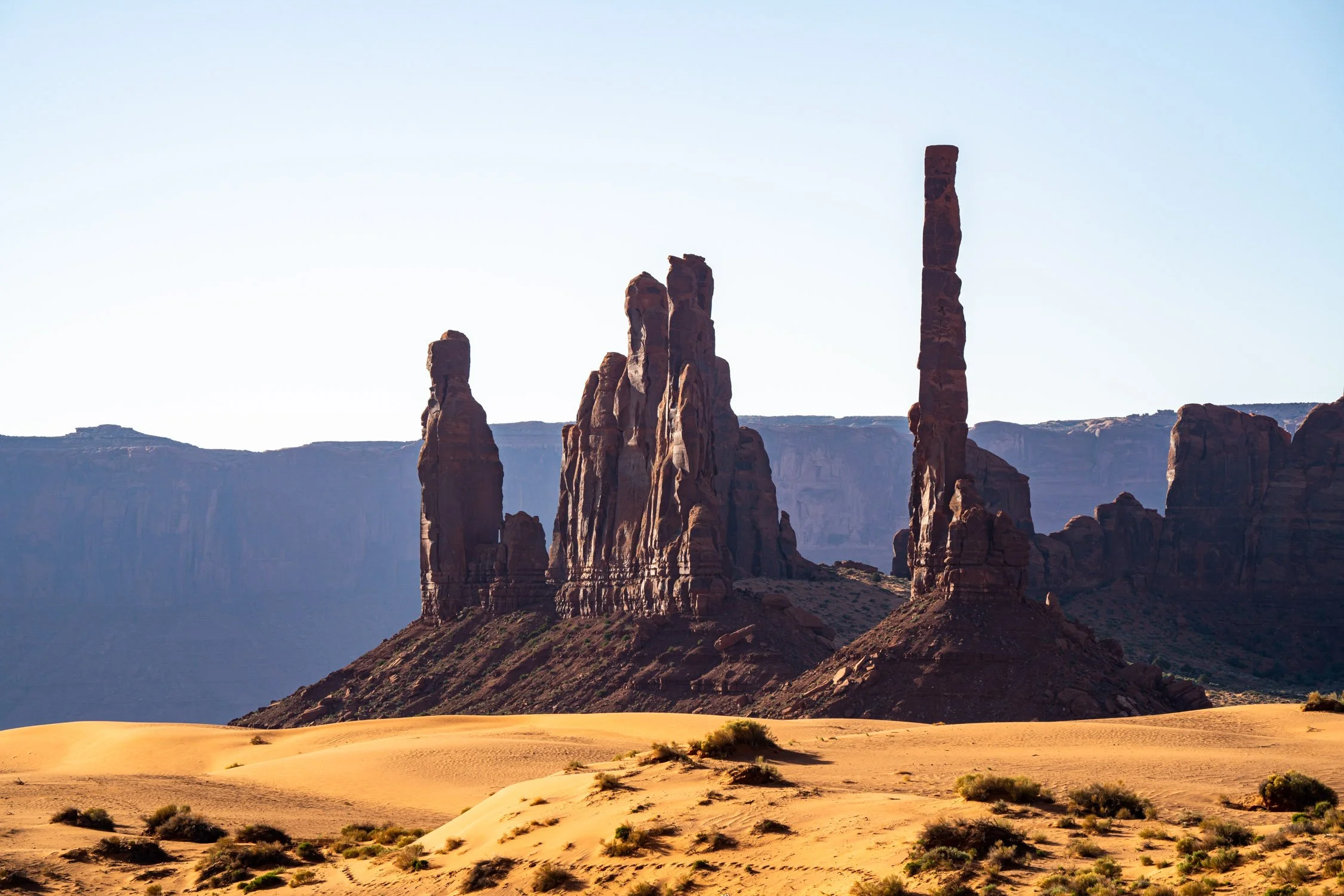
The totem pole deep in back of Monument Valley. Photo by Dalton Johnson
A visit to Monument Valley is an immersive journey into the heart of the American Southwest, where nature's grandeur and human history converge in a tapestry of awe-inspiring landscapes and cultural richness. Whether you come for the scenic vistas, the cultural experiences, or the outdoor adventures, Monument Valley promises an unforgettable experience that will leave a lasting impression on your soul.
Discover More Destinations

How To Find The Right Tent For You
Choosing the right tent for your camping trip can significantly impact your overall outdoor experience. With a wide range of options available in the market, finding the perfect tent can seem daunting. However, by considering factors such as tent size, capacity, seasonality, design features, and budget, you can narrow down your choices and select a tent that meets your specific camping needs. Let's delve into each of these factors to help you pick the right tent for your next adventure.
Choosing the right tent for your camping trip can significantly impact your overall outdoor experience. With a wide range of options available in the market, finding the perfect tent can seem daunting. However, by considering factors such as tent size, capacity, seasonality, design features, and budget, you can narrow down your choices and select a tent that meets your specific camping needs. Let's delve into each of these factors to help you pick the right tent for your next adventure.

Camping in Bridgeport, CA with a Featherstone Tent. Photo by Dalton Johnson
Tent Size and Capacity
The first consideration when choosing a tent is its size and capacity. Determine how many people will be using the tent and whether you need additional space for gear or pets. Tent capacities are typically labeled as one-person, two-person, three-person, and so on, but keep in mind that these ratings can vary between brands. It's often a good idea to choose a tent with a slightly higher capacity than the number of people to allow for extra space and comfort.
Seasonality
Tents are categorized into three main types based on their seasonality: three-season, four-season, and summer tents.
Three-Season Tents: These tents are designed for use in spring, summer, and fall. They offer good ventilation for warm weather and provide adequate protection against light rain and wind. They are not suitable for extreme cold or heavy snow conditions.
Four-Season Tents: Also known as winter or mountaineering tents, these are built to withstand harsh weather conditions, including heavy snow, strong winds, and low temperatures. They have stronger poles, reinforced fabric, and less mesh for better insulation.
Summer Tents: These are lightweight and designed for warm weather camping. They prioritize ventilation and are not suitable for cold or rainy conditions.
Choose a tent based on the seasons and weather conditions you expect to encounter during your camping trips.
Design Features
Consider the following design features when selecting a tent:
Tent Shape: Tents come in various shapes such as dome, cabin, tunnel, and geodesic. Dome tents are sturdy and easy to set up, while cabin tents offer more headroom but can be heavier. Geodesic tents are great for windy conditions due to their multiple pole crossings.
Weight: If you plan on backpacking or hiking to your campsite, opt for a lightweight tent. Car campers may prioritize space and comfort over weight.
Doors and Vestibules: Multiple doors allow for easier access, especially in larger tents. Vestibules provide extra storage space for gear and muddy boots.
Ventilation: Look for tents with mesh panels, windows, and adjustable vents to improve airflow and reduce condensation.
Freestanding vs. Non-Freestanding: Freestanding tents can be set up without stakes and are easier to move around. Non-freestanding tents require stakes for stability but are often lighter.
Budget
Set a budget for your tent purchase and prioritize features based on your needs. High-quality tents with advanced features may come at a higher price, but they offer durability and better performance in challenging conditions. Consider the long-term value of your investment when deciding on a budget.
Additional Tips
Reviews and Recommendations: Read reviews from other campers and outdoor enthusiasts to gain insights into the durability, performance, and ease of use of different tent models.
Try Before You Buy: If possible, set up the tent in-store or in your backyard to familiarize yourself with the setup process and ensure it meets your expectations.
Consider Accessories: Factor in additional accessories such as footprint (groundsheet), rainfly, and gear loft for added protection and organization.
Warranty and Customer Support: Check the warranty coverage and customer support offered by the tent manufacturer for peace of mind and assistance in case of any issues.
Camping on a beach in Baja, Mexico. Photo by Dalton Johnson
By carefully considering these factors and doing thorough research, you can confidently choose the right tent for your camping adventures. Remember that a well-suited tent enhances your outdoor experience and provides comfort and shelter during your wilderness explorations.
Discover more Adventures
How To Quickly Plan A Successful Road Trip
Planning a road trip can be an exciting and rewarding experience, offering the freedom to explore new places at your own pace. Whether you're embarking on a cross-country adventure or a weekend getaway, careful planning can make all the difference in creating a memorable and enjoyable trip. Here's a step-by-step guide on how to plan a road trip in the USA.
Planning a road trip can be an exciting and rewarding experience, offering the freedom to explore new places at your own pace. Whether you're embarking on a cross-country adventure or a weekend getaway, careful planning can make all the difference in creating a memorable and enjoyable trip. Here's a step-by-step guide on how to plan a road trip in the USA.

Road tripping the Valley of the Gods. Photo by Dalton Johnson
Pros
Flexibility: Road trips offer the flexibility to customize your itinerary, make spontaneous stops, and explore off-the-beaten-path destinations.
Cost-Effective: Compared to air travel, road trips can be more cost-effective, especially for families or groups traveling together.
Scenic Routes: Road trips allow you to take scenic routes, enjoy breathtaking views, and experience the beauty of diverse landscapes.
Freedom: You have the freedom to travel at your own pace, stop whenever you want, and change plans as needed.
Local Experiences: Road trips provide opportunities to immerse yourself in local culture, try regional cuisines, and interact with locals.
Bonding: Whether with family or friends, road trips can strengthen bonds through shared experiences and adventures.
Spontaneity: Embrace spontaneity by discovering hidden gems, trying new activities, and adapting to unexpected discoveries.
Cons
Time-Consuming: Road trips can be time-consuming, especially for long distances, requiring careful planning and consideration of travel time.
Driving Fatigue: Long hours of driving can lead to fatigue and discomfort, requiring regular breaks and rest stops.
Weather Challenges: Weather conditions can impact road trips, leading to changes in plans, delays, or hazardous driving conditions.
Fuel Costs: Gasoline expenses can add up, particularly for large vehicles or when covering extensive distances.
Accommodation Availability: During peak travel seasons, finding available and affordable accommodation along the route may be challenging.
Vehicle Maintenance: Road trips require a well-maintained vehicle, regular checks, and potential unexpected repairs or issues on the road.
Navigation Challenges: Navigating unfamiliar roads, GPS inaccuracies, and lack of mobile reception in remote areas can pose challenges.
Step 1: Choose Your Destination
The first step in planning a road trip is deciding where you want to go. Consider your interests, the time you have available, and any must-see destinations along the way. Whether you're dreaming of coastal drives, mountain vistas, national parks, or iconic cities, the USA offers a wide range of road trip options to suit every traveler.
Step 2: Plan Your Route
Once you've chosen your destination, it's time to plan your route. Use a map or GPS navigation system to plot your journey, taking into account the distance, driving time, and any attractions or stops you want to include along the way. Consider scenic routes, historic sites, and local gems to make your road trip more enriching and enjoyable.
Step 3: Set a Budget
Determine your budget for the road trip, including fuel, accommodation, food, activities, and any other expenses. Consider factors such as gas prices, accommodation options (camping, hotels, Airbnb), dining preferences (eating out vs. cooking your meals), and admission fees for attractions. Having a clear budget will help you make informed decisions and avoid overspending.
Step 4: Plan Your Accommodation
Decide where you'll stay during your road trip. Options range from hotels and motels to campgrounds and RV parks. Book accommodation in advance, especially during peak travel seasons, to ensure availability and secure the best rates. Consider factors such as location, amenities, and reviews when choosing where to stay.
Step 5: Prepare Your Vehicle
Before hitting the road, ensure your vehicle is road trip-ready. Schedule a maintenance check-up to inspect tires, brakes, fluids, and overall mechanical condition. Pack essential items such as a spare tire, jack, roadside emergency kit, maps or GPS, car charger, and any required documents (driver's license, registration, insurance).
Step 6: Pack Wisely
Pack light and smart for your road trip. Essential items include clothing for various weather conditions, toiletries, medications, snacks, water, travel documents, entertainment (books, music, games), camera or smartphone for capturing memories, and any specific gear or equipment for activities along the way (hiking, biking, swimming).
Step 7: Plan Your Activities
Research and plan activities and attractions along your route. This could include visiting national parks, museums, landmarks, scenic viewpoints, local markets, outdoor adventures, and cultural experiences. Check opening hours, admission prices, and any reservations or permits required for certain activities.
Step 8: Be Flexible
While planning is essential, leave room for flexibility and spontaneity during your road trip. Unexpected discoveries, detours, and local recommendations can add a special charm to your journey. Embrace the freedom of the open road and be open to new experiences along the way.
Step 9: Safety First
Prioritize safety during your road trip. Observe traffic laws, wear seat belts, avoid distracted driving (such as texting or using a phone while driving), and take regular breaks to rest and stretch. Be aware of weather conditions, road closures, and potential hazards, especially in remote areas.
Step 10: Enjoy the Journey
Above all, enjoy the journey and savor the moments during your road trip. Take time to appreciate the scenery, meet locals, try new foods, and create lasting memories. A road trip is not just about reaching your destination but also about the adventures and experiences along the way.
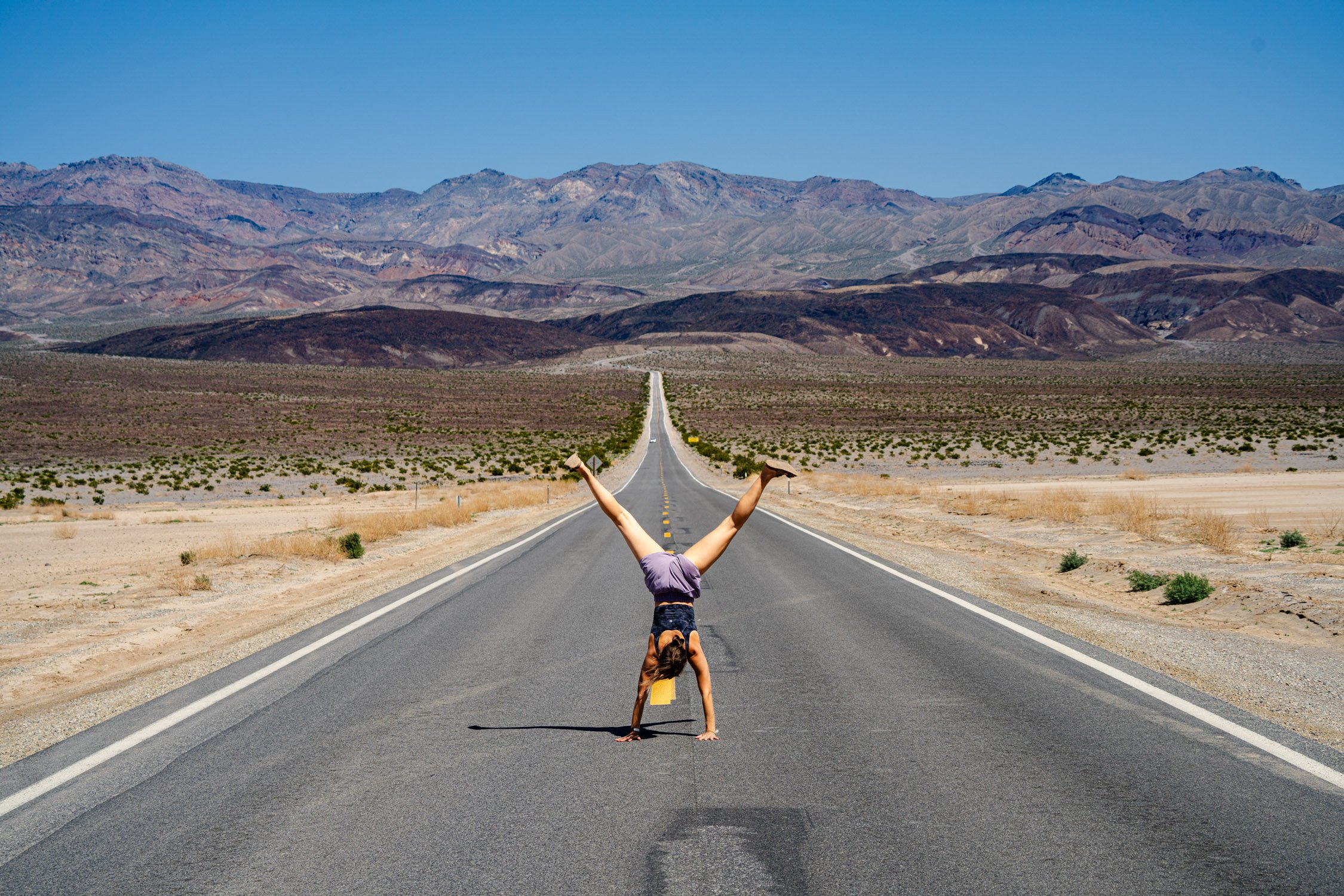
Kartwheeling in the middle of the road that never seems to end. Photo by Dalton Johnson
By following these steps and planning thoughtfully, you can ensure a smooth and enjoyable road trip across the diverse landscapes of the USA. From the rugged coastlines of California to the majestic mountains of Colorado, and from the vibrant cities of New York to the tranquil lakes of Minnesota, the USA offers a rich tapestry of experiences waiting to be explored. Whether you're a solo adventurer seeking solitude in nature, a family looking for bonding moments on the road, or a group of friends chasing adrenaline-fueled adventures, a well-planned road trip can cater to all preferences and create lasting memories.
So pack your bags, fuel up your vehicle, and embark on an unforgettable journey through the heart of America. Let the open road be your guide as you navigate through iconic landmarks, hidden gems, and the warm hospitality of local communities. Embrace the freedom, spontaneity, and sense of discovery that come with road tripping, and may each mile bring you closer to new experiences, friendships, and a deeper appreciation for the beauty of the USA.
Discover more Adventures

How To Find Outdoor Climbing Places Around You
Are you eager to scale new heights and conquer outdoor rock walls? Whether you're a seasoned climber or just starting your climbing journey, finding the right outdoor climbing spots can elevate your experience to new heights. Here's a comprehensive guide to help you discover exciting climbing destinations near you.
Are you eager to scale new heights and conquer outdoor rock walls? Whether you're a seasoned climber or just starting your climbing journey, finding the right outdoor climbing spots can elevate your experience to new heights. Here's a comprehensive guide to help you discover exciting climbing destinations near you.

Victoria pulling hard and cutting feet in Wild Iris. Photo by Dalton Johnson
1. Online Resources and Apps
The digital age has made it easier than ever to explore climbing opportunities. Utilize websites and apps dedicated to outdoor activities and rock climbing. Platforms like Mountain Project, TheCrag, and 27 Crags offer extensive databases of climbing routes, ratings, and user reviews. These resources provide valuable insights into the difficulty level, access information, and local regulations of climbing areas.
2. Local Climbing Gyms and Clubs
Your nearest climbing gym is not just a place to train; it's a hub of climbing enthusiasts with valuable local knowledge. Engage with staff and fellow climbers to learn about nearby outdoor climbing spots. Many gyms also organize outdoor climbing trips or can connect you with local climbing clubs and communities that share information about favorite crags and hidden gems.
3. Guidebooks and Publications
Invest in guidebooks specific to your region or desired climbing destination. These books are treasure troves of detailed route descriptions, access directions, safety tips, and historical background about the area. Popular guidebook publishers like Falcon Guides, Rockfax, and Supertopo cover a wide range of climbing areas worldwide, making them indispensable resources for planning your outdoor adventures.
4. Social Media and Online Forums
Join online climbing forums and social media groups to tap into the collective wisdom of the climbing community. Platforms like Reddit's r/climbing and Facebook groups dedicated to local climbing scenes often feature discussions, trip reports, and recommendations for nearby climbing spots. Engage respectfully, ask questions, and share your own experiences to foster a supportive network of climbers.
5. Local Climbing Festivals and Events
Attend climbing festivals, competitions, and outdoor events in your area or nearby regions. These gatherings not only offer opportunities to connect with fellow climbers but also showcase popular climbing areas through guided tours, workshops, and guest speakers. Take advantage of these events to explore new crags, learn from experienced climbers, and expand your climbing horizons.
6. Partner with Experienced Climbers
If you're new to outdoor climbing or unfamiliar with the local terrain, consider partnering with experienced climbers. Reach out to climbing guides, instructors, or seasoned climbers in your network who can mentor you and introduce you to safe and enjoyable climbing spots. Building relationships with experienced climbers also enhances safety and fosters a culture of mentorship within the climbing community.
7. Respect Local Regulations and Ethics
As you explore outdoor climbing spots, prioritize responsible and ethical climbing practices. Familiarize yourself with access regulations, permits, and conservation guidelines for each area. Respect closures, wildlife habitats, and cultural sensitivities associated with climbing locations. Leave no trace, minimize environmental impact, and contribute positively to preserving climbing access for future generations.
High stepping to the top of a sport climbing route. Photo by Dalton Johnson
Finding climbing spots near you is a thrilling journey that combines exploration, community engagement, and responsible stewardship of natural resources. By leveraging online resources, connecting with local climbing communities, and embracing ethical climbing practices, you can embark on unforgettable outdoor climbing adventures while fostering a deeper appreciation for the sport and the environments it embraces.
Discover more Adventures

Is Your Climbing Gym Up To Par? Here's What Makes A Good Climbing Gym
If you're looking to dive into the world of indoor climbing, finding the right climbing gym is crucial for your enjoyment, safety, and growth as a climber. Here's a comprehensive guide to help you find a good climbing gym that suits your needs and preferences.
If you're looking to dive into the world of indoor climbing, finding the right climbing gym is crucial for your enjoyment, safety, and growth as a climber. Here's a comprehensive guide to help you find a good climbing gym that suits your needs and preferences.

1. Location and Accessibility
Consider the location of the climbing gym. Is it easily accessible from your home, workplace, or regular commute routes? A gym that's conveniently located increases the likelihood of consistent visits, which is essential for progress in climbing.
2. Facility Amenities
Check the gym's amenities. Look for features like:
Ample climbing space with a variety of routes for all skill levels.
Safety equipment such as crash pads, harnesses, and ropes in good condition.
Training areas for strength and conditioning, including hangboards, campus boards, and workout equipment.
Clean and well-maintained facilities, including bathrooms and changing rooms.
Accessible parking and bike racks if you prefer alternative transportation.
3. Staff and Instruction
The quality of staff and instruction can significantly impact your climbing experience. Consider:
Qualified and experienced instructors who offer classes for beginners to advanced climbers.
Friendly and knowledgeable staff who can assist with equipment, route recommendations, and safety tips.
Opportunities for private lessons or personalized coaching if you're looking to improve specific skills.
4. Community and Atmosphere
A vibrant climbing community can enhance your motivation and enjoyment of the sport. Look for:
Social events like climbing nights, competitions, and community gatherings.
A welcoming and inclusive atmosphere where climbers of all backgrounds and skill levels feel comfortable.
Opportunities to connect with other climbers, join group outings, and participate in climbing-related discussions and activities.
5. Membership Options and Pricing
Evaluate the gym's membership options and pricing structure:
Choose a membership plan that aligns with your budget and climbing frequency (e.g., monthly, yearly, punch passes).
Consider additional costs such as gear rentals, classes, and special events.
Look for discounts or promotions for new members or referrals.
6. Safety Protocols and Equipment
Safety should be a top priority at any climbing gym. Make sure the gym:
Follows industry standards for safety protocols, including regular equipment inspections and maintenance.
Provides orientation sessions or safety classes for new members.
Encourages proper use of safety equipment and practices, such as belaying techniques and spotting.
7. Reviews and Recommendations
Research online reviews and seek recommendations from fellow climbers or local outdoor communities. Consider:
Reviews on platforms like Google, Yelp, or climbing forums that provide insights into the gym's reputation, customer service, and overall experience.
Feedback from friends, colleagues, or acquaintances who are familiar with the gym or climbing community.
8. Trial Visits and Introductory Offers
Take advantage of trial visits or introductory offers to experience the gym firsthand:
Visit the gym during different times to assess crowd levels, availability of climbing routes, and overall atmosphere.
Participate in introductory classes or open climbing sessions to get a feel for the gym's vibe and community.
9. Environmental and Ethical Practices
Consider the gym's commitment to environmental sustainability and ethical practices:
Look for gyms that prioritize eco-friendly initiatives such as recycling, energy conservation, and sustainable building materials.
Support gyms that promote Leave No Trace principles, outdoor stewardship, and responsible climbing practices.
10. Personal Preferences and Goals
Ultimately, choose a climbing gym that aligns with your personal preferences, goals, and values:
Consider factors like gym size, layout, style of climbing (e.g., bouldering, top-rope, lead climbing), and route diversity.
Reflect on your climbing goals (e.g., fitness, skill improvement, social connection, competitive aspirations) and choose a gym that supports your journey.
By carefully considering these factors and doing your research, you can find a good climbing gym that not only meets your practical needs but also enhances your overall climbing experience and enjoyment of the sport.
Discover more Adventures

Establishing a Base Fitness Level for Mountain Adventures
Mountain adventures encompass a wide range of thrilling activities, from alpine climbing and mountaineering to peak bagging, backpacking, and trail running. Whether you're a beginner looking to explore these activities or a seasoned adventurer aiming to enhance your fitness, establishing a solid base level of fitness is crucial. This guide will delve into five essential tips for getting in shape, emphasize the importance of a base fitness level, highlight the role of recovery, and discuss the balance between strength training and cardio.
Mountain adventures encompass a wide range of thrilling activities, from alpine climbing and mountaineering to peak bagging, backpacking, and trail running. Whether you're a beginner looking to explore these activities or a seasoned adventurer aiming to enhance your fitness, establishing a solid base level of fitness is crucial. This guide will delve into five essential tips for getting in shape, emphasize the importance of a base fitness level, highlight the role of recovery, and discuss the balance between strength training and cardio.
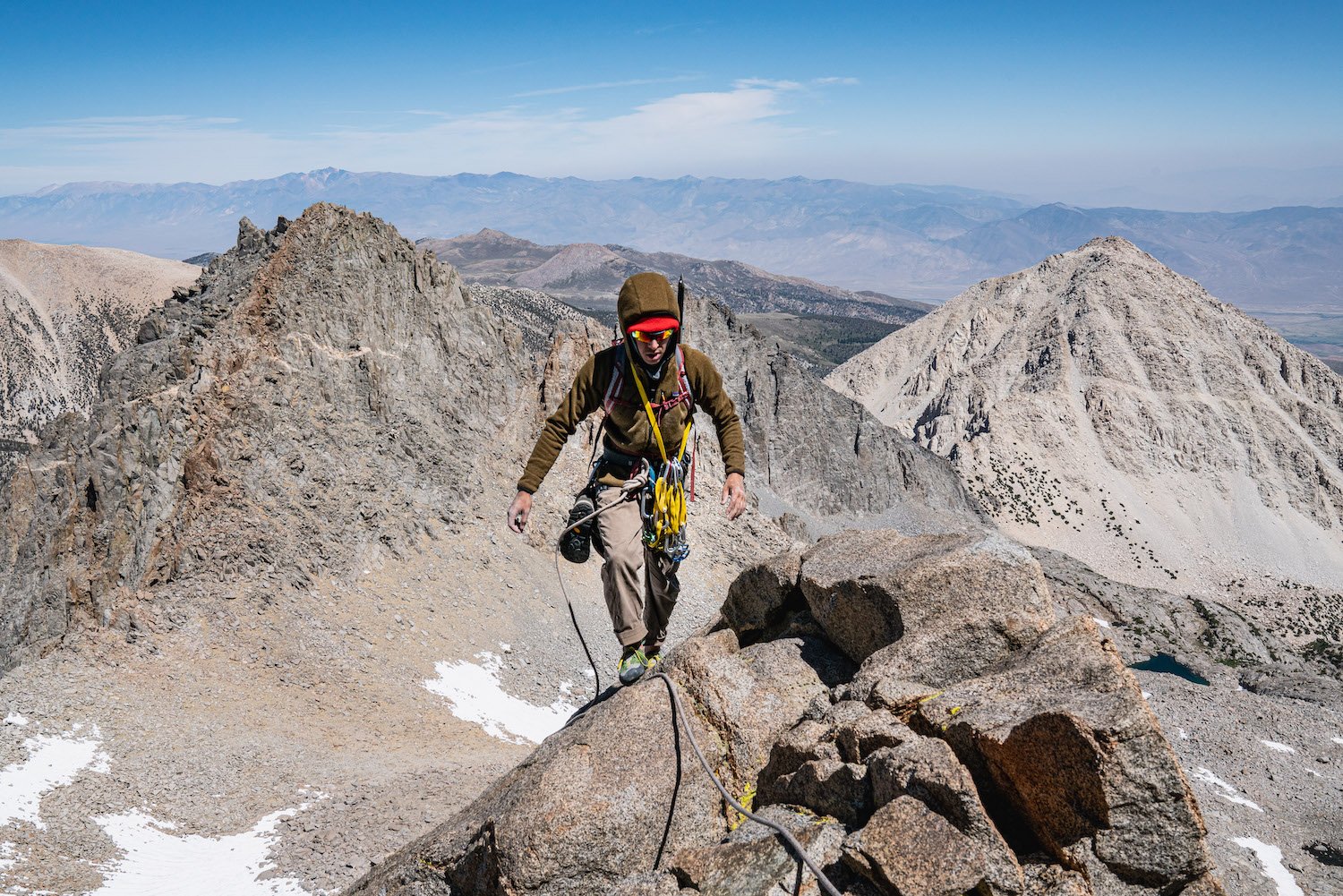
Midroute on Mount Sill in the High Sierra of California. Photo by Dalton Johnson
Importance of Base Fitness for Mountain Adventures
Establishing a base fitness level is crucial for mountain adventures due to the unique challenges posed by mountain environments. These challenges include high altitudes, rugged terrains, and unpredictable weather conditions. By being physically prepared, you not only improve your performance but also significantly reduce the risk of injuries. This preparation ensures that you can fully enjoy your mountain experience without being hindered by physical limitations or health concerns.
A solid base fitness level also allows you to navigate the demands of mountain activities more effectively. Whether you're tackling steep climbs, traversing rocky paths, or enduring long treks, having a strong foundation of fitness enables you to move with greater agility, endurance, and confidence. Additionally, being physically prepared enhances your resilience to external factors such as changes in weather or unexpected challenges, ensuring that you can adapt and thrive in various mountain scenarios.
Five Tips To Build A Fitness Foundation
Tip 1: Gradual Progression
Begin your fitness journey with a focus on gradual progression. Start with activities that align with your current fitness level and gradually increase intensity, duration, and complexity. For example, if you're new to hiking, start with shorter, less strenuous trails before tackling more challenging hikes or embarking on multi-day backpacking trips.
Tip 2: Consistency is Key
Consistency is the cornerstone of fitness progress. Set a regular exercise schedule that includes a mix of cardiovascular workouts, strength training, flexibility exercises, and rest days. Consistent training not only builds endurance and strength but also establishes healthy habits that support long-term fitness goals.
Tip 3: Comprehensive Training Approach
A well-rounded training approach is essential for mountain adventures. Incorporate cardiovascular exercises like hiking, running, cycling, or swimming to improve endurance and aerobic capacity. Strength training, focusing on core strength, lower body muscles, and functional movements, enhances stability, power, and resilience on challenging terrain.
Tip 4: Prioritize Recovery
Recovery is as crucial as training itself. Adequate rest, proper nutrition, hydration, and sleep are essential for muscle repair, recovery, and overall well-being. Incorporate stretching, foam rolling, yoga, and relaxation techniques into your routine to prevent injuries, reduce muscle soreness, and improve flexibility.
Tip 5: Listen to Your Body
Listen to your body's signals and adjust your training accordingly. Pay attention to signs of fatigue, overtraining, or injury, and allow sufficient time for recovery. Balance challenging workouts with lighter days or active recovery activities to prevent burnout and maintain motivation.
Balancing Strength Training and Cardio
A balanced approach to fitness includes both strength training and cardio exercises, each playing a crucial role in preparing for mountain adventures.
Strength Training:
Focus on functional exercises that mimic mountain movements such as squats, lunges, step-ups, and core exercises.
Incorporate resistance training with weights, resistance bands, or bodyweight exercises to build muscular strength, endurance, and stability.
Include exercises targeting specific muscle groups used during mountain activities, such as leg strength for hiking and climbing, core stability for balance, and upper body strength for carrying gear.
Cardiovascular Training:
Engage in aerobic activities like hiking, trail running, cycling, or stair climbing to improve cardiovascular fitness and endurance.
Vary intensity and duration of cardio workouts to simulate different challenges encountered in mountain environments, such as steep ascents, long trails, or high-altitude conditions.
Interval training, combining bursts of high-intensity effort with periods of recovery, enhances aerobic capacity, speed, and stamina.
Prioritizing Recovery for Optimal Performance
Recovery plays a pivotal role in achieving optimal performance and preventing injuries during mountain adventures. In this section, we'll delve deeper into the importance of recovery strategies and how they contribute to your overall fitness journey.
1. Rest and Active Recovery
Quality Sleep: Adequate sleep is essential for muscle repair, hormone balance, and mental well-being. Aim for 7-9 hours of quality sleep each night, prioritizing consistency and establishing a bedtime routine.
Rest Days: Incorporate rest days into your training schedule to allow muscles, joints, and the central nervous system to recover. Use rest days for gentle activities like stretching, light walks, or yoga to promote blood flow and relaxation without added stress.
Active Recovery: Engage in active recovery activities such as foam rolling, stretching, or low-intensity workouts on rest days or after intense training sessions. Active recovery aids in reducing muscle soreness, improving flexibility, and enhancing recovery between workouts.
2. Nutrition and Hydration
Proper Nutrition: Fuel your body with a balanced diet rich in nutrients, lean proteins, complex carbohydrates, healthy fats, and hydration. Prioritize post-workout nutrition with a mix of protein and carbohydrates to support muscle recovery and glycogen replenishment.
Hydration: Stay adequately hydrated before, during, and after workouts to maintain performance, regulate body temperature, and support metabolic functions. Monitor fluid intake based on activity level, climate, and individual hydration needs.
3. Recovery Techniques
Foam Rolling and Massage: Incorporate foam rolling, massage therapy, or self-myofascial release techniques to alleviate muscle tension, improve blood circulation, and enhance recovery. Target areas of tightness or soreness to promote relaxation and mobility.
Stretching and Mobility: Include dynamic stretches, static stretches, and mobility exercises in your warm-up and cool-down routines to improve flexibility, range of motion, and joint health. Focus on areas prone to tightness or stiffness during mountain activities.
4. Mental and Emotional Recovery
Mindfulness and Stress Management: Practice mindfulness, meditation, or relaxation techniques to manage stress, improve mental focus, and promote emotional well-being. Incorporate breathing exercises, visualization, or nature immersion to enhance resilience and mental clarity.
Balance and Enjoyment: Maintain a balanced approach to training, leisure activities, and personal life to prevent burnout and sustain motivation. Find joy and fulfillment in outdoor experiences, connecting with nature, and pursuing activities that rejuvenate your mind and spirit.
Headed to 11,000 Camp on Mount Denali. Photo by Dalton Johnson
Establishing a base fitness level for mountain adventures is a journey that combines dedication, consistency, and smart training strategies. By following the tips outlined in this guide, focusing on gradual progression, consistency, comprehensive training, prioritizing recovery, and balancing strength training with cardio, you'll build a strong foundation for tackling diverse mountain challenges. Remember to listen to your body, respect your limits, and enjoy the transformative journey of fitness and exploration in mountain landscapes.
Discover more Adventures

Trailborn Has Opened The Door For Adventure Travelers To The Best Sleep In Their Favorite Places
Trailborn, a new hospitality brand deeply influenced by the splendor of the great American outdoors, has launched its inaugural property at the eastern gateway of Rocky Mountain National Park in Estes Park, Colorado. This milestone marks the beginning of an innovative venture connecting adventure travelers with breathtaking natural landscapes while championing sustainability and community engagement.
Trailborn, a new hospitality brand deeply influenced by the splendor of the great American outdoors, has launched its inaugural property at the eastern gateway of Rocky Mountain National Park in Estes Park, Colorado. This milestone marks the beginning of an innovative venture connecting adventure travelers with breathtaking natural landscapes while championing sustainability and community engagement.

The Trailborn Rocky Mountains campus boasts 86 thoughtfully designed hotel rooms sprawled across two distinct properties: Trailborn Rocky Mountains and Trailborn Rocky Mountains Outpost, set to unveil its 46 additional rooms early this spring. The facilities include a restaurant, bar, and café, two retail markets, and expansive outdoor spaces featuring seasonal pools, patios, porches, and communal fire pits, all offering mesmerizing views of the surrounding Rocky Mountains. Looking ahead, Trailborn plans to expand its footprint with new properties slated for opening in iconic destinations such as the Grand Canyon, Highlands in North Carolina, Wrightsville Beach in North Carolina, and Mendocino in California.
Founders Mike Weiss and Ben Weinberg, seasoned entrepreneurs with extensive experience in real estate and hospitality, envisioned Trailborn as a transformative force in the travel industry. Their aim is to curate unparalleled experiences for today's adventure seekers, positioning each Trailborn hotel at the nexus of America's most awe-inspiring outdoor wonders, from national parks to coastal retreats and alpine getaways.
One of Trailborn's distinctive features is its commitment to environmental stewardship and community support. Through initiatives like "Keep Extraordinary," the brand allocates a portion of every reservation towards local land conservation efforts, safeguarding the natural beauty that surrounds its properties. Moreover, Trailborn prioritizes sustainability at every stage, employing eco-conscious construction practices, implementing green building standards, and integrating amenities that minimize waste, such as reusable water bottles and on-site water refill stations. The brand also emphasizes renewable energy sources to power its properties, further reducing its carbon footprint.
As Trailborn continues to expand, its dedication to preserving and enhancing the world's most extraordinary outdoor destinations remains unwavering. Guests are not just patrons but active participants in a movement to safeguard and celebrate nature's marvels, making Trailborn a beacon for adventure enthusiasts seeking immersive and sustainable travel experiences.
Discover More Destinations

Here's How to See The Northern Lights At Their Maximal Before They Are Booked Up
The captivating dance of the Northern Lights, or Aurora Borealis, is a celestial spectacle that leaves onlookers in awe. This year, the Northern Lights are reaching their maximal brilliance, presenting a golden opportunity for enthusiasts and adventurers alike to witness this natural wonder. But with popularity soaring, securing a spot to see them can be challenging. Here's a guide on how to catch the Northern Lights before they're booked up.
Updated: Sept. 16, 2024
The captivating dance of the Northern Lights, or Aurora Borealis, is a celestial spectacle that leaves viewers in awe. This year, the Northern Lights are reaching their maximal brilliance, presenting a golden opportunity for sky enthusiasts and adventure travelers alike to witness this natural wonder. But with popularity soaring, securing a spot to see them can be challenging. Here's a guide on how to catch the Northern Lights before they're booked up.
Northern Lights over the iconic Beluga ship in Churchill, Manitoba. Photo by Dalton Johnson
PROS:
Breathtaking Natural Phenomenon: The Northern Lights, with their vibrant colors and dynamic movements, offer a mesmerizing and unforgettable experience in nature.
Bucket List Moment: Witnessing the auroras is often a bucket list item for many travelers, providing a sense of accomplishment and fulfillment.
Cultural Immersion: Many destinations known for the Northern Lights, such as Iceland and Norway, offer rich cultural experiences alongside aurora viewing, adding depth to your trip.
Scientific Interest: For science enthusiasts, seeing the Northern Lights presents a chance to witness and learn about the interaction between solar particles and Earth's atmosphere.
CONS:
Weather Dependency: Viewing the auroras is highly dependent on clear skies and favorable weather conditions, making it unpredictable at times.
Timing Challenges: The Northern Lights are most visible during specific seasons and times of the day, between 10 pm and 2 am, requiring careful planning and flexibility in travel schedules.
Crowds and Tourism: Popular Northern Lights destinations can attract large crowds during peak viewing times, detracting from the serene experience some travelers seek.
Cost Considerations: Traveling to Northern Lights hotspots, especially remote locations, can be expensive due to accommodation, tours, and transportation costs.
Environmental Impact: Increased tourism for aurora viewing can have environmental impacts on fragile ecosystems and local communities if not managed sustainably.
What is A Northern Light Maximal?
The maximal of the Northern Lights in 2025 holds significant importance for both enthusiasts and researchers alike. For enthusiasts, such as travelers, photographers, and nature lovers, this event marks a rare opportunity to witness the auroras at their most vibrant and frequent display. The Northern Lights, driven by solar activity, go through cycles of intensity, with some years showcasing more spectacular shows than others. The maximal of 2025 indicates a peak in solar activity, leading to increased chances of seeing the auroras in regions where they are not typically visible or with enhanced brightness and colors. This heightened activity adds a sense of urgency and excitement for those planning to experience this natural marvel, making it a must-see event for anyone fascinated by the beauty of the night sky.
Moreover, the maximal of the Northern Lights in 2025 also matters from a scientific perspective. Researchers and scientists study solar cycles and their effects on Earth's atmosphere, including phenomena like the auroras. A maximal period provides a concentrated timeframe for observing and analyzing these celestial events, gathering valuable data to deepen our understanding of space weather and its impact on our planet. This research contributes to fields such as space exploration, climate studies, and geomagnetic research, fostering advancements in technology and knowledge that benefit society as a whole. Thus, the maximal of 2025 not only offers a dazzling visual spectacle but also serves as a window of opportunity for scientific inquiry and discovery.
Churchill, Manitoba: A Prime Spot for Aurora Viewing
One of the most renowned locations for Northern Lights sightings is Churchill, Manitoba. This remote Canadian town offers an unparalleled front-row seat to the auroras, making it a hotspot for travelers seeking the ultimate experience. Companies like Natural Habitat Adventures and Frontiers North Adventures specialize in crafting unforgettable journeys to witness this cosmic ballet.
Natural Habitat Adventures: Partnered with the World Wildlife Foundation, they offer responsible and adventure-filled trips. Explore four aurora-viewing locations away from town lights, including heated Aurora Domes and a custom-built Aurora Pod®, ensuring an immersive and comfortable experience in the subarctic wilderness.
Frontiers North Adventures: With over 30 years of experience, this family-owned business prioritizes authentic and intimate adventures. Their Tundra Buggy expeditions provide unique opportunities to witness the Northern Lights amidst Canada's pristine landscapes.
Iceland: A Land of Enchanting Aurora Experiences
Iceland, with its dramatic landscapes and vibrant culture, is another top destination for Northern Lights enthusiasts. Unforgettable Travel and Lindblad Expeditions-National Geographic curate exceptional experiences to capture the magic of the auroras.
Unforgettable Travel: Embark on a private five-night tour exploring Iceland's wonders, from geothermal marvels to the Golden Circle Route. Their bespoke itineraries ensure a thrilling chase for the Northern Lights, promising an unforgettable winter adventure.
Lindblad Expeditions-National Geographic: Offering a 12-day journey across Iceland and Eastern Greenland, this expedition is a dream for nature and photography enthusiasts. Witness the Northern Lights from luxurious geodesic glass igloos aboard the National Geographic Endurance or National Geographic Resolution, complemented by expert guidance from National Geographic Photography Experts.
Norway: The Land Of The Vikings
Norway's Viking heritage and stunning landscapes make it a premier destination for Northern Lights seekers. Sailing with Havila Voyages offers a unique and guaranteed Northern Lights promise:
Havila Voyages' Northern Lights Promise: From October to March, embark on the Bergen-Kirkenes-Bergen round trip with Havila Voyages. They guarantee Northern Lights sightings during this period. If you don't see the auroras, you'll receive a free voyage, including meals and accommodations. Sail in spacious cabins designed for comfort and relaxation, surrounded by the Nordic landscape.
Tips for Photographing the Northern Lights
Capturing the Northern Lights on camera adds another layer of enchantment to the experience. Here are some essential tips for photographing this celestial phenomenon:
Use a tripod: Keep your camera steady for long exposures, capturing the intricate movements of the auroras.
Choose a wide-angle lens: Capture the expansive sky and the auroras' grandeur in your shots.
Adjust settings: Experiment with exposure times, ISO, and aperture settings to find the perfect balance for vibrant and detailed photos.
Stay patient: The Northern Lights can be unpredictable, so patience is key. Be prepared to wait for the perfect moment to capture the auroras at their most brilliant.

The Northern Lights dancing over the teepee in Churchill, Manitoba. Photo by Dalton Johnson
As the Northern Lights reach their peak this year, don't miss the chance to witness this breathtaking spectacle. Whether you choose Churchill, Manitoba, or embark on an Icelandic adventure, these tips and curated experiences ensure an unforgettable journey under the dancing lights of the auroras.
Discover More Destinations
Why Monument Valley Should Be Your Next American Southwest Road Trip Stop
Monument Valley. The very name conjures images of John Wayne striding across a dusty plain, dwarfed by the colossal red rock formations that pierce the endless blue sky. This iconic landscape, straddling the Arizona-Utah border, is far more than just a movie set. It's a place steeped in history, culture, and raw, untamed beauty that beckons travelers seeking an unforgettable American Southwest adventure.
Monument Valley. The very name conjures images of John Wayne striding across a dusty plain, dwarfed by the colossal red rock formations that pierce the endless blue sky. This iconic landscape, straddling the Arizona-Utah border, is far more than just a movie set. It's a place steeped in history, culture, and raw, untamed beauty that beckons travelers seeking an unforgettable American Southwest adventure.
The Three Sisters of Monument Valley. Photo by Dalton Johnson
PROS:
Stunning Scenery: Monument Valley boasts otherworldly landscapes with towering red rock formations that create a truly awe-inspiring experience.
Cultural Significance: Learn about the Navajo Nation's history and traditions, gaining a deeper appreciation for the land and its people.
Prime Stargazing: Witness a magnificent night sky with minimal light pollution.
Road Trip Friendly: Monument Valley is a popular stop on many American Southwest road trips.
Unique Experience: Monument Valley offers a landscape unlike anywhere else on Earth.
CONS:
Remote Location: Monument Valley is located in a remote area, requiring a dedicated trip or inclusion on a longer Southwest adventure.
Limited Amenities: Lodging and dining options are limited within the Monument Valley Tribal Park.
Crowds: Monument Valley can get crowded, especially during peak season.
Cost: Guided tours and park entrance fees can add up.
Limited Accessibility: Some areas of the valley are only accessible by Jeep tours, which may not be suitable for everyone.
Short Stay Potential: Unless you're planning other activities in the area, Monument Valley itself may not warrant a long stay.
A Landscape Sculpted by Time
Over millions of years, wind and water have sculpted the Navajo Nation sandstone into a fantastical realm of towering buttes, mesas, and pinnacles. The iconic Mittens, Merrick Butte, and John Ford's Point stand sentinel, their fiery red hues shifting dramatically with the ever-changing light. As you drive the scenic 17-mile Monument Valley Loop, the vastness of the desert unfolds before you, punctuated by these geological giants.
Beyond the Scenery: A Cultural Tapestry
Monument Valley is not just a natural wonder; it's a sacred land for the Navajo Nation. Their ancestral stories and traditions are woven into the very fabric of this place. Guided tours led by Navajo guides offer a deeper understanding of the cultural significance of the land. You'll learn about Navajo history, their reverence for nature, and how they have adapted and thrived in this unforgiving environment. These insights add a layer of richness to your experience, transforming Monument Valley from a scenic vista to a living, breathing cultural landscape.
Activities for Every Explorer
Monument Valley offers a variety of experiences for visitors of all interests.
Drive the Monument Valley Loop: This scenic, self-guided tour allows you to explore the heart of the valley at your own pace. Pull over at designated viewpoints to capture breathtaking photos of the iconic formations.
Embark on a Jeep Tour: Delve deeper into the valley with a guided Jeep tour. Navajo guides will take you off the beaten path, navigating sandy washes and leading you to hidden gems like the Ear of the Wind and Mystery Valley. These tours offer exceptional photographic opportunities and a chance to see the valley from a different perspective.
Hike the Wildcat Trail: Lace up your boots and explore the valley on foot. The Wildcat Trail is a moderate 3.1-mile loop that takes you around the base of Merrick Butte, offering stunning views of the surrounding landscape.
Stargazing: Light pollution is minimal in Monument Valley, making it a prime location for stargazing. On a clear night, witness a dazzling display of stars blanketing the velvety black sky.
Visit the Monument Valley Visitor Center: Learn more about the history, geology, and culture of Monument Valley at the visitor center. Here, you can find exhibits, purchase Navajo crafts, and get helpful information for planning your visit.
Capturing the Perfect Monument Valley Photo
Monument Valley is a photographer's paradise. Here are some tips to capture stunning photos:
Golden Hour Magic: The best time to photograph the buttes is during sunrise and sunset when the low angle of the sun bathes the rock formations in a warm, golden light.
Play with Perspective: Don't be afraid to experiment with different angles and viewpoints. Get creative! Try incorporating foreground elements like wildflowers or desert shrubs to add depth to your composition.
Use a Tripod: A tripod will help you achieve sharp photos, especially during low-light conditions.
Focus on Details: Zoom in to capture the intricate textures and patterns of the sandstone formations.

The left mitten silhouetted at sunrise in Monument Valley. Photo by Dalton Johnson
A visit to Monument Valley is a chance to step back in time, to experience the untamed beauty of the American Southwest, and to connect with the rich cultural heritage of the Navajo Nation. Whether you're a seasoned road tripper, a photography enthusiast, or simply someone seeking an awe-inspiring escape, Monument Valley has something to offer everyone. So, pack your bags, fuel up your car, and get ready to be transported to a landscape that will leave you breathless.
Discover More Destinations

Spot Polar Bears and Volcanoes on This Arctic Cruise
Volcanoes have been grabbing headlines recently, with awe-inspiring eruptions captured on social media and igniting a travel trend for intrepid explorers. But what if you could witness these powerful forces of nature up close, while also searching for the majestic polar bear in its icy habitat? Abercrombie & Kent's Arctic Cruise Adventure: In Search of the Polar Bear offers a dream trip unlike any other, combining adventure travel, wildlife encounters, and the chance to explore a rarely-visited volcanic island.
Volcanoes have been grabbing headlines recently, with awe-inspiring eruptions captured on social media and igniting a travel trend for intrepid explorers. But what if you could witness these powerful forces of nature up close, while also searching for the majestic polar bear in its icy habitat? Abercrombie & Kent's Arctic Cruise Adventure: In Search of the Polar Bear offers a dream trip unlike any other, combining adventure travel, wildlife encounters, and the chance to explore a rarely-visited volcanic island.
This exclusive 13-night expedition takes place aboard a small ship cruise, ensuring a personalized experience with a maximum of 199 guests. Imagine sailing through the breathtaking Arctic, a landscape sculpted by glaciers and bathed in the ethereal glow of the midnight sun. Your journey encompasses the best of Norway, Iceland, and Greenland, with each day offering exciting discoveries.
One of the highlights of the cruise is a shore expedition to Jan Mayen, a remote island dominated by the colossal Beerenberg Volcano, one of the world's northernmost active volcanoes. Towering an impressive 7,500 feet, Beerenberg is a sight to behold. Subject to special permits and weather conditions, guests will have the rare opportunity to disembark on this island and explore its unique environment.
Aboard the ship, A&K's expert naturalists will lead you on guided hikes and Zodiac excursions, providing insightful commentary on the region's geology, wildlife, and history. You might encounter a majestic polar bear roaming the pack ice, or witness a pod of playful orcas breaching in the icy waters. The chance to witness these incredible creatures in their natural habitat is a truly unforgettable experience.
But the adventure doesn't stop there. Your visit to Jan Mayen will include a visit to the island's meteorological station, offering a glimpse into the vital work conducted in this isolated outpost. Nature lovers will be thrilled by the opportunity to observe colonies of seabirds, including the northern fulmar, little auk, thick-billed guillemot, and black guillemot.
To capture these once-in-a-lifetime moments perfectly, Abercrombie & Kent has you covered. A dedicated photography coach will be onboard throughout the voyage, offering expert guidance and ensuring your photos are Instagram-worthy. With their help, you'll learn the best techniques to capture the raw beauty of the Arctic landscape, the dramatic volcanic peaks, and the wildlife encounters.
This exceptional cruise departs on July 29th and concludes on August 12th. With its focus on small-group exploration, expert-led activities, and wildlife encounters, this Arctic adventure is perfectly suited for travelers seeking a grand adventure beyond the ordinary.

Iceland's recent volcanic activity has sparked a surge in interest for this captivating destination. Abercrombie & Kent's Arctic Cruise Adventure offers the perfect opportunity to experience Iceland's dramatic landscapes firsthand, while also venturing further into the Arctic to explore Norway and Greenland. This is a dream trip for nature lovers, photographers, and anyone seeking an unforgettable adventure.
Discover More Destinations

Maintaining Freedom While Traveling with a Partner
Traveling with a partner can be an incredibly enriching experience. You get to share adventures, create lasting memories, and deepen your bond. However, it's essential to balance togetherness with individual freedom to ensure a harmonious and fulfilling journey. In this article, we'll explore how couples can maintain their independence while traveling together, allowing each person to pursue their interests and passions.
Traveling with a partner can be an incredibly enriching experience. You get to share adventures, create lasting memories, and deepen your bond. However, it's essential to balance togetherness with individual freedom to ensure a harmonious and fulfilling journey. In this article, we'll explore how couples can maintain their independence while traveling together, allowing each person to pursue their interests and passions.
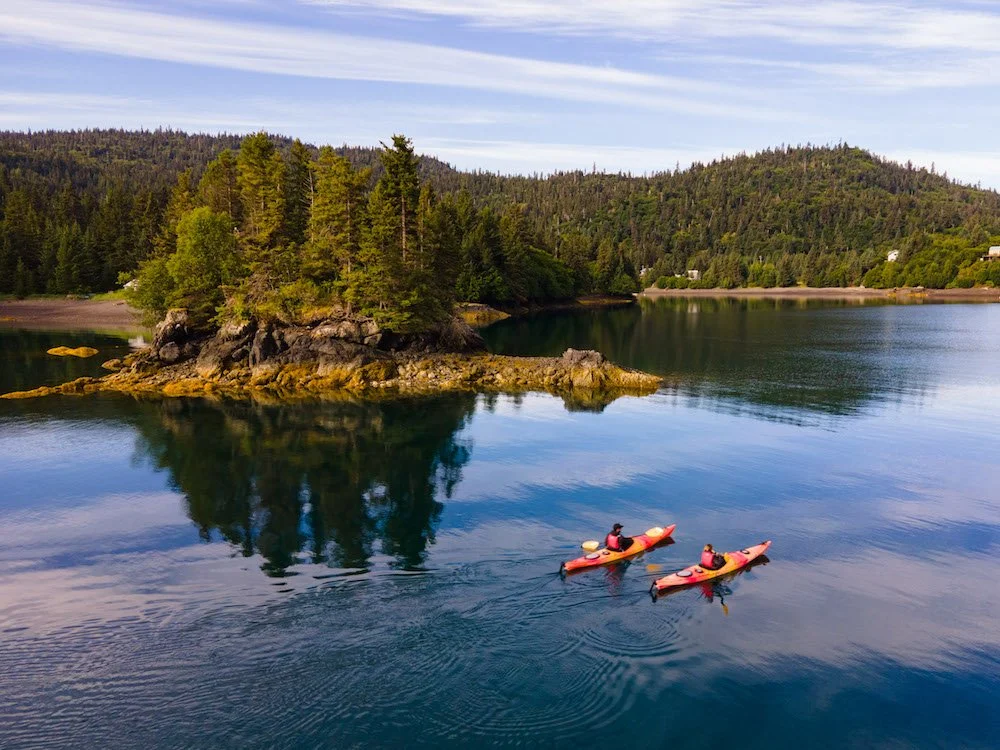
Sharing a kayaking exerience we both dreamed of doing while in Alaska. Photo by Dalton Johnson
Embrace Open Communication
The foundation of successful couple travel lies in open and honest communication. Before embarking on your journey, have a conversation about your travel expectations, interests, and preferences. Discuss how you can support each other's individual pursuits while still enjoying shared experiences. Establishing this understanding from the outset can prevent conflicts and promote a supportive travel dynamic.
Plan Together, Plan Apart
While it's exciting to explore new destinations together, recognize that you don't have to do everything as a pair. Plan activities and excursions that align with both of your interests, but also allow for solo adventures. For example, if one of you wants to hike a scenic trail while the other prefers a leisurely day at a local market, schedule time apart to indulge in these experiences independently.
Prioritize Personal Time
In the midst of immersive travel experiences, it's crucial to prioritize personal time. Allocate moments in your itinerary where each of you can pursue individual interests or simply relax alone. This could mean taking a morning stroll, reading a book in a quiet café, or exploring a museum solo. Allowing for these moments of solitude rejuvenates the mind and enhances appreciation for shared experiences.
Respect Each Other's Boundaries
Respecting each other's boundaries is essential for maintaining harmony during travel. If one person needs space or time alone, honor their request without taking it personally. Similarly, communicate your own boundaries openly and respectfully. This mutual respect fosters a supportive environment where both partners feel valued and understood.
Embrace Flexibility
Travel plans don't always unfold as expected, and that's part of the adventure. Embrace flexibility in your itinerary, allowing room for spontaneous detours or changes based on individual interests. If one of you discovers a hidden gem or unexpected activity, be open to adjusting plans to accommodate new experiences. Flexibility adds an element of excitement and discovery to your journey.
Foster Shared Experiences
While independence is vital, don't overlook the importance of shared experiences. Engage in activities that you both enjoy, whether it's trying local cuisine, embarking on a scenic drive, or attending cultural events. These shared moments create cherished memories and strengthen your bond as a couple.
Utilize Technology Wisely
In today's digital age, technology can be a valuable ally for maintaining independence while traveling together. Use travel apps to explore different activities and attractions based on individual interests. Stay connected with communication tools to coordinate meet-up times or share exciting discoveries. Technology enhances your travel experience without compromising personal freedom.
Practice Compromise
Compromise is a cornerstone of successful couple travel. Be willing to find middle ground and make concessions to ensure both partners feel fulfilled. If conflicting interests arise, seek solutions that accommodate each other's desires. For instance, alternate between activities or explore a hybrid option that combines elements of both preferences.
Celebrate Differences
Embrace the diversity of your interests and celebrate the differences that make your relationship unique. Use travel as an opportunity to learn from each other, discover new passions, and broaden your perspectives. Embracing each other's individuality enriches your travel experience and strengthens your connection as a couple.
Reflect and Reconnect
Throughout your journey, take time to reflect on your experiences and reconnect as a couple. Share stories, insights, and moments of joy from your independent adventures. Use these conversations to deepen your understanding of each other's perspectives and strengthen your bond through shared reflections.
Going for a boat ride on Lake Nicaragua. Photo by Dalton Johnson
Maintaining freedom while traveling with a partner is achievable through open communication, mutual respect, and a balance of shared experiences and personal pursuits. By embracing independence alongside togetherness, young couples can cultivate a fulfilling and harmonious travel experience that enriches their relationship and creates lasting memories.
Discover more Adventures

Stargazing in Arches National Park
Stargazing in Arches National Park is a captivating experience that transports visitors into a realm of cosmic beauty. As daylight gradually fades, the sky transforms into a canvas adorned with countless stars, offering a glimpse into the vastness of the universe. This article explores the allure of stargazing in Arches National Park, highlighting the best locations and tips for an unforgettable celestial adventure.
Stargazing in Arches National Park is a captivating experience that transports visitors into a realm of cosmic beauty. As daylight gradually fades, the sky transforms into a canvas adorned with countless stars, offering a glimpse into the vastness of the universe. This article explores the allure of stargazing in Arches National Park, highlighting the best locations and tips for an unforgettable celestial adventure.
Taking in the night sky of Arches National Park. Photo by Dalton Johnson
PROS:
Minimal Light Pollution: Arches National Park boasts low levels of light pollution, providing excellent visibility of celestial objects and enhancing the stargazing experience.
Clear Desert Skies: The park's location in the desert ensures clear skies on many nights, ideal for observing stars, planets, and other astronomical phenomena.
Natural Landmarks as Backdrops: Iconic rock formations like Delicate Arch and Balanced Rock serve as stunning backdrops for stargazing, adding a unique and picturesque element to the experience.
Ranger-Led Programs: The park offers ranger-led stargazing programs, providing guided tours of the night sky and educational insights into astronomy for visitors.
Variety of Viewing Locations: From elevated viewpoints like Panorama Point to natural "windows" such as the Windows Section, Arches National Park offers diverse locations for stargazing, catering to different preferences and interests.
CONS:
Weather Variability: Like any outdoor activity, stargazing in Arches National Park is subject to weather conditions. Cloud cover or storms can obstruct visibility and limit stargazing opportunities.
Crowded During Peak Seasons: The park can become crowded during peak tourist seasons, potentially impacting the tranquility and serenity desired for stargazing.
Limited Amenities at Night: Facilities and amenities within the park may be limited or closed during nighttime hours, requiring visitors to come prepared with essentials such as water, snacks, and appropriate clothing.
Remote Location: Arches National Park's remote location means limited access to nearby services or accommodations, necessitating careful planning for overnight stays or extended stargazing sessions.
Wildlife Encounters: While encountering wildlife can be a positive aspect of visiting the park, it's important to be aware of potential encounters during nighttime activities, such as avoiding disturbing nocturnal animals or insects.
The Magic of Arches National Park at Night
Arches National Park, located in southeastern Utah, is renowned for its striking rock formations, including over 2,000 natural sandstone arches. However, as night falls, a different kind of spectacle unfolds overhead. The park's remote location and minimal light pollution create optimal conditions for stargazing, attracting astronomers, photographers, and nature enthusiasts seeking to marvel at the night sky's wonders.
Ranger-Led Stargazing Programs
For an enriching stargazing experience, consider participating in ranger-led programs offered within the park. These programs often include guided tours of the night sky, educational presentations on astronomy, and telescope observations of celestial objects. Rangers share their knowledge of the stars, planets, and constellations, enhancing your understanding of the cosmos and adding depth to your stargazing adventure.
Prime Stargazing Locations in Arches National Park
While stargazing can be enjoyed from various points within the park, four locations stand out for their exceptional celestial views:
Delicate Arch Viewpoint
The Delicate Arch Viewpoint not only offers a stunning perspective of the iconic Delicate Arch during the day but also serves as an extraordinary stargazing location at night. As darkness envelops the landscape, the arch becomes a natural frame for the starry sky, creating a picturesque setting for celestial photography and contemplation.
Panorama Point
Situated at an elevated vantage point, Panorama Point provides sweeping views of the surrounding terrain by day and transforms into an ideal stargazing spot after sunset. From this elevated position, visitors can gaze upon the horizon and immerse themselves in the expansive night sky, witnessing the dance of stars, planets, and passing satellites.
Balanced Rock Overlook
The Balanced Rock Overlook offers a unique stargazing experience amidst the park's iconic geological formations. The towering Balanced Rock, precariously perched atop its pedestal, provides an intriguing foreground for observing the celestial wonders above. As night descends, the rock's silhouette against the starry sky creates a captivating contrast, making this overlook a favorite among night sky photographers and stargazing enthusiasts.
Windows Section
The Windows Section of Arches National Park features several large arches, including the North Window and South Window, which frame the night sky in a breathtaking manner. These natural stone windows act as frames for the stars, planets, and constellations, enhancing the stargazing experience with a sense of wonder and awe. Visitors can set up their telescopes or simply lie back and enjoy the spectacle of the universe through these natural "windows" to the sky.
Tips for Stargazing Success
To make the most of your stargazing excursion in Arches National Park, consider the following tips:
Red Flashlight: Use a red flashlight to preserve your night vision while navigating the park's trails and observation areas. Red light is less disruptive to your eyes and allows you to see clearly without affecting other stargazers' experiences.
Weather Awareness: Check weather conditions and astronomical forecasts before your visit. Clear skies are essential for optimal stargazing, so plan your trip on nights with minimal cloud cover and good visibility.
Camera Equipment: Bring a camera with manual settings or a smartphone with a night photography mode to capture the brilliance of the night sky. Experiment with long exposures to capture star trails and celestial phenomena.
Patience and Quietude: Embrace the tranquility of the night and allow yourself to become fully immersed in the stargazing experience. Minimize noise and distractions to appreciate the cosmic spectacle unfolding above.
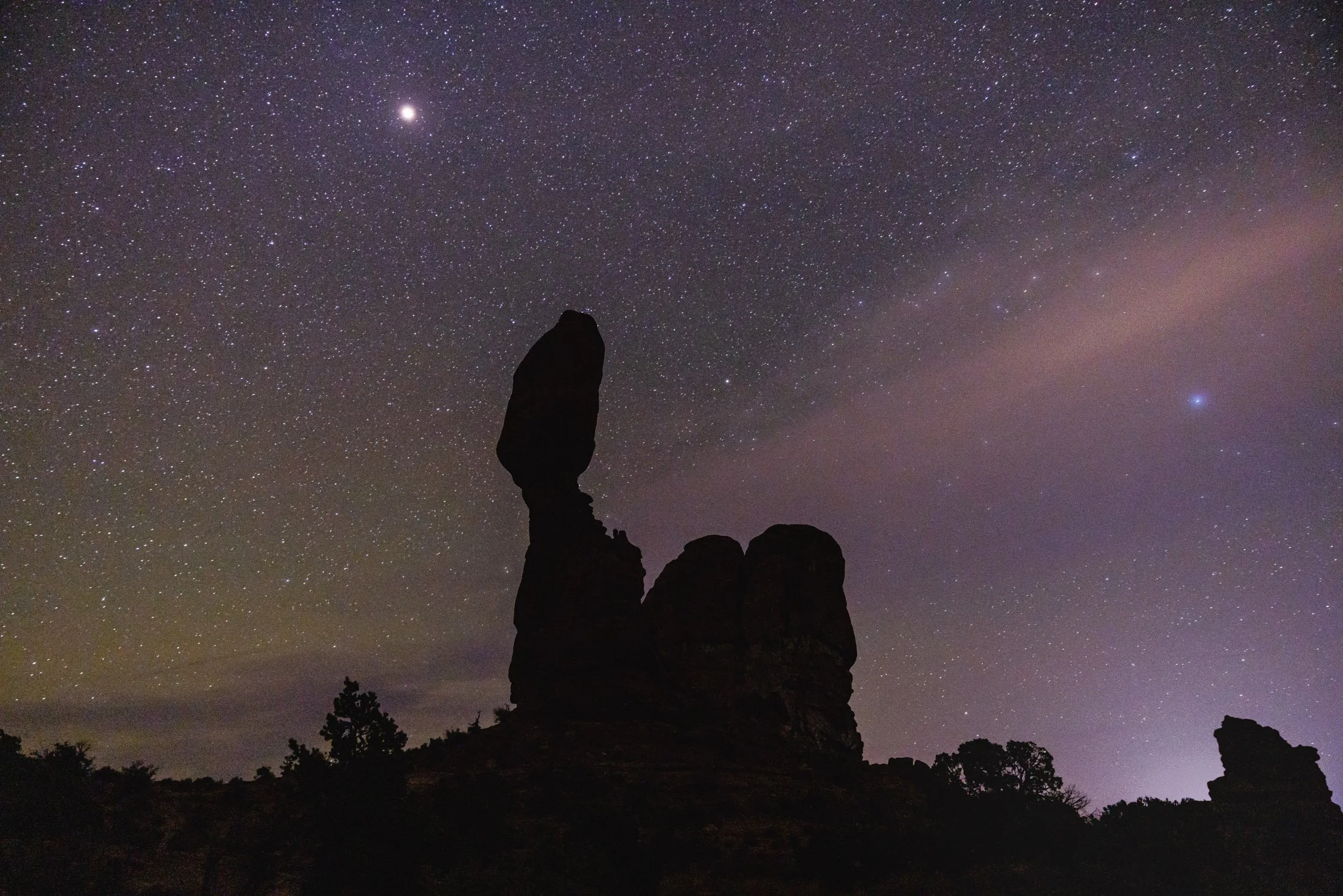
Stargazing at Balanced Rock in Arches National Park. Photo by Dalton Johnson
Stargazing in Arches National Park offers a magical journey into the depths of the universe, where ancient starlight illuminates the desert landscape. Whether you're a seasoned astronomer or a curious adventurer, the park's celestial wonders are sure to inspire awe and wonder. Join a ranger-led stargazing program, find a secluded spot with unobstructed views, and let the starry spectacle of Arches National Park ignite your imagination and sense of wonder.