7 Lessons I Learned While Creating My Newest Adventure Documentary; 14ERS
There was no intention of making this documentary, but as the summits ticked and I kept pressing record, a story unfolded. I guess that is the luck of the draw when you put yourself in the right position. If you are here as a fellow peak bagger, I hope you enjoy the film. If you are here as a filmmaker, I hope these lessons help you along your journey.
1) Filming a documentary as a crew of two was dumb.
While the end result of 14ERS is something I can be proud of creating, the origin story of the project started with a simple question:
"Can we summit all of these peaks in the time window we have?"
There was no goal of making a documentary, but I did have my camera, so why not film the process, right?
At least that is what I thought.
Turns out, filming yourself is freak'n hard and WAY more work! Also, the downside of not being able to move the camera makes creativity a bit harder. What do I mean? Since we were filming ourselves, the camera movements are very simple/created in post.
Most of the movement shots are done via POV. Making this film have very natural feel. However, the mix of VFX and graphics really bring the overall quality of the film from a basic vlog to a film.
A few tips for filming yourself:
b-roll is key, so set up time lapses, talk to the camera, and film your surrounding area
have a good tripod
be willing to attach the camera to things for POV / fixed shots in weird places like a water bottle, hiking pole, etc.

Follow Dalton on your favorite platform: @storiesbydalton
2) Making a documentary takes about 2 to 3 years... with all the resources at hand, maybe 18 months. If you are about to embark on this journey, here's what I wish I knew at the time investment.
I just released my second documentary and I've started to notice a pattern for the creation timeline, so here's a rough timeline streamlined:
3-6. months planning, researching, getting permits, aligning people
6-12 months finding investors/sponsors (optional and done at same time as planning)
2 months to film (just fyi you might need to wait a few seasons to film, slowing the process)
1-3 months to outline footage and create first draft
3 months for edit and revisions
1 month sound and VFX
2 weeks exporting and creating marketing materials
2-3 months promotion (assuming you are not doing a film tour/film festival circuit)
1 day release
If all of this is perfectly aligned, you might be able to finish in 18 months. Expect for this to take longer is you are solo editing and make sure to leave time away from the project so you can look at it with fresh eyes.

Follow Dalton on your favorite platform: @storiesbydalton
3) These were the 5 most challenging parts of making my most recent documentary:
filming is the fun part, but sitting down to create the story arc takes time and collaboration
the process is slow and revisions take a while to get them right
publishing is much harder than another round of edits
finding sponsors vs investing your own money
promoting the film can make or break the investment (especially if this is a personal project)

Follow Dalton on your favorite platform: @storiesbydalton
4) Reaching the metaphorical (and physical) summit isn't really worth the hype.
I've chased summits for nearly 10 years and have more than 100 under my belt, but I don't remember most of them. Hell, if it wasn't for photos I don't even know if I would remember standing on the summit of the peak. So, thankfully I have photos, right?!
So, what is climbing a mountain about?
That's personal, but here are a few principles that apply to physical and metaphorical mountains you can climb:
1) CURIOSITY - can you start that business and make it profitable? can you push through the burning in your thighs? can you snap a photograph that will tell a story?
2) VISION - you have an idea and don't want to stop until you see it for yourself. This goes beyond curiosity because you already have the belief you can do it, it's just about following through
3) EDUCATION - if anyone told you climbing a mountain was pointless, they are not wrong, but you can still learn from pointless things. The mountains have taught me far more about who I am and what I can do than any classroom I have been in. It's the school of hard knocks, but dang the mountain is a great teacher.
These three words (I call principles, but maybe I am using that word wrong... yes I did look up the definition) are the truth as to why you should embark on a journey to a summit you choose.
Instead of letting others tell you to climb this mountain or that mountain. Pick your own and go climb it.
Wow... I didn't expect that ending lol

Follow Dalton on your favorite platform: @storiesbydalton
5) Distribution is key for funding a project
The longer I am in this industry the more I loath the question, “so, where is this filming going to end up?” Since I am not an established filmmaker with a track record of winning emmy’s the answer is, “I don’t know.”
However, the get investors interested in a film, they want to know what the ROI is going to be. So, building out a stream of distribution channels can be huge. This doesn’t have to be OutsideTV, Netflix, etc. Distribution can come in all shapes and sizes.
Here are a few of the places I look to distribute:
film festivals (duh)
podcasts
short form social (this gets views and leads to longer video)
blogs and newsletters
specialty websites
Together, these can scrap up at least a million or more views if deployed correctly.

Follow Dalton on your favorite platform: @storiesbydalton
6) There were so many doubts in my mind the entire project length.
At first, I didn't even know if we would be able to summit every peak, let alone film it, then turn the clips into something worth watching.
I was filled with internal doubt the entire time:
Was I wasting my own money?
Was this project going to be fun if I filmed the entire time?
Did I have the knowledge base to even make this dream come to life?
All of these internal questions battled inside of me for almost two years, but last week, I released the full documentary.
You can watch it here if you want: https://youtu.be/P8VzC7_85MI?si=P773MNdvbKXMes86
Turns out, I can do it.
Turns out, I have the knowledge.
Turns out, that risk was worth while.
Now, for the next steps of the process:
1) submitting to film festivals (kinda doing it backwards, but that's okay with me)
2) landing/submitting to streaming platforms
3) learning how to marketing a film once it is published
For now, I'm just taking one step at a time, but, I am excited to see where this goes in the end.

Follow Dalton on your favorite platform: @storiesbydalton
7) Finding the joy in the smallest of moments, that might be the greatest take away from this project.
I used to think the only thing that mattered were the incredible shots that took somebodies breath away. However, throughout the course of this project, my mindset around this shifted.
Instead of focusing on perfect light, I focused on what actually mattered, the journey.
Yes, you still need those banger shots to tell the story, but without:
the flowers on the side of the trail
the trailhead signs
the silence and stillness not often found on the trail
the grand views during "poor light" you see while summit 14ers
the story would have fallen flat.
Instead, I leaned into the journey, the process, the experience one gets while on a mountain.
That made this project feel very human, elevated the project, and made it into the documentary it has become today.
About Dalton:

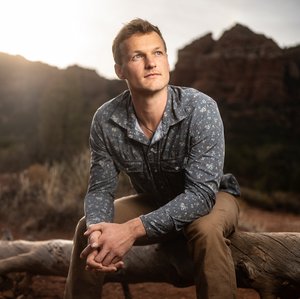
Dalton Johnson is a photographer, filmmaker, and writer.
Over the last 10 years, Dalton’s creative work has taken him to every continent, above the arctic circle, and below the antarctic circle.
His travels are documented in a free, weekly newsletter called UnBound, which is written for those daring to build their dream life.