
Inside a Real Adventure Photography Production
People love the idea of getting paid to go on adventures, but almost nobody talks about what happens before the camera comes out. There's an entire production process behind every adventure photography project, and understanding it is the difference between someone with a cool Instagram and someone running an actual business.
Here's what that process looks like from the inside.
Quick Note: If you find this article helpful, the idea come from The Adventure Photographer's Playbookand it costs $10. Why so cheap? The goal is to help as many new to mid level photographers as possible go from nothing to getting booked in 18 months. If that is you, check it out.
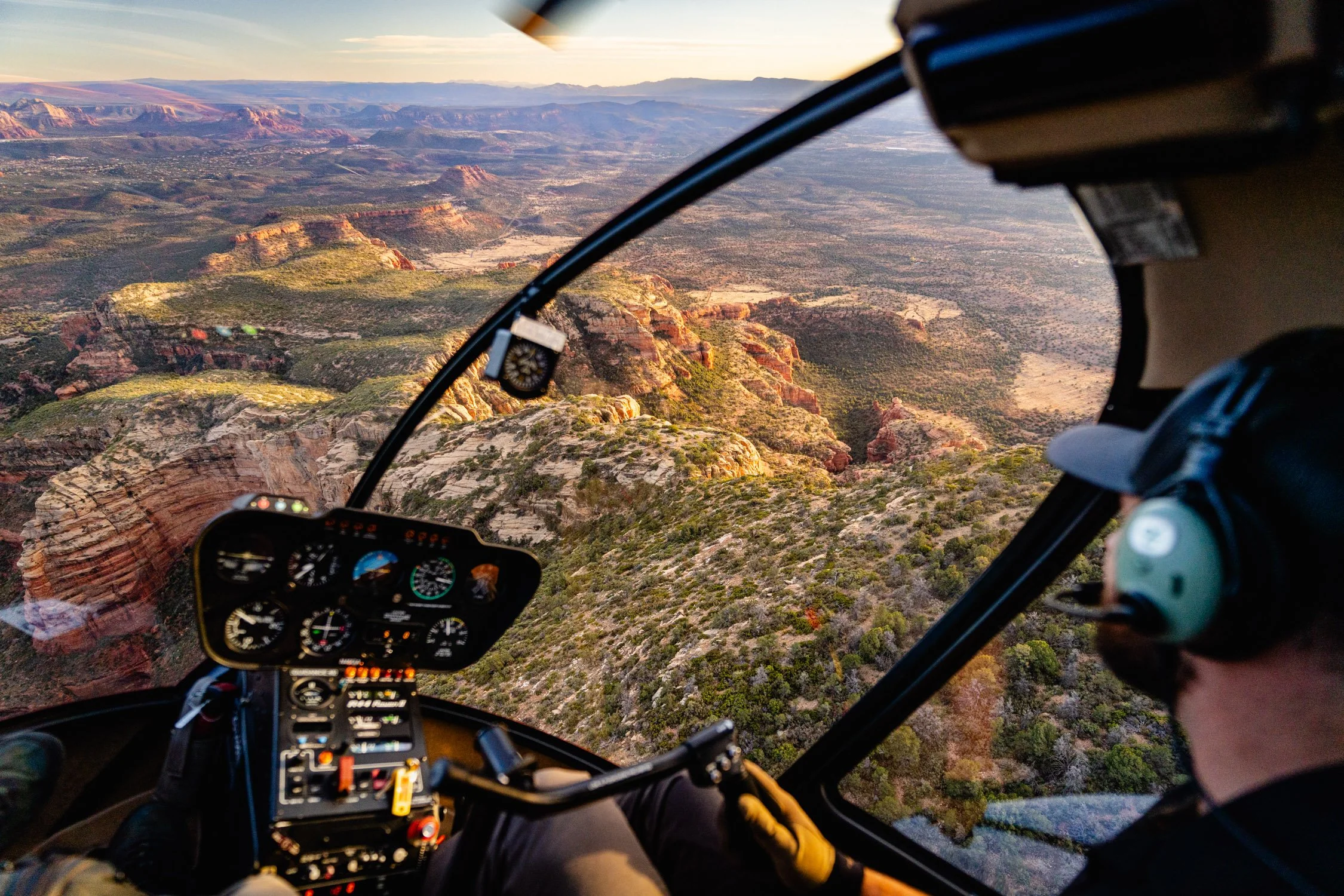
All projects have a way to be funded, if you are can get creative. To get this helicopter ride over Sedona, AZ we wrote a review about them in exchange for the ride to keep the costs down. Meanwhile, the project was about visiting Sedona in the winter for the tourism board and a few brands.
It Starts With an Idea, Not a Budget
Every project starts the same way. Someone has an idea that sounds cool, sounds fun, and feels worth pursuing. At this stage there's no funding, no team, nothing locked in. Just a concept.
This is the part nobody pays for, and it's also the part that determines everything else. A weak idea is hard to fund no matter how good your pitch is later.
Defining the Deliverable
Before you go looking for funding, you need to know what you're actually creating. A film? A book? A series of articles? A photo collection? This decision changes everything downstream, from gear needs to time on location to how you eventually pitch sponsors, because brands fund deliverables, not vague adventures.
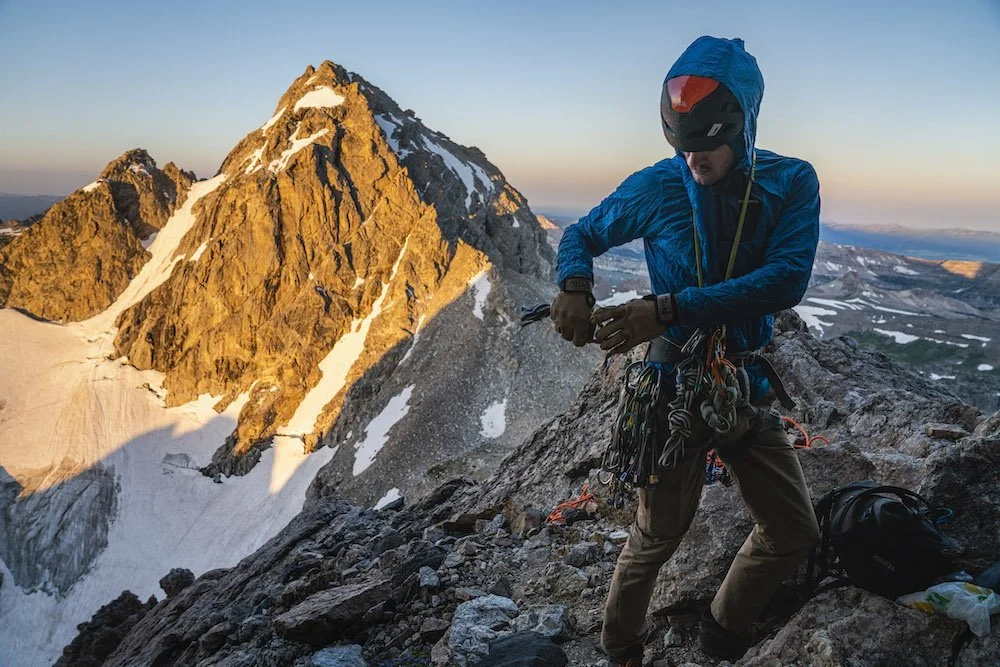
Not every project requires a massive budget, so look into the costs and figure out how much you need to make to be profitable. It could be the price of a couple of images or it could be thousands. Map your costs and start pitching ideas.
Mapping Every Cost
Once funding is in motion, the real production work begins: breaking down every cost category individually. Adventure costs. Pre-production costs. Talent costs. Post-production costs. Each of these breaks down further into its own set of line items, and getting this wrong is one of the easiest ways to lose money on a project before you've even started shooting.
This part is detailed enough that it deserves its own breakdown, but the short version is: if you're not mapping costs this granularly, you're guessing, and guessing with a sponsor's budget is a fast way to not get hired again.
Building the Team
Once the idea exists, the next step is figuring out who needs to be involved. Depending on the scope, that could mean an athlete, a producer, additional camera operators, or support crew. The team shapes what's possible, and what's possible shapes the pitch you're about to build.
Here’s What Lives In My Gear Bag:
Sony a7r4; my work horse
Sony a7s3; mostly for video work like solo-filmmaking documentary
Tamron 16-30; probably my favorite lens right now
Tamron 28-75; I think this is the best all around focal length
Tamron 70-180; I don’t use this a ton, but it’s a great lens
Securing Funding
With a team and a deliverable defined, you go after funding, typically through brand sponsorships. This is where the idea either becomes real or stalls out. A clear deliverable makes this conversation infinitely easier, because you're not asking a brand to fund an adventure, you're asking them to fund a specific piece of content they can use.

Brands are always on the look out for content, so if you approach enough brands there is bound to be one who might be interested in your project. Note, that brand doesn’t need to fund the whole thing, just enough for you to support the project.
Executing the Production
This is the part everyone sees: the actual shoot. But by the time you get here, most of the hard decisions have already been made. The goal now is to execute against the plan and, ideally, hit the objective you set out to achieve.
When It Doesn't Go to Plan
Sometimes the objective doesn't happen. Weather shifts, an athlete gets injured, access falls through, the conditions never materialize. When that happens, the job becomes figuring out how to curate and reshape the story around what actually happened instead of what was planned.
This is where experience matters most. A new photographer panics when the plan falls apart. An experienced one starts asking what story is actually in front of them now.

Surfing often is hit or miss with the waves, so if you are planning a surf project have a back up plan just in case the waves don’t arrive and your storyline is bust.
Delivering the Assets
Finally, everything gets delivered: photos, video, written content, whatever was defined as the deliverable back at the start. And then the cycle starts over, for the next project, and the one after that, for the entire span of a career.
Reflection Questions
If you had to define a single deliverable for your next project idea, what would it be?
Have you ever pitched an adventure without a clear deliverable attached, and how did that go?
What's your plan if the main objective on your next shoot doesn't happen?
Are you mapping production costs in detail, or estimating and hoping it works out?
This lesson comes from my The Adventure Photographer's Playbook and it costs $10. Why so cheap? The goal is to help as many new to mid level photographers as possible go from nothing to getting booked in 18 months:

The Adventure Photographer’s Playbook is an e-book created by full-time photographer Dalton Johnson to help new photographers go from nothing to booked in the adventure photography space.
This adventure photography e-book goes over the business and what “making it” as a photographer in the outdoor space requires. Covering topics such as pricing, marketing, building a body of work, reflection questions, and everything you need to know to make a career out of adventure photography.
Updated: June 2025
Read More From The Photographer’s Playbook


About Dalton
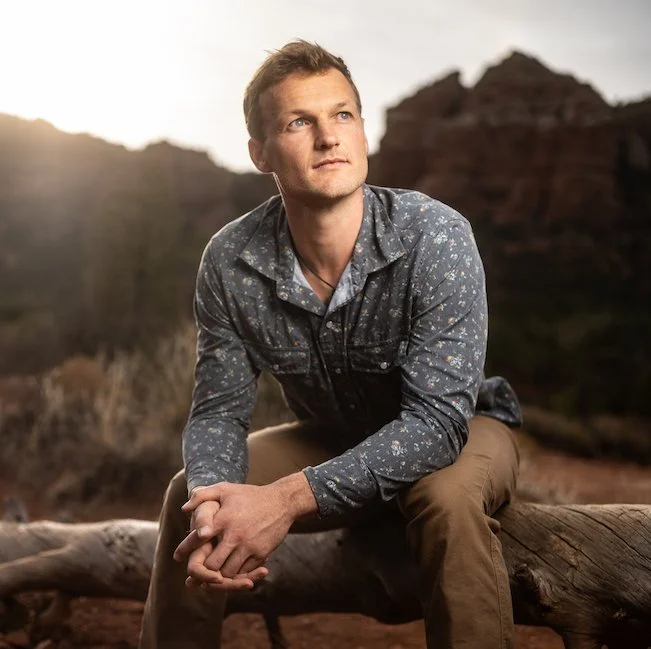
Dalton Johnson is a photographer, director, and writer (award-winning at all three) based in South Lake Tahoe, CA.
Over the last 10 years, Dalton’s creative work has taken him to every continent, above the arctic circle, and below the antarctic circle.
Lorem ipsum dolor sit amet, consectetur adipiscing elit. Vestibulum id ligula porta felis euismod semper.