Where to Hang a Metal Print to Avoid Glare
Hang a metal print on a wall that does not face a bright window or a strong light. Metal is stunning, and it is one of the two materials I would choose for this photograph, but it has a lot of glare. Where you put it decides whether you love it or squint at it.

Spring flowers line the California hillside overlooking the Golden Gate Bridge. From here, I snap this stunning photograph of the Golden Gate Bridge, perfect for any wall in a home or a office.
Additional Information:
Please allow 5-10 days for printing and shipping.
I have the ability to print custom sizes and material (like wood, gatorboard, etc.). If this interests you, please reach out to dj@dalton-johnson.com for a free quote with the size and material you desire.
Here is why metal behaves the way it does. The surface is smooth and reflective, which is exactly what gives the color its depth. The yellow wildflowers, the blue sky, and the red bridge all look vivid on metal. That same surface acts a little like a mirror, so any bright light in the room can bounce straight off it.
The classic problem is the dining room. If you hang a metal print where you sit across from it at a table, and there is a window behind you, the light can bounce off the surface and shine right back into your face. That is not fun, and it is an easy mistake to make.
Start by picturing the room. Where does the sun come in, and at what time of day? Where are the lamps? Imagine the light hitting the print and bouncing off. If it lands in a place where people sit, move the print. A wall that sits beside a window rather than across from one is usually a good choice. A hallway with soft light works well too.
Here is a cheap test. Tape a sheet of paper to the wall at the size of your print, then check it in the morning, afternoon, and evening. You will see where the reflections fall. It costs nothing, and it can save you from a bad decision.
Placement is not only about windows. Lamps and ceiling fixtures matter too. A spotlight aimed directly at a metal print will create a hot spot. Soft, indirect lighting is much kinder. If you want to light the print, angle the light so it comes in from the side.
Size plays a role. A larger metal print has more surface to catch light, so a big piece in a bright room will show more reflections. If glare is a concern, that is one more reason to think carefully about the size before you order.
I still recommend metal for this photograph, when the wall is right. It is the most durable of the three materials, it has high UV protection, and the colors come through with real punch. It is usually the most expensive option, so it is worth making sure the spot works before you commit.
If your room is bright all day and there is no good wall, paper with a frame is a friendlier choice, though the glass can reflect as well. I choose the paper for every order myself, so you can count on it looking right.
Height and angle are the last details. Hang the piece so its center sits near eye level, and keep it flush to the wall rather than tilted, since a forward tilt sends reflections in new directions. Before you drill, stand where you will usually sit or stand in the room and look at the spot. What you see from that position is what you will live with every day, so trust it. A few minutes of standing there beats a lot of guessing.
This is a real photograph, made on a hillside above the Golden Gate Bridge at sunset. It ships in about 5 to 10 days, and I am happy to talk through your room if you are unsure.
Go check out all the prints by Dalton Johnson.
About the Author
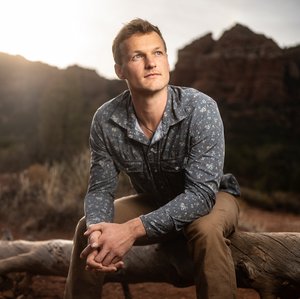
Dalton Johnson is a photographer, writer, and filmmaker who tells stories about real people pushing themselves in the outdoors, from the High Sierra to the far reaches of every continent. He has shot and written for brands, tourism boards, and editorial outlets, including Nike, Patagonia, Four Seasons, PBS, GoPro, and Ford, with more than 160 campaigns and hundreds of published articles to his name. Off assignment, he bikepacks, trail runs, swims open water, chases big waves, and rock climbs.