
Why One Shoot Should Never Just Be One Deliverable
Most photographers hand over a gallery link and call the job done.
I used to do the same thing. Shoot the job, edit the images, deliver the files, move on. That was the workflow. That was what the client asked for. That was the whole transaction.
It took me years to realize how much I was leaving on the table. Not just money. Reach. Impact. The kind of results that make a client call you back and refer you to someone else.
The Rivian project at the end of 2024 was the clearest proof I have seen of what changes when you stop treating a shoot like a single deliverable and start treating it like the raw material for an entire campaign.
If you are a photographer still handing over a gallery and walking away, this is for you.
Quick Note: If you find this article helpful, the idea come from my ebook, The Adventure Photographer's Playbook, and it costs $10. Why so cheap? The goal is to help as many new to mid level photographers as possible go from nothing to getting booked in 18 months. If that is you, check it out.
One shoot contains multitudes.
Think about what actually happens on a commercial shoot. You show up with your camera. You spend hours, sometimes days, in a location with a subject, a product, a vehicle, a landscape. You capture thousands of frames. You see things from angles no one else will see. You experience the story firsthand.
And then you deliver 50 selects and disappear.
That experience you just had? It was a magazine article. It was a newsletter. It was a series of behind the scenes social clips. It was a short film. It was a blog post. It was a quote card. It was a YouTube video. It was a podcast episode waiting to happen.
None of that requires going back to the location. None of it requires a second shoot day. All of it lives inside the work you already did.
The shoot is not the deliverable. The shoot is the source.
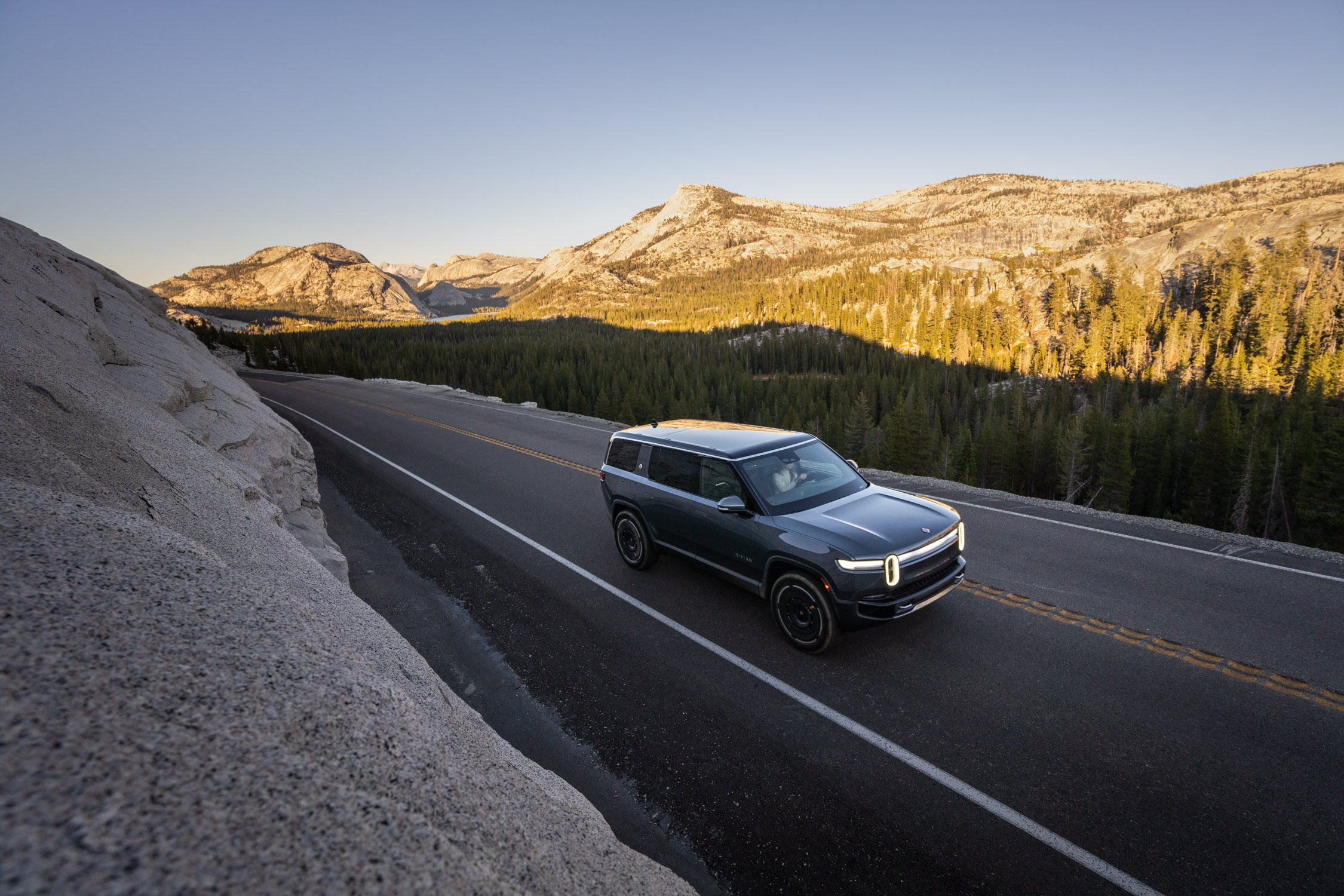
Exploring Tioga Pass with Rivian. Photo by Dalton Johnson
What the Rivian project actually produced.
The brief was straightforward on the surface: take a week-long road trip through Northern California in the fall, stop at the newly opened Groveland Outpost, document the adventure on a sustainable electric vehicle, and write the story for a digital publication.
One week. One vehicle. One location.
But here is what that actually became.
The professional photos went to Rivian for press use, PR campaigns, and marketing materials. High resolution. Polished. Exactly what a brand needs when they are launching a new outpost and want visuals that hold up in a magazine spread or a billboard.
The written article was placed in a digital publication. That article told the story of the road trip, highlighted the fall colors in Yosemite and around Lake Tahoe, introduced readers to weird little towns scattered through Northern California that most people have never heard of, and documented what it felt like to charge an EV at a brand new outpost and be among the first people to use those chargers. The article was not a press release. It was an actual story. People read it because they wanted to, not because they had to.
The behind the scenes iPhone footage became UGC clips for social media. Raw. Unpolished. Real. The kind of content that performs on Instagram and TikTok precisely because it does not look like an ad.
The combination of all three — professional photography, longform writing, and social UGC — generated just over a million trackable views. Not from a single platform. Across all of them, each format feeding the others.
That is what one shoot looks like when you stop treating it like one deliverable.
CASE STUDY: Rivian Motors Road Trips Northern California
Why photographers leave this on the table.
There are a few reasons this does not happen more often.
The first is scope. Most photographers are hired to shoot. The brief says photography. The contract says photography. So they show up and shoot and deliver photography and go home. Nothing in the engagement asked for anything more.
But here is what I have learned: the brief is almost never the full opportunity. It is just the thing the client knew how to ask for. If you can show up with more, most clients will be thrilled. They did not ask because they did not know it was possible from a single hire.
The second reason is skill. Writing is a skill. Editing video is a skill. Building a distribution strategy is a skill. If you only have one of those skills, you can only produce one of those outputs. This is exactly why skill stacking matters. Every skill you add does not just open a new revenue stream. It multiplies the value of every shoot you ever do.
The third reason is habit. Photographers are trained to think in images. The frame is the unit of work. But a frame without context is a beautiful file sitting in a folder. Context is what makes it travel. And context requires words, narrative, and distribution.
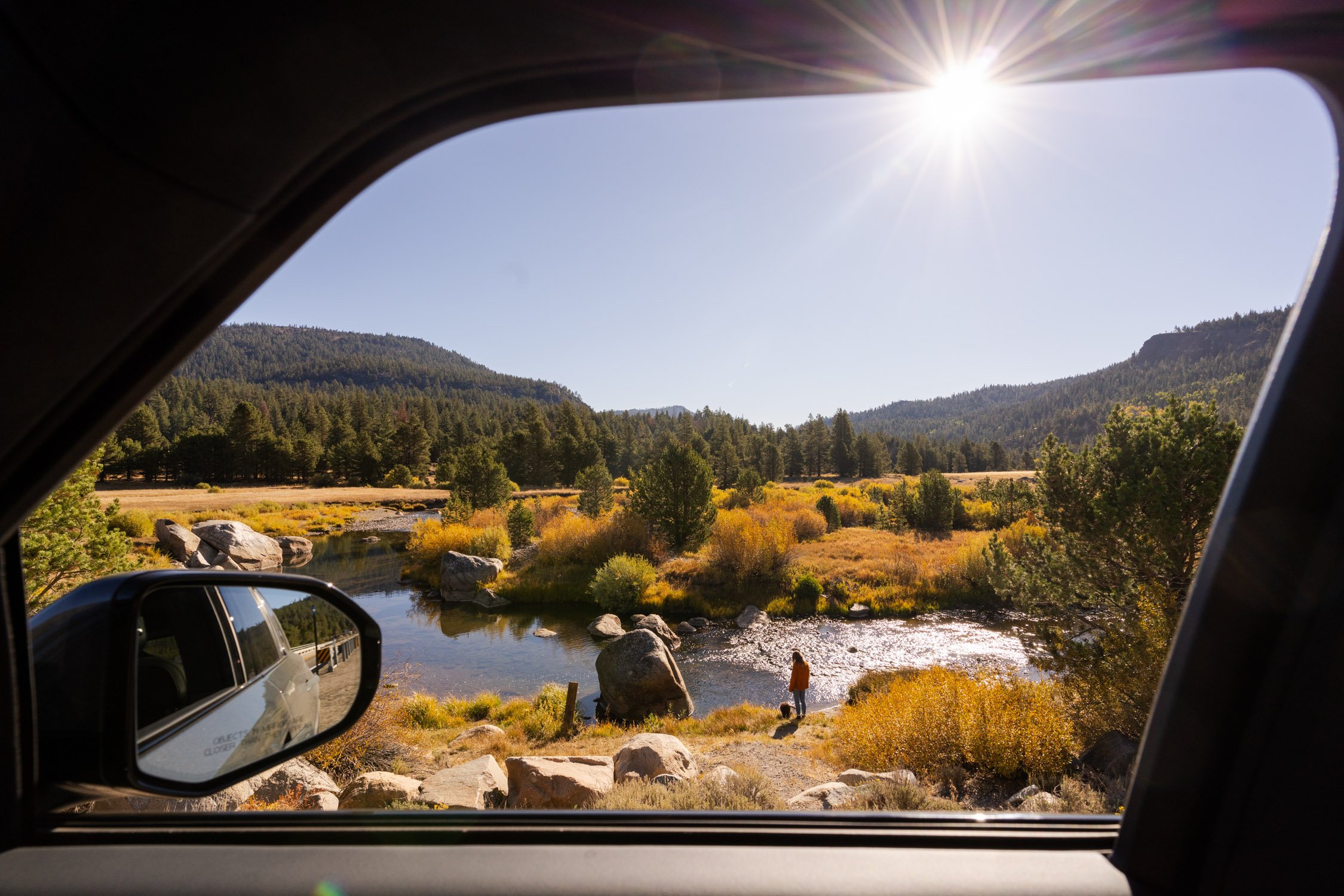
Road-side pit stop because it was just so pretty! Photo by Dalton Johnson
How to start thinking differently about your next shoot.
Before your next job, ask yourself this question: if this shoot were the source material for a four-week content campaign, what would that campaign look like?
Map it out. The hero images go here. The behind the scenes clips go here. The written story goes here. The short-form social content goes here. The email newsletter goes here. You do not have to produce all of it on every job. But knowing what is possible changes how you show up on set.
You start capturing differently. You think about the behind the scenes moments that will make sense as a clip. You keep a voice memo running in your pocket so you can capture your thoughts in real time for the article you will write later. You ask yourself what the emotional arc of the story is, not just what the shot list says.
None of this adds significant time on set. It adds intention.
The compounding effect.
Here is what most photographers do not see until it is already happening: when you deliver more than images, your clients start talking about you differently.
You stop being the photographer they hired for that one job. You start being the person who made that campaign work. The distinction matters enormously when the next brief lands on a desk and someone asks who they should call.
Clients do not just come back to photographers who delivered good images. They come back to photographers who made their jobs easier, their campaigns stronger, and their results measurable. A gallery of 50 selects is a deliverable. A million views is a result.
The Rivian project opened doors not because the photography was exceptional in isolation. It opened doors because the photography was part of something bigger than itself.
That is the shift. One shoot, treated as source material, becomes a campaign. One campaign becomes a case study. One case study becomes the reason the next brief lands with you instead of someone else.
Stop handing over the gallery and walking away.
The shoot is just the beginning.
If this resonated, subscribe below for more on building a photography career that compounds over time.
Reflection questions:
Think about your last three shoots. What other formats were hiding inside that work that you never produced?
If you had to turn your next shoot into four different types of content, what would they be and where would each one live?
What skill are you missing right now that is limiting what you can pull out of a single shoot?
What would it mean for your client relationships if you started delivering results instead of just deliverables?
This lesson comes from my ebook The Adventure Photographer's Playbook and it costs $10. Why so cheap? The goal is to help as many new to mid level photographers as possible go from nothing to getting booked in 18 months:

The Adventure Photographer’s Playbook is an e-book created by full-time photographer Dalton Johnson to help new photographers go from nothing to booked in the adventure photography space.
This adventure photography e-book goes over the business and what “making it” as a photographer in the outdoor space requires. Covering topics such as pricing, marketing, building a body of work, reflection questions, and everything you need to know to make a career out of adventure photography.
Updated: June 2025


Sed purus sem, scelerisque ac rhoncus eget, porttitor nec odio. Lorem ipsum dolor sit amet.