The Mistake That Cost Me an Hour and a Half on Summit Day
as always, the full gallery is at the bottom, so skip there if you don’t care about the words
I had one job the night before summit day. Pack everything I needed, organize it carefully, and make sure my helmet was attached to the outside of my backpack so I could not possibly miss it in the dark. I even said it out loud to myself. Put the helmet on the pack. Do not put it inside the tent. I was so confident I had this handled that I went to sleep feeling genuinely prepared for what was coming.
I was not prepared.
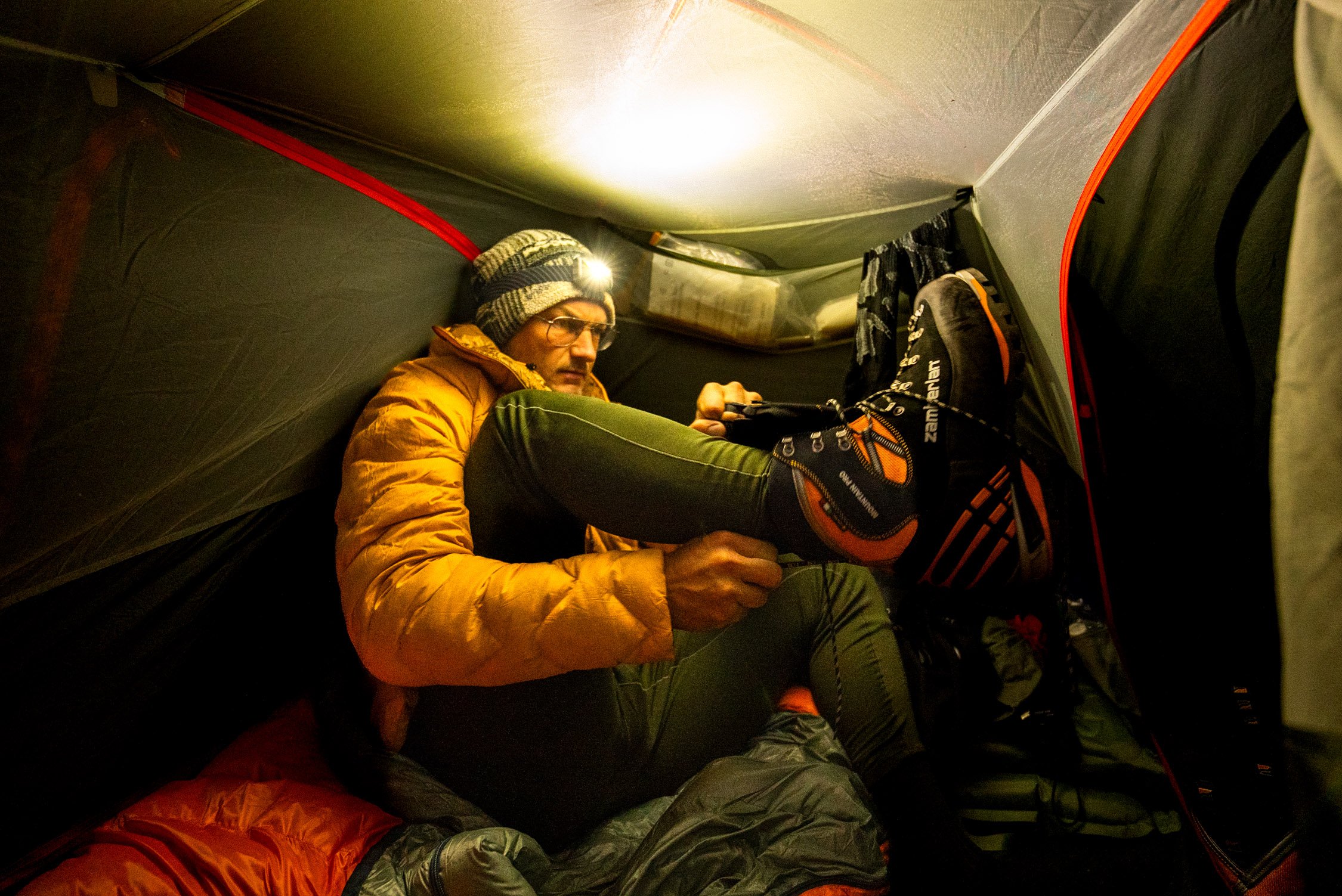
Thirty to forty-five minutes into the climb, somewhere on the lower slopes of Mount Shasta with my headlamp cutting through the dark and my crampons biting into perfect crusty snow, I reached back out of habit and felt the outside of my pack. No helmet. I stopped moving. I stood there on the mountain in the dark and ran through the possibilities in my head, hoping there was some version of this where the helmet was actually there and I just could not feel it. There was not. The helmet was sitting inside my tent at horse camp, exactly where I had told myself not to put it.
Here is what an hour and a half costs you on summit day. It costs you the best snow conditions of the morning. On a mountain like Shasta, the snow firms up overnight and stays perfect for climbing in the early hours before the sun softens it. Every minute you spend descending back to camp and climbing back up again is a minute of ideal conditions disappearing underneath your boots. It also costs you energy. I had already warmed up my legs, found my rhythm, and settled into the mental headspace of a long climb. Walking all the way back to camp and starting over reset everything. By the time I was climbing again I was already more tired than I should have been at that point in the day.
My Favorite Items I Brought On This Trip:
2p Tent Copper Spur by Big Agnes; I’ve had this tent going on 5 years and still love it
Crazy Creek Camp Chair; easy and simple to use
Jetboil Flash; I’ve had mine for almost a decade and still works great
Sony a7r4; my work horse of a camera
Tamron 16-30; probably my favorite lens right now
Peak Design Tripod; a requirement for solo creatives
The walk back to camp was a specific kind of miserable. Not dangerous, not dramatic, just slow and quiet and frustrating. I had nobody to blame but myself and I knew it. I unzipped the tent, grabbed the helmet, clipped it where it should have been clipped the night before, and started back up the mountain. The whole round trip took an hour and a half. An hour and a half because I put something in the wrong place.
What makes this mistake worth writing about is not that it was catastrophic. It was not. I still summited. The weather held. The day ended well. What makes it worth writing about is how preventable it was and how common this kind of mistake is on big mountain days. When you are preparing for a major climb, especially after several consecutive hard days in the mountains, your brain is already working overtime. You are managing gear, weather, nutrition, timing, and a hundred other variables at once. The small details, the ones you are so sure you have handled, are exactly the ones that slip through.
The fix is almost embarrassingly simple. Do not trust your tired brain to remember where things are. Make a physical checklist. Lay your gear out the night before and touch every single item before you put it in or on your pack. If something is critical for safety, attach it to your pack immediately rather than telling yourself you will do it in the morning. Morning you is always more exhausted and less careful than evening you thinks morning you will be.
An hour and a half is a long time to spend fixing a thirty second mistake. I will not be making it again.
Read more about my road trip to Lassen and Shasta:
The Day’s Gallery


About the Author:
Dalton Johnson is a photographer, direcor, and writer (award-winning at all three) based in South Lake Tahoe, CA.
Over the last 10 years, Dalton’s creative work has taken him to every continent, above the arctic circle, and below the antarctic circle.