Manzanita Lake Photography Guide
as always, the full gallery is at the bottom, so skip there if you don’t care about the words
I almost did not go back. After a long foggy day two at Mount Lassen, driving all the way around to the north entrance only to find rain and flat light, part of me wanted to write Manzanita Lake off and focus all my energy on the ski attempt the next morning. Something told me to go back.
I set my alarm for four in the morning, made the drive to the north entrance in complete darkness, and walked down to the lake with my Sony A7R4, one tripod, and one lens. What happened over the next few hours became the most memorable morning of the entire seven day trip.
Manzanita Lake sits right at the north entrance of Lassen Volcanic National Park. It is one of those places that looks good in any photograph but becomes something extraordinary under the right conditions.
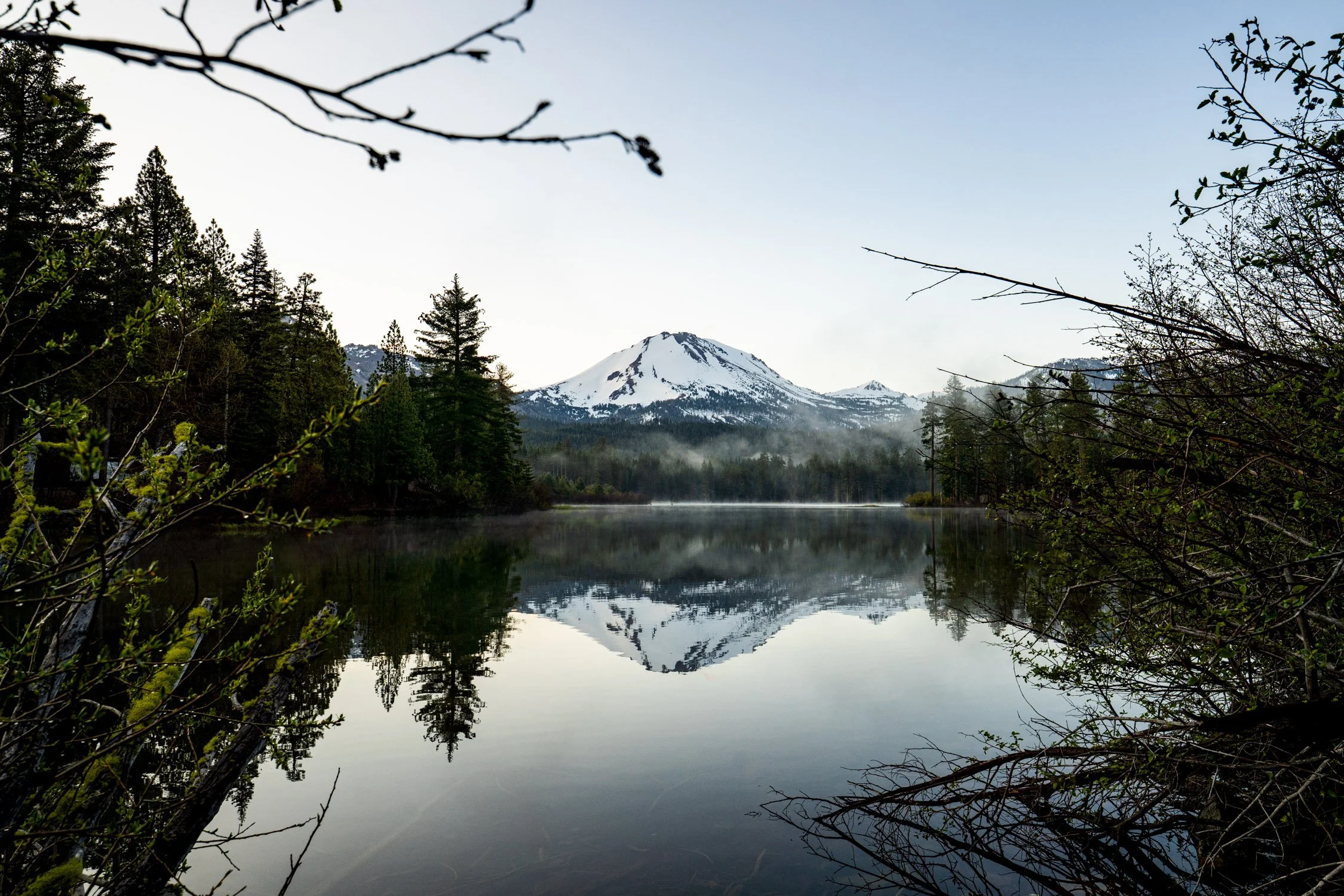
The lake is relatively small and calm, which means on a still morning it acts like a mirror, reflecting Lassen Peak in the water below it. When mist or steam rises off the surface at first light, the whole scene takes on this quiet, almost dreamlike quality that is hard to replicate anywhere else in Northern California. It is the kind of location that rewards photographers who show up early and stay patient.
When I arrived that morning everything was still deep blue. That window between full dark and first light where the world has color but no sun yet.
I started on the northern edge of the lake looking for a composition and could not find one that felt right. The angles were off. The shoreline was too cluttered with brush in certain spots. So I made the decision to walk the entire loop around the lake and find something better. That decision changed everything about the morning.
My Favorite Items I Brought On This Trip:
2p Tent Copper Spur by Big Agnes; I’ve had this tent going on 5 years and still love it
Crazy Creek Camp Chair; easy and simple to use
Jetboil Flash; I’ve had mine for almost a decade and still works great
Sony a7r4; my work horse of a camera
Tamron 16-30; probably my favorite lens right now
Peak Design Tripod; a requirement for solo creatives
The southern side of the lake opened up in a way the northern side did not. There is a small man made dam along the southern edge that creates a clean, unobstructed sightline across the water toward Lassen Peak. I found that spot and set up my tripod just as the sun started to hit the summit. That first touch of golden light on the peak was breathtaking. Below it, a thin layer of mist hung just above the surface of the lake, catching the early light and glowing softly against the still dark water. I stood there for a moment before even touching the camera. Some scenes demand that you just look first.
For photographers planning a shoot at Manzanita Lake, a few practical things will make a significant difference. Arrive before first light and give yourself time to walk the full loop before committing to a composition. The northern side is the obvious entry point but the southern side near the dam is where the strongest compositions tend to live. Bring a tripod without question. The low light conditions at sunrise require it and the reflections in the water are sharp enough to be worth the extra effort of a stable shot. A longer focal length lets you compress the distance between the lake surface and the peak behind it, which intensifies the reflection and makes Lassen feel closer and more dramatic in the frame.
Weather at Manzanita Lake changes fast and flat light is common. Do not let one foggy visit convince you the location is not worth your time. I almost made that mistake and I am glad I did not. The morning I almost skipped turned into the best photographs of the entire project. Some locations require persistence before they reveal what they are actually capable of. Manzanita Lake is absolutely one of them.
More reads from my road trip to Lassen National Park:


About the Author:
Dalton Johnson is a photographer, director, and writer (award-winning at all three) based in South Lake Tahoe, CA.
Over the last 10 years, Dalton’s creative work has taken him to every continent, above the arctic circle, and below the antarctic circle.