

I Should Be On Everest Right Now, But I’m In Las Vegas
I am supposed to be on Everest, right now, the broken record in my head repeats. Why am I standing on top of my van watching the sunrise from Las Vegas?
I am supposed to be on Everest, right now, the broken record in my head repeats. Why am I standing on top of my van watching the sunrise from Las Vegas?

Waiting for the rising sun to come with its much needed blanket of warmth. Connect with Dalton on your favorite social media: @storiesbydalton
Have you ever end up somewhere and you just don’t understand how you got there? The confusion hits hard, you want to make the best of your focus, and yet all you can do is dream of being somewhere else. Well, this was one of those times for me.
It was April 2023 and I was supposed to be on Everest, filming a documentary about a blind veteran climbing the tallest peak in the world, not for himself, not to see what the view is like (I hope the oxymoron gives you a chuckle), but to challenge the status quo around blindness and give other wounded solders a role model to say, “yes, I can do thing I thought impossible.”
His name: Lonnie Bedwell
We met on Denali about a year before, while I was filming the award-winning short documentary Climbing For Furley, and as time passed he reached out with a last minute invitation to come film the trip and hopefully make a documentary if the trip is a success.
In many ways, this was a dream assignment of dream assignments. Lonnie’s story is great, the setting couldn’t be more stunning, and I have a personal goal of creating something on all seven summits.
However, with the last minute nature of the trip, bringing me on board 10 days before the expedition left, not all the boxes were checked.
When I arrived at the airport ready to leave, I was denied. My passport, while valid for the next 7 months, did not meet all the requirements. The Nepal Tourism requires all travelers to a passport valid for 6 months after their return date. I was one week shy of that requirement.
My trip ended before it started.
I was devastated.
For 48 hours, I tried to get a new passport, but, the passport office was overwhelmed with 10x the normal inquiries and even with a Congressional push to get me an overnight passport, I still could not.
Breaking the news to the team, I didn’t know what to do with my two month open schedule. So, I packed the van and headed to the desert to lick my metaphorical wounds.


In 2023, I had been in this career for almost 8 years, yet I considered myself a young-gun in the industry. With lots of lessons, like this, still to learn and never repeat, I was in a rut. I was angry. For the most part, I was a climbing dirtbag with a camera, so when the bureaucracy of paperwork held me back, I couldn’t accept my failure.
The time in the desert was a warming respite from the cold I often endure in my career, but I couldn’t get out of my own head.
Kristin, my girlfriend, tried everything she could to cheer me up, but I was in an unbreakable mood. I felt bad she had to experience my mood. I wanted to let her go enjoy herself, but we were traveling in a van together, so she would have had to leave me behind. In many ways, that sounded nice, but I didn’t really want to shrivel up like a piece of jerky out here in the desert.
So, we pushed on together. Driving through Alabama Hills, Death Valley, Valley of Fire, and towards Lake Mead.


A few weeks into the trip, still being a sourpuss, I wanted to turn the corner. Let things go. But, how?
The mishap was out of my control and that is what I needed to accept.
At least, from all of my travel the major lesson I have learned has been: When things are not going your way and the results are out of your control, you need to let it go. I believe this concept is coined “The Traveler’s Mindset”
So, one of the evenings sitting alone lake side, I intentionally watched the light show on the mountains acting as the backdrop to Lake Mead change from a washed out daytime blue to orange to purple to a black bright with stars seeking an internal silver lining.
For the rest of this trip, seeking that silver lining would become my north star, but, it wouldn’t come on this trip. In fact, I would have to wait until June, just when I would have been coming home from Everest, to find my silver lining, which would literally take me around the world.

I sit quietly looking out at the calm waters, trying to make sense of everything that had happened. Connect with Dalton on your favorite social media: @storiesbydalton
The Small Things That Help
Thank you for taking the time to read UnBound. I hope the images and stories have scratched your mid-week wanderlust itch. If they have, would you please consider forwarding this newsletter to a friend?
If you haven’t done so already, consider following me on your favorite social platform:
Related Reads:


As A Kid, My Dream Was To See The World
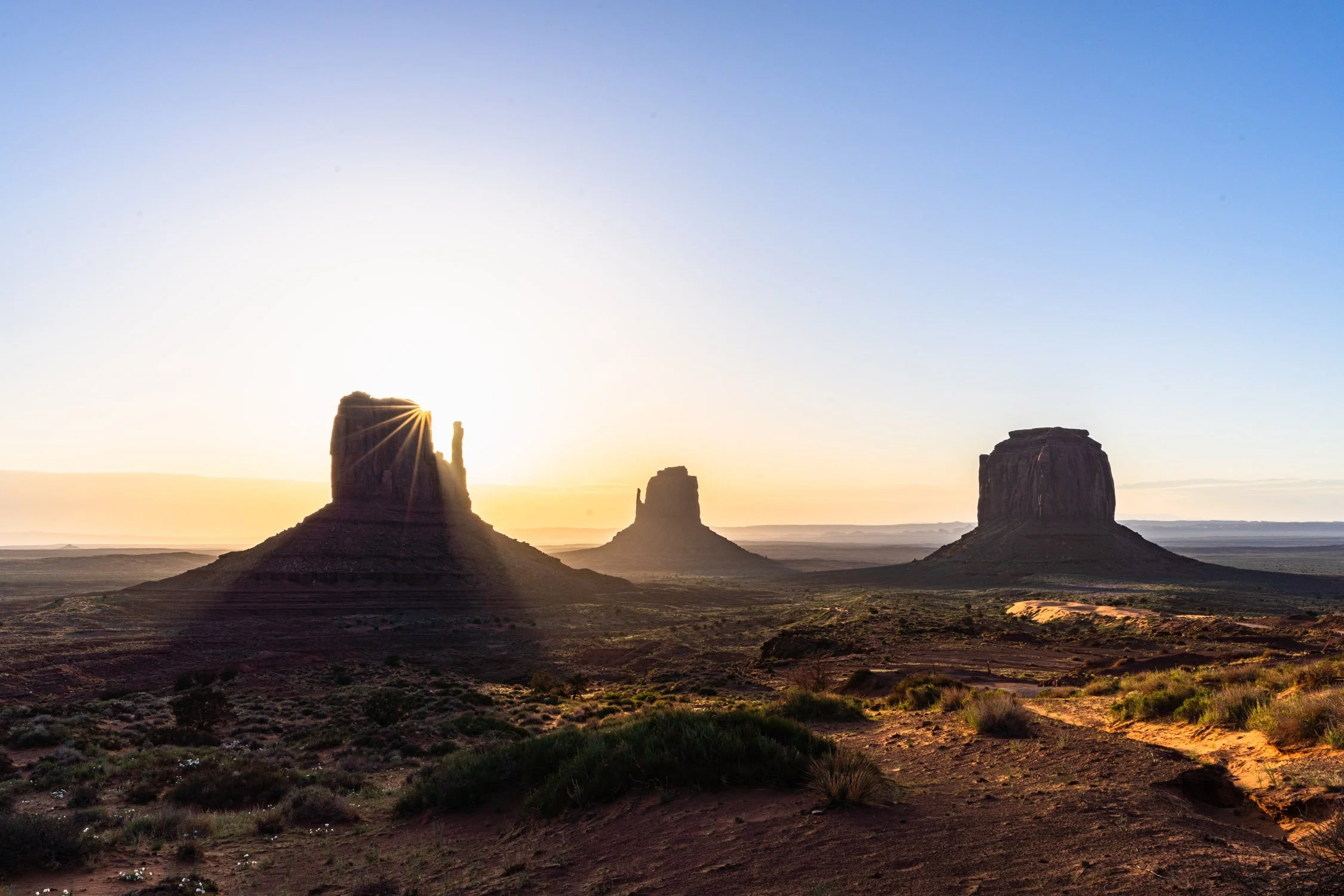
As a kid, my dream was to see the world. My oldest core memories come from road trips with my family growing, which is why I think I love them so much still to this day. Every year, I try to take at least 3 or 4 "big" road trips to new places. However, whenever I can return to a location that blew my mind, I get very happy. And, I must say Monument Valley is one of those locations.
As a kid, my dream was to see the world. My oldest core memories come from road trips with my family growing, which is why I think I love them so much still to this day. Every year, I try to take at least 3 or 4 "big" road trips to new places. However, whenever I can return to a location that blew my mind, I get very happy. And, I must say Monument Valley is one of those locations.

On a chilly morning in Monument Valley, I embarked on a photography adventure that I will forever cherish. The air was crisp, and a light layer of frost adorned the landscape, creating a breathtaking winter wonderland. As the sun began to rise, casting a golden hue across the majestic rock formations, I couldn't resist the urge to capture the magic of the moment.
Wrapped in multiple layers to shield myself from the cold, I positioned my camera on a sturdy tripod and carefully composed the frame. The iconic Mittens stood tall in the distance, their peaks glowing with the warm morning light. I adjusted the exposure settings, wanting to capture every intricate detail of the snow-dusted landscape.
As I clicked the shutter, the quietness of the morning was momentarily disrupted. My breath fogged the air, a visual testament to the frigid temperatures. Yet, I was completely immersed in the beauty surrounding me. Monument Valley, usually known for its arid desert charm, had transformed into a winter paradise, and I felt like a witness to a hidden gem.
In that frozen moment, as I captured the photograph, I couldn't help but feel a deep sense of gratitude. Nature had unveiled a side of Monument Valley that few had witnessed, and I was fortunate enough to freeze that fleeting beauty in time. That photograph serves as a reminder of the awe-inspiring moments that nature gifts us, even in the most unexpected and inhospitable conditions.
Additional Information:
Please allow 5-10 days for printing and shipping.
I have the ability to print custom sizes and material (like wood, gatorboard, etc.). If this interests you, please reach out to dj@dalton-johnson.com for a free quote with the size and material you desire.
On my second trip to Monument Valley, the flowers were blooming, wild horses were grazing, and I was with the love of my life. Sharing a place as magical as this was a treat I hope I can share with my kids one day. But, what made it special?
From the 10,000 foot level Monument Valley is just a desert with some towers. But, that isn't how this place feels. When my feet landed in the sand and my face was warmed by the sun, I couldn't help but feel something special about this place. A sense of calm. A sense of belonging. A sense of struggle. A sense of perseverance.
The towers made me feel small and the dryness of the desert made me feel the ephemerality of life.
My mind tries to transport me back in time, but I can’t because it hurts. The history of this land in the not-so-far-back history is one of cruelty that I do not understand and will never understand. Even if I pretend to understand, it is a lie because the mindsets of both groups were so vastly different and conversations were not possible as a global mindset wasn’t around to aid in communication.
Going back farther in time, the landscape was likely very different. Water was more present and the area had far more predators and prey. Hunting would have looked different, the towers would look different, it all would be different.
I wish I could sit and understand, but I honestly don’t know where, or how, to start. So, on this trip, I drove the path and remained stunned by the natural beauty of the place. Snapped images and let the landscape sink into me. Laughed with Kristin and were goofy together.


The loop isn’t that long in distance and the 2WD van made the journey just fine, but we took our time. Starting at the famous Mitten towers we rattled down the dirt road and to the “back” at the Totem Pole. From here, we took a lunch break and walked around for a while. Not far away some like minded individuals pulled out a table and made lunch.
My belly was hungry and Kristin kept eyeing their food, so we made some ourselves.
I can’t recall if we had breakfast this morning because we woke up so early to arrive at the Mittens for sunrise. Something I recommend everyone do! So, the simple food we made of veggies was a delight.
Together, we sat on the roof of the van and stared out at the Totem Pole. What a sight!
I can see why movies have been filmed here. I just wonder what this place looked like 5,000 years ago.
A few of these images are available as prints, check them out in my store:
https://dalton-johnson.com/prints/monument-valley
If you are planning a road trip to Monument Valley, I've got you covered, read all about the area:

Why Is Nobody Talking About This Free Campsite Near Joshua Tree National Park?
If you’ve ever tried camping at Joshua Tree National Park, you know how competitive it can be to snag a campsite. With limited spaces at popular spots like Hidden Valley Campground and Jumbo Rocks, visitors often face the disappointment of finding every site full, even with early arrival and perfect timing. After years of visiting Joshua Tree for climbing and photography, I’ve learned that camping near the park doesn’t have to be this frustrating. There’s a hidden gem that few people seem to be talking about: the free Bureau of Land Management (BLM) land just outside the park.
If you’ve ever tried camping at Joshua Tree National Park, you know how competitive it can be to snag a campsite. With limited spaces at popular spots like Hidden Valley Campground and Jumbo Rocks, visitors often face the disappointment of finding every site full, even with early arrival and perfect timing. After years of visiting Joshua Tree for climbing and photography, I’ve learned that camping near the park doesn’t have to be this frustrating. There’s a hidden gem that few people seem to be talking about: the free Bureau of Land Management (BLM) land just outside the park.

Sipping coffee and enjoying the warmth of the morning sun while camping on Joshua Tree’s free BLM land. Photo by Dalton Johnson
Can You Camp for Free Near Joshua Tree National Park?
Yes, you can! While the park itself charges fees for camping, the BLM land adjacent to Joshua Tree offers a no-cost alternative for those willing to trade proximity for freedom. This land, managed by the Bureau of Land Management, is open to dispersed camping, meaning you can park your van or set up your tent in a variety of spots without the need for reservations or fees.
My Struggles with Camping in Joshua Tree
When I first started visiting Joshua Tree eight years ago, finding a campsite was an exhausting experience. The first-come, first-served system in the park means you either have to arrive at the crack of dawn or hope for a miracle when sites free up. I’ve tried it all—checking trailheads, rolling into campgrounds early, even camping near pullouts and hoping not to get the dreaded knock from a park ranger. Spoiler: It rarely worked.
Three years into my visits, I stumbled upon the nearby BLM land, and it changed everything. This wide-open desert landscape provides a stark yet stunning backdrop for a peaceful night under the stars. You can even have campfires, which isn’t always an option within the park itself. It felt like discovering a secret treasure—uncrowded, free, and simple.


The Pros of BLM Camping Near Joshua Tree
It’s Free
Camping on BLM land doesn’t cost a dime. For those traveling on a budget, this can save you $20-$25 per night compared to park campgrounds.No Reservations Needed
Dispersed camping on BLM land operates on a first-come, first-served basis, but you’re not confined to designated campsites. With plenty of open space, it’s unlikely you’ll have trouble finding a spot.Wide-Open Space
Unlike the crowded campgrounds inside the park, BLM land offers solitude and vast desert views. It’s perfect if you’re looking to escape the hustle and bustle of the main park.Campfires Allowed
While fire restrictions may apply during certain seasons, you can often enjoy a campfire on BLM land. This is a luxury compared to the restrictions within Joshua Tree’s campgrounds.

Commuting in and out of the park will rack up a gas bill, so this is one major downside of the free camping on BLM. Photo by Dalton Johnson
The Downsides of BLM Camping
Of course, this option isn’t perfect. The biggest drawback of staying outside the park is the extra driving time. Depending on where you camp, you might spend 20-40 minutes driving into the park each day. This can mean getting caught in traffic at the park entrances, especially during peak seasons like spring or fall.
Another downside is missing the sense of community that comes with staying at campgrounds like Hidden Valley. Inside the park, you’ll find other climbers, photographers, and outdoor enthusiasts swapping stories and tips. On BLM land, you’ll likely feel more isolated, which may or may not appeal to you.
How to Find This Free Campsite
The most popular BLM camping area near Joshua Tree is located north of the park, off Highway 62 near the towns of Joshua Tree and Twentynine Palms. Some well-known spots include:
BLM Land North of Joshua Tree: Accessible via Sunfair Road, this area is flat and spacious, with plenty of room for tents or vehicles.
Sheephole Valley Wilderness: A bit further out, but offers even more seclusion for those willing to drive.
Make sure to follow Leave No Trace principles, pack out all trash, and be mindful of fire regulations.
Dogs are very welcomed on the BLM when camping, unlike inside Joshua Tree National Park. Photo by Dalton Johnson
Is Free Camping Near Joshua Tree Worth It?
If you value solitude, flexibility, and saving money, camping on BLM land is absolutely worth considering. However, if you’re looking for convenience and a chance to connect with the vibrant community of climbers and adventurers, you might want to stick to the park’s campgrounds.
For me, this free camping spot has been a game-changer. While it doesn’t offer the same camaraderie as Hidden Valley, it provides an excellent backup plan when the park’s campgrounds are full. After all, there’s nothing quite like waking up to the quiet expanse of the desert, with the stars giving way to the morning light on Joshua Tree’s iconic boulders.
Next time you head to Joshua Tree National Park, consider giving BLM camping a try. It might just be the hidden gem that transforms your trip.
Discover more Adventures

Everyday Carry Is Just Better with These Case Knives
When it comes to everyday carry (EDC), having a reliable, high-quality knife in your pocket can make all the difference. Whether you’re tackling a quick fix around the house, heading into the great outdoors, or just getting through your daily tasks, Case Knives have you covered. Known for their craftsmanship and durability, Case Knives offer a perfect balance of form and function. Here’s a look at three standout options that will elevate your EDC game.
When it comes to everyday carry (EDC), having a reliable, high-quality knife in your pocket can make all the difference. Whether you’re tackling a quick fix around the house, heading into the great outdoors, or just getting through your daily tasks, Case Knives have you covered. Known for their craftsmanship and durability, Case Knives offer a perfect balance of form and function. Here’s a look at three standout options that will elevate your EDC game.
Bridgeline Knives: Lightweight and Ready for Anything
The Bridgeline series is a perfect addition to any EDC setup, blending modern design with practicality. These knives come in two designs—the Longhouse and Highbanks—both offering a variety of handle styles and colors to fit your personal taste.
Built with aluminum frames, they’re lightweight but tough enough to handle day-to-day tasks. Whether you’re cutting through rope, opening packages, or tackling weekend projects around the house, Bridgeline knives offer a sleek, dependable option. Their versatility makes them a must-have for anyone looking for a functional and stylish EDC knife.

CT Hunter: Your Go-To for Outdoor Adventures
For those who love to explore the outdoors, the CT Hunter is a powerhouse knife designed for rugged conditions. It’s built with a high-quality carbon steel blade that holds its edge, meaning you won’t be left dealing with a dull knife when you need it most.
The CT Hunter is ideal for everything from outdoor excursions to everyday utility tasks. This is the knife you want by your side whether you’re camping, hunting, or just making sure you’re ready for anything. Its durability and sharpness make it a top choice for EDC enthusiasts who need a blade that can handle the elements.

Peach Seed Jig Amber Bone Razor: Classic Style Meets Everyday Function
Looking for something that blends traditional craftsmanship with everyday practicality? The Peach Seed Jig Amber Bone Razor brings the best of both worlds. Its handle, crafted from cattle bone, is not only incredibly tough but also gives the knife a timeless look that fits into any EDC collection.
With two blades—the Razor blade and a Pen blade—this knife gives you options for handling a range of tasks. Whether you’re opening mail, trimming thread, or working on a more detailed project, the versatility of this knife makes it a perfect fit for everyday use. Plus, its classic amber bone handle gives it a grip that feels just right in your hand, ensuring every cut is precise.
Case Knives have a long-standing reputation for producing top-quality knives that last, and these three models—Bridgeline, CT Hunter, and Peach Seed Jig Amber Bone Razor—are no exception. They’re reliable, stylish, and built to perform, making them essential tools for anyone who values a solid EDC setup. Whether you’re an outdoors enthusiast, a DIYer, or someone who just appreciates having the right tool on hand, these Case Knives will have your back every day.
Discover More Gear
Select the Perfect Adventure Travel Bag
When preparing for an adventure trip, choosing the right bag is crucial. A great bag not only enhances your travel experience but also ensures that you can move freely and efficiently. To pick the correct bag, you need to consider a few key factors: versatility, durability, and comfort. Here’s a comprehensive guide on how to select the ideal bag for your adventure:
When preparing for an adventure trip, choosing the right bag is crucial. A great backpack not only enhances your travel experience but also ensures that you can move freely and efficiently. To pick the correct bag, you need to consider a few key factors: versatility, durability, and comfort. Here’s a comprehensive guide on how to select the ideal bag for your adventure:
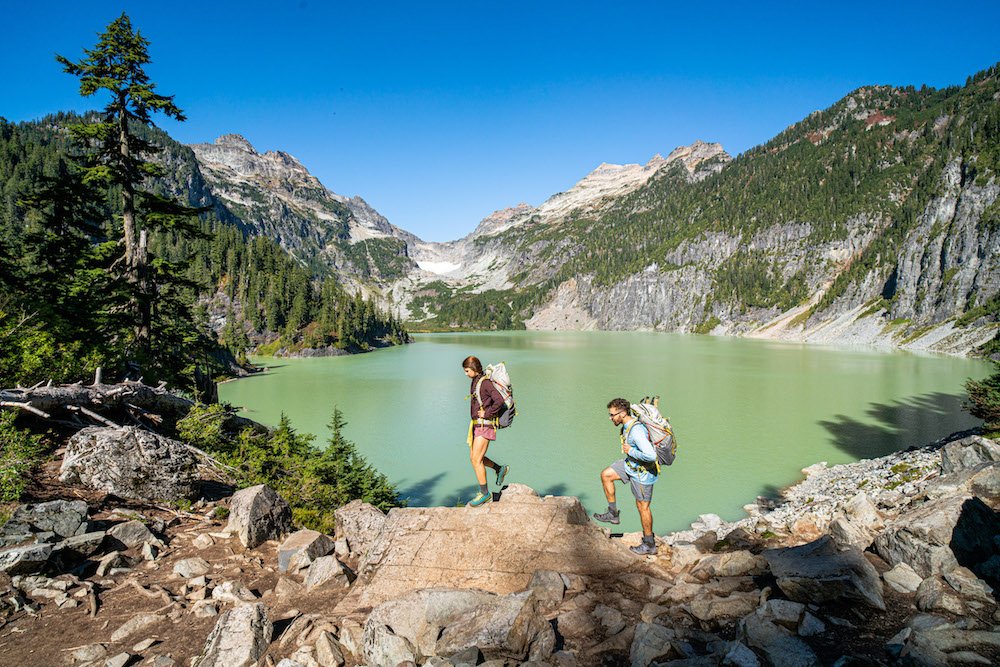
Backpacking to Blanca Lake in Washington. Photo by Dalton Johnson
Versatility
Opt for a bag that can adapt to various situations. Look for features like removable compartments, adjustable straps, and multiple carrying options (such as backpack and duffel configurations). This allows you to use the bag in different scenarios, whether you’re hiking in the mountains, exploring a city, or taking a weekend trip. A versatile bag can transition seamlessly from one activity to another, providing flexibility and convenience.
Durability
Your bag will be exposed to various elements, so it’s essential to choose one made from high-quality, durable materials. Look for bags made from ripstop nylon or polyester, which offer excellent resistance to wear and tear. Reinforced stitching and heavy-duty zippers are also important to ensure your bag can withstand the rigors of adventure travel. Investing in a durable bag means it will last longer and protect your gear, regardless of the conditions you encounter.
Comfort
A comfortable bag makes a significant difference, especially when carrying it for extended periods. Look for a bag with padded shoulder straps, a cushioned back panel, and an adjustable harness system to distribute weight evenly and reduce strain. Additionally, a well-ventilated back panel can help keep you cool during strenuous activities. Comfort features are essential to prevent discomfort and fatigue, enabling you to enjoy your adventure to the fullest.


Size and Capacity
A 40-45 liter backpack is ideal for most adventure trips, providing ample space for all your essentials without being too bulky. This size typically meets airline carry-on size restrictions, allowing you to avoid checked baggage fees and the hassle of waiting at baggage claim. Ensure the bag has multiple compartments to keep your gear organized and easily accessible. A well-sized bag strikes the perfect balance between capacity and convenience, making it an essential piece of gear for any traveler.
Additional Features
Consider bags with features like hydration bladder compatibility, external attachment points for gear, and a built-in rain cover for added protection. These extras can enhance your travel experience and ensure you’re prepared for various conditions. Hydration bladder compatibility is useful for staying hydrated on the go, while external attachment points allow you to carry additional gear like trekking poles or sleeping bags. A built-in rain cover protects your belongings from the elements, ensuring they stay dry.

Headed into the High Sierra for a week of walking. Photo by Dalton Johnson
By selecting a versatile, durable, and comfortable bag that meets airline carry-on size restrictions, you’ll be well-equipped for your week-long adventure trip. A 40-45 liter backpack strikes the perfect balance between capacity and convenience, making it an essential piece of gear for any traveler. With the right bag, you can focus on the excitement and experiences of your adventure, knowing that your gear is secure and you can move freely and efficiently.
Discover More Gear

Strategies for Managing Jet Lag on Solo Trips
Jet lag is an inevitable part of international travel, particularly for solo adventurers who thrive on the thrill of exploring new destinations. Adjusting to a new time zone can be challenging, but with the right strategies, it is possible to minimize its effects and make the most of your adventure travel experiences. Here are some effective tips for overcoming jet lag on solo trips.
Jet lag is an inevitable part of international travel, particularly for solo adventurers who thrive on the thrill of exploring new destinations. Adjusting to a new time zone can be challenging, but with the right strategies, it is possible to minimize its effects and make the most of your adventure travel experiences. Here are some effective tips for overcoming jet lag on solo trips.
One of the rare moments jet lag was helpful was seeing the Northern Lights in Canada. Photo by Dalton Johnson
Understanding Jet Lag
Jet lag occurs when your body's internal clock, or circadian rhythm, is disrupted by crossing multiple time zones. This disruption can lead to a range of symptoms, including fatigue, insomnia, irritability, and difficulty concentrating. While the severity of jet lag varies from person to person, it generally takes about a day for each time zone crossed to fully adjust to the new local time.
Pre-Trip Preparations
1. Gradual Time Adjustment
One of the most effective ways to prepare for a trip across multiple time zones is to gradually adjust your sleep schedule a few days before departure. If you are traveling east, try going to bed and waking up an hour earlier each day. Conversely, if you are traveling west, go to bed and wake up an hour later. This gradual shift can help your body start adjusting to the new time zone even before you leave.
2. Prioritize Rest
Ensure you are well-rested before your trip. Being sleep-deprived can exacerbate the symptoms of jet lag. Aim for a full night's sleep in the days leading up to your departure, so you start your journey feeling refreshed and energized.
3. Stay Hydrated
Hydration is crucial for maintaining overall health and can help mitigate some of the discomfort associated with long flights. Drink plenty of water before and during your flight to stay hydrated and avoid excessive consumption of caffeine and alcohol, which can dehydrate you.
During the Flight
4. Adjust Your Watch
As soon as you board the plane, set your watch to the local time of your destination. This simple step can help mentally prepare you for the new time zone and encourage you to start thinking in terms of your destination’s time.
5. Move Around
Sitting in one place for an extended period can lead to stiffness and discomfort, making it harder to adjust once you arrive. Take regular walks up and down the aisle, do some light stretching exercises, and move your legs and feet to promote circulation.
6. Nap Strategically
If your flight schedule allows, try to nap in alignment with your destination’s nighttime. Avoid long naps that can leave you groggy and disoriented. Short naps of 20-30 minutes can be refreshing and help reduce sleep debt without interfering too much with your new sleep schedule.
Upon Arrival
7. Get Natural Light Exposure
Exposure to natural light is one of the most powerful ways to reset your internal clock. Spend as much time outdoors as possible during daylight hours, particularly in the morning. This exposure can help signal to your body that it is time to be awake and active.
8. Stay Active
Engaging in physical activity can boost your energy levels and help your body adjust to the new time zone. Consider taking a brisk walk, going for a run, or doing some light exercises to help shake off fatigue and reset your internal clock.
9. Avoid Heavy Meals
Eating large, heavy meals can make you feel sluggish and interfere with your sleep. Opt for lighter meals, and try to eat at the local mealtimes to help your body acclimate to the new schedule.
Managing Sleep
10. Create a Sleep-Conducive Environment
When it is time to sleep, create a restful environment to help you fall asleep and stay asleep. Make your room as dark as possible, keep the temperature cool, and eliminate noise. Consider using earplugs, an eye mask, or a white noise machine to block out any disturbances.
11. Use Sleep Aids Sparingly
While it can be tempting to use sleep aids to help you fall asleep, use them sparingly and only as a last resort. Over-reliance on sleep aids can disrupt your natural sleep patterns and prolong your adjustment period. If you do use them, opt for natural options like melatonin, which can help regulate your sleep-wake cycle.
12. Practice Good Sleep Hygiene
Good sleep hygiene is essential for overcoming jet lag. Establish a relaxing bedtime routine, such as reading a book, taking a warm bath, or practicing mindfulness or meditation. Avoid screens and electronic devices before bed, as the blue light can interfere with your ability to fall asleep.
Staying Connected
13. Keep in Touch with Loved Ones
Solo travel can sometimes feel isolating, especially when you are dealing with jet lag. Stay connected with friends and family back home to help lift your spirits and provide a sense of comfort. Sharing your experiences and hearing familiar voices can be a great way to stay motivated and positive.
14. Engage with Locals
Interacting with locals can be a rewarding way to immerse yourself in the new culture and stay active. Ask for recommendations on the best places to visit, eat, and explore. Engaging in conversations can also help keep your mind stimulated and alert.
Mental and Emotional Well-being
15. Stay Positive
Maintaining a positive attitude is crucial when dealing with jet lag. Remind yourself that the symptoms are temporary and that your body will eventually adjust. Focus on the exciting aspects of your trip and the new experiences that await you.
16. Practice Mindfulness
Mindfulness techniques, such as deep breathing exercises and meditation, can help reduce stress and anxiety associated with jet lag. Taking a few moments each day to center yourself can improve your overall well-being and make it easier to handle the challenges of solo travel.
17. Be Patient with Yourself
Adjusting to a new time zone takes time, and it is essential to be patient with yourself. Allow your body the time it needs to acclimate and avoid pushing yourself too hard. Listen to your body’s signals and rest when needed.
Staying active and getting outside into the natural light cycle helps cut down on jet lag. Photo by Dalton Johnson
Jet lag can be a challenging aspect of solo travel, but with the right strategies, it is possible to minimize its effects and make the most of your adventure travel experiences. By preparing in advance, staying active, prioritizing rest, and maintaining a positive mindset, you can overcome jet lag and fully enjoy the excitement and rewards of solo travel. Embrace the journey, stay resilient, and let your adventures take flight.
Discover more Adventures
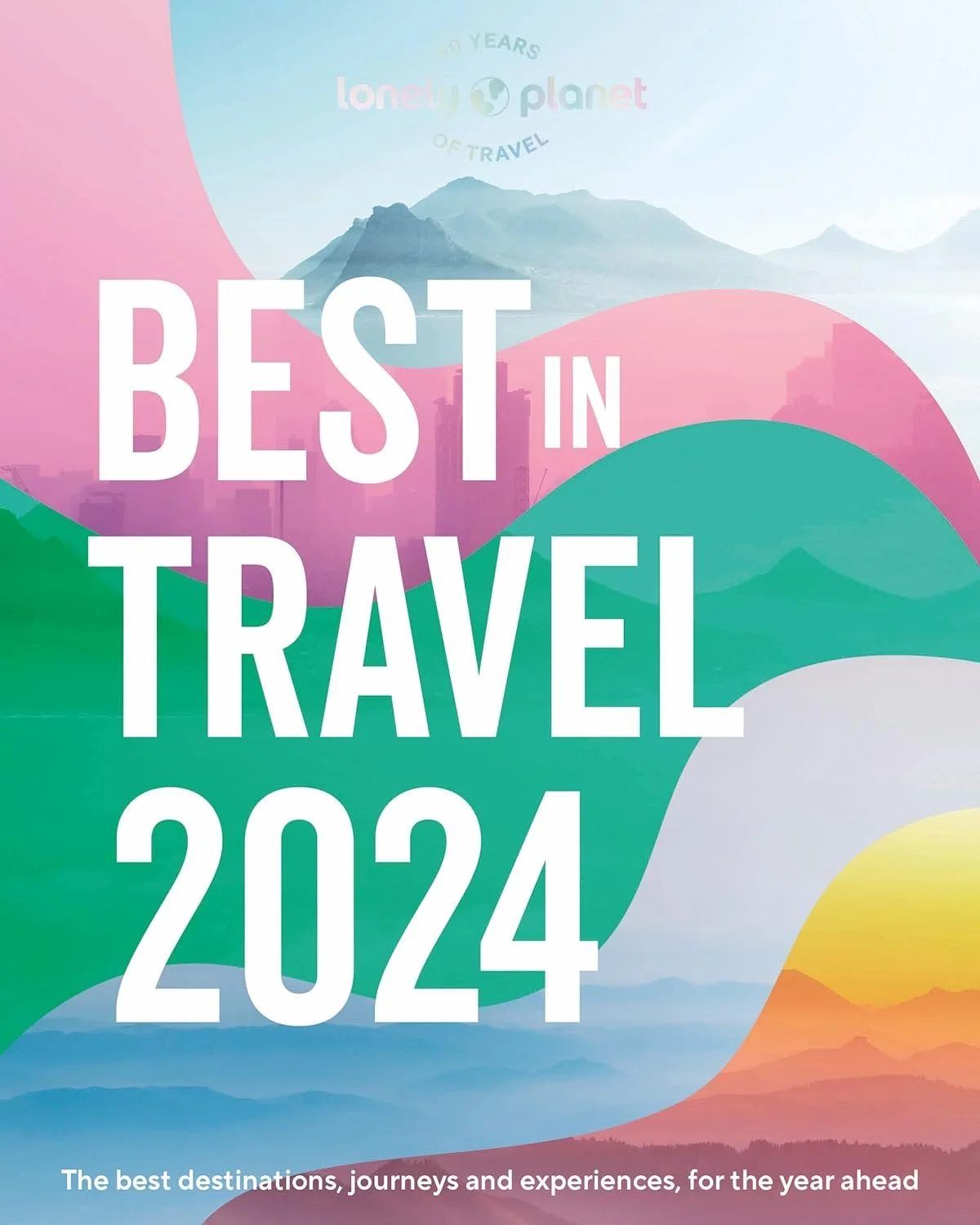
Lonely Planet's Best in Travel is Back
Lonely Planet's Best in Travel is back and better than ever, making a triumphant return after a one-year hiatus to celebrate the 50th anniversary of this iconic travel brand. This annual bestseller is a must-have for wanderlust enthusiasts, providing a roadmap to the most exciting and captivating destinations around the globe. With 2024 just around the corner, this edition promises to be a source of inspiration and discovery for every type of traveler.
Lonely Planet's Best in Travel is back and better than ever, making a triumphant return after a one-year hiatus to celebrate the 50th anniversary of this iconic travel brand. This annual bestseller is a must-have for wanderlust enthusiasts, providing a roadmap to the most exciting and captivating destinations around the globe. With 2024 just around the corner, this edition promises to be a source of inspiration and discovery for every type of traveler.
Inside the pages of Lonely Planet's Best in Travel 2024, readers can expect to find a treasure trove of wanderlust-inducing content. The expert panel of judges has meticulously selected and ranked 50 destinations, divided into five distinct categories, each catering to different travel preferences.
The first list, "Top 10 Countries," showcases nations that are on the brink of becoming the next big thing in travel. Whether it's an emerging cultural hotspot or a natural wonder waiting to be explored, this list is your gateway to the world's most promising destinations.
For those seeking regional gems, the "Top 10 Regions" category highlights areas that often fly under the radar. These are the places where authenticity and adventure await, away from the tourist crowds.
If you're more of a city explorer, the "Top 10 Cities" list will guide you to urban destinations that are brimming with culture, history, and excitement. These cities offer a unique blend of tradition and modernity, making them perfect for urban adventurers.
Budget-conscious travelers will find the "Top 10 Best Value Destinations" indispensable, as it features destinations that offer an exceptional experience without breaking the bank.
In an era where sustainable travel is gaining importance, the "Top 10 Sustainable Travel Destinations" list highlights places that are taking significant steps to protect the environment and support responsible tourism.
But Lonely Planet's Best in Travel 2024 is more than just lists. Each destination profile is packed with timely reasons to visit in 2024, expertly curated itineraries to help you make the most of your trip, and practical advice to ensure a seamless travel experience. Furthermore, the stunning travel photography captures the essence of these 50 incredible locations, from the people and landscapes to the activities that make them truly exceptional.

With Lonely Planet's Best in Travel 2024 in hand, you'll be ready to embark on a year filled with remarkable adventures, unforgettable experiences, and the joy of exploring the world's best destinations. Whether you're an intrepid explorer, a culture enthusiast, a budget-savvy traveler, or an eco-conscious globetrotter, this book has something for everyone, making it an indispensable guide for planning your next great escape. Don't miss the chance to celebrate the 50th anniversary of Lonely Planet by discovering the world anew in 2024.
Discover More Gear

Let Traveling Be Your Continued Education
Travel is often regarded as a leisure activity, called vacation, that serves as a chance to escape the routines of daily life and experience new destinations. But, what if it didn't? Instead, what if you took it as an opportunity to be your classroom? A dynamic classroom that offers valuable lessons, enriching experiences, and personal growth. With eight years of endless travel under my belt, I wanted to take this opportunity to explore how travel can be a classroom where one gains real life insights into history, culture, geography, and oneself.
Travel is often regarded as a leisure activity, called vacation, that serves as a chance to escape the routines of daily life and experience new destinations. But, what if it didn't? Instead, what if you took it as an opportunity to be your classroom? A dynamic classroom that offers valuable lessons, enriching experiences, and personal growth. With eight years of endless travel under my belt, I wanted to take this opportunity to explore how travel can be a classroom where one gains real life insights into history, culture, geography, and oneself.
A lobster fisherman taking in the sunrise before setting out on the water for the day. Photo by Dalton Johnson
History Lessons Beyond Textbooks
Traveling to different parts of the world is akin to stepping into a living history book. It provides an opportunity to witness, touch, and experience the remnants of the past. Historical sites and landmarks, whether they be the pyramids of Egypt, the Colosseum in Rome, or the Great Wall of China, are portals to bygone eras. They allow travelers to immerse themselves in the rich tapestry of human history. Yet, it doesn't have to be a grand destination to teach you something, as long as you keep your eyes open. Museums are great, but there are better ways to learn.
For example, after blowing up a Ford Bronco while shooting a youtube series for one of their ambassadors, we had nothing to do but surf and hang out on the beaches of San Juanico in Baja Sur. At first, it was a blessing, because the surf was good, but then it went flat. Looking for something to do, we wandered down to the marina (which is just a bunch of boats sitting on the sand) and started hanging with the fisherman who we noticed in the surf line-up. After a short while, they told us to come back the next day to go fishing with them. Which turned into a history lesson about famous locals, Mexican folklore, and so much more!
Geography and Environmental Awareness
Travel can be more than plane flights and bus rides, it's an opportunity to get your feet on the ground and experience a landscape that differs from your home. Offering a unique opportunity to study geography in a practical and engaging way. Unlike studying maps and globes, traveling allows individuals to witness geographical features, ecosystems, and climate variations firsthand. Whether exploring the lush rainforests of Costa Rica, the vast deserts of the Sahara, or the icy tundra of the Arctic, travelers learn about the world's geography in a tangible and memorable manner. Increasing our connection to the planet.
Bringing people closer to nature and the environment fosters an appreciation for the Earth's beauty and the importance of environmental preservation. Experiencing natural wonders such as the Grand Canyon, the Great Barrier Reef, or the Amazon rainforest instills a sense of responsibility toward the planet and encourages sustainable practices. Travel as a classroom, in this sense, can inspire individuals to become more environmentally conscious and advocates for conservation efforts.
Personal Growth and Self-Discovery
While travel can be a classroom for learning about the external world, it is also a powerful arena for self-discovery and personal growth. Stepping out of one's comfort zone and facing the uncertainties of travel can lead to increased self-confidence and resilience. Travelers are often confronted with unforeseen challenges and opportunities, and the ability to adapt and thrive in such situations is a valuable life skill.
Moreover, travel encourages introspection. Being in unfamiliar surroundings and away from the familiar routines of daily life prompts individuals to reflect on their values, goals, and aspirations. Given enough time, traveling can be a catalyst for personal transformation, where travelers reevaluate their priorities, discover hidden talents, and gain a deeper understanding of themselves.
Problem-Solving and Adaptation
It goes without saying, but we should say it. Travel is not without its challenges, and dealing with these challenges becomes a vital part of the educational experience. From navigating foreign transportation systems to overcoming language barriers and adapting to different customs, travelers must constantly problem-solve and adapt to changing situations.
These experiences in unfamiliar environments help develop critical thinking skills and resourcefulness. Travelers learn to approach problems with an open mind and a sense of adventure, which can be applied to various aspects of life. The ability to adapt to new and unexpected situations becomes a valuable asset in the ever-changing landscape of the modern world.
Using the open space, while camping in the wild, to reflect upon travel. Photo by Dalton Johnson
Travel is a classroom like no other, offering an array of educational opportunities. It provides lessons in history, culture, geography, and self-discovery that go beyond the confines of traditional education. Traveling exposes individuals to the world's diversity, fosters cultural understanding, and raises awareness of environmental issues. Moreover, it encourages personal growth, problem-solving skills, and adaptability.
The lessons learned from travel are not just academic but also deeply personal. They help individuals become more empathetic, open-minded, and self-aware. The classroom of travel broadens our horizons, enriches our lives, and equips us to navigate the complex and interconnected global society we live in. Travel, in all its forms, has the power to be a transformative force in our lives, providing education and enlightenment that no textbook or classroom can replicate.
Discover more Adventures

VSSL's NEST Collection Just Dropped and It's A Coffee Changer
Adventure and coffee have long been inseparable. A steaming cup of coffee before a dawn patrol surf session, a hunting expedition, or a day on the slopes can set the tone for an epic day. Now, VSSL Gear, known for its innovative outdoor equipment, is poised to elevate the outdoor coffee experience with the introduction of the NEST Collection. This groundbreaking system is designed to bring a barista-level coffee experience to adventurers, and it's set to change the game for coffee lovers on the go.
Adventure and coffee have long been inseparable. A steaming cup of coffee before a dawn patrol surf session, a hunting expedition, or a day on the slopes can set the tone for an epic day. Now, VSSL Gear, known for its innovative outdoor equipment, is poised to elevate the outdoor coffee experience with the introduction of the NEST Collection. This groundbreaking system is designed to bring a barista-level coffee experience to adventurers, and it's set to change the game for coffee lovers on the go.
The NEST Collection by VSSL is the embodiment of a visionary coffee solution for adventurers. Designed to cater to the unique demands of outdoor enthusiasts, this collection promises to redefine the way coffee is enjoyed in the wild.
At the heart of the NEST Collection is a coffee system made from 80 percent recycled stainless steel. It includes a V60 pour-over, two mugs, a BPA-free lid, and grinder storage, all designed with portability and convenience in mind. Its modular structure allows all these components to fit snugly into an 11.5-inch by 3.4-inch package, making it the perfect companion for adventures both near and far.
The two ten-ounce mugs in the NEST Collection are equipped with double-walled, vacuum-insulated technology, ensuring that your coffee remains piping hot for hours. No need to worry about spills either, as the splash-resistant mug lid is designed to keep your coffee securely inside the mug. The pour-over device also incorporates double-walled insulation to minimize heat loss during the brewing process. Additionally, the NEST Pour Over Kit comes with a reusable stainless steel mesh filter and is compatible with size number two and number three disposable filters, making it incredibly versatile and adaptable to different brewing preferences.
The NEST Collection is more than just a coffee system; it's a testament to VSSL's commitment to redefining the outdoor coffee experience. Whether you're a seasoned adventurer or a casual outdoor enthusiast, the NEST Collection offers four distinct configurations to cater to your specific needs, ensuring that a premium coffee experience is always within reach, no matter where your adventure takes you.
Discover More Gear

Best Ways To Explore The Amalfi Coast
The Amalfi Coast, a UNESCO World Heritage site located in southern Italy, is renowned for its stunning cliffs, charming villages, and breathtaking coastal views. Stretching about 50 kilometers along the southern edge of the Sorrentine Peninsula, it offers a myriad of ways to explore its beauty. Here are some of the best ways to discover the Amalfi Coast.
The Amalfi Coast is a mosaic of charming towns, each with its unique character and allure. From the pastel-colored houses of Positano cascading down to the sea, to the historic grandeur of Amalfi and the serene gardens of Ravello, every corner of this region invites exploration and wonder. The azure waters of the Mediterranean Sea contrast beautifully with the rugged cliffs, creating a landscape that is both dramatic and serene.
Travelers to the Amalfi Coast can choose from a myriad of ways to experience its splendor. Whether it's winding through the coastal roads by bus or scooter, sailing along the shoreline by ferry, or trekking through its scenic hiking trails, there is an adventure to suit every preference. For those seeking a leisurely pace, the coastal towns offer quaint streets filled with artisanal shops, cafes, and restaurants serving up the region’s delectable cuisine.
In this guide, we delve into the best ways to discover the Amalfi Coast, highlighting the diverse transportation options and unique experiences that await. Whether you're a first-time visitor or returning to savor its beauty once more, this enchanting region of Italy promises an unforgettable journey.
The colorful buildings of Positano glowing in the light along the Amalfi Coast of Italy. Photo by Dalton Johnson
1. Busing the Amalfi Coast
One of the most popular ways to traverse the Amalfi Coast is by bus. The SITA bus service connects the main towns along the coast, such as Positano, Amalfi, and Ravello. Busing allows you to sit back and enjoy the panoramic views without the stress of navigating the narrow, winding roads yourself. The buses are frequent and relatively inexpensive, making them a great option for budget-conscious travelers. However, during peak season, they can be crowded, so it's advisable to plan ahead and be prepared for some waiting.
Pros:
Affordable and budget-friendly.
Regular and frequent service.
Great for enjoying panoramic views without the stress of driving.
Cons:
Can be crowded, especially during peak season.
Limited flexibility with schedules and stops.
Potential for long waits and delays.
2. Scooter the Amalfi Coast
For those seeking a more adventurous and flexible way to explore, renting a scooter is an excellent choice. Scooters allow you to easily navigate through the narrow streets and find hidden gems that larger vehicles cannot access. You'll have the freedom to stop wherever and whenever you want, making it easier to discover secluded beaches or charming roadside cafes. Just remember to wear a helmet and drive carefully, as the coastal roads can be quite challenging.
Pros:
Offers flexibility and freedom to explore at your own pace.
Easier access to narrow streets and hidden spots.
Fun and adventurous way to travel.
Cons:
Requires confident driving skills and caution.
Limited protection from weather conditions.
Potentially dangerous due to winding roads and traffic.
3. Ferry Ride the Amalfi Coast
Taking a ferry is another fantastic way to experience the Amalfi Coast, offering a unique perspective from the water. Ferries connect several key towns along the coast, including Sorrento, Positano, Amalfi, and Salerno. This mode of transportation provides stunning views of the coastline and the Mediterranean Sea, making it a scenic and relaxing way to travel. Additionally, ferries are less crowded than buses during high season and offer a smooth, enjoyable ride.
Pros:
Provides stunning coastal views from the water.
Less crowded than buses during peak season.
Smooth and relaxing travel experience.
Cons:
Limited to specific routes and schedules.
Weather-dependent service.
Can be more expensive than other modes of transportation.
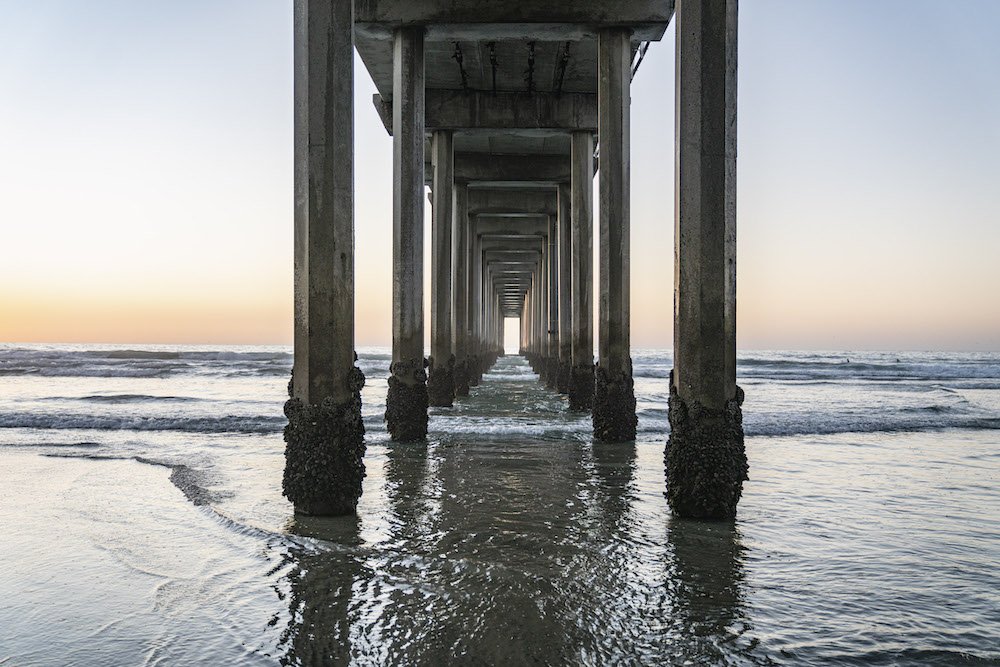


4. Driving the Amalfi Coast
If you prefer having complete control over your itinerary, renting a car is an option. Driving along the Amalfi Coast can be a thrilling experience, but it comes with its challenges. The roads are narrow, winding, and often crowded, requiring confident driving skills. Parking can also be difficult to find and expensive. Despite these challenges, having a car allows you to explore at your own pace and venture off the beaten path to discover lesser-known areas.
Pros:
Complete control over your itinerary.
Ability to explore off-the-beaten-path locations.
Convenient for carrying luggage and personal items.
Cons:
Challenging driving conditions with narrow, winding roads.
Difficult and expensive parking.
Potential for traffic congestion, especially in summer.
5. Hiking the Amalfi Coast
For nature enthusiasts, hiking is one of the best ways to immerse yourself in the natural beauty of the Amalfi Coast. The Path of the Gods (Sentiero degli Dei) is the most famous trail, offering spectacular views of the coastline and the Tyrrhenian Sea. The trail runs between the towns of Bomerano and Nocelle, and is suitable for hikers of various skill levels. Other popular hikes include the Valle delle Ferriere and the coastal trail from Maiori to Minori. Hiking allows you to experience the region's lush landscapes, terraced vineyards, and charming villages up close.
Pros:
Immersive experience in nature and local scenery.
Access to breathtaking viewpoints and less-visited areas.
Healthy and active way to explore.
Cons:
Requires physical fitness and good footwear.
Weather-dependent and can be strenuous.
Limited to specific trails and areas.
6. Exploring by Boat
Chartering a private boat or joining a boat tour is a luxurious and intimate way to explore the Amalfi Coast. This option allows you to visit secluded coves and beaches that are inaccessible by land. You can also enjoy activities such as swimming, snorkeling, and diving in the crystal-clear waters. Many boat tours offer the opportunity to visit nearby islands like Capri and Ischia, adding more variety to your coastal adventure.
Pros:
Luxurious and intimate way to see the coast.
Access to secluded coves and beaches.
Opportunities for swimming, snorkeling, and diving.
Cons:
Expensive, especially for private charters.
Weather-dependent and may be seasonal.
Limited to coastal areas and not inland towns.

Looking east, down the Amalfi Coast of Italy from Vietri Sul Mare. Photo by Dalton Johnson
The Amalfi Coast offers a multitude of ways to explore its breathtaking scenery and charming towns. Whether you choose to bus, scooter, ferry, drive, hike, or explore by boat, each mode of transportation provides a unique perspective and experience. Plan your trip according to your preferences and comfort level to make the most of your visit to this enchanting part of Italy.
So pack your bags, prepare your itinerary, and get ready to discover the unparalleled beauty of the Amalfi Coast. Buon viaggio!
Discover More Destinations

Five Iconic California Vacations You Need To Do
For the thrill-seekers, outdoor lovers, photographers, and overall rad humans, California unveils a realm of exhilarating adventures and breathtaking landscapes that go far beyond the typical tourist trail. Fake cough... fake cough... I'm talking about the thought of California as a big long sandy beach. There is a ton more! From the tallest peak in the lower 48 to capturing the perfect shot of a cascading waterfall, California can be a dream destination for anyone. Here are five iconic California vacations that will satisfy your craving for both adrenaline and awe-inspiring scenery.
For the thrill-seekers, outdoor lovers, photographers, and overall rad humans, California unveils a realm of exhilarating adventures and breathtaking landscapes that go far beyond the typical tourist trail. Fake cough... fake cough... I'm talking about the thought of California as a big long sandy beach. There is a ton more! From the tallest peak in the lower 48 to capturing the perfect shot of a cascading waterfall, California can be a dream destination for anyone. Here are five iconic California vacations that will satisfy your craving for both adrenaline and awe-inspiring scenery.

A sunset kayak along the rocky east shore of Lake Tahoe. Photo by Dalton Johnson
Summiting Mount Whitney
For those who thrive on the adrenaline rush of high-altitude challenges and possess a passion for photography, conquering Mount Whitney is the ultimate thrill. The journey to the summit offers not only a physical challenge but also a visual feast for the camera lens. Capture the play of light on alpine meadows, the rugged beauty of rocky slopes, and the sheer triumph of reaching the highest point in the contiguous United States.
As a photographer, Mount Whitney provides a canvas of ever-changing landscapes. From sunrise to sunset, the interplay of colors against the dramatic backdrop of the Sierra Nevada range creates a photographer's paradise. The sense of accomplishment and the stunning visuals make this adventure a must for those who seek both physical and artistic fulfillment.
Kayaking and Hiking in Lake Tahoe
Lake Tahoe, with its crystal-clear waters and mountainous surroundings, is a paradise for thrill-seekers with a penchant for photography. Paddle through hidden coves, capturing reflections of snow-capped peaks on the serene surface of the lake. The juxtaposition of water and mountains provides endless opportunities for dynamic and captivating shots.
Venture onto the Tahoe Rim Trail, where alpine vistas and dense forests become the backdrop for your photographic explorations. As you hike along the rim, seize the chance to capture the changing light on the landscape, from the vibrant hues of wildflowers to the soft glow of twilight over the lake. Lake Tahoe is not just a destination; it's a canvas for outdoor enthusiasts with a camera in hand.
Road Trip Highway 1
Embark on a road trip along California's iconic Highway 1, and every turn reveals a new opportunity to capture the raw beauty of the Pacific coastline. From the historic Bixby Creek Bridge to the misty cliffs of Big Sur, the coastal majesty unfolds before your camera lens. Whether you're chasing the perfect sunset or capturing the rugged landscapes in the soft glow of dawn, Highway 1 is a photographer's dream.
The quaint coastal towns, hidden coves, and dramatic seascapes provide endless subjects for your lens. Set up your tripod at one of the many overlooks, feel the salty breeze, and let your camera tell the story of your journey along this scenic route. Highway 1 is not just a road trip; it's a visual adventure that beckons photographers to capture the essence of California's coastal grandeur.
Backpack the Lost Coast
For thrill-seekers who crave the solitude of remote landscapes, backpacking the Lost Coast is an adventure that promises both challenge and photographic reward. The rugged coastline, untouched by development, becomes a blank canvas for your camera. Capture the wild beauty of secluded beaches, towering cliffs, and the rhythmic dance of the tides.
As you trek through this untouched wilderness, document the raw power of the ocean meeting the land, the intricate details of tidepools, and the untouched beauty of a landscape that remains largely unexplored. The Lost Coast is not just a backpacking trip; it's a visual journey into the heart of California's untamed and untouched nature.
Explore Waterfalls Around Mount Shasta
For those who find inspiration in the soothing sounds of waterfalls and the challenge of capturing their ethereal beauty, the waterfalls around Mount Shasta offer a symphony of photographic opportunities. From the iconic McCloud Falls to the hidden gems like Hedge Creek Falls, each cascade becomes a muse for your lens.
Embark on a waterfall-hopping adventure, framing the dynamic flow of water against the majestic backdrop of Mount Shasta. Experiment with long exposures to capture the silky movement of water or focus on the intricate details of moss-covered rocks. The waterfalls around Mount Shasta are not just natural wonders; they are moments frozen in time through the lens of an adventurous photographer.
Kristin sitting and enjoying one of the many waterfalls around Mount Shasta. Photo by Dalton Johnson
California's diverse landscapes provide the perfect playground for outdoor enthusiasts who thrive on thrills. Whether you're summiting Mount Whitney, cruising along Highway 1, paddling through Lake Tahoe, trekking the Lost Coast, or capturing the symphony of waterfalls around Mount Shasta, each adventure is an opportunity to blend the thrill of the outdoors with the artistry of photography. So, pack your camera gear, embrace the adrenaline, and embark on a visual journey through the exhilarating landscapes of California.
Discover More Destinations
Has Google Maps Destroyed The Art of Road Tripping?
Before digital maps, road tripping was an exploration into the unknown. Unfolding like treasure maps, paper maps embodied the thrill of getting lost an integral part of the adventure. Google Maps, while undoubtedly efficient, has replaced the gut punch of taking that wrong turn, rerouting us away from the unexpected hidden gems. Now, in the era of instant gratification and digital navigation, the once-beloved art of road tripping has undergone a transformation, leaving us to question whether the convenience of Google Maps has inadvertently stripped away the soulful essence of the journey.
Before digital maps, road tripping was an exploration into the unknown. Unfolding like treasure maps, paper maps embodied the thrill of getting lost an integral part of the adventure. Google Maps, while undoubtedly efficient, has replaced the gut punch of taking that wrong turn, rerouting us away from the unexpected hidden gems. Now, in the era of instant gratification and digital navigation, the once-beloved art of road tripping has undergone a transformation, leaving us to question whether the convenience of Google Maps has inadvertently stripped away the soulful essence of the journey.
Before we dive deeper, let me first, just say, I still use Google Maps everyday to get around, but I do recall the times when my Grandpa and Dad road tripped from California to the Midwest and driving to-and-from different swim meets with my Mom that we either had hand drawn maps, printed directions, or nothing at all.
So, what have we lost by using Google Maps?

The open road through the windshield of the van window. Photo by Dalton Johnson
1. Digital Detours vs. Serendipitous Discoveries:
Google Maps' precise navigation can be a double-edged sword. While it efficiently guides us to our destinations, it also eliminates the chance for serendipitous discoveries. The quirky roadside diner, the scenic overlook not marked on the map—these hidden gems are casualties of a journey overly reliant on the guidance of technology.
2. Disconnecting from the Journey:
As the soothing voice of Google Maps directs every turn, there's a risk of disconnecting from the journey itself. The constant focus on the screen can overshadow the scenic landscapes passing by, the stories etched in small towns, and the laughter shared in the confines of a car. The road trip becomes more about reaching the destination efficiently than about savoring the moments along the way.
3. The Erosion of Navigational Skills:
In the days before turn-by-turn directions, road trippers relied on a combination of maps, intuition, and local advice. The art of navigating became a skill, an interactive dance with the landscape. With Google Maps leading the way, there's a concern that the once-common ability to read a map and navigate without technology may be eroding.
4. Overlooking Local Wisdom:
One of the charms of road tripping was engaging with locals for directions and recommendations. Google Maps, while efficient, may bypass the invaluable insights that locals provide. The art of striking up a conversation with a gas station attendant or asking for directions becomes a lost opportunity for cultural exchange and discovering hidden gems known only to those who call the area home.
5. Trading Spontaneity for Predictability:
Road trips were synonymous with spontaneity—taking an unexpected turn, exploring a detour, and embracing the unpredictable. Google Maps, in its quest for efficiency, can inadvertently trade the spontaneity of the open road for the predictability of the prescribed route.
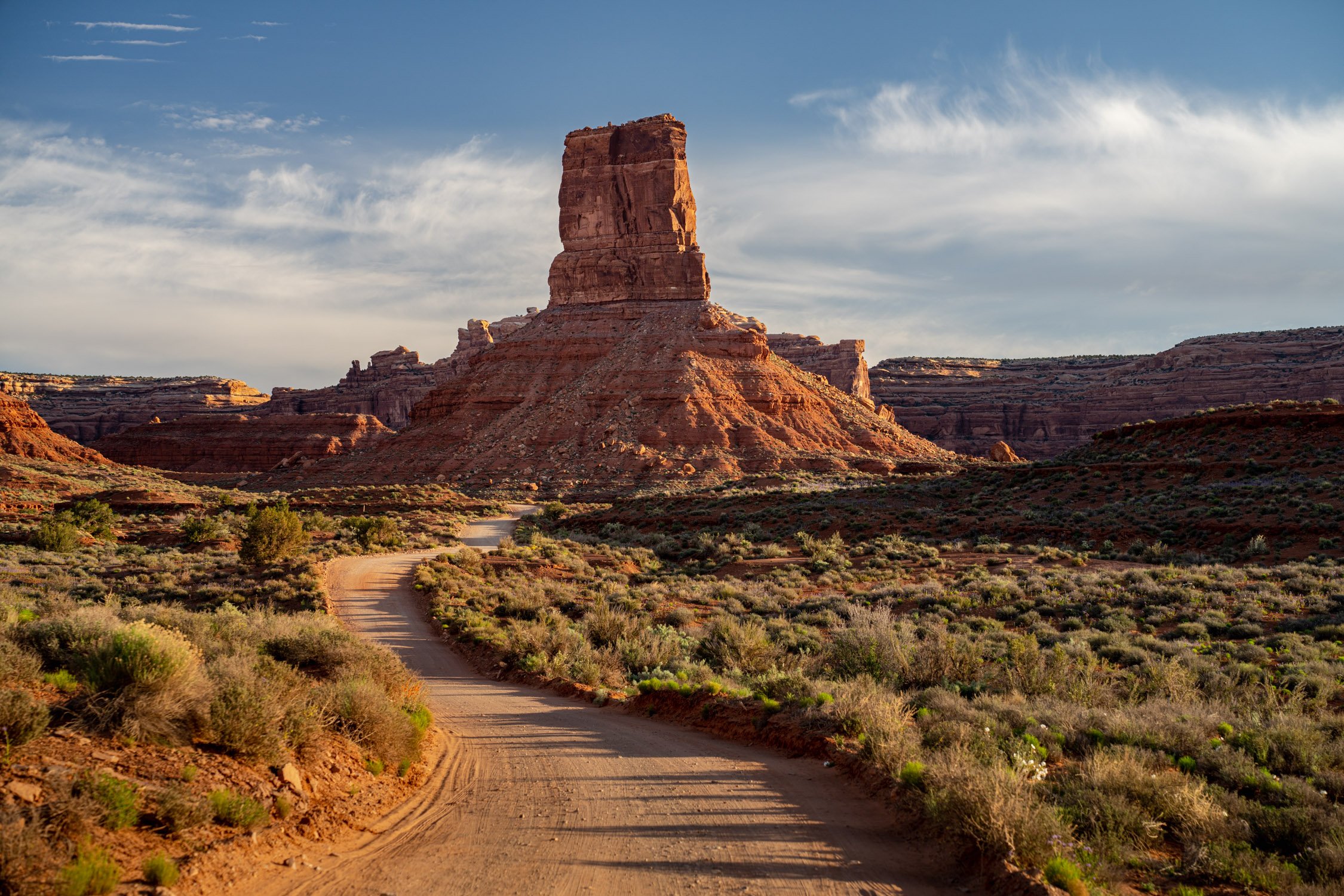
If it wasn’t for a local, we would have driven right past Valley of the Gods. Photo by Dalton Johnson
While Google Maps has undeniably revolutionized the way we navigate and travel, it is essential to acknowledge the potential impact on the art of road tripping. The challenge lies in finding a balance, leveraging technology for efficiency while preserving the essence of the journey—the joy of the unknown, the thrill of exploration, and the unscripted stories waiting to be discovered on the open road.
Discover more Adventures

Montana Has a Pie Trail, Here is Everything You Need To Know
We might recognize Montana as the home to Old Faithful, grizzly bears, and a hunters' paradise, but that isn't all it has to offer. Tucked away in Central Montana is a road trip destined to add a few pounds to your waistline, but don't worry, there are enough outdoor activities for you to do along this 727-mile journey to burn off those pie pounds.
We might recognize Montana as the home to Old Faithful, grizzly bears, and a hunters' paradise, but that isn't all it has to offer. Tucked away in Central Montana is a road trip destined to add a few pounds to your waistline, but don't worry, there are enough outdoor activities for you to do along this 727-mile journey to burn off those pie pounds.
With twenty, yes, 20, pie stops along the way, you will certainly become an expert in your pies by the time you finish this loop starting and ending in Chester, MT. Once you land, rent a car, ideally something with good gas mileage, then start your journey clockwise, or counter-clockwise, and uncover your favorite flavor of pie.
A field of wildflowers and a tower in Monument Valley during the spring sunrise. Photo by Dalton Johnson
Will it be the Montana specialty, Huckleberry? Or, will it be the American classic, apple pie? Or, will it be something else? In summer, raspberries, gooseberries, and other seasonal treats grace the pie tins of Central Montana. And traditional favorites like apple, peach, and lemon meringue are always on the menu at the end of a great meal.
Don't forget to add a scoop of ice cream to your pie!
Best of all, these pie stops are all owned and operated locally, so, your greenbacks are directly supporting the community that is feeding you. So, make sure to leave a great tip for your waiter.
The Pie a La Road Stops
Chester - Spud’s Cafe
Choteau - Log Cabin Cafe
Conrad - Home Cafe
Denton - Shade Tree Cafe
Fairfield - Cozy Corner Cafe
Fort Benton - Wake Cup Coffee House
Grass Range - Little Montana Truckstop
Great Falls - 2K’s Kafe
Great Falls - Double Barrel
Great Falls - Family Affair Restaurant
Great Falls - Lippi’s Kitchen
Great Falls - Roadhouse Diner
Havre - The Lunch Box
Havre - Wolfer’s Diner
Hobson - Tall Boys Tavern
Lewistown - Brooks Market and Deli
Loma - Ma’s Cafe
Martinsdale - Crazy Mountain Inn
Shelby - The Griddle Restaurant
White Sulphur Springs - Branding Iron Café
Discover More Destinations

The Realities of Long Term Motorcycle Travel
I met Jimbo Tarpey while staring at salmon in a river, waiting for a grizzly bear to come eat, in Hyder, Alaska.
Without cell service, I sat on a wooden bench, staring at these salmon, as if watching paint dry. Then, I saw Jimbo wander up in a full motorcycle kit, high on life. Thinking to myself, I need to know the story behind this guy, I scooted closer to eavesdrop on his conversation.
In a short while, I became a part of the conversation learning about Jimbo's goal of riding a motorcycle from his home in Minnesota to the top of Alaska all the way to the bottom of South America. His story blew my mind and I am honored to share his story with you all through a Q&A below:
I met Jimbo Tarpey while staring at salmon in a river, waiting for a grizzly bear to come eat, in Hyder, Alaska.
Without cell service, I sat on a wooden bench, staring at these salmon, as if watching paint dry. Then, I saw Jimbo wander up in a full motorcycle kit, high on life. Thinking to myself, I need to know the story behind this guy, I scooted closer to eavesdrop on his conversation.
In a short while, I became a part of the conversation learning about Jimbo's goal of riding a motorcycle from his home in Minnesota to the top of Alaska all the way to the bottom of South America. His story blew my mind and I am honored to share his story with you all through a Q&A below:
Jimbo
A Q&A with Jimbo on Long Term Motorcycle Riding, History, and the Pan-Am Highway:
Q: Could you introduce yourself?
A: My name is Jimbo Tarpey, a year ago I quit my job and left everything behind to travel the world. I’m a 33 year-old Minnesotan that makes infotainment videos and blogs on historical places across the Americas that I visit on my motorcycle.
Q: How can we follow your journey?
A: You can find me on YouTube, Instagram, Facebook, and Patreon by looking up “2 Wheels 1 Compass” or 2W1C. I have a website here too.
I release YouTube videos once every month or so that are real labors, and I try to release a blog or 90-second reel on Facebook or Instagram every other day.
90% of my blogs are on Patreon and free to read, but the best stories are saved for those who donate to my cause. On Patreon you can give as little as $1 / month and access those stories.
Q: What are you currently doing?
A: After saving and planning for 7 years, I quit my job, donated my mattress, left my apartment, sold my car, and rode off on my motorcycle to cross the Americas from the top to the bottom. I’ve been traveling for 13 months.
Not only do I travel, I also ride around to historical locations, stay with locals, and report on the history and culture of the places that I visit on social media platforms as an amateur influencer. It’s been a dream of mine and I’ve worked on it for years and I’m currently living it!
Q: What’s your background?
A: I worked in the health insurance industry for about 6 years... I left it all behind for this trip. I have a degree in Anthropology and I speak Spanish, so I’ve been recently using those to dive into the culture of Latin America and report on the interesting, strange, and unique things I see. I’ve been a motorcyclist since I was 25.
Q: What is your route and how did you decide on it?
I always knew I wanted to travel the world but I didn’t know how. One day, the dream actually started with me looking around Google Earth on a rainy day. I was looking at far off and remote places like Greenland or the interior of Australia. I had just got back from a road trip and I was wondering what extreme road trip places existed.
My eyes were drawn to the top of North America. This was around 2014 so there was only 1 road to the Arctic Ocean. As it turns out, there were a few people that had taken that route in their own private vehicles over The Dalton Highway, the treacherous stretch from Fairbanks up to the shores of Earth’s northern ocean.
Then that made me wonder, how far south can I go from there? Then I looked up the farthest south roads go. That brought me to Ushuaia, Argentina.
My coworker at the time was a motorcyclist and talked about all of the advantages I’d have with traveling on a motorcycle such as cost, ease of access, quality of living, economy, and many other things.
I wanted no time limit to see all the things in between. Given there are things such as tourist visas and seasons there’s obviously not unlimited time, but I wanted to be able to see everything I could. There was no set route other than these two points: Deadhorse, Alaska and Ushuaia, Argentina.
Q: What bike did you choose?
A: I have a 2020 Honda Africa Twin 1100. I selected it because it is an adventure bike class, meaning it has the best fuel economy (~60 MPG), good ergonomics for long highway stretches, and it can go off-road and handle the rough stuff when needed.
Q: How did you select your bike? What other bikes did you consider?
A: I needed something that could handle crossing the vast expanses of North America as well as the rough-and-tumble scenic routes of Latin America. I picked Honda over BMW, Triumph, or KTM because of cost, and it would be easier to find parts and dealerships across the hemisphere.
I considered the Kawasaki Versys and Suzuki V-Strom as well, but the immediate post-pandemic availability back in spring of 2021 limited my options. Right now I’m falling in love with the Yamaha Tenere 700 but don’t tell my bike that.
Q: How did you budget for the trip?
A: I should preface this by saying that my biggest priority for this journey was time. I wanted to travel for years. So, I saved a lot for this over the course of my young career. I didn’t want to be hampered by costs and budgeting, so I saved up a large sum of money over the course of several years and I’m slowly chipping away at it as I go.
I don’t look ahead further than maybe 1-2 days in terms of budgeting. I find out how much it’ll cost to operate daily and multiply that by a month. Every month I’ll look back at my expense totals and forecast what I may be down to looking forward as the months go by.
Q: What was the hardest part of starting?
A: All those years I was saving, I had to put many things aside. Many romantic relationships had to have the conversation: “Here’s what I’m doing. Have you ever considered long-term travel?”
I had relationships with an expiration date. My goal was the exact opposite of people looking to have children, buy houses, and settle down. There’s a lot of social pressure to do these things, both internal and external. It’s hard to ignore those pressures.
Also, you need to consider apartment leases and large possessions when you go. I had furniture and a car. I had to sell the car and have friends take what they could if they agreed to it. I also got a storage locker to pack up my life and I paid the maximum 2 year advance for it. When signing for my last apartment, I awkwardly asked for a 20-month lease that was set to expire in July 2022 so I could leave in the summer to the Arctic.
Q: What was the largest barrier-to-entry that almost made you reconsider?
While friends were using their vacation time to visit far off locations around the world, I budgeted my paid time off to go on long-distance motorcycle trips around the US and Canada to practice the camping, packing, and logistics of this ‘big trip.’
I don’t think anything got close to making me reconsider. Once I had told my friends and family I was planning on doing it, and once I’d started to save up the money and make sacrifices for the long-term goal, there was no going back.
It would hurt more to quit than it would to keep going.
Q: How far have you gone? How much is left?
I have gone from Minneapolis, MN to Deadhorse, AK, and I’m writing to you from Costa Rica after being on the road for 13 months.
I have been on the road for 43,902 km or 27,279 miles.
I have no idea how many miles are ahead, but I’m targeting hitting the bottom of South America in January to February of 2025 during the southern hemisphere’s summer. From there, I will head North.
I don’t know what I’ll do after I reach the bottom. That is still TBD. I’ll look at the 4 Bs:
My Bank account
My Bike
My Brain
My Body.
Then I’ll decide what I can handle next. A Trip home? A continuance to another continent? Time will tell.
Q: Thus far, what are 3 to 5 highlights?
A: In no particular order:
The Dalton Highway to Deadhorse Alaska. Reaching that Arctic Ocean shore was a feat I’d been dreaming of for years.
I was invited to dive deep into the Mexican state of Sinaloa to stay with local motorcyclists. Those connections lead to private invites to 2 Mexican motorcycle rallies that even put me on 2 local news outlets. Link 1 Link 2
A therapeutic psychedelic mushroom experience with a shaman as a spotter in the mountains south of Mexico City.
Stowing away on a 12-hour ferry from the Baja Peninsula to the mainland of Mexico by getting past security and sleeping on the floor of their movie theater.
Death Valley’s challenges and reaching a point of total self-sufficiency after about 4 months on the road.
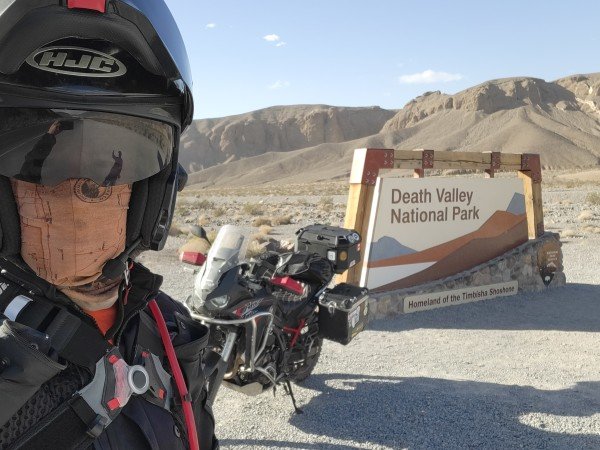
Jimbo
Q: Now, on the flip-side, what are 3-5 lowlights?
Particularly in order, but each of these ‘bad times’ turned into great stories.
5) I hit a bowl of soupy sand and crashed offroading in the Paso de Cortez in Mexico in between Mexico City and Puebla. It broke my pannier off (Box attached to the motorcycle with my gear). The pannier had my emergency can of gas attached. With the help of locals I was able to connect it (imperfectly) and I took it to a welder. He gave me a quote and told me to come back in 3 hours. Upon returning to the welder, he told me the price was going to be 33% more. I argued no, we had a deal. When I attached the pannier, I noticed gasoline had been stolen from my can. They tried to overcharge me after stealing from me.
4) My motorcycle battery died and could not be bump started or jumped (it’s a Lithium Ion Battery) so I hitchhiked with a French-Canadian 255 km (158 mi) one way, then had help from a Canadian motorcyclist to go out and tow it back adding another 2 trips of that same distance.
In total I went 765 km (474 miles) over the course of about 9 hours of travel in 1 day across central British Columbia. It was all done on generosity.
3) I was horribly sick with Montezuma’s Revenge with no appetite for 4 days as I recovered in a Mexican motorcyclist’s spare bedroom on the roof of his house in the Yucatan Peninsula. There was no AC and only a fan. At the hottest time of year, during the hottest part of every day, it loomed around 40C (104 F) for several hours, meaning aiming a fan at me was cooking me like a convection oven as the temperature was above my body temp. It took a few days to work up the gumption to go to a doctor.
2) I finally came down with Covid for the first time in Washington state. I’d tested negative, but as I was coming down with it, I stayed overnight in the garage of a motorcyclist as the cascadian rain came down. As we were getting to know each other, I was held conversationally hostage as he went on a racist tirade against immigrants and addicts. I was in no condition to leave, it was dark and raining, I was getting more sick by the minute, and I was also in the process of eating a dinner he provided me. When he took a second to breathe, I thanked him for the dinner and he changed immediately and it was over. I was confined to the garage because a pit bull was inside the house that he assured me would attack me. Luckily I had a noisy space heater that drowned out the sound of rats fighting in the piles of motorcycle parts of the garage. I left the next morning first thing.
1) At the Calgary Stampede Rodeo, one of the largest gatherings in Canada, I went out to the bar with some locals. After getting separated, we found each other to leave. I climbed into the vehicle of my ride back to the hostel but I didn’t know my driver was drunk. He hooted and hollered, waving his cowboy hat out the window as he began to swerve into oncoming traffic. When I asked him to drive safer, he called me a pussy. I asked to be let out of the vehicle but he refused.
I was then literally in the process of being kidnapped, as he wouldn’t let me out of the vehicle. He ran red lights to prevent us from stopping so I couldn’t get out. Finally after hitting some traffic, I got out. I walked home a sobering 5 hours across Calgary with no water and arrived at 7AM. My card was eaten by an ATM earlier that day and the Stampede was going on, so Uber was not an option.
Q: What is the community like on the road?
A: I feel like there are 3 different circles you run in. There’s the backpackers, the overlanders, and the locals. Each one of them has different things to offer and can be interesting, helpful, and you can learn from each of them in their own way.
Q: Best interaction?
This is impossible to answer.
I’ve traveled alongside wonderful people and stayed in the homes of the best hosts imaginable. I keep in touch with many folks I’ve met along the way, some of them I’ve only seen once or twice. There is so much positivity in people. You really see it come out when you travel.
My world view has grown much more warm because of all of the hospitality, and generosity I’ve witnessed over the last year. Anyone that travels like I do would say the same.
Q: Since you are solo, is it lonely? If so, how to avoid that feeling?
A: Yes, it can be lonely. I try to keep a regular cadence of keeping in touch with friends and family virtually. If I need to get a fix of personal human interaction, I can stay at hostels or go on tours. As a solo traveler, you’re surprisingly more approachable. Sometimes just being lost in a book on a beach, in a park, or in the hostel lobby can make you seem approachable. Opening up a paper map on the side of the road acts as a magnet for people to come to you to help as well.
When I’m very lonely, I write. I write blogs that no one will read. I try to get to the bottom of the loneliness I’m feeling. One thing I cannot fix, however, is that I’m in this for the long run. I fight through those feelings like any other illness, injury, or sunburn. It takes some time.
Q: What do you mostly eat?
A: This is probably my weakest link in travel. Eating well is essential to having a good time and being able to tackle problems efficiently and enjoy the journey.
In countries where the dollar is more powerful, I eat at restaurants a lot to get local flavor and save on time. If I’m in more expensive places like Costa Rica, California, or the Canadian arctic, I cook for myself. I’ve cooked medleys of vegetables with rice or lentils. When you resort to cooking more it’s much harder, because on a motorcycle you have no refrigeration.
Q: Hygiene tips/tricks for long term motorcycle travel?
A: I carry biodegradable soap in case I need to bathe in a body of water like a lake or river, I carry cologne for those sweaty days where I know my odor will offend people in my proximity and I can’t get showered yet. In tropical environments, I sometimes apply deodorant or shower multiple times per day.
Keeping gear clean is also essential to its longevity and your own mental state. I try to keep my boots, riding jacket and pants, and helmet padding washed every so often to keep it in good shape and my smell down.
They no doubt need to be washed more often in hotter climates where I sweat more.
Don’t forget about your camping pillow, sleeping bag, and air mattress! Keeping them clean will keep your skin clean and smell down as well. They typically require handwashing, so it’s good to keep a day budgeted somewhere every month or two to get things really washed depending on climate.
Q: What has bike maintenance been like on the road?
A: I purchased a new motorcycle. There are many reasons for and against this.
When you buy a used motorcycle, it’s not as big of a loss if you need to abandon it in the event of a massive situation like deportation, a pandemic, or crash. When you buy used, however, they may need maintenance for wear and tear that is not-so-typical.
My Africa Twin has only needed routine maintenance such as tires, air and oil filters, brakes, chains, and sprockets. It helps to have an understanding of WHAT wears out and keep a tally of the intervals. I keep a spreadsheet of all regular replacements and at what mile / km they were done at.
You don’t have to be a mechanic to do this life. If you’re not mechanically inclined, you just need to be prepared to spend more time and money when things do go wrong or need to be changed. You can also learn as you go such as I am.
Q: After a days riding is done, describe a “typical” night in a town and in a remote setting?
A: There is no ‘typical’ anything in a life like this, but I try to follow some similar guidelines.
When searching for a hostel, hotel, or other non-camping setup, I ask if there’s a safe place to park my motorcycle indoors. That’s a first. Then, I ask if there’s Wifi, AC, any breakfast included, and cost. If I can avoid AirBnB or Hostelworld getting a cut, I call hostels and hotels directly to make reservations by phone. This helps me save a few bucks and the folks on the other end of the line typically like the personal touch. I’m also able to ask the aforementioned questions in real time.
When it comes to a remote setting, I use iOverlander a lot. It’s an app that requires no internet once you’ve downloaded a region. It has a ton of free sites (and some paid but hard to find) where I’ve ended up running into a lot of travelers on the Overlanding circuit.
Q: Camping set up?
I have a Nemo Galaxy 2 person tent that can fit my gear underneath the rain flaps. It’s free-standing which is SUPER helpful, and I can leave the rain fly off to sleep in much hotter environments.
I have a small cooking stove / burner that takes white gas and butane. It’s the achilles heel to my cooking setup. Gas can be easily found in countries where camping is a bigger hobby but hard everywhere else. Folks who can turn gasoline into a stove have more versatility.
Now that I’m in Latin America I don’t camp as much, as costs are lower. I look for hostels with kitchens when I can.

Jimbo
Q: Worst night sleep?
A: Death Valley turned my tent into a sandbox overnight. Zippers never worked the same, my helmet visors were scratched up, and my air mattress, air pillow, and sleeping bag had a risk of getting holes. I slept with a balaclava over my mouth and nose. When I finally did sleep for a few hours, I woke up to my eyes caked in sand.
I’ve had much worse quality sleep at very hot locations I’ve camped like the Caribbean coast of Guatemala or Pacific Coast of El Salvador, but those don’t sound as interesting. Extreme heat when sleeping can really make your trip rough as poor sleep impacts your entire day.
Q: Close calls, road conditions, have you gone off-road yet?
A: I would consider the entire Dalton Highway, which goes North out of Anchorage up to Deadhorse, as off-roading. It can be in pretty rough shape depending on the weather and conditions that year, or sometimes it just comes down to what stretch you’re on. You need 50/50 onroad / offroad tires and quite a bit of experience to handle it.
I’ve done a lot of off-road riding in the Canadian and American west, as well as getting to some remote Latin American villages. I admit, I’m not the best off-road rider, HOWEVER, I can cut through thick Latin American traffic as well as the moto-delivery locals.
Give me a little coffee, the right fast-paced song playing in my bluetooth helmet, good weather, then drop me in heavy Mexican City traffic. I’ll dart through it like a madman, weaving between lanes and aggressively keeping pace with the rest of them, regardless of the size of my 1100 Motorcycle. All of my focus, both physical and mental, is engaged. For some reason it’s a huge thrill to me. It’s an adrenaline itch that no roller coaster could scratch.
Q: Darien gap with a motorcycle. What’s your plan
A: At the moment, I’m taking a break in Costa Rica. I used to live here, so I’m staying with friends and regrouping.
Eventually I’ll contact a company called Overland Embassy, based out of Panama, which seems to be a great group of people. They do Motorcycles, Vans, even RVs. They do air and sea, even to Europe. The current plan is flying the bike from Panama City to Bogota with them.
Q: Scariest experience thus far?
A: Going out on a limb to trust a stranger with psychedelics in Mexico was quite a stretch. I rode into a very poor and dangerous region of the country and trusted someone I didn’t know with all of my things while I put myself in a very vulnerable situation.
Even getting in contact with them was through a grapevine. It wasn’t exactly advertised. The trip I was on turned paranoid for a while, but it ended up okay. I came out the other side in much better shape than when I went in.
It was totally worth it, I wouldn’t go as far as suggest it to others. There are too many variables to consider. It’s not like finding a place to go ziplining.
Q: License plates… if you care to elaborate/share.
A: When I was a wee lad growing up in Minnesota, a neighbor who had recently moved from South Dakota gave me some of their extra license plates. From there I started collecting them from friends and relatives, many giving me some as presents. I would display them on my walls as a kid.
As I’ve traveled, I’ve started seeking them out at junkyards and gift shops. I’ve never purchased a single one online. I currently have about 18 of them on me, all Mexican states and one Belize plate, and I’m looking to find a way to send them home while I’m in Costa Rica.
They’re fun to display and many of them have some crazy stories.
Q: How has history interwoven into your trip?
I love stories, specifically non-fiction ones. I feel like those “based on a true story” tales are always the best. For that reason, I love history. I had the idea to travel to places to speak to their historical relevance as a way to bring people along for the journey.
For some people, going to a historical place is “just a few old buildings” or “Just a hole in the ground.” but giving it historical context makes it so much more interesting.
History ties people to a land. It’s a part of the culture, identity, and personality of a people. Finding those artifacts and monuments to history helps people relate to one another.
I see it as: Anthony Bourdain used food. I use history.
Q: Parting words/message you want to get out to the world?
A: This is not a vacation, it is a major lifestyle change. It is a lot of work and high risk, but there is also high reward.
Also: there is no wrong way of doing this. There are people that travel the world on scooters and roller skates. The way you do it will determine what’s hard and easy. As long as you keep moving and you’re enjoying things, you’re doing it right.
Discover more Adventures

Expedition Overland Goes to Africa
As Expedition Overland packed their bags and double checked their passports, I had the opportunity to ask them a few key questions about what it takes to set off on an overland expedition. This veteran overlandering family, the Croft's, are headed out for an action packed, two-month long journey through Africa.
Here is what they have to say:
As Expedition Overland packed their bags and double checked their passports, I had the opportunity to ask them a few key questions about what it takes to set off on an overland expedition. This veteran overlandering family, the Croft's, are headed out for an action packed, two-month long journey through Africa.
Here is what they have to say:
Q: Best tips you have for preparing for an overlanding expedition?
First, make a plan for where you want to go and the expectations of your trip, then map and plan accordingly.
Example: If you are going with another person, talk about the kind of adventure you want to have. If one of you wants to hike and one wants a lot of off-roading, talk about doing those activities so you both have a good experience. If it’s just you, ask yourself what would make this trip a ‘win’ for you regarding the location you want to go. At the same time, allow yourself the freedom to change course if and when something comes up that redirects you.
Second, be self sufficient.
Try not to be overwhelmed by all the gear but remember that people have been doing this for years with very little. The more you go, the more refined your systems will be. To start, It can be broken down into a few categories.
Safety - Med kits, fire extinguisher, sat phone or in-reach, paper maps, gps or app like onX Offroad (know how to use all of these before you leave!)
Recovery - Maxtrax (recovery boards), snatch strap, winch (if you have one), gloves, shovel (again, know how to use these items)
Livability - What do you want/need to be able to live in and out of your vehicle?
Q: What are you excited about for Overlanding in Africa?
I am always excited for the new unknowns and challenges that come with exploring a new place. I am excited to immerse myself in a new culture, meet new people, and learn how others live. I am also very excited to watch our boys learn and experience a new place. I know we will all return a bit different then when we left. In a good way ;)
Q: What unknowns are keeping you up at night right now?
Picking up our trucks from the port. Anytime we ship our vehicles to another country, there are always unknowns and things out of our control. You can do your best to have all the paperwork and everything needed, but at the end of the day, you are sometimes at the mercy of one person behind a desk who decides what they want or need from you that day.
Camping and living in a wild place with many animals, big and small, makes me a bit nervous. We only have bears to worry about in Montana. Where we are going in Africa, we have lions, hippos, leopards, buffalo, elephants, snakes, spiders, and scorpions, to name a few.
Follow Expedition Overland as they travel through Africa:
Discover More Destinations

How To Manage Your Time And Stay Productive as a Digital Nomad
Digital nomads have mastered the art of blending work and travel seamlessly, allowing them to explore new destinations while staying productive in their professional endeavors. Balancing work and travel requires a strategic approach and a set of effective practices. Let's delve into how digital nomads stay productive while on the move.
Digital nomads have mastered the art of blending work and travel seamlessly, allowing them to explore new destinations while staying productive in their professional endeavors. Balancing work and travel requires a strategic approach and a set of effective practices. Let's delve into how digital nomads stay productive while on the move.
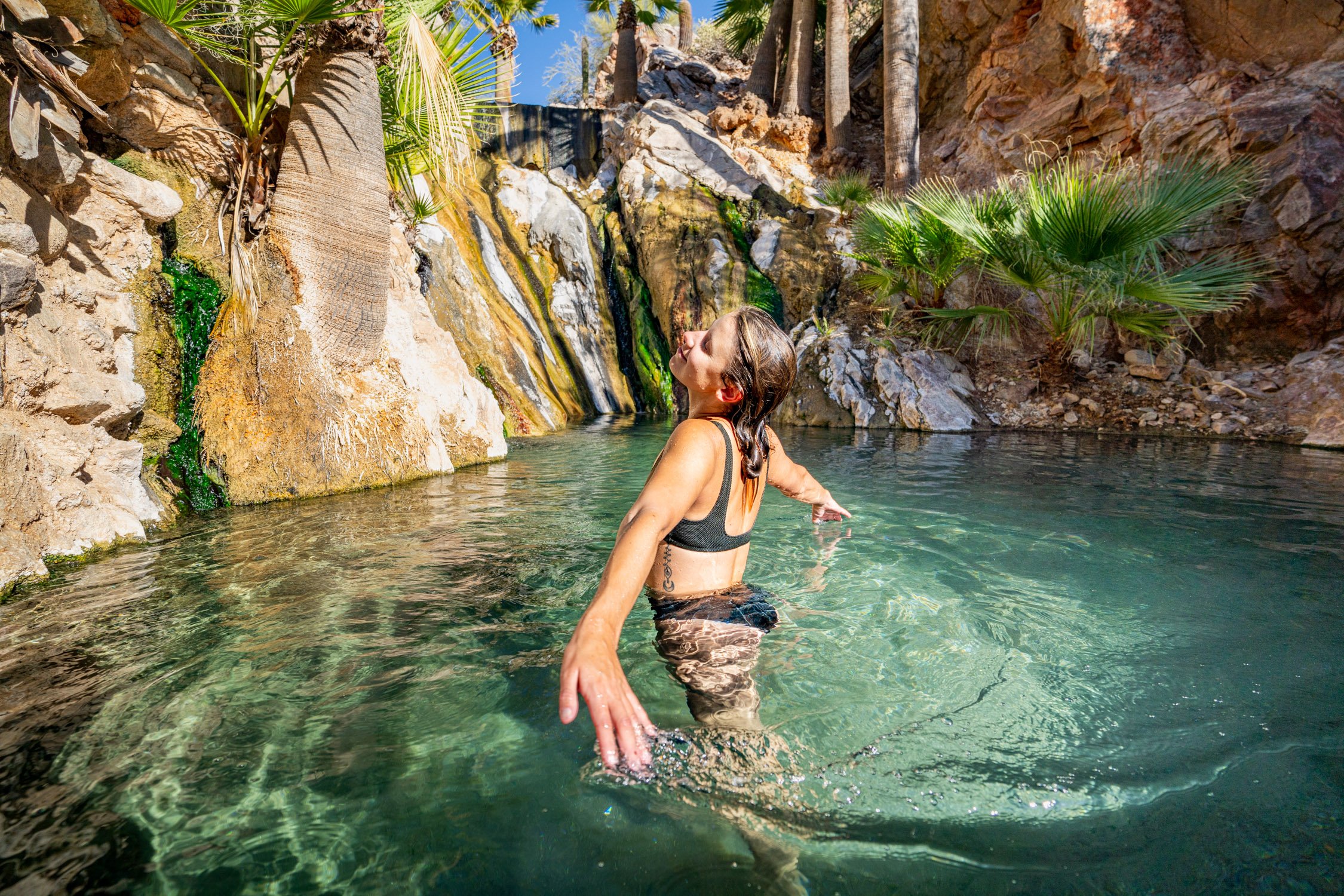
Kristin finding time to enjoy the hot springs while on a work assignment as a digital nomad. Photo by Dalton Johnson
1. Effective Time Management
Digital nomads prioritize their tasks and manage their time effectively. They often use time management techniques such as the Pomodoro Technique, time blocking, or setting specific work hours to maintain focus and productivity. By allocating dedicated time slots for work, they create a structured routine that helps them stay on track despite changing environments.
2. Creating a Functional Workspace
A crucial aspect of productivity for digital nomads is creating a functional workspace wherever they go. This includes having a comfortable chair, a reliable internet connection, proper lighting, and essential tools like laptops and chargers. Many nomads opt for co-working spaces or cafes with conducive environments for work.
3. Utilizing Productivity Tools
Digital nomads rely on various productivity tools and apps to streamline their work processes. These tools include project management platforms like Trello or Asana for task organization, communication tools like Slack or Zoom for team collaboration, and time tracking apps to monitor work hours and productivity levels.
4. Setting Clear Goals and Deadlines
Setting clear goals and deadlines is essential for digital nomads to stay focused and motivated. By breaking down projects into manageable tasks and setting realistic deadlines, they can track their progress and ensure timely completion of work while juggling travel plans.
5. Embracing Flexibility
Flexibility is a hallmark of the digital nomad lifestyle. Nomads adapt to changing circumstances, such as travel delays or unexpected challenges, by adjusting their work schedules and priorities accordingly. Embracing flexibility allows them to maintain productivity even in unpredictable situations.
6. Managing Distractions
While traveling, digital nomads face various distractions such as tourist attractions, social events, or new experiences. Managing these distractions involves practicing self-discipline, using productivity techniques like the "two-minute rule" to tackle small tasks immediately, and creating boundaries between work and leisure time.
7. Prioritizing Self-Care
Maintaining productivity requires a healthy work-life balance. Digital nomads prioritize self-care by incorporating regular exercise, mindfulness practices, and adequate rest into their routines. Taking breaks and rejuvenating their minds and bodies contribute to sustained productivity and overall well-being.
8. Networking and Collaboration
Digital nomads often engage in networking events, meetups, or online communities to connect with like-minded individuals and expand their professional networks. Collaborating with other nomads or local professionals not only fosters creativity and innovation but also opens up opportunities for growth and learning.
9. Continuous Learning and Skill Development
To stay competitive in their fields, digital nomads prioritize continuous learning and skill development. They invest time in online courses, workshops, or certifications relevant to their industries, enhancing their expertise and staying abreast of industry trends and advancements.
10. Maintaining Work-Life Integration
Finally, digital nomads strive for work-life integration rather than strict separation. They blend work with leisure activities, allowing for cultural immersion, exploration, and personal growth while fulfilling professional responsibilities. This integrated approach contributes to a fulfilling and sustainable lifestyle as a digital nomad.
There is always time to step outside and watch the Northern Lights when you are a digital nomad. Photo by Dalton Johnson
Digital nomads stay productive while traveling by leveraging effective time management, creating functional workspaces, utilizing productivity tools, setting clear goals, embracing flexibility, managing distractions, prioritizing self-care, networking and collaborating, continuous learning, and maintaining work-life integration. These strategies enable them to thrive in a dynamic work environment while enjoying the freedom and adventure of travel.
Discover more Adventures
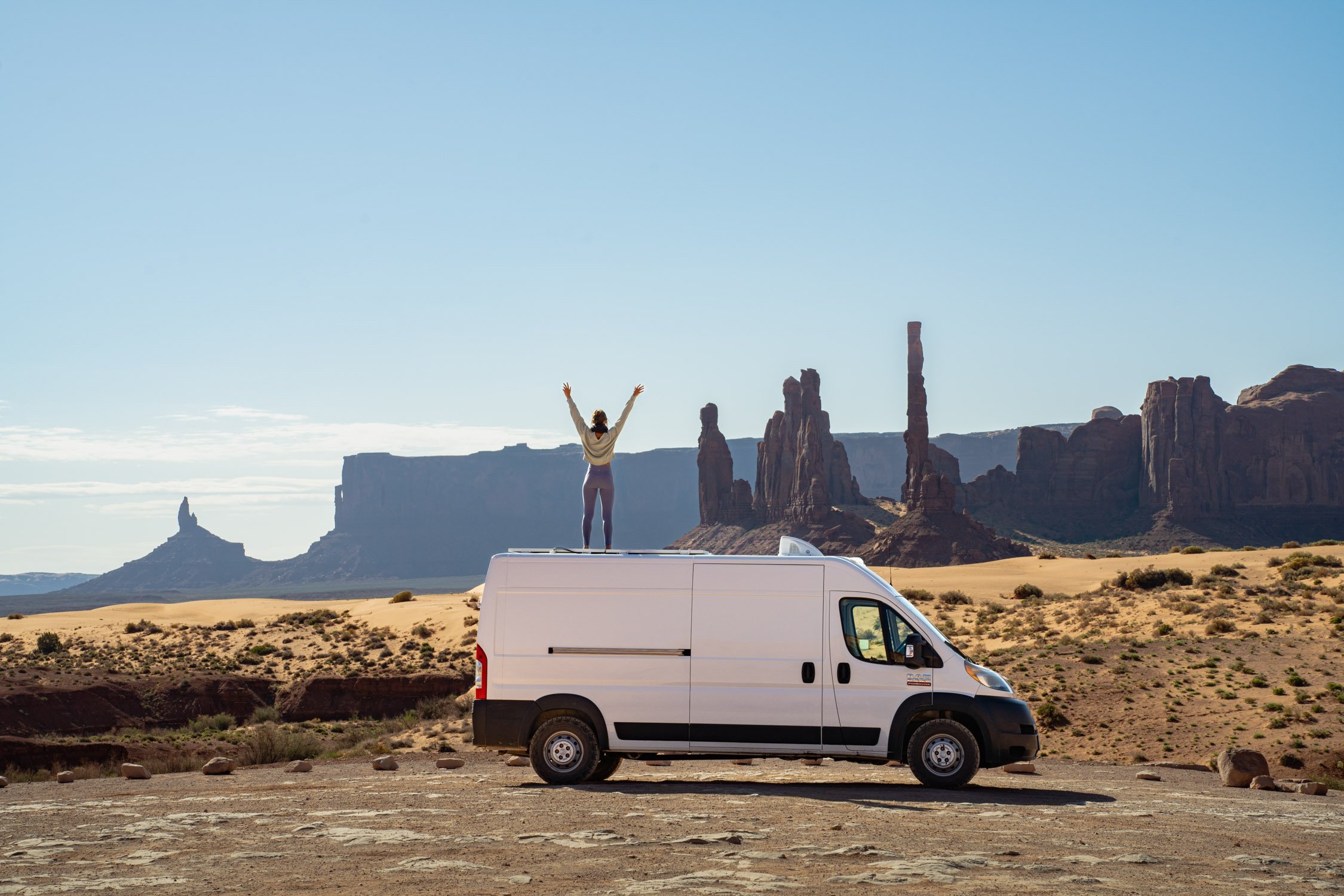
What To Do In Monument Valley
Nestled within the red-rock desert of the American Southwest lies a place of unparalleled beauty and cultural significance — Monument Valley. This iconic landscape, with its towering sandstone buttes and vast open spaces, has captivated travelers, artists, and adventurers for generations. If you're planning a visit to Monument Valley and wondering what to do and see, read on for a comprehensive guide to make the most of your experience.
Nestled within the red-rock desert of the American Southwest lies a place of unparalleled beauty and cultural significance — Monument Valley. This iconic landscape, with its towering sandstone buttes and vast open spaces, has captivated travelers, artists, and adventurers for generations. If you're planning a visit to Monument Valley and wondering what to do and see, read on for a comprehensive guide to make the most of your experience.
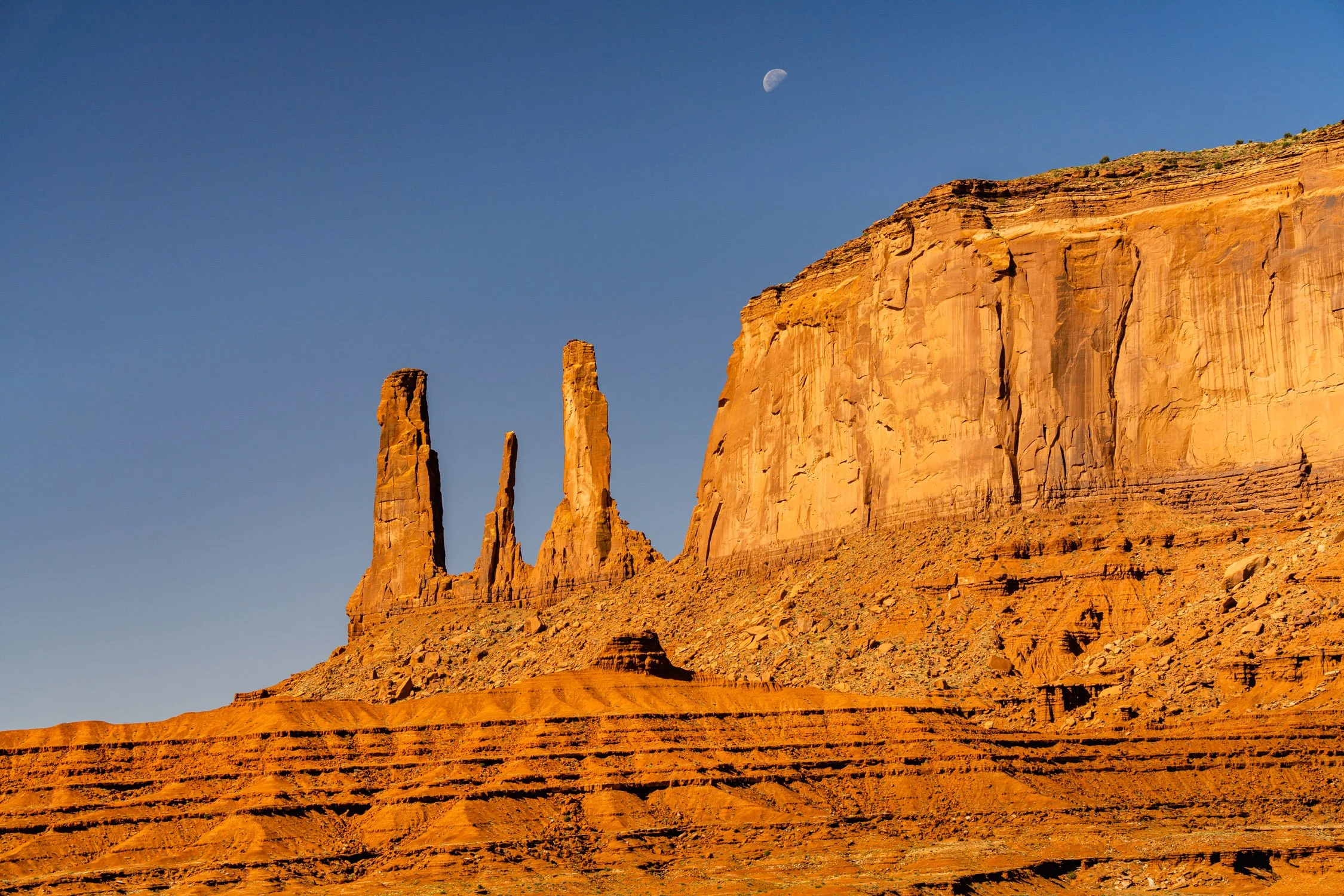
The Three Sisters standing tall on the horizon of Monument Valley glowing in the morning sun. Photo by Dalton Johnson
Understanding Monument Valley's Cultural Significance
Before delving into the activities and sights, it's crucial to appreciate the cultural heritage of Monument Valley. This region is not just a geological marvel but also holds deep spiritual and historical importance for the Navajo people. Respect for their traditions, land, and way of life is paramount when visiting Monument Valley. Many guided tours offer insights into the Navajo culture, providing visitors with a richer and more meaningful experience.
Hiking Adventures in Monument Valley
One of the best ways to immerse yourself in the raw beauty of Monument Valley is through hiking. The valley offers a range of trails suitable for different skill levels, from leisurely strolls to challenging treks. Here are a few notable hiking options:
Wildcat Trail: This 3.2-mile loop is the only self-guided trail within the Monument Valley Tribal Park. It offers stunning views of the iconic West Mitten Butte and allows you to experience the landscape up close.
The Hunt's Mesa: For more experienced hikers seeking a thrilling adventure, the trek to Hunt's Mesa is a must-do. This challenging trail rewards hikers with panoramic views of Monument Valley from a breathtaking vantage point.
The Totem Pole and Yei Bi Chei: These rock formations are accessible via guided tours or with a Navajo permit. The hike takes you through narrow canyons and unveils ancient petroglyphs, offering a glimpse into the area's rich history.
Photography in Monument Valley
Monument Valley is a photographer's paradise, offering endless opportunities to capture stunning images. The ever-changing play of light and shadow against the red rocks creates a mesmerizing spectacle. Whether you're a professional photographer or an amateur with a smartphone, here are some tips for capturing the best shots:
Golden Hour Magic: The hours around sunrise and sunset bath the landscape in golden hues, enhancing the beauty of the rock formations. Plan your photography sessions during these times for magical results.
Wide-angle Views: Monument Valley's vastness is best captured with wide-angle lenses. Experiment with different focal lengths to showcase the scale and grandeur of the buttes and mesas.
Foreground Interest: Incorporate elements like desert vegetation, rock formations, or Navajo dwellings into your compositions to add depth and interest to your photos.
Guided Tours for a Deeper Experience
While exploring on your own is rewarding, guided tours offer unique insights and access to areas not open to the public. Consider joining a guided tour to maximize your experience in Monument Valley:
Navajo-guided Jeep Tours: Navigate the rugged terrain of Monument Valley with a knowledgeable Navajo guide who can share stories, legends, and cultural insights along the way.
Cultural Immersion Tours: Immerse yourself in Navajo culture with tours that include visits to traditional hogans (dwellings), storytelling sessions, and demonstrations of traditional crafts like rug weaving and pottery making.
Photography Tours: Join a specialized photography tour led by experienced photographers who know the best vantage points and lighting conditions for capturing stunning images of Monument Valley.
Must-See Attractions and Landmarks
No visit to Monument Valley is complete without experiencing its iconic landmarks. Here are some must-see attractions to add to your itinerary:
The Mittens and Merrick Butte: These towering rock formations are among the most recognizable symbols of Monument Valley, especially striking during sunrise and sunset.
Monument Valley Navajo Tribal Park Visitor Center: Start your journey here to learn about the park's history, geology, and cultural significance. The center also offers informative exhibits and guided tour options.
Artist's Point: This overlook provides a panoramic view of the valley, allowing you to admire the vast expanse of red rock formations and mesas stretching into the distance.
Planning Your Visit
The ideal duration for exploring Monument Valley depends on your interests and schedule. While some visitors opt for a day trip, others prefer spending two to three days to fully immerse themselves in the beauty and culture of the region. Consider the following tips when planning your visit:
Accommodations: While there are no lodging options within the Monument Valley Tribal Park, nearby towns like Goulding and Kayenta offer hotels, campgrounds, and RV parks for overnight stays.
Weather Considerations: Summer months can be scorching, so plan outdoor activities accordingly and carry ample water and sun protection. Spring and fall offer milder temperatures and are ideal for hiking and photography.
Permits and Reservations: Some areas within Monument Valley, such as restricted Navajo lands and guided tours, may require permits or reservations. Plan ahead and check with the park authorities or tour operators for any requirements.
Soaking in the magic of Monument Valley from a top the van during a van life road trip. Photo by Dalton Johnson
Monument Valley is a treasure trove of natural beauty, cultural heritage, and outdoor adventures waiting to be explored. Whether you're hiking through its rugged terrain, capturing its majesty through photography, or immersing yourself in Navajo culture, a visit to Monument Valley promises an unforgettable experience. Plan your trip thoughtfully, respect the land and its people, and prepare to be awestruck by the timeless allure of this desert wonderland.
Discover More Destinations
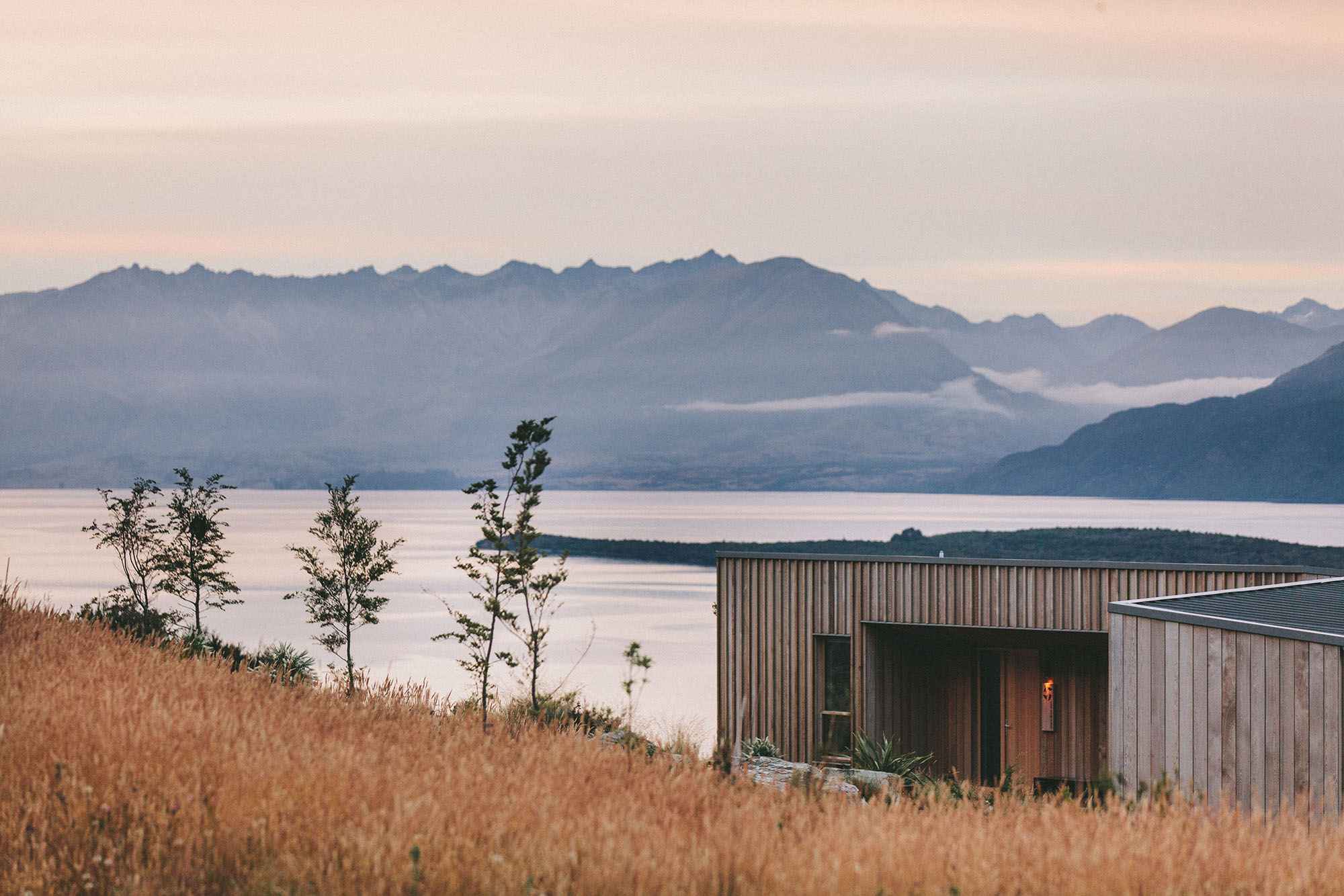
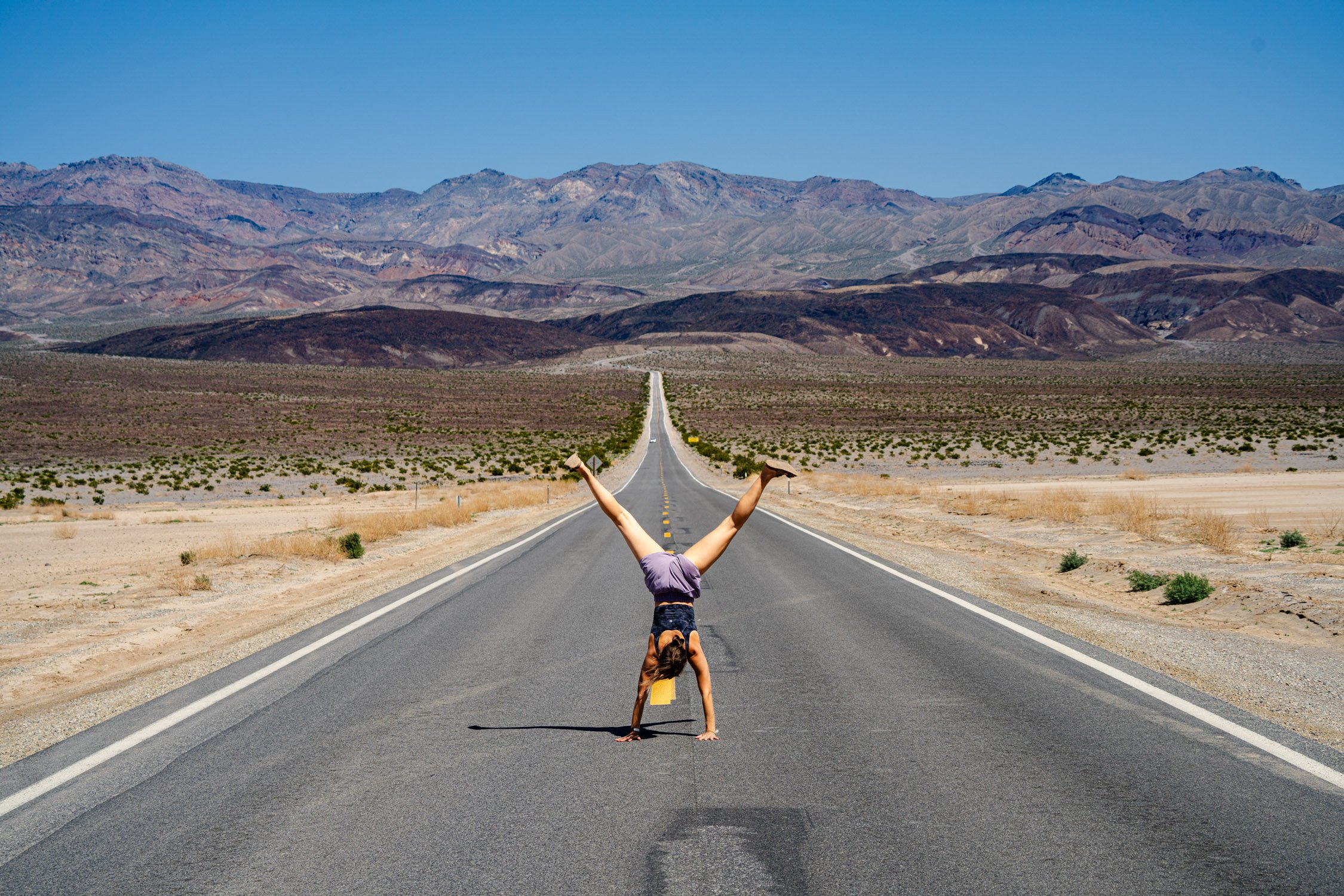
How To Quickly Plan A Successful Road Trip
Planning a road trip can be an exciting and rewarding experience, offering the freedom to explore new places at your own pace. Whether you're embarking on a cross-country adventure or a weekend getaway, careful planning can make all the difference in creating a memorable and enjoyable trip. Here's a step-by-step guide on how to plan a road trip in the USA.
Planning a road trip can be an exciting and rewarding experience, offering the freedom to explore new places at your own pace. Whether you're embarking on a cross-country adventure or a weekend getaway, careful planning can make all the difference in creating a memorable and enjoyable trip. Here's a step-by-step guide on how to plan a road trip in the USA.

Road tripping the Valley of the Gods. Photo by Dalton Johnson
Pros
Flexibility: Road trips offer the flexibility to customize your itinerary, make spontaneous stops, and explore off-the-beaten-path destinations.
Cost-Effective: Compared to air travel, road trips can be more cost-effective, especially for families or groups traveling together.
Scenic Routes: Road trips allow you to take scenic routes, enjoy breathtaking views, and experience the beauty of diverse landscapes.
Freedom: You have the freedom to travel at your own pace, stop whenever you want, and change plans as needed.
Local Experiences: Road trips provide opportunities to immerse yourself in local culture, try regional cuisines, and interact with locals.
Bonding: Whether with family or friends, road trips can strengthen bonds through shared experiences and adventures.
Spontaneity: Embrace spontaneity by discovering hidden gems, trying new activities, and adapting to unexpected discoveries.
Cons
Time-Consuming: Road trips can be time-consuming, especially for long distances, requiring careful planning and consideration of travel time.
Driving Fatigue: Long hours of driving can lead to fatigue and discomfort, requiring regular breaks and rest stops.
Weather Challenges: Weather conditions can impact road trips, leading to changes in plans, delays, or hazardous driving conditions.
Fuel Costs: Gasoline expenses can add up, particularly for large vehicles or when covering extensive distances.
Accommodation Availability: During peak travel seasons, finding available and affordable accommodation along the route may be challenging.
Vehicle Maintenance: Road trips require a well-maintained vehicle, regular checks, and potential unexpected repairs or issues on the road.
Navigation Challenges: Navigating unfamiliar roads, GPS inaccuracies, and lack of mobile reception in remote areas can pose challenges.
Step 1: Choose Your Destination
The first step in planning a road trip is deciding where you want to go. Consider your interests, the time you have available, and any must-see destinations along the way. Whether you're dreaming of coastal drives, mountain vistas, national parks, or iconic cities, the USA offers a wide range of road trip options to suit every traveler.
Step 2: Plan Your Route
Once you've chosen your destination, it's time to plan your route. Use a map or GPS navigation system to plot your journey, taking into account the distance, driving time, and any attractions or stops you want to include along the way. Consider scenic routes, historic sites, and local gems to make your road trip more enriching and enjoyable.
Step 3: Set a Budget
Determine your budget for the road trip, including fuel, accommodation, food, activities, and any other expenses. Consider factors such as gas prices, accommodation options (camping, hotels, Airbnb), dining preferences (eating out vs. cooking your meals), and admission fees for attractions. Having a clear budget will help you make informed decisions and avoid overspending.
Step 4: Plan Your Accommodation
Decide where you'll stay during your road trip. Options range from hotels and motels to campgrounds and RV parks. Book accommodation in advance, especially during peak travel seasons, to ensure availability and secure the best rates. Consider factors such as location, amenities, and reviews when choosing where to stay.
Step 5: Prepare Your Vehicle
Before hitting the road, ensure your vehicle is road trip-ready. Schedule a maintenance check-up to inspect tires, brakes, fluids, and overall mechanical condition. Pack essential items such as a spare tire, jack, roadside emergency kit, maps or GPS, car charger, and any required documents (driver's license, registration, insurance).
Step 6: Pack Wisely
Pack light and smart for your road trip. Essential items include clothing for various weather conditions, toiletries, medications, snacks, water, travel documents, entertainment (books, music, games), camera or smartphone for capturing memories, and any specific gear or equipment for activities along the way (hiking, biking, swimming).
Step 7: Plan Your Activities
Research and plan activities and attractions along your route. This could include visiting national parks, museums, landmarks, scenic viewpoints, local markets, outdoor adventures, and cultural experiences. Check opening hours, admission prices, and any reservations or permits required for certain activities.
Step 8: Be Flexible
While planning is essential, leave room for flexibility and spontaneity during your road trip. Unexpected discoveries, detours, and local recommendations can add a special charm to your journey. Embrace the freedom of the open road and be open to new experiences along the way.
Step 9: Safety First
Prioritize safety during your road trip. Observe traffic laws, wear seat belts, avoid distracted driving (such as texting or using a phone while driving), and take regular breaks to rest and stretch. Be aware of weather conditions, road closures, and potential hazards, especially in remote areas.
Step 10: Enjoy the Journey
Above all, enjoy the journey and savor the moments during your road trip. Take time to appreciate the scenery, meet locals, try new foods, and create lasting memories. A road trip is not just about reaching your destination but also about the adventures and experiences along the way.
Kartwheeling in the middle of the road that never seems to end. Photo by Dalton Johnson
By following these steps and planning thoughtfully, you can ensure a smooth and enjoyable road trip across the diverse landscapes of the USA. From the rugged coastlines of California to the majestic mountains of Colorado, and from the vibrant cities of New York to the tranquil lakes of Minnesota, the USA offers a rich tapestry of experiences waiting to be explored. Whether you're a solo adventurer seeking solitude in nature, a family looking for bonding moments on the road, or a group of friends chasing adrenaline-fueled adventures, a well-planned road trip can cater to all preferences and create lasting memories.
So pack your bags, fuel up your vehicle, and embark on an unforgettable journey through the heart of America. Let the open road be your guide as you navigate through iconic landmarks, hidden gems, and the warm hospitality of local communities. Embrace the freedom, spontaneity, and sense of discovery that come with road tripping, and may each mile bring you closer to new experiences, friendships, and a deeper appreciation for the beauty of the USA.