Unveiling Alaska's Frozen Giants: Exploring the Majestic Glaciers
Alaska has 664 named glaciers, and several more unnamed, that will change your perspective on this planet. Glaciers are massive ice fields, often called a frozen river, that are always moving and changing, making them special. With this change, seeing a glacier several times won’t get old. So, if it is your first glacier, or your 664th glacier, it will still be an experience.
Alaska has 664 named glaciers, and several more unnamed, that will change your perspective on this planet. Glaciers are massive ice fields, often called a frozen river, that are always moving and changing, making them special. With this change, seeing a glacier several times won’t get old. So, if it is your first glacier, or your 664th glacier, it will still be an experience.
There are several ways to see glaciers in Alaska, but the best ways are flightseeing, hiking on a glacier, taking an ocean cruise, exploring ice caves on a glacier, and kayaking to a glacier. By doing all of these, you will see glaciers from the air, from the ground, from the inside, and from the water. If I could only chose one way to see a glacier, I would chose to go hiking on a glacier.
Read on to discover the best ways to see and experience glaciers in Alaska.

Kayaking to Portage Glacier in Alaska. Photograph by Dalton Johnson
Pros of Seeing Glaciers in Alaska:
Majestic Beauty: Alaska is home to some of the most breathtaking glaciers in the world. Witnessing these massive ice formations up close offers a profound appreciation for the awe-inspiring beauty of nature.
Unique Experience: Seeing glaciers in Alaska provides a once-in-a-lifetime opportunity to witness the power and grandeur of these natural wonders. It's an experience that few people get to have and creates lasting memories.
Environmental Awareness: Glaciers are powerful indicators of climate change. Seeing them firsthand in Alaska can deepen your understanding of the impact of global warming and inspire a greater commitment to environmental conservation.
Wildlife Viewing: Glaciers in Alaska attract a diverse array of wildlife. While observing glaciers, you may have the chance to see seals, sea lions, whales, eagles, and other marine and bird species in their natural habitats.
Adventure Activities: Alaska offers a range of adventure activities related to glaciers, such as glacier hiking, flightseeing tours, dog sledding, and kayaking. These activities allow you to explore the glaciers in unique and exciting ways.
Cons of Seeing Glaciers in Alaska:
Accessibility Challenges: Getting to some of the more remote glacier locations in Alaska can be challenging and may require additional time, effort, and expenses for transportation.
Weather Conditions: Alaska's climate can be unpredictable, with cold temperatures, rain, fog, and wind being common. It's important to be prepared for changing weather conditions, which can impact visibility and outdoor activities.
Environmental Impact: The popularity of glacier tourism in Alaska can contribute to increased foot traffic and potential environmental impacts if not managed responsibly. It's essential to choose reputable tour operators and follow guidelines to minimize any negative effects.
Cost: Visiting glaciers in Alaska can be costly, especially when considering transportation, accommodations, and guided tours. It's important to budget accordingly and plan ahead to ensure a fulfilling experience within your financial means.
Seasonal Limitations: Glacial activities in Alaska are typically limited to the summer months when access is safer and more feasible. If you visit during other seasons, you may have fewer opportunities for glacier-related experiences.
Cruise through Glacier Bay:
Embarking on a cruise through Glacier Bay National Park is an extraordinary way to witness the splendor of Alaska's glaciers. This iconic national park, located in southeastern Alaska, encompasses over 3.3 million acres of stunning natural landscapes. As you sail through the icy waters of Glacier Bay, you'll be surrounded by towering glaciers, snow-capped mountains, and pristine wilderness. The park is home to numerous glaciers, including the famous Margerie Glacier and Grand Pacific Glacier, which offer breathtaking displays of calving and shimmering blue ice formations.
Before setting off on your Glacier Bay cruise, it's important to be aware of a few key details. First, access to the park is limited to boats and planes, as there are no roads leading to Glacier Bay. Therefore, joining a cruise tour is the most common and convenient way to explore the area. Cruise itineraries typically include stops at various glaciers within the park, providing ample opportunities for up-close encounters with these magnificent icy wonders. It's advisable to book your cruise well in advance, especially during the peak summer season, as availability may be limited.
Cruising through Glacier Bay is a once-in-a-lifetime experience that offers a myriad of reasons why it should be on every adventure traveler's bucket list. Firstly, the sheer beauty and grandeur of the glaciers are simply awe-inspiring. Witnessing these massive ice formations, with their radiant blue hues and thunderous calving, evokes a sense of wonder and appreciation for the raw power of nature. Secondly, Glacier Bay National Park is an ecological treasure trove, teeming with diverse wildlife. From humpback whales breaching in the distance to playful sea otters and soaring bald eagles, the park offers abundant opportunities for wildlife sightings. Finally, the sense of serenity and tranquility that permeates Glacier Bay is truly unparalleled. The untouched wilderness, interrupted only by the occasional crackling of ice or the distant call of a seabird, provides a meditative atmosphere, allowing visitors to disconnect from the modern world and connect with the raw beauty of nature.
Explore Kenai Fjords National Park:
Nestled on the southeastern coast of Alaska, Kenai Fjords National Park is a captivating destination renowned for its magnificent glaciers and abundant marine life. Spanning over 600,000 acres, this national park offers a stunning blend of icy fjords, rugged coastline, and towering mountains. Exploring Kenai Fjords allows you to witness the relentless power of nature as glaciers calve into the sea, listen to the crackling sounds of icebergs, and marvel at the diverse wildlife that calls this park home.
When planning a visit to Kenai Fjords National Park, there are a few essential details to consider. The gateway to the park is the town of Seward, located approximately 125 miles south of Anchorage. From Seward, you can embark on boat tours that take you into the heart of the fjords, where you'll encounter awe-inspiring glaciers such as the iconic Exit Glacier and the massive Aialik Glacier. It's advisable to book your boat tour in advance, as they can fill up quickly, especially during the peak summer season. Additionally, be prepared for variable weather conditions and dress in layers to ensure comfort throughout the day.
Exploring Kenai Fjords National Park offers an unparalleled opportunity to witness the raw beauty of Alaska's glaciers and coastal landscapes. The sight of massive glaciers calving into the sea, creating thunderous echoes and towering icebergs, is an awe-inspiring experience that leaves a lasting impression. Beyond the glaciers, the park is a haven for marine wildlife. Keep your eyes peeled for playful sea otters, graceful seals, and majestic whales as they navigate the chilly waters. The park's rugged coastline also provides excellent opportunities for birdwatching, with puffins, bald eagles, and other seabirds soaring overhead. Whether you choose to hike to an overlook, embark on a boat tour, or camp under the starry Alaskan sky, Kenai Fjords National Park offers a truly immersive and unforgettable experience in the heart of Alaska's natural wonders.
Take a Flightseeing Tour:
If you're seeking a truly extraordinary way to witness the breathtaking beauty of Alaska's glaciers, a flightseeing tour is an adventure not to be missed. Taking to the skies in a small plane or a helicopter allows you to gain a unique and awe-inspiring perspective of Alaska's vast icy landscapes. From the towering Juneau Icefield to the stunning Hubbard Glacier, a flightseeing tour provides an unparalleled opportunity to soak in the immensity and grandeur of these frozen wonders from above.
When planning a flightseeing tour in Alaska, there are a few essential details to keep in mind. First and foremost, it's important to choose a reputable tour operator with experienced pilots who prioritize safety. Be sure to check reviews and certifications before making your booking. Flightseeing tours are available in various locations across Alaska, including Juneau, Denali, and Talkeetna. These tours range in duration and can be customized to suit your preferences. It's advisable to dress warmly, as the temperatures can be colder at higher altitudes, and consider wearing comfortable clothing that allows you to move freely in the aircraft.
Embarking on a flightseeing tour in Alaska offers a truly unforgettable experience that combines the thrill of flying with the awe-inspiring beauty of the state's glaciers. From the moment you take off, you'll be treated to breathtaking panoramic views that reveal the sheer magnitude and intricate details of Alaska's icy landscapes. The perspective from above allows you to grasp the vastness of the glaciers, witness their ever-changing forms, and appreciate the awe-inspiring shades of blue that radiate from the ice. The exhilaration of soaring above these majestic natural wonders and capturing incredible aerial photographs is an adventure that will leave you with a profound sense of wonder and a lifelong appreciation for the power of nature.
A flightseeing tour in Alaska is a unique opportunity to witness the splendor of the state's glaciers in a way that few others get to experience. The combination of thrilling aerial perspectives, the sheer beauty of the icy landscapes, and the informative commentary from experienced pilots creates a truly immersive adventure. It's a chance to see Alaska from a whole new angle, gaining a deeper understanding and appreciation for the pristine wilderness that makes this region so remarkable. So buckle up, brace yourself for an unforgettable journey, and prepare to be amazed as you take to the skies for a flightseeing tour of Alaska's glaciers.


Hike to Glacier Viewpoints:
Embarking on a hike to glacier viewpoints in Alaska is an exhilarating and rewarding way to experience the majesty of these icy giants up close. Alaska is home to numerous hiking trails that lead to stunning viewpoints overlooking glaciers, offering breathtaking vistas and a profound connection to the natural beauty of the region. Whether you choose to explore the trails near McCarthy, Juneau, or other glacier-rich areas, hiking to glacier viewpoints provides a unique opportunity to witness the raw power and awe-inspiring beauty of these frozen wonders.
Before setting off on a hike to glacier viewpoints, there are a few essential details to consider. Firstly, research the trail you plan to hike and ensure it is suitable for your fitness level and experience. Some trails may require a moderate to advanced level of hiking ability, while others offer more accessible options for beginners. It's crucial to pack appropriate gear, including sturdy hiking boots, layered clothing, and essential supplies such as water, snacks, and a map or navigation tools. Additionally, be aware of any safety considerations specific to the area, such as bear encounters, weather changes, or glacier hazards. It is often recommended to hike with a knowledgeable guide or join guided tours to ensure safety and maximize your experience.
Embarking on a hike to glacier viewpoints in Alaska offers an unparalleled adventure and a deep connection to the natural world. Witnessing the enormity and beauty of a glacier in person is a transformative experience that leaves a lasting impact. Hiking through pristine wilderness and reaching a viewpoint where you can gaze upon the icy expanse is a reward in itself, reminding us of the grandeur and resilience of nature. Along the way, you may encounter stunning vistas, alpine meadows, and even wildlife, creating a multi-faceted experience that combines physical exertion, natural beauty, and a sense of exploration. Hiking to glacier viewpoints allows you to become a part of the landscape, immerse yourself in the quietude of nature, and appreciate the intricate details of these frozen wonders that cannot be fully captured from a distance. It's an adventure that encourages personal growth, fosters a sense of adventure, and provides a deeper understanding of the delicate balance between humans and the natural world.
Go Dog Sledding on Glaciers:
Imagine the thrill of racing across vast expanses of pristine snow and ice, pulled by a team of enthusiastic sled dogs. Dog sledding on glaciers in Alaska is a remarkable adventure that allows you to experience the true spirit of the Last Frontier. As you glide through the icy landscapes, guided by expert mushers, you'll witness the untouched beauty of Alaska's glaciers while forging a unique bond with these incredible canine athletes.
Before embarking on a dog sledding adventure on glaciers, there are a few key details to keep in mind. Firstly, choose a reputable tour operator that prioritizes the well-being of their dogs and follows ethical practices. Tour operators in Juneau, Skagway, and other glacier-rich regions offer dog sledding experiences that cater to different skill levels and durations. Be prepared for varying weather conditions and dress warmly in layers, as temperatures can be cold, especially on the glaciers. Most tours provide all the necessary equipment, such as warm gear and boots, but it's always a good idea to confirm what is included. Lastly, remember to listen to your guides' instructions and treat the dogs with kindness and respect throughout the experience.
Embarking on a dog sledding adventure on glaciers is an opportunity to step into the shoes of an Alaskan musher and be a part of a time-honored tradition. Beyond the thrill of the ride itself, dog sledding allows you to forge a bond with these incredible animals, witnessing their strength, agility, and teamwork firsthand. You'll learn about the rich history and heritage of dog sledding in Alaska, and gain a deeper appreciation for the symbiotic relationship between musher and sled dog. Moreover, dog sledding on glaciers offers a unique perspective of the surrounding landscapes. As you glide across the icy terrain, you'll be surrounded by towering glaciers, snow-covered peaks, and pristine wilderness, creating a magical and unforgettable experience. Whether you're an adventure seeker, a nature lover, or simply curious about Alaskan traditions, dog sledding on glaciers is an adventure that combines exhilaration, natural beauty, and the chance to connect with the spirit of the North.
Kayak Among Glacial Ice:
Immerse yourself in the stunning beauty of Alaska's glaciers by embarking on a kayaking adventure among glacial ice. Kayaking allows you to navigate the serene waters surrounding the glaciers, getting up close and personal with the towering ice formations. Paddling through pristine fjords and witnessing the vibrant blue hues of the icebergs creates an unforgettable experience that showcases the raw power and majesty of these natural wonders.
Before venturing out on a kayak journey among glacial ice, it's important to have some essential information. First, choose a reputable kayak tour operator that provides experienced guides and quality equipment to ensure safety and a memorable experience. No prior kayaking experience is usually required, as many tours cater to beginners and provide basic instruction. Dress appropriately for the weather conditions, wearing layers to adapt to changing temperatures. It's also essential to have waterproof gear and a dry bag to protect personal belongings. Keep in mind that weather conditions and glacial activity can affect the itinerary, so be flexible and prepared for potential changes.
Kayaking among glacial ice offers a truly immersive and awe-inspiring experience that allows you to intimately connect with the beauty and power of Alaska's glaciers. Paddling through tranquil waters surrounded by towering ice formations, listening to the gentle creaking of ice and witnessing the occasional calving event create moments of wonder and serenity. The vibrant blue colors of the icebergs, contrasting against the surrounding landscapes, provide a visual feast for the senses. Moreover, kayaking allows you to explore areas inaccessible by larger vessels, providing a sense of discovery and a unique perspective on the glaciers and their environment. It's an adventure that combines physical activity, natural beauty, and a deep appreciation for the fragility and resilience of the glacial ecosystem.
Kayaking among glacial ice is an extraordinary experience that offers a profound connection to the pristine wilderness of Alaska. It allows you to escape the crowds, immerse yourself in the tranquility of the fjords, and witness the extraordinary beauty of these frozen landscapes up close. The sense of peace and solitude that comes with gliding through the calm waters, surrounded by glacial ice, creates a truly transformative experience. Whether you're an outdoor enthusiast, a nature lover, or simply seeking a unique adventure, kayaking among glacial ice promises unforgettable moments and the chance to forge a deep connection with Alaska's majestic glaciers.
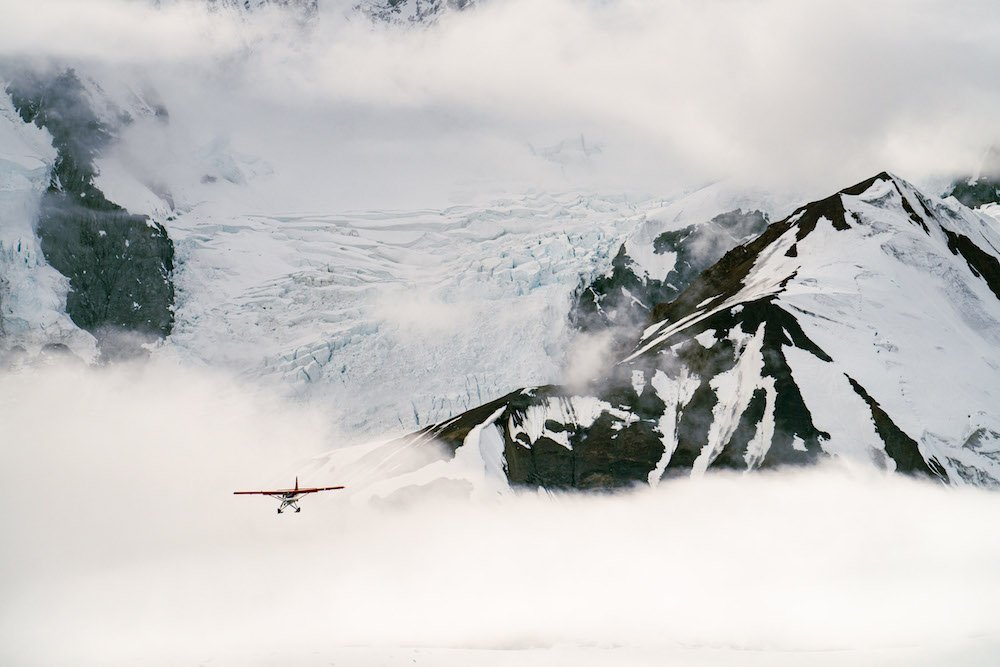
Mount Denali seen out the front window of a flight-seeing plane. Photograph by Dalton Johnson
Alaska's glaciers offer a majestic and unforgettable experience for adventure travelers. Whether you choose to cruise, hike, fly, or engage in other activities, witnessing the grandeur of Alaska's frozen landscapes will leave you in awe. Remember to plan your trip well in advance, prioritize safety, and respect the fragile nature of these remarkable icy wonders. So pack your sense of adventure and embark on a journey that will take you closer to the magnificent glaciers of Alaska.
Discover more of Alaska



Grewingk Glacier Lake Hike | Hike Alaska
Stepping off the boat onto solid ground, the Grewingk Glacier Lake hike begins. Up a wooden ladder to a vertical trail, the start to this hike can be brutal. However, once you are over the hump it’s all downhill to Grewingk lake. Arriving at Grewingk Lake is a special event as the beach often has ice chunks and iceburgs floating close to shore.
Stepping off the boat onto solid ground, the Grewingk Glacier Lake hike begins. Up a wooden ladder to a vertical trail, the start to this hike can be brutal. However, once you are over the hump it’s all downhill to Grewingk lake. Arriving at Grewingk Lake is a special event as the beach often has ice chunks and icebergs floating close to shore.
Hiking to Grewingk Glacier Lake is an ideal way to see a glacier that pours into the lake on the Kenai Peninsula. This 12 mile round trip hike can be done in a day, or over several days if you would like to carry your overnight gear. The catch, you need to take a water taxi to the trailhead.
Read on to discover how to get to this hike, a personal experience of this hike, what to bring, and so much more!
Grewingk Glacier Lake from the sky. Photograph by Dalton Johnson
GREWINGK GLACIER LAKE HIKE OVERVIEW:
Distance: 12.6 miles round trip
Time needed: 5-6 hours
Elevation change: 2,100 feet
Type of terrain: Well maintained trail
Difficulty of hike: Strenuous
Our Experience at Grewingk Glacier Lake
Unsure what was in-store for us, we boarded our water taxi just after breakfast. Our captain was friendly and greeted us with a smile and a map. “Where are you all headed?” He asked. After sheepishly saying Grewingk Glacier Lake because we had no idea how to pronounce it, he responded, “You’re in for a treat.”
Once a few more souls loaded up, we headed out of the harbor and across Kachemak Bay. I was in awe. The views. The wildlife. The… everything. A calm day on the bay allowed us to see a more than my heart could have imagined and getting to talk with many of the fellow riders, we were reassured that Grewingk Glacier was a good hike. Phew!
As the boat came close to shore, scrapped our way to a stop and the captain got a ladder out for us to climb off of. “I’ll see you all in a 6 hours. Give me a call if you want an earlier, or later pick up.” And off the captain drove.
The wooden staircase was easy to find and we began the labor of love working up the steep cliffside. This felt as though it took forever to reach the saddle. Twisting and turning up the hillside we went, until, finally, we began our descent towards the lake. I kept an eye out between the trees to see if I could see anything, but nothing. The trees were thick.
As the hike continued downhill, we eventually made it to a flat, rocky terrain that was once apart of the terminal moraine. We were getting close to the lake. After a quick bathroom stop in a pit toilet, we made it to the waters edge.
WOW! Icebergs floating at the waters edge, loads of green surrounded this glacially carved lake, and the Grewingk Glacier way off in the distance.
WHERE IS GREWINGK GLACIER LAKE?
Gerwingk Glacier Lake is located in Kachemak Bay across the from Homer, Alaska. To reach the trailhead, you will need to charter a water taxi, I suggest Mako Water Taxi, across the bay. Taking the water taxi is an awesome experience because you see so much wildlife along the way. On our ride, we saw a raft of otters, a couple of whales, and a few eagles.
Click here for direction to Grewingk Glacier Lake Trailhead
HOW LONG DOES IT TAKE TO HIKE GREWINGK GLACIER LAKE?
Hiking Grewingk Glacier Lake takes about 6 hours to hike out and back and the water taxi is roughly 1 hour, so this hike is a full day adventure. With that said, several hikers bring camping supplies and stay at Grewingk Glacier Lake for 1 to 2 nights.
IS GREWINGK GLACIER LAKE hike kid friendly?
If you decide to bring kids on this hike, be ready to carry them. Okay, maybe the hike isn’t that bad, but I wouldn’t bring a kid who is not an avid hiker because there isn’t much of a turn around point, nor good views of the lake along the trail. Additionally, if you have to turn around because your kid decides they are done, you now have to wait for the water taxi to come get you and that could be a while.
What to bring while hiking GREWINGK GLACIER LAKE?
While there is no specific gear required to hike to Grewingk Glacier Lake, I suggest you bring a modest day hiking kit that includes:
Hiking shoes
A day pack
2L of water
Snacks
Sunscreen
Rain jacket (you are in Alaska)
Bug spray
Other Adventures Near GREWINGK GLACIER LAKE Hike:
Backpack to Red Mountain
Fishing Charter from Homer Spit
Sea Kayaking in Halibut Cove
Hiking up the ladder to the steep trail to Grewingk Glacier near Homer, Alaska. Photograph by Dalton Johnson
Now that you have discovered how to get to this hike, read a personal experience of this hike, and what to bring to hike Grewingk Glacier Lake, it’s your turn to get out into this beautiful world!
Discover more of Alaska


The Best Summer Hikes in Alaska
Covering more than 665,000 square miles, Alaska is massive. Earning the number one spot for being the largest state in the United States, Alaska’s landscape is still untouched and remote, accounting for two-thirds of the country’s national parklands, roughly 80% of wildlife refuges and houses the two largest national forests. For most, these numbers are incomprehensible, so, to put it simply, Alaska offers more outdoor adventures than any other state. Making Alaska one of the most diverse places to hike in the United States. But, which hikes should you start with?
Covering more than 665,000 square miles, Alaska is massive. Earning the number one spot for being the largest state in the United States, Alaska’s landscape is still untouched and remote, accounting for two-thirds of the country’s national parklands, roughly 80% of wildlife refuges and houses the two largest national forests. For most, these numbers are incomprehensible, so, to put it simply, Alaska offers more outdoor adventures than any other state. Making Alaska one of the most diverse places to hike in the United States. But, which hikes should you start with?
The best summer hikes in Alaska are:
Byron Glacier Ice Cave Hike
Grewingk Glacier Lake Hike
Rainbow Lakes Hike near Kenai Lake
Chutes and Ladders Hike
Exit Glacier and Harding Icefield Hike
Read on to discover where these hikes are located, how long they take, and an overview of the best summer hikes in Alaska.
Seeing the entrance to the ice cave of Byron Glacier for the first time while hiking in Alaska. Photograph by Dalton Johnson
Byron Glacier Ice Cave Hike
Hiking Byron Glacier during the summer is a treat. From the trailhead, the cool breeze from the glacier and the rushing river sounds draw you into a mystical mindset as you approach the ice cave. After hiking for a 1.5 miles, you reach the entrance to the cave. Looking dark and daunting, as you enter, your eyes quickly adjust and reveal the magic that is the Byron Glacier Ice Cave hike.
Where is Byron Glacier?
Byron Glacier is located in Girdwood, Alaska on the Kenia Peninsula. Sitting adjacent to Portage Lake and Portage Glacier, this ice cave hike is often paired with a visit to Portage Lake.
Click here for direction to Byron Glacier Trailhead
How long does it take to hike Byron Glacier Ice Cave?
Hiking to the ice cave of Byron Glacier will take 20-30 minutes along a flat dirt trail. Several people stay for 2-3 hours as they explore deep into the ice cave.
Byron Glacier Ice Cave Hike Overview:
Distance: 1.6 miles round trip
Time needed: 1-2 hours
Elevation change: 100 feet
Type of terrain: Maintained trail to rocky river bed in the ice cave
Difficulty of hike: Easy
Interested in learning more about the Byron Glacier Ice Caves? I wrote a full article about how to hike and explore the ice caves at Byron Glacier safely.
Grewingk Glacier Lake Hike
Stepping off the boat onto solid ground, the Grewingk Glacier Lake hike begins. Up a wooden ladder to a vertical trail, the start to this hike can be brutal. However, once you are over the hump it’s all downhill to Grewingk lake. Arriving at Grewingk Lake is a special event as the beach often has ice chunks and iceburgs floating close to shore.
Where is Grewingk Glacier Lake?
Gerwingk Glacier Lake is located in Kachemak Bay across the from Homer, Alaska. To reach the trailhead, you will need to charter a water taxi, I suggest Mako Water Taxi, across the bay.
Click here for direction to Grewingk Glacier Lake Trailhead
How long does it take to hike Grewingk Glacier Lake?
Hiking Grewingk Glacier Lake takes about 6 hours to hike out and back and the water taxi is roughly 1 hour, so this hike is a full day adventure. With that said, several hikers bring camping supplies and stay at Grewingk Glacier Lake for 1 to 2 nights.
Grewingk Glacier Lake Hike Overview:
Distance: 12.6 miles round trip
Time needed: 5-6 hours
Elevation change: 2,100 feet
Type of terrain: Well maintained trail
Difficulty of hike: Strenuous
Rainbow lakes Hike near Kenai Lake
Rainbow Lakes are a hidden gem between Kenai Lake and Cooper Lake. This chain of lakes is not very large, but Rainbow Lakes offers wonderful views—especially at sunset— and short hikes accessible to all. The trails are maintained and many of the lakes have a bench you can sit at to enjoy the view. Additionally, there is camping and fishing at all of these lakes, so bring a tent and stay for the weekend.
Where Are Rainbow Lakes?
Rainbow Lakes are located halfway between Kenai Lake and Cooper Lake. The nearest town is Cooper’s Landing, AK on the Kenai Peninsula. To reach Rainbow Lakes you will need to drive down a dirt road for a long while, between 30-40 minutes. The pullout for this chain of lakes comes upon you quickly, so keep your eyes peeled for the forest service sign.
Click here for direction to Rainbow Lakes Trailhead
How long does it take to hike Rainbow Lakes?
Rainbow Lakes offers several short hikes that are all less than a mile and take roughly 10 to 20 minutes. However, many hikers visiting Rainbow Lakes come for the views and easy access to the lakes for swimming and fishing.
Rainbow Lakes Hike Overview:
Distance: 1 mile round trip
Time needed: 10-20 minutes
Elevation change: 30 feet
Type of terrain: Maintained trail
Difficulty of hike: Easy
Chutes and Ladders Hike
Just outside of Anchorage, AK in town called Girdwood there is a local waterfall hike called Chutes and Ladders. This incredible waterfall hike is tricky to find, as it is unmarked on any map and there are no trail signs to get there. However, once you find the first rope, leading down into the canyon, the fun begins.
Where is Chutes and Ladder?
The Chutes and Ladders hike in Girdwood begins and ends at the Winner Creek Gorge Trailhead. This loop hike has a large parking lot, a pit toilet, and it is easy to find the initial trail, but getting to Chutes & Ladders can be difficult because there is not a marked trail that will lead you to the start.
Click here for direction to Chutes and Ladders Trailhead
How long does it take to hike Chutes and Ladder?
Chutes and Ladders in Girdwood, Alaska is a quick hike, 30 minutes round trip, but most hikers take between 90-120 minutes to complete. This waterfall hike is unique and technical, so hikers prefer to take their time to increase their safety and enjoy the journey of the hike. I suggest taking your time, Chutes and Ladders is a lot of fun!
Chutes and Ladder Hike Overview:
Distance: 2.5 miles
Time needed: 1-2 hours
Elevation change: 350 feet
Type of terrain: Non-maintained trail, wet rock
Difficulty of hike: Moderate, but technical
Exit Glacier and Harding Icefield Hike
The Exit Glacier and Harding Icefield hike is a one-two hit combo in the Kenai Fjord National Park just outside of Seward, Alaska. Most hikers decide to day hike to Exit Glacier to see this massive frozen river up close, but few push onward and upward to the Harding Icefield. If you have the time and energy, you should hike up the switchbacks to the Harding Icefield so you can soak in the United States largest icefield.
Where is Exit Glacier and Harding Icefield?
Exit Glacier and the Harding Icefield trail begins outside of Seward, Alaska at the Kenai National Park Nature Center.
Click here for direction to Exit Glacier and Harding Icefield Trailhead
How long does it take to hike Exit Glacier and Harding Icefield?
Hiking both Exit Glacier and Harding Icefield will take 6-7 hours, so make sure to pack some water and snacks for the trail. If you are only interested in hiking to Exit Glacier, this 2.2 mile hike will take about an hour to complete.
Exit Glacier and Harding Icefield Hike Overview:
Distance: 9.2 miles round trip
Time needed: 6-7 hours
Elevation change: 3,600 feet
Type of terrain: Maintained trail
Difficulty of hike: Hard
Also consider these other Amazing ALaskan Summer hikes:
Red Mountain near Homer
Kenai Lake beach walk
Portage Pass
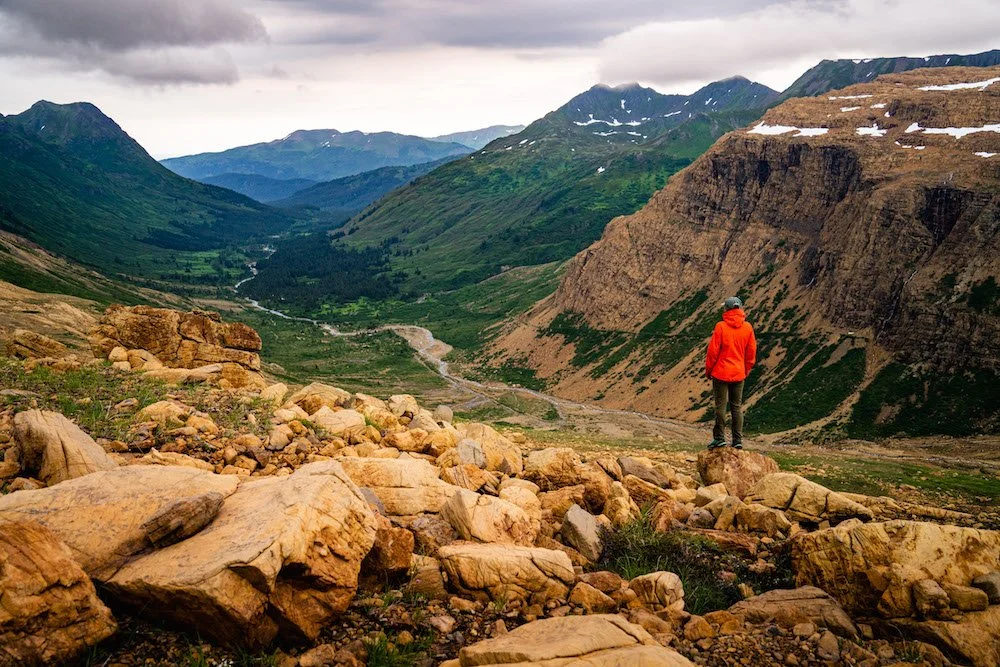
An avid hiker takes a look at where she came from while hiking Red Mountain along the Kenai Peninsula in Alaska. Photograph by Dalton Johnson
Now that you have discovered where these hikes are located, how long they take, and an overview of the best summer hikes in Alaska it is your turn to start exploring the trails of Alaska.