The Gear Failures That Taught Me the Most
A wetsuit zipper caught the housing fastener wrong on a water shoot a few years back, and by the time anyone noticed, water was already pooling inside the camera. That was the end of that body for the day. I still had four hours of shooting left and one working camera instead of two.
That is the job. Not the version of the job people see on Instagram, the version where every frame looks effortless and every piece of gear performs exactly like the spec sheet promised. The real version involves salt water finding its way past a seal that has worked fine for two years, a lens falling two hundred feet down a rock face, and a laptop full of unsaved footage getting a full cup of coffee poured into it. If you shoot adventure work long enough, gear failure stops being a possibility you plan around and becomes a certainty you plan for.
I go deeper into how I build redundancy, budget for gear loss, and structure contracts around the unpredictable parts of this job in The Adventure Photographer’s Playbook, if you want the fuller system behind everything below.
The Camera That Flooded Mid-Shoot
Water is the single most common way I have lost gear over a decade of doing this. Not lightning, not altitude, not drops onto rock. Water, again and again, in a dozen different forms.
The housing flood is the clearest example. I was shooting a water sports job, the kind of day where the camera lives in a housing because there is no other option, and the fastener that seals the housing shut caught against the edge of my wetsuit at some point during a transition between setups. I did not feel it happen. I noticed it because the image on the back screen started fogging, and by the time I got the housing open, there was standing water inside the body.
That camera was done for the day. Not destroyed permanently, but done in the moment, which on a paid shoot is functionally the same problem. I had a second body with me, which is the only reason the day did not end early. That is a habit now, not a choice I make shoot by shoot. On any water-adjacent job, whether that is surfing, kayaking, SUP, or canoeing, I do not bring one camera. I bring at least two, and I treat the housing check as a real pre-shoot step, not a formality.
Water damage on adventure shoots is not usually one dramatic moment either. It is often slow. Humidity finds its way into a bag over a multi-day paddling trip. Splash gets past a seal you thought was solid. Fog builds up inside a lens you swapped in a damp tent. The fix I lean on for anything water-adjacent, even gear that never touches the housing, is packing silica packets and dehydrated rice directly with the camera gear. Moisture is the recurring risk on water shoots, more than any single catastrophic failure, and pulling humidity out of a bag every night is a cheap habit that prevents a much more expensive problem.
None of this means housings or waterproofing have gotten worse. If anything, weather sealing across camera bodies has improved enough that it barely counts as a selling point anymore, it is closer to a baseline expectation now than a competitive edge. But sealing only protects you from water finding its own way in. It does not protect you from a fastener catching wrong against a wetsuit in the middle of a transition, because that is not a sealing failure, that is a human moment during a physically demanding day. You cannot engineer that risk away completely. You can only build in redundancy so one mistake does not end your day.
I have thought about that transition a lot since it happened. Nothing about my process that day was careless. I checked the housing before getting in the water, same as always. The failure happened in the gap between setups, the part of a shoot day nobody plans around because it feels like dead time. That is exactly why it is dangerous. The moments that feel routine are the ones where attention drops, and gear failure loves an unguarded moment more than it loves a genuinely difficult one. Now I treat every transition on a water shoot, getting in, getting out, swapping positions, as its own small checkpoint, not just the start and end of the day.
The Lens That Fell Two Hundred Feet
The second story still makes me wince a little to tell.
I was on a climb, shooting from a position on the wall, and needed to swap lenses mid-climb to get a different angle on the next sequence. In the moment the lens was detached from the body, between hands essentially, my foot slipped. Not a bad slip, not a fall that put me at risk, but enough of a jolt that the lens came loose and went down the face. A couple hundred feet, gone.
That is one of those failures where the lesson is less about the gear itself and more about workflow. I do not rig a camera directly to a climbing harness in most situations. If I am climbing with the camera, it lives in a backpack while I move, not clipped to me, because a harness clip limits how freely I can move past or above whoever I am shooting. But that same logic has to extend to the moment of a lens swap, which is exactly when a piece of gear is most exposed and least secured. A camera in a backpack is safe. A lens mid-swap, in your hand, on exposed terrain, is not.
Since that day, I am far more deliberate about when and where a lens change actually happens on a climb. If the position is not stable enough to safely have a lens fully detached from the body for those few seconds, the swap waits. It is a small discipline, and it costs you shots sometimes, because the moment you wanted a different lens for might pass before the terrain gives you a safe spot to make the change. But losing a couple hundred feet of altitude on a lens is a cheaper trade than losing a couple hundred feet of altitude on a person, and it forces you to respect that gear failure and personal safety are more connected on a climbing shoot than they look from the ground.
It also reframed how I think about single points of failure generally. A dropped lens is a bad day and an expensive one. It is not a career-ending one, because I was not carrying only one lens, and the shoot did not depend on that exact focal length being available for the rest of the day. The redundancy that saved the flooded-camera day applies here too. Bring more than you think you need, especially on terrain where retrieving a dropped piece of gear is not an option.
For more on how I handle the unpredictable parts of this business, see:
Why Gear Insurance Isn’t Optional Anymore
I carry gear insurance, and I have used it enough times that I no longer think of it as an optional line item. It runs me somewhere around fifty dollars a month, with a deductible that is manageable rather than punishing, and it has paid for itself many times over across a decade of shoots that do not always go according to plan.
The flooded camera and the dropped lens are the two stories I tell most often because they are dramatic and specific, but they are not the only failures. Water damage in general has hit gear more times than I can count precisely, in smaller, less cinematic ways than a full flood. And it is not only camera gear. I once had a full cup of coffee go into a laptop mid-edit, on the road, and lost footage that had not been backed up yet. None of these moments were catastrophic to the business. All of them would have been meaningfully worse without insurance and without the habit of assuming something, at some point, is going to break, spill, flood, or fall.
The mindset shift that matters here is treating gear failure as a cost of doing business, the same way you treat travel expenses or a percentage of jobs that fall through. You budget for it. You do not budget for it by guessing which specific piece of gear will fail on which specific shoot, because you cannot predict that. You budget for it by carrying insurance that covers the category of risk, and by never structuring a shoot day so that a single failure takes down your ability to deliver.
I think a lot of photographers skip insurance early on because it feels like an expense with no visible return, right up until the month it saves you thousands of dollars in a single claim. I was that photographer once. The years I went without it, I got lucky more than I got careful. Luck is not a system. Insurance, paired with the habit of always carrying backup bodies and lenses on anything remote or exposed, is what actually lets you say yes to harder shoots without quietly hoping nothing goes wrong.
This is also where line-item pricing and gear failure intersect more than people expect. When a job is priced to actually cover the cost of doing business, that includes the real cost of maintaining, insuring, and replacing gear that takes the kind of abuse adventure work demands. A day rate that only covers your time does not leave room for the camera you might flood on that same day. Pricing that accounts for the full cost of the equipment and its risk does.
What I Actually Do Differently Now
A few habits have come directly out of failures like these, and they are simple enough that anyone can adopt them immediately.
Dual card slots, writing to both cards simultaneously, removed memory card failure from my list of real worries. It used to be a legitimate risk. Now, on bodies that support it, a card failing mid-shoot is close to a non-issue, because the second card already has everything the first one does. That is the kind of redundancy you set up once and then stop thinking about, which is exactly what you want from a backup system.
Weather sealing matters, but I no longer treat it as the differentiator it used to be, because most gear at a professional level now has some version of it. What actually matters for durability is buying bodies and lenses that can survive the physical abuse this kind of work involves, drops, impacts, temperature swings, being packed and unpacked a dozen times a day. That is a durability question more than a specs-sheet question, and it changes what I actually prioritize when deciding what to add to the kit.
On climbing shoots specifically, gear lives in the backpack while I move, not clipped to a harness, and lens swaps only happen in positions stable enough to have a piece of gear fully detached from the body for a few seconds. On water shoots, silica packets and dehydrated rice travel with the gear as a default, not an afterthought, and a second body comes along on anything water-adjacent as a rule, not a maybe. And underneath all of it, gear insurance runs quietly in the background every month, covering the failures I cannot predict and cannot fully prevent no matter how careful the workflow gets.
None of these habits came from reading them somewhere. Every one of them came from a specific day where the old version of my process did not hold up. That is probably the honest pattern behind most of the systems a working photographer eventually builds. You do not design for every failure in advance because you cannot imagine every failure in advance. You lose a camera to water, or a lens to a rock face, and the system gets built afterward, shaped exactly around the gap that just cost you money or time. The photographers with the most durable workflows are not the ones who never had a bad day in the field. They are the ones who took the bad day seriously enough to change something permanently instead of just feeling unlucky and moving on.
Gear failure is not a sign you are doing something wrong. It is a sign you are actually out shooting in the conditions this work requires instead of somewhere safer and easier. The photographers who never lose a piece of gear to water, altitude, or a bad step are often the ones who are not pushing into the terrain that makes adventure photography worth hiring for in the first place. The goal is not avoiding failure entirely. It is building a kit, a workflow, and a budget that can absorb it when it happens, and getting back to shooting instead of getting stuck.
If you want the full system I use for pricing, contracts, and building a business that can absorb the unpredictable parts of this job, including gear failure, it’s all in The Adventure Photographer’s Playbook.
Reflection Questions
What would happen to your next shoot day if your primary camera failed in the first hour?
Do you currently carry gear insurance, and if not, what is actually stopping you?
Where in your workflow is a single piece of gear a point of failure that could take down an entire shoot?
What habit from a past gear failure have you never actually turned into a permanent system?
About the Author
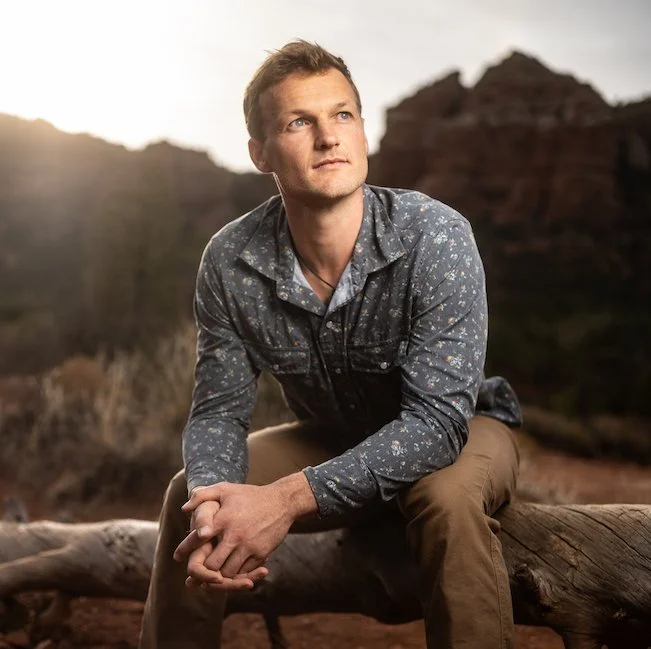
Dalton Johnson is an adventure and editorial photographer and director based in South Lake Tahoe, California. He has shot on all seven continents for brands including Patagonia, GoPro, Arc’teryx, Four Seasons, Nike, Rivian, Big Agnes, and Ford Bronco, directed more than fifty commercial spots, and spent eight years living out of a van and a car while building his business from nothing. His documentary work includes a PBS aired film and the self initiated project 72 Miles of Blue. He writes about the real business and craft of adventure photography for other photographers building their own careers.