Why I Stopped Trying to Outsource Editing to Humans
I hired a human editor four times before I gave up on the idea. Four different people, four different workflows, four different sets of instructions I wrote out in more detail each time hoping the next one would finally stick the landing. None of them were bad at editing. That was never the problem. The problem was speed, and speed is the one thing you cannot coach into someone else’s schedule.
Every time I brought someone new on, I told myself this round would be different. Better onboarding, clearer references, a shorter first batch to build trust before handing over a full shoot. It never mattered how carefully I ran the handoff. The pattern repeated itself almost exactly, which eventually told me the issue wasn’t any individual editor’s skill or work ethic. It was the structure of the arrangement itself.
If you want the full system behind how I actually run this business day to day, that’s in The Adventure Photographer’s Playbook.
The Real Bottleneck Isn’t Talent, It’s Speed
Every editor I brought on could match my color grade eventually. Give someone a LUT, a handful of reference galleries, and two rounds of feedback, and most trained editors will get close enough that a client wouldn’t notice the difference. That part is learnable. What isn’t learnable, at least not on the timeline a working photography business runs on, is caring about my turnaround the way I care about it.
A brand doesn’t wait for my editor’s queue. They wait for me. When a client emails asking where the gallery is, that email has my name on it, not a contractor’s. So every time I handed off a card of footage to someone else, I was adding a layer between the shoot and the delivery, and that layer had its own priorities, its own other clients, its own version of urgent that didn’t always match mine.
I want to be clear that this isn’t a knock on the editors themselves. Most of them were freelancers running their own version of the same business I run, juggling their own client list, their own slow months, their own reasons a project might sit for three days before they got to it. That’s a completely reasonable way to run an editing business. It just doesn’t match what an adventure photography client expects, which is a fast, personal turnaround from the person they hired to be there.
The instructions problem made it worse. Adventure work isn’t studio work. There’s no single lighting setup to dial in once and repeat. One gallery might be golden hour on a ridge, the next might be flat overcast light in a forest, the next might be a headlamp-lit shot from a summit push that started at midnight. I could write pages of notes on how I want skin tones handled in shifting light, and an editor would still hit situations the notes didn’t cover, because adventure photography by definition happens somewhere new every time.
So the real bottleneck was never whether someone else could edit well. It was whether someone else could edit at the pace and with the judgment a business built around unpredictable locations and fast client turnaround actually requires. Four tries told me the answer was almost never, at least not without a level of oversight from me that ate up nearly as much time as just doing the edit myself.
I also underestimated how much the queue problem compounds when you’re not the editor’s only client. Even the most reliable of the four people I hired had weeks where three other projects landed in their inbox on the same day mine did. That’s not a character flaw, it’s just math. A freelance editor with five clients has to make triage decisions constantly, and there’s no guarantee I’m the client who gets bumped to the top of that list on any given week, especially once the relationship stops being new and exciting for them. My own business doesn’t get to tell a brand “you’re third in line this week.” Neither should the person editing for me, but in practice, that’s exactly what kept happening.
There’s a seasonality mismatch too that I didn’t see coming until I’d lived through it twice. My busiest shooting months don’t always line up with an editor’s quiet months. More than once I landed a big multi-day shoot right as an editor I worked with hit their own busy season with other clients, and suddenly the turnaround I needed most urgently was the turnaround I was least likely to get. Building a business around someone else’s calendar, on top of my own unpredictable one, doubled the amount of scheduling risk instead of reducing it.
Further reading, if you want to see how this fits into the rest of how I run production:
What a Human Editor Actually Costs You Beyond the Invoice
The invoice is the easy number to point at. A skilled editor charges real money, and if you’re paying per image or per hour, that cost adds up fast on a shoot with a few thousand frames. But the invoice was never the expensive part for me. The expensive part was everything around it.
Every hand-off meant writing a brief. Not a quick note, a real brief: color direction, which images were priority selects, which ones the client had already flagged as favorites on set, what mood the brand wanted versus what mood I actually captured. Writing that brief well took real time, and writing it poorly meant a first pass that missed the mark and needed a second full round of notes to fix.
Then there was the review cycle itself. I’d get a batch back, and instead of doing my own single pass of refinement, I was doing quality control on someone else’s work first. Checking for consistency across a gallery. Checking that skin tones matched from image to image even though the light shifted across the day. Checking that nothing got over-sharpened or had a color cast that wouldn’t show up on a small preview but would show up the second a client opened it full size on a laptop. That review pass is its own kind of editing, except now I was doing it on top of writing the brief and on top of whatever revision requests came back after.
There’s also a trust cost that’s harder to put a number on. When I edit my own work, I know exactly which frame from a shoot day means something beyond what’s visible in it. The one where the light was fading and I sprinted the last quarter mile to catch it. The one where the client almost canceled the whole thing because of weather and this was the shot that justified going anyway. An editor working from a card of RAW files doesn’t know any of that, and there’s no brief detailed enough to transfer it. So even a technically excellent edit sometimes missed the images that actually mattered most, because the meaning behind them lived in my head and nowhere else.
Add it up and a human editor wasn’t saving me the hours the invoice implied. Between the brief, the review, the revision rounds, and the moments where I quietly redid sections myself because explaining the fix would take longer than making it, I was often spending nearly as much time managing the edit as I would have spent just doing it.
The last cost is the one that stings the most looking back, which is momentum. Photography businesses run on referrals and repeat work more than almost anything else, and both of those depend on a client feeling like the experience of working with you was smooth start to finish. A slow gallery doesn’t just annoy one client. It sits in the back of their mind the next time someone asks them for a photographer recommendation. I never had a client fire me over a slow turnaround, but I have no way of knowing how many quiet recommendations I lost because a gallery took ten days instead of four, and the brand’s marketing lead moved on to the next project before the images landed at their best possible moment.
This lesson comes from my The Adventure Photographer's Playbook and it costs $10. Why so cheap? The goal is to help as many new to mid level photographers as possible go from nothing to getting booked in 18 months:

The Adventure Photographer’s Playbook is an e-book created by full-time photographer Dalton Johnson to help new photographers go from nothing to booked in the adventure photography space.
This adventure photography e-book goes over the business and what “making it” as a photographer in the outdoor space requires. Covering topics such as pricing, marketing, building a body of work, reflection questions, and everything you need to know to make a career out of adventure photography.
Updated: June 2025
What Changed When I Brought in an AI Editing Pass
I’d tried outsourcing to a person four times and landed in roughly the same place each time, so when AI editing tools got good enough to actually consider, I didn’t expect much. The pitch sounded like the same problem with a different vendor. What actually happened was different, and it came down to where in the process the help showed up.
A human editor was trying to hand me a finished product, which meant every gap between their judgment and mine became a revision cycle. An AI pass isn’t trying to hand me a finished product. It’s doing the preliminary cull and a base correction pass, the unglamorous first-round work that used to eat the first few hours of every edit regardless of who was doing it. Sorting through duplicates and near-duplicates. Flagging technically sharp frames. Applying a baseline color correction across a gallery shot in mixed light.
That reframes the whole relationship. Instead of reviewing someone else’s finished interpretation and deciding whether it matches mine, I’m starting my own real edit at what would normally be revision two. The tedious sorting is already done. The base grade is already close. I’m doing the part that actually needs my judgment, which is picking the frames that carry the meaning of the shoot and pushing the color and mood in the direction the story needs, instead of spending that same energy on triage.
The speed difference is the part that mattered most given everything in the section above. There’s no brief to write for an AI pass the way there was for a human editor, because I’m not handing off final judgment, I’m handing off the repetitive first layer. There’s no waiting on someone else’s queue. There’s no review cycle where I’m checking another person’s consistency across a gallery, because I’m the one doing the final consistency pass myself, just starting from a head start instead of a blank card of RAW files.
I still don’t think of this as a fully solved problem. The tools handle culling and base correction well. They don’t know which frame means something beyond what’s visible in it, the same gap that limited even a skilled human editor. That part was never going to be solvable by handing the job to someone or something else. It was always going to require me.
The scheduling risk disappeared too, which surprised me more than the time savings did. There’s no queue to wait behind. There’s no other client’s rush job landing in front of mine on a random Tuesday. When I finish a shoot and import the footage, the first pass starts immediately, on my timeline, not shared with anyone else’s business. That alone removed the seasonality mismatch that used to cost me the most sleep, the specific dread of a big shoot landing during someone else’s busy month.
It changed how I quote turnaround to clients too. When a human editor was part of the pipeline, I built in buffer days I didn’t like admitting to, padding for a queue I couldn’t control. Now the only unpredictable variable in my delivery timeline is my own schedule, which I can actually manage. I quote faster turnarounds now and I hit them more consistently, and clients notice that kind of thing even when they never say it directly.
Where the Human Touch Still Has to Come In
I want to be honest about the limits here, because the pitch for AI editing tools online tends to oversell what they actually replace. They don’t replace judgment. They replace the parts of editing that don’t require judgment, which turns out to be a meaningful chunk of the total time but not the part that actually makes a gallery good.
Final selects are still entirely mine, and I don’t see that changing anytime soon. No tool decides which frame from a bikepacking trip captures the actual grind of the day instead of just the prettiest light. No tool knows that the client mentioned offhand during the shoot that this particular product needed to read clearly in frame because it was the whole reason the brand hired me. Those decisions require the context of having been there, and that context doesn’t transfer through a folder of files no matter how well organized.
Color mood is the same story. A baseline correction gets skin tones and exposure into a reasonable range. It doesn’t know that this particular gallery needed to feel colder and more remote than the raw files suggested, because the story was about isolation, or that another gallery needed to feel warmer than it actually was because the story was about camaraderie around a fire at the end of a long day. That’s a creative decision, not a technical one, and creative decisions are exactly the part I never wanted to hand off in the first place.
Client-specific consistency also still needs a real human pass. If a brand has worked with me across three campaigns, they expect a certain feel that connects all of it, even as locations and lighting change every time. An AI pass working gallery by gallery has no memory of the last campaign. Keeping that thread consistent across a long-term client relationship is still work only I can do, and honestly it’s work I want to keep doing myself, because it’s part of what a client is actually paying for when they hire me specifically instead of whichever photographer is available.
So the honest version of this story isn’t that AI editing solved outsourcing. It’s that AI editing finally targeted the layer of the job I actually wanted to hand off, the repetitive first pass, while leaving the layer I never wanted to hand off, the judgment, entirely in my hands. Four attempts at human outsourcing tried to hand off both layers at once, and that mismatch was the whole problem the entire time.
If you’re earlier in your career and weighing whether to hire your first editor at all, I’d push you to separate those two layers before you make the call. Ask yourself honestly which part of editing actually drains you. If it’s the sorting and the baseline correction, a tool solves that today without any of the queue risk or brief-writing overhead a person adds. If it’s genuinely the creative judgment that exhausts you, hiring a person won’t fix that either, because you can’t fully hand off judgment about your own work to someone who wasn’t on set. That part stays yours whether you like it or not.
If you’re trying to figure out where your own editing time actually goes before deciding whether to outsource any of it, the full breakdown of how I run production end to end is in The Adventure Photographer’s Playbook.
Reflection Questions
How much of your own editing time actually goes to judgment calls versus repetitive first-pass work like culling and base correction?
If you outsourced editing today, could you write a brief detailed enough to transfer the context only you have from being on set?
What would change about your turnaround time if the first round of every edit was already done before you sat down to start?
Is there a client relationship you have where consistency across projects matters enough that you’d never want to hand that judgment to anyone else?
Learn More About Adventure Photography
About the Author
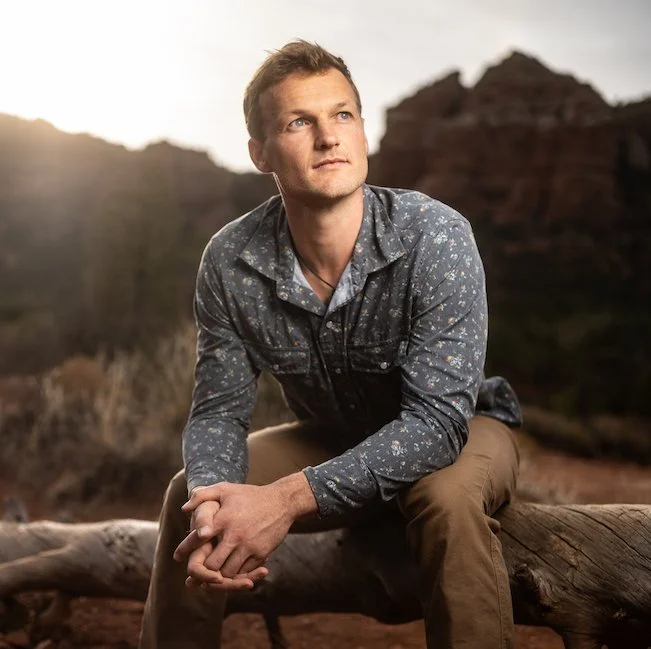
Dalton Johnson is an adventure and editorial photographer and director based in South Lake Tahoe, California. He has shot on all seven continents for brands including Patagonia, GoPro, Arc’teryx, Four Seasons, Nike, Rivian, Big Agnes, and Ford Bronco, directed more than fifty commercial spots, and spent eight years living out of a van and a car while building his business from nothing.
His documentary work includes a PBS aired film and the self initiated project 72 Miles of Blue. He writes about the real business and craft of adventure photography for other photographers building their own careers.