The Model Release Rule I Learned the Hard Way
Every photographer learns the model release rule for client work fast. A brand hires you, a model shows up, someone signs a release before the shoot starts. Nobody questions it. It is built into the job the same way a contract is, and it gets treated as a non-negotiable step long before anyone picks up a camera.
The gap shows up somewhere else entirely. It shows up with the people you already know. The friends you paddle out with, climb with, camp with, the ones you photograph a hundred times over a hundred casual weekends because you happen to have a camera and they happen to be doing something worth photographing. Nobody asks for a release in that moment. It would feel strange to ask. You are not a photographer working a job, you are just a friend with a camera, and the whole interaction reads as a weekend, not a shoot.
That is exactly the gap that got me. Not a client dispute, not a contract fight with a brand. A falling out with people I actually knew, over photos that were never supposed to be complicated in the first place. The paperwork instinct I had built for every paid job never crossed over into the unpaid, casual side of the same craft, and I paid for that gap in a way no client relationship ever cost me.
I have rebuilt a lot of how I run this business around moments like that one. The pricing structure, the contract habits, the release rule I am about to walk through, all of it lives in The Adventure Photographer's Playbook if you want the full system instead of just this one piece of it.
It is worth saying up front that this is not a story about a bad client or a broken deal. Nothing here involves an agency, a brand, or anyone I was ever formally hired by. It is entirely about the part of this job that never gets talked about in the same breath as contracts and invoices, the personal and social side of carrying a camera everywhere, which turned out to be exactly where my actual paperwork discipline broke down.
The Shoot That Didn't Feel Like It Needed a Release
Surf culture has a strong current of localism running through it, and it shapes how people feel about cameras before it shapes anything about the photos themselves. Being out in the water with a camera around people who surf a spot regularly is a trust exercise before it is a creative one. People are usually fine with photos of themselves existing. What changes the temperature fast is what happens to those photos after they are taken, especially once they leave the small circle they were taken inside of.
I was shooting friends. Not a booked subject, not a model, not anyone I was paying or being paid to photograph. Just people I already spent time with, doing the same activity we always did together, with a camera along because I always had one along. Over time that turns into a real archive of images, some good enough to actually use for something beyond a personal photo roll, sitting on a hard drive next to years of paid client work with none of the same paperwork attached to it.
Nobody signed anything, because nobody was thinking about signing anything. That is the actual root of the gap. A release did not feel unnecessary because anyone made a conscious decision to skip it. It felt unnecessary because the whole interaction did not read as a shoot. It read as hanging out, and nobody formalizes hanging out. Pulling out a release form in that moment would have felt like turning a good day into a business meeting, so it never happened, session after session, for years.
The photos sat that way for a long time with no issue at all. Nobody in the group thought twice about a camera being around, because a camera being around was just part of how those days went. The issue only started once the photos stopped being purely personal and started having real value attached to them, which is precisely the moment a release becomes worth having and precisely the moment it feels most awkward to ask for one.
Looking back, the absence of a release was never really a decision. It was just the default outcome of nothing ever prompting the question. Client work prompts the question automatically, because contracts and releases are baked into how that side of the business runs from the very first email. Friend groups do not come with that same built-in prompt, so the responsibility to bring it up sits entirely on the photographer, and I did not carry that responsibility the way I should have.
Further reading, on the paperwork side of this business:
What Actually Went Wrong
Once real money entered the picture, the same photos that had been sitting around harmlessly for years suddenly meant something different to the people in them. That is the part that caught me off guard. It was not that the photos changed. It was that the context around them changed, and feelings about image use are not fixed at the moment a photo is taken. They can shift years later, sometimes specifically because money is now part of the conversation in a way it never was before.
I offered fair compensation once that conversation came up. That did not resolve it the way I expected it to. The disagreement was not really about the money itself, it was about a sense that the terms had never actually been agreed to in the first place, because there had never been any terms. Nothing was written down, so there was nothing to point back to when the disagreement started. Both sides were working from memory and assumption instead of anything concrete, and memory is a bad foundation for a dispute that involves money and feelings at the same time.
This tracks with a pattern I see constantly on the client side too. Contract gaps almost never show up on brand or agency work. Brands and agencies build contracts into how they operate as a baseline requirement, so the paperwork exists before I even show up, usually generated by someone in legal or operations who has never met me and never will. The gap shows up on personal projects and work with friends specifically, because that is the one category of shoot where nobody instinctively reaches for paperwork. The stakes feel lower in the moment precisely because the relationship feels closer, which is exactly backwards from how the risk actually works.
Losing a client relationship over a usage dispute is bad. It costs future work, it costs a referral, sometimes it costs a portfolio piece you were proud of. Losing an actual friendship over the same kind of dispute is worse, and it does not come with the professional distance that makes a client conflict easier to compartmentalize. You cannot email a friendship a formal notice and move on. That is the real cost that made this lesson stick harder than any client conflict ever has.
What made it sting more was realizing the fix would have taken minutes. A simple release, signed at any point before the photos found a real-world use, would have made the entire disagreement moot. Instead the absence of five minutes of paperwork turned into a drawn-out, uncomfortable conversation with people I cared about, over something that should have been settled before it ever became a conversation at all.
There was no villain in this story, which is part of what made it so uncomfortable. Nobody was trying to take advantage of anyone. It was a genuine disagreement between people who had never actually discussed the terms in the first place, which meant there was no shared reference point to fall back on once opinions started to diverge. That is a much harder situation to resolve than a dispute over a clause somebody clearly broke, because there was no clause. There was only memory, and memory bends differently for everyone involved.
Why "We're Friends, It's Fine" Is the Riskiest Assumption in Photography
The instinct to skip a release with people you know well makes emotional sense even though it is the wrong call. Asking a friend to sign something can feel like you are treating the relationship as transactional, like you do not trust them, like you are turning a weekend into a business arrangement. Nobody wants to introduce that tension into a friendship on purpose, especially when the whole point of being out there together was to not think about work at all.
But closeness does not lower the actual risk, it just lowers your guard around it. A model release exists to answer one question clearly: what can this photo be used for, and what can it not be used for. That question does not become less important because you like the person in the photo. If anything it becomes more important, because a dispute with a friend carries a different kind of damage than a dispute with a stranger you were only ever going to work with once and likely never see again.
What actually determines whether you need a release was never the relationship. It is the usage. The moment an image might be shared publicly, used commercially, licensed, or shown to anyone beyond the small circle it was taken inside of, the same protections that apply to a paid model apply to a friend. Casual does not mean low stakes. Casual just means nobody happened to formalize it yet, and that gap sits there quietly until something forces the question, usually money, sometimes just visibility.
I think a lot of photographers learn this exact lesson eventually, because it is such a natural blind spot. The paperwork instinct gets built for client work early, since client work makes the need for it obvious from the first conversation. Personal and social shooting never gets that same forcing function, so the habit has to be built on purpose instead of by default, which means most photographers only build it after something has already gone wrong once.
There is also a version of this that has nothing to do with money at all. Sometimes the disagreement is just about visibility, not payment. A friend who was fine being photographed for a private album can feel very differently about the same image circulating publicly, tagged, searchable, attached to a name. Money makes the stakes obvious, but visibility alone can shift how someone feels about a photo, which is one more reason the release conversation needs to happen up front rather than only when a check is involved.
The Rule I Follow Now, No Exceptions
The rule is simple, even if it took a real falling out to actually adopt it. Get a signed release immediately, ideally in the moment or as close to it as possible, regardless of the relationship and regardless of whether any money is involved yet. Not eventually. Not once it becomes clear the photo might be worth something. Immediately, while the situation is still simple and nobody has a reason to disagree about anything yet, because that window closes the moment real value or real visibility enters the picture.
A release does not need to be complicated to do its job. It needs to say clearly what the image can be used for, whether that use is personal, commercial, editorial, or some specific combination, and it needs to leave room to go back and ask again if a new use comes up later that was not part of the original conversation. The goal is not to lock someone into a use they never agreed to. The goal is to make sure everyone is working from the same understanding instead of from memory and assumption, which is exactly what was missing in my own situation.
I have also come to see this the opposite way from how it felt at the time. Asking for a release is not the thing that introduces distrust into a friendship. Skipping it is what leaves a friendship exposed to a disagreement with no clear answer, which is a far worse outcome than a slightly awkward conversation up front. Handled well, asking for a release reads as being organized and considerate about someone else's image, not as treating a friend like a stranger. Most people respect that more than they resent it, once they understand it protects them just as much as it protects you.
This has become part of how I treat any shoot now, paid or not, formal or not. If a camera comes out and there is any chance the resulting image goes beyond a private photo roll, a release conversation happens at the same time, not after the fact once the photo has already found a use nobody agreed to. It takes a few minutes out of a good day. It has never once ruined the day it was asked during.
I have also stopped treating the release as a one-time event tied only to the day of the shoot. If a new use comes up later that was never part of the original conversation, licensing the image to a new brand, using it in a paid campaign, putting it somewhere far more visible than originally discussed, that is worth a fresh conversation, not an assumption that the original release covers whatever comes next. Revisiting the agreement when the use changes costs almost nothing compared to what it protects.
Conclusion
The client side of this business was never where the real gap was. Brands and agencies build contracts and releases into how they operate by default, so that part of the job mostly protects itself. The actual blind spot was the shoots that never felt like shoots at all, the casual ones with people I already trusted, where paperwork felt unnecessary right up until it clearly was not.
That is the version of this lesson I would pass on to anyone else carrying a camera into their own friend group. The professional side of this job tends to protect itself, since brands and agencies are the ones pushing for paperwork. The personal side only gets protected if you decide to protect it yourself, before there is any reason to think you need to.
If you want the rest of how I structure contracts, pricing, and the paperwork side of this business so a casual shoot never turns into a hard conversation later, it is all laid out in The Adventure Photographer's Playbook.
Reflection Questions
Do you have any casual, unpaid photos of friends sitting around that could ever be used publicly or commercially without a release in place?
Would you know what to say if a friend got uncomfortable with how a photo of them was being used, years after it was taken?
Where else in your work does a close relationship make you skip a formality you would never skip with a stranger?
What would it cost you, personally or professionally, if a casual shoot turned into a real dispute tomorrow?
This lesson comes from my The Adventure Photographer's Playbook and it costs $10. Why so cheap? The goal is to help as many new to mid level photographers as possible go from nothing to getting booked in 18 months:

The Adventure Photographer’s Playbook is an e-book created by full-time photographer Dalton Johnson to help new photographers go from nothing to booked in the adventure photography space.
This adventure photography e-book goes over the business and what “making it” as a photographer in the outdoor space requires. Covering topics such as pricing, marketing, building a body of work, reflection questions, and everything you need to know to make a career out of adventure photography.
Updated: June 2025
Learn More About Adventure Photography
About the Author
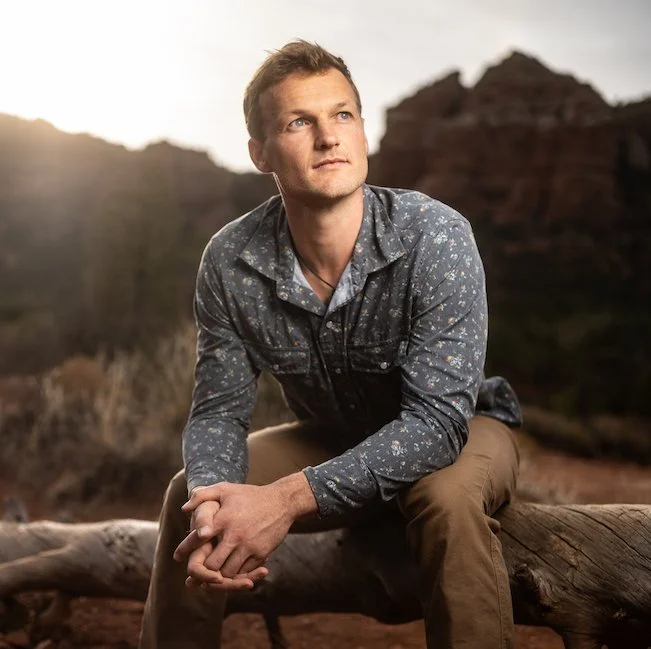
Dalton Johnson is an adventure and editorial photographer and director based in South Lake Tahoe, California. He has shot on all seven continents for brands including Patagonia, GoPro, Arc’teryx, Four Seasons, Nike, Rivian, Big Agnes, and Ford Bronco, directed more than fifty commercial spots, and spent eight years living out of a van and a car while building his business from nothing.
His documentary work includes a PBS aired film and the self initiated project 72 Miles of Blue. He writes about the real business and craft of adventure photography for other photographers building their own careers.